Vad, Șercaia, Brașov County

Vad, Șercaia, Brașov County
What can you see among the daffodils?
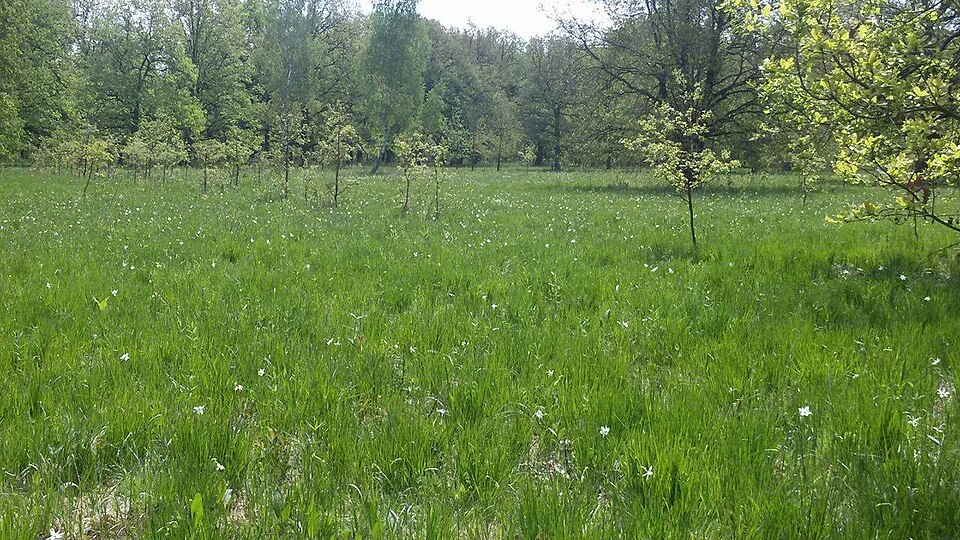
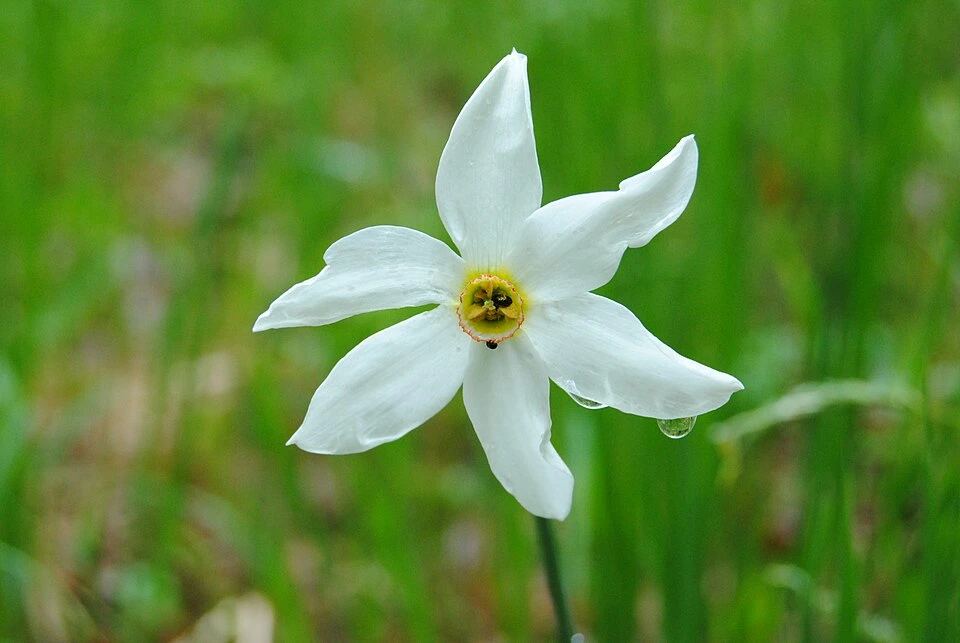
At Vad in the Făgăraș depression, white flowers rise from the grass of a glade with scattered trees. The daffodil is the flower that makes the place recognisable in spring. At grass level the structure of the glade comes into view, with wet patches, tall plants and woodland edges. [4] [5] [1]
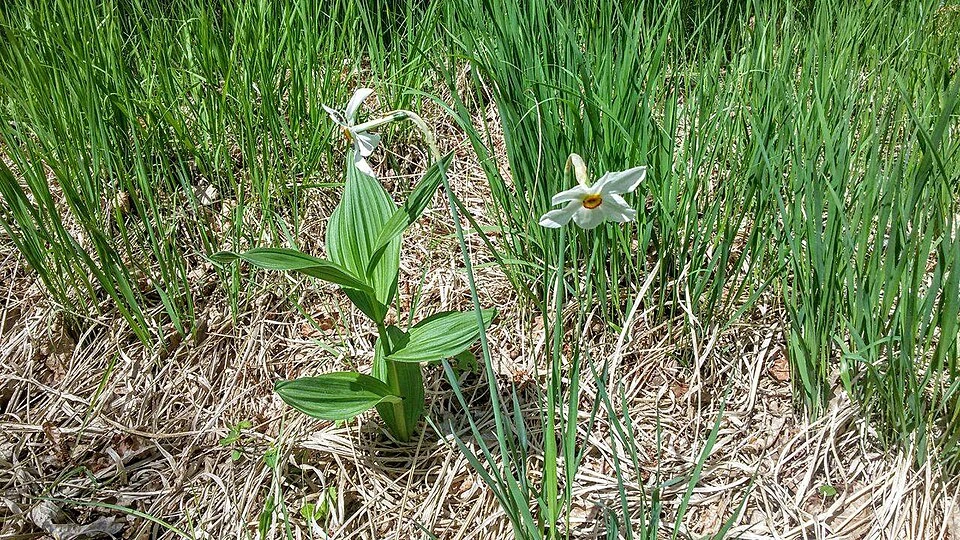
In the close-up, look for the small cup in the middle of the flower. The site plan describes the local daffodil as Narcissus poeticus, subspecies radiiflorus, with usually white segments arranged like a star. Go back to the wide view and look at the space between the trees. That is where the story of the other plants and the insects begins. [6] [1]


Meadow and oaks
Why does the moisture between the trees matter?
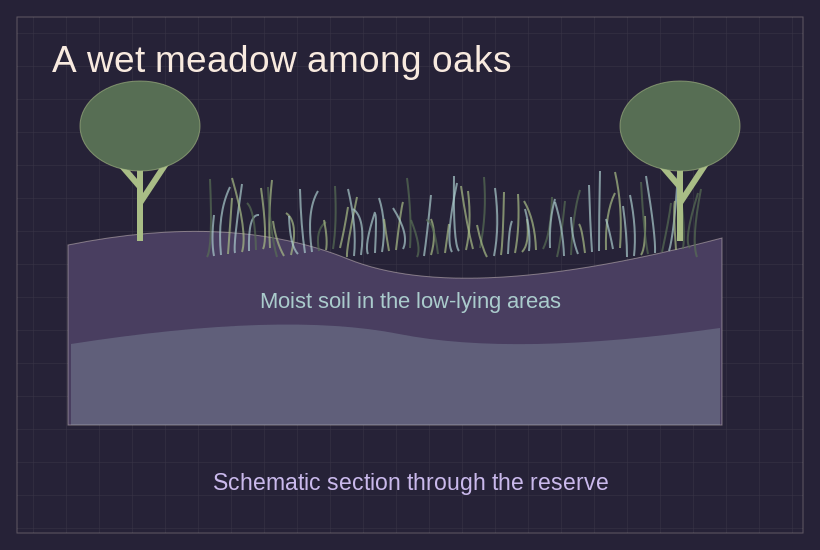
The management plan describes what remains of old oak woodland on terraces north of the Făgăraș Mountains. Both forestry and local conditions have opened it up. In lower areas, excess water in spring makes it harder for acorns to germinate and young oaks to establish. Open patches and groups of trees remain. [1]
In the glades, purple moor-grass, known to botanists as Molinia caerulea, can form an almost continuous cover. Beneath trees, the same grass grows in tussocks among other plants. The section shows where open woodland meets a wet meadow. That arrangement offers flowers and insects a range of different conditions over the year. [1]
Field surveys since 2000
How did the list of butterflies and moths grow?
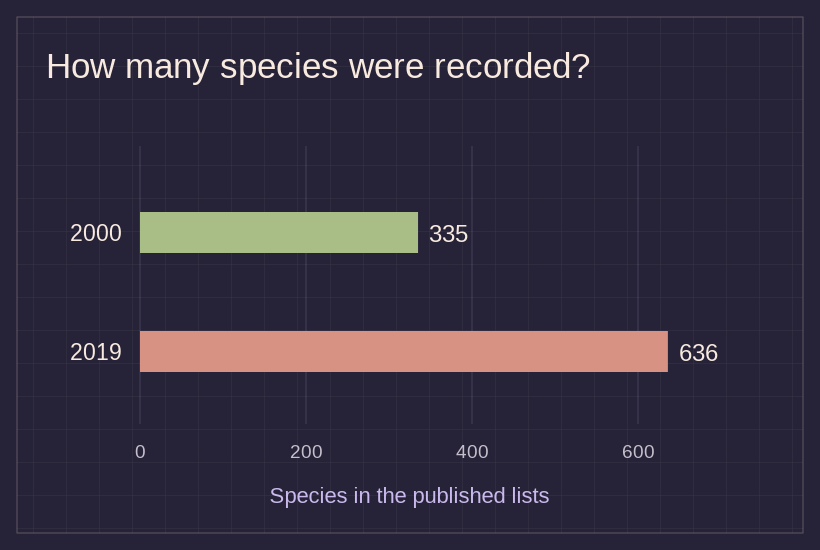
From 8 to 12 June 2000 entomologists held a research camp in the area. The camp and fieldwork that year led to a published list of 335 species of Lepidoptera, the group that includes butterflies and moths. More visits followed, particularly after 2012. [2]
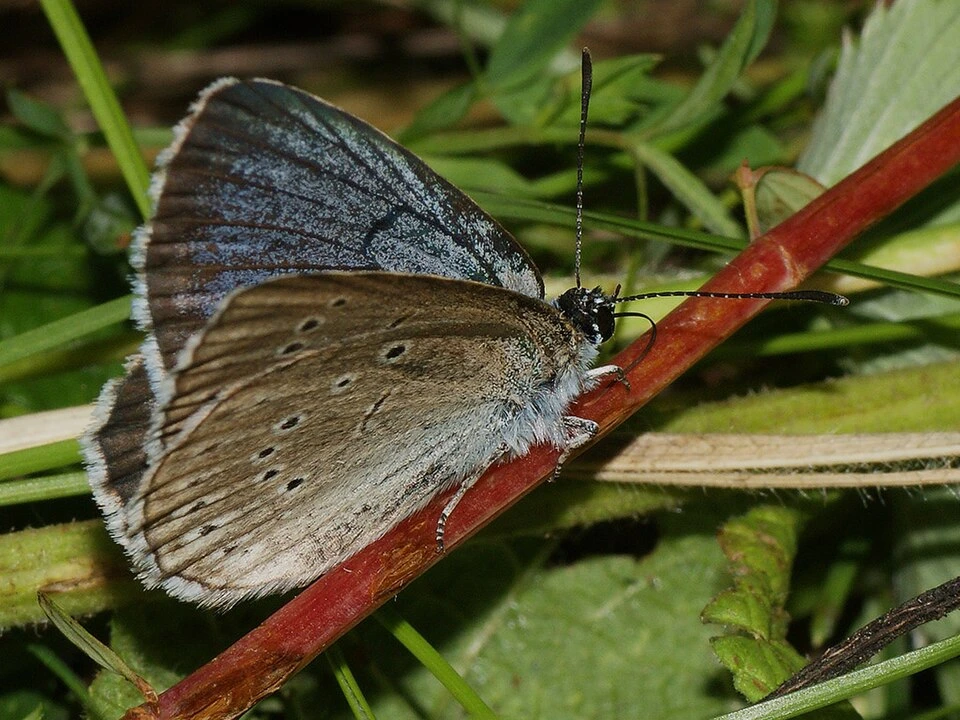
Levente Székely and Roberth Görbe published an inventory of 636 species recorded at Dumbrava Vadului in 2019. The comparison shows how much the researchers added to their list. It gives no measure of how the number of insects in any one glade changed. One of the species recorded is the scarce large blue, Phengaris teleius. [2] [1]
A plant and an ant colony
How does a caterpillar get from flower to ant nest?
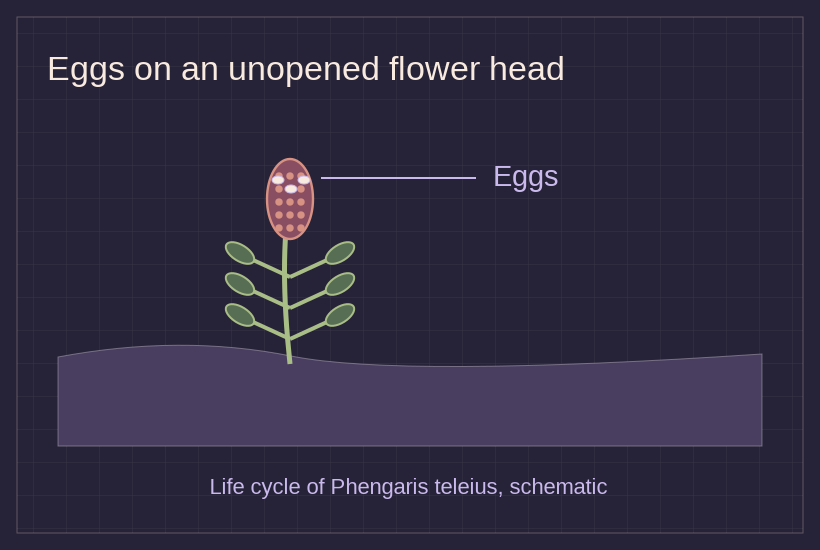
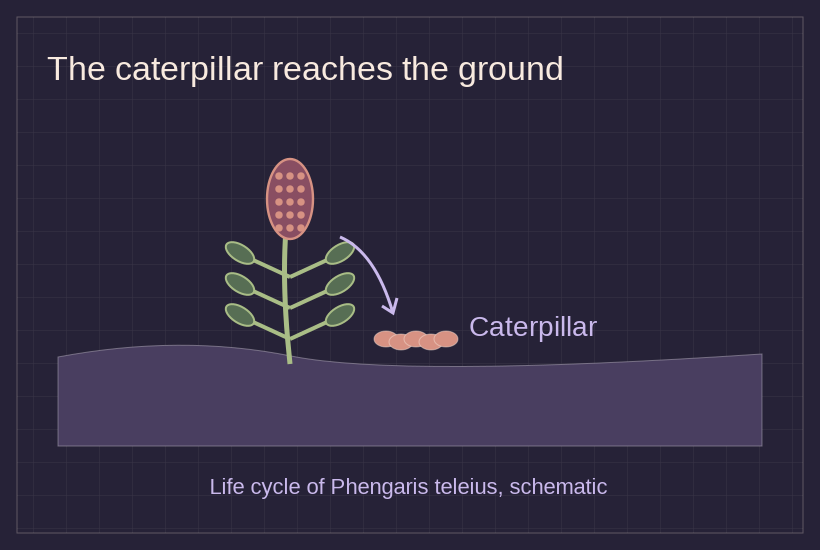
The 2016 plan calls the butterfly Maculinea teleius. The female lays eggs on unopened flower heads of great burnet, Sanguisorba officinalis. The caterpillar first feeds within the flower head. As it develops it comes down to the ground. [1] [3]
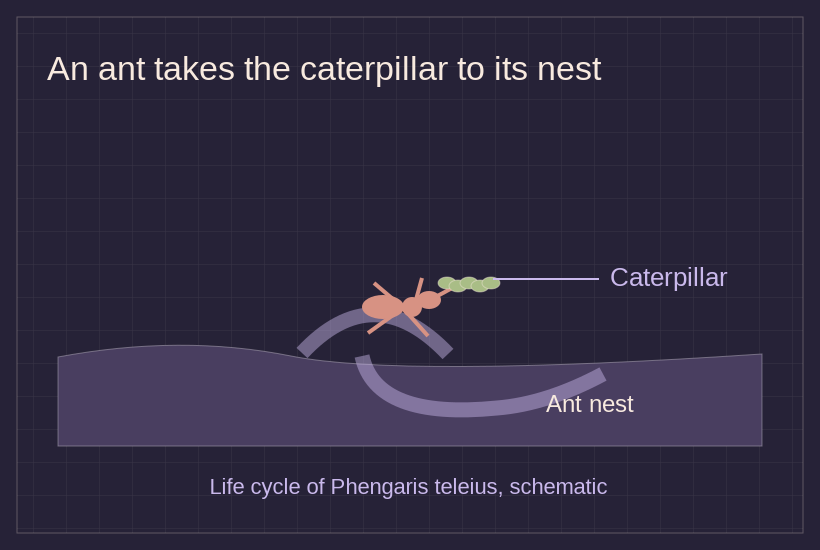
An ant of the genus Myrmica may pick it up there and carry it to the nest. In the nest the caterpillar feeds on ant eggs or larvae. Choose each stage to see how the setting changes. The daffodil helps you recognise the glade. Great burnet and the ants show why its conditions matter to the butterfly. [1] [3]

Laboratory recordings, 2014
What does the caterpillar sound like in the two stages?
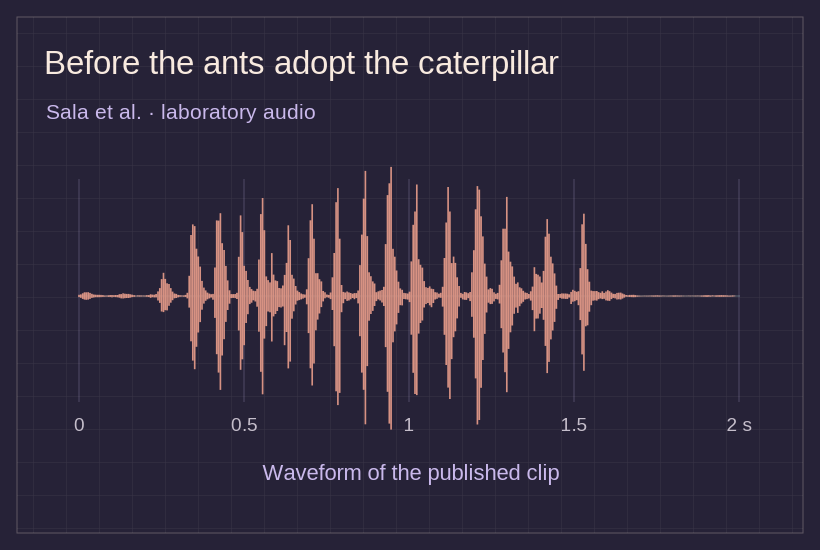
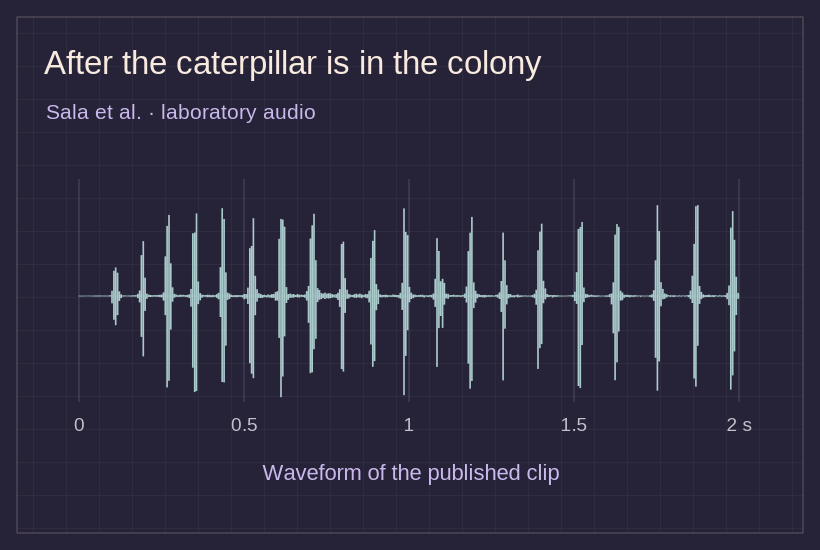
In a study published in 2014, Marco Sala and colleagues recorded caterpillars of the same species collected from a wet meadow near Turin, Italy. Listen to two clips about two seconds long. One is from a caterpillar before ants had taken it in. The other is from a caterpillar that had already been adopted. [3]
In one experiment they played the sounds to worker ants. In response to the sound from before adoption, the ants touched the speaker with their antennae more often than for the later sound. The authors propose that these pulses may help a caterpillar hold an ant’s attention before being taken in. The recordings illustrate the Italian study. The species’ presence at Vad is documented separately. [3] [2]
The 2016 plan
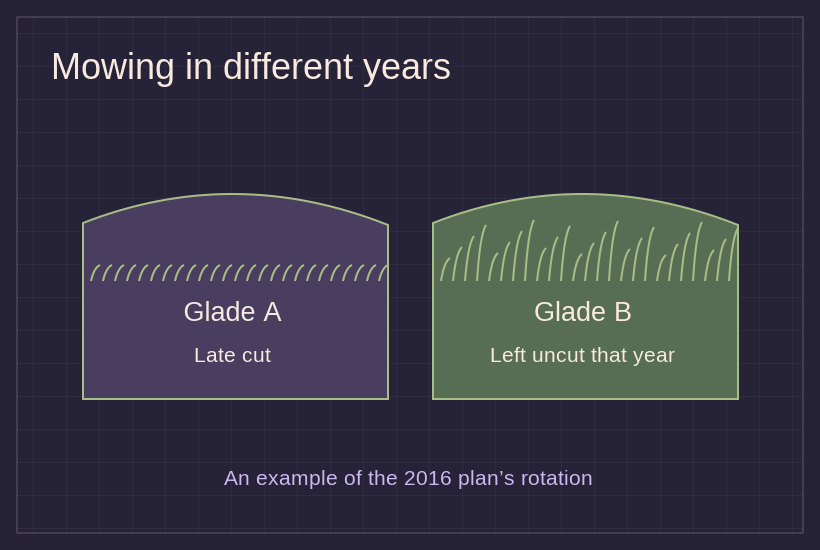
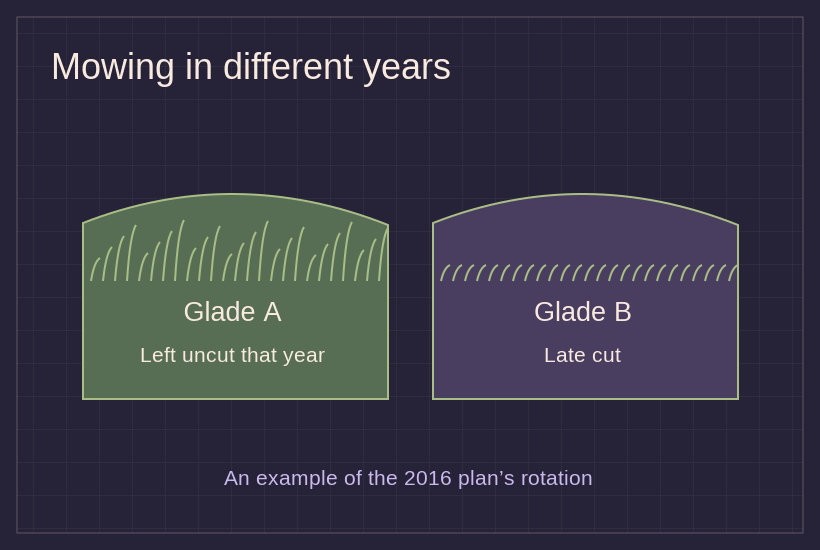
Why mow different glades in different years?
The site plan says that if a meadow grows dense and dead vegetation accumulates, conditions change for the ants that host the caterpillar. For the butterfly’s habitat the plan recommends mowing after 10 August and alternating glades every other year. That leaves part of the habitat uncut each year. [1]
The plan also links retaining moisture to the plant on which the caterpillar starts out. Look at the glade again and you have three different things to look for: the daffodil that makes it recognisable in spring, the plant where the caterpillar begins life, and the ground where the ants live. They inform different decisions about the same place. [4] [1]