- measured
- NASA eclipse catalogue (Saros 145)
- calculated
- the Moon’s orbit tilted 5.1° to the Earth’s
- drawn
- orbit lines
Eighteen years earlier, the same eclipse
An eclipse needs the Moon to pass in front of the Sun exactly where its tilted orbit meets the Earth’s. That only happens twice a year, near the two “nodes”, and the geometry repeats after 18 years, 11 days and 8 hours: a saros.
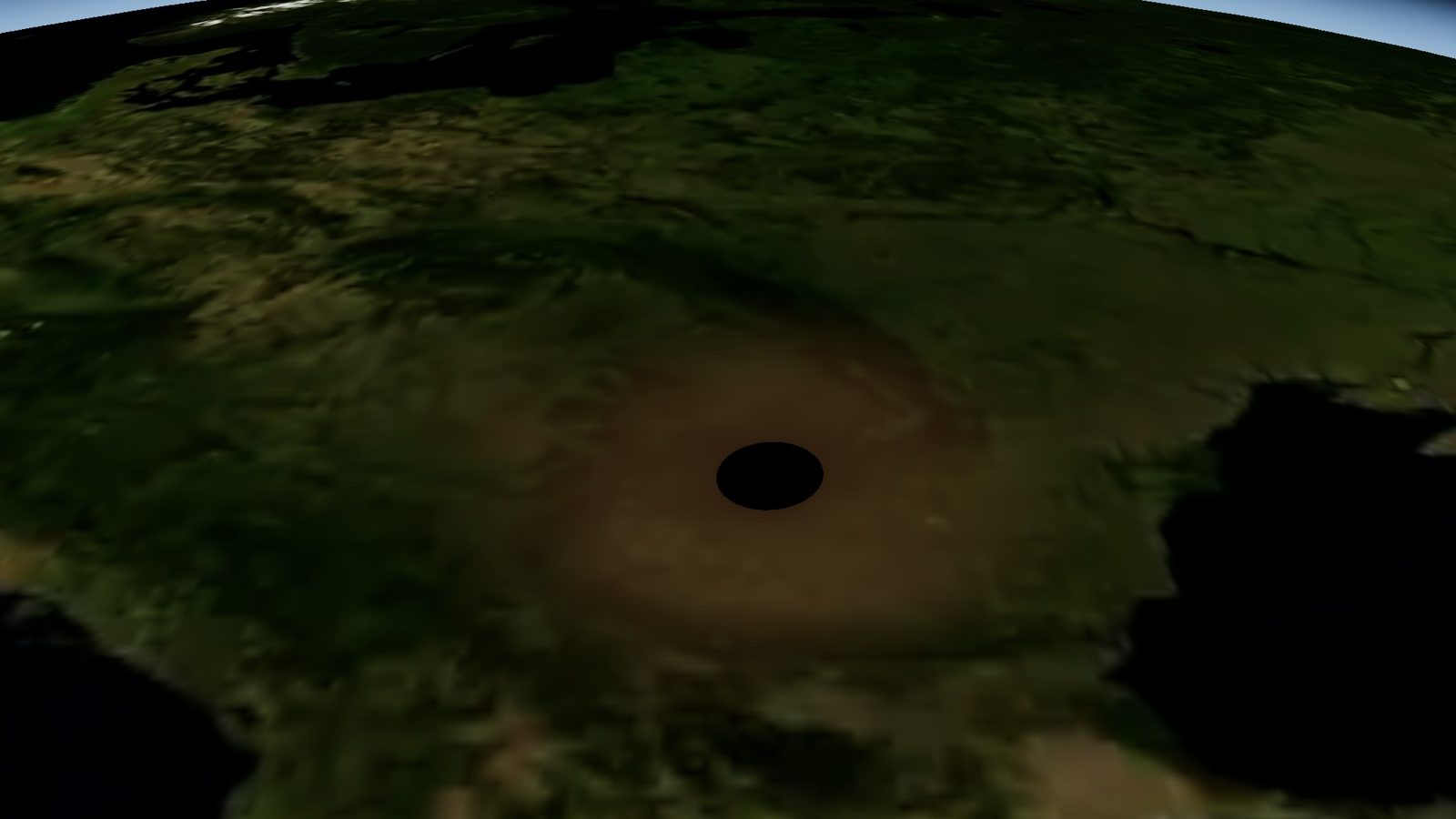
On 31 July 1981 the same alignment threw a total eclipse across Siberia. The next turn of the cycle was booked for the afternoon of 11 August 1999, over Europe. The eight extra hours meant the Earth would have turned a third further round.