Request for timber
Request for timber
The request to the prefecture
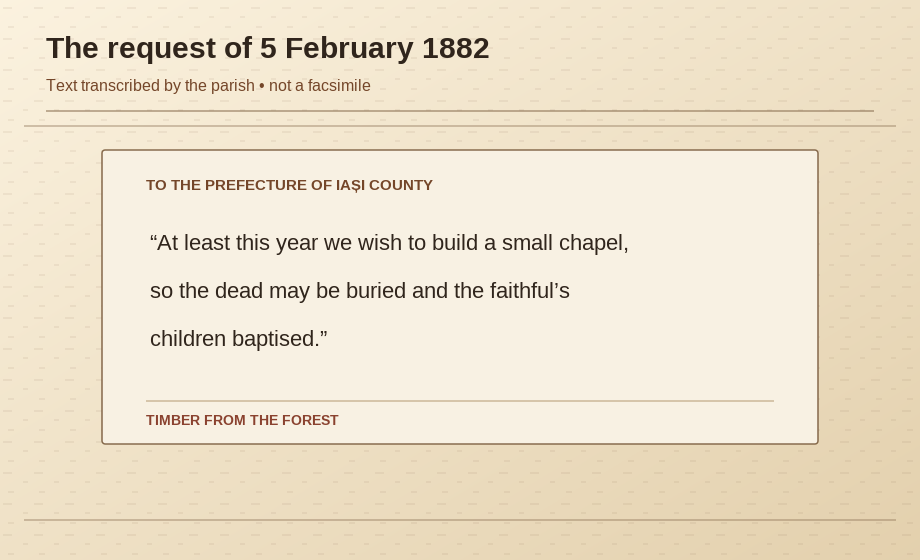
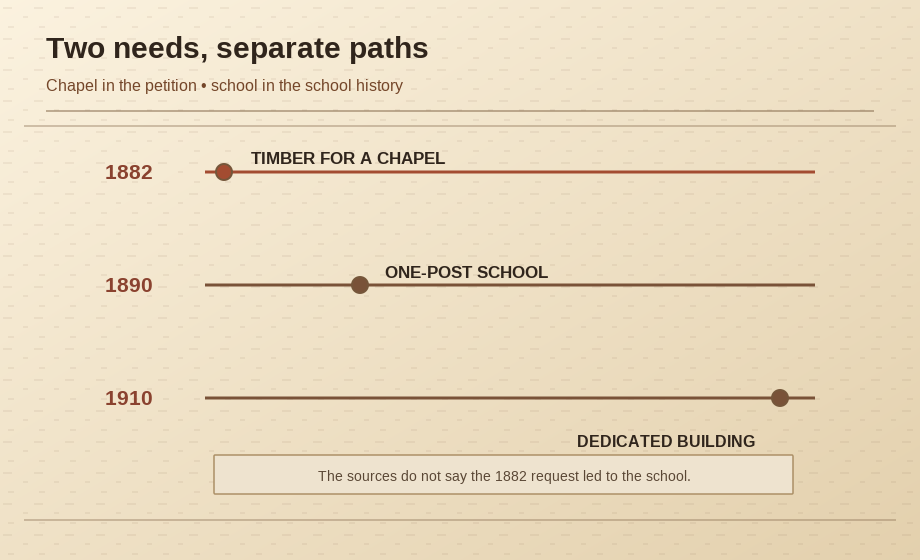
On 5 February 1882, villagers in Fântânele asked Iași Prefecture for timber from the state forest to build a small chapel. The parish page reproduces a short sentence from the request: people wanted a place to bury the dead and baptise children. The request concerns a religious space, not a school. [1]
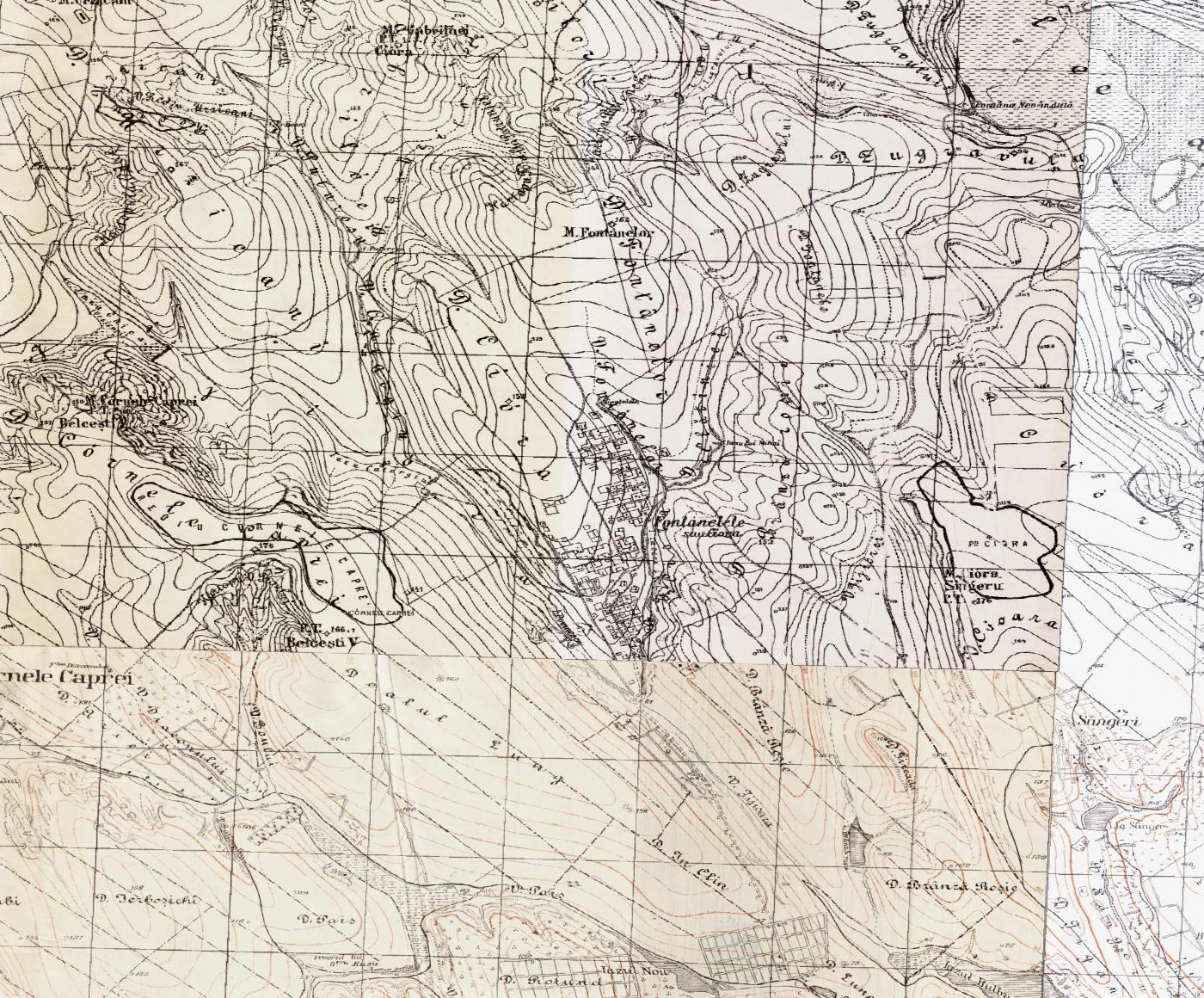
Fântânele was still a new settlement, established in 1879 and also recorded as Cioara or Odaia Domnească. Local documents and memories about its churches show people trying to build institutions with materials they could obtain; the 1882 request gives a specific glimpse of that effort. [1] [4]
School begins
A one-teacher school
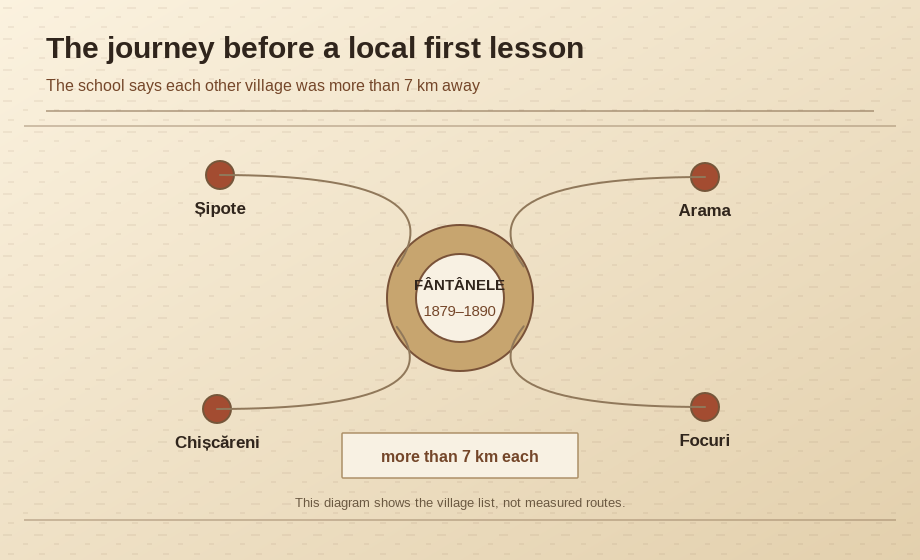
A school with one teacher’s post opened in Fântânele on 1 October 1890. The school history names Sava Mândru as its first teacher. Until then, children who attended lessons had to reach Șipote, Arama, Chișcăreni or Focuri; the school source says each was more than seven kilometres away. [2]
The distance helps explain the change: in 1890 lessons came to the village, even though there was still no school building. The school history does not give the number of children, attendance or the first class’s syllabus. We can name the teacher who opened the school and trace its later moves, but we cannot reconstruct an ordinary school day without the contemporary registers. [2]
The first class
A classroom inside a home
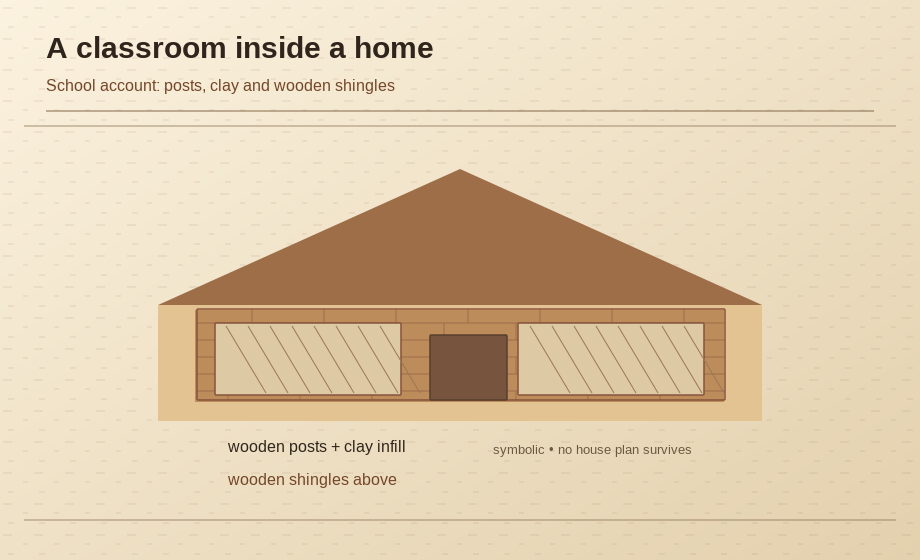
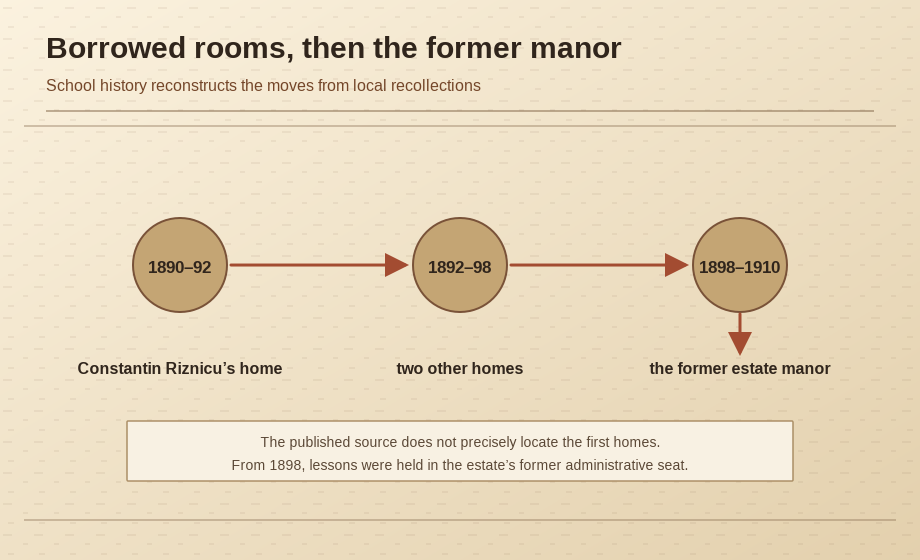
The first lessons were held in Constantin Riznicu’s home, described as a structure of wooden posts and clay infill under a shingle roof. The school history places it in the western part of the village and says it hosted classes until 1892. [2]
The source gives no floor plan or exact address. The drawing shows only the materials described, so we can picture the difference between classes arranged in a home and the brick building constructed later. School began as an activity in borrowed space, before there were rooms designed for it. [2]
Years of moves
The school moves
After Riznicu’s home, classes were held until 1898 in the homes of Costache Ciuhureanu (Bolohan) and Ioan Sacară, according to the school history. From 1898 until 1910, pupils studied in the former manor, which had served as the estate’s administrative seat until its liquidation in 1889. [2]
This route also marks a property changing its use: the school received rooms in the former estate administration after years of lessons in private homes. The names of those homes come from recollections published by the school; their positions are not precise enough to map without speculation. [2]
A dedicated schoolhouse
Bricks from the hill
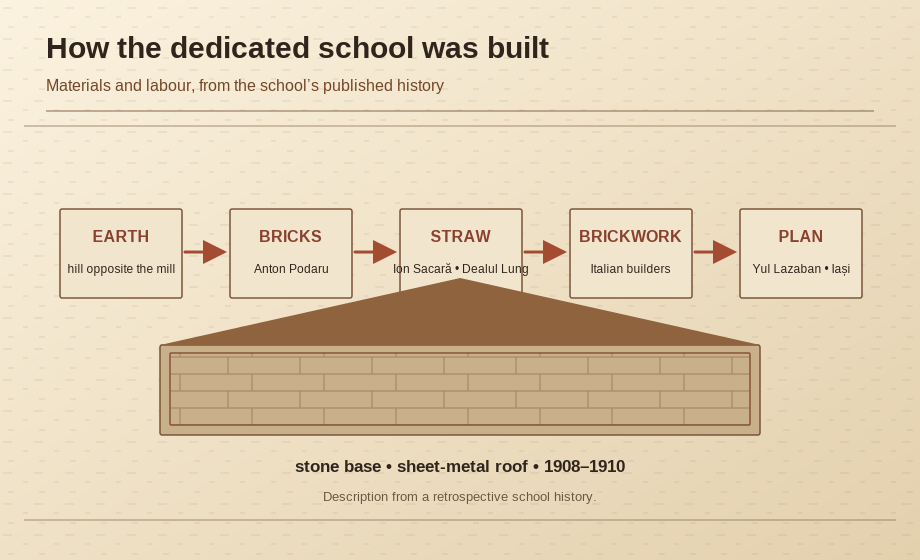
Between 1908 and 1910, the school says its dedicated building was constructed with central funds. Anton Podaru made the bricks from earth taken from the hill opposite the mill; Ion Sacară supplied straw from Dealul Lung for firing them. [2]
A team of Italian builders laid the masonry on a stone foundation, following an estimate prepared by engineer Yul Lazaban of Iași. The history also mentions black sheet metal, rolled at a mill it calls “Otto Bismark” in Düsseldorf. These details come from a retrospective school history; we have no invoice, estimate or technical plan to compare against it. [2]
The 1910 building
Two classrooms and a mulberry walk
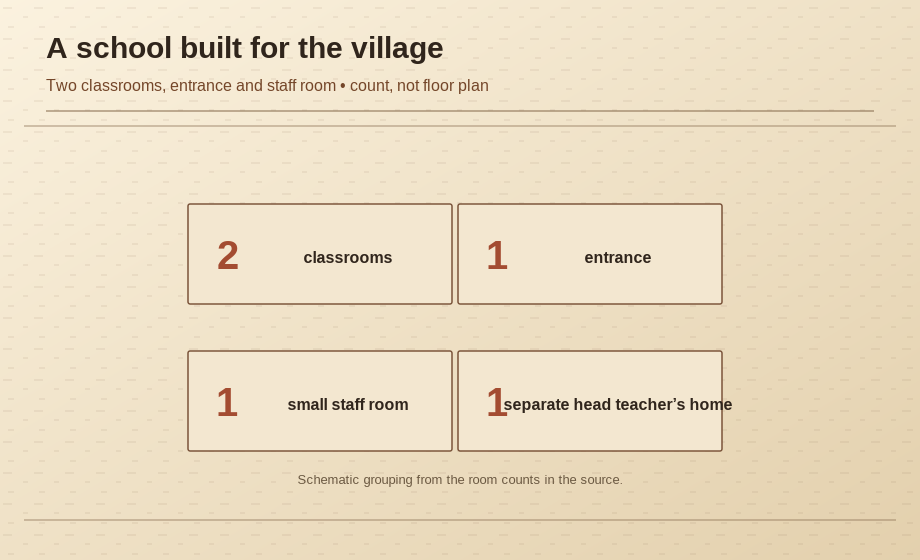
The dedicated building, opened in 1910, had two classrooms, an entrance hall and a small staff room. A separate head teacher’s home was built with two rooms, a kitchen, pantry and store room. The school says this old building still exists. [2] [3]
In front of the school, pupils led by teacher Grigore Racoviță planted mulberries brought from the school nursery; the history says some are still there. The row connects a building raised through central funding, skilled labour and local contributions with the pupils who used it. The trees’ present location and condition should be checked on site; the sources consulted do not include a dated photograph of the row. [2]