Marius ComperDâmbovița · cement works
Română

Fieni

How the Fieni cement works made clinker

Three chimneys rise above the Fieni cement works in a photograph published in 1938. Inside, a long sloping tube produced the clinker that went into cement. Follow the material through the kiln and see what the works produced as new equipment arrived.

Follow the material through the kiln ↓
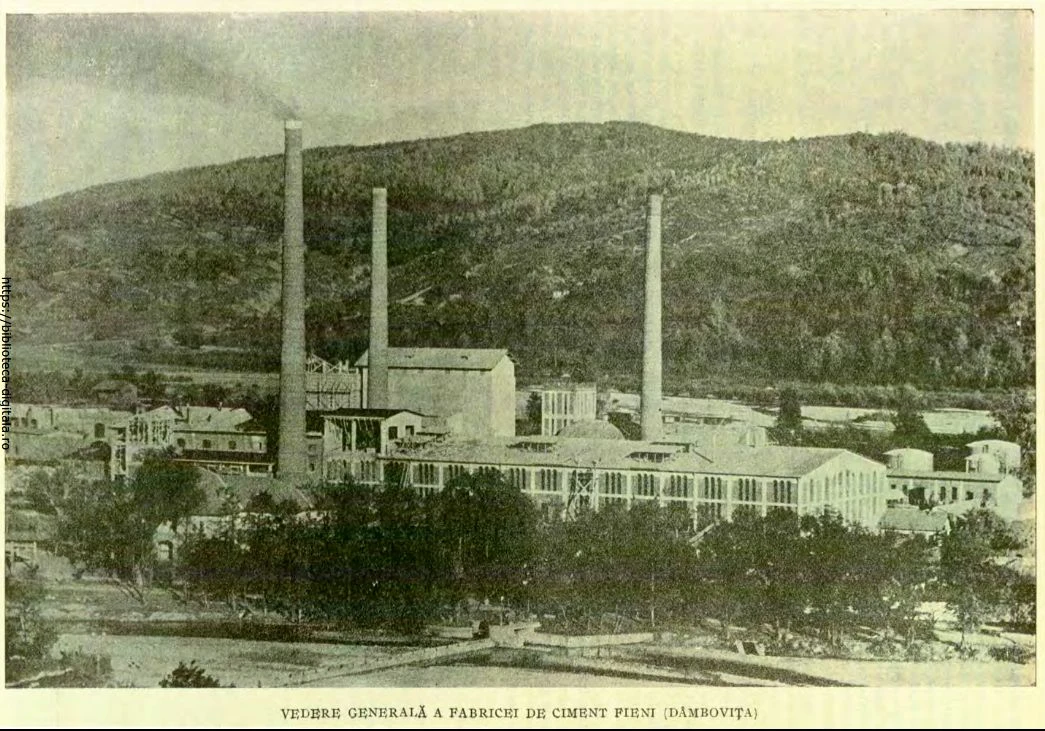
An old photograph with three slender chimneys and the cement works buildings at Fieni.
Three chimneys, production buildings and the hill behind the works. The photograph, published in 1938, shows the plant from outside. (Source · Romanian Digital Library / Enciclopedia României, III, p. 891 · Public domain)

Fieni, 1938

What the kilns behind the chimneys did

The 1938 photograph lets you count three chimneys. A hill rises behind them, with a long, tall-windowed hall to the right. The kiln is the puzzle in this view. The equipment that made clinker was far longer than it was tall. [1] [2]

The Romanian Academy’s history describes another photograph taken during construction. The column forms and timber props beneath the beams are visible. The reinforced-concrete hall was part of the plant that would make cement. [3]
An old photograph with three slender chimneys and the cement works buildings at Fieni.
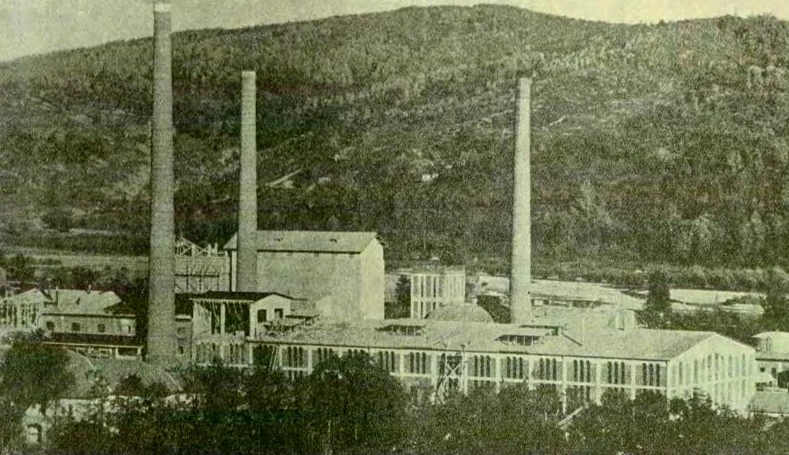
Three chimneys, production buildings and the hill behind the works. The photograph, published in 1938, shows the plant from outside. (Source · Romanian Digital Library / Enciclopedia României, III, p. 891 · Public domain)
Crop bringing the chimneys and the hall’s row of windows closer.
The hall windows appear at bottom right. The upright chimneys carried exhaust gas away. The rotary kilns operated almost horizontally. (Source · Romanian Digital Library / Enciclopedia României, III, p. 891 · Public domain)

1914–1923

Nine years from signatures to production

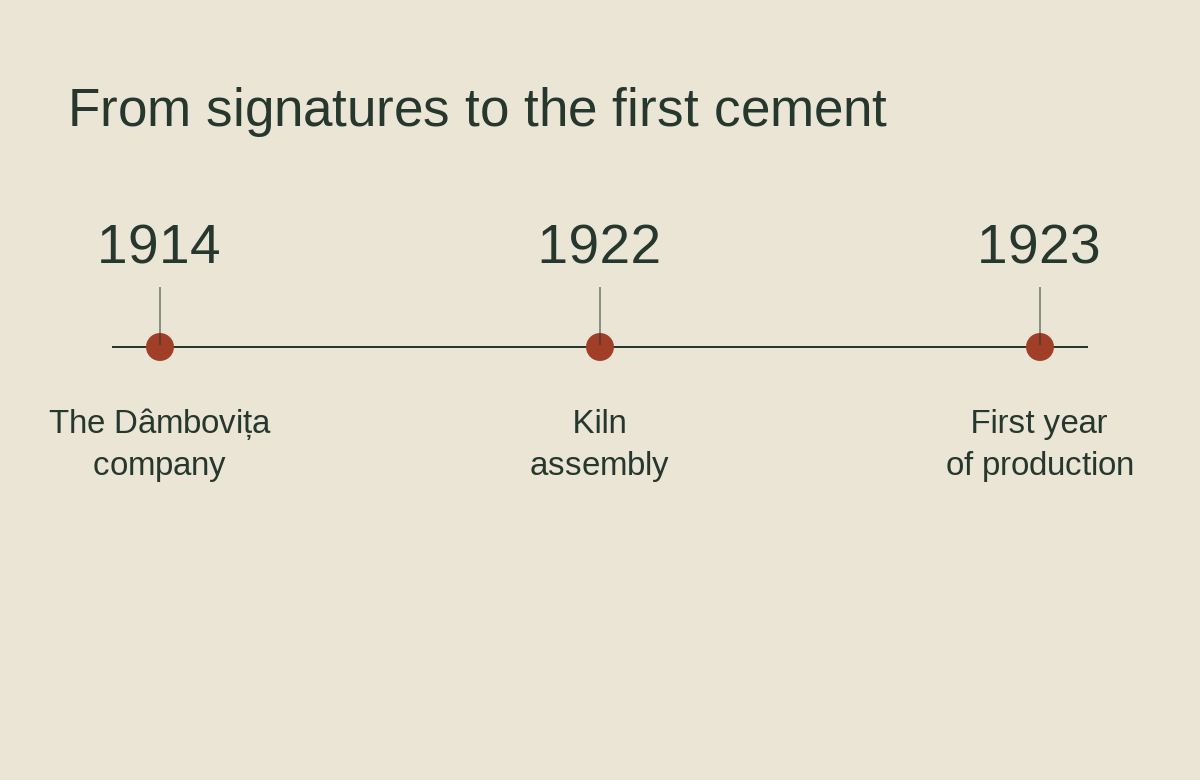
Engineer Mihail Lupescu studied the resources around Fieni. In March 1914, eleven shareholders signed the papers for the Dâmbovița company. The area offered limestone and other raw materials, and the railway linked the works to markets. [3] [2]

The war delayed deliveries of equipment. Photographs in the plant history show the first Polysius kiln being assembled in 1922. Their caption gives a rated capacity of 6.35 tonnes of clinker an hour. The first reported annual output is for 1923. [2]
Timeline with three date markers from 1914 to 1923.
March 1914, the company is founded. 1922, the first kiln is assembled. 1923, the first production year. (Source)

Clinker

How stone travels through a rotating tube

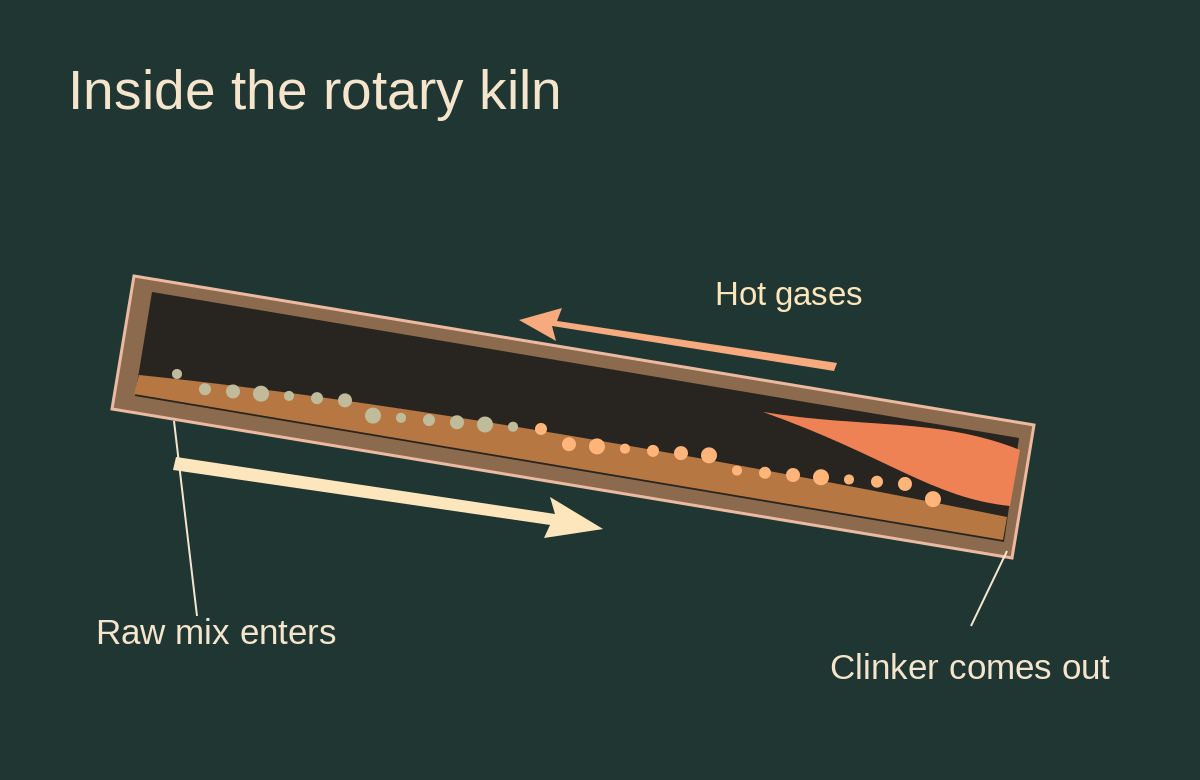
A rotary kiln is a long cylinder on a shallow incline. The prepared mixture of limestone and other raw materials enters at the high end. As the wall turns, it lifts some material and lets it fall. The incline makes it advance gradually toward the lower end. [2] The plant history gives a length of 58 metres for the first rotary kilns installed. [2]

A flame heats the material toward the outlet. At high temperature the ingredients form nodules called clinker. After cooling, the clinker is ground with gypsum to make cement. The model shows how the kiln moves the material. [2]
Inclined tube, with solids moving left to right and hot gases flowing right to left.
Explanatory section. Raw mix enters at the raised end and travels as the tube turns. The flame is near the outlet. Hot gases flow in the opposite direction from the material. (Source)
A drawing of three different stages of material in the factory.
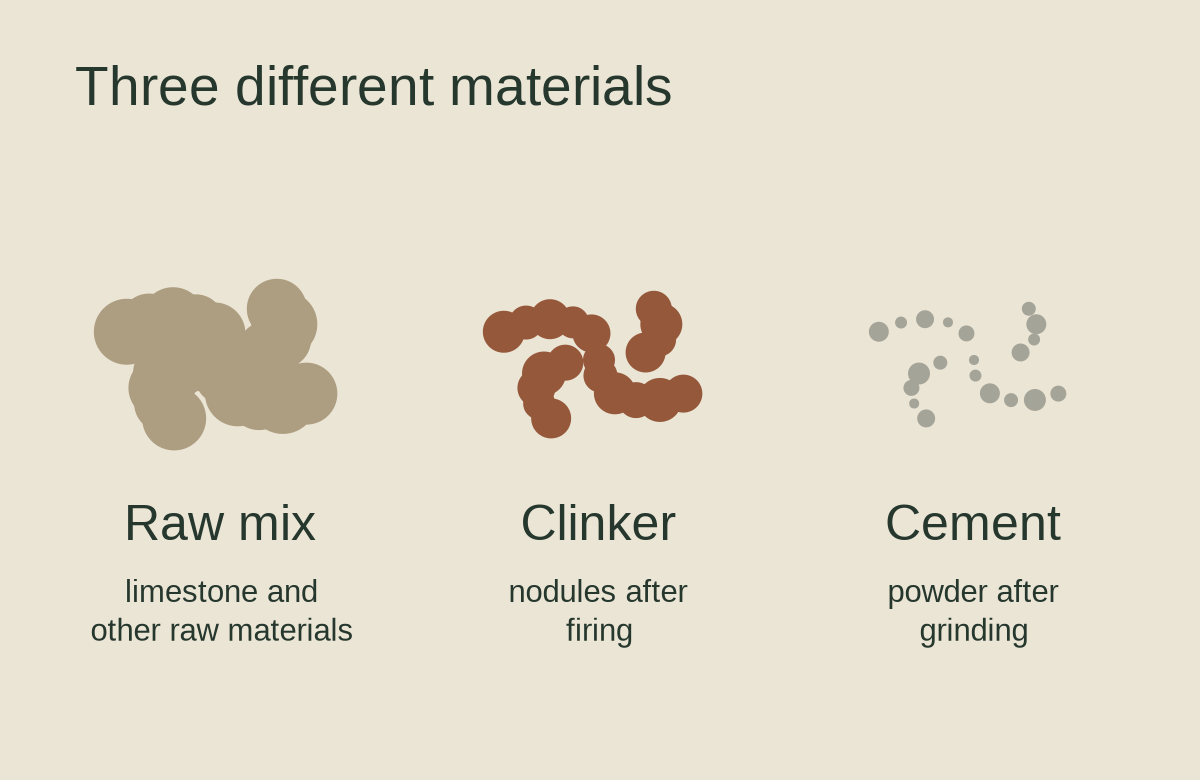
Prepared raw mix goes into the kiln. Cooled clinker goes to the mill. Cement is the powder produced by grinding. (Source)

The Ialomița

The flood that swept away the plant’s dam

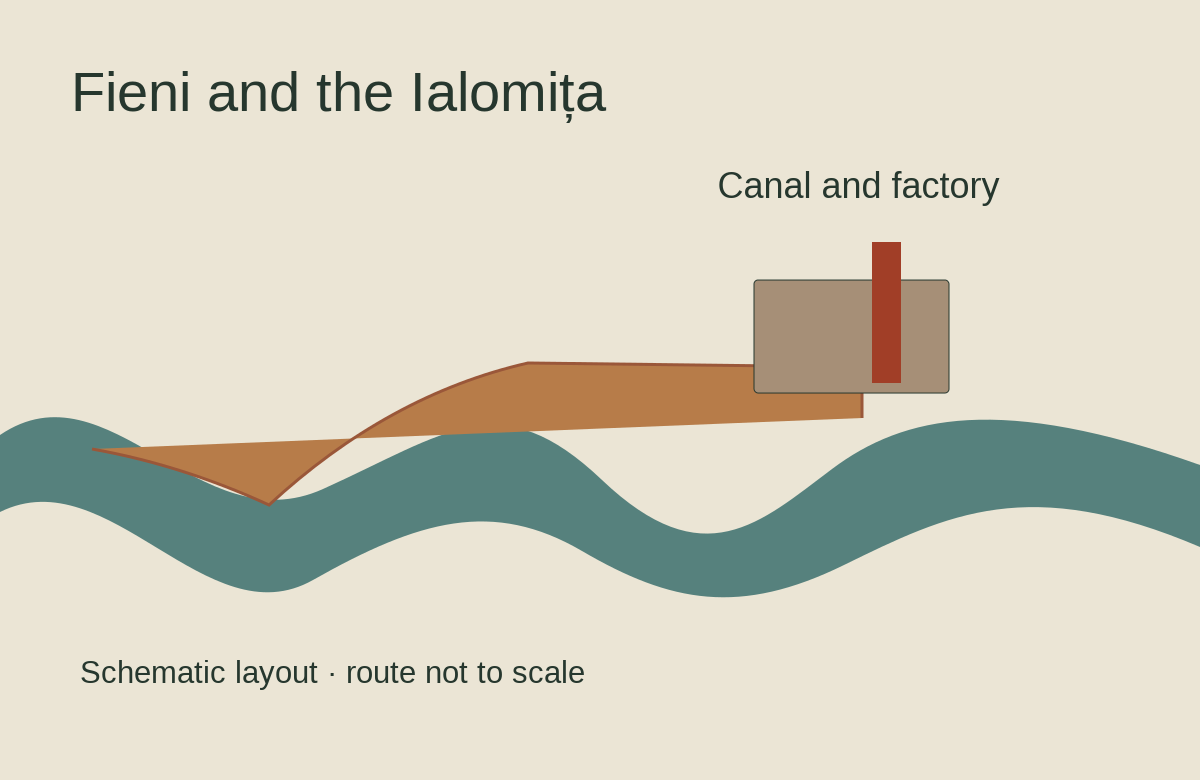
A canal about 1.5 km long brought water from the Ialomița to the plant’s hydroelectric equipment. Two Voith turbines rated at 315 and 320 kW supplied motive power, according to the plant history. [2]

The 1925 flood washed away the dam that had been built with the canal. It was rebuilt in 1927, according to the caption in the plant history. The water supply is outside the frame of the 1938 panorama even though part of production depended on it. [2] [1]
Schematic view of a river and a canal leading toward the works.
Explanatory drawing. The dam and canal were built together. The company book records the loss in 1925 and the rebuild in 1927. (Source)

Tonnes per year

What changed as new kilns were added

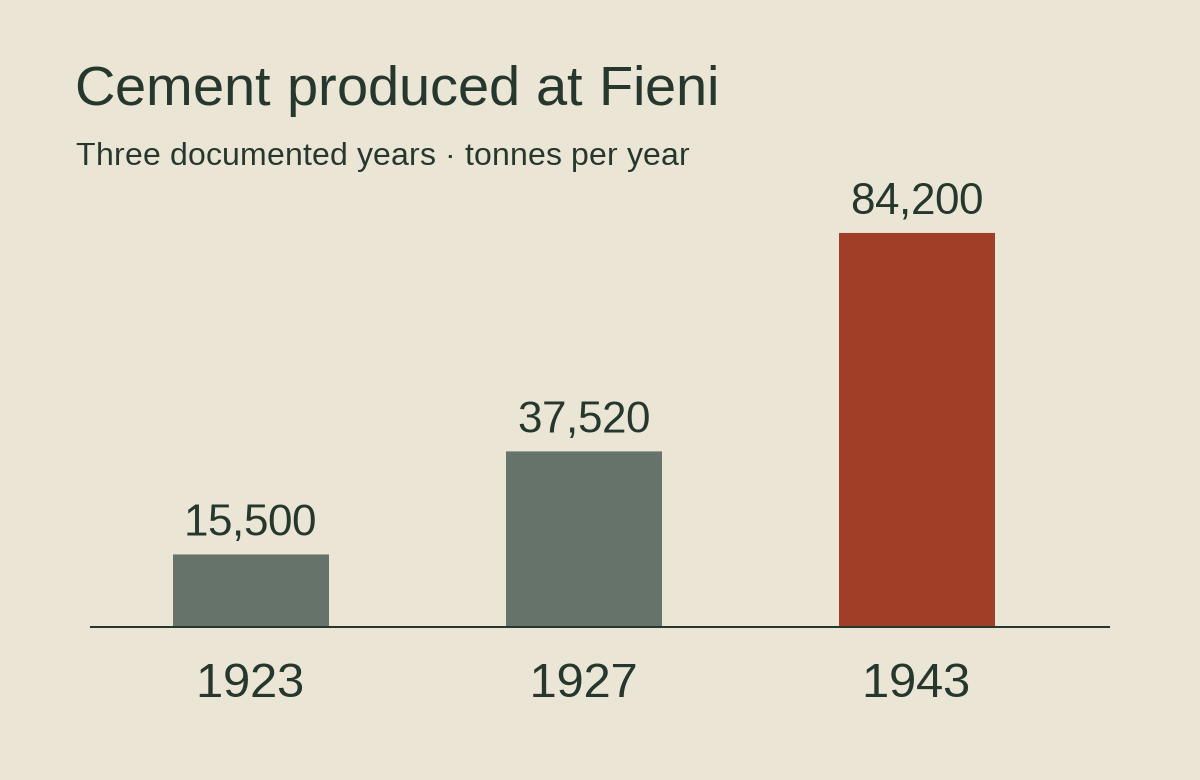
With its first kiln, the works produced 15,500 tonnes of cement in 1923. For 1927, the centenary history records 37,520 tonnes and two rotary kilns. A third kiln, made by Krupp, entered service in 1939, after the encyclopaedia published the panorama. [2] [1]

In 1943 the works made 84,200 tonnes. All three bars measure annual cement production. The kiln rating, in tonnes of clinker per hour, answers a different question from the annual output of the whole factory. [2]
Three bars on one scale for cement production.
15,500 tonnes in 1923, 37,520 in 1927 and 84,200 in 1943. The bars start at zero. (Source)

The works today

What happens to some of the leftover heat

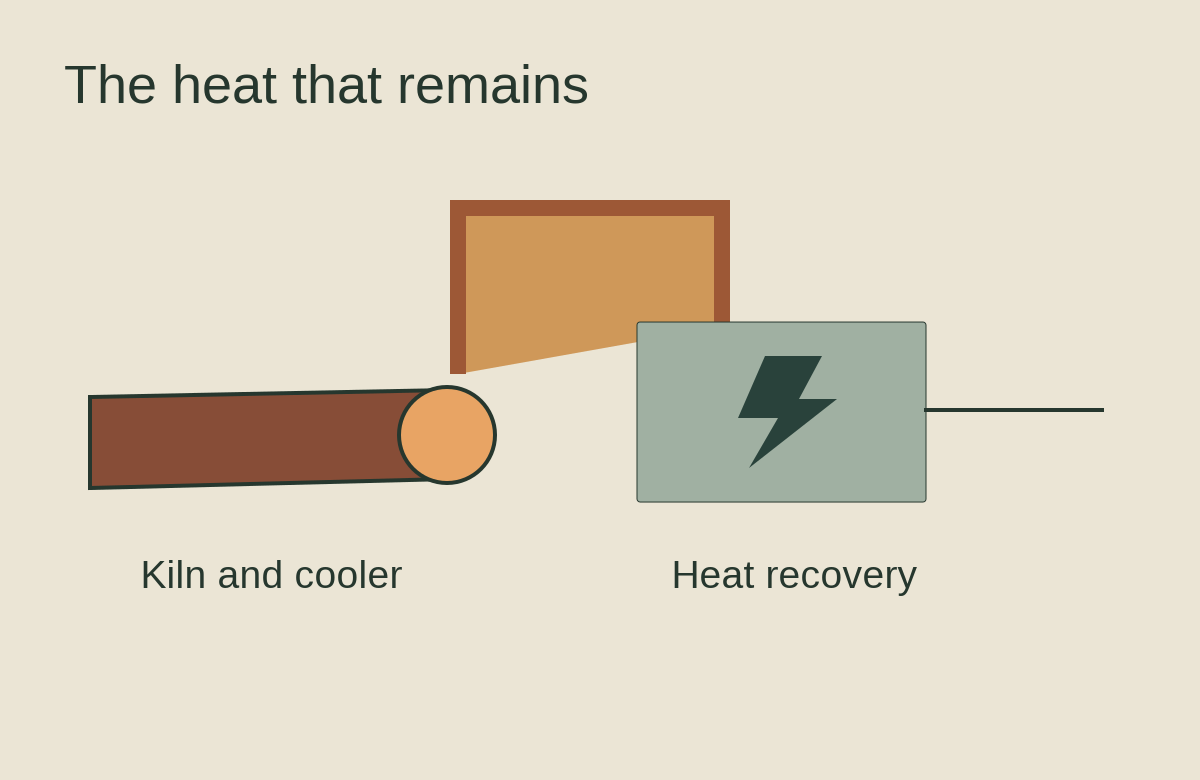
According to the operator, part of the heat from clinker production now goes into a system that converts it into electricity. The plant uses that power on site. In the drawing the circuit begins with the hot production process and returns to the works as electricity. [4]

This describes what the equipment does. The operator publishes annual environmental reporting and permit documents for figures on production and emissions. Heat recovery belongs to a later part of the story than the factory shown in the 1938 photograph. [1] [4]
An outlet from the heated process leads to an electricity-generating block.
Explanatory drawing based on the operator’s description. Part of the process heat is converted to electricity used on site. (Source)

Sources

The photograph places the works among the hills of Fieni. The kiln used rotation and slope to carry material toward the flame. The annual output records show what left the works. Each view reveals a different part of the work.

  1. Enciclopedia României, vol. III, 1938, p. 891Plant panorama, digitised and marked public domain on Wikimedia Commons.
  2. Fieni. 100 Years of CementA company history published in 2014. Captions and descriptions on pp. 20–23 and 28–35 identify the first kiln and expansion.
  3. Romanian Academy, History of Romanian Technology and Industry, vol. IP. 444 describes the site and the reinforced-concrete factory buildings.
  4. Heidelberg Materials, Fieni cement worksThe operator describes current heat recovery and publishes environmental documents.