Spring 1956
Spring 1956
Four equal plots, three places
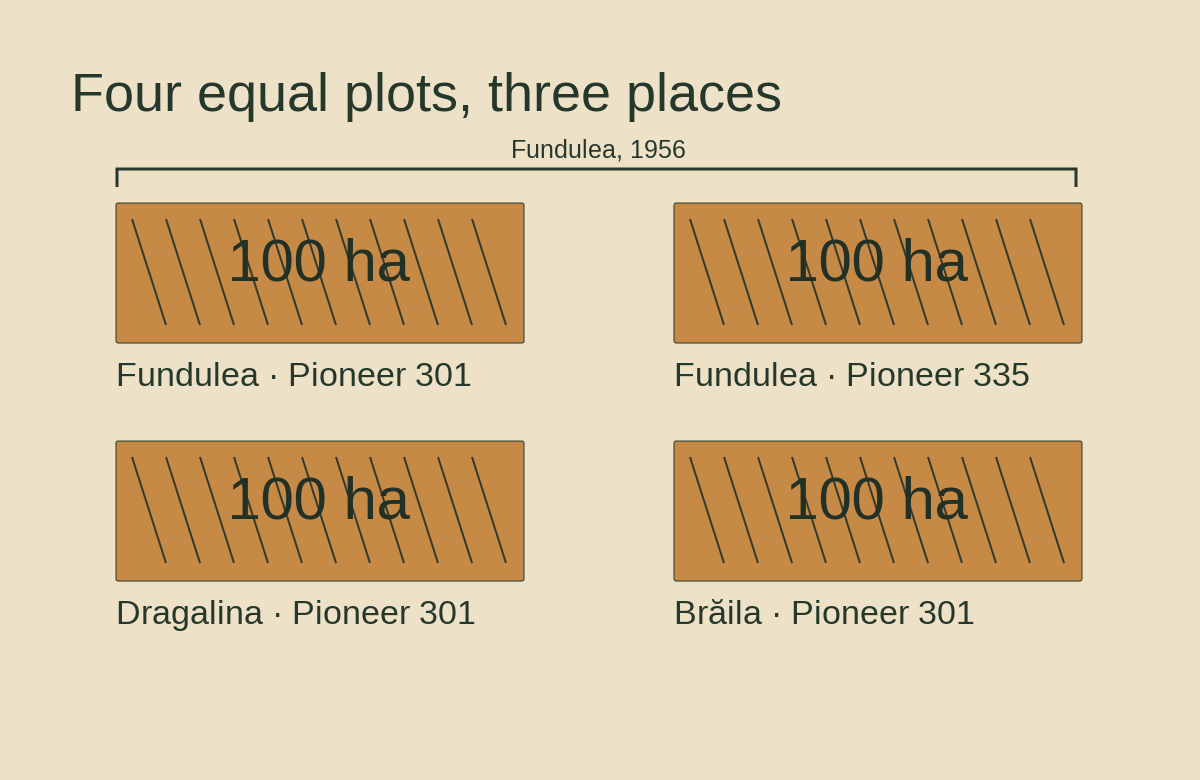
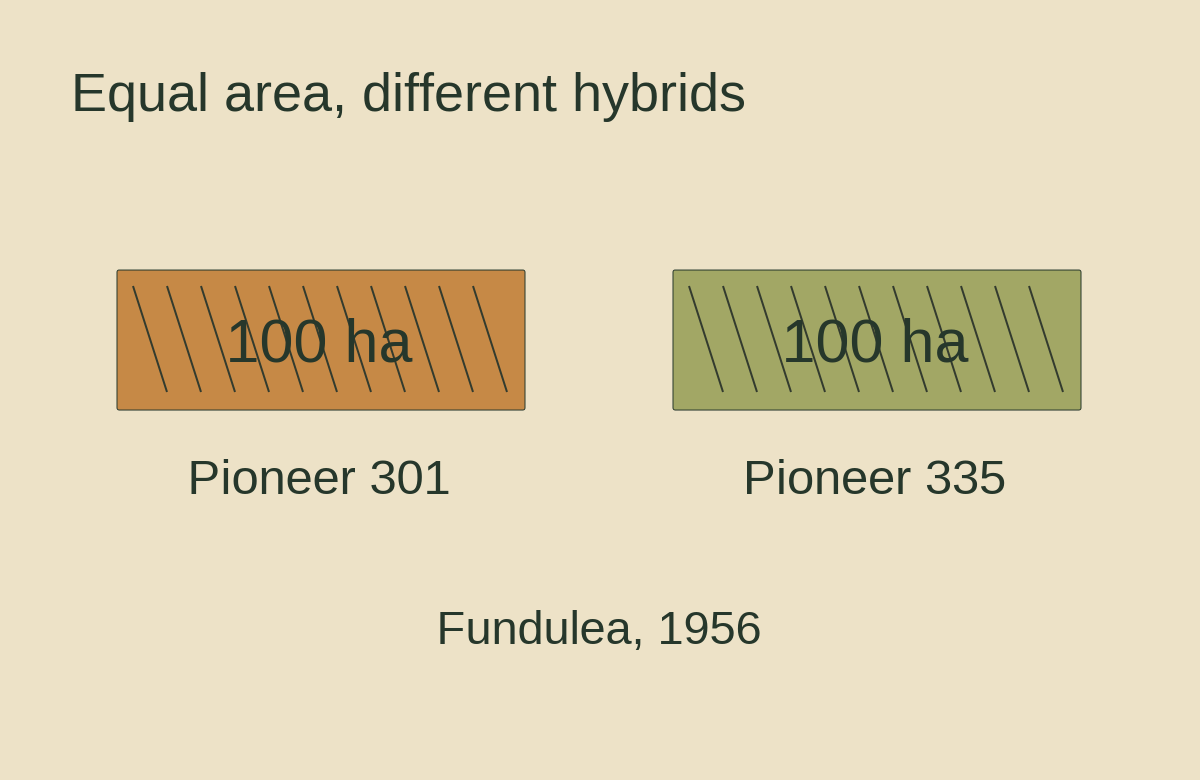
At Fundulea in 1956, a commission set aside two equal areas for two kinds of maize. It planted Pioneer 301 on 100 hectares and Pioneer 335 on another 100. Two further plots, at Dragalina and Brăila, received Pioneer 301. [1]
Each block in the diagram represents 100 hectares. Pioneer 301 was tried in three places. The other hybrid is recorded at one. The account by the institute records how the commission allocated the plots. [1]
A shipment from Iowa
How the seeds reached Fundulea
The American producer Roswell Garst was invited to Romania in spring 1956. His son brought equipment and 1,000 kilograms of maize seed, according to the institute’s account. Engineers Tiberiu Mureșan and Alexandru Butică were put in charge of the fieldwork. [1]
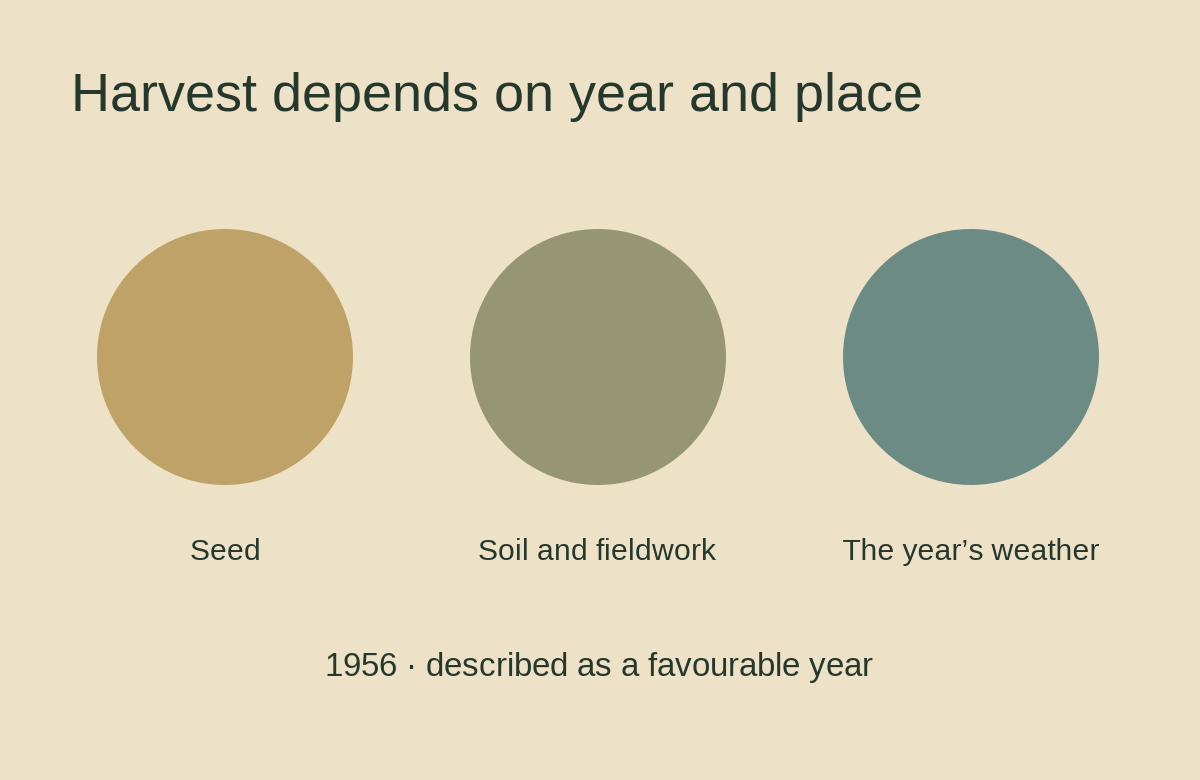
The institute describes 1956 as an unusually favourable year. Its account gives no yield for each individual plot. It shows why the results encouraged further research while leaving open how much the hybrids and the weather each contributed. [1]
Founding decision
The decision names the commune
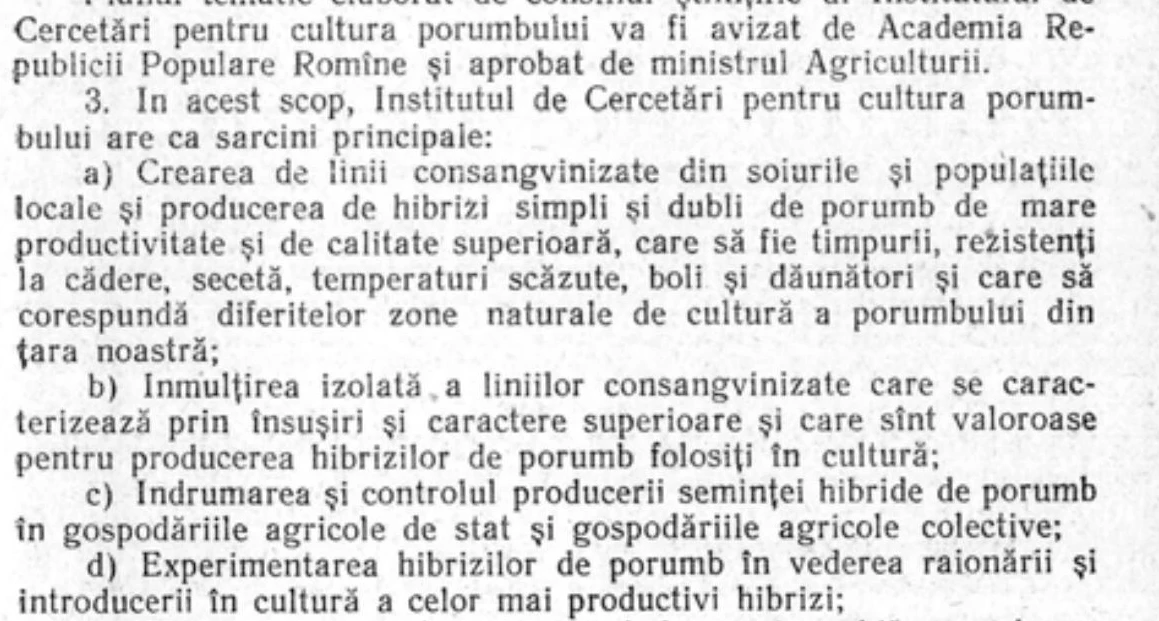
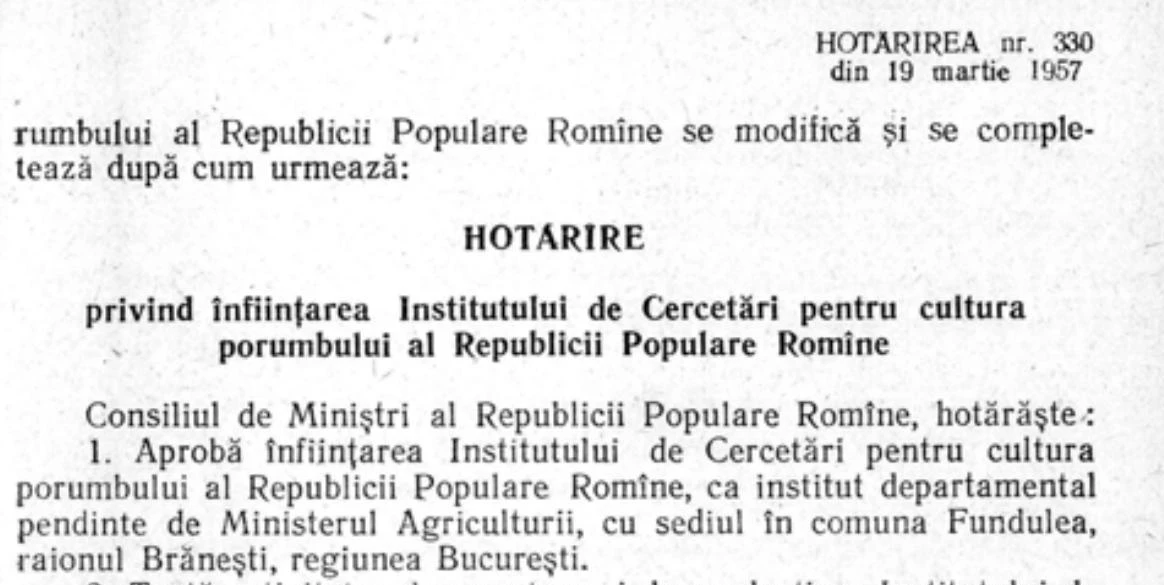
The Council of Ministers adopted a decision establishing the institute in December 1956. Decision no. 330 of 19 March 1957 amended it, specifying Fundulea as the seat and placing it under the Ministry of Agriculture. [2]
Look at the first numbered paragraph. Below it, the tasks include developing hybrids, testing them in different growing regions and supervising seed production. Each involved years of work after the 1956 planting. [2] [1]
1957–1961
From a few plots to five years of testing
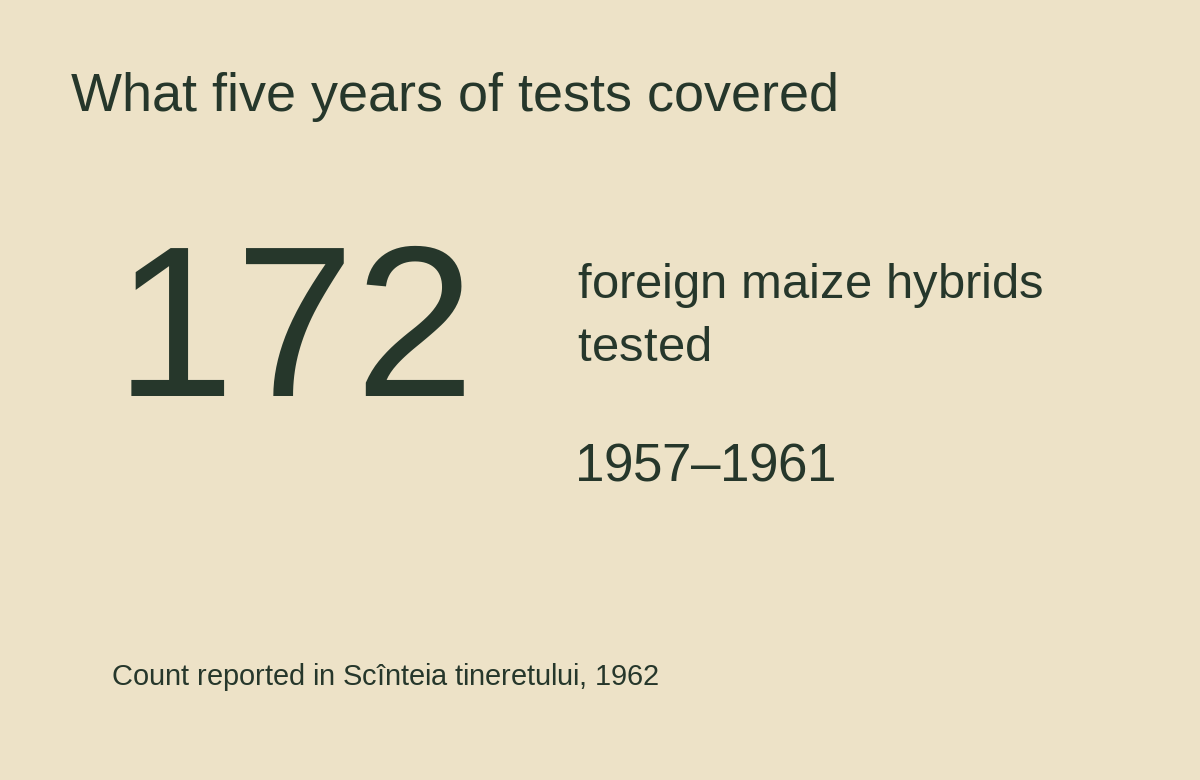
In 1962 Scînteia tineretului reported that researchers had tried 172 foreign maize hybrids during the five years from 1957 through 1961. The count refers to hybrids tested. It gives neither the number of fields nor the number approved for production. [4]
The paper and the institute say the aim was to see which plants performed under local conditions. A trial could rule something out, identify a candidate or show the conditions in which it did well. [4] [1]
The Romanian programme
What it meant to develop a hybrid here
Researchers crossed selected maize parent lines and tested the resulting plants. The decision called for hybrids suited to different growing regions. Alongside yield it names early ripening and resistance to drought, cold, disease and lodging. [2]
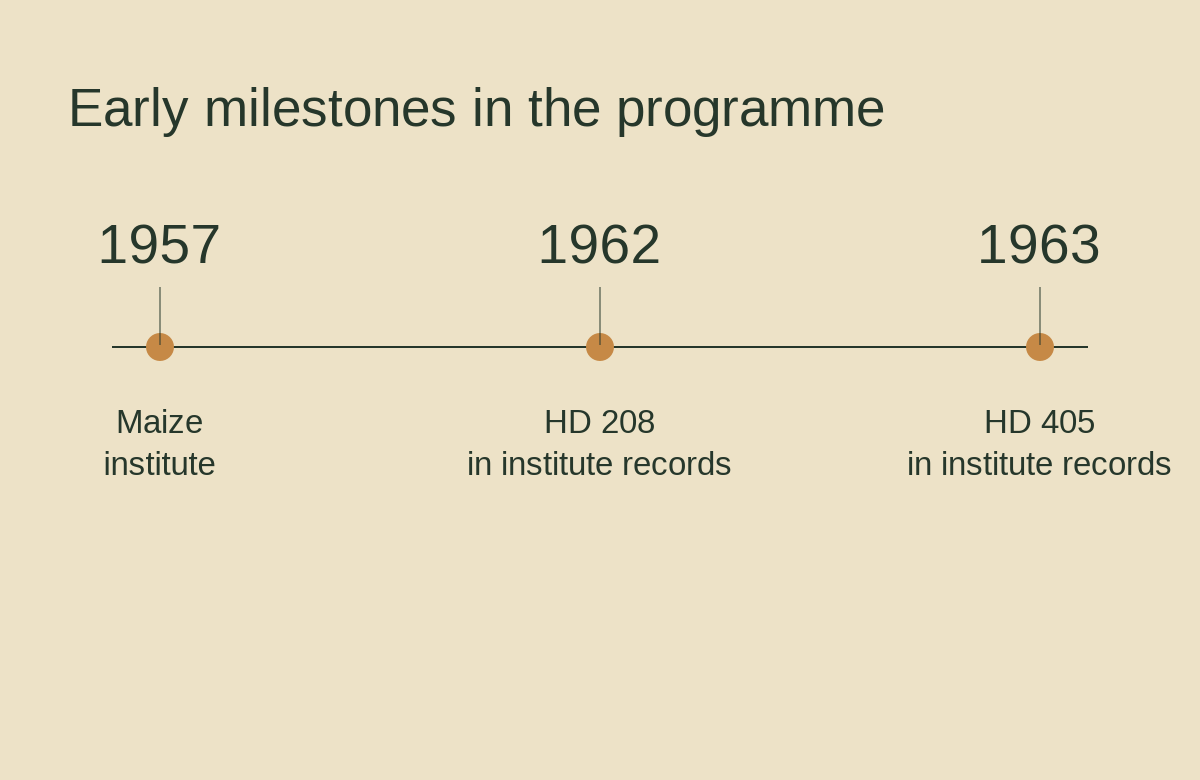
In the institute’s retrospective list, HD 208 appears in 1962 and HD 405 in 1963. These dates belong to Romania’s own programme. The codes let you track those hybrids apart from the Pioneer names of 1956. [3] [1]
What the records tell us
Back to the four plots
The 1956 plan records what went into the soil. The published decision of 1957 sets out what the institute was to do. The list tracks some later results. Together the documents connect one field trial to a much longer programme. [1] [2] [3]
Comparing yield plot by plot would require harvest amounts, growing conditions and measurements from each place. The records here support a comparison of the areas and allocation of the hybrids. The exact yields of the four plots remain a separate question. [1]