Orientation sheet
Orientation sheet
Two villages and a station on the Brăila plain
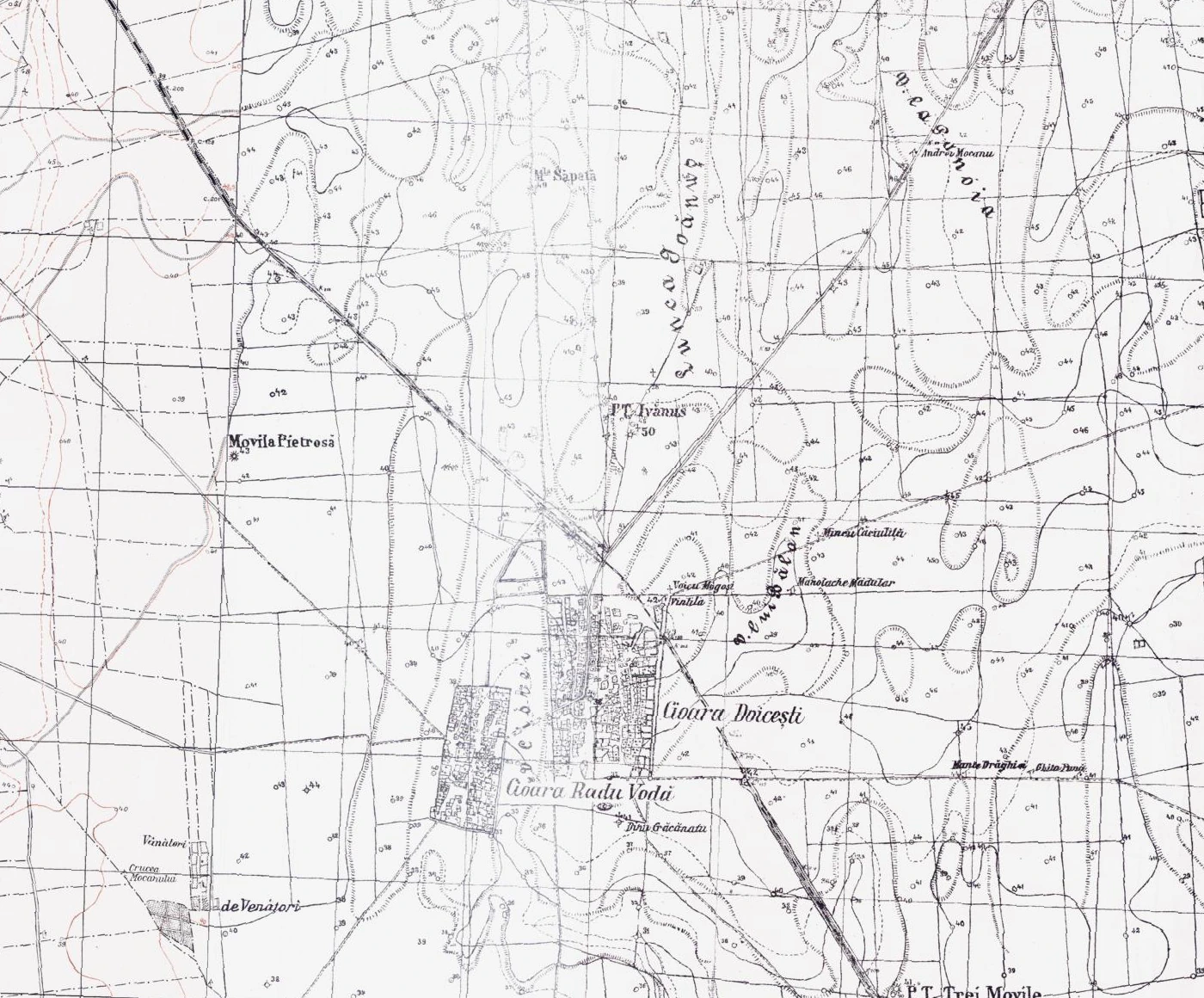
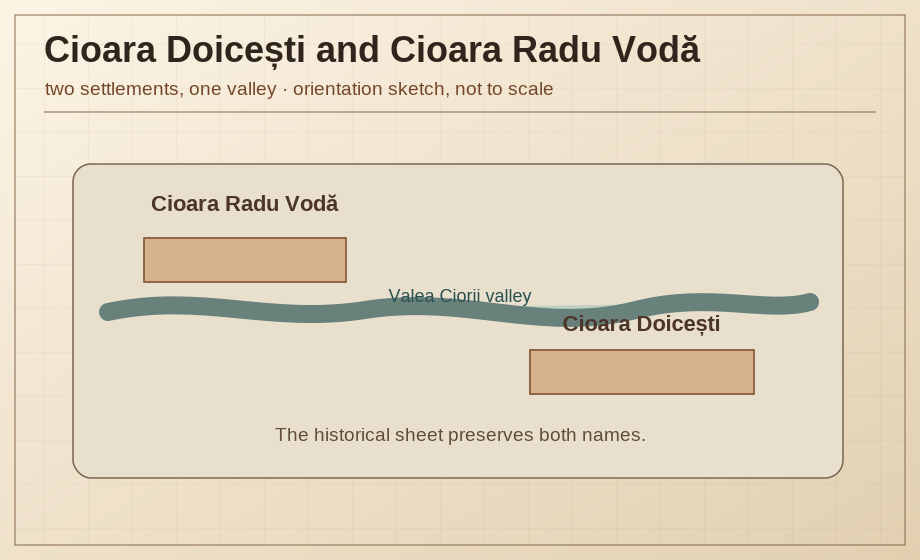
Around Spicu station, a military topographic sheet preserves two similar labels: Cioara Doicești and Cioara Radu Vodă. The settlements lay on opposite sides of the Cioara valley. The map records terrain and roads; its date is absent from this extract, so it cannot be read as a view of the 1886 opening. [1]
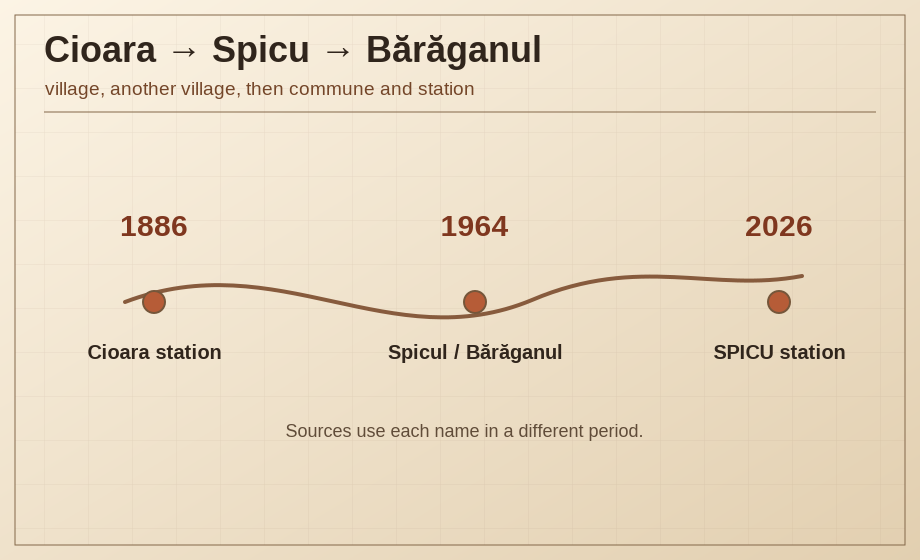
The map marker locates today’s Spicu station in Bărăganul commune. It is the present-day reference point for a story of changing names: sources describe a Cioara station on the Făurei–Fetești line, followed by a station associated with the name Spicu. [7] [2]
The settlements
Two nearby villages with similar names
In 1894, the geographical dictionary of Brăila County described Cioara Doicești as a distinct settlement. A local study says the village may have formed around 1836, with people arriving from Cioara Radu Vodă, and that it was first called Cioara Mică. These are accounts of its formation and local tradition, not coordinates for each village centre. [3] [2]
On the military sheet, the two names appear close together, separated by the Cioara valley. The map shows why a bare reference to “Cioara” in a document can be ambiguous: two nearby villages used the name. Without more clues in a record, we cannot automatically assign a mention to one of them. [1] [3]
Station and construction site
What stood near the station in 1894
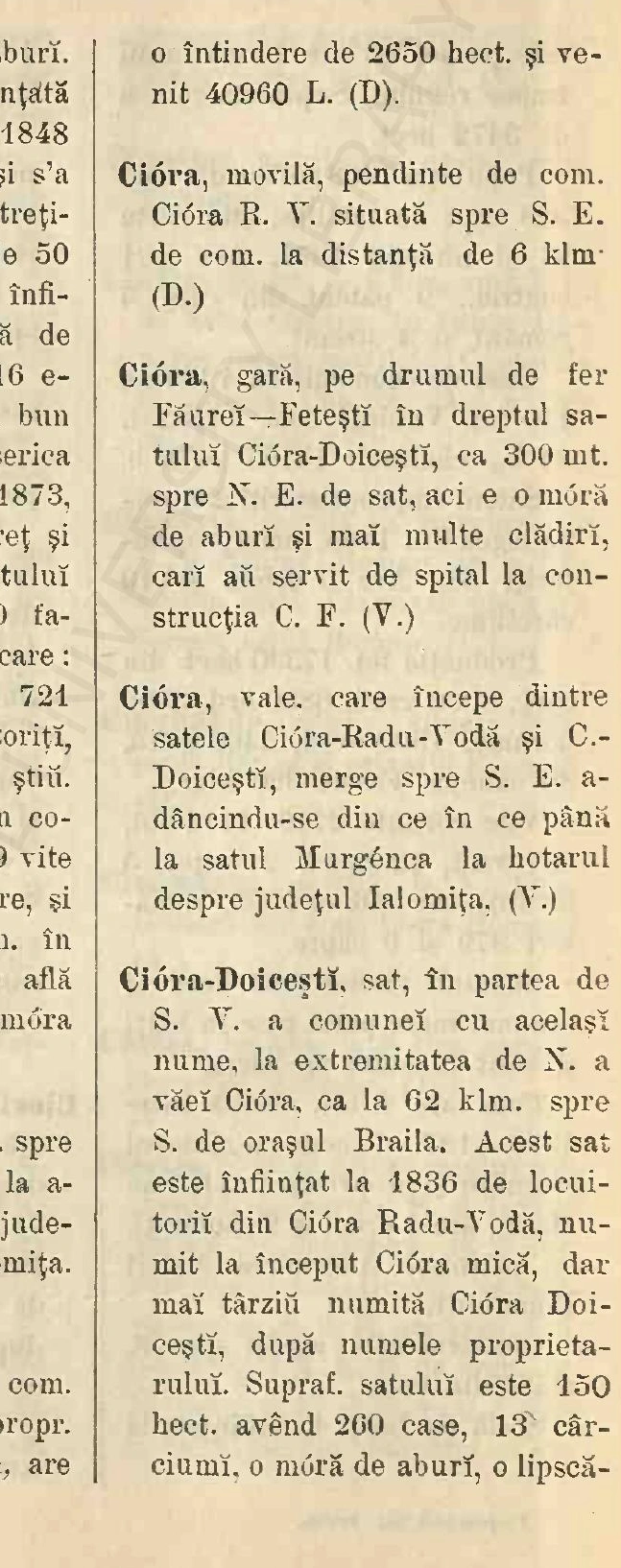
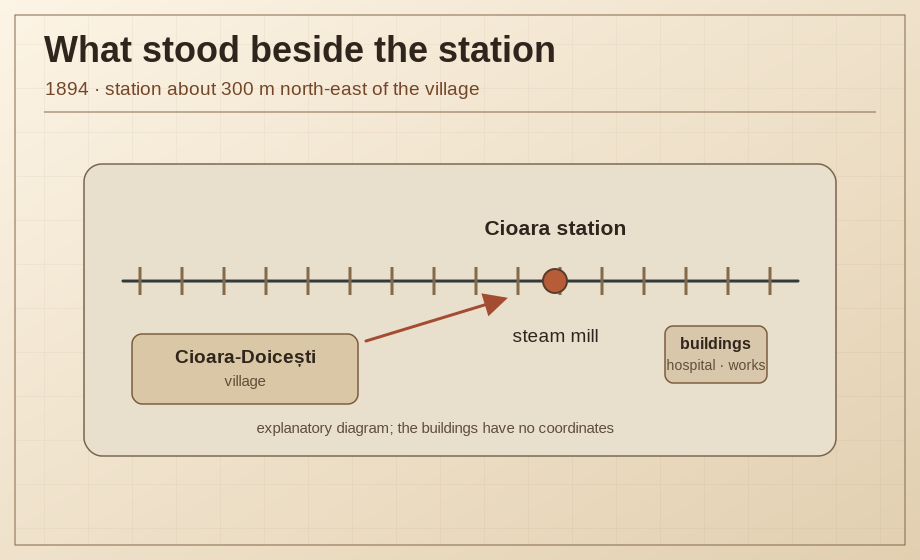
The local study records service at Cioara station beginning on 21 November 1886, on the Făurei–Fetești line. In 1894, the geographical dictionary placed the station about 300 metres north-east of Cioara-Doicești. The same entry mentions a nearby steam mill and buildings used as a hospital during construction. [2] [3]
The page does not date the buildings or say whether they were still used as a hospital in 1894. It links the station to construction-site facilities and specifies their temporary hospital use during construction. In 1957, a newspaper again mentions Cioara station in a complaint about station staff. The diagram separates the reported distance to the village from the buildings’ unknown positions. [3] [4]
The station in everyday life
A disputed fine reaches the newspaper
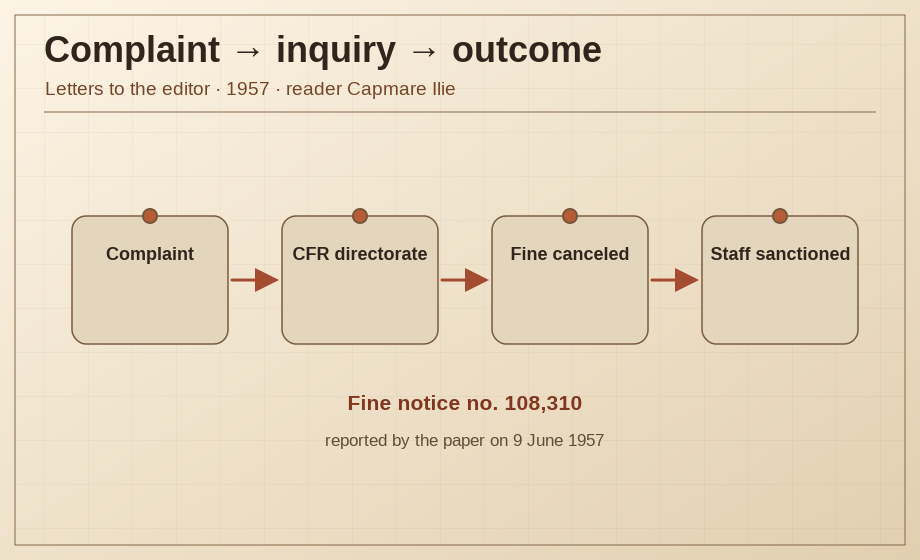
In its 9 June 1957 issue, the newspaper’s “Letters to the editor” column published a reply to Capmare Ilie’s complaint about staff at Cioara station. The movement and commercial directorate of the CFR department had investigated the case on the Făurei–Fetești line. [4]
The paper reported that fine notice no. 108,310 was canceled after the inquiry found it unfounded, and that station employees were sanctioned. The page captures one specific incident through the institution’s reply; it does not tell us how often such problems occurred or what the station building looked like. [4]
The locality’s names
In 1964, three names change
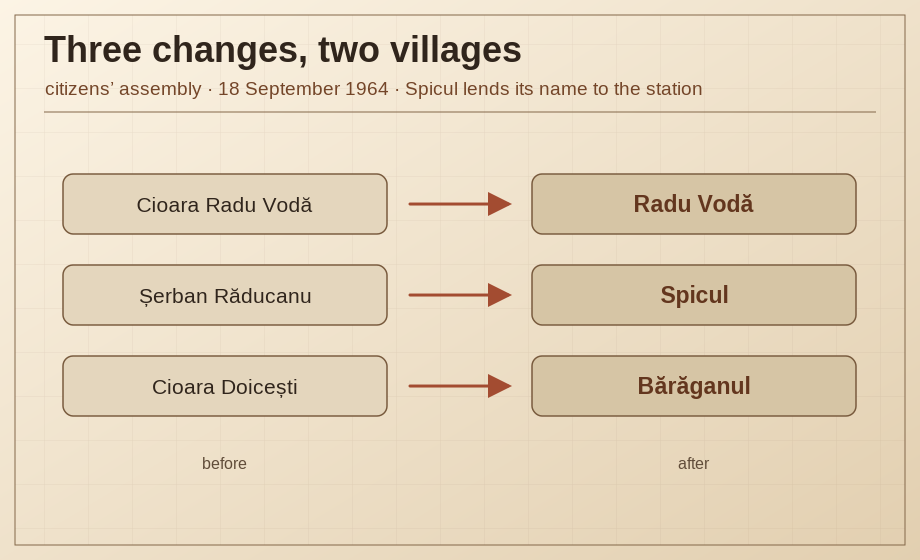
The local study records a citizens’ assembly on 18 September 1964 and proposals for three changes: Cioara Doicești to Bărăganul, Cioara Radu Vodă to Radu-Vodă, and Șerban Răducanu to Spicul. Decree no. 799, published in December, sets the changes to take effect on 1 January 1965. Munteanu links the name Spicul to the railway station as well. [5] [2]
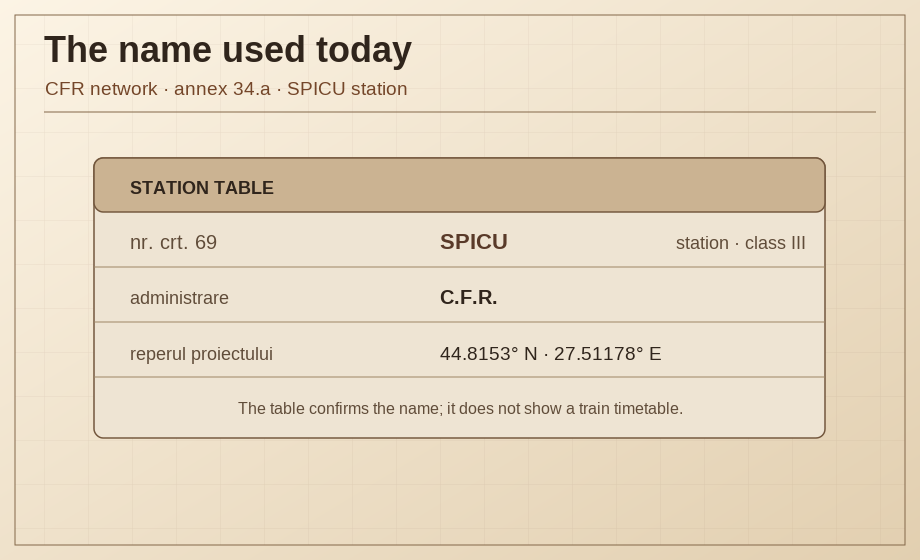
Comparing the decree with CFR’s network register shows the name transfer: the act renames the village Spicul; the station table records the stop as SPICU. The toponymy study links the two forms, and the table confirms the name used in the railway network. [5] [2] [6]
What the current register shows
SPICU remains the name in CFR’s network
In CFR’s Network Statement station table, SPICU appears as entry 69, a class III station administered by the company. This technical register confirms the name used by the infrastructure authority. It does not give a train timetable, the condition of the building or how many people use the stop. [6]
The marker shows the present-day station in Bărăganul commune. The military sheet locates the two historic villages without identifying individual buildings. Read together, the sheet, the 1957 newspaper and CFR’s register trace three moments: two nearby villages, an operating Cioara station and the SPICU name in the network. [7] [1] [4] [6]