The spring
The spring
Water rose through the rock in the middle of the hill
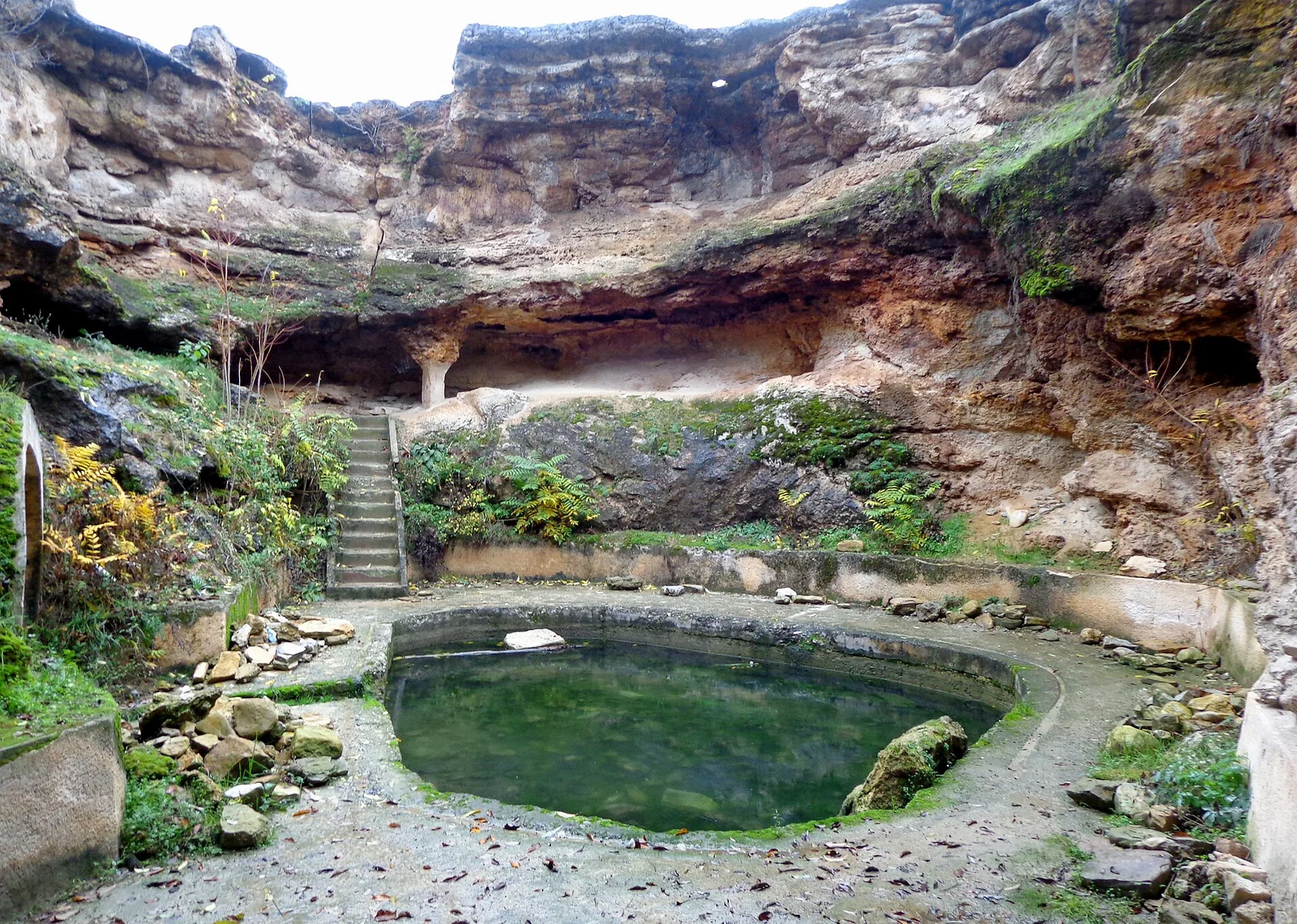
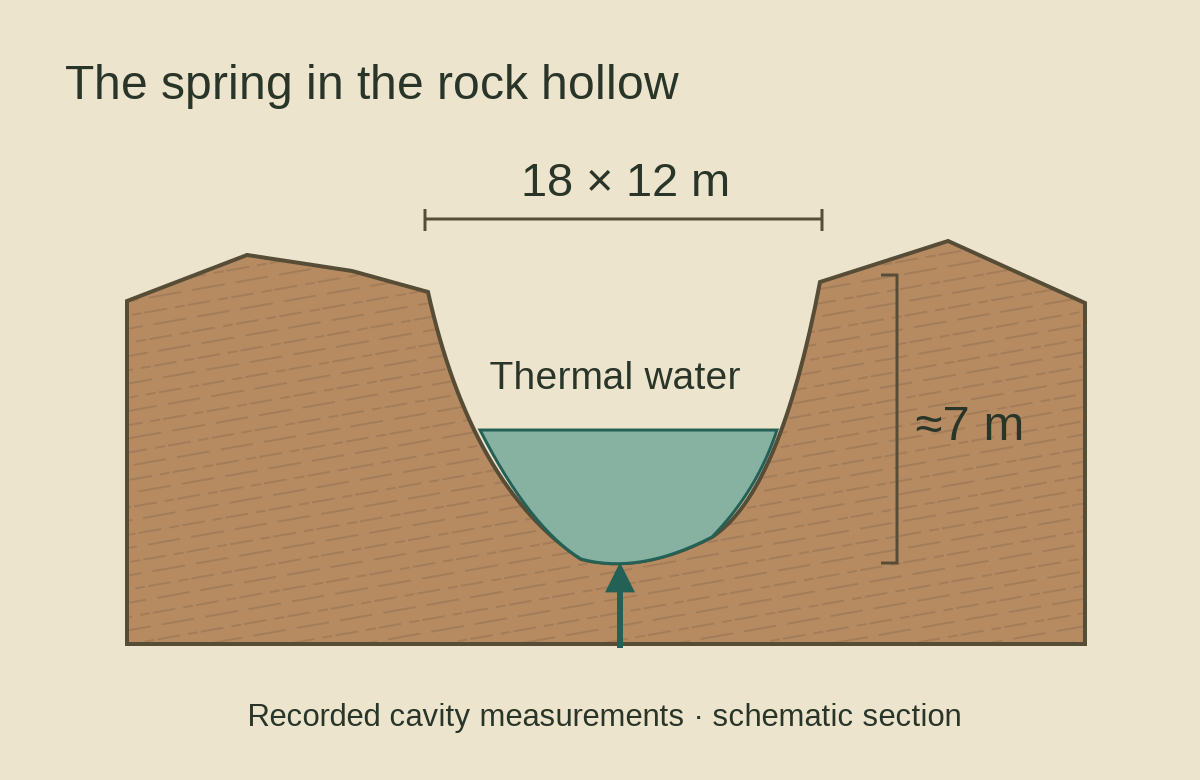
Rock walls enclose a funnel-shaped hollow in the centre of Geoagiu-Băi. The excavation report gives its opening as 18 by 12 metres, with a maximum depth of about seven metres. In Roman times it was full of thermal water. The smooth edge visible in the 2013 photograph belongs to a pool built in modern times. [1] [2] [6]
Germisara also included a fort at Cigmău, about five kilometres south, and a civilian settlement. Stamped tiles and inscriptions found at the baths point to a military presence. The bath site is now known as Dâmbul Romanilor. [1] [5]
The water’s route
When the water level fell, the Romans cut into the rock
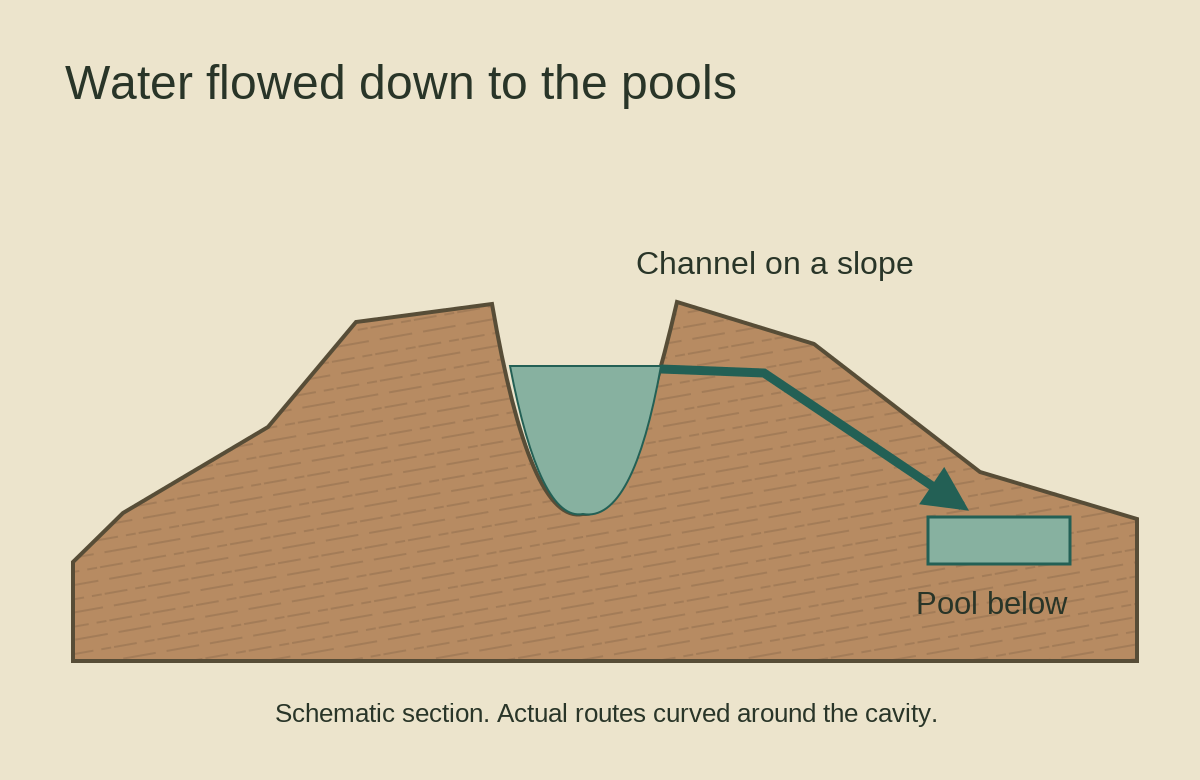
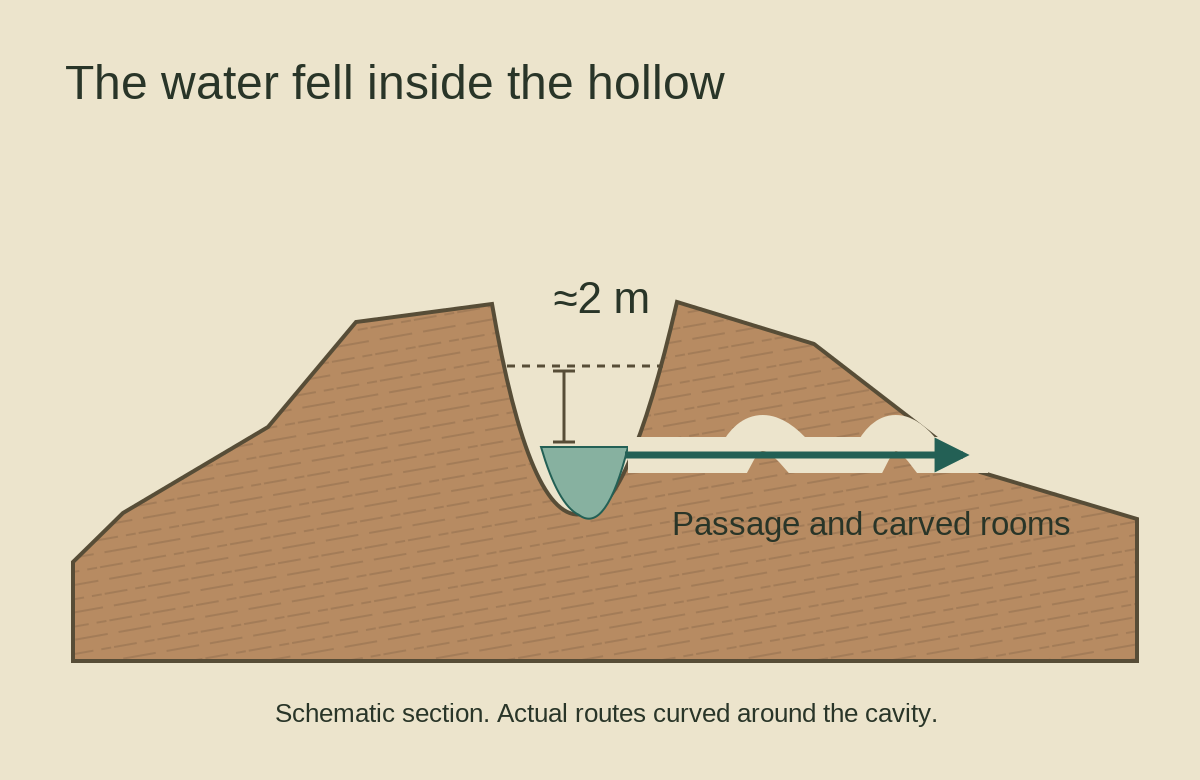
At first, channels took the water to pools at the bottom of the hill. Some channels were cut into the rock. Where that was impractical, the builders completed the route with tiles and mortar or wooden troughs. Gravity carried the water downhill. [1]
Later the water in the hollow settled about two metres below its former level, according to the excavation report. The pools at the foot of the hill lost their supply. A passage was dug and rooms were cut lower into the rock. Switch views to follow the water through both phases. [1]

A bathing room
Two benches remain in the carved rock
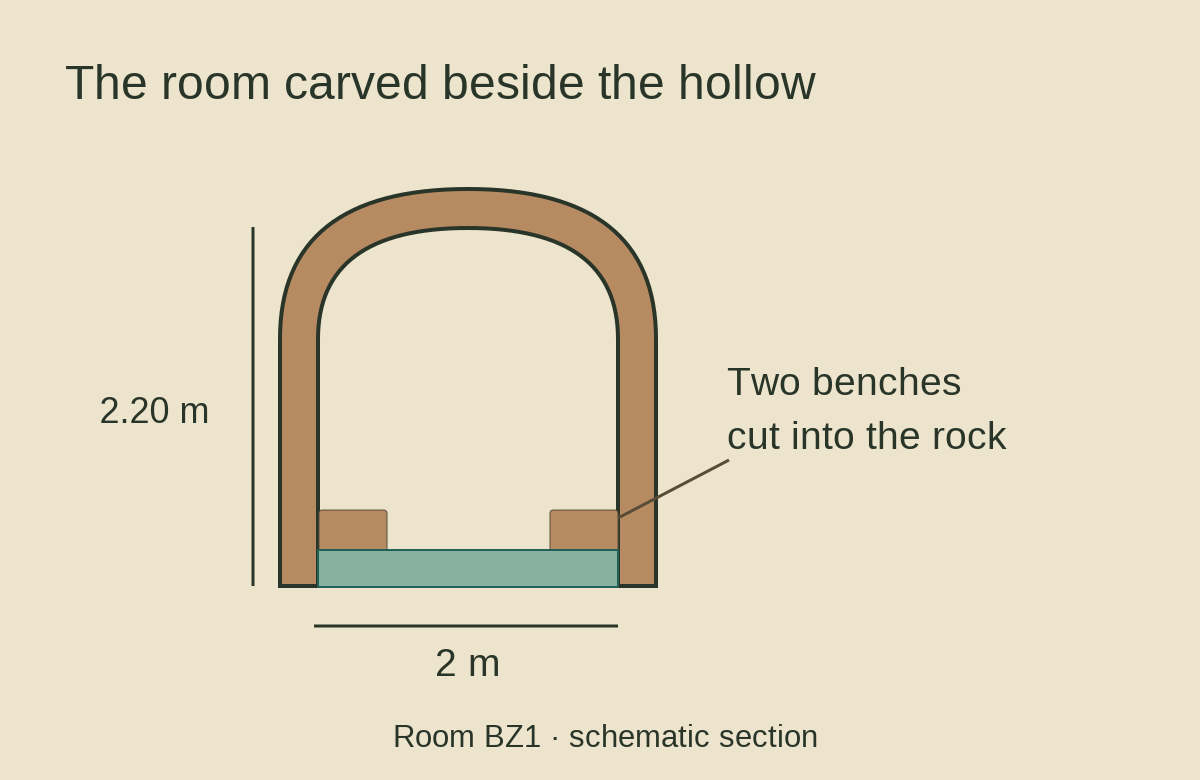
The first vaulted room, BZ1 in the report, measured about two metres each way and 2.20 metres to the crown of the vault. Benches were cut into the rock on either side. Water entered through an opening from the hollow and continued towards other pools. Modern works altered the opening. [1]
In the next chamber, archaeologists observed a waterline on the walls. They suggested the regulated level might have reached the neck of a seated bather. The report also offers two explanations for the use of an overflow channel leading to an outside pool. Some of the work can still be seen; the exact sequence remains open. [1]
The offerings
Coins and gold came out of the hollow
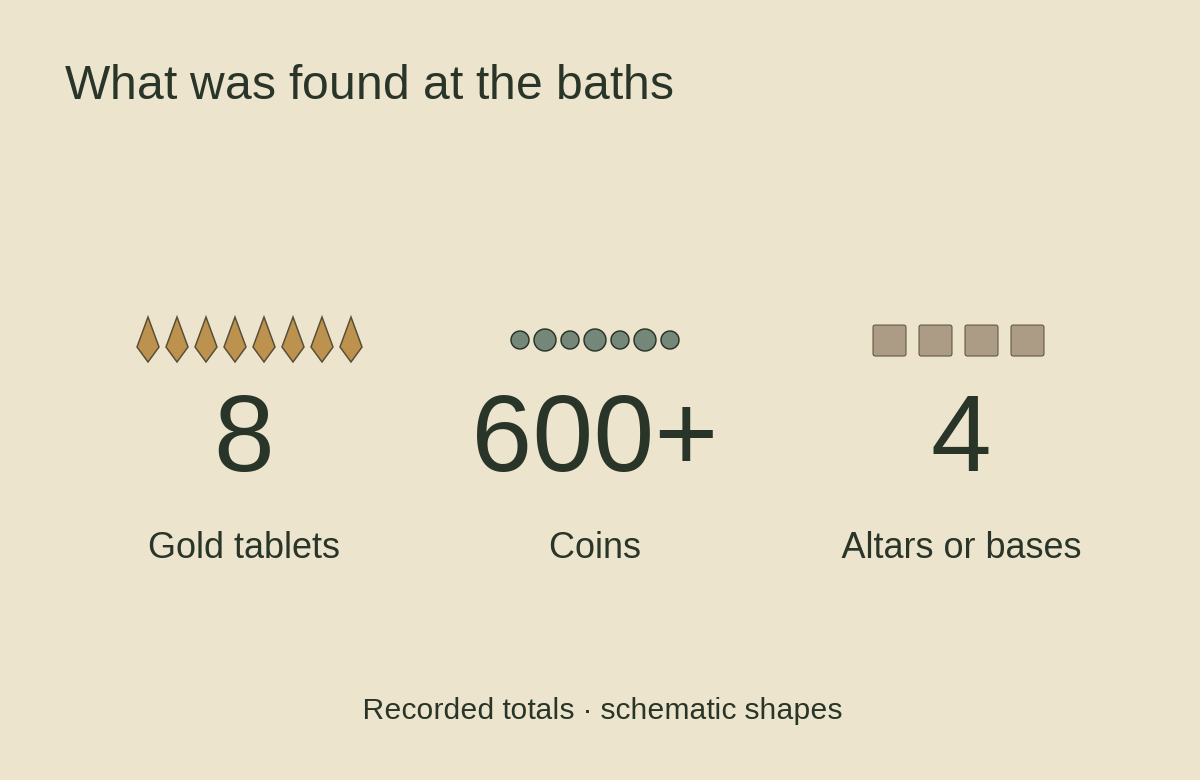
The rescue excavations found more than 600 silver and bronze coins deposited as offerings. The report also describes a marble statue of Diana, gold tablets and altars thought to have stood around the water before falling in. The Madrid exhibition catalogue shows the statue and three tablets. [1] [3] [4]
The drawing counts different kinds of objects. Eight tablets from the site are known. The Deva museum says its collection holds seven. The four stone objects are described as altars or statue bases. [3] [4]
Two names
The gold preserves the names of people who came to the spring
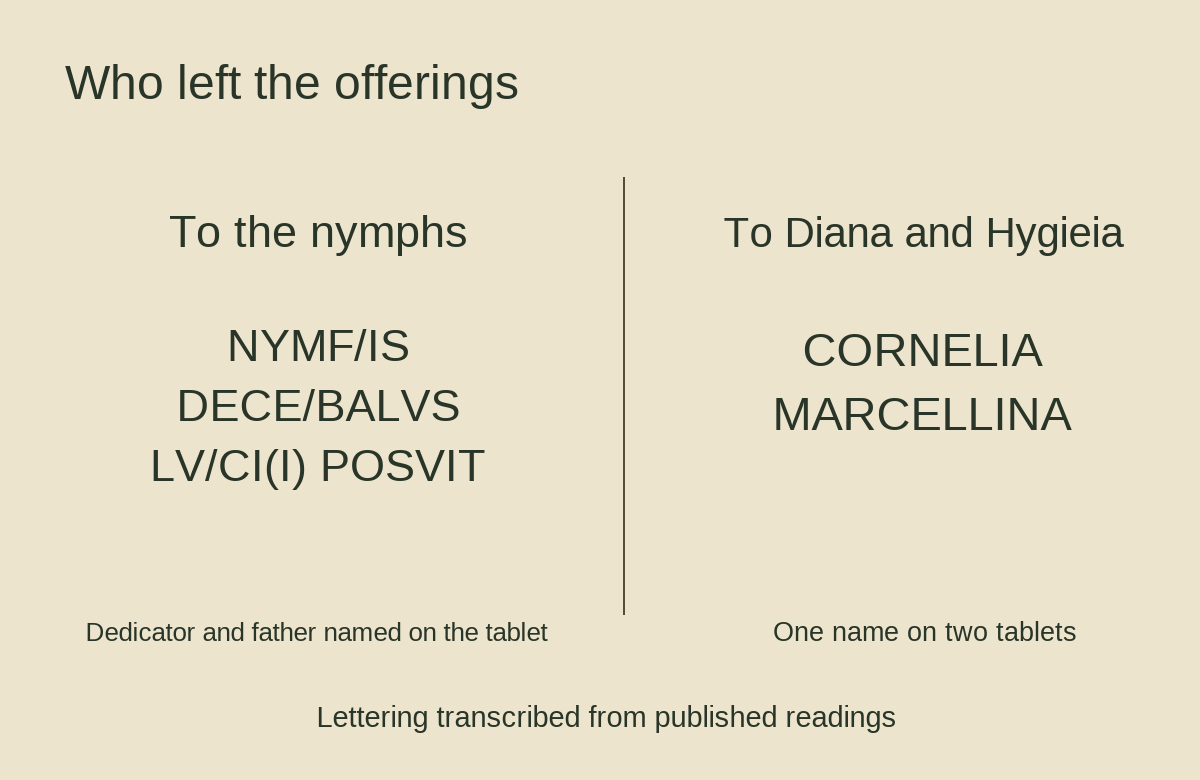
Cornelia Marcellina gave two tablets, one to Diana and the other to Hygieia, the goddess of health. Her name was scratched into the gold after the piece was made. The image had been raised by beating the thin gold sheet against a mould. The incised letters record who gave it. [2] [4]
On another tablet are the nymphs and Decebalus, son of Lucius. The inscription is in Latin and gives Decebalus a Dacian name alongside his father’s Roman name. It records one person who left an offering. The catalogue shows the goddesses and gives the inscriptions. [4] [2]
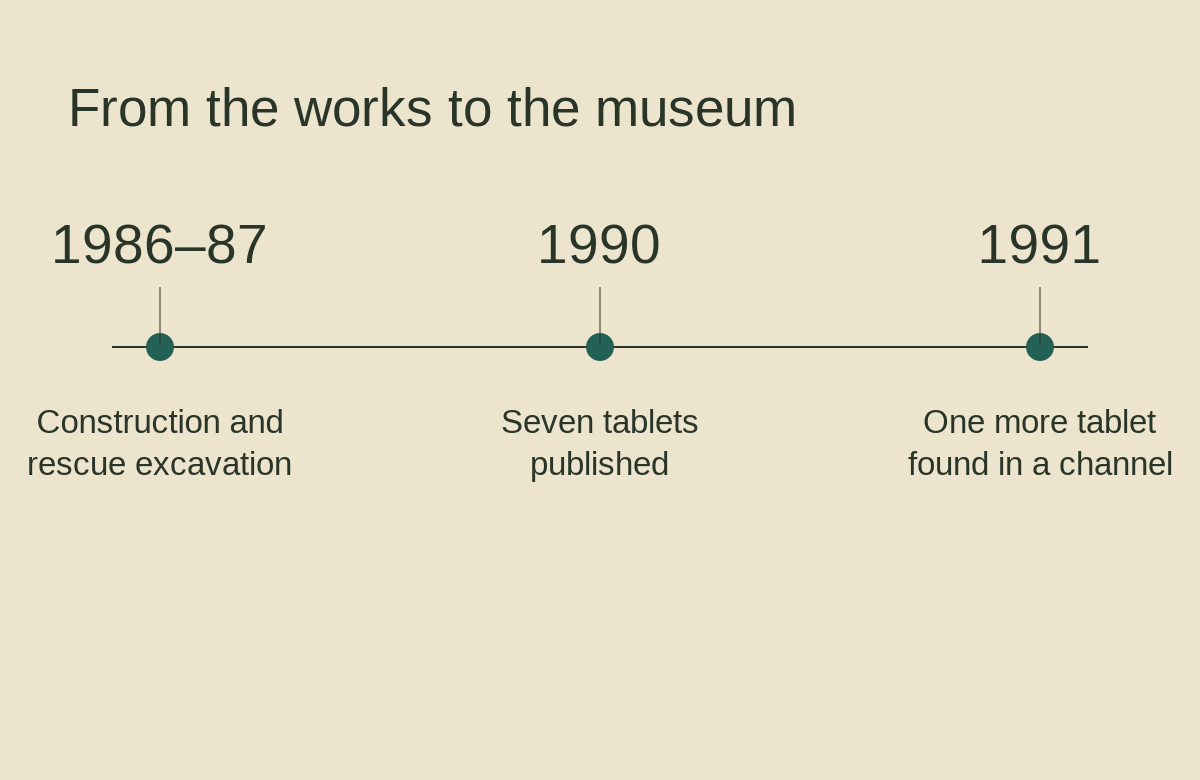
1986–1991
Building work in the resort brought the offerings to light
Rescue archaeology began in 1986, according to the museum. Piso and Rusu describe workers deepening the hollow in 1987 in search of the spring. Tablets and coins came out during the works. The museum took the pieces into its care and excavations continued. [3] [2]
Seven tablets were published in 1990. The excavation report records an eighth found along a channel in 1991. The earlier publication and the later report preserve different stages of the discovery. [2] [1]