Starting point
Starting point
The Danube needed maintenance
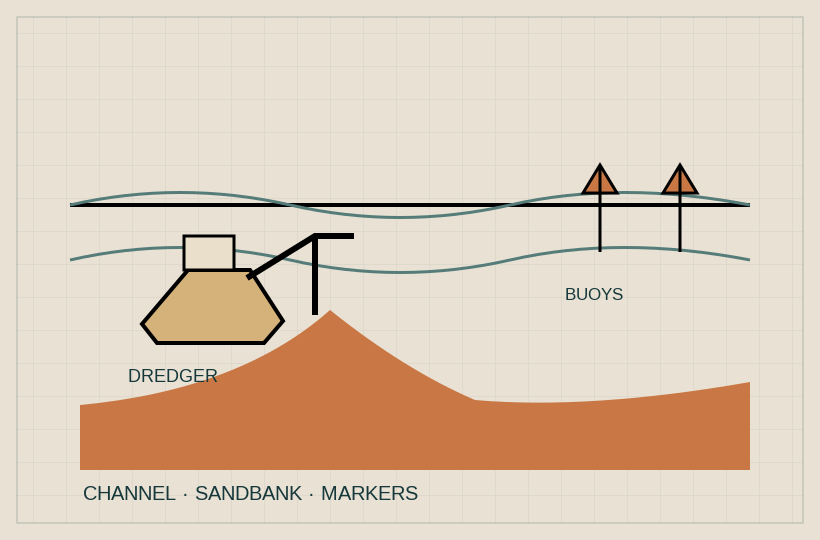
Founded in 1874, the Hydraulic Service dredged sandbanks, maintained the navigable channel and installed lit buoys for night travel. A Danube port depended on this quiet work: vessels needed enough depth and a marked route. [1]
The Service’s vessels and technical equipment also needed repairs. The shipyard belonged to a wider system of work: channel, buoys, harbour basin and the vessels that maintained them. [1]
1897
A floating workshop at kilometre 490
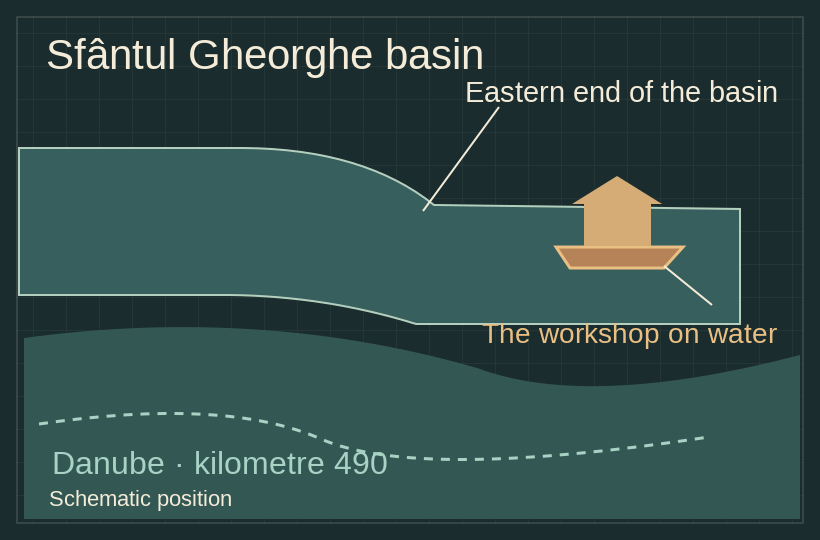
In 1897 the Hydraulic Service installed a floating workshop at the eastern end of the Saint George basin, opposite the city’s former gates. The study places it at kilometre 490 of the Danube and says it served all the Service’s vessels and technical equipment. [1]
The workshop had been bought from a Dutch company, though another source says English. The study identifies 1897 as the beginning of the modern shipyard. Giurgiu had an earlier boatbuilding history, followed by a gap in the surviving evidence after 1835. [1]
1899
Tools move into brick buildings
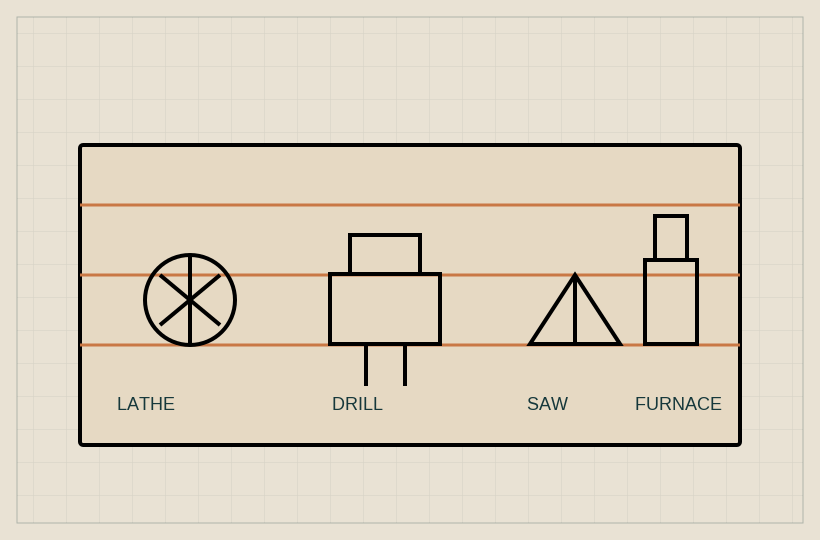
Two years later, the harbour fleet had grown and the makeshift workshop could no longer keep up. In 1899, brick buildings were added to the Hydraulic Service yard, behind City Hall, on the Saint George Channel platform. The old equipment moved off the floating workshop, joined by lathes, drills, a circular saw and two furnaces for bronze and cast iron. [1]
The story now shifts from access to the river to workshop capacity. A lathe could shape parts, a drill opened mounting holes, and the furnaces supplied molten metal for repairs and components. The study treats this as the first fixed workshop. Separately, the official historic-monuments list dates the old naval workshops on Portului Road to 1910. [1] [2]
1948
After the war, Giurgiu repaired more than it built
In 1948, Giurgiu was one of four Romanian yards specialising in ship repairs. It came under the Ministry of Communications and officially became the Giurgiu Naval Workshops. Buildings were expanded, with new foundry and carpentry sections, yet the work still centred on inspection and repair. [1]
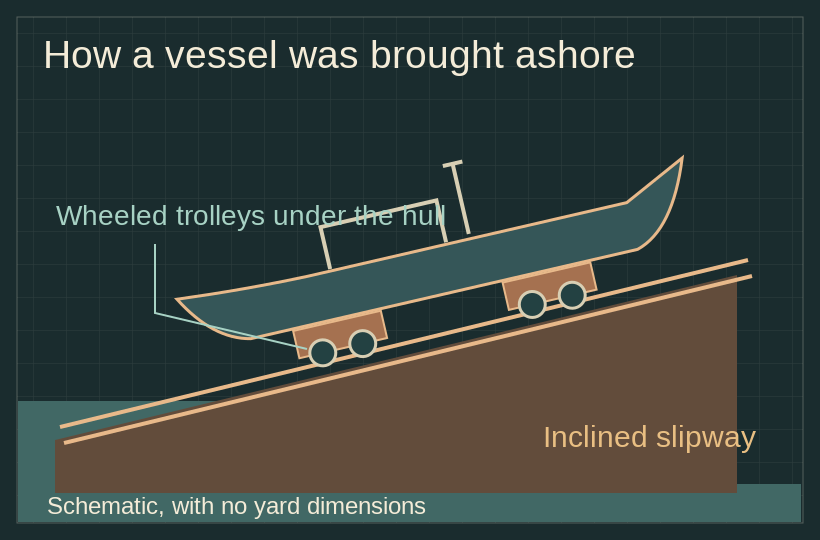
To bring a vessel ashore, the yard had an inclined slipway with wheeled trolleys. The hull rested on the trolleys as they moved up the ramp. That gave workers access to the part of the hull that normally sat in the water. [1]
The operation grew gradually: the study reports 89 employees in 1938 and 156 in 1948. Early investment under the planned economy remained limited. The yard maintained Danube vessels and built pontoons, barges and small craft. This slow pace helps explain why the next leap required new machinery, space and workers. [1]
1968
The yard starts building tugs
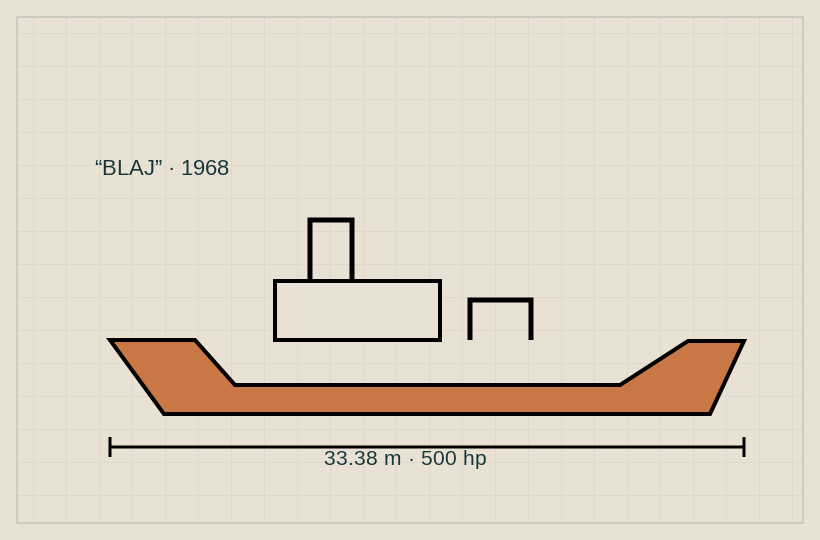
At first, the yard mainly built pontoons and small craft. In 1968 Giurgiu built the river tug “Blaj”, with a 500 hp engine. The study gives it as an example of a tug of that power built at the yard. The workboat was becoming a major product. [1]
A push tug moves a string of barges by pushing from behind. These short, broad vessels carried large loads along the Danube. A yard shaped around repairs now needed a new production line: cutting steel plate, assembling hulls and testing machinery. Later, the Giurgiu fleet included push tugs, dredgers and passenger boats. [1]
1974–1975
From workshop to 28-hectare platform
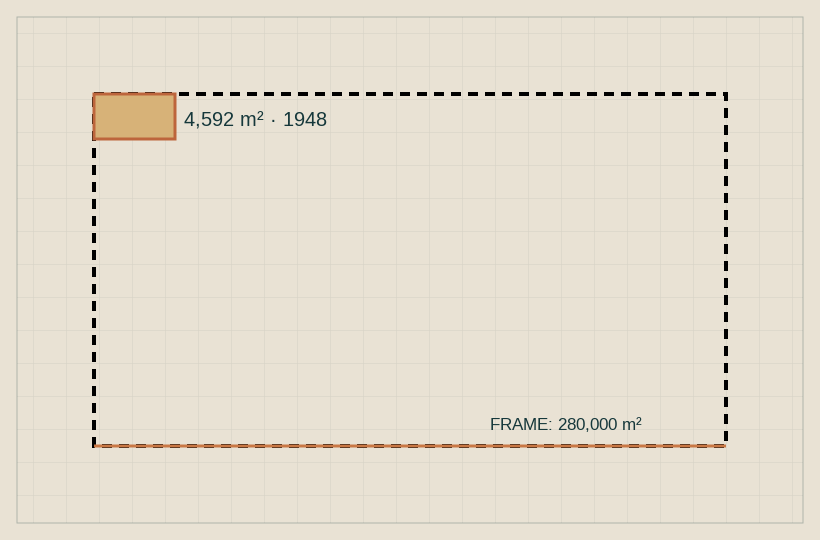
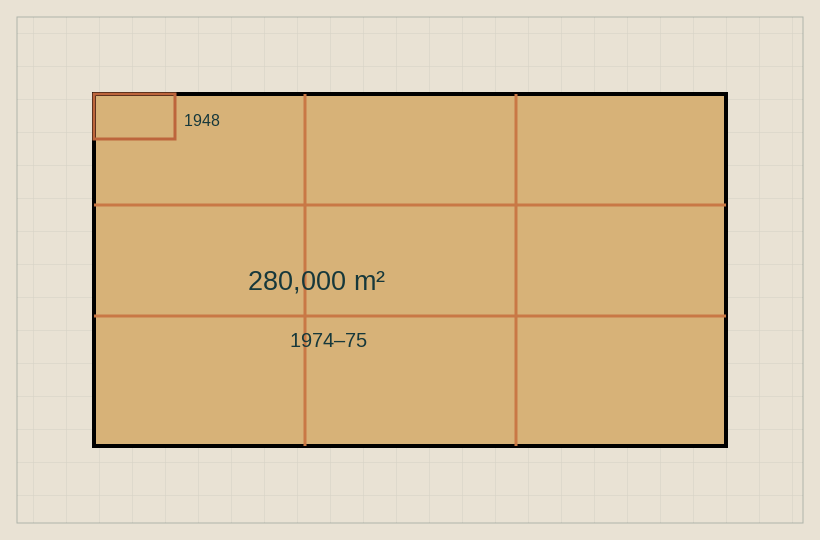
The yard covered 4,592 m² in 1948 and 38,316 m² by 1973. The study reports almost 100,000 m² in 1974, then an expansion to 280,000 m² during 1974–75. These are successive reported stages, and the text does not define every boundary behind each measurement. The area grew by nearly 61 times from 1948 to 1975. [1]
The workforce grew too: from 156 employees in 1948 to nearly 1,700 in 1972. New assembly halls opened and the yard became a major builder of push tugs. [1]
A 21 September 1987 issue of Scînteia tineretului preserves a press photograph and describes push tugs, 1,600-tonne barges, navigation-marker vessels and floating cranes being built. The chief engineer said two contracted barges were expected in January 1988, ahead of an April deadline. That was a newspaper prediction, not proof of delivery. [3]
1990–1997
What happens when orders change
After 1990, the yard continued to build complete vessels and worked with overseas partners. The study lists orders for push tugs, barges, container ships and hulls up to 110 metres long. Giurgiu was delivering vessels to operators in several countries. [1]
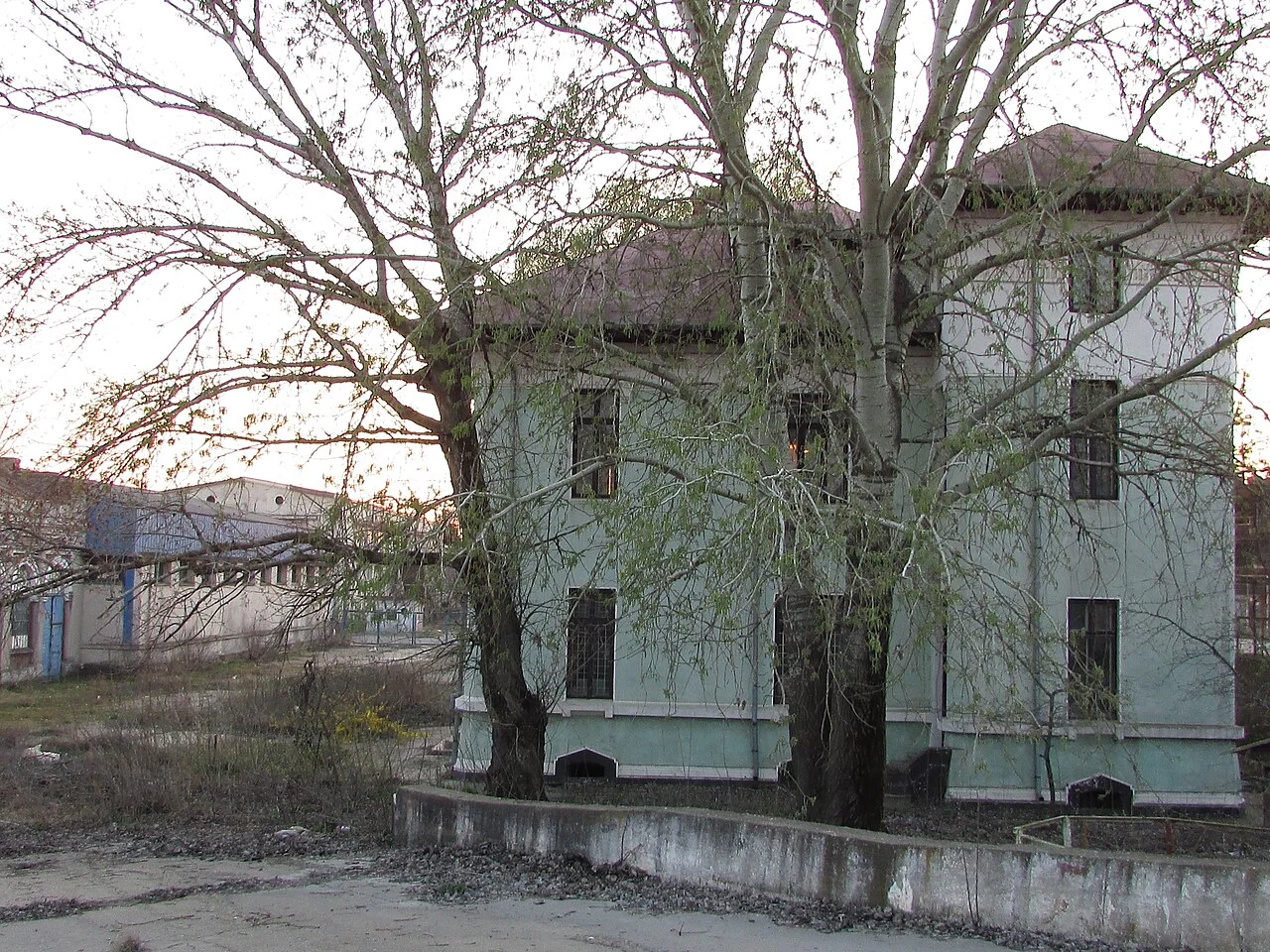
In 1996, the creation of the Giurgiu Free Zone coincided with parts of the yard being divided and sold to investors, who used its halls as warehouses. A 2019 photograph shows the shipyard administration building, listed separately as a 1910 monument. It is one historic building that can still be identified in the harbour; it is not the floating workshop of 1897. [1] [4] [2]