On the map
On the map
The place takes its name from a river mouth
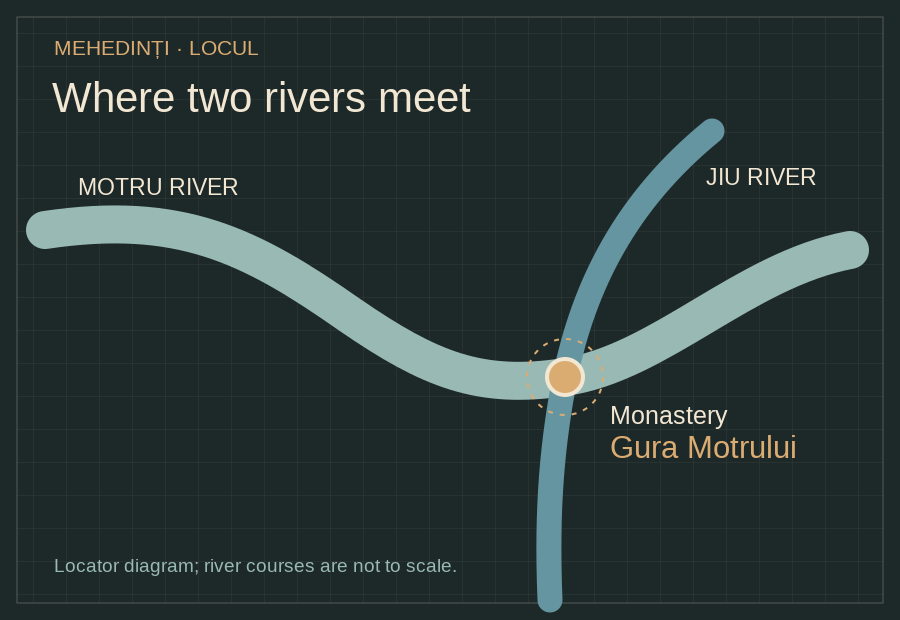
At Gura Motrului, the Motru flows into the Jiu near the edge of today’s Mehedinți County. The settlement and monastery take their name from this meeting of rivers. It places the complex at the boundary between floodplain and hill, on a route through the region. [3] [1]
Before asking when the first church was built, separate the place from the building. The church standing today can be seen; the first religious community has to be traced through charters, inscriptions and excavations at more than one site. Keep that distinction in mind as the map sets out the story. [8] [5]
An origin in the record
A tradition and a charter tell different stories
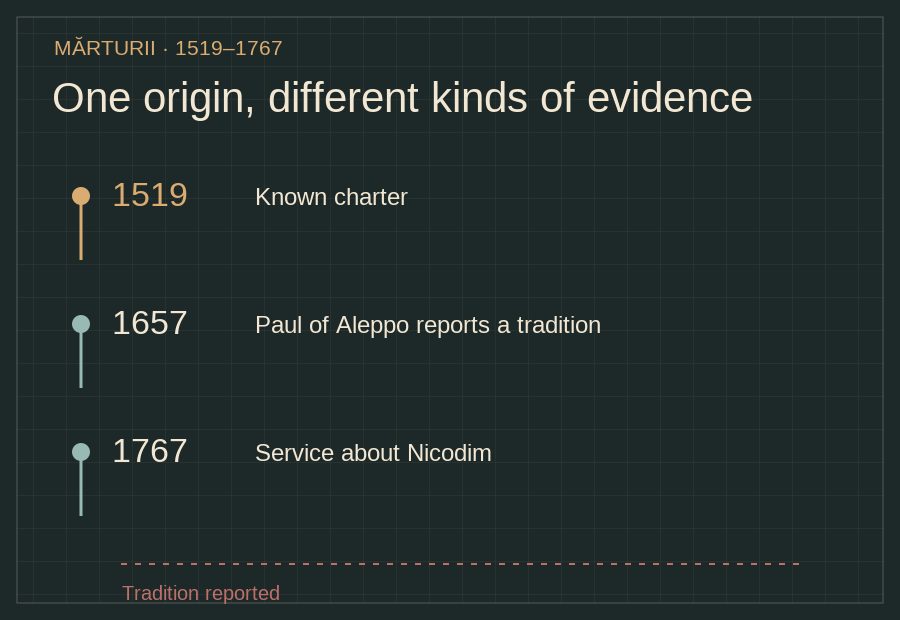
A tradition says that Nicodim, a monk who came from Serbia in the second half of the fourteenth century, founded a small hermitage on the Motru. Paul of Aleppo visited the monastery in 1657, four years after the church was built, according to the 1969 historic guide. His account records the Nicodim tradition; a service printed in 1767 names him as the first founder. These sources show when the story was being told, not when the monastery was founded. [12] [13] [5]
The earliest known charter, from 1519, names Harvat. That does not prove that nobody prayed here before him; it shows that the monastery’s earliest surviving documentary record recognizes Harvat. Paul of Aleppo’s account is later and carries a different origin story. A memory about a saint and a charter about a monastery are different kinds of evidence. [1] [12]
The 1519 charter
What the earliest known charter does and does not say
The National Archives guide dates the monastery’s earliest known charter to 13 January 1519. Neagoe Basarab confirmed village and land donations to the monastery begun by Harvat, a senior official. The charter proves that the institution and its founder were recognised by then; it does not tell us when the first building was erected. [1]
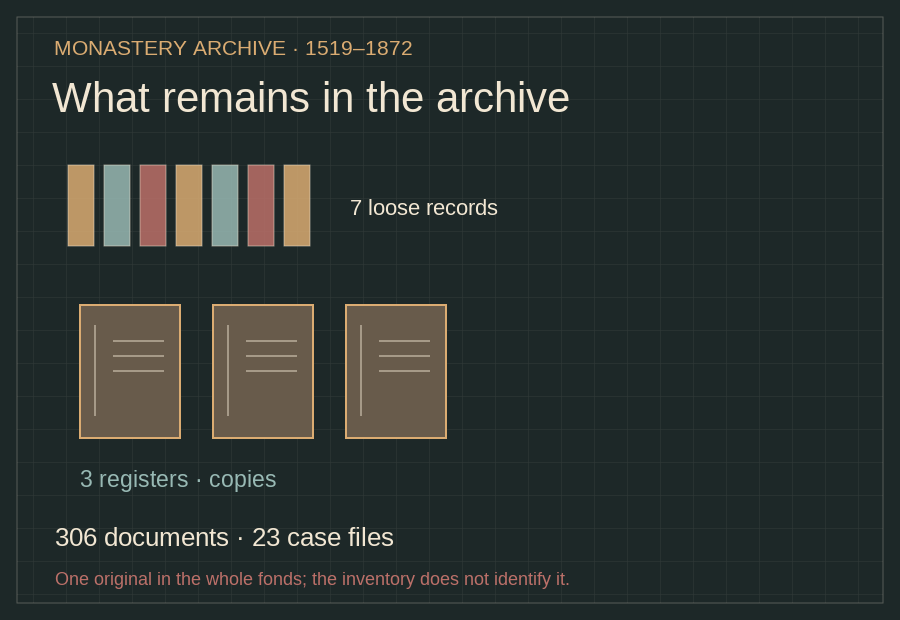
The guide also describes the archive preserving the site’s records: 306 documents from 1519–1872, seven loose sheets, the rest copies in three registers, and 23 case files. It says one document in the entire collection is an original, without identifying which one. We therefore do not call the surviving copy of the 1519 charter “the original”. [1]
Inscription in the narthex
The church you see has a different date
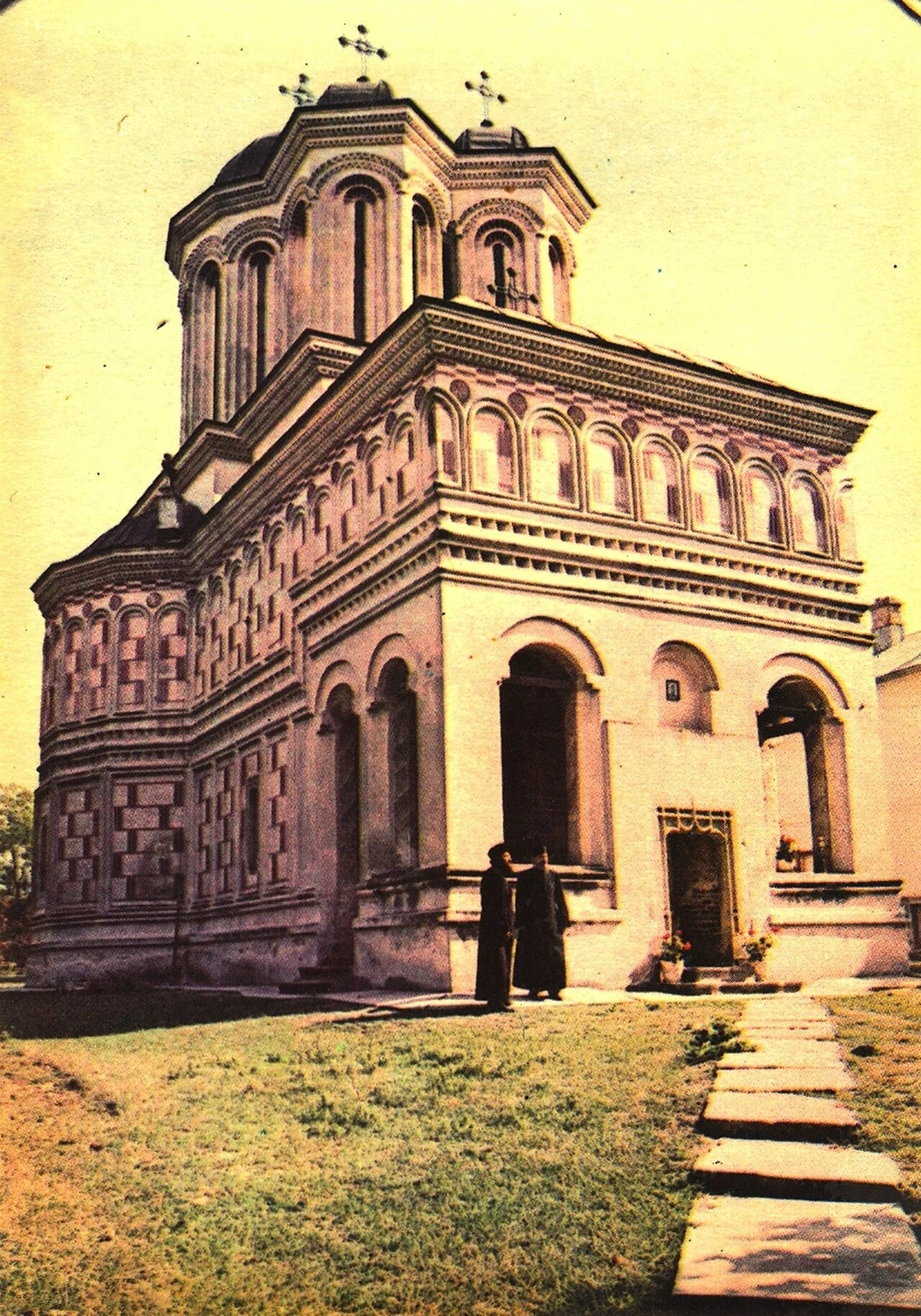
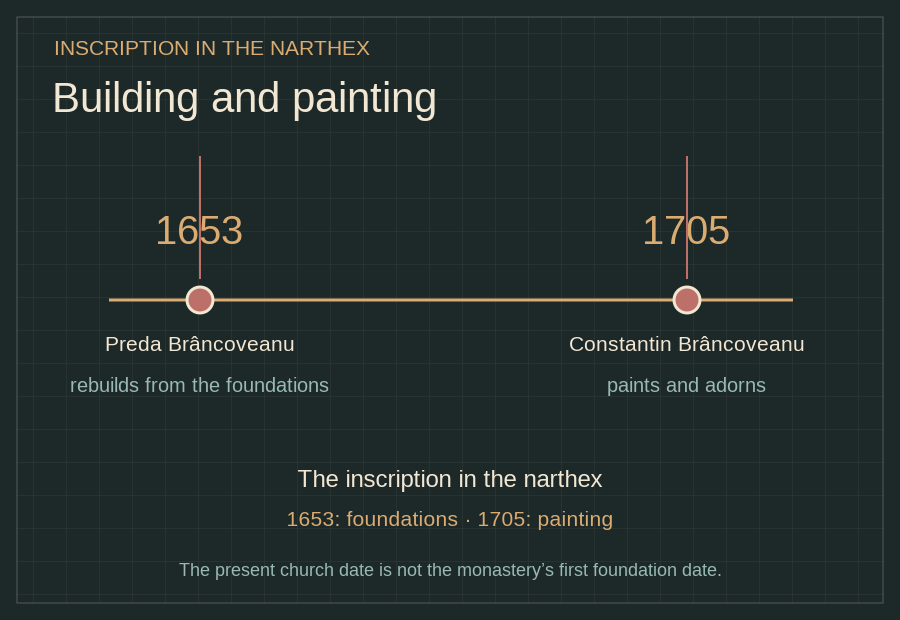
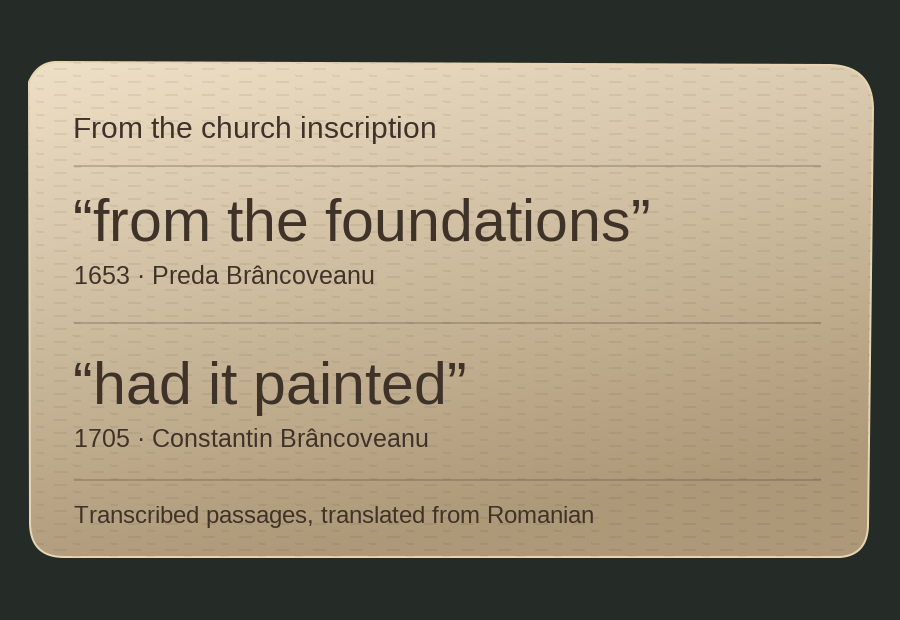
The church standing today carries an inscription in its narthex that changes the question. It says Preda Brâncoveanu rebuilt the church “from the foundations” in 1653. That is the clearest date for the present building, several generations after Harvat’s charter. In one inscription, the monastery as an institution separates from the church you can see now. [2]
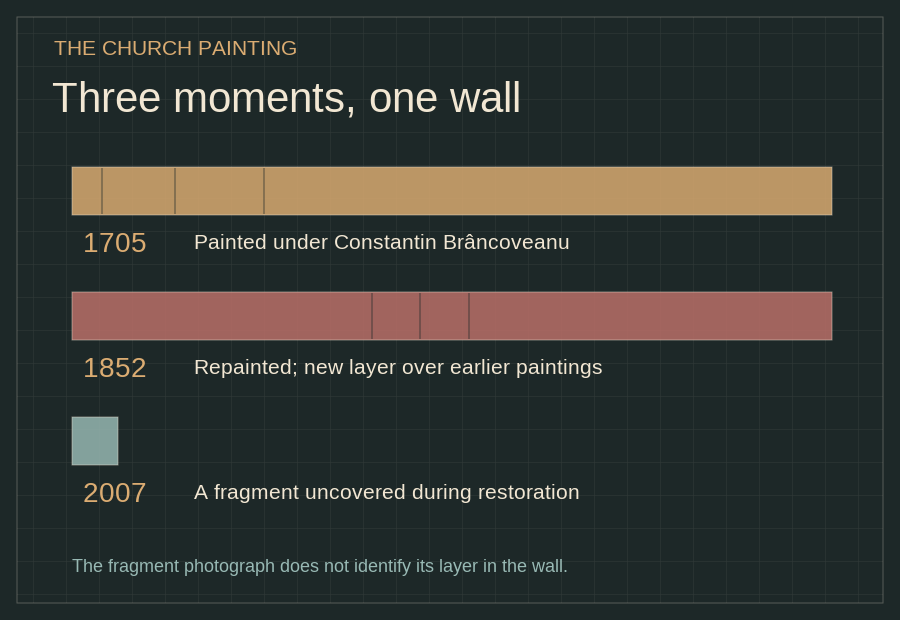
The same inscription says that Preda’s grandson, Constantin Brâncoveanu, painted and adorned the church in 1705, the seventeenth year of his reign. The dates 1653 and 1705 do not compete for the same event: one describes the building, the other its decoration and later works. [2]
The paintings
The painted wall has its own history
About a century and a half later, the painting was redone. CIMEC transcribes a 1852 inscription from the time of Barbu Știrbei and the abbot Eufrosin Poteca. Its record explains that the repainting covered older scenes with a protective layer and new painting. What visitors see may therefore preserve traces of more than one campaign. [2]
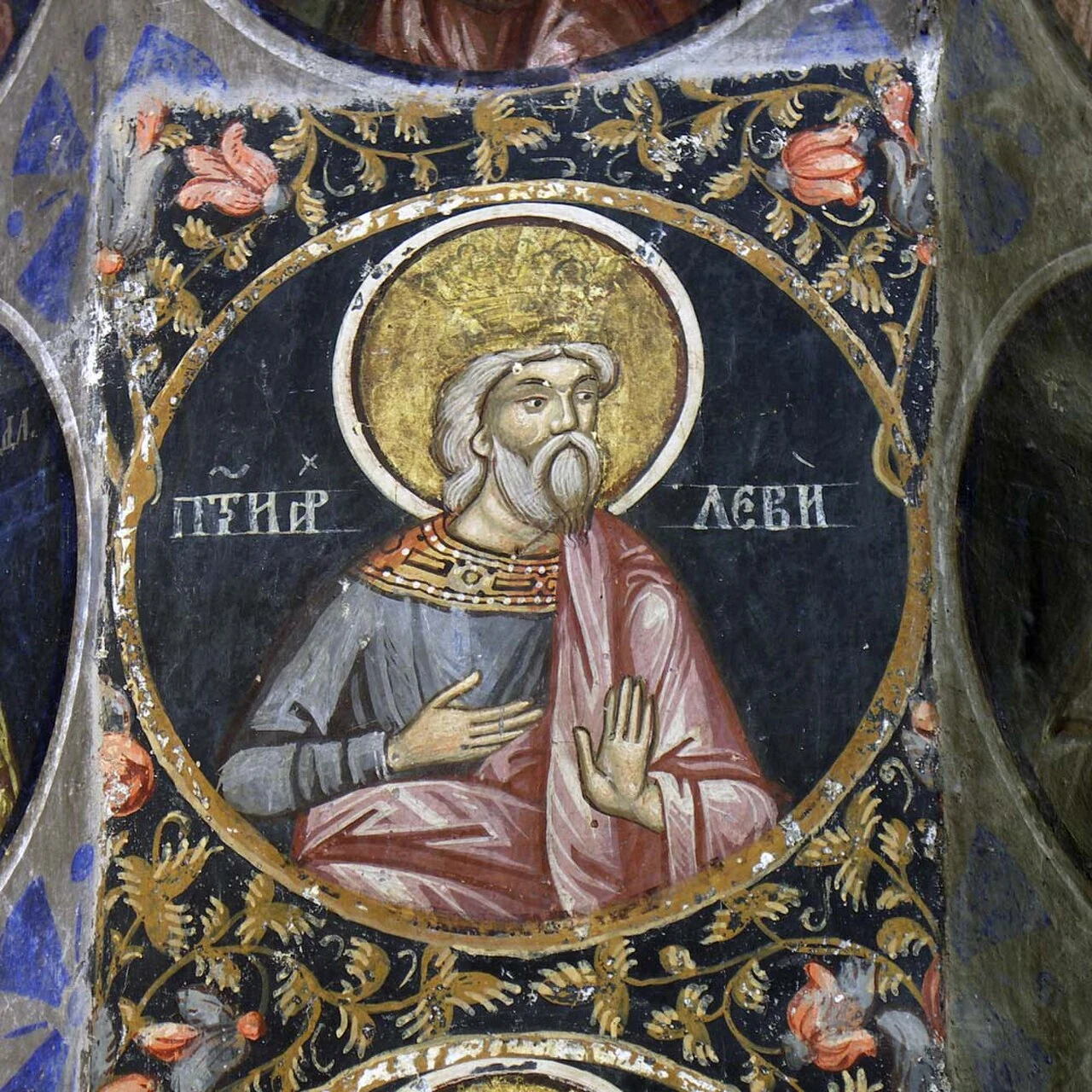
Alexandru Baboș’s 2007 photograph is captioned as a Brâncoveanu-period painting fragment uncovered during restoration. The file page does not identify its exact layer. It records restoration work; on its own, the image is not enough to say that we are looking at a particular scene painted in 1705. [11]

The 1956–57 excavations
A story about old foundations was tested in the ground
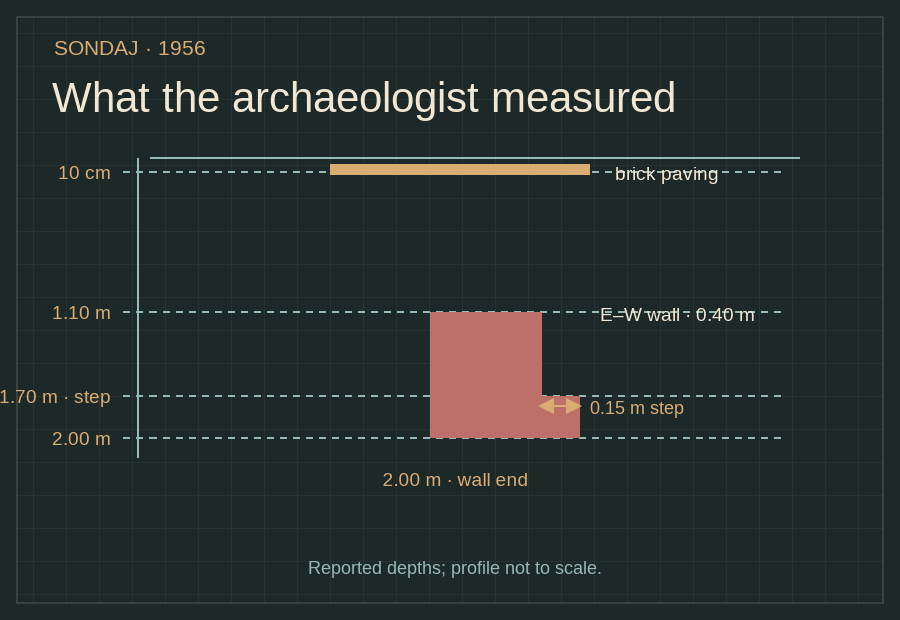
In 1956, restoration research opened a four-by-one-metre trench inside the monastery stable. A brick pavement appeared at ten centimetres. Beneath rubble, at 1.10 metres, archaeologists found a wall about 40 centimetres wide, running east–west. At 1.70 metres, the wall widened along its south face into a 15-centimetre step; it ended another 30 centimetres lower, at about 2 metres. This small trench yielded measurements, not the full plan of a church. [3]
A 1957 test separately examined foundations which tradition linked to Nicodim or Harvat; some thought they were Roman. Rosetti dated the foundations found there to the second half of the eighteenth or the beginning of the nineteenth century. That rules out a building earlier than or contemporary with the monastery at this specific spot; it does not rule out every older site in the valley. [4] [5]
Another site upstream
Could Nicodim belong to another monastery?
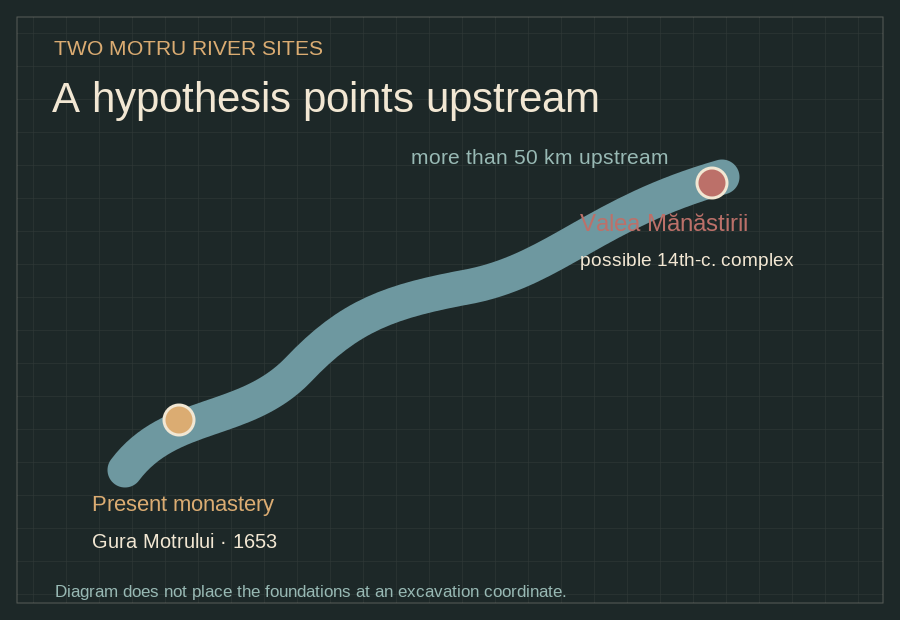
In 1989, a rescue excavation at Valea Mănăstirii in Cătunele, more than 50 kilometres upstream, uncovered a brick building over six metres long. Its use layer contained fourteenth-century pottery and a coin minted early in Vladislav I’s reign, between 1364 and 1377. The partial walls do not by themselves tell us whether this was a monastery or a noble residence. [6] [5]
Cantacuzino cautiously connects this site to the Nicodim tradition: a 1767 account said the saint had first stopped “on the Motru,” and the village itself retained a monastic name. This is a hypothesis about two different places, not a proven relocation of the monastery. The Motru ruins are evidence of a medieval building; its identity and any connection with Nicodim remain open. [5]
The church today
The hillside is part of the building’s story
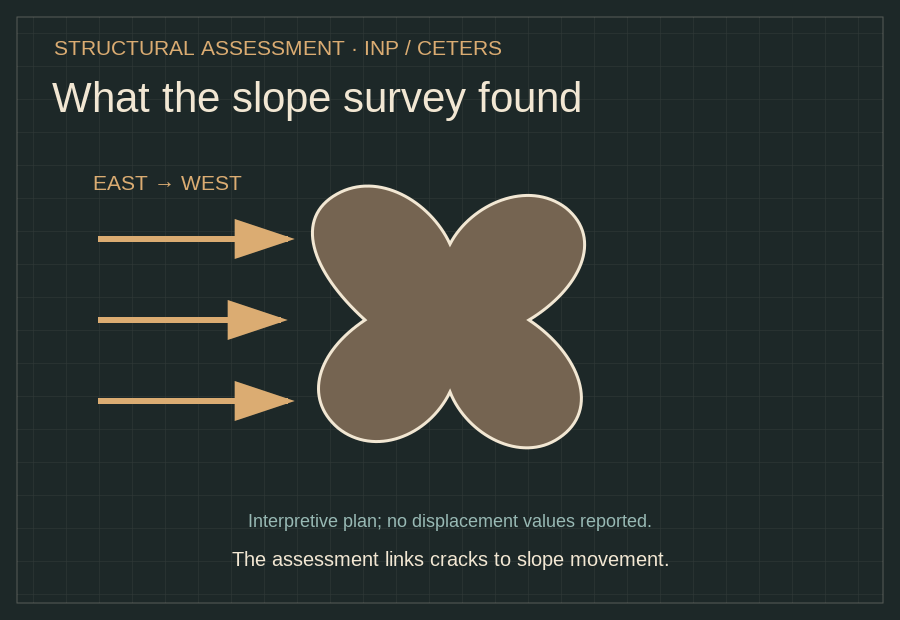
The National Heritage Institute’s structural assessment shows that the story continues in the walls. Its report distinguishes cracking and distortion associated with earthquakes, long-term decay and east-to-west slope movement. It describes transverse cracking as more pronounced than cracking along the church. The page gives no measurement of ground displacement, so this diagram shows the diagnosis, not a rate or distance. [7]
The same page records that archaeological research was complete while structural and architectural restoration plans were still being prepared. Two kinds of care meet here: preserving what can be read in the walls and stopping movement that weakens them. The visible church is the newest witness to a history that begins in documents and continues beneath the ground. [7] [8]