The place
The place
The castle and park in the Gurghiu valley
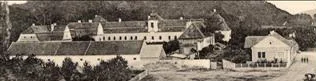
Rákóczi–Bornemisza Castle stands in the Gurghiu valley, at the foot of the mountains in eastern Mureș County. The photograph from around 1900 shows the long main building. Trees brought from other regions grew in the grounds around it. [4] [1]
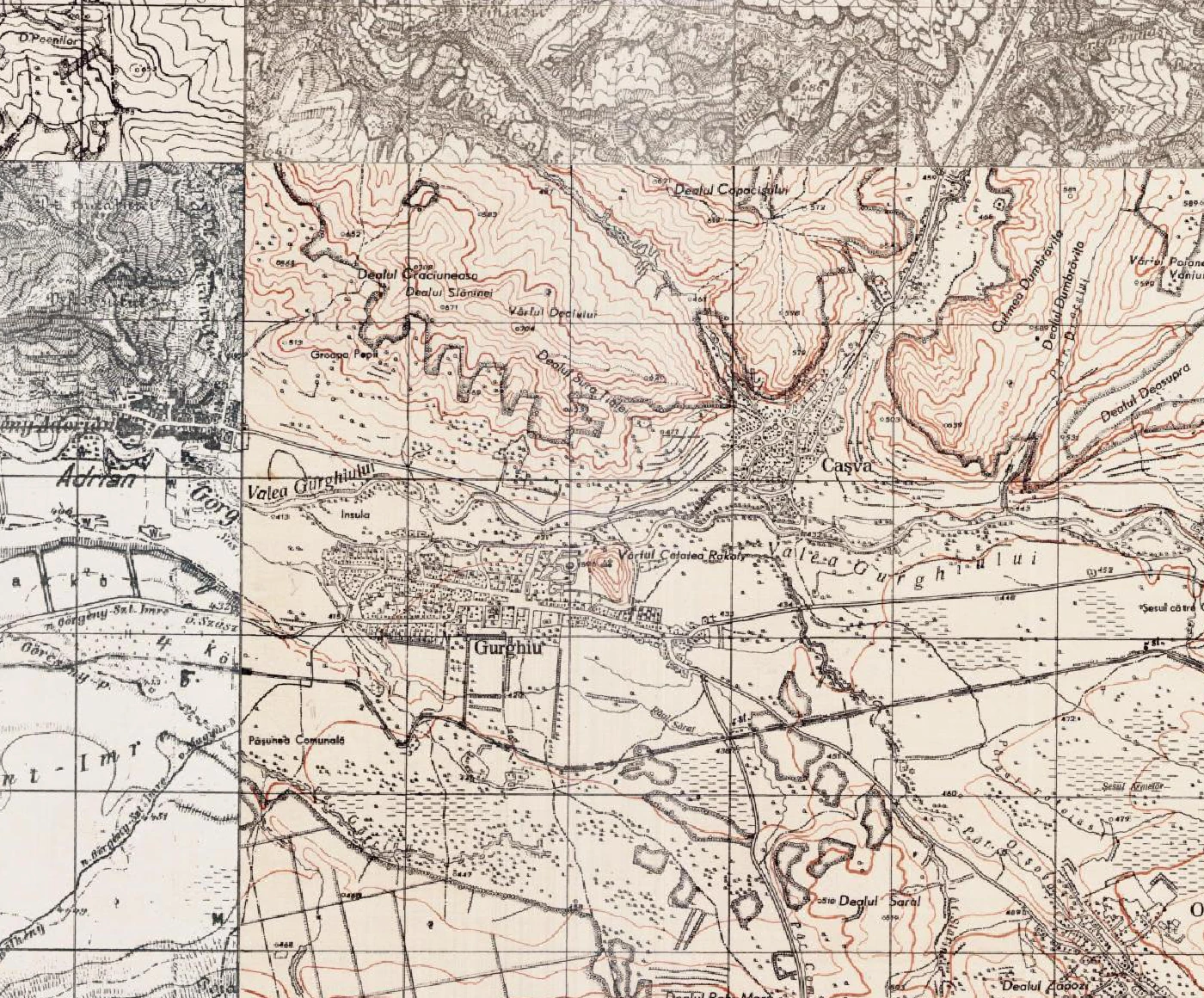
The military topographic sheet places Gurghiu in the valley among surrounding wooded hills. The crop does not mark the park, and the sheet date is not visible. An early twentieth-century photograph and the school records help connect the site to the role it held in those years.

The school
Forest guards learned to work in state forests
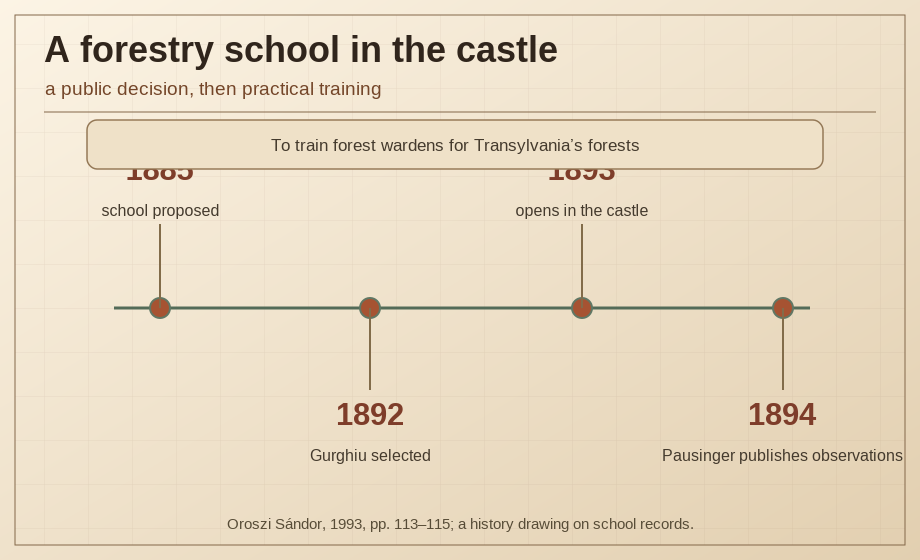
In the 1880s, officials were preparing a forestry school for Transylvania. In 1892, the Agriculture Ministry chose Görgényszentimre—the Hungarian name then used for Gurghiu—as a place to train forest guards for state forests. The school received the former Bornemissza castle and began classes in autumn 1893.
Preparations had begun by 1885; the building was repaired and adapted for teaching. The surrounding park became the school’s botanic garden. Historian Sándor Oroszi reconstructs this timeline from archival records and publications by school staff. The following year, József Pausinger published observations about the foreign species growing in the park.
The park
Young and old robinia grew at different rates
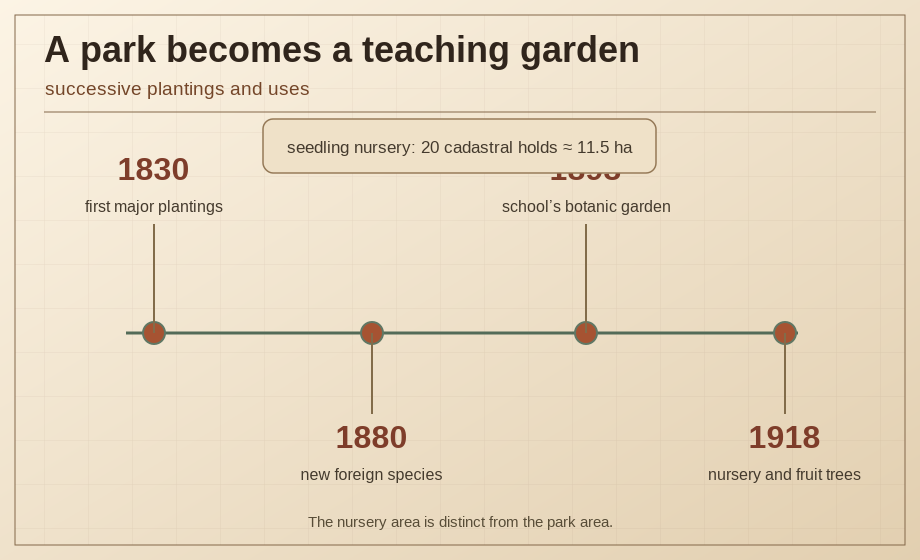
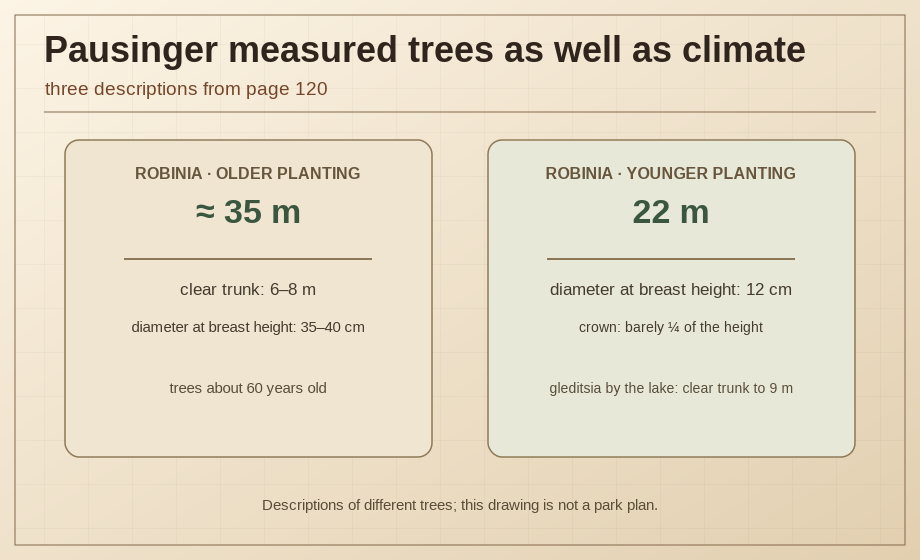
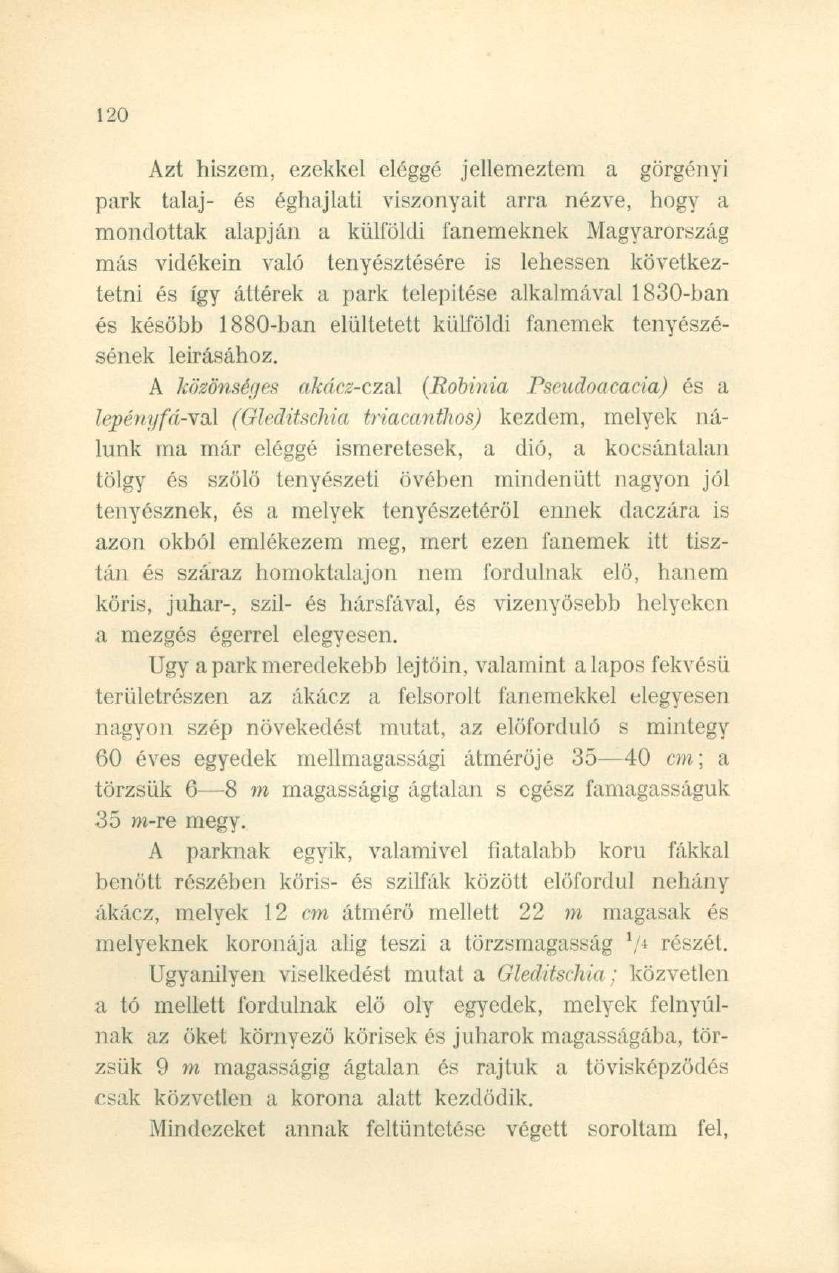
Foreign plantings in the park began around 1830 and continued in 1880. Pausinger measured robinia of different ages: specimens about 60 years old reached roughly 35 metres, with branch-free trunks up to six to eight metres. Their diameter at breast height was 35–40 centimetres.
In an area with younger trees, robinia only 12 centimetres across reached 22 metres; the crown occupied scarcely a quarter of the trunk’s height. By the lake, gleditsia rose into the canopy of nearby ash and maple, with a clear trunk up to nine metres. Pausinger describes different specimens in different places, and the park gave the school a garden in which to compare them.
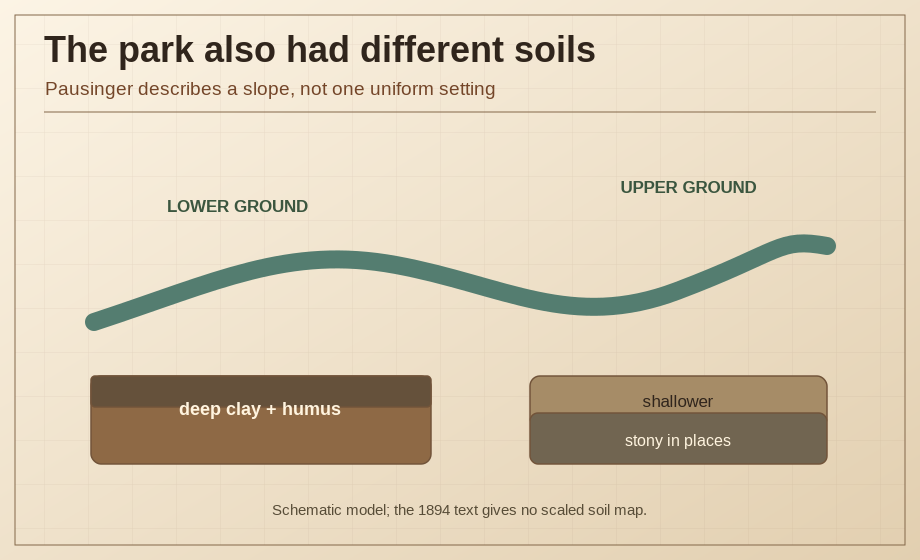
The report also describes the ground: deep, clay-rich and rich in humus below, shallower and sometimes stony higher up. A forestry historian records that the upper park was later extended with fill and new plantings. Soil and exposure were part of the growing conditions students could observe.
The weather
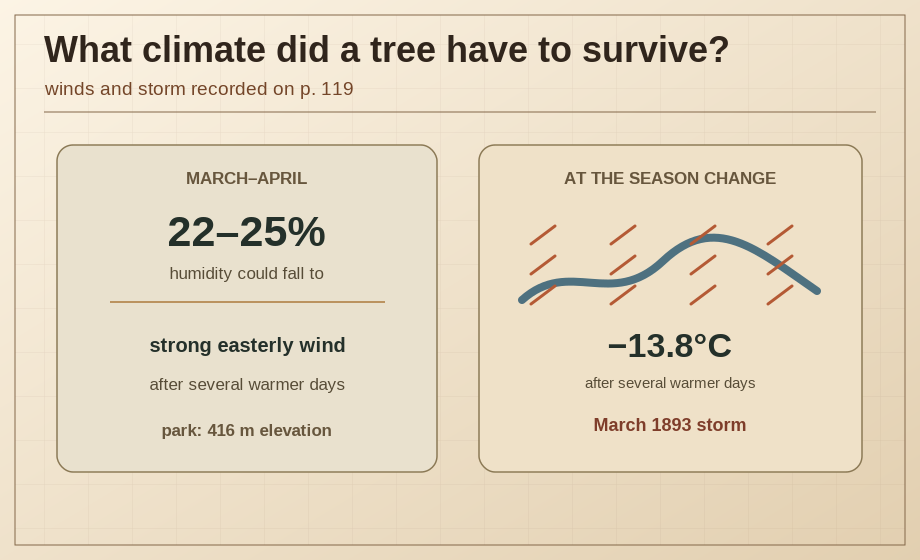
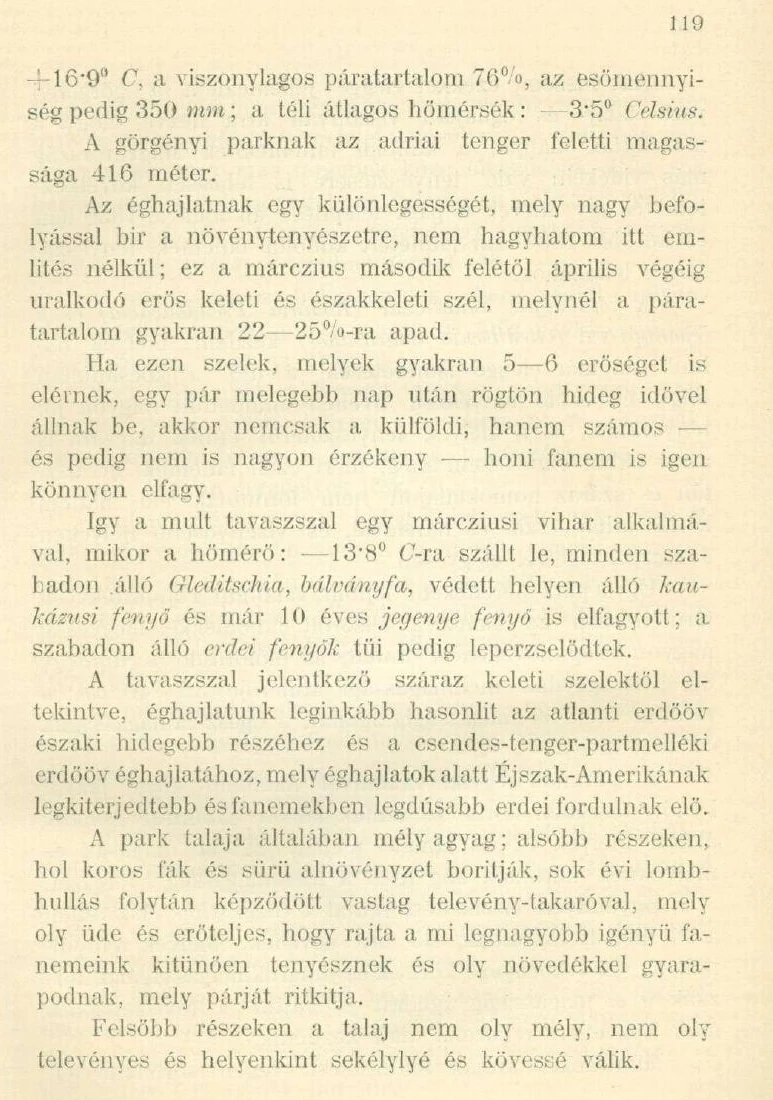
Easterly winds lowered humidity to 22–25%
In late March and April, strong easterly and north-easterly winds brought dry air. Pausinger writes that humidity could fall to 22–25%. Several warmer days could be followed by a sudden return of cold; native species froze as well as the foreign trees.
During a storm in March 1893, the thermometer fell to −13.8°C. The park stood 416 metres above sea level. Page 119 places these details beside observations about the trees and differences between lower and upper soils. The illustrated article excerpt is not a complete measurement series; we keep to the values Pausinger records on this page.
The comparison
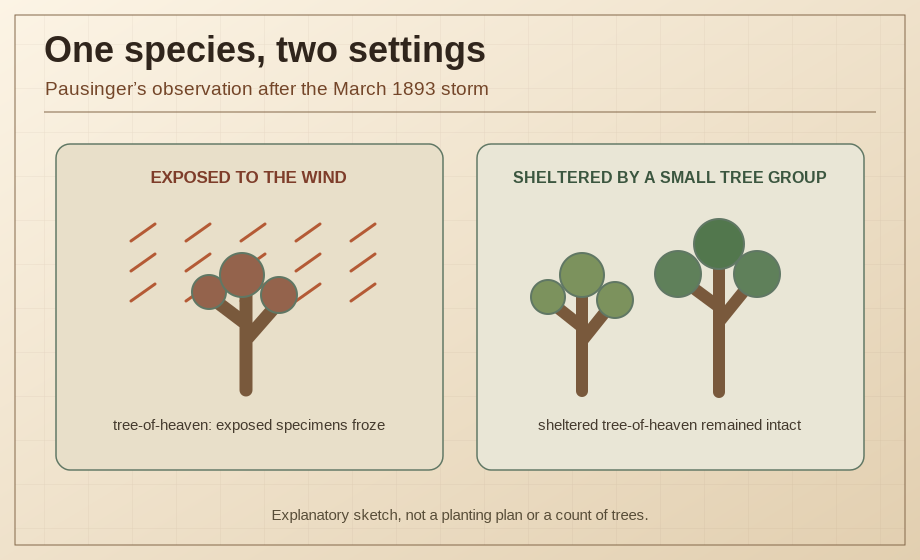
Sheltered tree-of-heaven in the park remained intact
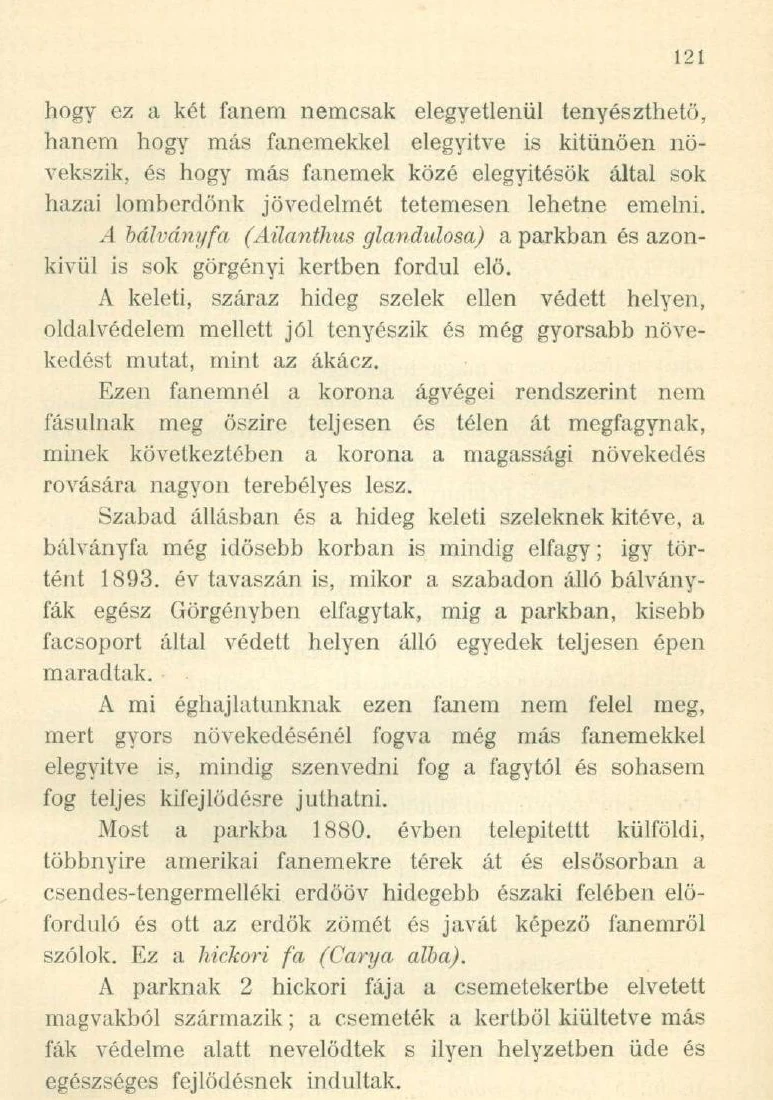
Pausinger identifies tree-of-heaven as Ailanthus glandulosa. It grew both in the park and in Gurghiu’s gardens. Trees in open ground froze even when they were older. After the 1893 freeze, Pausinger found exposed tree-of-heaven frozen across Gurghiu; specimens in the park, sheltered by a small group of trees, remained intact.
The comparison concerns the same species in two settings with different exposure. Pausinger gives no tree count and publishes no planting plan. The diagram shows only the relationship described in the text. It does not reconstruct tree positions or represent a controlled trial; it is a field observation after a storm.
The article gives the scientific name Ailanthus glandulosa; today the species is called Ailanthus altissima, or tree-of-heaven. Pausinger prints the Hungarian name bálványfa beside the Latin name.
Other species
Some sheltered trees froze too
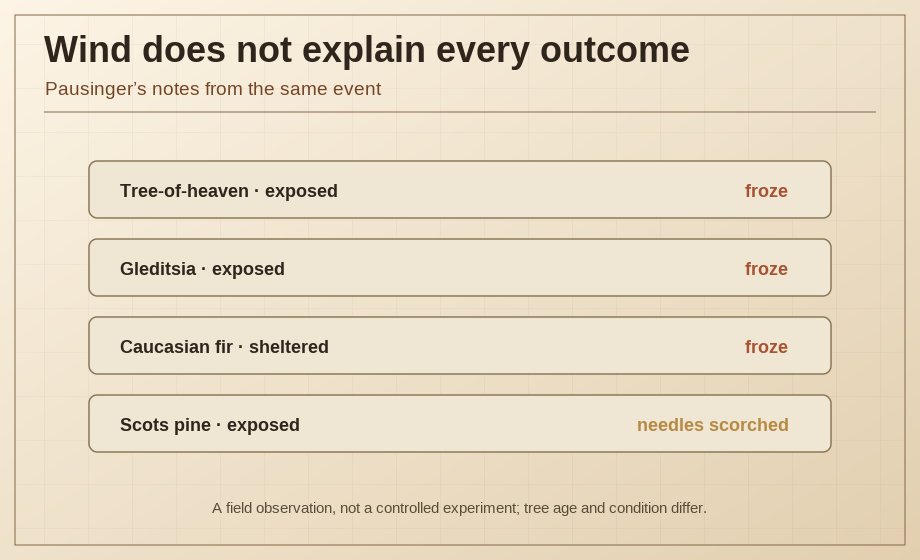
The storm affected other species too. Pausinger also records exposed gleditsia, a sheltered Caucasian fir and a ten-year-old silver fir as having frozen. Needles on exposed Scots pines were scorched. He does not report how many trees were in each group or whether they were of similar age.
The results show why shelter cannot be turned into a simple rule. Species, age, soil and position differed. In the 1893 observations, a small group of trees seems to have protected tree-of-heaven, but it did not spare every tree in the park. The report documents one storm, not a trial with equal groups and outcomes measured by the same method.
The nursery
Lessons in the park continued in the nursery
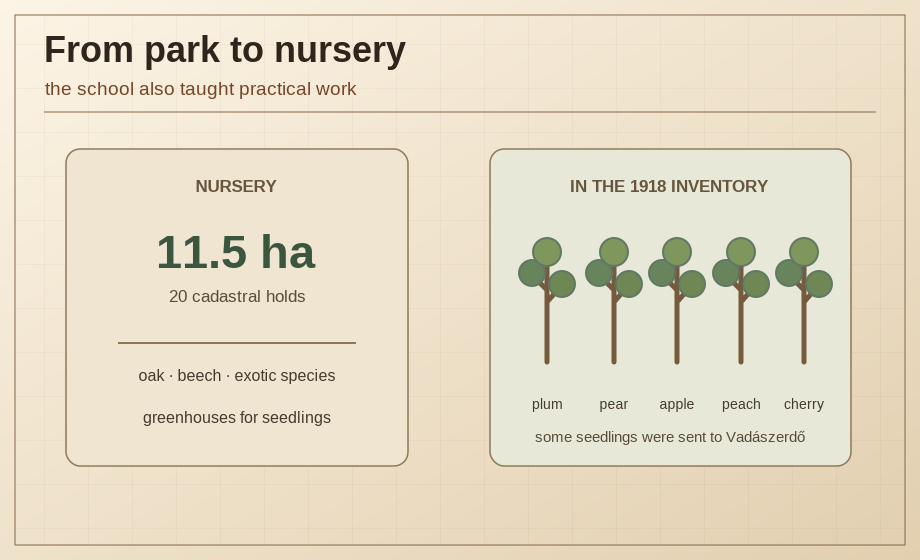
The park was only one part of the training. A seedling nursery of about 20 cadastral holds—around 11.5 hectares—raised oak and beech as well as exotic species, with greenhouses for the latter. Oroszi cites an inventory from autumn 1918: plum, pear, apple, peach and cherry trees were grown there; some were sent to Vadászerdő, another forestry school.
Together, castle, park and nursery formed a training ground: a classroom near trees students could compare, with seedlings moving from greenhouse to field. Pausinger’s article shows how this work could be done: observe climate and soil, track growth and record losses as well as successes. The account remains useful because it tells us what he saw and what he did not measure.