Hârlău
Hârlău
Two screws rise above the press
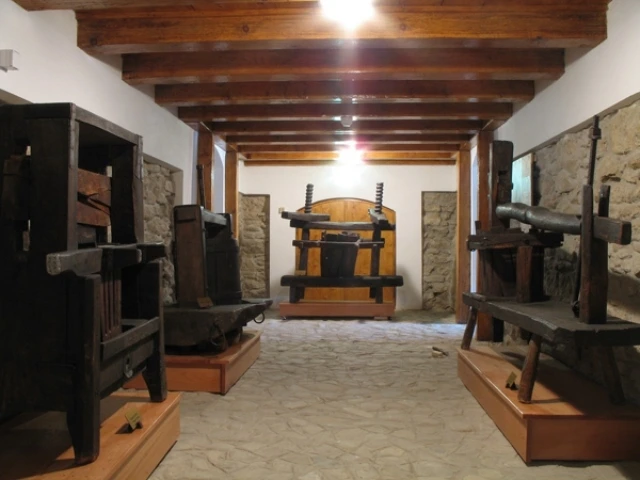
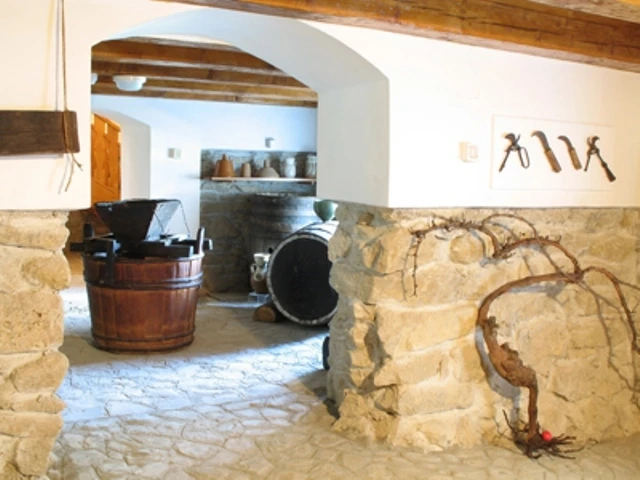
There are several kinds of press in the cellar of the Hârlău museum. In the room photograph, you can recognise the one at the far end by its two upright screws above the beam. A wooden press transferred force to squeeze juice from grapes. [1]
From the doorway, the threading is hard to see. A similar example in the Vrancea Museum collection was photographed up close and catalogued, so you can see where its beam rested and how it moved. [2]
The comparison piece
How to spot the moving parts
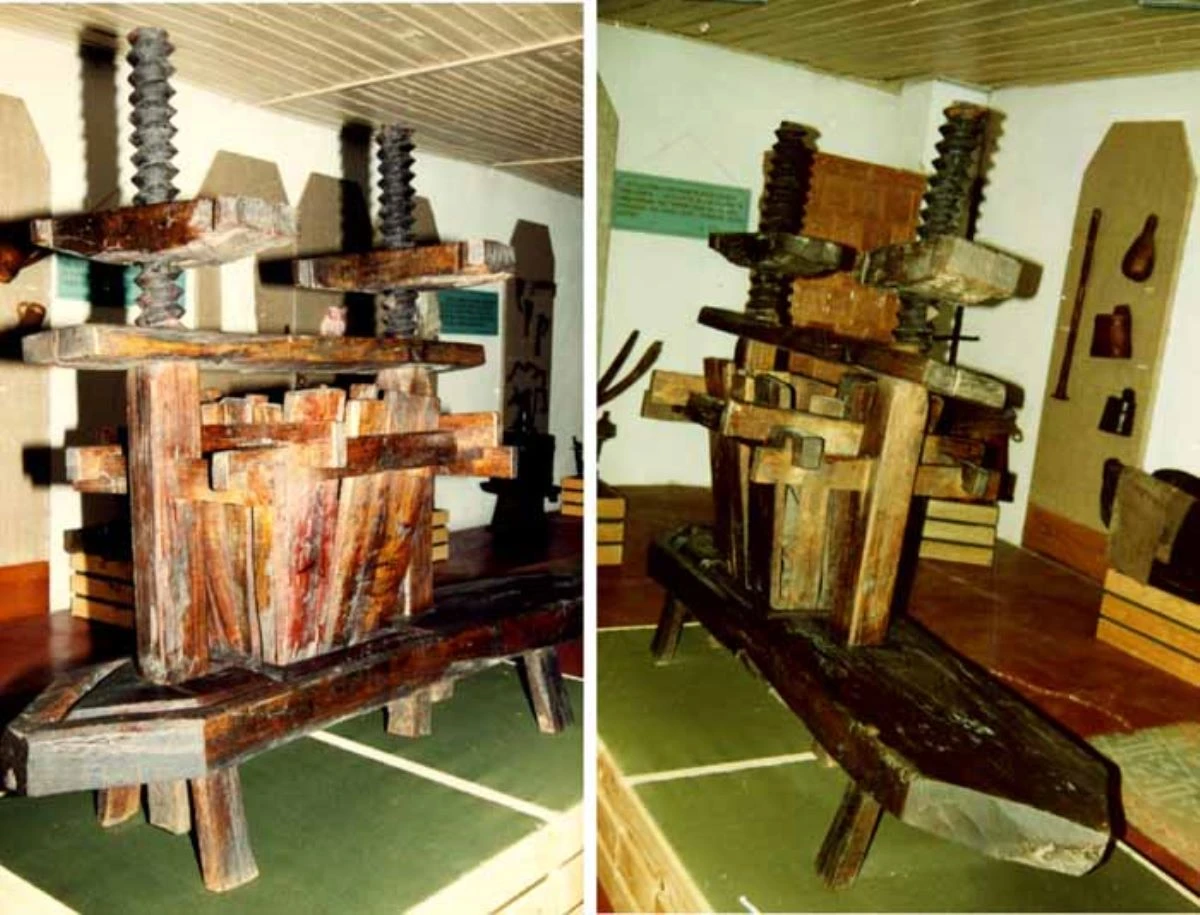
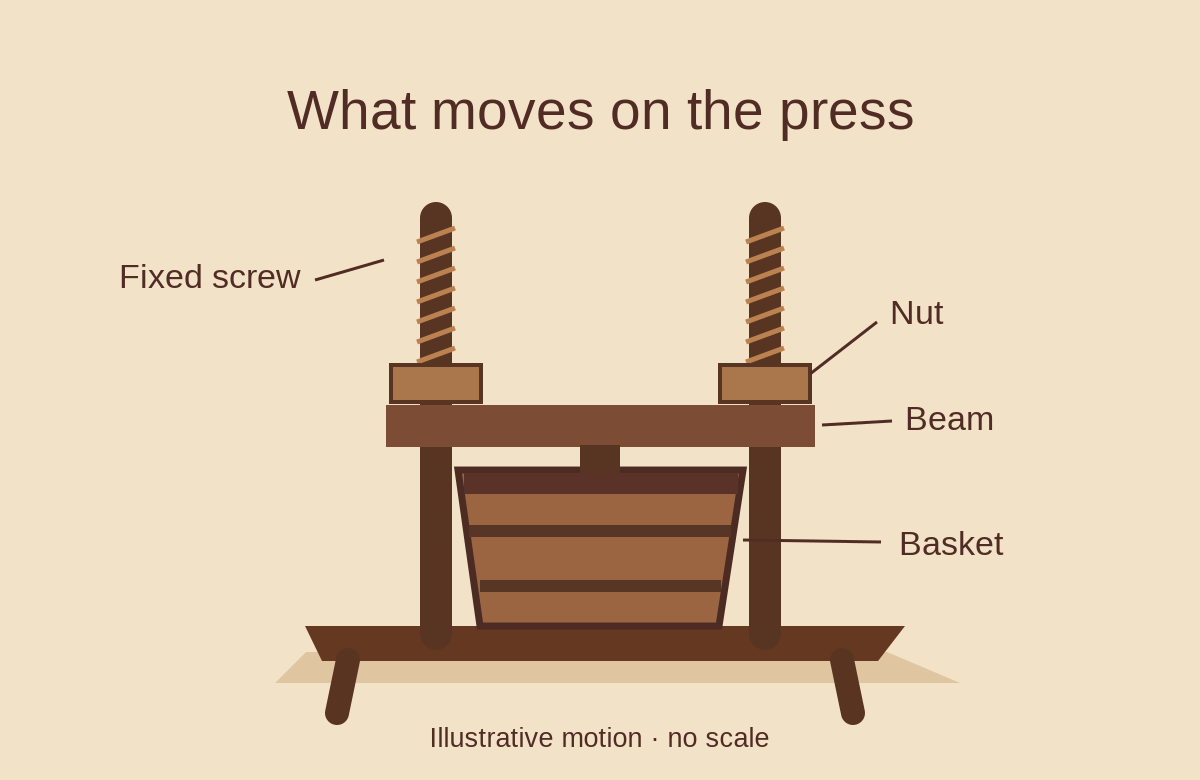
The Vrancea Museum press dates from the late 19th century. Its two wooden screws are fixed into the bed. A hefty wooden nut turns around each screw. In the photographs the nuts look like two short crosspieces, one on each screw just above the long beam. [2]
Trace the thread on the left down to its nut, then follow the beam all the way to the right screw. The record documents the Focșani piece. The Hârlău photograph shows where to look for the same features in its exhibition. [2] [1]
The mechanism
Turn the nuts and the beam comes down
Each nut moves along its thread as it turns. The beam beneath them transfers pressure to the grapes in the basket. The two screws stay fixed in the bed. [2]
Move the slider to follow the beam from raised to lowered. The model turns the nuts together so you can see the movement more easily. Its travel and thread pitch are illustrative. [2]
After pressing
Where the juice goes
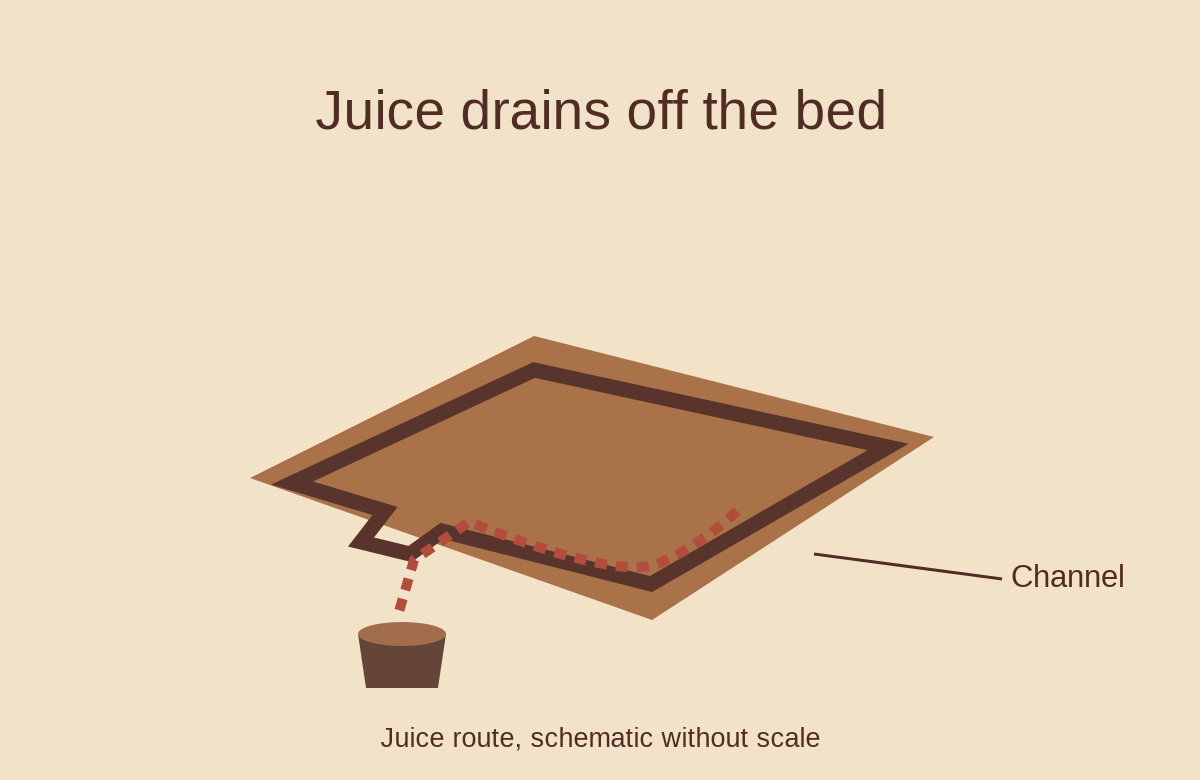
The bed of the recorded Focșani press has a channel cut into the wood near its edge. As the grapes are pressed, the groove takes the juice towards the end of the bed. The basket holds the solids while the liquid drains. [2]
The Hârlău cellar also displays vessels made of staves, the narrow planks held together by hoops. A vessel caught liquid leaving the press. Barrels allowed it to be kept in the cellar. [1] [3]
Upstairs and in the cellar
From the press to baptisms, weddings and funerals
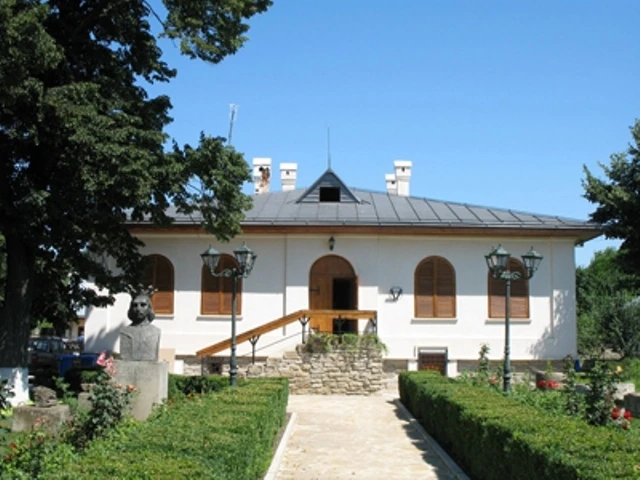
The building on Logofăt Tăutu Street housed the post office from 1875 to 1983, according to the National Heritage Institute record. The vine and wine exhibition opened on 20 July 2006. [1] [4]
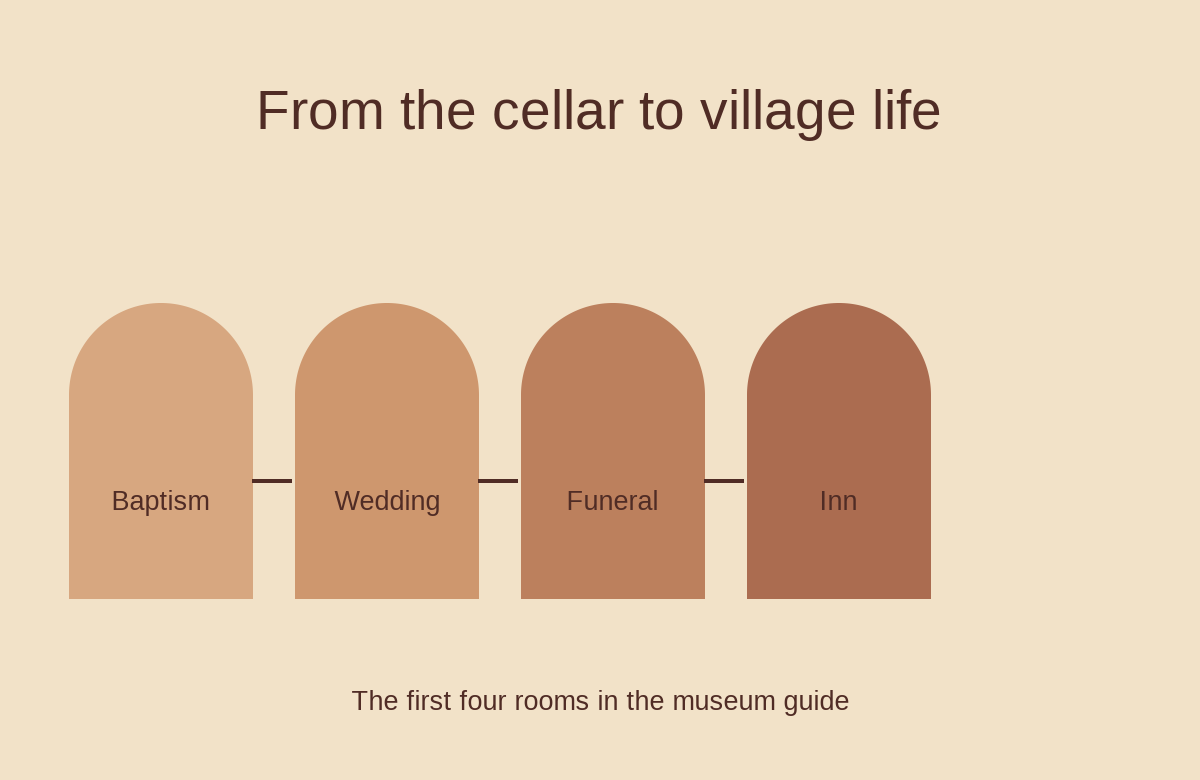
The first three rooms described by the museum follow wine through baptism, marriage and burial. The fourth recreates an inn. In the cellar you can see the work that supplied these uses, from crushed grapes to juice collected in vessels. [3] [1]