ONE WORD, ONE CIRCLE, NEARLY THREE MILLENNIA
The dance at your wedding starts on Achilles' shield
Greek choros meant the dancing-floor and the band of dancers. In the East it stayed on its feet — horo, oro, horă, horah. In the West, through Latin and Old French, it became choir, the seated company of singers. The wheel below joins every stop.
- Iliad 18.590–606
- the dancing-floor on Achilles' shield
- 1856 → 1859
- the poem becomes the union's anthem
- 2017
- kolo enters UNESCO. Hora is not on the list.
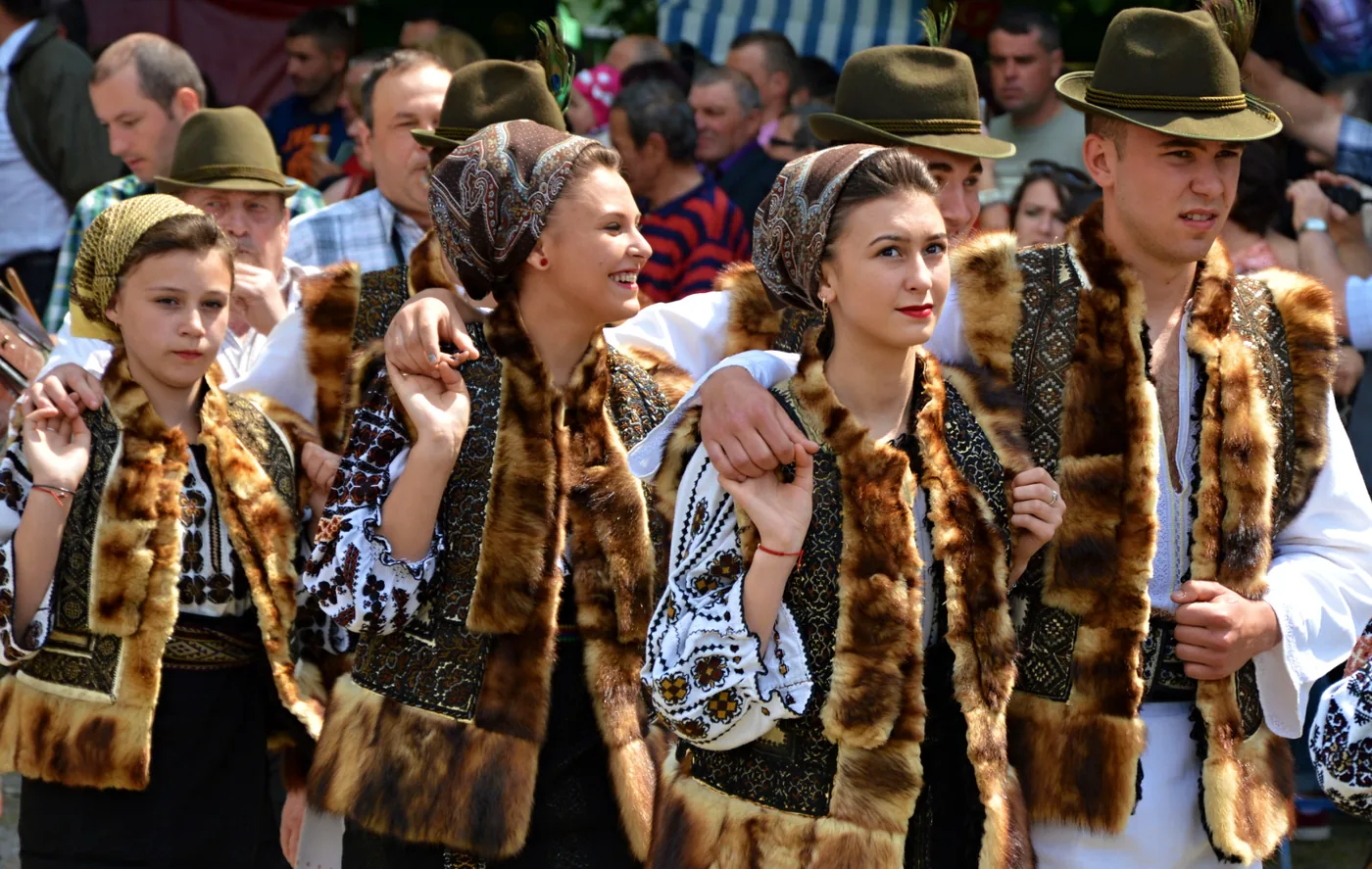

c. 4200 BCE → 1989
The circle joins hands
- ΧΟΡΟΣ
- CHOROS
- HORO
- HORĂ
- HORAH
The Word Wheel
Seven stops, from Cucuteni clay to today's circle. Press play or pick a stop; each shows its year, form and place, with a link to the chapter.
c. 4200 BCE
○
before the word · Frumușica, Neamț county
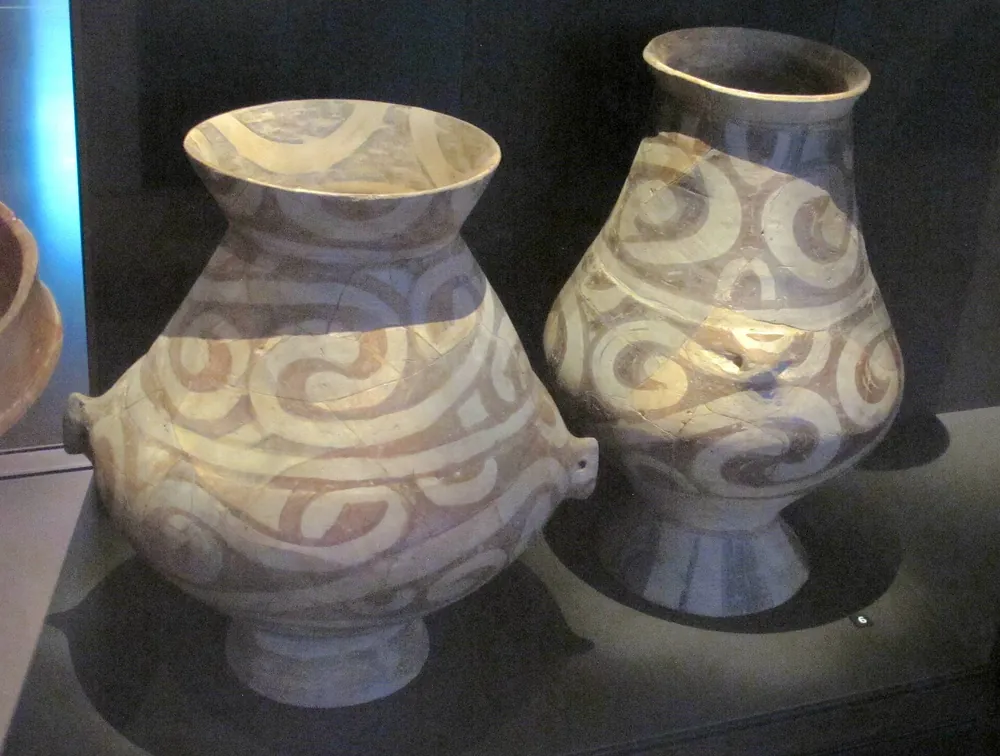
Cucuteni A stand-vessels with 4, 6 or 8 feminine figures in a round dance. Archaeologists call them the “Hora” type; what links them to today's hora is the shape, not a document.
The western branch: CHORUS (Latin, “ring dance”) → CUER (Old French) → CHOIR (English, “band of singers”, c. 1400; organised company, c. 1650). The word that sat down to sing.
c. 4200 BCE
○
before the word · Frumușica, Neamț county
Cucuteni A stand-vessels with 4, 6 or 8 feminine figures in a round dance. Archaeologists call them the “Hora” type; what links them to today's hora is the shape, not a document.
c. 750 BCE
ΧΟΡΟΣ
choros: the floor and the band · Cnossus / Troy (in the poem)
Hephaestus forges on the shield a choros “like unto that which in wide Cnosus Daedalus fashioned of old for fair-tressed Ariadne”. Youths and maidens hold “their hands upon the wrists one of the other”.
c. 1100
ΧΟΡΟΣ
the same circle, nearly two thousand years on · Constantinople
The “hand on wrist” step repeats in the Byzantine and post-Byzantine age; ring dances are danced in the narthex too. The one who begins the song and keeps the circle is the chorolektes.
c. 1400
HORO · ORO · HORĂ
the word branches · The Balkans
From choros: Bulgarian horo, Macedonian oro, Romanian horă (via Bulgarian, says DEX), Turkish hora. The first sense may have been “circle”.
1856 → 1859
HORA UNIRII
the poem becomes an anthem · Iași
Alecsandri publishes the poem in 1856; Flechtenmacher writes the music. The song becomes the “unofficial anthem” of the Union, danced every 24 January.
1919–1923
הורה · HORAH
the Third Aliyah · Tel Aviv
The horah grows out of the Romanian hora, says Encyclopaedia Judaica: running steps to the right, slow at first, then ever faster.
1989 → today
HORA
the living circle · Timișoara → Iași
In December 1989 the crowds of Timișoara sing Hora Unirii. Every January the circle joins hands again.
Chapters
Six slow stops, each with its sources.
Chapter I · c. 4200 BCE
I. The clay circle
Millennia before Homer, clay vessels already carry a round dance. Archaeologists call it “Hora”; what links it to our hora is the shape, not a document.
- 4, 6, 8
- figures on the stand-vessels
- Cucuteni A
- white-red bichrome
- Frumușica
- first find, Neamț county
“Hora”-type stand-vessels come from the Cucuteni A phase: on them, 4, 6 or 8 stylised feminine figures hold a round dance. The first came to light on Cetățuia Frumușica, at Bodești in Neamț county — hence the nickname “Hora of Frumușica”.
The Cucuteni-5000 symposium abstract (2018) calls the hora “the most ancient dance in Europe”. The title belongs to the archaeologists; no chain of records runs from their clay to today's hora. The shape is plain to see; the records between it and today are missing.

Chapter II · c. 750 BCE
II. The shield of Achilles
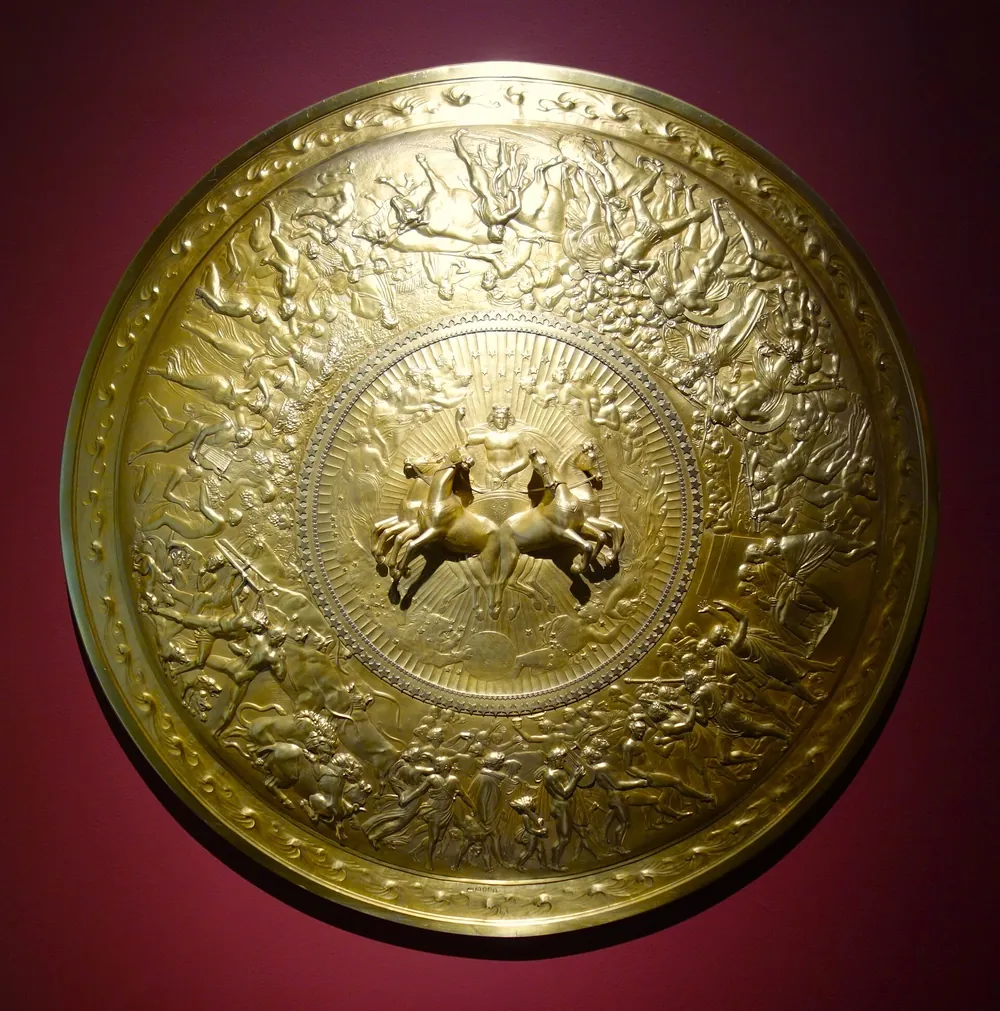
The oldest record of the word is a whole scene: a dancing-floor forged in metal, the steps described move by move.
- 18.590–606
- Iliad, the dancing-floor lines
- 17
- lines, counted on Murray's text
- 1924
- Murray's translation, public domain
Hephaestus forges the scene on Achilles' shield at Thetis' bidding: a whole choros, with garments, with golden daggers, with the crowd around and two tumblers in the middle, “leaders in the dance”.
Choros here means the dancing-floor; the same word also names the dancers. The English etymological dictionary gives both senses in one breath: “round dance; dancing-place; band of dancers”.
[590] Therein furthermore the famed god of the two strong arms cunningly wrought a dancing-floor like unto that which in wide Cnosus Daedalus fashioned of old for fair-tressed Ariadne. There were youths dancing and maidens of the price of many cattle, holding their hands upon the wrists one of the other. [595] Of these the maidens were clad in fine linen, while the youths wore well-woven tunics faintly glistening with oil; and the maidens had fair chaplets, and the youths had daggers of gold hanging from silver baldrics. Now would they run round with cunning feet [600] exceeding lightly, as when a potter sitteth by his wheel that is fitted between his hands and maketh trial of it whether it will run; and now again would they run in rows toward each other. And a great company stood around the lovely dance, taking joy therein; [605] and two tumblers whirled up and down through the midst of them as leaders in the dance.

Chapter III · c. 1100
III. Hand on wrist
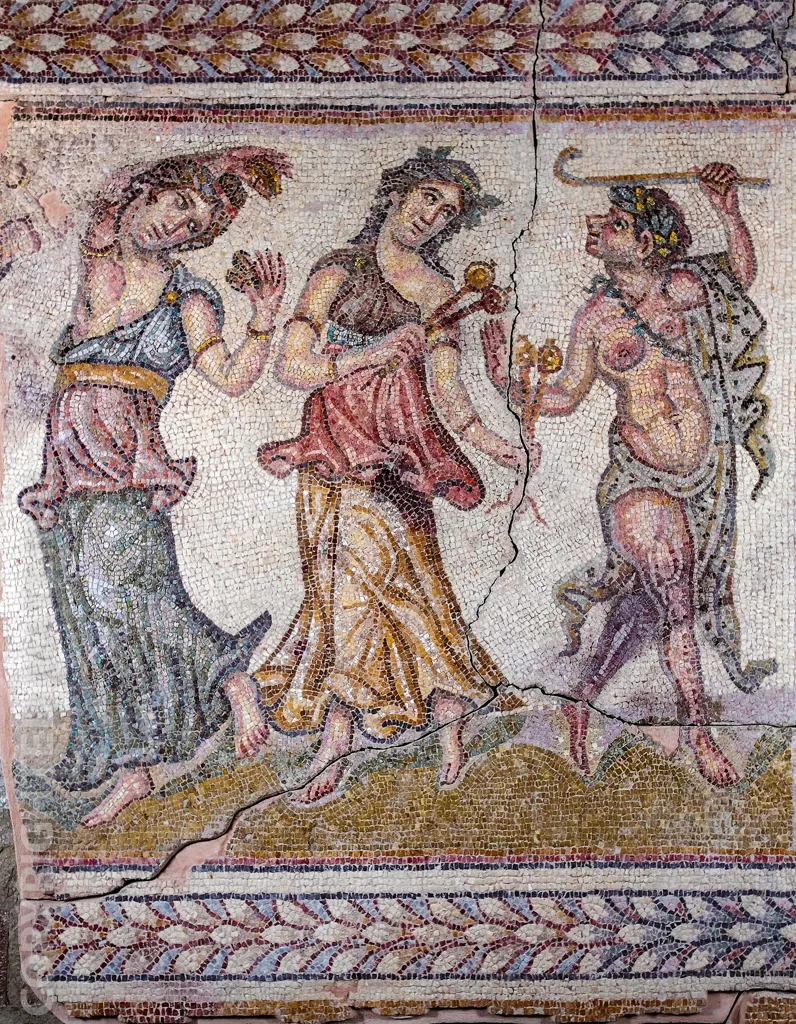
Nearly two thousand years after Homer, the same step is danced around churches and inside them.
- chorolektes
- the one who begins the song and keeps the circle
- narthex
- ring dances danced in church too
- “hand on wrist”
- the Homeric step, repeated past Byzantium
“The so-called ‘hand on wrist’ dance step … is repeated in the Byzantine and post-Byzantine period”, summarises Archaeology Wiki. The pairing with Homer's line is this chapter's whole point.
The leader of the dance was called koryphaios or chorolektes: he began the song and made sure the circle was maintained. Eustathius of Thessalonica mentions a dance that began in a circle and ended with the dancers facing one another.

Chapter IV · c. 1300–1650
IV. The parting of the word
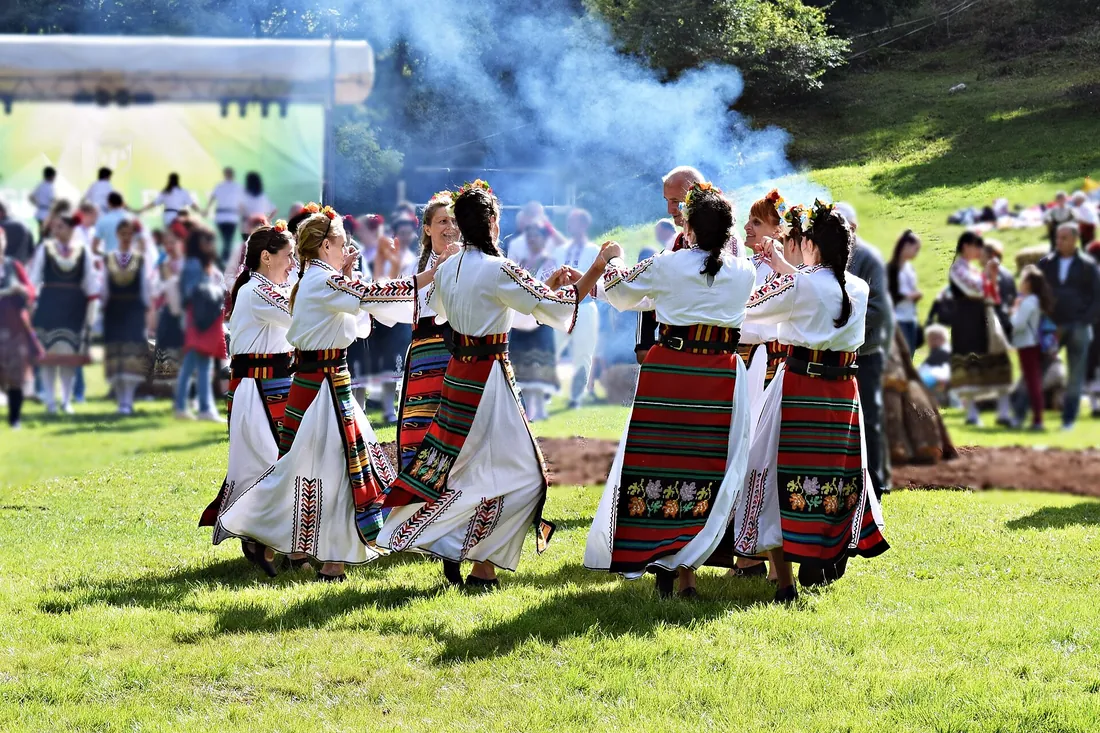
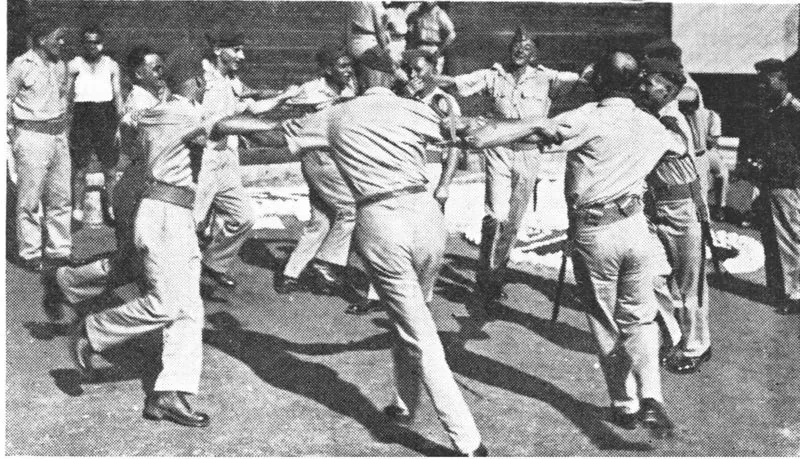
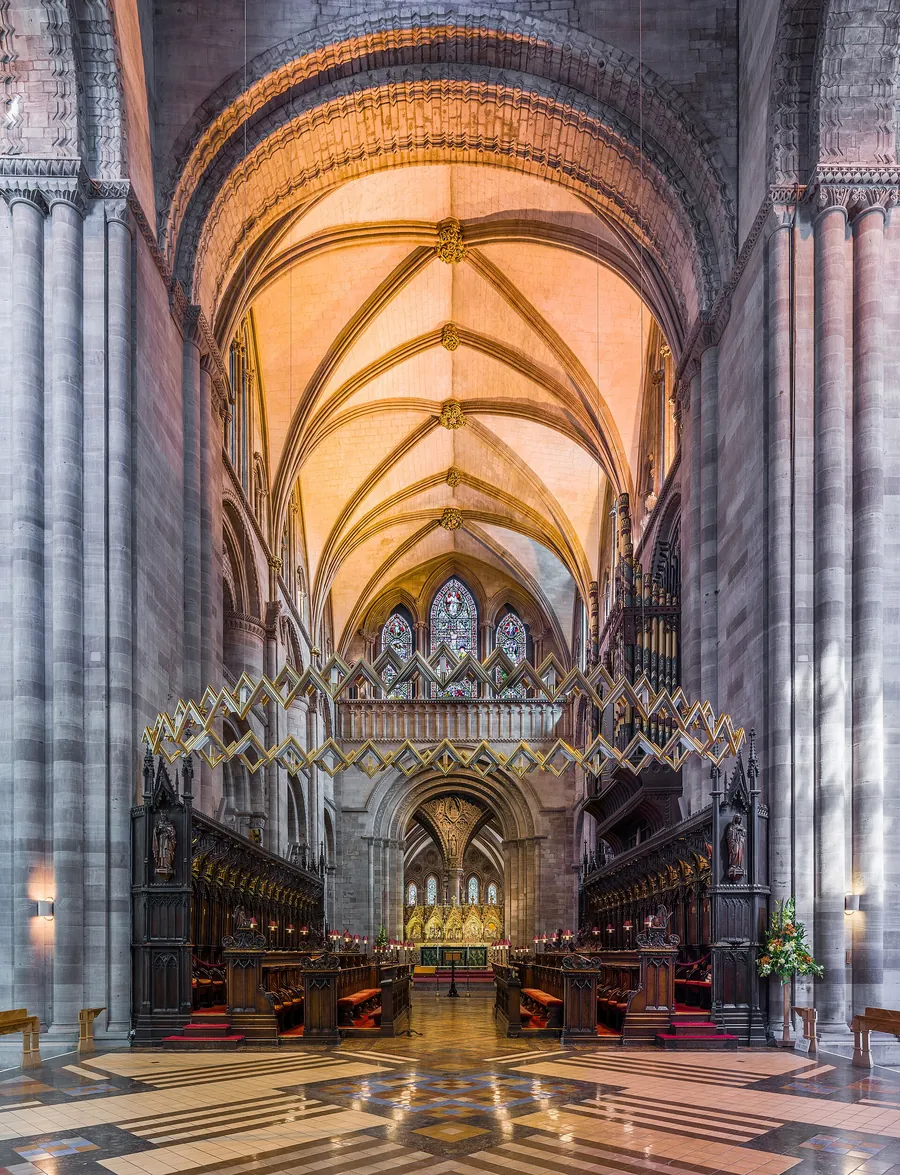
In the East the word stayed on its feet, in a circle. In the West it sat down in the choir stalls. Both fates start from the same syllable.
- horo · oro · horă
- the branch that dances
- chorus → cuer → choir
- the branch that sings
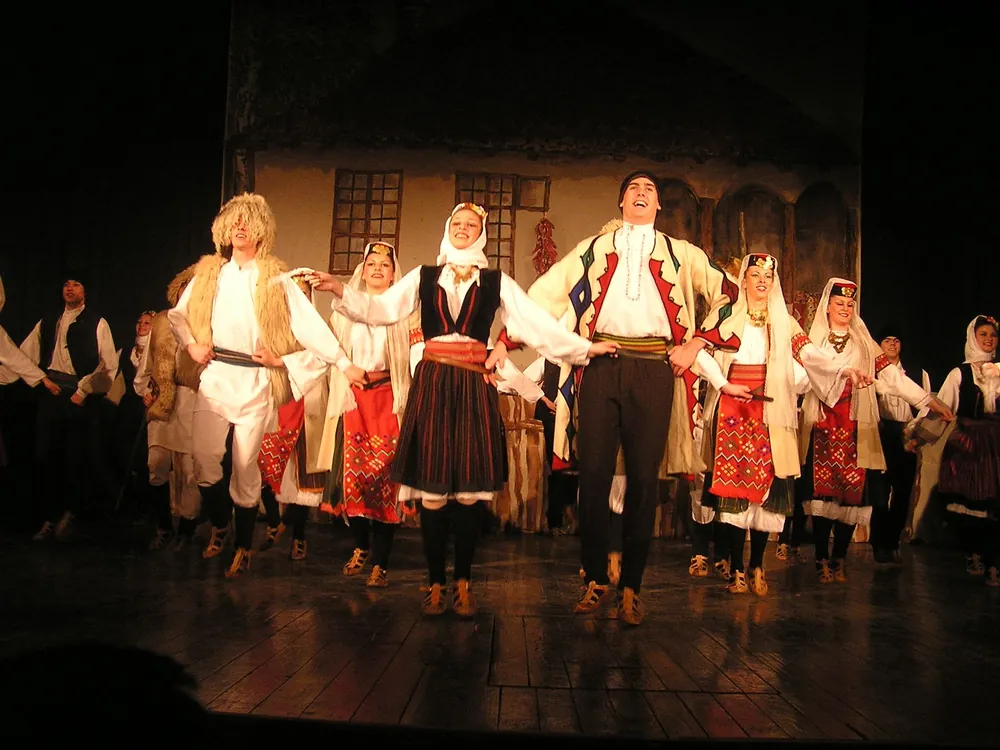
- *kolo “wheel”
- the same circle, another word
The first sense of choros may have been “circle”. Where the Greek word itself comes from, nobody knows: perhaps *gher- “to grasp, enclose”, perhaps *gher- “to like, want” — both guesses stand.
The sârba and the perinița are Romanian dances under other names, with other histories; they do not belong in the line of choros.
The two branches
The branch that dances
- HORO Bulgarian — through it the word enters Romanian (DEX)
- ORO Macedonian
- HORĂ Romanian, from Bulgarian (DEX: “Bg. horo”)
- HORA Turkish
- HORAH Hebrew, chiefly from the Romanian hora (Judaica)
- KHOROVOD Russian — “commonly analysed as” choros + vod “to lead”; one weak source
The branch that sings
- CHORUS Latin: “ring dance” (Merriam-Webster)
- CUER · QUER Old French: the stalls and the band of singers
- QUEOR · QUYRE English, c. 1300–1400
- CHOIR re-spelt c. 1650 after the classical form; “organized company of singers”
The bridge from dance to voice: Attic drama “arose from tales inserted in the intervals of the dance”; the tragic khoros held 12 or 15 people, the comic 24. That is where the chorus that comments on the play begins — and, much later, the stalls.
The same circle, another word
- KOLO Serbian, from Proto-Slavic *kolo “wheel”. Proof that the same circle can have another name. In UNESCO since 2017 — which hora is not.
- HALAY disputed: a Pontic song-refrain, per Wikipedia; outside choros either way.




Chapter V · 1856–1859
V. Hora Unirii
A magazine poem becomes, in three years, the song a whole country joins.
- 1856
- Alecsandri's poem
- Flechtenmacher
- the music
- 24 January
- Union day, hora day
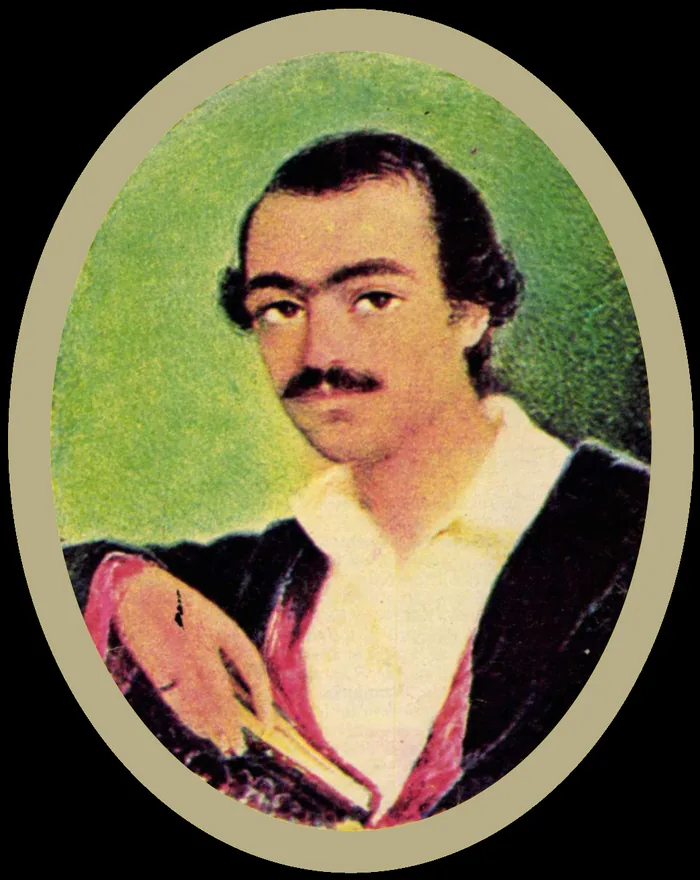
Vasile Alecsandri publishes the poem in 1856; Alexandru Flechtenmacher writes the music. The song is sung and danced above all on 24 January, the day of the 1859 Union — the “unofficial anthem” of the Principalities' merging.
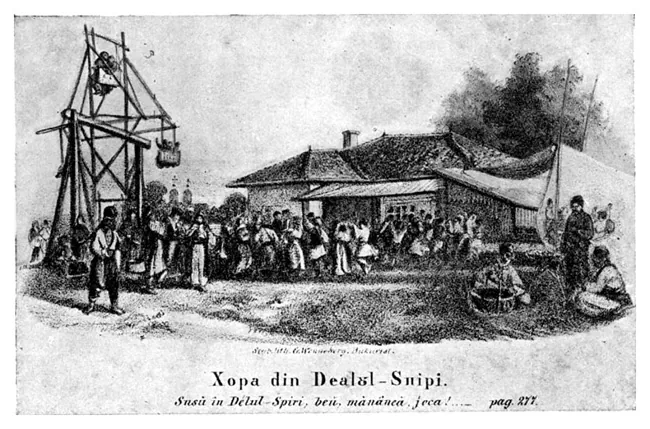
An 1857 lithograph shows the hora on Spirii Hill in Bucharest: two years later the same dance had new words.
The anthem's historic recordings hold no free licence; this chapter reads in silence.


Chapter VI · 1989 → today
VI. The living circle
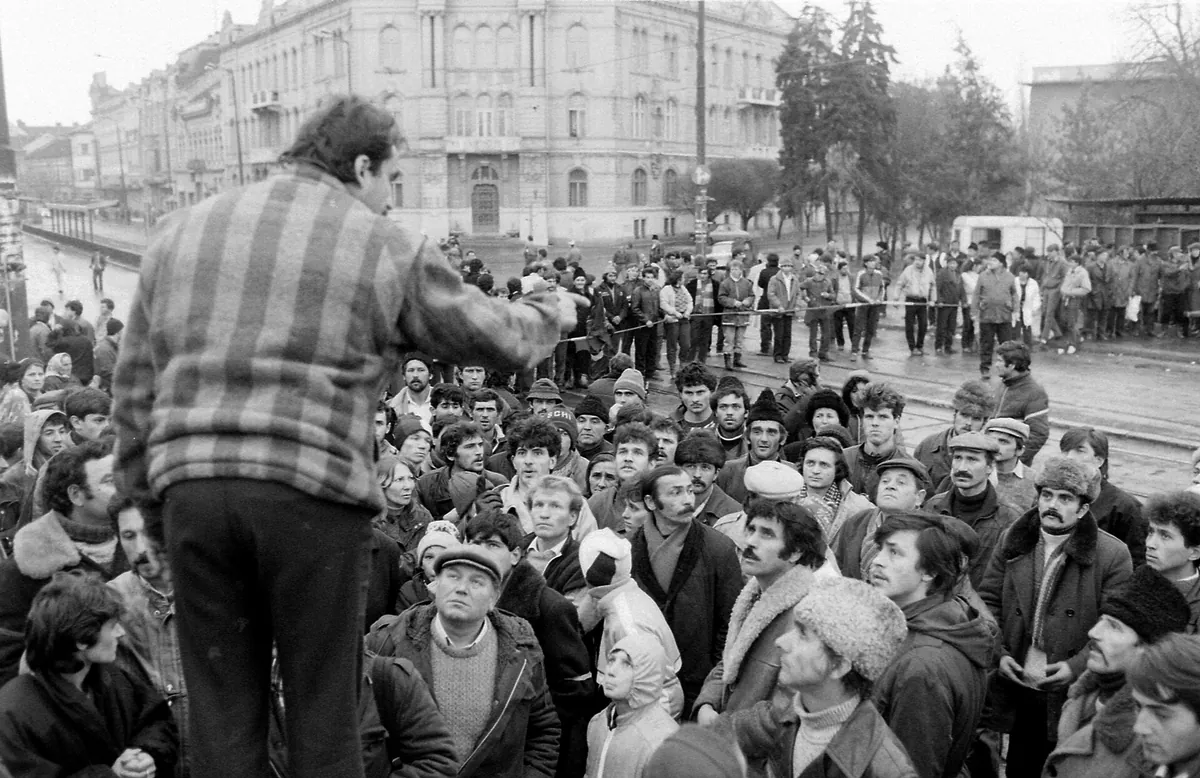
In December 1989, Timișoara sings Hora Unirii. The circle has held ever since.
- 16 December
- Timișoara takes to the streets
- “Libertate!”
- the chant, then the song
- 24 January
- the hora is danced every year
“The crowds began chanting ‘Libertate!’ and singing Hora Unirii and Deșteaptă-te, române”, notes a course text on the Revolution, of Timișoara. The singing is on record; the hora danced in Bucharest in those days belongs to memory, still unverified on paper.
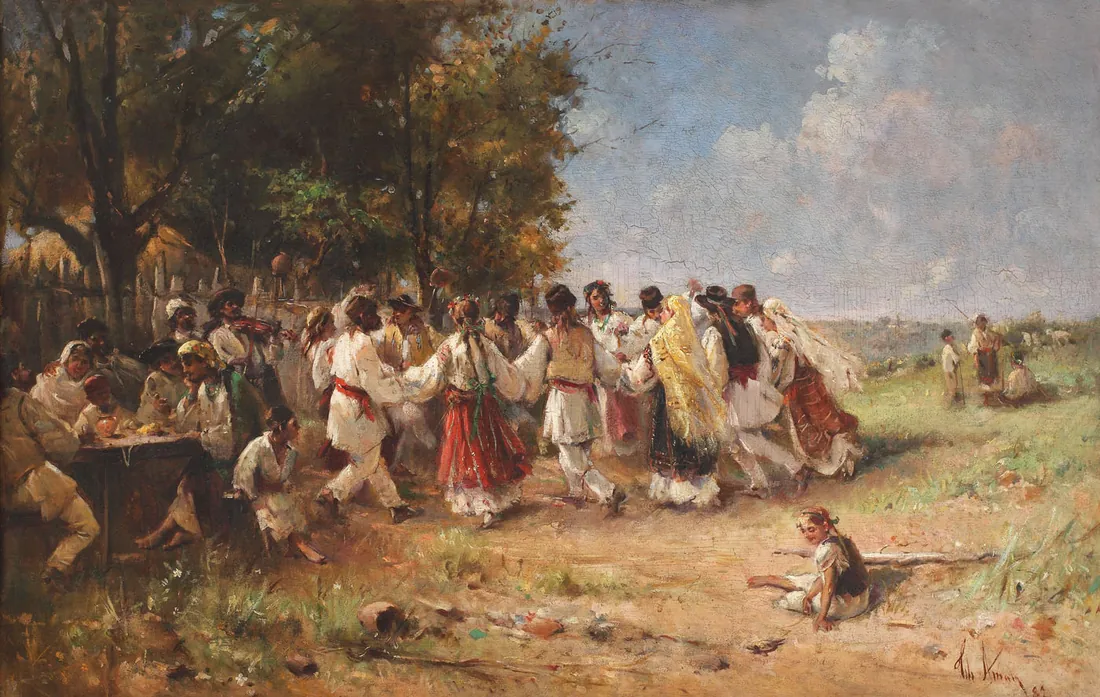
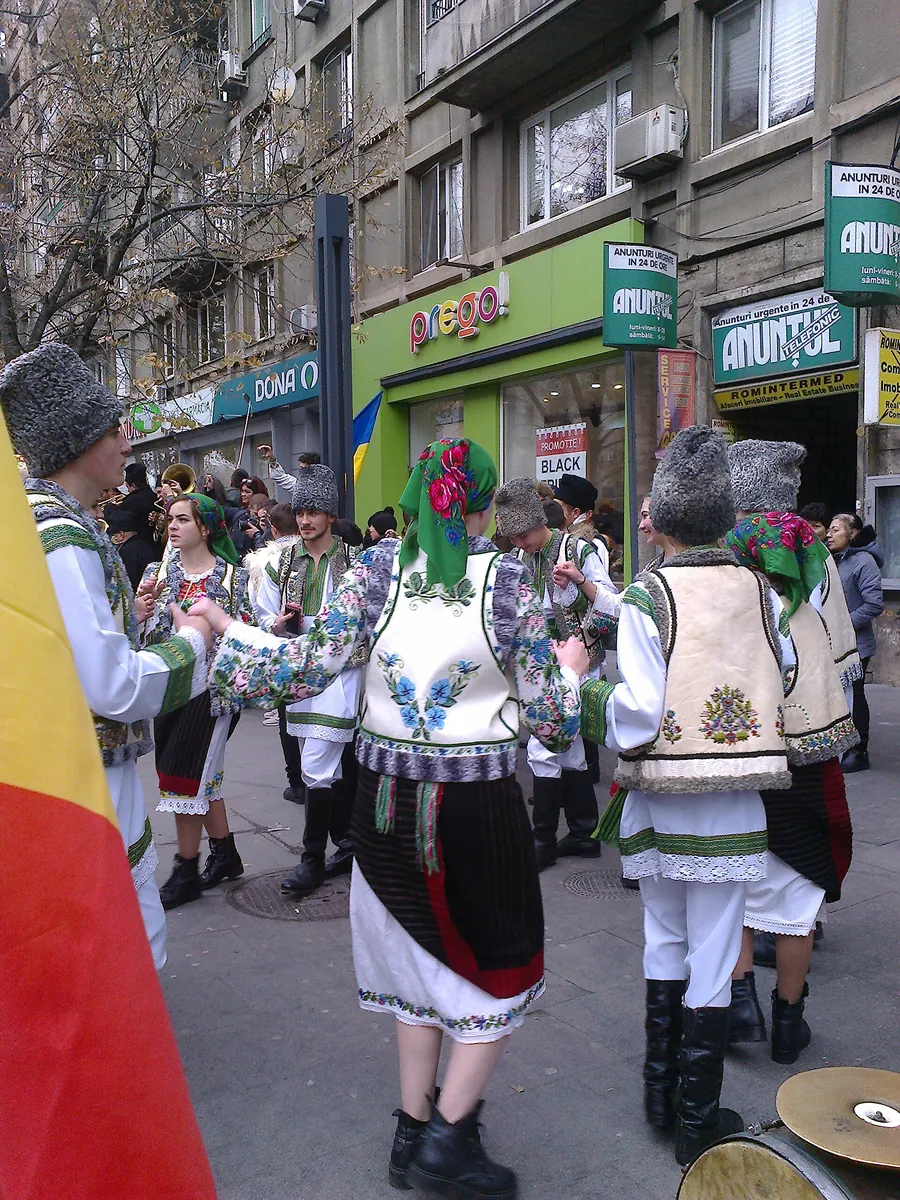
Every 24 January, on Union Day, the hora joins in squares from Iași to Bucharest. Aman painted it at Aninoasa in 1890; today's photographer catches it the same way, shoulder to shoulder.



What hora is not
Three claims heard often that do not stand.
“Hora is UNESCO-listed”
It is not on any list. Romania's list holds the Căluș, the Doina, Horezu ceramics, the Colindat, the Lad's dances, wall carpets, the Mărțișor, the Lipizzans and transhumance — no hora. The error starts partly in a symposium abstract that declares it listed; checking the official list refutes it.
“Kolo and halay are the same word”
They are not the same word. Kolo comes from Proto-Slavic *kolo, “wheel”. Halay is disputed, outside choros either way. The circles look alike; the words are unrelated.
“The hora has danced unchanged since Cucuteni”
No chain of records links the clay to today. What survives is the shape — the circle — and, from Homer on, the word. “Without a break” would claim more than we know.
Whose word is it?
Six forms, six languages. Match each form to its language; the score stays saved here.
1 HORO is the … form
The answer
Bulgarian — Horo is the Bulgarian form; through it horă entered Romanian.
2 ORO is the … form
The answer
Macedonian — Oro is the Macedonian form.
3 HORAH is the … form
The answer
Hebrew — Horah is the Hebrew form, taken — says Judaica — chiefly from the Romanian hora.
4 Which root does KOLO come from?
The answer
Proto-Slavic *kolo “wheel” — From *kolo “wheel”: proof that the same dance can have another name.
5 Which road brought CHOIR into English?
The answer
choros → chorus → cuer → choir — Through Latin and Old French; “band of singers” since about 1400.
6 What can be safely said about KHOROVOD?
The answer
“commonly analysed as” choros + vod — Only that: the breakdown travels with a single weak source.
The circle in numbers
Every figure comes from the sources above.
- 17
- Iliad lines, 18.590–606
- 4 · 6 · 8
- figures on the “Hora” vessels
- 12 · 15 · 24
- people of the tragic and comic khoros
- 3
- years from the poem (1856) to the Union (1859)
- 130
- years from the Union to December 1989
- 2017
- the year kolo enters UNESCO; hora is not on the list
Sources and method
Old texts first, then dictionaries, then history. The links lead to the cited pages.
Texts and dictionaries
- Iliad 18.590, Murray tr. (Perseus)
- Etymonline: choir
- Etymonline: chorus
- Merriam-Webster: chorus
- DEX online: horă
The dance and its history
- Hora (dance), etymology (EN-wiki)
- Byzantine dance (EN-wiki)
- Dance in Byzantium (Archaeology Wiki)
- Hora Unirii (EN-wiki)
- Horah (Encyclopaedia Judaica)
Contrasts and lists
- Kolo (dance) (EN-wiki)
- Kolo, traditional folk dance (ich.unesco.org/01270)
- Halay (EN-wiki)
- ICH elements in Romania (EN-wiki)
- Cucuteni-5000 Redivivus, pp. 32–33 (UTM, PDF)
The Murray (1924) quotes are public domain; the Romanian rendering of the Homeric passage is the author's own, marked as such. Where the source is missing, the text stays silent or tells the story as memory — see “What hora is not”.
Type: Fraunces, Newsreader and Atkinson Hyperlegible, under the SIL Open Font Licence.