mariuscomper.uk RO
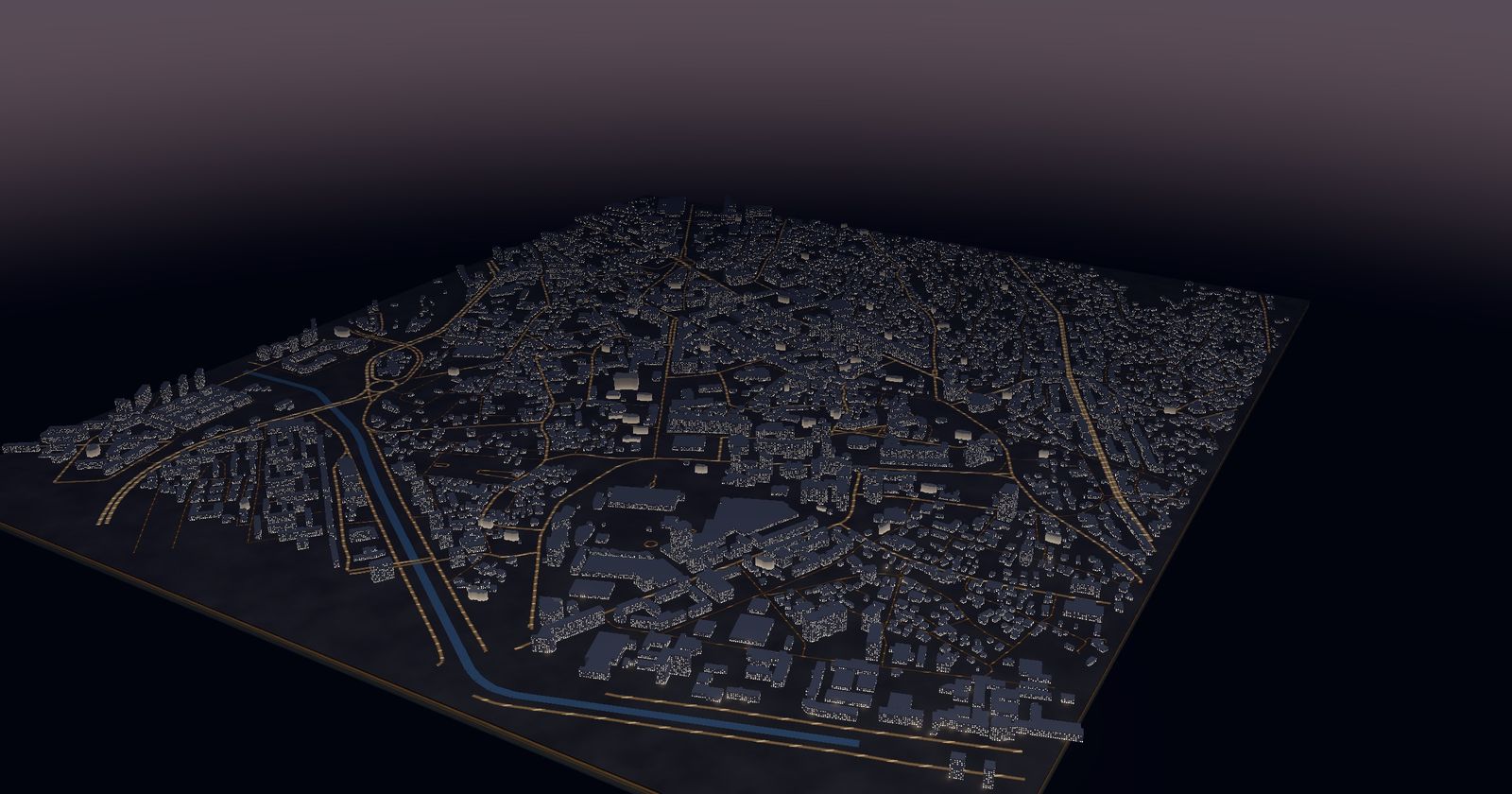
The old centre of Iași at night, set on a block of ground.

Iași, Romania · the old town

The hrube of Iași

Under the old centre of Iași, in north-eastern Romania, lie vaulted cellars, the hrube, from the 17th to the 19th centuries, some on two or three levels. Legend says a tunnel ran from here to Cetățuia Monastery, under the river Bahlui. Below: what archaeologists found and what the archives say, on today’s map.

The tunnel to Cetățuia

The story comes back whenever new hrube turn up: tunnels kilometres long are said to link the princely court with the fortified monasteries of Golia, Three Hierarchs and Cetățuia, and the princes are said to have fled through them when the town was besieged.

The dotted line to the south joins the Palace of Culture and Cetățuia Monastery: 2.9 kilometres in a straight line, under the Bahlui’s floodplain. Bobi Apăvăloaiei, then coordinator of the Iași county culture directorate, said in 2023 that the floodplain was once “a great marsh”, so such a tunnel would have been “a technical impossibility”, and it could not have been ventilated.

On horseback, says Amiras

The historian N. A. Bogdan wrote that Prince Mihai Racoviță was said to have escaped through this tunnel when Captain Ferenț besieged him in the princely court.

The chronicler Alexandru Amiras tells it differently: on hearing that the Germans were coming, the prince and all his boyars mounted their horses and rode to Cetățuia, where they shut themselves in.

The archivist Gh. Ungureanu, who set the two accounts side by side in 1973, noted that no document attests a stone tunnel under the Bahlui to Cetățuia or to Galata.

The tunnels that exist: the drains begun in 1832

In 1832, when levelling and paving the streets came up, Iași brought miners, called lagâmi, from Constantinople. They began digging drains of dressed stone for rainwater under the streets, which had to be built like mine galleries, deep enough not to hit cellars or foundations.

The main drain ran along the street that is now Ștefan cel Mare Boulevard and down towards the Bahlui; the princely court was connected to it by drains under the palace square.

Ungureanu relates, after the chronicler Manolache Drăghici, that in 1844, while the court was being repaired, men digging one of these drains came upon stone masonry like a tunnel, as high as a man of middling height and two cubits wide, holding a money belt with silver coins. People took it for the tunnel of the legend. Ungureanu notes that wherever such drains and cellars came to light, the same explanation followed at once: “this is the tunnel that went to Cetățuia”.

What has actually been found

The lit points are eleven places where old cellars or galleries have been measured by archaeologists, listed as historic monuments, described in the archives or reported in the local press. The ground is drawn see-through, to scale; the fine lines on the surface are 50 metres apart.

Each is only a fragment. Iași has no complete map of what lies beneath it, and cellars also come to light during building work: an underpass, a restoration, a foundation. “Whenever there has been digging in Iași, a great many cellars have been found,” said Bobi Apăvăloaiei.

Under the Palace of Culture

The Palace of Culture stands on the site of the princely court. In 1907, during work on the palace, the architect Ion D. Berindey identified the old court’s walls, and their plan survives.

Beside the Watchtower, two galleries are each about 22 metres long, 1.70 metres wide and up to 1.80 metres high, joined by a cross passage. In 2021 the museum showed foundations and walls of the old court under a glass floor, in the exhibition “Underground Iași – Istorii redescoperite”.

The cellar under Hotel Petersburg

In front of the Palace of Culture, where Ștefan cel Mare Boulevard ends, stood the houses of the high chancellor Grigore Ghica. His son sold them in 1847 to the banker Strul Heim Daniel, who let them from the following year to the Hotel Petersburg.

In a rescue dig by the Iași Institute of Archaeology, licensed in 2021, it turned out that the hotel’s foundation walls had been built over an older cellar, most likely in use in the 18th century, partly destroying it. Its vaults had collapsed. Their remains lay 1.75 metres below ground, the floor 3.86 metres, and the walls were about 75–82 centimetres thick.

The hrube beside Lozonschi Church

At the corner of Costache Negruzzi and Arhitect G. M. Cantacuzino streets, near Piața Unirii, beside St George Lozonschi Church and the former Sturdza palace, now the Faculty of Orthodox Theology, hrube were discovered in 2018 and described at the time by the archaeologist Stela Cheptea.

The structure is L-shaped, with a barrel vault strengthened by transverse arches. It was found about 3 metres below today’s ground. It is over 30 metres long, about 7 metres wide and over 3.5 metres high; inside, the span exceeds 4 metres and the height is up to 3 metres.

The drawing is to scale; the sources do not give the length and orientation of each arm, so these are approximate.

Inside

A person 1.75 metres tall reaches just over half the height of the vault.

Quoted by the newspaper BZI, Stela Cheptea dates them to the early 18th century; elsewhere the same article places them in the early 19th century, and a 2020 article called them “the old stables of Prince Grigore Sturza”. The date is not settled.

The restoration of the former Sturdza palace entered the government’s investment programme in 2020, estimated then at 76.15 million lei; according to the local site Ora de Iași, the project includes opening the hrube to the public.

What they were for: wine, spirits, pickles

“The cellars of Iași were famous,” Ungureanu wrote. Some held casks and barrels of wine and spirits, others vegetables and barrels of pickles. The princely court, the houses of many monasteries and churches, and those of boyars and merchants had cellars, enlarged as the vineyards of Miroslava, Bucium or Cotnari produced more. Iași was one of the most important wine depots in Moldavia.

Merchants with narrow shops sometimes dug a second cellar under the first. Under the Gothic Hall at Three Hierarchs, Ungureanu described a cellar on three levels, from which a passage led to other cellars of the former monastery.

The list of historic monuments includes “the cellars of chronicler Grigore Ureche’s house”, from the 17th century, which the archaeologist Voica Maria Pușcașu attributed to the houses of the chronicler’s father, Nistor Ureche, and the cellars of the abbot’s house at Barnovschi, from 1786. A rescue dig in 1982–1986 on the west side of Ștefan cel Mare Boulevard uncovered 17th-century houses, one of them with vaulted cellars.

The ground they are dug into

The south edge of the block, by the Palace of Culture, shows the layers of the terrace under the Palace, the National Theatre and Piața Unirii, from the city hall’s geological study: made ground down to 2–3 metres, and beneath it loess-like deposits, given in the study as “between 3 and 7 m”: a fine, porous, silty soil. The groundwater layer starts at about 6 metres below Piața Unirii, the National Theatre and the Palace of Culture. The drawing is schematic: in Tătărași, on the same terrace, the study gives 9–10 metres.

Wet loess can lose its strength. On Șorogari hill, at the edge of Iași, engineers from the Technical University flooded a test site in the 1960s: in a sample from 2.3 metres down, cohesion fell to zero after flooding, and near the surface the specific settlement on wetting reached 10.2%.

“The archive of the Iași city hall is full of files about collapses,” Ungureanu wrote. A record from 1884 that he quotes shows that on Păcurari Street, by the former Sculy house, part of the street had caved in because of the thousands of rats living in rubbish piled up in abandoned cellars. And the statue of Cuza could not be placed in Piața Unirii as planned, because of a large cellar on the side towards Lăpușneanu Street.

More than 3,000 cellars fit for shelter

In 1939, a civil-defence survey found more than 3,000 cellars in Iași that could serve as shelters, besides many others too weak to use.

The survey covered the whole city, and Ungureanu quotes it without addresses. So the points show at least how many there were, not where: there are 3,000 of them, scattered at random under the buildings on the map, which covers only the centre.

In 1973, he wrote, most of these underground voids were filled with water.

A puzzle with no map

The tunnel to Cetățuia remains a legend. The cellars are real: the eleven on the map have been measured or described, and in 1939 more than 3,000 were fit for shelter.

In 2023 Apăvăloaiei said that building work in Iași is preceded by archaeological surveys, and called the city beneath “a huge puzzle that is being completed with information”.

The documented cellars, one by one

Eleven places in Iași where old cellars or galleries have been measured, described by archaeologists, listed as historic monuments, described in the archives or reported in the local press. Where a column is empty, the source does not say.

PlaceWhat was foundDateSizeSource
The Lozonschi hrube
Costache Negruzzi × Arh. G. M. Cantacuzino
L-shaped vaulted gallery with transverse arches; investigated from 2018 by Stela Cheptea.early 18th c. (Cheptea); another article: early 19th c.over 30 m long, ~7 m wide, over 3.5 m high; found ~3 m downBZI, 2021
The cellar under Hotel Petersburg
in front of the Palace of Culture
Cellar with collapsed vaults, built over by the hotel’s foundations; rescue dig licensed in 2021.most likely 18th c.vault remains at 1.75 m, floor at 3.86 m; walls 0.75–0.82 mInstitutul de Arheologie Iași, 2022
The Watchtower galleries
Palace of Culture (former princely court)
Two galleries joined by a cross passage. A plan of the court’s walls identified by Ion D. Berindey in 1907, while the palace was built (after V. M. Pușcașu).—each ~22 m × 1.70 m, up to 1.80 m highZiarul de Iași, 2011
The cellar under the Gothic Hall
Three Hierarchs Monastery
Three-level cellar; from the deepest level a passage led to other cellars of the former monastery.—three levelsGh. Ungureanu, Cronica, 1973
Cellars of chronicler Grigore Ureche’s house
Anastasie Panu × Adamachi
Listed monument (IS-II-m-B-03961), on two levels; attributed by V. M. Pușcașu to the houses of Nistor Ureche.17th c.—Lista monumentelor istorice
Cellars of the abbot’s house
Barnovschi ensemble, 26 Ghica Vodă St
Listed monument (IS-II-m-A-03907.02).1786—Lista monumentelor istorice
The Cub ruins
Ștefan cel Mare Blvd, west side
Rescue dig 1982–1986: 17th-century houses, one with barrel-vaulted cellars. Archaeological site IS-I-s-A-03512.14th–17th c. (monuments list)—V. M. Pușcașu, 2019
The Sf. Vineri underpass cellar
by the Central Market
Semi-basement and cellar of an old house, found when the underpass was dug (2006) and kept inside it (2012).18th-c. remains—Ziarul de Iași, 2012
The cellar under Hotel Traian
Piața Unirii
“A large cellar with extensions” under Academiei Street, with passages reaching Piața Unirii.——Gh. Ungureanu, Cronica, 1973
Casa Universitarilor cellar
Toma Cozma St, Copou
A well, a water tank and fittings, investigated by a team from Al. I. Cuza University.house from about 1800, rebuilt 1840~200 m²BZI, 2020
Metropolitan Palace hrube
16 Ștefan cel Mare Blvd
Hrube in the basement and the courtyard.——BZI, 2020

What is not known

There is no public map of all the hrube. The 1939 count of cellars fit for shelters is quoted by Gh. Ungureanu without addresses. For the Lozonschi hrube, the local press gave two different dates, and the length and orientation of each arm of the L have not been published; in the drawing they are approximate. For the other places, the points mark the building or the street corner, not the shape of the cellar.

Buildings, streets, parks and the Bahlui are from OpenStreetMap; building heights come from OpenStreetMap tags and, where those are missing, are estimated from the building type. The layers on the edges of the block follow, everywhere, the profile of the Bahlui’s first terrace in the city hall’s geological study (made ground to 2–3 m, loess-like deposits “between 3 and 7 m”, groundwater 6 m below Piața Unirii, the National Theatre and the Palace of Culture); the water plane is drawn only over that terrace. On the higher terraces, towards Copou and Tătărași, the same study gives other thicknesses and groundwater at 9–14 m.

Share

A link that opens straight on the story of the hrube.

More on Iași

Sources

The numbers and quotations in the text come from the sources below. Map data: © OpenStreetMap contributors, ODbL.

  1. Gh. Ungureanu, „Pivnițele, canalele și hrubele Iașilor”, Cronica (Iași), 1973: canalele din 1832, tunelul din 1844, Racoviță și Amiras, statistica din 1939, prăbușirea din 1884, pivnița de sub Sala Gotică. www.bibliotecadeva.ro
  2. Institutul de Arheologie Iași, raport de cercetare arheologică preventivă, Casa Ghica-Daniel / Hotel Petersburg, 2022 (RAN 95079.04). cronica.cimec.ro
  3. V. Hutanu, „O construcție, cu hrube de senzație, va fi reabilitată”, BZI, 19 noiembrie 2021 (hrubele Lozonschi). www.bzi.ro
  4. „În premieră, descoperirile subterane… vor intra într-un proces de restaurare”, BZI, 2020 (datarea și atribuirea Stelei Cheptea). www.bzi.ro
  5. C. Hitruc, „Misterul tunelurilor din Iași”, Adevărul, 4 aprilie 2023 (Bobi Apăvăloaiei, DJC Iași). adevarul.ro
  6. „Hrubele de sub pietonalul Ștefan cel Mare…”, Ora de Iași, 23 septembrie 2026 (formularea legendei). oradeiasi.ro
  7. „Turnul Străjerilor și două tuneluri vor fi restaurate în acest an”, Ziarul de Iași, 2011. www.ziaruldeiasi.ro
  8. V. M. Pușcașu, Cercetări istorice, Muzeul de Istorie a Moldovei, 2018 (planul lui Ion Berindei, 1907). biblioteca-digitala.ro
  9. Palatul Culturii, expoziția „Underground Iași – Istorii redescoperite”, 2021. palatulculturii.ro
  10. V. M. Pușcașu, Ioan Neculce. Buletinul Muzeului Municipal, 2019 (pivnițele Ureche, ruinele de la Cub). biblioteca-digitala.ro
  11. „Pasajul Sf. Vineri a fost inaugurat”, Ziarul de Iași, 2012. www.ziaruldeiasi.ro
  12. „Descoperiri arheologice în hrube de la monumentul istoric Casa Universitarilor”, BZI, 2020. www.bzi.ro
  13. „Descoperiri în subsolul de la Palatul Mitropolitan din Iași”, BZI, 2020. www.bzi.ro
  14. Lista monumentelor istorice, județul Iași (IS-II-m-B-03961, IS-II-m-A-03907.02, IS-I-s-A-03512). temp-18-250.cimec.ro
  15. Primăria Iași, studiu geologic pentru versanți (stratigrafia terasei I a Bahluiului). www.primaria-iasi.ro
  16. N. Boți, I. Boți, „Cercetări privind fundarea construcțiilor pe loessuri… Colina Şorogarilor – Iași”, Conferința Națională de Geotehnică, 2012. srgf.ro
  17. CNI, programul de investiții 2020 (fostul palat Mihail Sturdza, 76,15 milioane de lei). www.cni.ro
  18. OpenStreetMap: clădiri, străzi, parcuri, râul Bahlui (ODbL). www.openstreetmap.org