Humor · Suceava
Humor · Suceava
A siege with no year
Five or six kilometres from Gura Humorului, the church at Humor Monastery carries paintings across its outer walls. Low on the south facade is a scene known as the “Siege of Constantinople”. Its title identifies a city and a subject; it gives no year for the event. [1] [3]
When the painting is compared with written sources, two historical memories come into view: the siege of 626 and the conquest of 1453. The scene sits beneath a hymn praising the Virgin, linking military history with an older liturgical tradition. Neither connection turns the image into a documentary portrait of one particular siege. [3] [4]
The site’s history
The monastery is older than today’s church
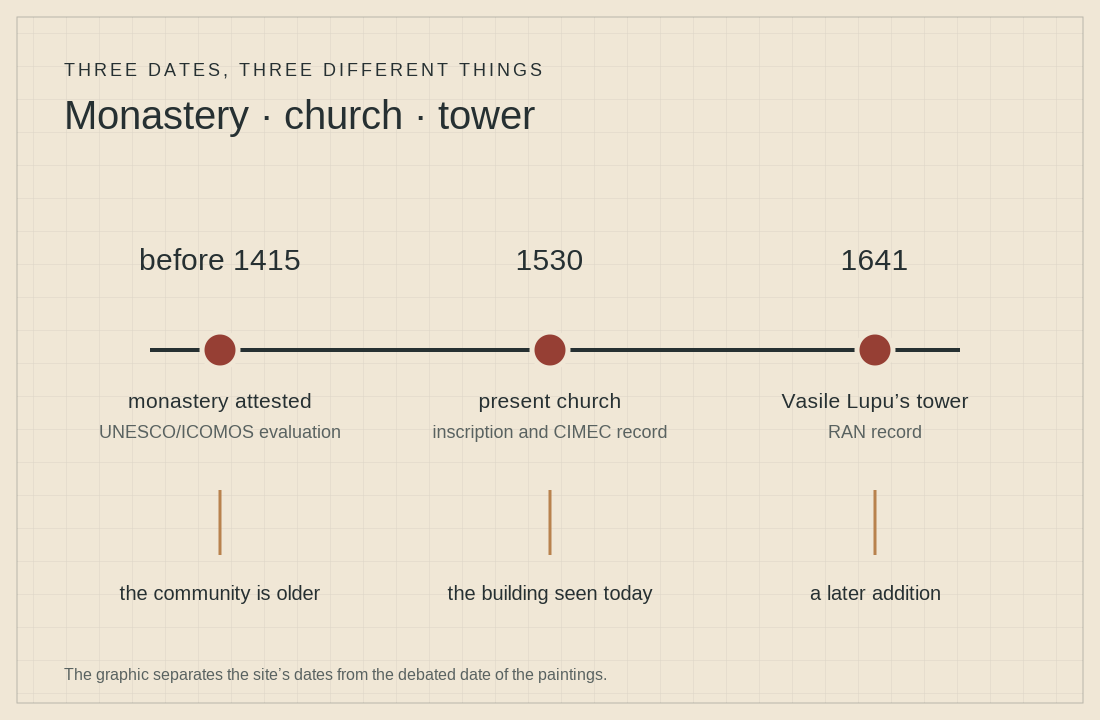
The 1993 UNESCO/ICOMOS evaluation places the monastery before 1415. The church visible today was built in 1530. Keeping these dates apart prevents a common confusion: the beginning of the community and the construction of the present building are different moments. [2] [1]
The CIMEC entry also mentions the ruins of an older church nearby. The sources support an earlier monastic site and a new church built in 1530; they do not date every surviving wall or describe every stage between those points. [1] [2]
The 1530 church
The logothete Toader Bubuiog built the church
The church inscription gives 1530 and names Toader Bubuiog and his wife Anastasia. The logothete was one of Moldavia’s senior officials. The UNESCO/ICOMOS report says Petru Rareș wished and helped the church to be built during his first reign, from 1527 to 1538. [1] [2]
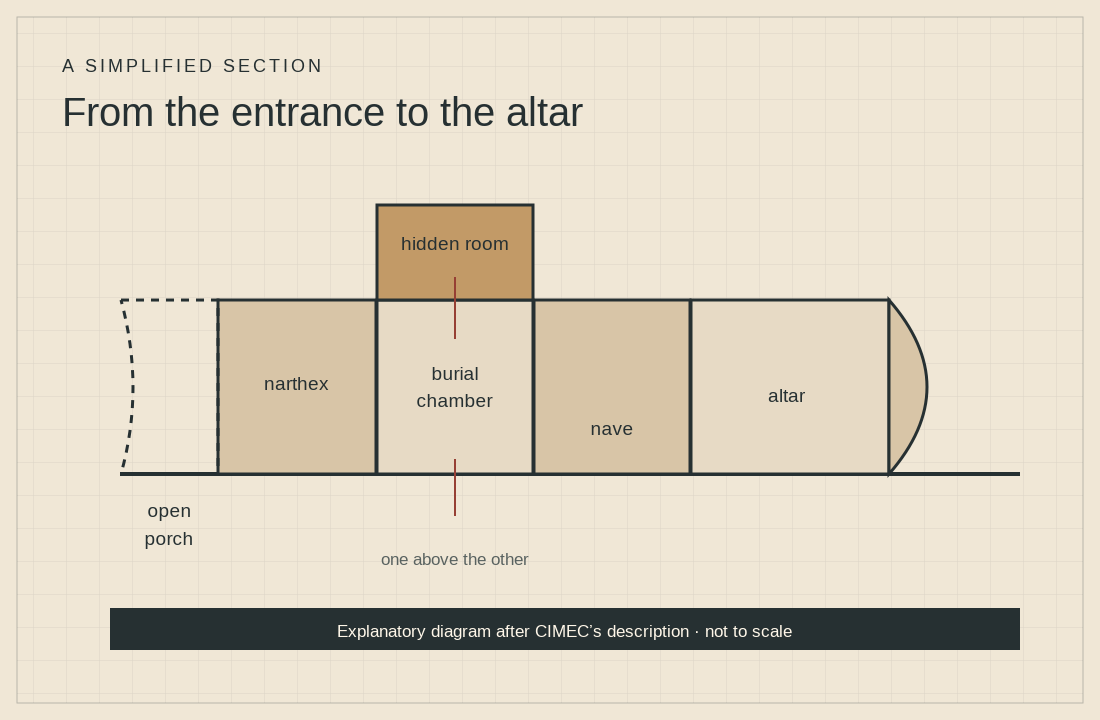
The church has several distinctive features: an open porch on three sides, a three-apsed plan without a drum above the nave, and a burial chamber topped by a room called a tainiță. The section diagram follows the sequence of spaces. Sources describe the tainiță as a hidden room; they do not specify its use here. [1]
Around the building
Each side tells a different story
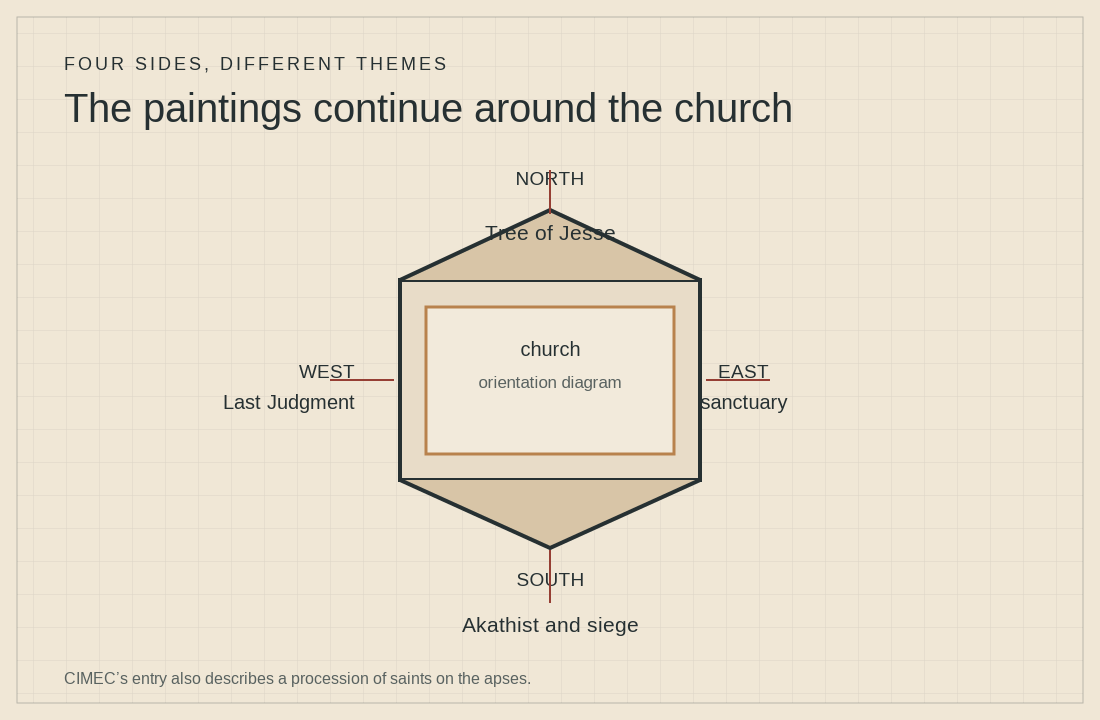
CIMEC records a painted programme across the exterior. The south wall carries the Akathist Hymn; fragments of the Tree of Jesse survive on the north; the Last Judgment appears on the west porch. Processions of saints cover the apses. [1]
The Akathist is a long Christian hymn in praise of the Virgin Mary, arranged in stanzas and images. The Tree of Jesse presents Mary in Christ’s genealogy, while the Last Judgment shows humanity’s fate at the end of time. These themes help explain why the military scene is read in relation to the rest of the facade. [1] [3]


An exact position
The hymn and the siege share one facade
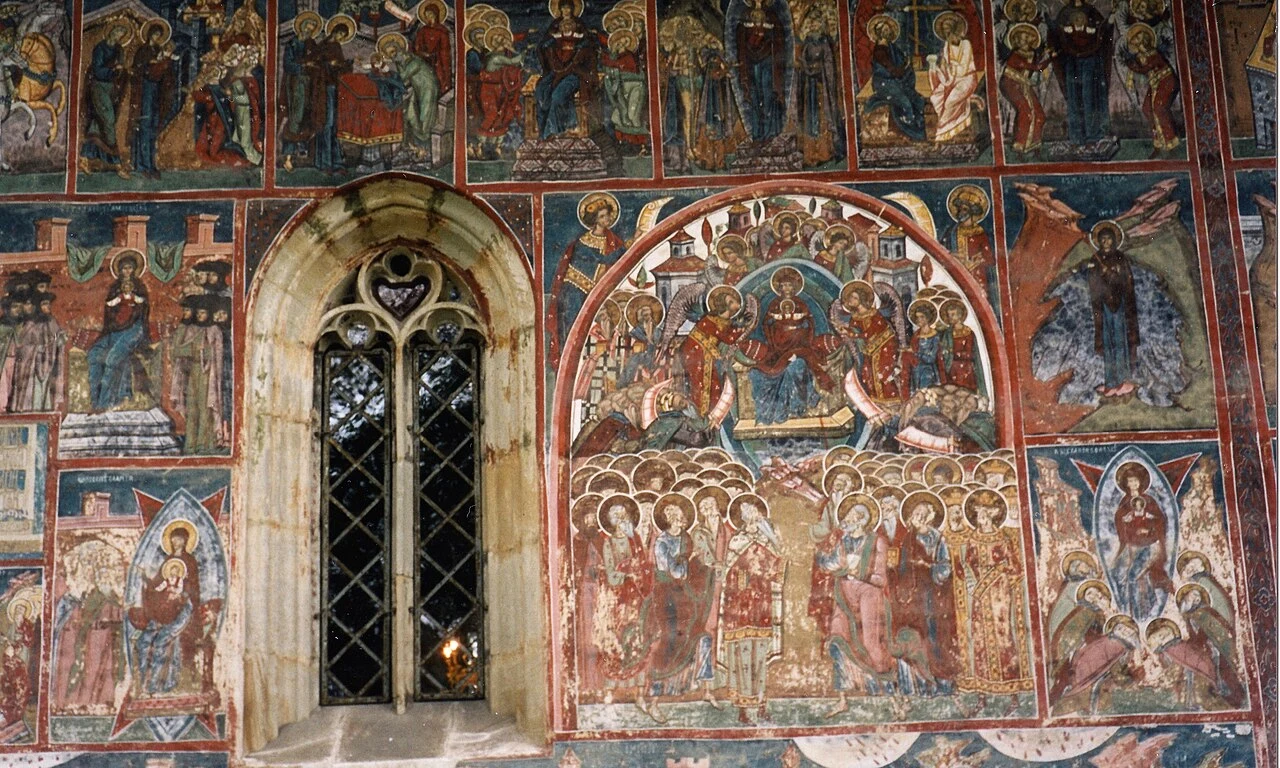
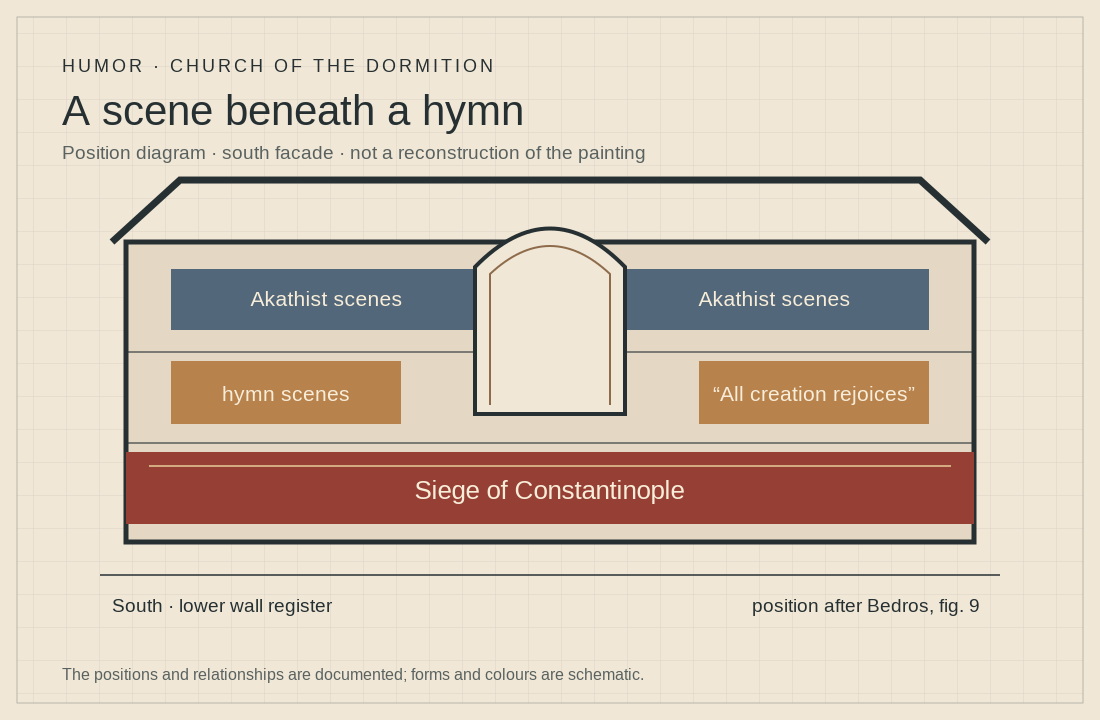
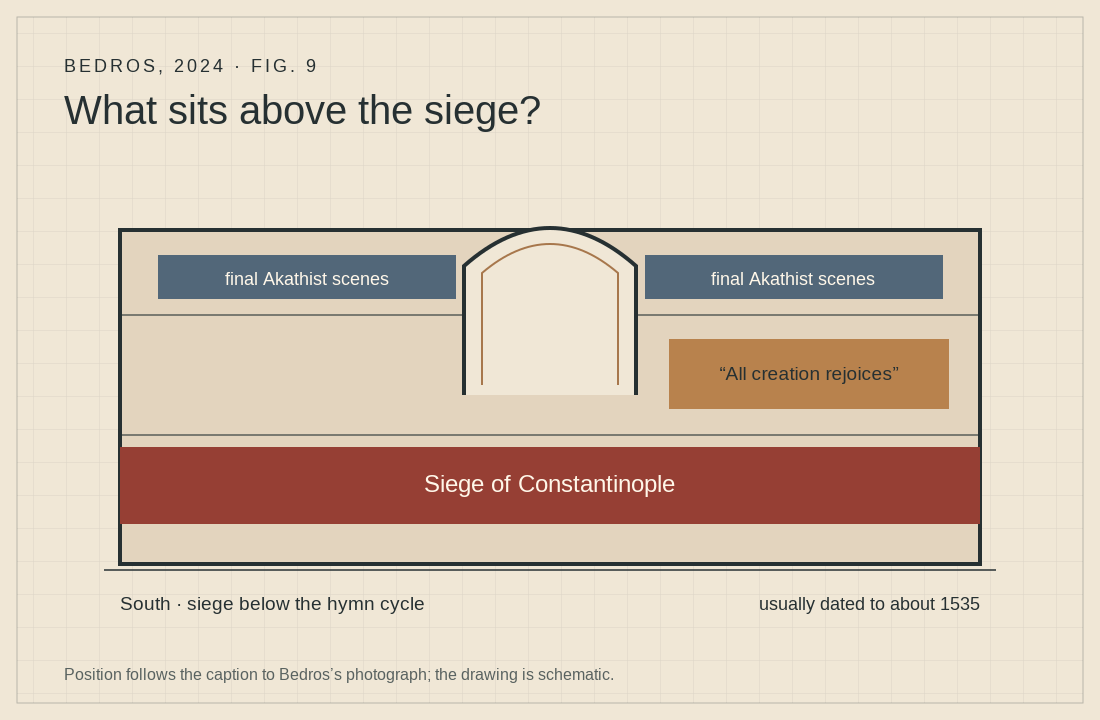
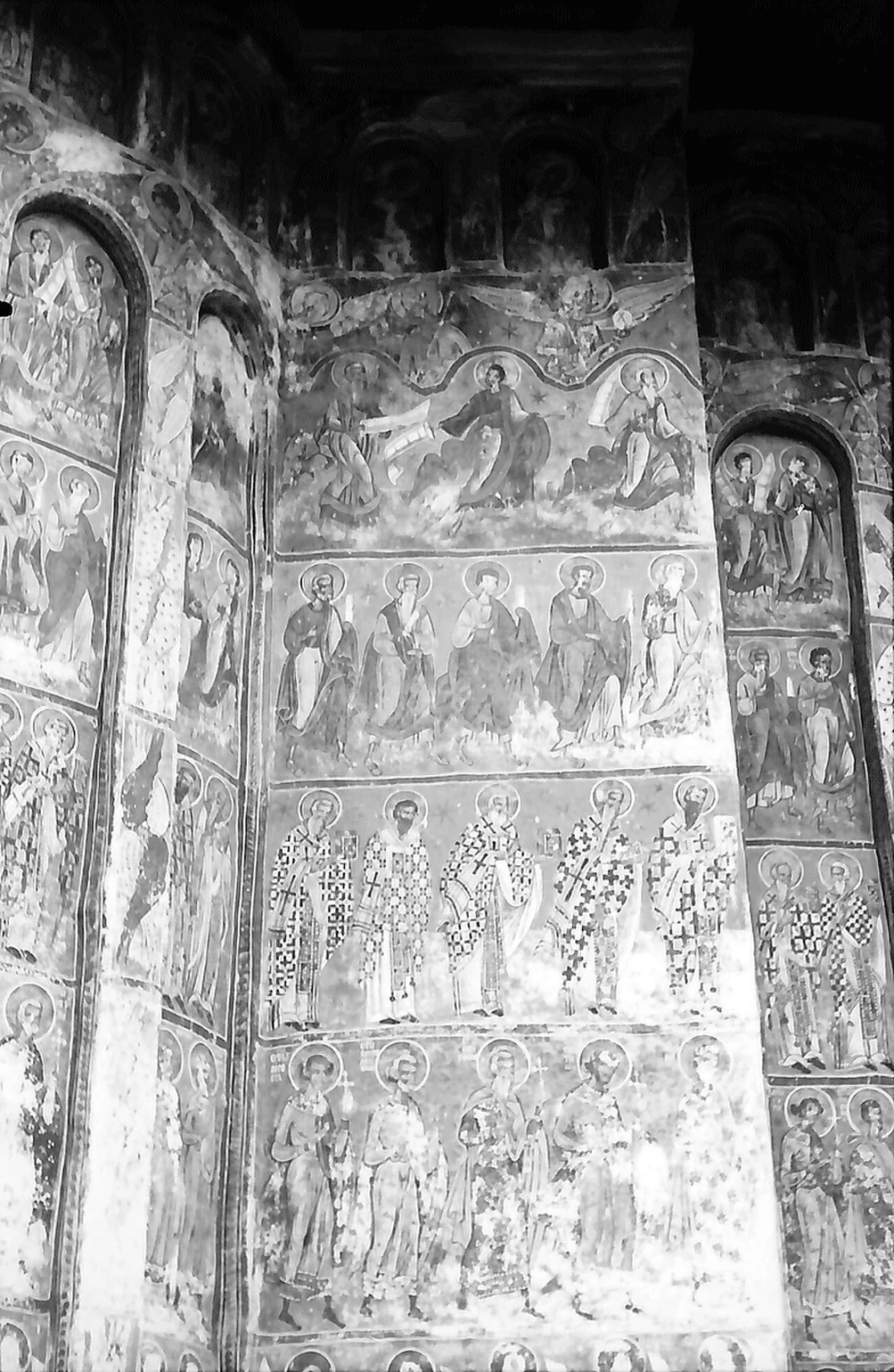
In the caption to his photograph, Vlad Bedros identifies “All creation rejoices in thee” among the Akathist’s final stanzas. The Siege of Constantinople appears immediately below it in the same photograph. The location is specific: the south wall, with the hymn cycle above and the siege in the lower register around the window. [3]
Bedros argues that the siege forms a visual base beneath the Akathist’s cycle of 24 stanzas. Its position gives it a role in the whole ensemble and connects the narrative to the hymn’s liturgical use during Lent. The layout supports a reading of the image in context; it does not establish the date of a historical event. [3]
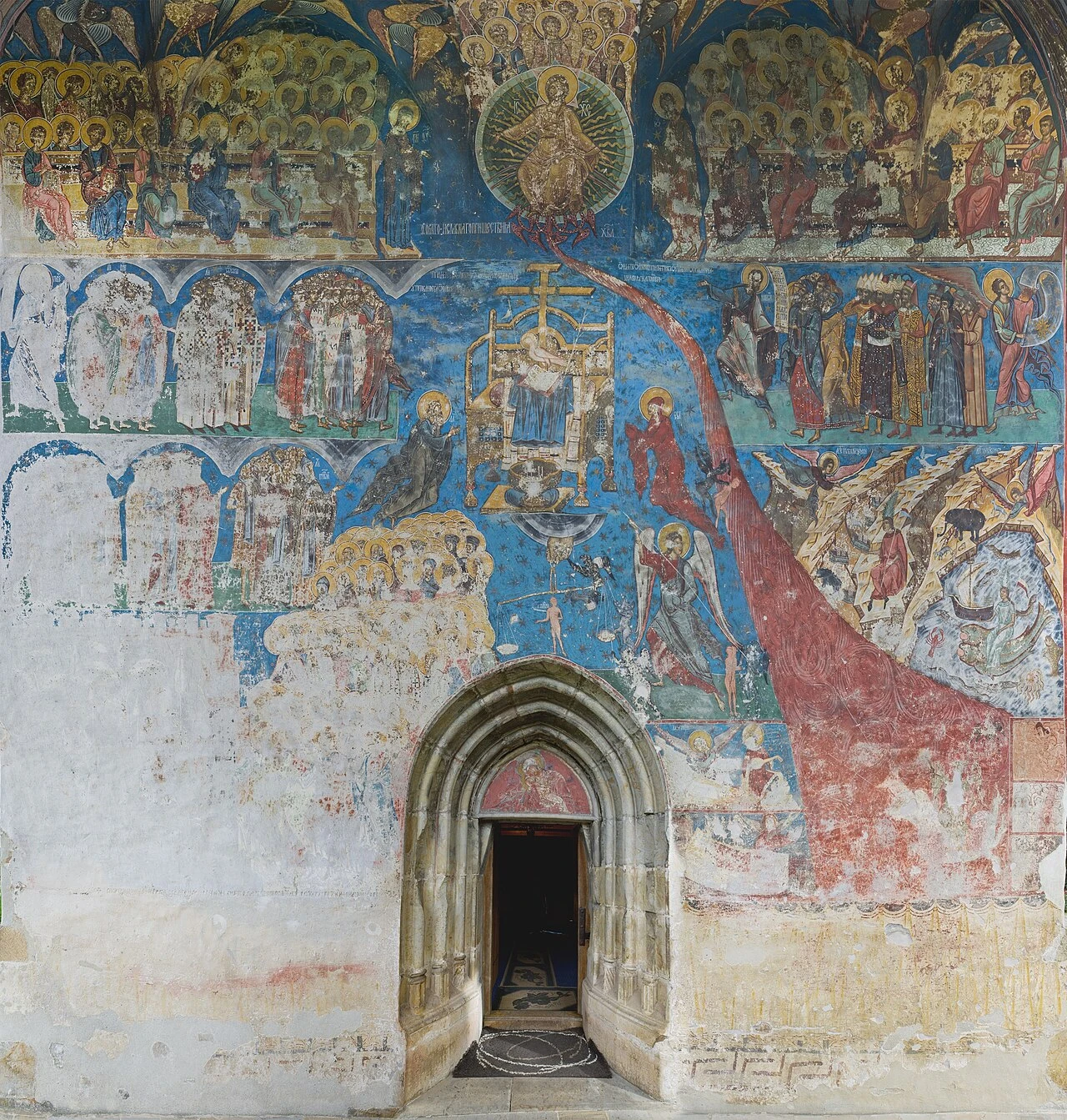
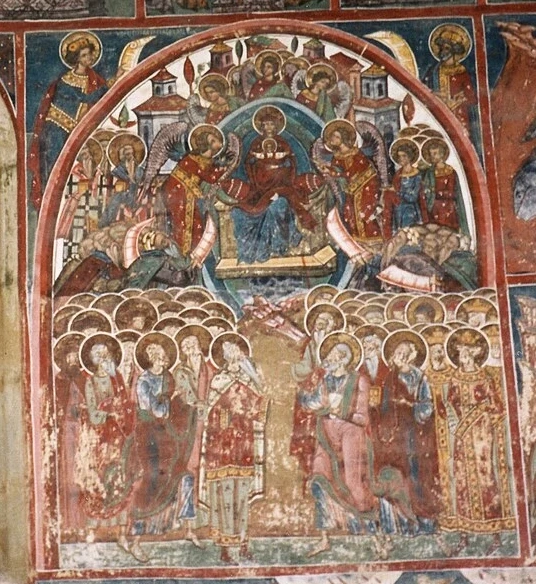
In Kiss Tamás’s photograph look at the painted arch to the right of the window, with the Virgin and Child at its centre. Bedros’s numbered photograph also takes in the siege below the bands of painted scenes on the same wall. [14] [3]

Reading the image
626 or 1453? Follow the clues
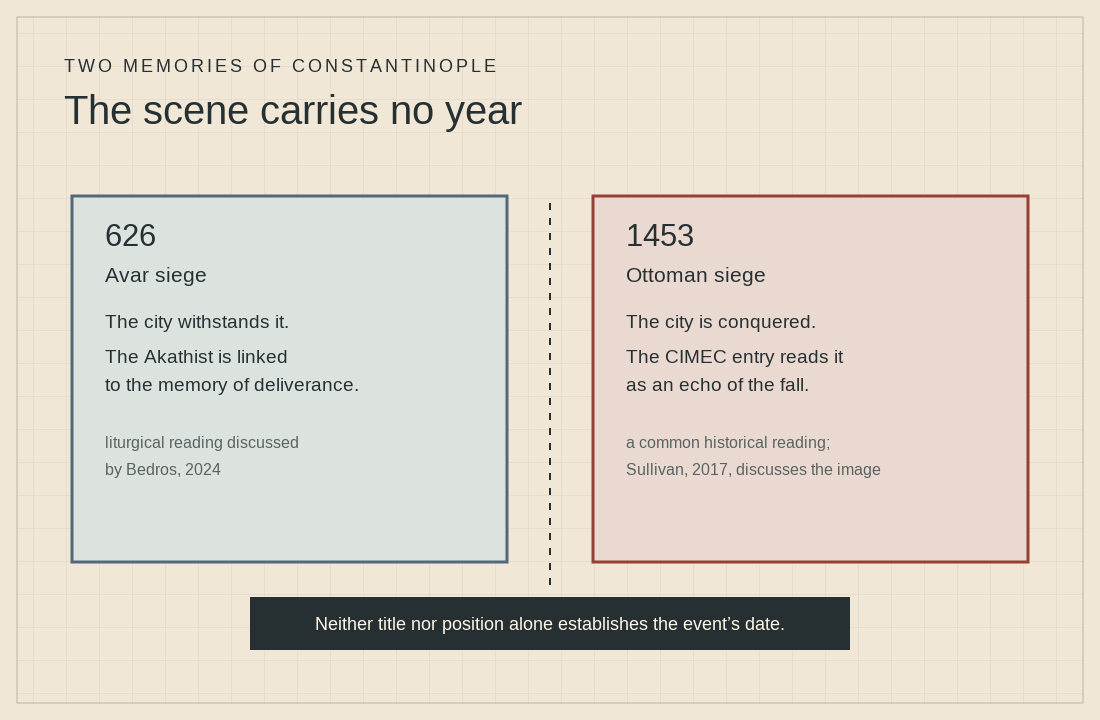
The scene is known as the Siege of Constantinople. The CIMEC record connects it with the Ottoman conquest of 1453. The tradition around the Akathist Hymn also recalls the deliverance of the city in 626, when Constantinople resisted an Avar attack. Both memories inform readings of the painting. [1] [3]
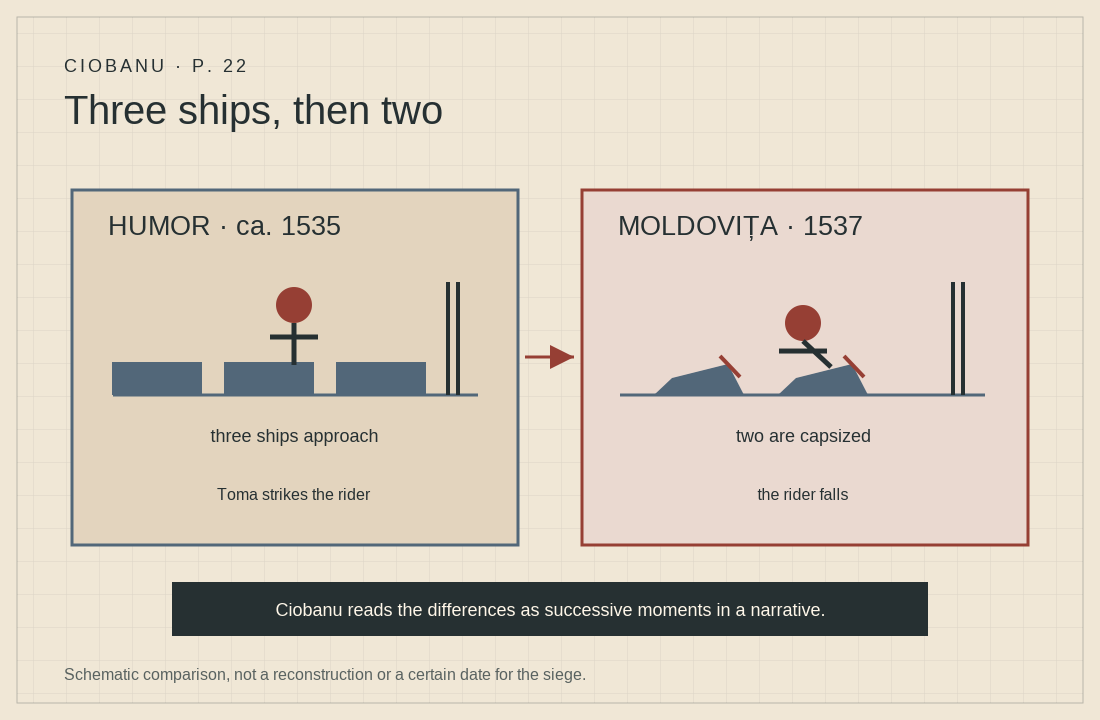
Constantin I. Ciobanu compares details at Humor and Moldovița. In his reading at Humor the Christian rider Toma strikes the Ottoman rider as three ships approach. At Moldovița the Ottoman rider falls and two ships have capsized. Ciobanu reads these as successive moments in one story. The details clarify the painted narrative. Which historical siege is evoked remains a question of interpretation. [12]
What can a portrait date?
What can the year 1535 establish?
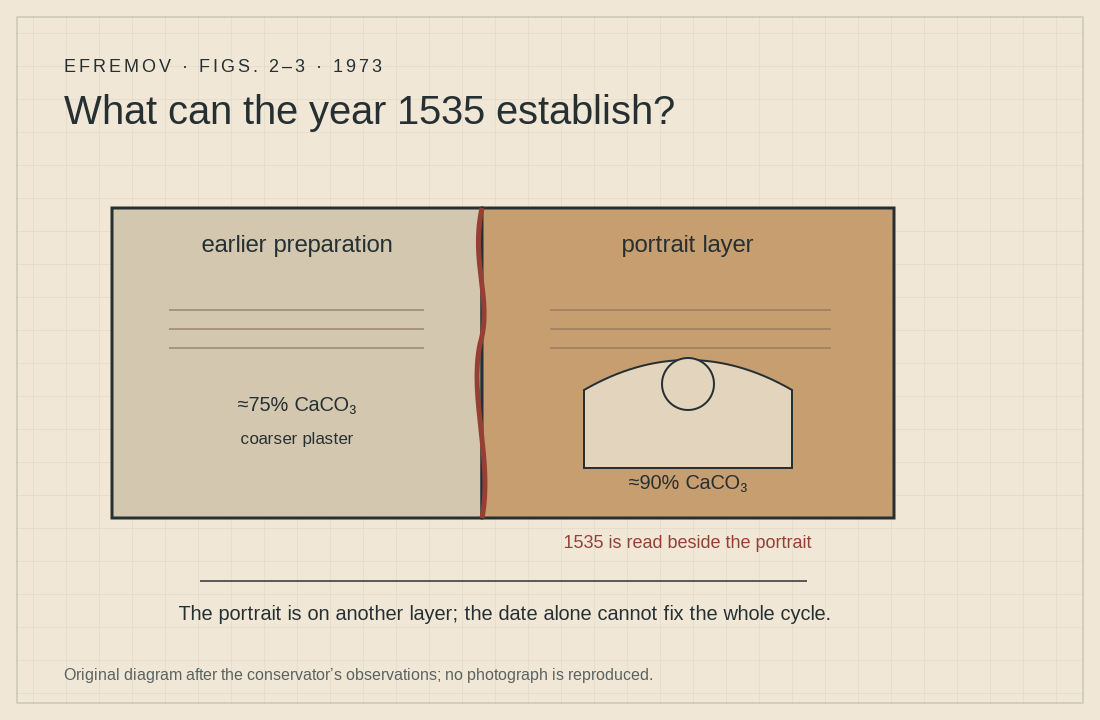
The date commonly used for the mural ensemble is around 1535. Sorin Ulea read 1535 beside the portrait of the monk Paisie on the north wall and used it to date the paintings. In 1973, conservator and art historian Alexandru Efremov examined that portrait and described a join between the earlier wall preparation and the plaster used for the portrait. [5] [13]
Efremov’s laboratory measurements record about 75% calcium carbonate in the coarser surrounding plaster and about 90% in the finer preparation beneath Paisie’s portrait. The difference identifies a separate painted layer; the date beside it cannot securely date the whole cycle. Bedros later notes that Paisie is documented alive in 1539 and 1541, adding another limit to readings of the inscription. The murals may date to about 1535, but the precise year remains unsettled. [5] [13]
The painter’s name
Toma appears on one scene, not every wall
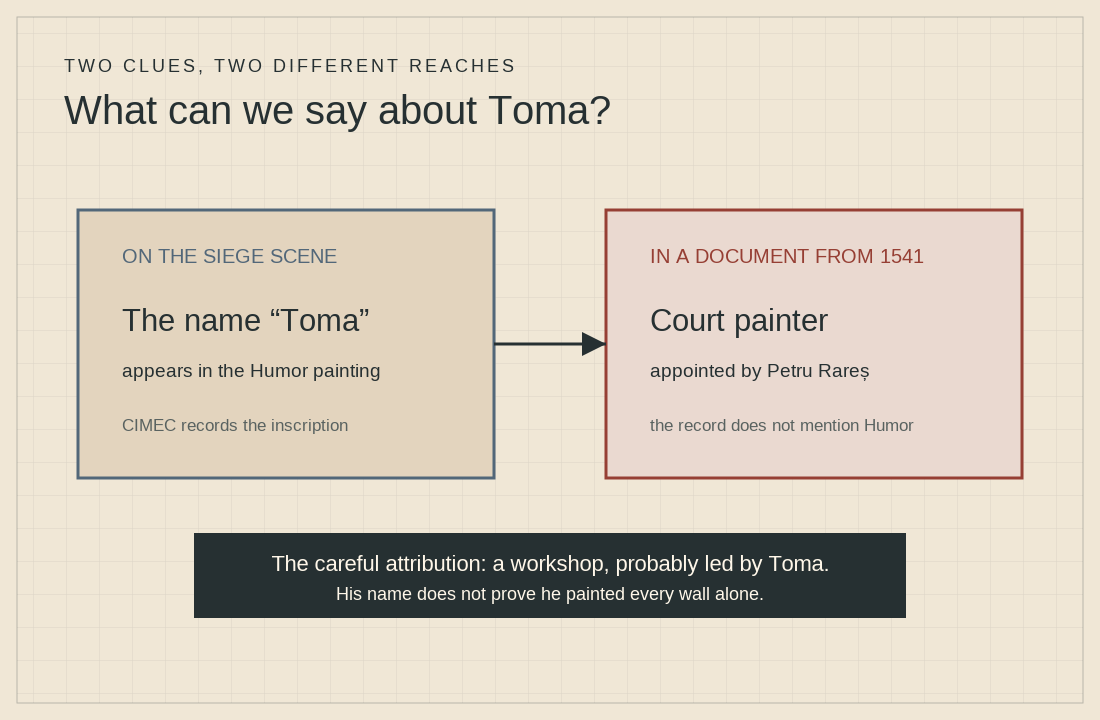
CIMEC records the name Toma on the siege scene. Constantin I. Ciobanu identifies him as the Christian horseman who strikes an opposing rider. A separate 1541 document names Toma as court painter to Petru Rareș. These clues connect the painter with Humor and the prince’s court. [1] [12]
Together, the inscription and court record support an attribution to a workshop probably led by Toma of Suceava, as CIMEC phrases it. The 1541 document establishes his court position; it does not describe who painted each wall. A large cycle like this could involve several painters working together. [1]
Another layer of the ensemble
The tower came later
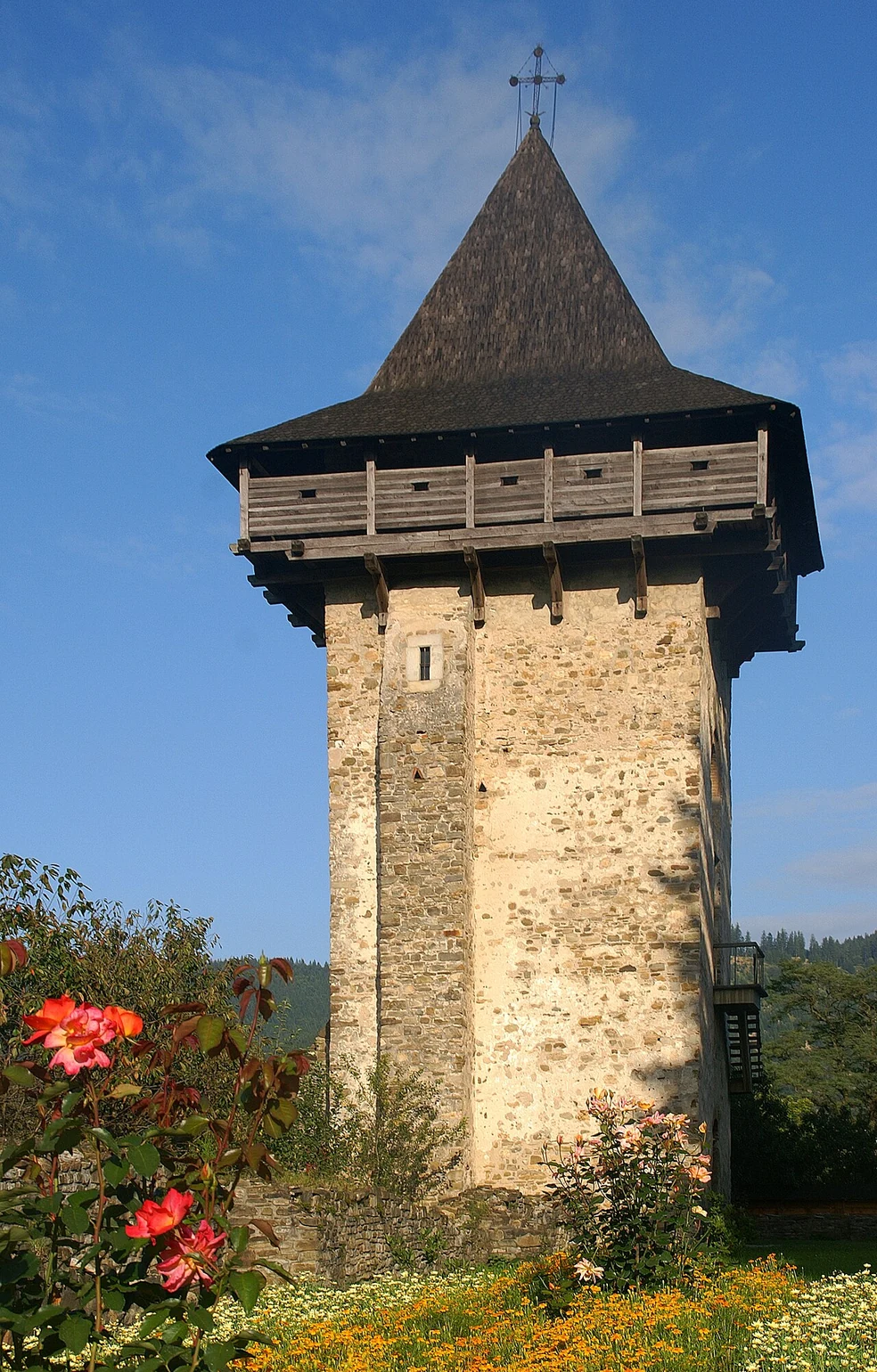
The bell tower is dated to 1641 and attributed to Vasile Lupu. The present church had stood for more than a century by then. The tower has a ground floor and three upper levels, with narrow windows. Stanislav Dusík’s photograph shows how the defensive tower now rises above the enclosure. [6] [11]
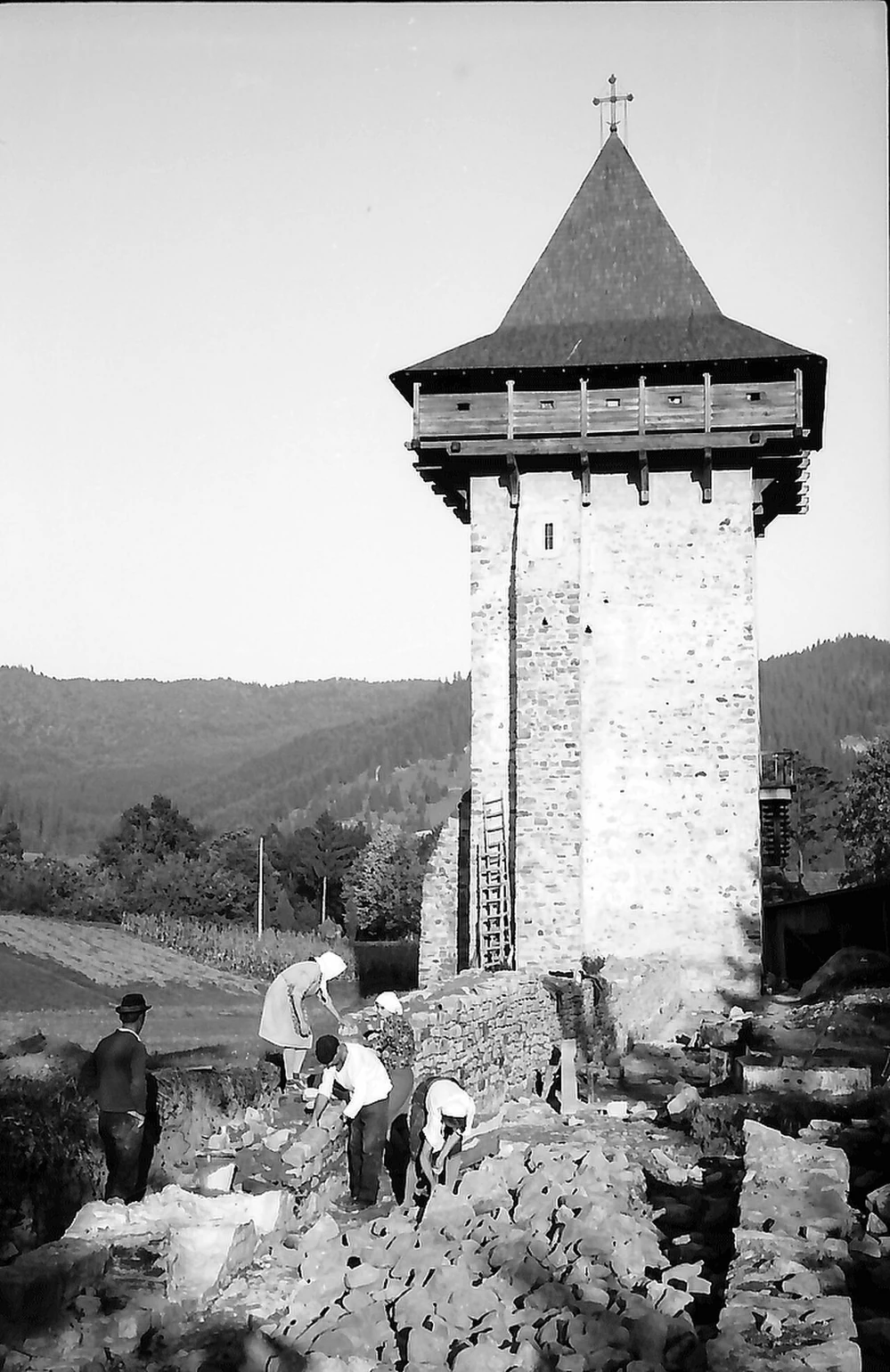
Willy Pragher photographed the tower and ditch works in the foreground on 25 September 1971. The archive caption does not say what the works were for. The ICOMOS report says mural restoration at the seven listed churches was under way with UNESCO support from 1971. The photograph records the site that year without identifying the work in the frame. [9] [2]
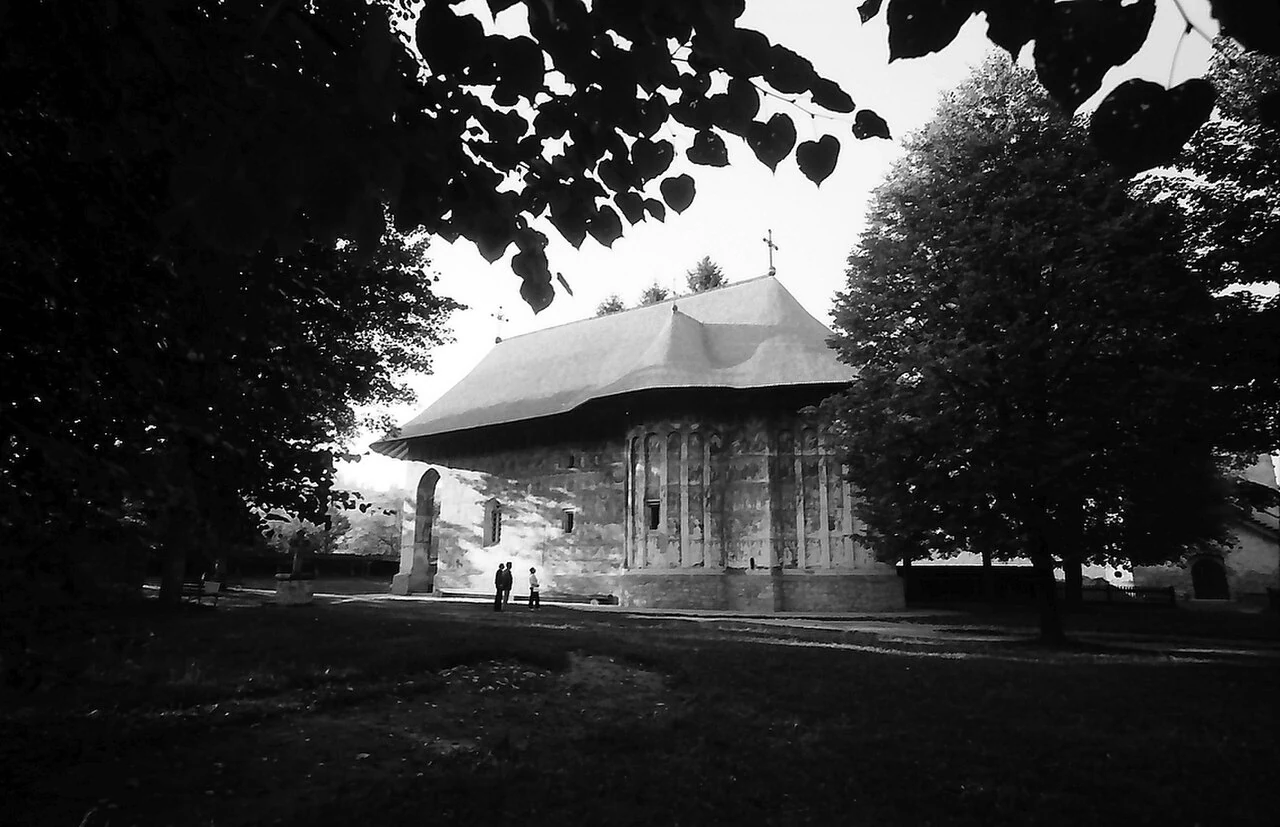
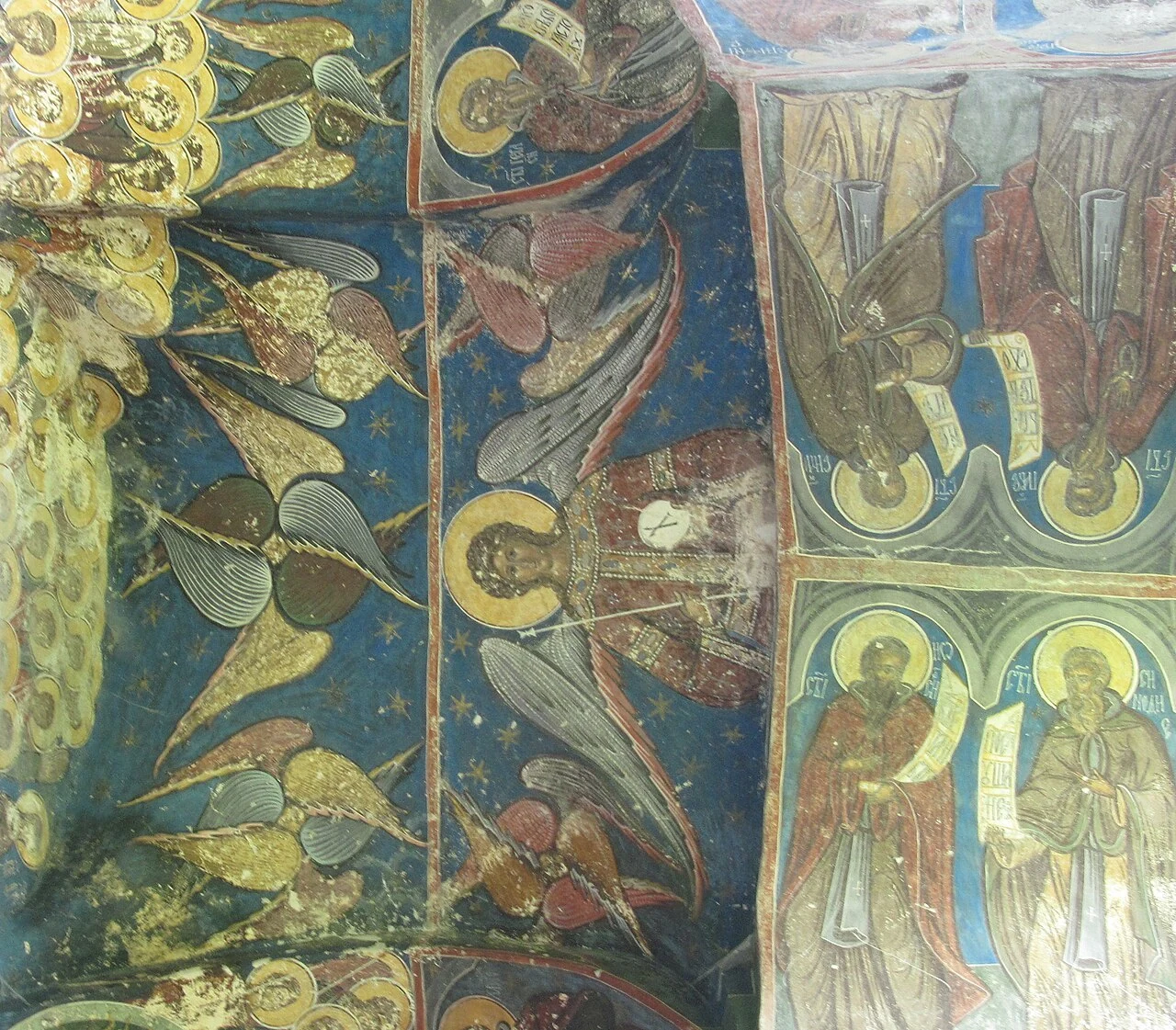
Another archive photograph records the church’s exterior, and a 2010 colour detail shows painted figures at Humor. Together they allow a comparison across time while keeping separate what each photograph shows and what the written records explain. [7] [10]