1945
1945
A vanished building, preserved in a photograph
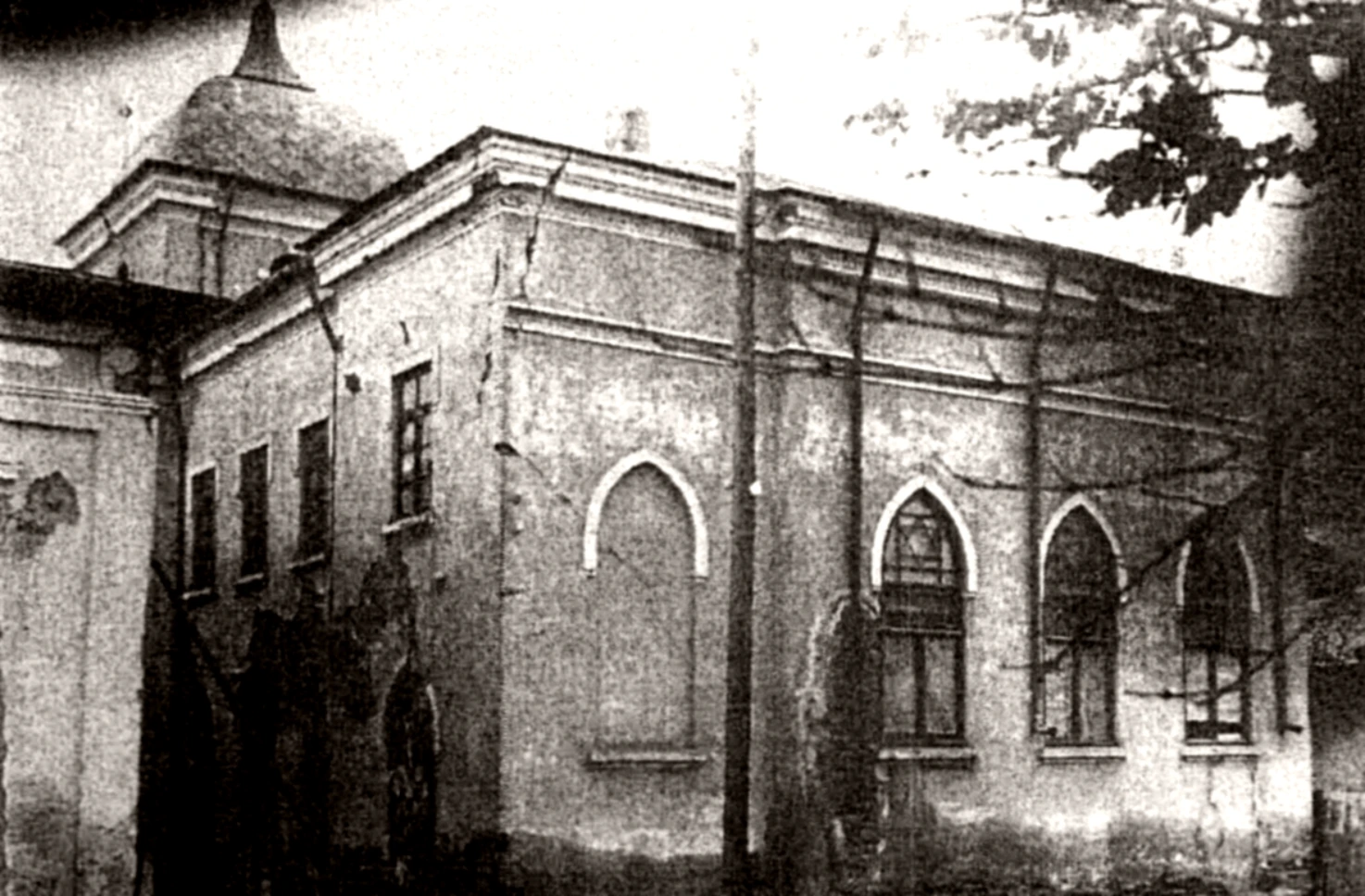
In a photograph from 1945, pointed-arch windows line the façade of Beth-Hamidras Synagogue. The building was demolished. Its name survives with the photograph published by historian Costin Clit and in records of the community. [1] [2]
Huși had several synagogues. One photograph cannot tell you how large the community was or whether this was its oldest place of worship. The names and dates come from records made at different times. [2] [3]
1857
What the district administration recorded
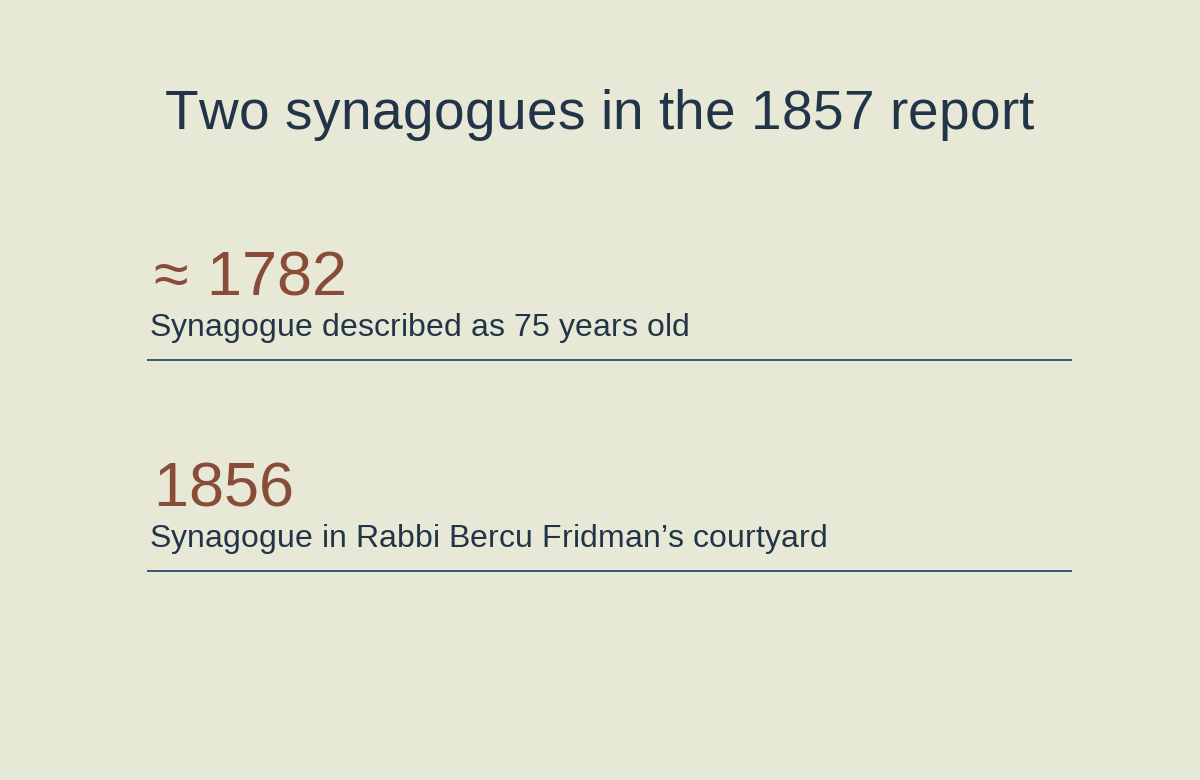
In March 1857 the administration of Fălciu County sent a report about places of worship and the people who served them. One synagogue in Huși was said to have been founded about 75 years earlier. Clit derives the year 1782 from that wording. [2]
A second synagogue, founded by the community in 1856, stood in Rabbi Bercu Fridman’s courtyard. The same report lists rabbis and community leaders. It records what the district knew in 1857. The connection to the façade in the 1945 photograph remains uncertain. [2]

Community institutions
Alongside synagogues, a school and hospital
The Federation of Jewish Communities’ account records a school in an annexe of a synagogue. Huși also had a canteen, a ritual bath and a Jewish hospital. These institutions served a range of everyday needs. [3]
The same account names the physician David Almoghen. He directed a volunteer hospital during the War of Independence and was decorated for his work. His career connects the medical work of the community to a history beyond its places of worship. [3]

1950
Beth-Hamidras and the Great Synagogue appear by separate names
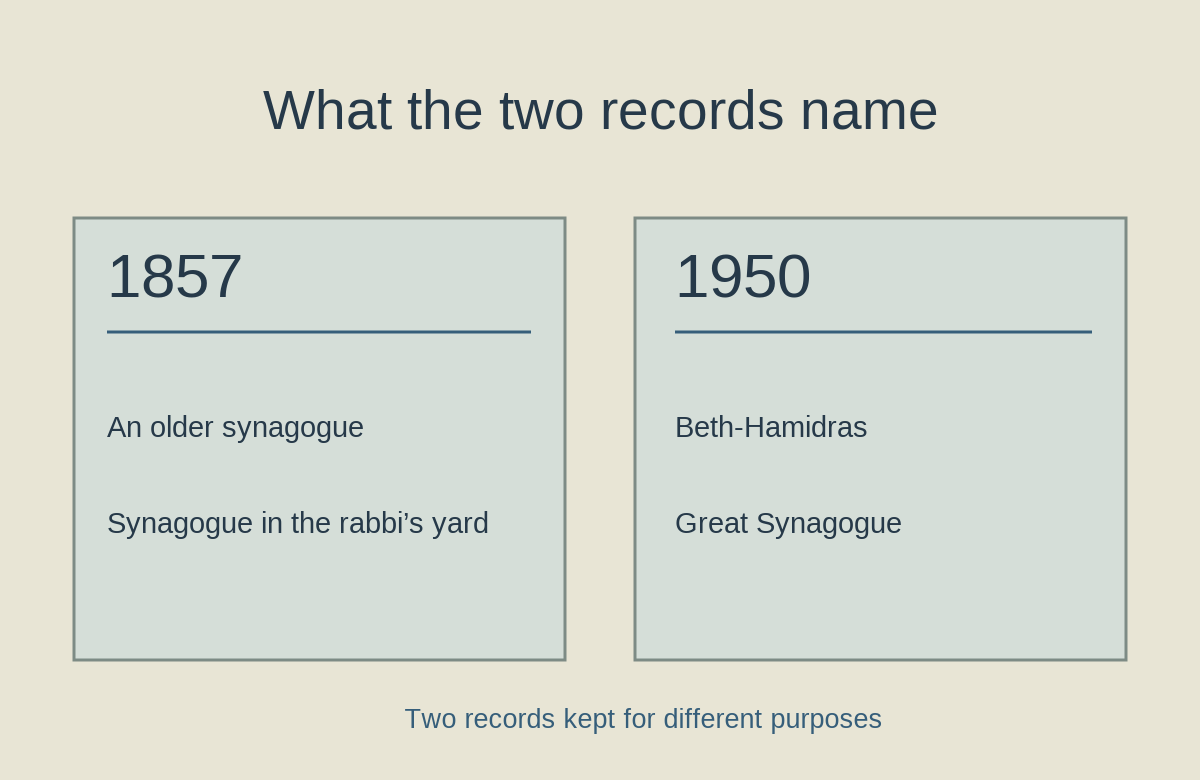
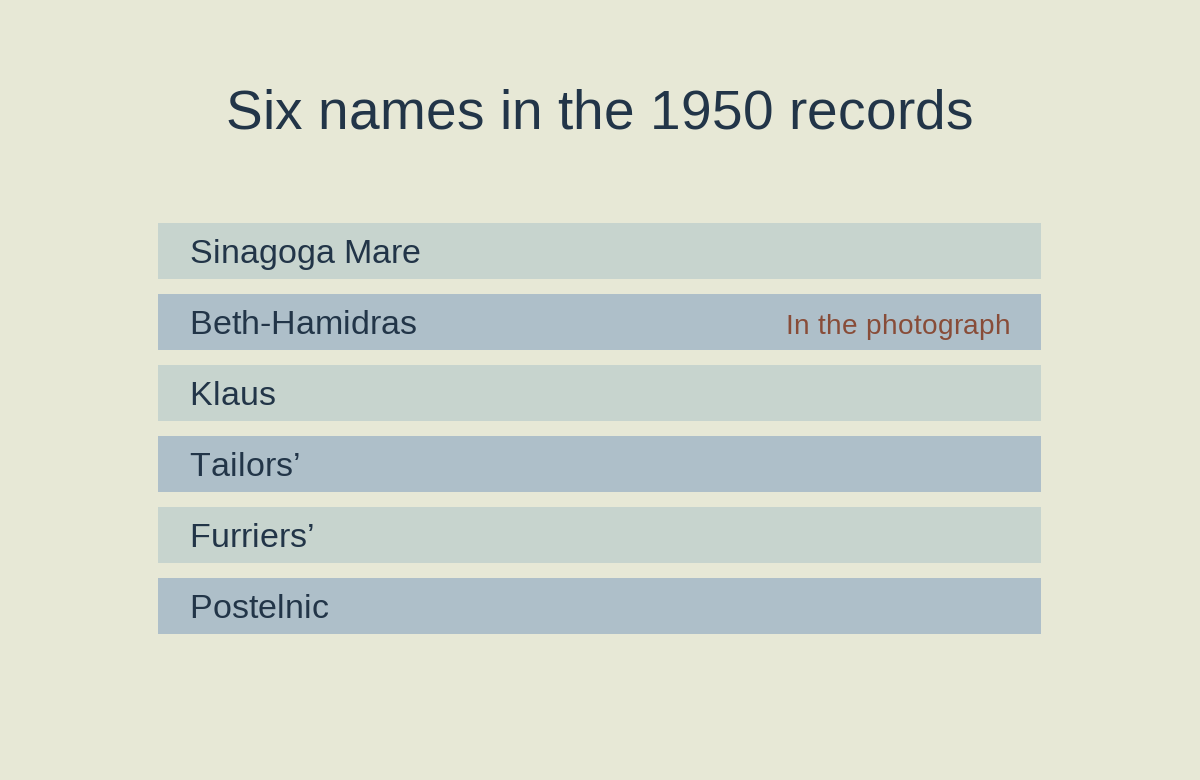
In postwar records Clit identifies six synagogue names in 1950. One reference confused the Great Synagogue with Beth-Hamidras. He corrects the identification and keeps the names separate. [2]
The Tailors’ Synagogue is on the list. The historian described it as the sole survivor at the time of his study. The two entries in 1857 and the six names in 1950 come from records kept for different purposes. The lists show what each set of documents captured. [2] [3]
What survives
The community sought protection for its old cemetery
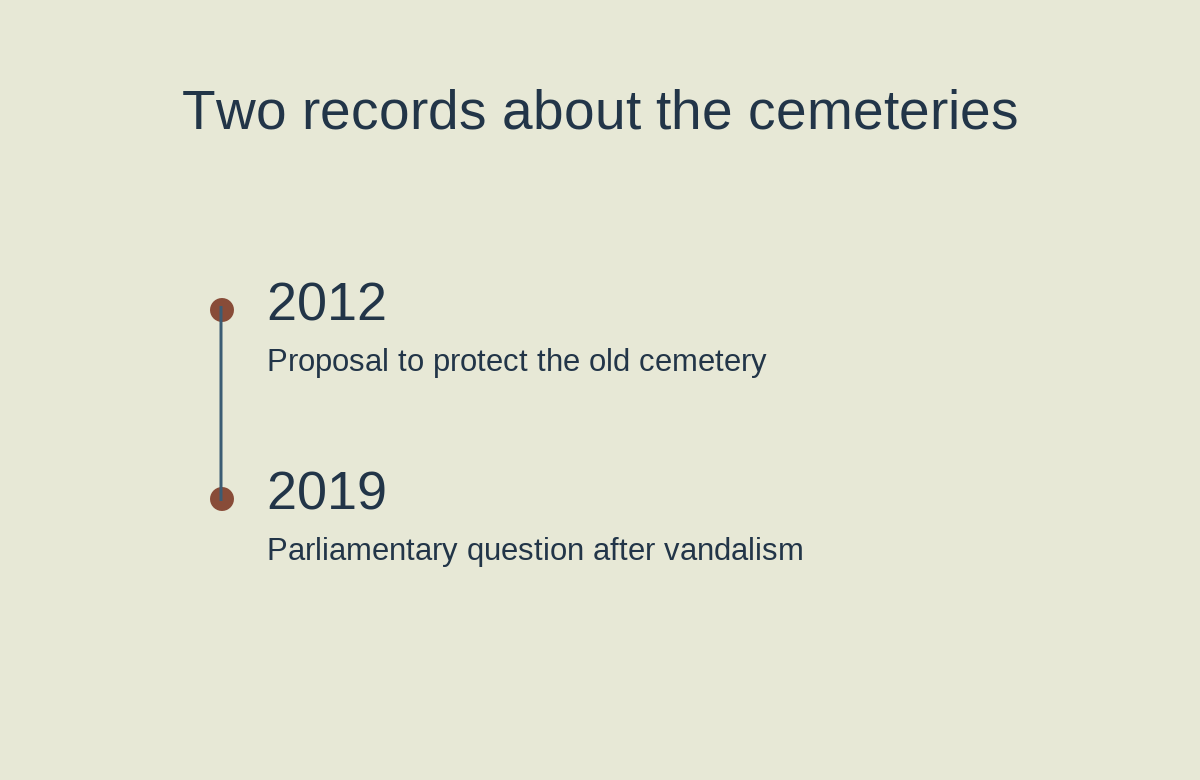
In 2012 the Federation’s journal described the old cemetery on Călărași Street in the former village of Broșteni, now a neighbourhood of Huși. The local community had proposed listing the site as a historic monument. [4]
In 2019 the Federation recorded vandalism of 73 graves at a Jewish cemetery in Huși. Deputy Silviu Vexler raised the case in Parliament. In Huși, caring for burial places helps preserve what remains of the community’s history. [5] [6]