The place
The place
A church on a rise in the village
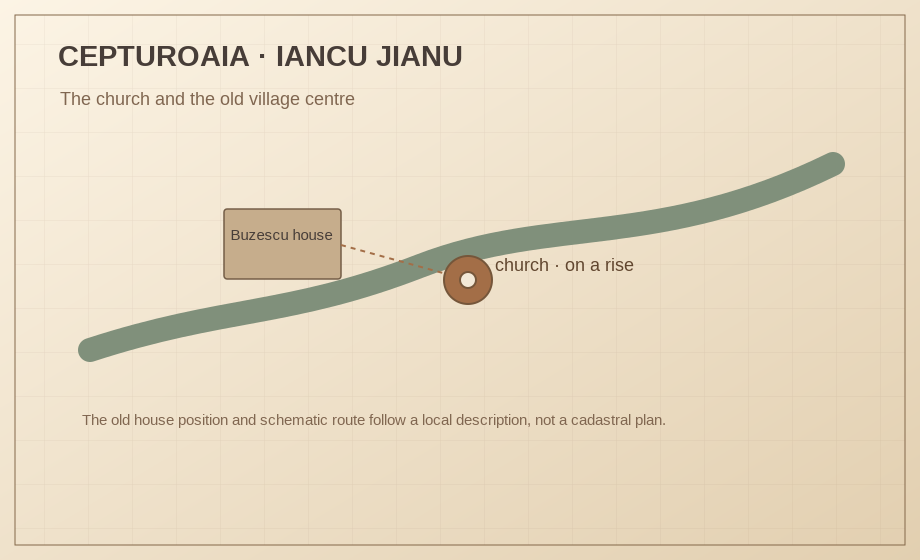
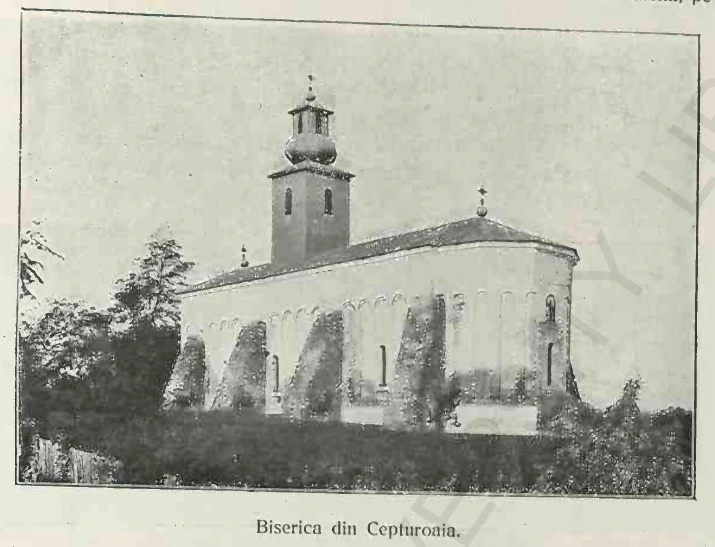
In the village now called Iancu Jianu, the “Cuvioasa Paraschiva” church stands in the old centre of Cepturoaia. A local description in the urban plan places it on a rise near the former Buzescu family house. For generations, the boyar residence, family cemetery and village church shared this ground. [7] [4]
The village name changed, but the church preserves a trace from before its current name. The 2015 monument register calls it “Cuvioasa Paraschiva”; the earlier name Cepturoaia appears in the 1991 register. Its story starts with a grave from the reign of Moise Vodă and a question about what it tells us about the age of the building. [3] [4]
The grave
What is written on Dumitru’s stone?
In 1911 Petru V. Năsturel described the tombstone of Dumitru Pârcălabul in the church narthex (the inner entrance room), beside the north wall. The Slavonic says Dumitru “fell by the sword” in the time of Moise Vodă, whose reign ran from 1529 to 1530. The slab gives no year of death. [1]
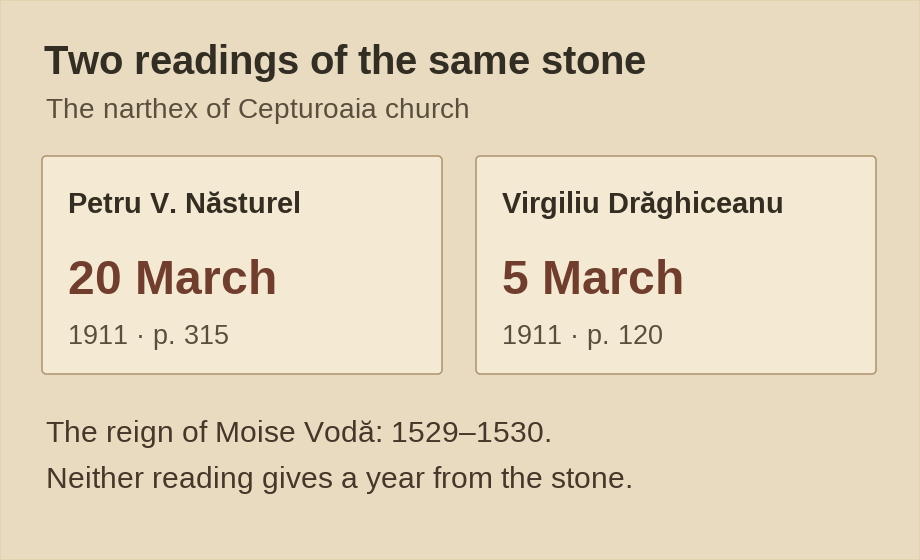
The two authors who transcribed the inscription in 1911 read the day in March differently. Năsturel read it as the 20th and Virgiliu Drăghiceanu as the 5th. The old monuments register lists 1529. The stone places the burial in the reign of Moise Vodă, leaving the date of the church’s surviving walls and paintings open. [1] [2] [3]
The second tombstone
A misreading shifted the date by ten years
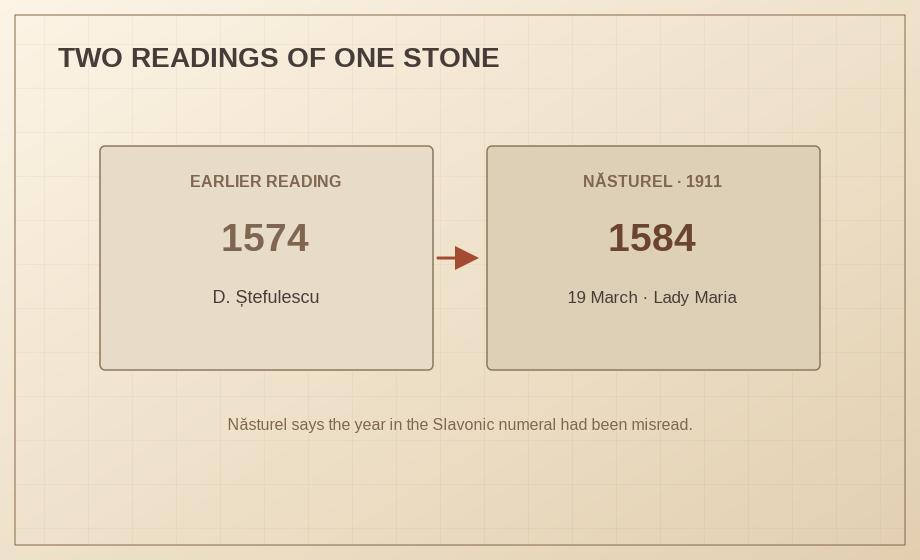
Beside Dumitru’s grave, Năsturel described Lady Maria’s tombstone. Its inscription dated her death to 19 March 1584. He noted that an earlier reading giving 1574 had misread the Slavonic numeral in the inscribed year. [1]
The two stones show why one date cannot tell the whole story of the building. Two sixteenth-century family graves survive in the narthex. In 1911, careful transcription moved Maria’s date by ten years and distinguished her from another woman with the same name in the Buzescu family history. [1]
The porch
In 1894, local people painted new patrons
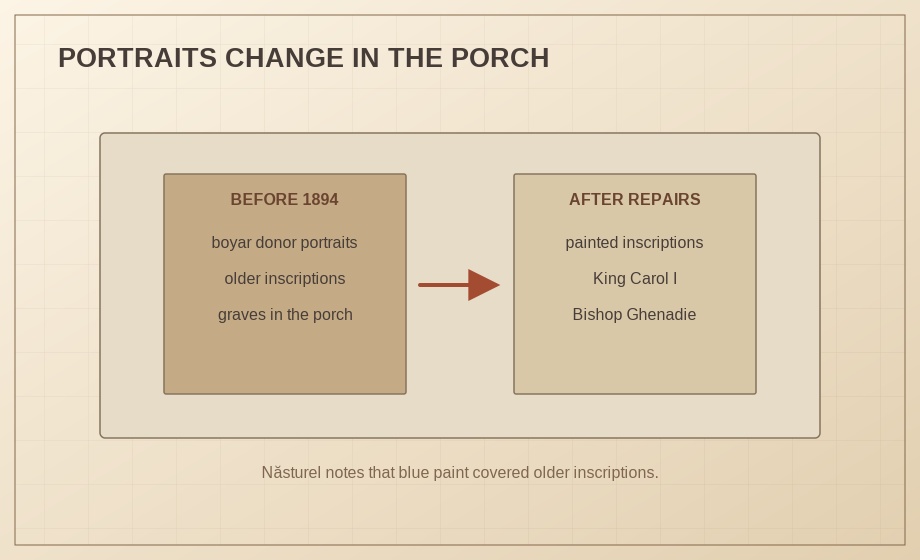
Năsturel says there was no stone foundation inscription. During minor repairs in 1894, however, parishioners painted a new text and their own donor portraits on the walls. Bishop Ghenadie Enăceanu was placed in the position of honour; King Carol I appeared elsewhere. Blue paint covered older inscriptions, while the new text soon began to fade. [1]
Năsturel criticised the placement of some portraits. The narthex already held graves and inscriptions. The portraits recorded a new generation of people who supported the church at the end of the nineteenth century. [1]
The building
The 1802 earthquake changed the church’s silhouette
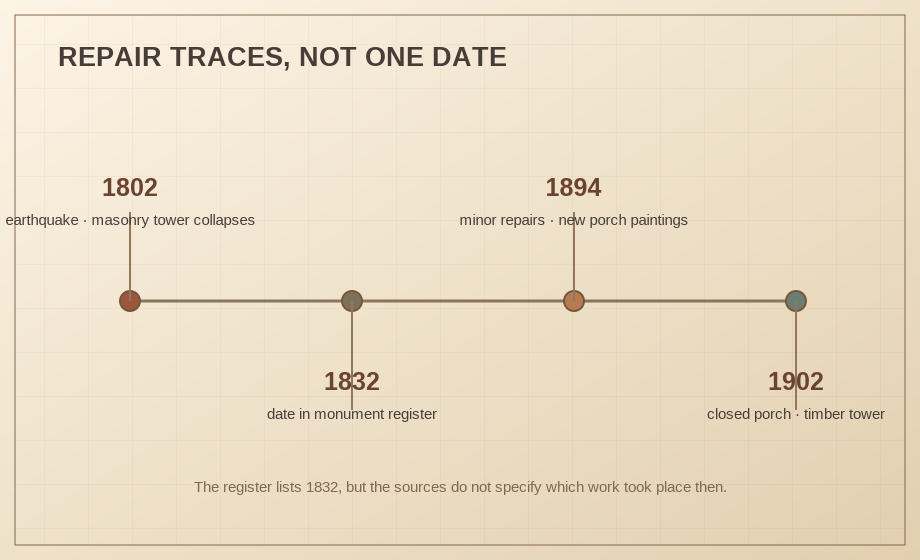
An architecture guide records that the major earthquake of 1802 damaged the church and brought down its masonry tower. Repairs in 1902 added the enclosed porch on the west side and replaced the tower with a timber one clad in sheet metal. These changes altered the monument’s silhouette while the graves remained inside. [6]
The monuments register also lists 1832. It gives no details of what was built or repaired that year. Other accounts separately record the addition of the enclosed porch and the replacement of the tower. [4] [6] [1]
The Commission file
The commission withdrew the painter’s authorisation
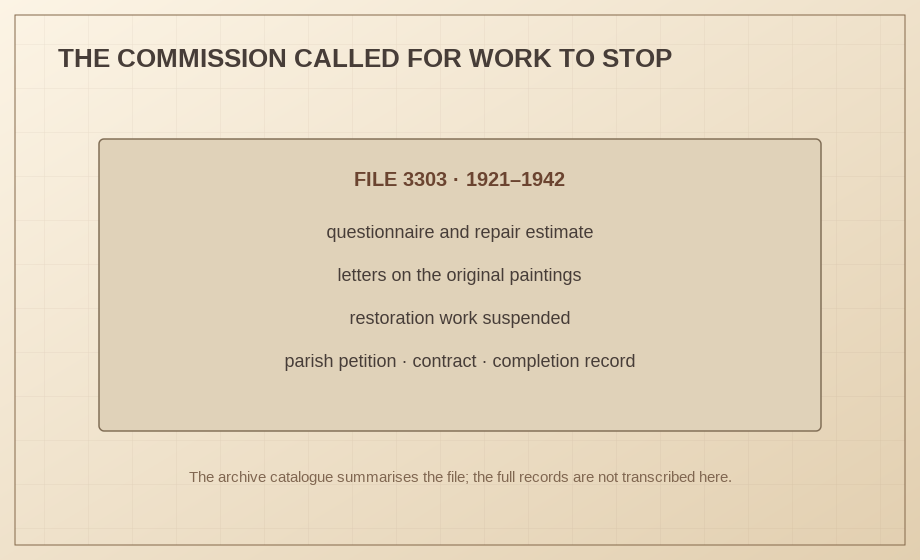
File 3303 of the Historical Monuments Commission covers correspondence from 1921 to 1942. The archive catalogue records that painter Petre Lișteavă’s authorisation to restore the paintings was withdrawn. The file also contains requests and discussions about preserving the paintings and the building. [5]
The inventory also records parishioners’ response: the file includes a community petition, estimates, contracts, correspondence about choosing the painter and a completion record. We do not have each letter’s full argument here, but the dispute over the old paintings reached the monuments authority and changed how work proceeded. [5]
What 1529 means
One church date hides several histories
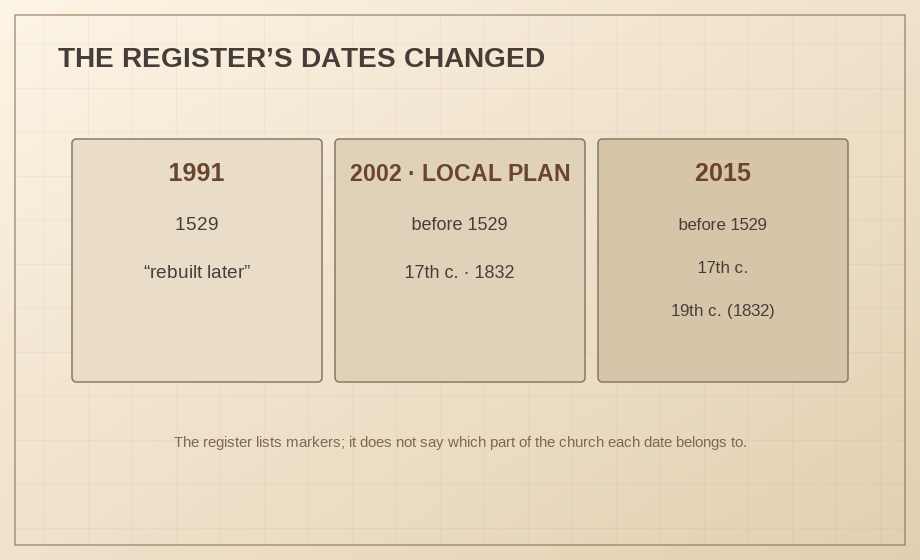
The 1991 register called it the “Cepturoaia” church and dated it to 1529, with a note that it had later been rebuilt. By 2015, the same entry had become more complex: before 1529, seventeenth century, and nineteenth century (1832). These markers can coexist if they refer to different phases; the register does not link each date to a specific wall or painting. [3] [4]
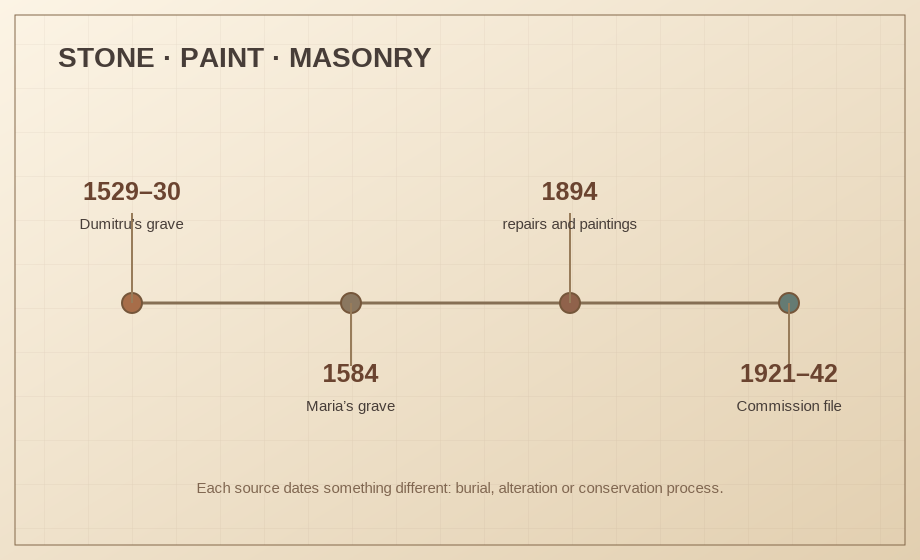
Dumitru’s stone records a burial at the start of the sixteenth century, Maria’s stone another in 1584, and Năsturel described paintings and repairs from 1894. The earthquake damage and changed tower, the enclosed porch added in 1902 and the restoration file from 1921–1942 add further layers. Simply saying “the church was built in 1529” leaves out what the sources let us see. [1] [6] [5]