682,621
YES
Four chapters · 2026-09-19
The coup of 2 May 1864 and the August law: how 406,429 dependent peasants became owners — and what it cost them.
The short answer
Not one man, but two. Mihail Kogălniceanu wrote and drove the rural law, while Alexandru Ioan Cuza dissolved the Assembly that blocked it and sealed the coup with a plebiscite. The land came, in good part, from the monastery estates secularized in December 1863. On 14 August 1864 the clăcași became owners of lots sized by their oxen — and paid the redemption price until 1884.
Capitolul I
13/25 December 1863 · Bucharest
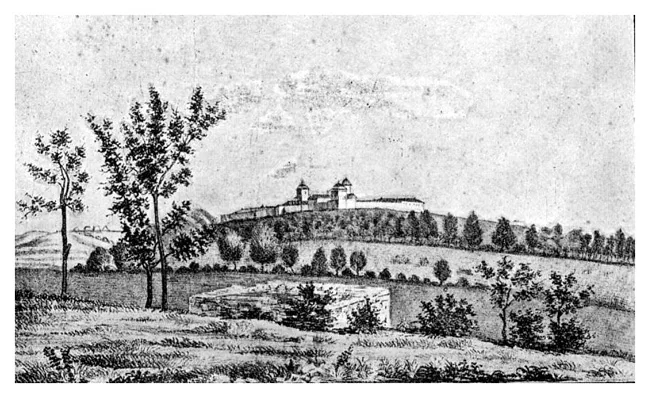
Before dividing the land, the state had to own it. About a quarter of the country's soil lay in the hands of the dedicated monasteries — untaxed, its revenues draining away to Athos and Jerusalem.
The Kogălniceanu government put the secularization bill before the Chamber in December 1863, with the prince's assent. The monastic estates, formed mostly under Phanariot rule, were poorly productive and starved state revenues — and no arable reserve for land reform could be built without them.
The vote passed 97 to 100, and the Greek Church was offered 150 million piasters in compensation — refused as too little by Patriarch Sophoronius III. The state deemed the matter closed: one third of Moldavia's arable land and one fourth of Wallachia's stood free for the coming land distribution.
“On 13 December 1863, the Romanian Chamber voted with great enthusiasm the Law for the secularization of the monastic estates.”
Capitolul II
2/14 May 1864 · plebiscite 22–26 May 1864
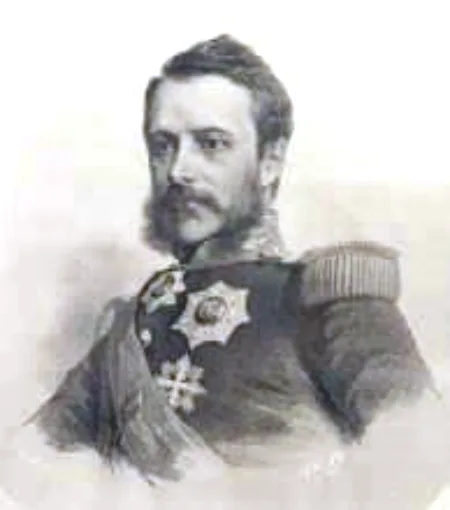
The rural bill reached Parliament in the spring of 1864 and hit a Chamber elected by some 4,000 voters, nearly all boyars. The conservatives called it “insane” and prepared a censure motion.
Kogălniceanu had published the bill in the Official Gazette against the text of the Focșani Commission — his defence: “Publication was necessary in order to quell the rural population.” The cabinet resigned; Cuza refused to accept it. On the day the conservatives forced the censure vote, the prince dissolved the Assembly: Kogălniceanu himself read the decree in Parliament.
Then came the Statute Expanding the Paris Convention — the prince alone holding legislative initiative, a Senate named by him, forced labour abolished — put to the plebiscite of 22–26 May together with the electoral law. The result, on 31 May: 682,621 votes for and 1,307 against, from 754,148 registered. The Porte approved the Statute on 28 June 1864 with two reservations: a 32+32 Senate and the census lowered to 100 ducats.
The prince exposed the intrigues that had reduced the government to “impotence” and sought to bury the bill — “a law of justice, fulfilling the legitimate hopes of three million peasants”.
Capitolul III
14/25 August 1864 · in force 23 April/5 May 1865
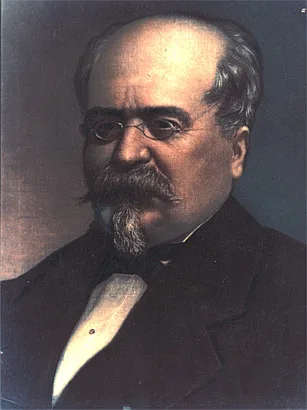
The rural law was sanctioned and promulgated on 14 August 1864 (Official Gazette no. 181) and took effect on St George's Day 1865. The claca, the dijma, the podvezi and the village monopolies fell; the dependent peasant became owner of his lot, sized by his cattle.
The division turned on oxen. In Wallachia, the fruntași (four oxen and a cow) took 11 pogoane, the mijlocași (two oxen and a cow) 7 pogoane and 19 prăjini, the codași or “toporași” (a cow only) 4 pogoane and 15 prăjini. In Moldavia the measure was the falce: 5 fălci and 40 prăjini, 4 fălci, and 2 fălci and 70 prăjini for the pălmași.
Nothing was free: every lot was redeemed by a yearly payment over 15 years, and the owners received compensation. Expropriation could not exceed two thirds of an estate — one third stayed the absolute property of the former master, “purged of any peasant use-rights”.
By princely decree, the claca was abolished “forever”, and the peasantry learned that “from today you are free owners of the lands under your rule”.
Capitolul IV
1865–1884 · Zăicoi, Rădinești, Baia
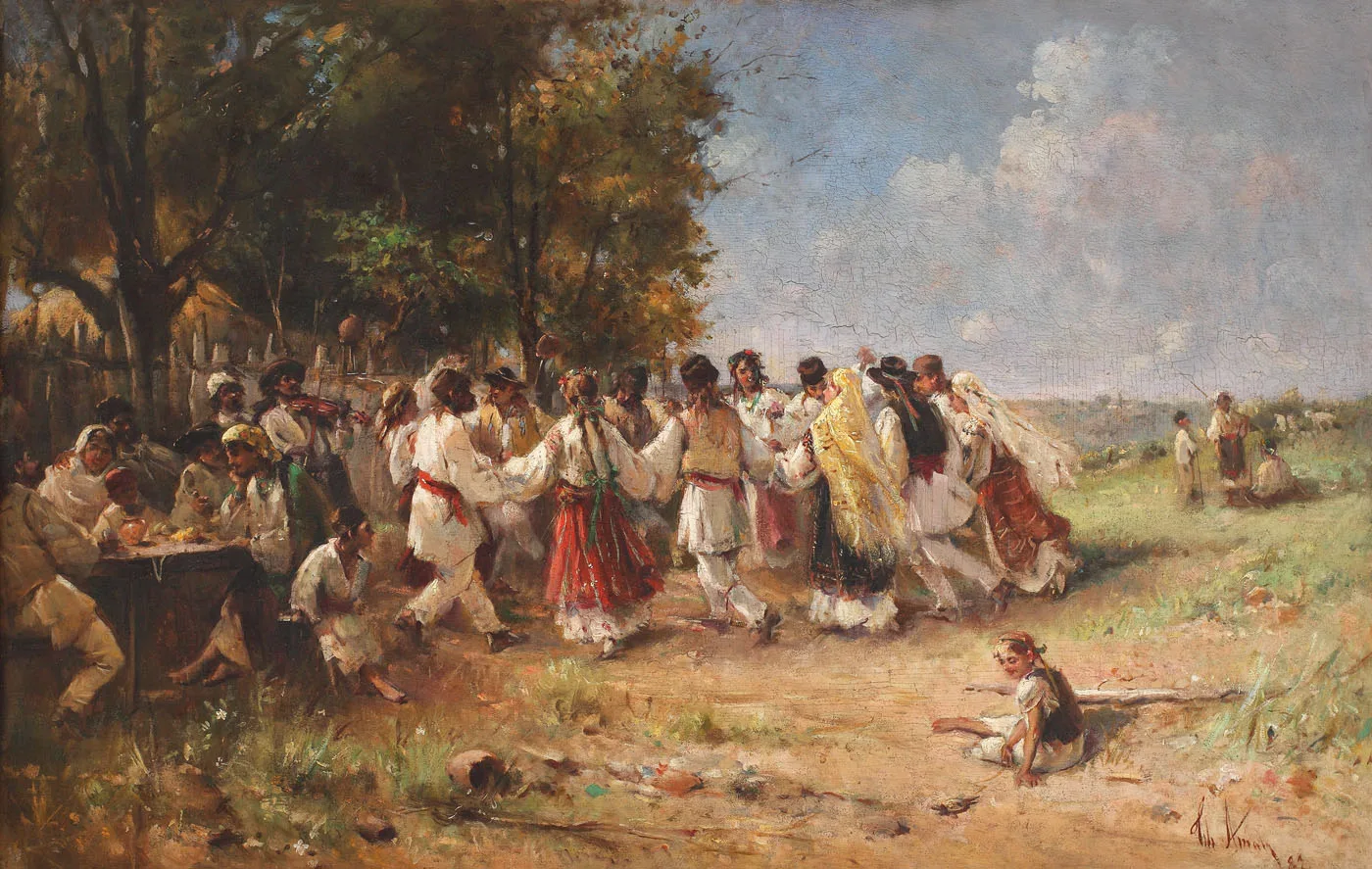
The law was applied village by village, name by name. The table of 9 March 1865 lists the clăcași of Zăicoi under their owners; the registers say who had how many oxen and owed what redemption sum.
Country-wide, historians Adăniloaie and Berindei count 406,429 peasants endowed with 1,654,964 hectares — among them 72,751 fruntași and 200,132 mijlocași — plus 60,651 people given house-and-garden plots only. After the reform the peasantry held about 30% of the land, the remaining 70% staying with the gentry and the state.
The price of freedom was paid in rates until 1884, and Ion Ghica wrote that the peasantry's state was “worthy of pity”: an ex-clăcaș's dues exceeded 32% of yearly income. The land could not be sold for 15 years; when it could be, rapid pauperization followed. The moșneni had been excluded from the distribution, dijma labour continued through farm-hire laws, and Kogălniceanu himself demanded a new distribution in the Chamber on 11 February 1882. The convulsions of 1888–1907 and the 1921 reform closed the account.
“The clăcaș Matei Barbu receives, for claca done with his arms, 4 pogoane, 15 prăjini and 498 stânjeni for house and garden, owing for redemption 71 lei and 90 parale.”
The centrepiece
Drag the slider and pick a region: see who held the land before 1864, who kept one third of the estate, and what lot each category took — by the letter of the law.
Before 1864
After the rural law
Pick a category:
11 pogoane
| Wallachia | Moldavia | |
|---|---|---|
| Fruntași — 4 oxen and a cow | 11 pogoane | 5 fălci and 40 prăjini |
| Mijlocași — 2 oxen and a cow | 7 pogoane and 19 prăjini | 4 fălci |
| Codași / pălmași — no draught oxen | 4 pogoane and 15 prăjini | 2 fălci and 70 prăjini |
Country result: peasant property (old and new) ≈ 30% of cultivated land; gentry and state ≈ 70%.
The plebiscite of 22–26 May 1864
Of 754,148 registered, 683,928 valid votes were cast (90.69%): 99.81% for the Statute and the electoral law. The final result was known on 31 May 1864.
The game
Two rounds on real registers: first the redemption money at Rădinești, then the fălci at Baia. Do the sums and check yourself against the record.
Ten clăcași on C. V. Tecovici's estate: 6 with two oxen (100 lei redemption each) and 4 working with their arms (71.20 lei each). Tap each household to class it, then check the 884.80 lei total.
Exactly 884.80 lei — as the register says. The money checks out to the ban.
Baia, Suceava county: 35 fruntași, 146 mijlocași, 202 codași — and the record says 1,346 fălci divided. How many fălci come out if you apply the law's lots (1 falce = 80 prăjini)?
Correct: 35 × 5.5 + 146 × 4 + 202 × 2.875 = 1,357.25 fălci. The record says 1,346 — a gap of about 11 fălci, undocumented. Old accounts never balance perfectly.
The figures
Myths
Half true. Cuza struck the coup that made the law possible — he dissolved the Assembly and called the plebiscite. But the law was written and carried by the Kogălniceanu government, and the land came from the December 1863 secularization. Credit each precisely: one broke the door, the other divided the estate.
It was not. Every lot was redeemed in yearly rates over 15 years, until 1884 — at Zăicoi, for instance, 71 lei and 90 parale for an arms-worked lot. Ion Ghica reckoned an ex-clăcaș's dues exceeded 32% of yearly income.
No. The moșneni were excluded from the distribution, and 60,651 people received house-and-garden plots only. Childless widows, the disabled and those who did not work the land stayed with house and garden too.
It unlocked it; it did not solve it. Seven tenths of the land stayed with the gentry and the state, dijma labour continued through hire laws, and Kogălniceanu himself demanded a new distribution in 1882. The convulsions of 1888–1907 followed, and only the 1921 reform broke up the great estates.
Sources & method
The law's figures (lots, terms, the 2/3 cap) come from Official Gazette no. 181 of 15 August 1864, via the Nacu & Bărbieru study (2014), read in full. The plebiscite (682,621 / 1,307 / 754,148) comes from the Direct Democracy database, after Hitchins and Riker. The totals (406,429; 1,654,964 ha; 60,651) come from Adăniloaie & Berindei (1969). Every claim is traced in SOURCES.md.
What we left out, and why: square-metre equivalents (the study contradicts itself in the arithmetic — the page uses pogoane and fălci only); the 511,896 grand total (it does not sum from its components); the codași headcount as such (shown as an arithmetic remainder: 133,546); the ~11-fălci Baia gap and the Rădinești “104 prăjini” slip (both shown, neither smoothed); Clark's 14 redemption years against the Gazette study's 15 (the page uses 15 and flags the dispute).
index.md · The full source register (SOURCES.md)