01 · one errand
01 · one errand
What does an ordinary trip out of Ineleț involve?
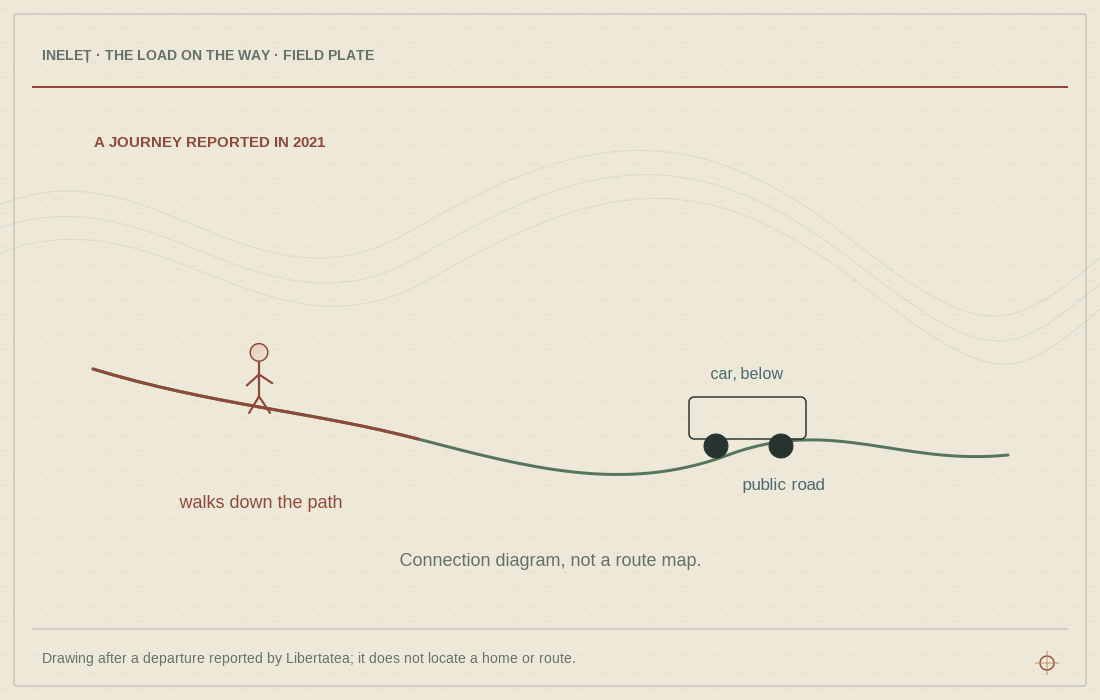
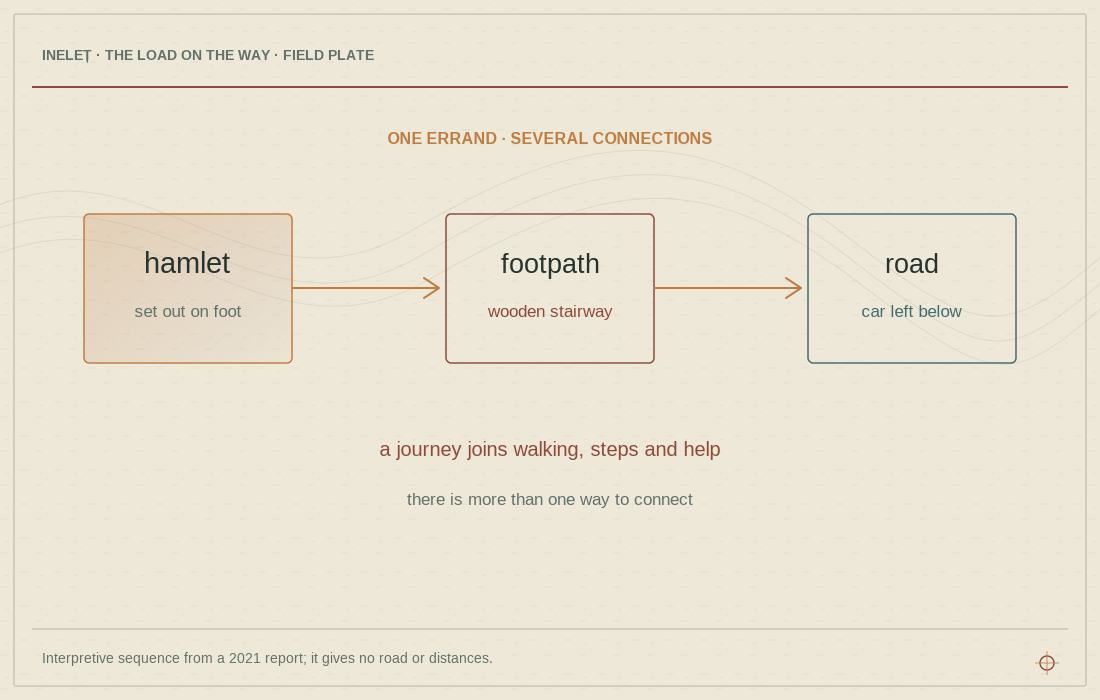
In a 2021 report, Alexandru Marinică sets off to repair his car. He walks down from the hamlet to the road, where he left it by a bus shelter. [3]
The same report describes him laughing at the two journalists, who had taken longer to climb than he did. His times are not a standard for residents or visitors; they show only how differently the same ascent can feel to two people. [3]
We do not redraw the road or locate anyone’s home. We follow the connections in a published account: hamlet, footpath, ladders, then the road where the car is waiting. [3]
02 · the construction
How did the wooden stairway reach the limestone wall?
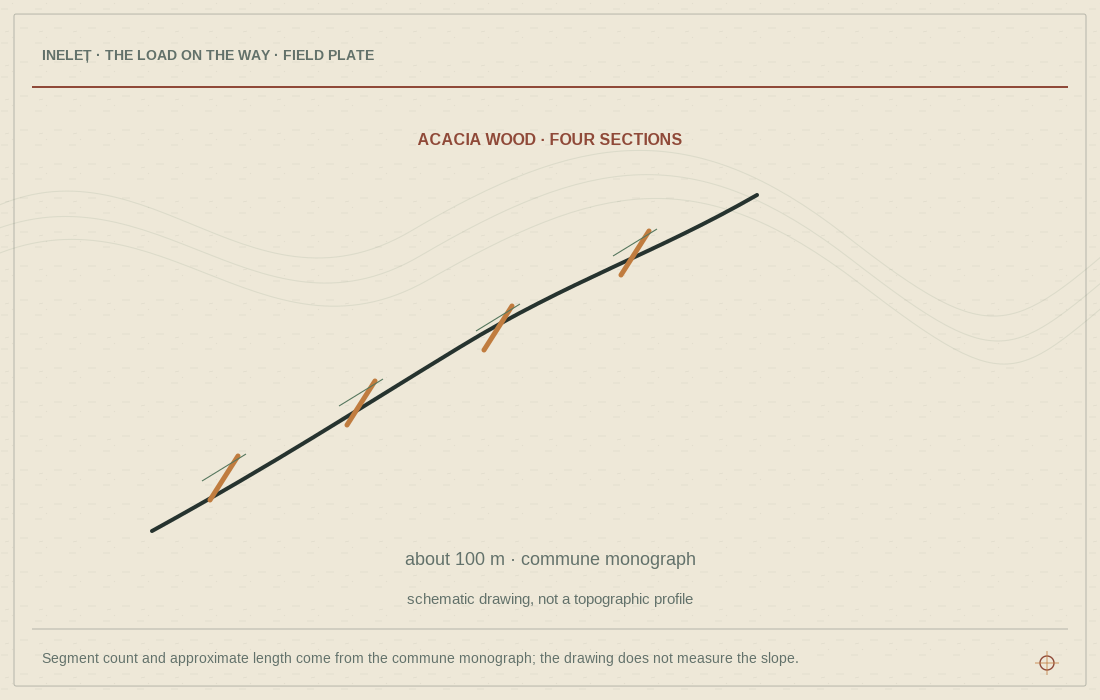
The commune monograph says the stairway was built in the early 1970s from acacia wood, in four sections, with a total length of about 100 metres. This is a local account; the webpage does not give the monograph’s edition or date. [1]
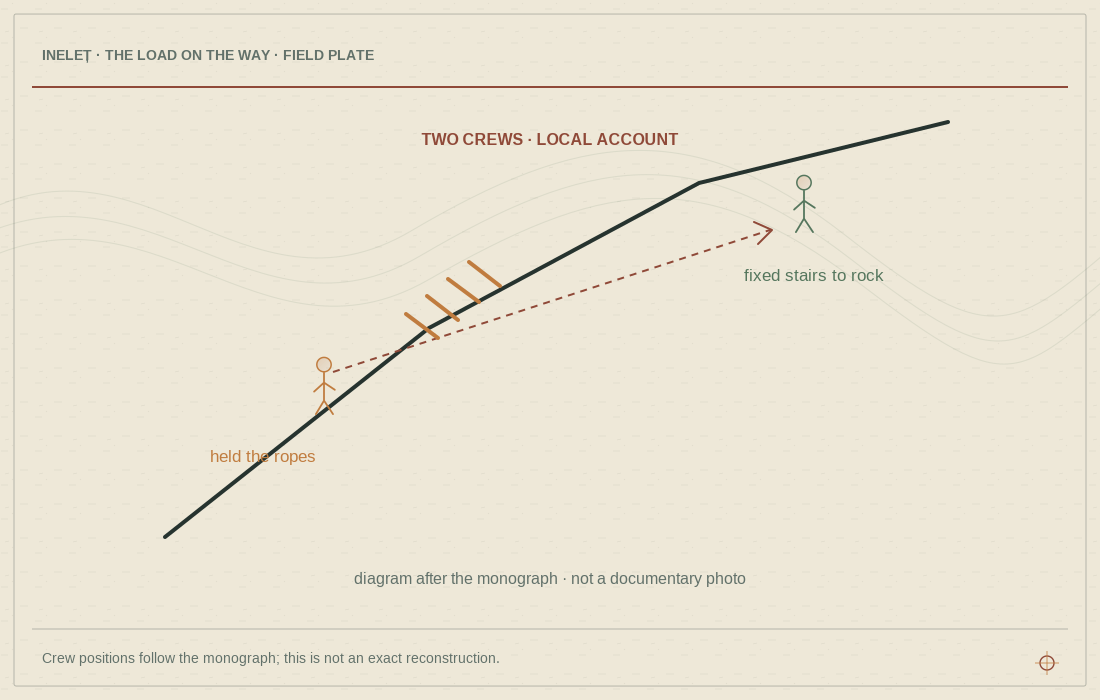
The same account describes two crews: one above holding ropes, while the others descended the slope to fix the sections to rock. The diagram shows only that work relationship; we have no photograph or technical plan of the installation. [1]
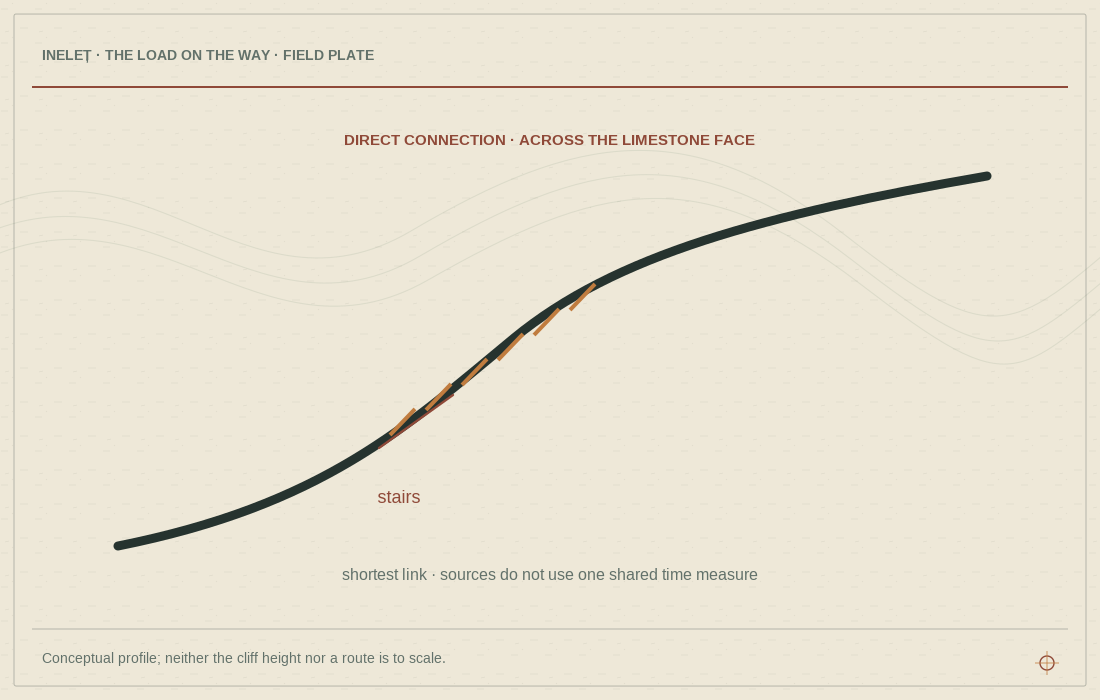
A geography study published in 2013 describes the stairs as the shortest link across the limestone wall, with the steps fixed to rock. The author describes spending four days with a family in Ineleț. Figure 1 shows the stairway fixed to the rock. [2]
03 · two connections
The stairway is the short way; footpaths skirt the cliff
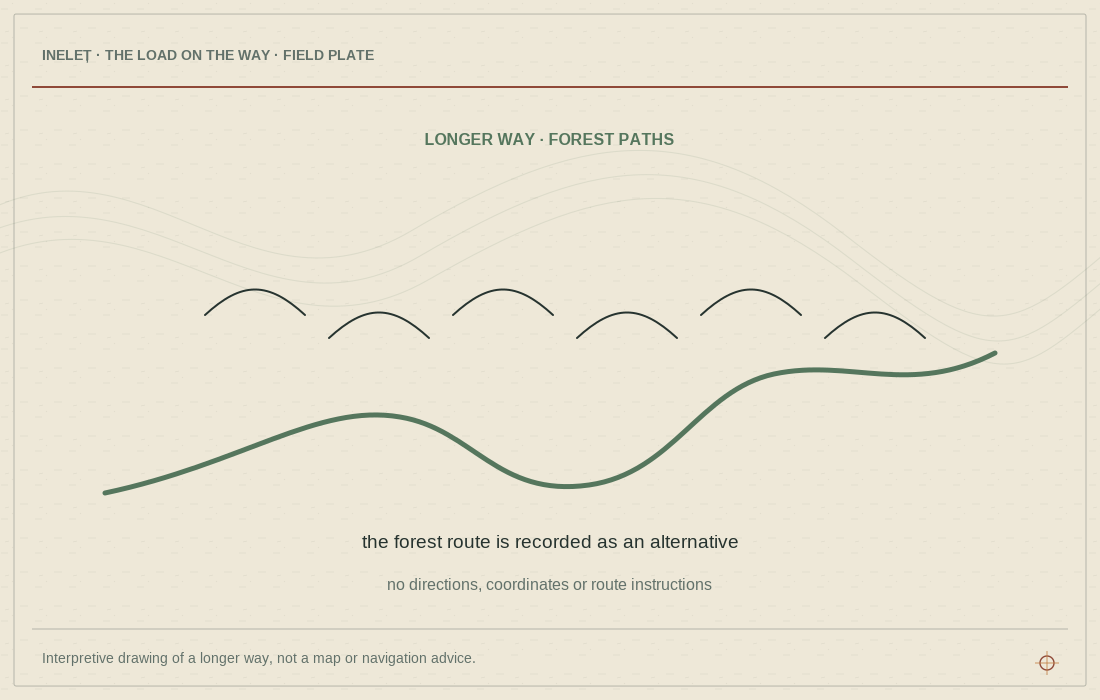
The commune monograph says that before the stairway, residents used a longer path through the forest. The study published in 2013 also describes access by footpaths alongside the direct crossing of the wall by stairs. [1][2]
The sources do not compare the same stretch or the same unit of time: one discusses the older way to the road, the other access across the limestone wall. We therefore do not rank the travel times in those accounts. [1][2]
The drawing compares two kinds of connection — a direct crossing and a forest detour. It is not a map and gives no visitor directions. [1][2]
04 · the load
Who carried goods on the final stretch?
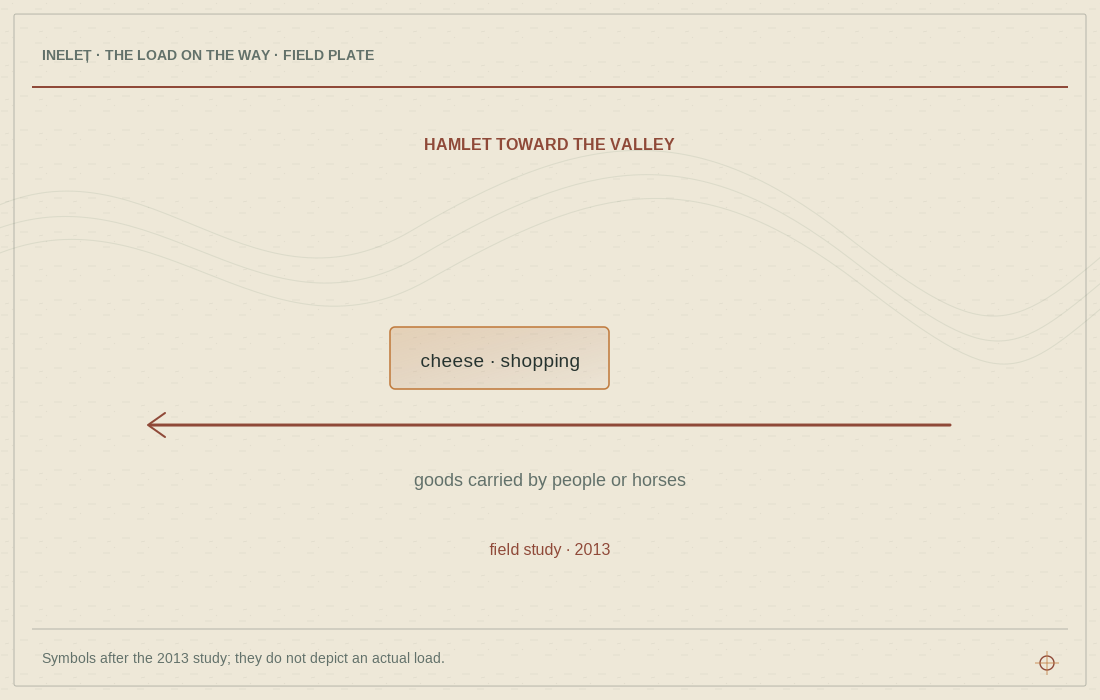
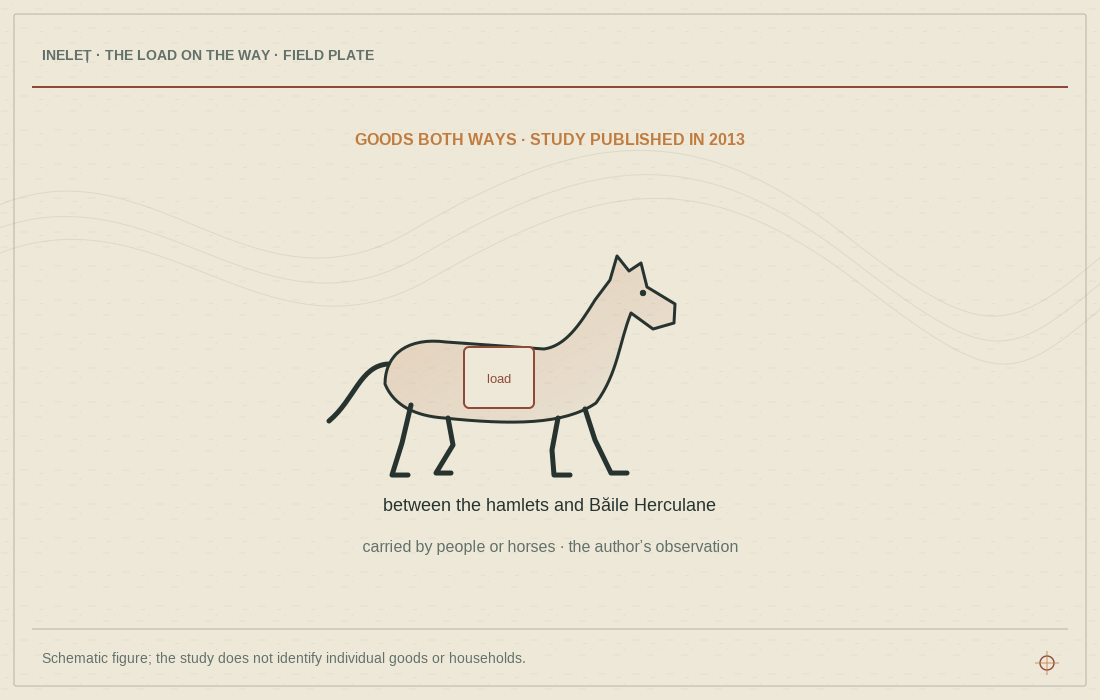
In his study, Pătrățanu notes that food and other goods bought or sold in Băile Herculane were carried between the hamlets and Băile Herculane by people or horses. He describes several Cerna Mountain hamlets, including Ineleț; he does not count every trip or load. [2]
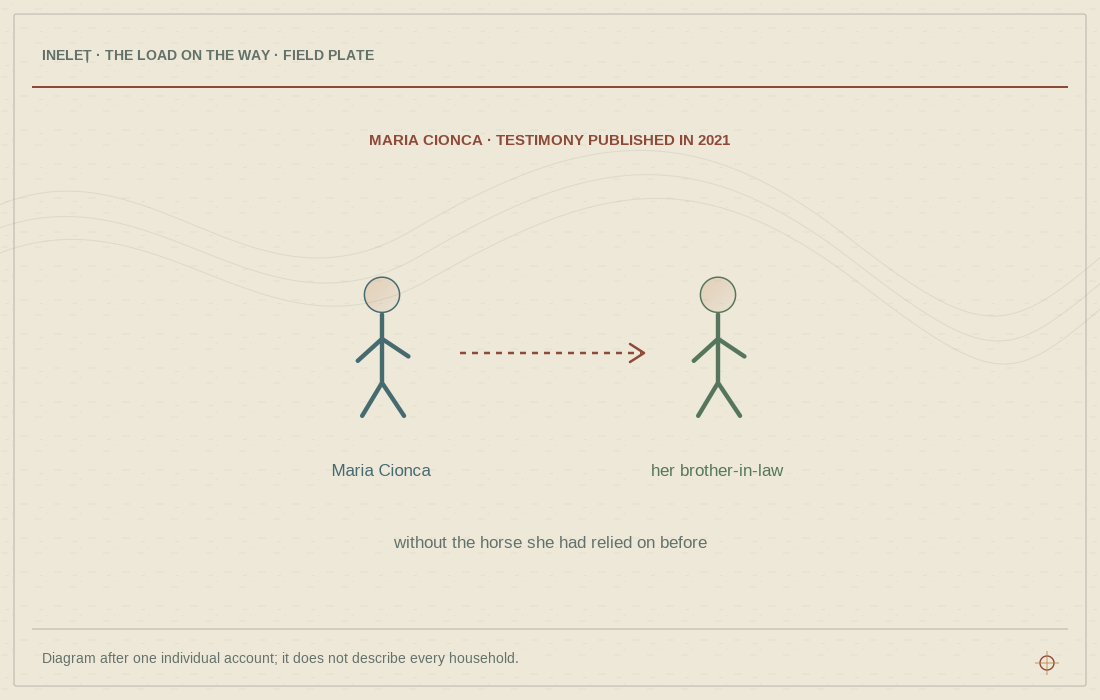
In 2021, Maria Cionca told a reporter her horse had fallen ill and she could no longer keep it. She asked to go with her brother-in-law when he went to Băile Herculane. [3]
Together, the accounts show that getting around also involved carrying goods and relying on help from relatives or animals. [2][3]
05 · buying and selling
How was cheese paid for without a seller?
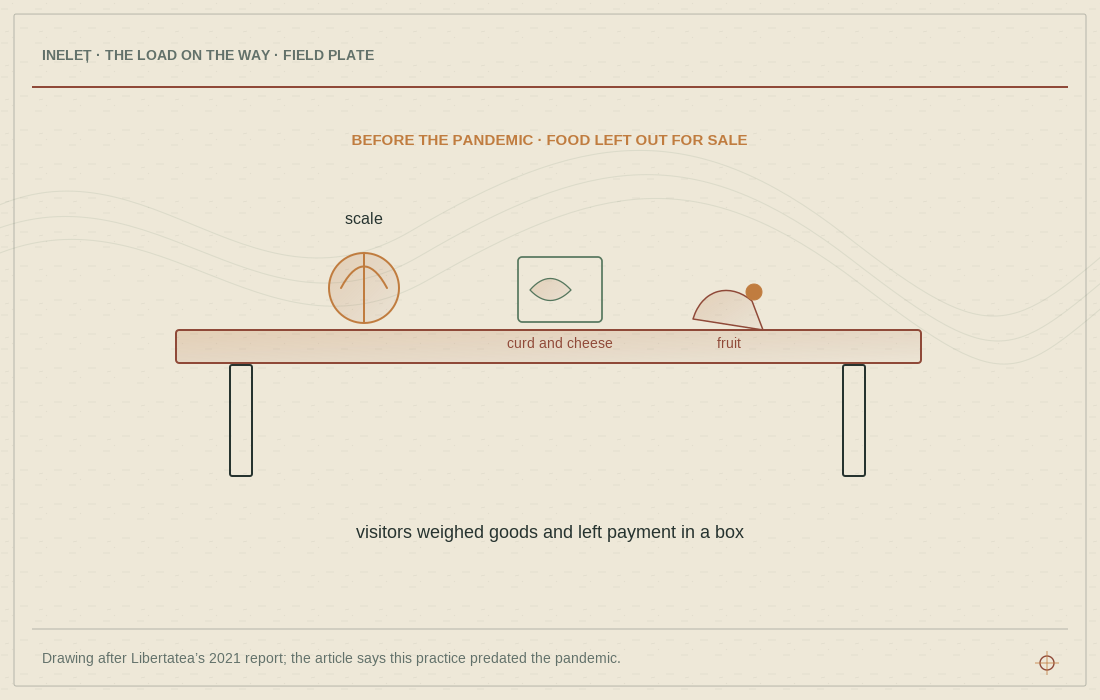
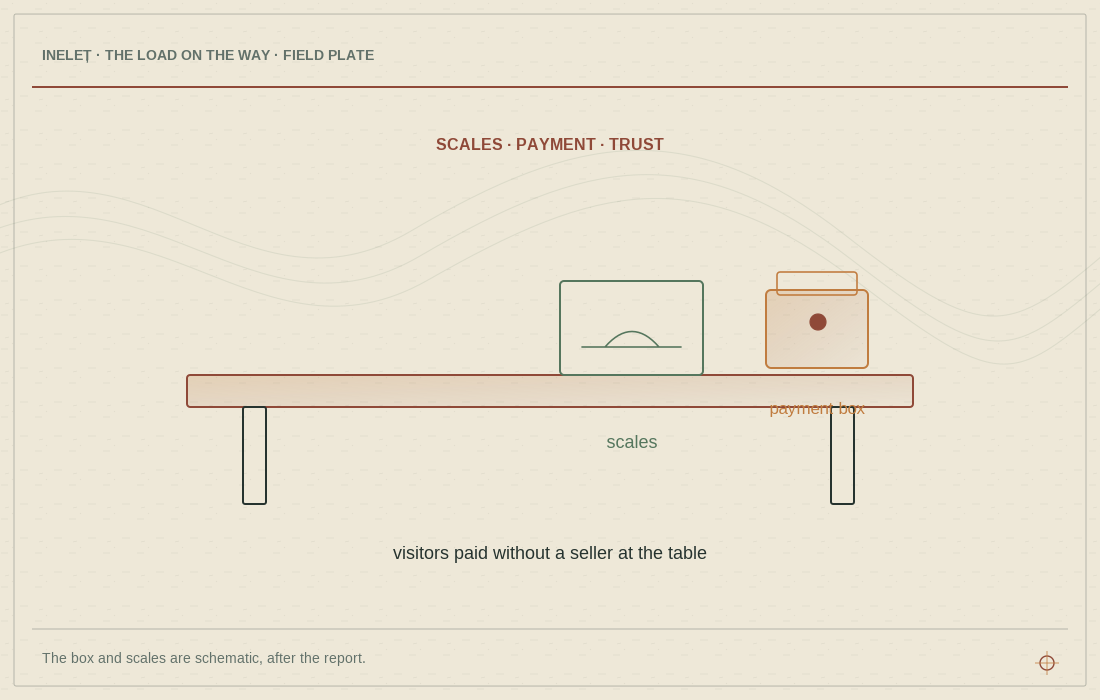
Libertatea’s report describes a pre-pandemic practice: residents left cheese, curd and fruit at the hamlet entrance, alongside scales and a box for money. Visitors weighed what they took and left payment. [3]
It was a simple exchange arranged without a seller permanently at the table. The article describes it as a practice of that period; it does not say whether it continues now or whether every household took part. [3]
We show the produce and scales together, then isolate the payment in a second view. This is not a photograph of the real table, and its exact position is not marked. [3]
06 · meeting visitors
What did visitors bring on their way up?
The 2021 report says tourists often came at weekends, and Maria Cionca was glad to see new people. This is one resident’s voice in an interview, not a measure of how the whole hamlet feels. [3]
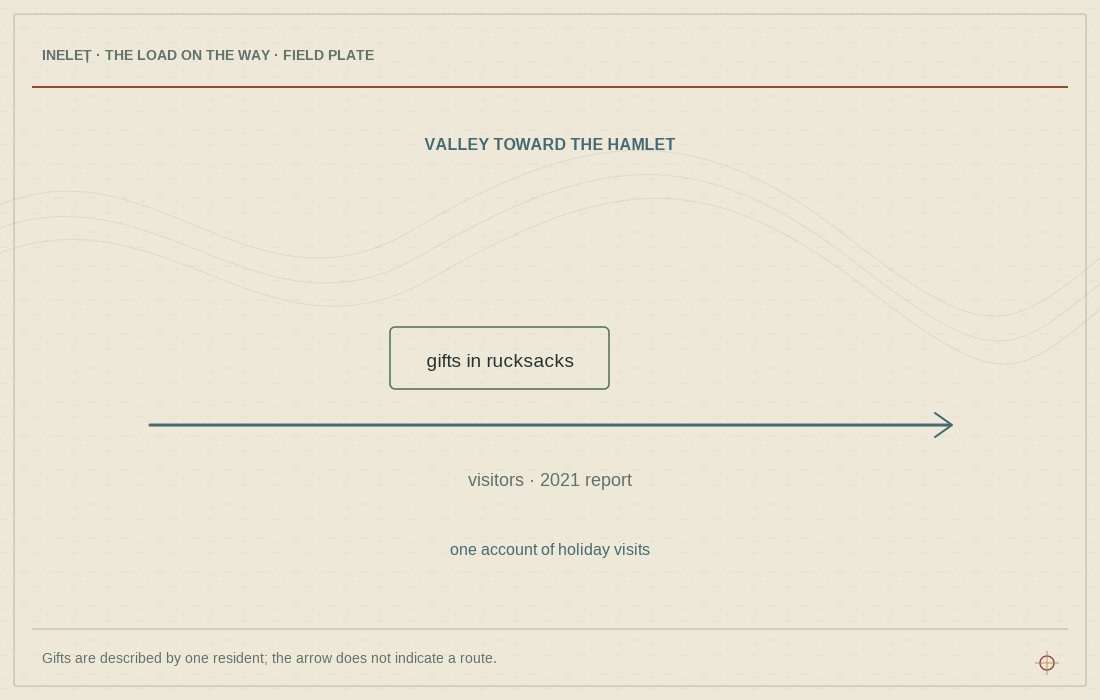
Before the pandemic, the produce table also made exchange possible without a face-to-face sale. At holidays, Maria said, some visitors brought small gifts in their rucksacks. The journey therefore carried both goods for sale and gifts for people they met. [3]
The stairway links the hamlet and valley; the reports show that using it also depended on paths, animals, relatives and visitors. These accounts capture different moments, not a picture that applies to every resident or to the present. [2][3]