Six claims about the heart, each set against the source it comes from.
Wrong in size, overstated in weightA heart the size of a car
What is said. SeaWorld’s fact sheet: the heart “may weigh 908 kg … as much as a small car”. A NOAA photograph caption: “the size of a VW Beetle”.
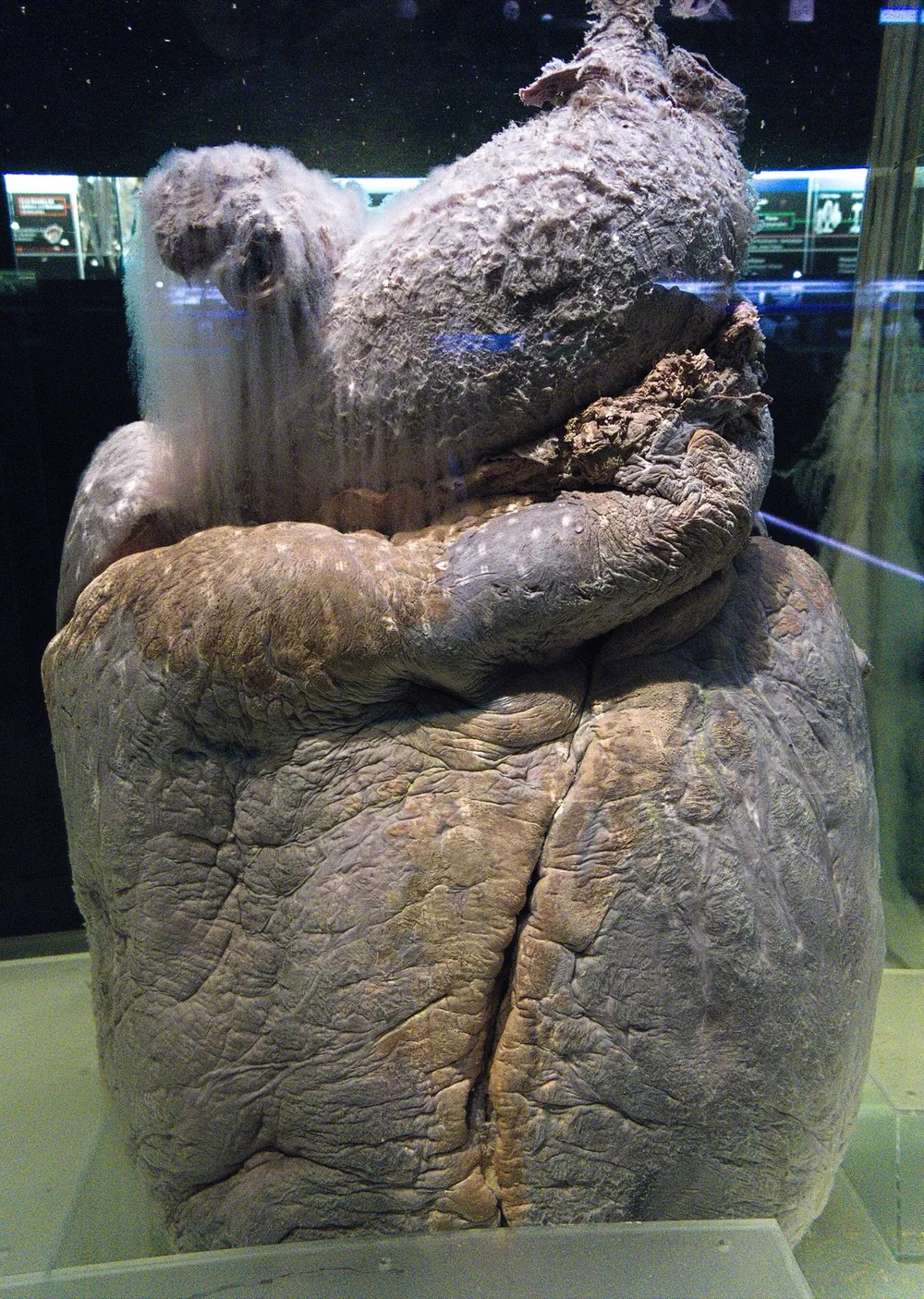
What the sources show. The Toronto heart was weighed at 175 kg, 19 to 24 % of a Beetle’s mass, and measures 96 by 106 cm against the car’s 4.1 by 1.5 m. Whalers who weighed 32 blue whale hearts in 1947–49 found 112 to 750 kg; only the heaviest reached the mass of the lightest Beetle (730 kg), and SeaWorld’s 908 kg is above all 32.
Limit. Across the 32 weighings, taking the Toronto heart’s proportions and the same density, even the heaviest heart would scale to about 1.7 m long, under half of the Beetle’s 4.1 m.
Not supportedA child could swim through the aorta
What is said. A NOAA photograph caption: the aorta is “large enough for a human to crawl through”.
What the sources show. Press accounts of the museum’s work say it fits a human head, not a body. The reports give 20 cm and 23 cm. A two-year-old’s shoulders average 23.9 cm across; an eight-year-old’s, 31.4 cm.
Limit. Neither report shows the living width, and no source read for this page gives a measured blue whale aorta.
True at the lowest readingA heart that beats twice a minute
What is said. The claim in the title of this page.
What the sources show. In the first paper’s record 2 a minute was the lowest reading of one whale. Rates of 4 to 8 were typical at depth and 25 to 37 at the surface, up to 37 being more than 18 times the lowest. In 2026, five more whales: about 22 a minute right after a lunge, easing to about 8.
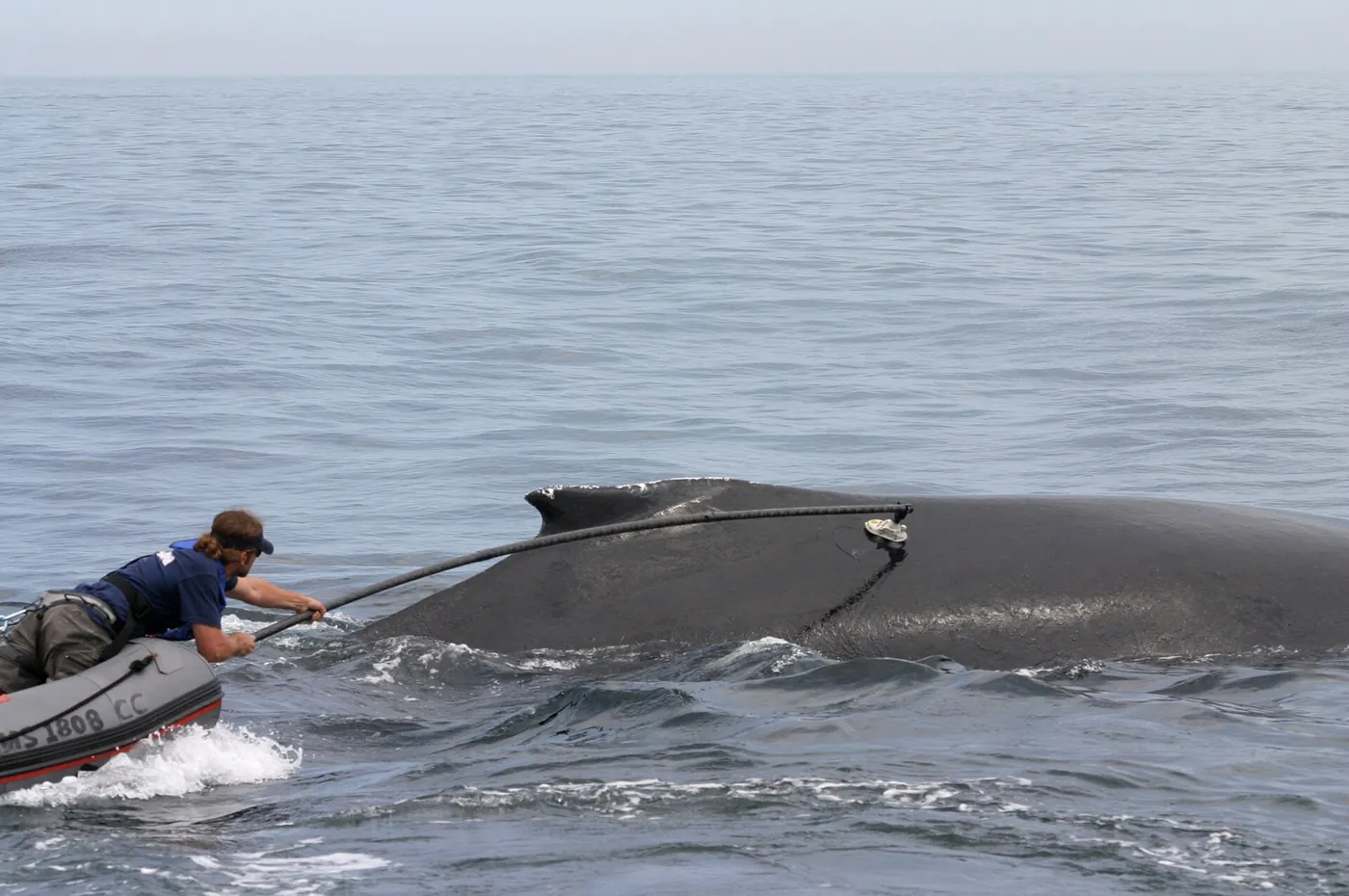
Limit. The two ECG studies report six blue whale records: one in 2019 and five in 2026.
No source foundThe heartbeat can be heard two miles away
What is said. NOAA Fisheries: “Its heartbeat can be heard 2 miles away!”
What the sources show. The 2019 paper recorded electrical signals with electrodes and reports no sound level or distance. None of the sources read for this page gives one.
Limit. A failed search does not show the claim is false.
Not supported as statedIt pumps 220 litres with every beat
What is said. Guinness World Records: about 58 US gallons (220 litres). NOAA: 60 gallons.
What the sources show. The 2019 paper predicts about 80 litres per beat for a 70-tonne whale, from equations for mammals. The 220 is 2.75 times that, and none of the sources shows how it was worked out.
Limit. The 80 litres is a prediction too.
Above every weighing foundThe heart weighs 900 kilograms
What is said. SeaWorld: “908 kg … as much as a small car”.
What the sources show. Whalers who weighed 32 blue whales in 1947–49 found hearts of 112 to 750 kg, 347 kg on average. The Toronto heart, 175 kg, lies inside that range. SeaWorld’s figure is 1.2 times the heaviest of the 32.
Limit. Those whales were weighed piece by piece and the blood that flowed away was not counted; North Atlantic whales may differ.
.jpg)


.jpg)