mariuscomper.uk Română

Borsec · Covasna · Băile Herculane

Romania's mineral springs: Why water tastes of iron or eggs

Three famous springs, three unforgettable tastes: one sparkles, one leaves metal on the tongue, one smells of rotten eggs. Taste shows the rock the water crossed. Pour your own blend and read the geological label in every glass.

The blend: pour and taste

Carbonated water

Choose how many parts to pour from each spring. The glass, the tastes and the stamp change at once. The glass starts with two parts Borsec. The stamp shows the blend's illustrative character, not a laboratory bulletin.

Intensely carbonated: 2,868.4 mg of free carbon dioxide per litre.

Carbonated, with mofette; the bottled water holds 7.3 mg of manganese per litre.

Sulphurous and thermal; the Hercules I spring varies between 17 and 52 degrees Celsius.

In the glass:

  • sparkling: fine carbon-dioxide bubbles, 2,868 mg per litre at Borsec
  • full-bodied, mineral: total mineralisation of 2,554 mg per litre at Borsec

At Borsec, the water is drunk fresh at the spring, and bottling has run since 1806.

The three waters, in brief

  • Borsec: intensely carbonated, bicarbonate, magnesian. Taste: sparkling, full-bodied, mineral.
  • Covasna: carbonated with mofette, alkaline-earth with calcium and magnesium. Taste: sparkling, metallic-tasting.
  • Băile Herculane: sulphurous, thermomineral. Taste: rotten-egg smelling, bitter-astringent, warm.

Three springs, three rocks

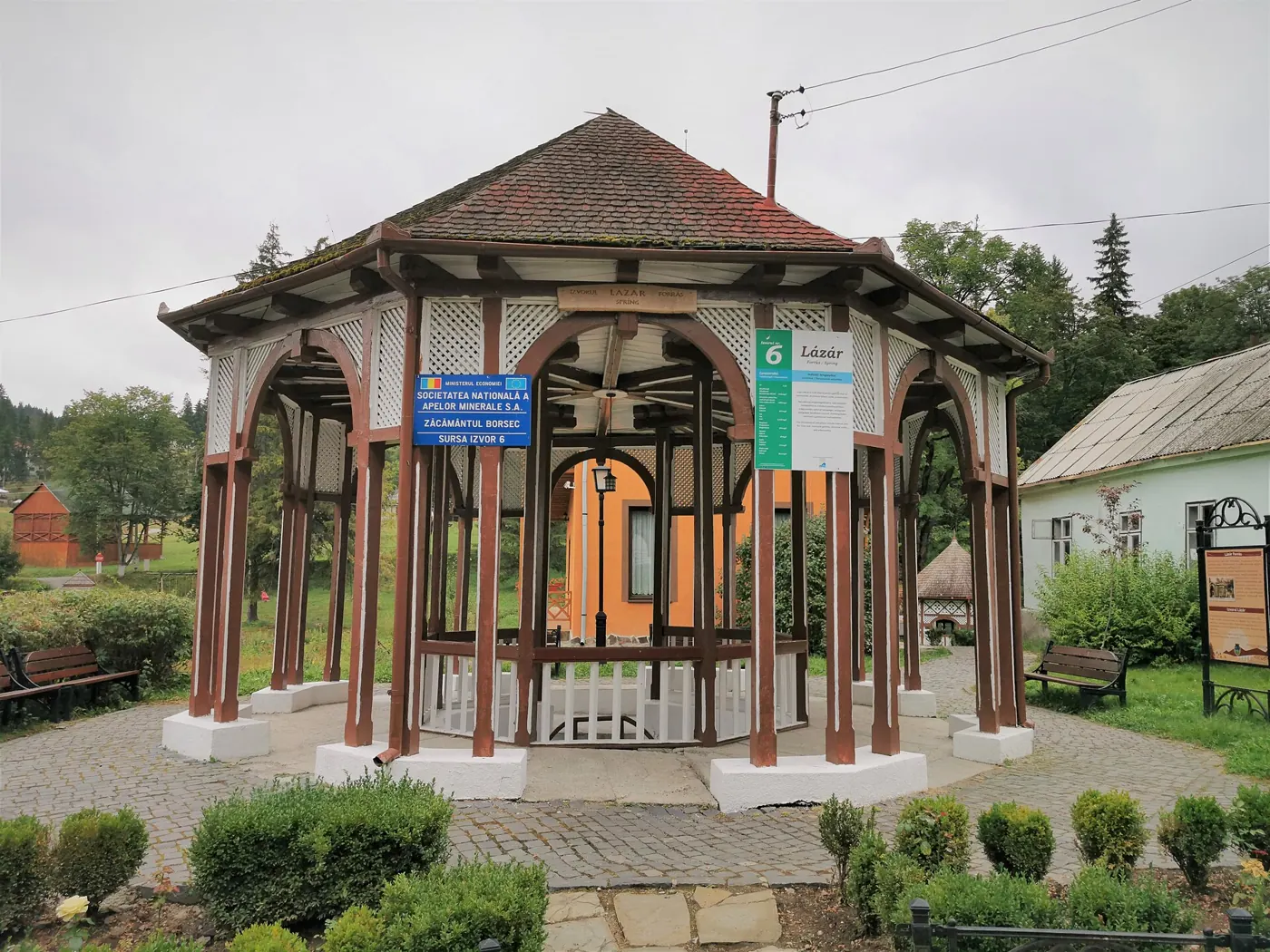
The Lázár spring at Borsec, a small stone structure over the water outlet
The Lázár spring at Borsec, one of the resort's head springs, in September 2019. Photograph: Elekes Andor, CC BY-SA 4.0, source Wikimedia Commons.

Borsec: the water that bites

In the Borsec depression, water leaves the rock loaded with gas. An analysis published in 2013 records 2,868.4 mg of free carbon dioxide per litre, with 1,903.2 mg of bicarbonate, 384.4 mg of calcium and 107.1 mg of magnesium, at a total mineralisation of 2,554 mg per litre. The sampling year is not stated, and figures vary by year and borehole.

The gas comes from the mofettic aureole of the Călimani-Harghita volcanic chain and dissolves calcium, magnesium and iron on its way through volcanic rock. That is how intensely carbonated, bicarbonate, magnesian waters are born.

The head springs have proper names: Boldizsár (no. 3), László (no. 5), Lázár (no. 6), Kossuth (no. 10), Petőfi (no. 11) and Pierre Curie. Two Austrian citizens leased the land in 1806 and built the first bottling plant. The Queen of mineral waters title comes, according to the town hall, from Emperor Franz Joseph.
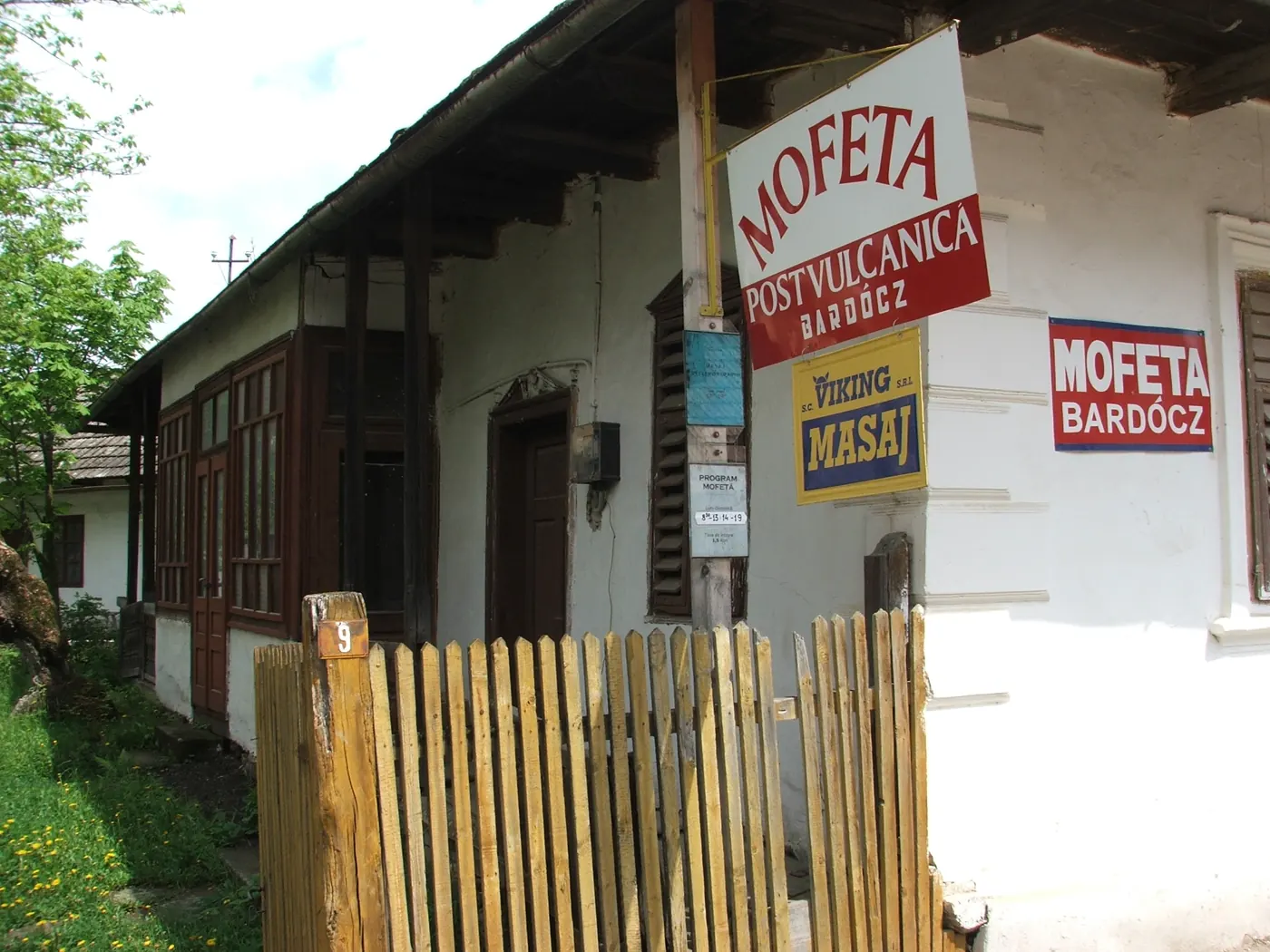
The Bardócz mofette building at Covasna, with the Mofeta sign over the entrance
The Bardócz mofette at Covasna, where gas leaves the ground and serves external cures. Photograph: Stipkovits Fülöp, CC BY-SA 3.0, source Wikimedia Commons.

Covasna: the gas you sit in

At Covasna, carbon dioxide leaves the ground as gas, in mofettes, while carbonated baths and gas emanations serve, in a sheltered climate, a cardiology hospital and a children's sanatorium. A large study of one thousand hypertensive patients described the hypotensive effect and capillary vasodilation.

The water is carbonated, alkaline-earth with calcium and magnesium. Manganese, the usual companion of iron in mineral waters, reaches 7.3 mg per litre in the bottled water here, more than twenty times the 0.3 mg per litre level at which iron tastes metallic. The comparison shows the order of size: the threshold belongs to iron, not to manganese.

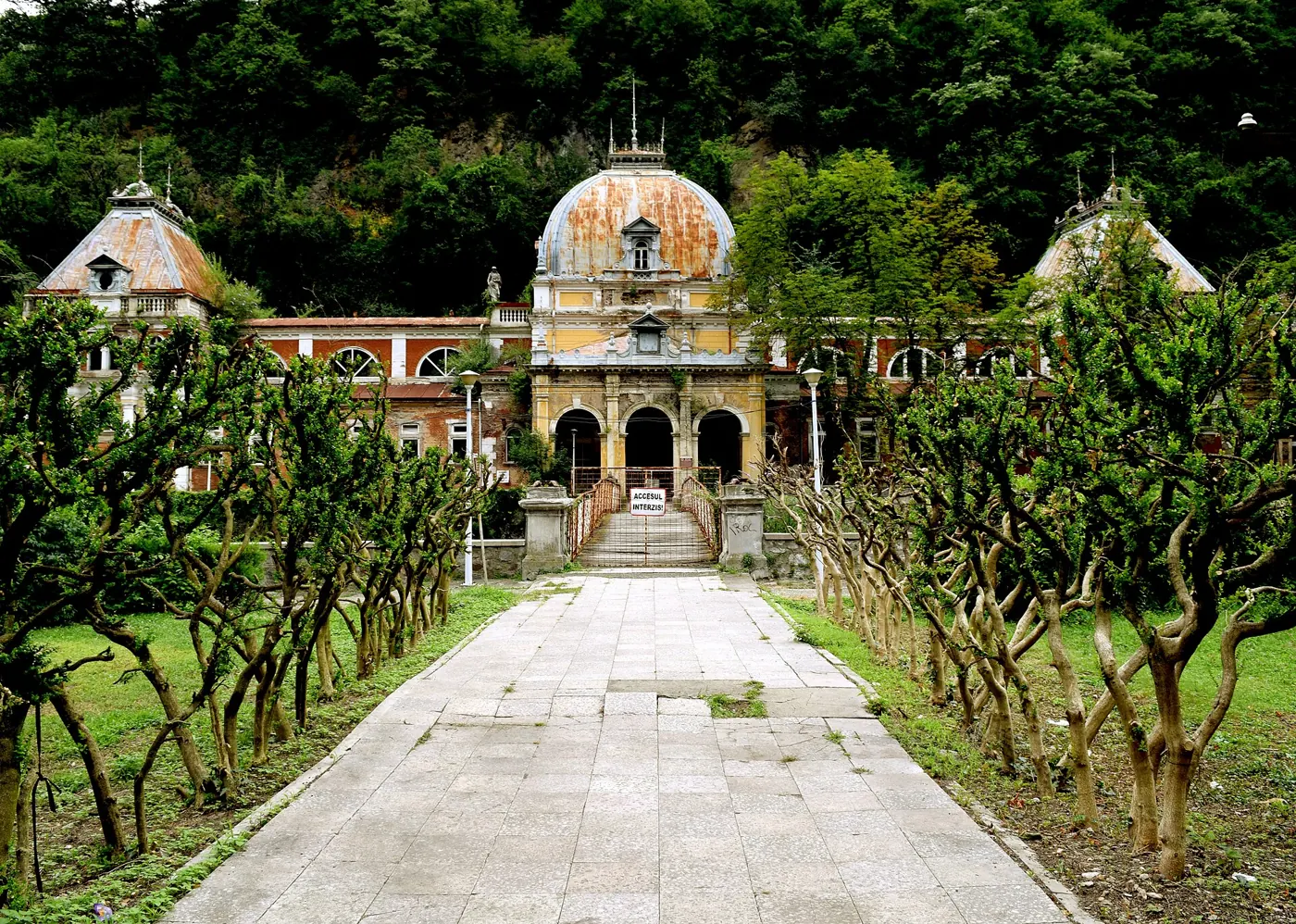
The Neptun Baths at Băile Herculane, the historic facade with the statue on the gable
The Neptun Baths in 2019, closed after the roof collapse. Photograph: Máté, CC BY-SA 4.0, source Wikimedia Commons.

Băile Herculane: warm water with sulphur

The thermomineral springs of the Cerna valley were known and used by the Romans and were rediscovered in 1728. The northern springs: Apollo, Hercules II, Hygeea, Hercules I: rise from the limestones of the Hercule hydrostructure, along the valley's tectonic corridor. Hercules I varies between 17 and 52 degrees Celsius, flowing between 36 and 132 litres per second as cold infiltration water cuts it.

These are sulphurous waters, with at least one mg of hydrogen sulphide or related sulphur compounds per litre: the Neptun 2 spring, more concentrated in hydrogen sulphide, appears in balneology research with inhibitory effects on the processes of the digestive lining. The taste is bitter-astringent, with a characteristic smell. Sulphurous waters never become table water; they stay medicinal waters and thermal baths.

Romans built baths here, the Habsburgs rebuilt them, and Franz Joseph called the resort, on his 1852 visit, the most beautiful on the continent, as the Neptun Baths dossier reports. Guests included Empress Elisabeth. The Neptun Baths were among the most modern in Europe in their day; after 1989 they were abandoned.

Three thresholds the senses can feel

1,000 mg/l

Carbon dioxide. From this level the water is called carbonated. Borsec passes it almost three times over.

10 mg/l

Iron. From this level the water is called ferruginous. The metallic taste starts at 0.3 mg per litre.

1 mg/l

Hydrogen sulphide and related compounds. From this level the water is called sulphurous. The rotten-egg smell starts at 0.0005 parts per million in air.

Method and limits

  • Figures for Borsec come from an analysis published in 2013, with no sampling year. For Covasna and Herculane the page shows classifications and literature values, not laboratory bulletins.
  • Analyses differ by sampling year and borehole; thresholds stay, figures pass.
  • The page tells the historical use of the waters and gives no treatment guidance.

Sources