A line in the census

A line in the census
Today’s Izvoarele appears as Regele-Ferdinand
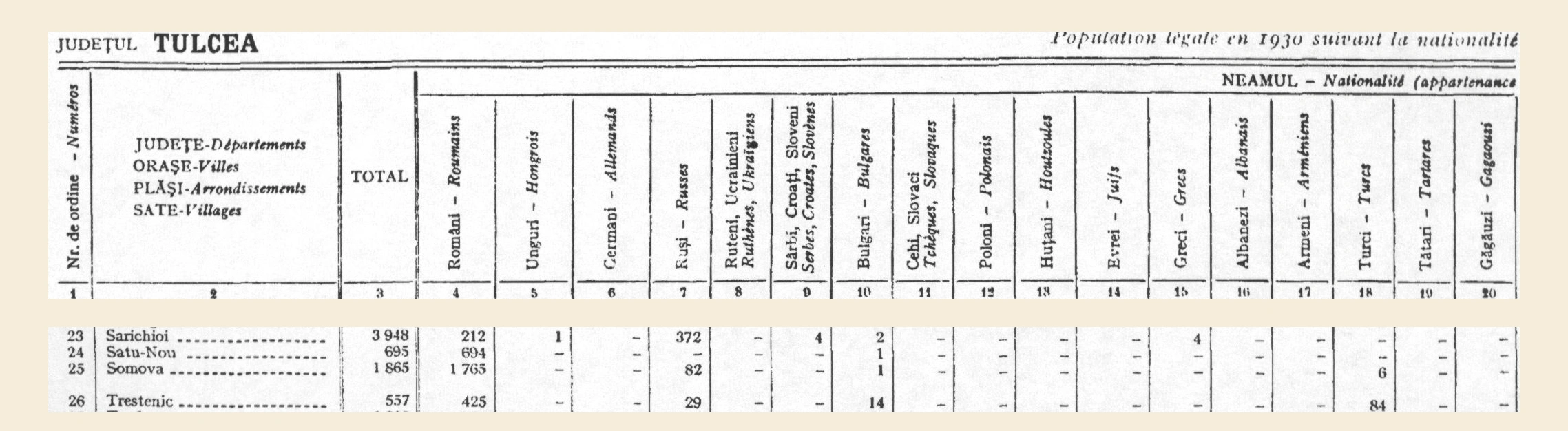
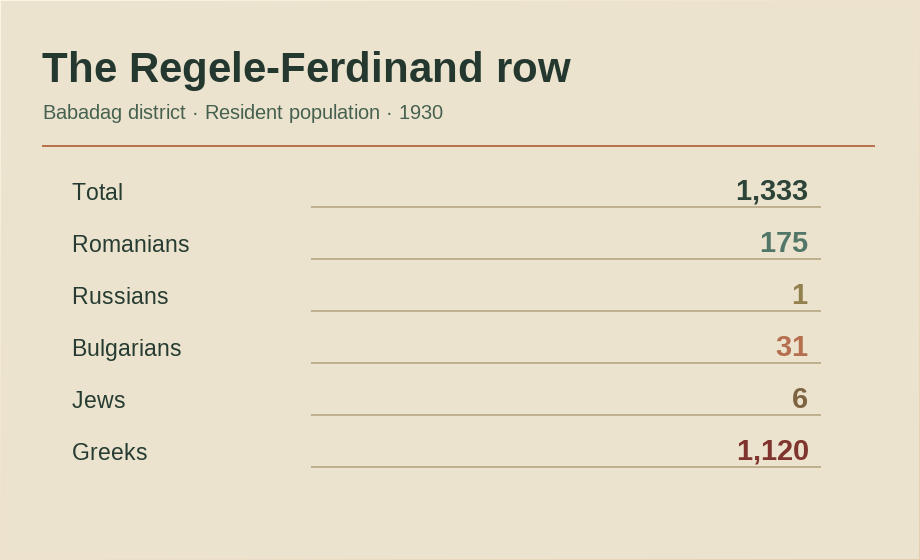
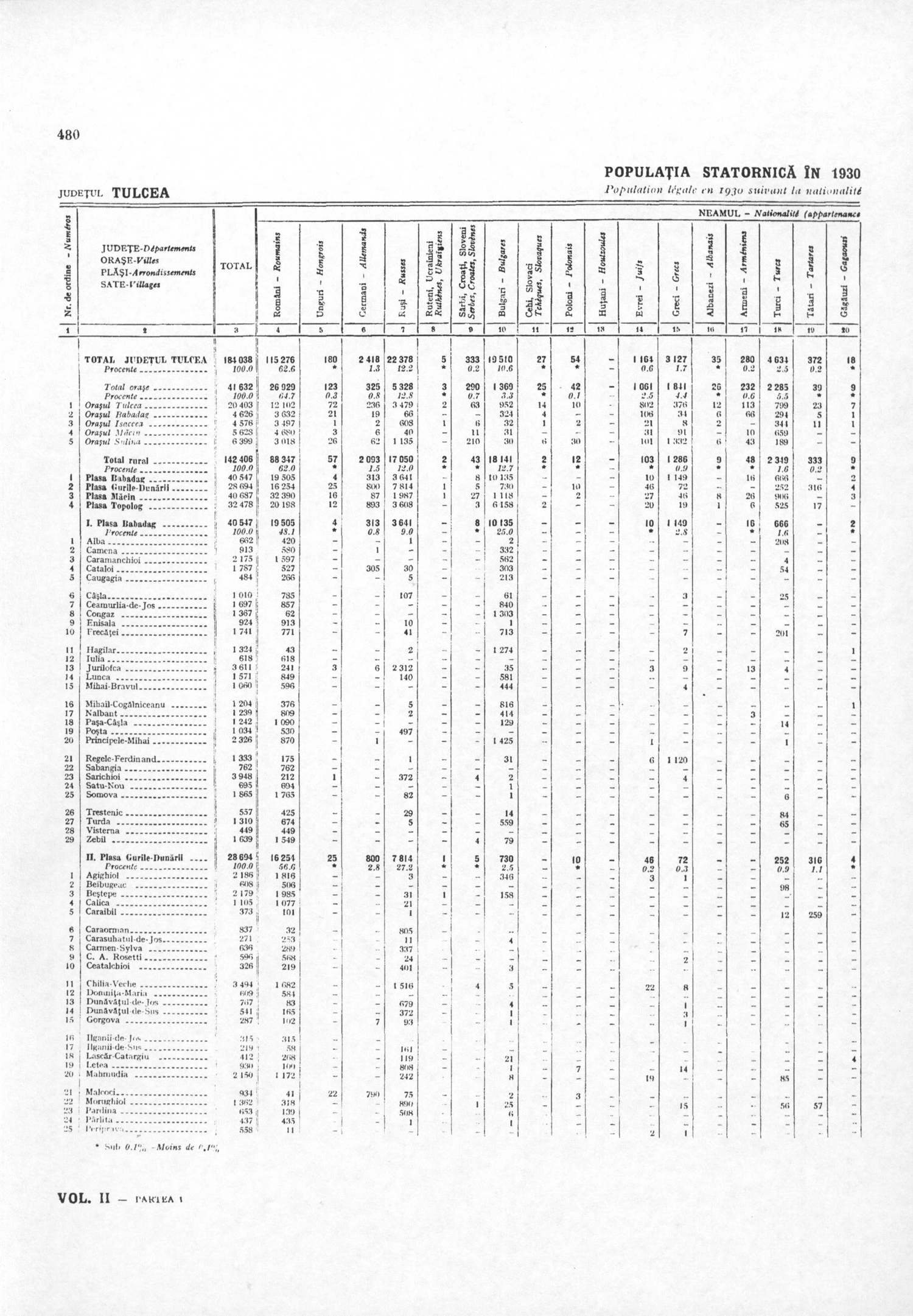
In 1930, census takers listed the village below Mount Consul in Babadag district. Find the Regele-Ferdinand row, then the column headed “Greci”, or Greeks. The name in the document differs from the one on today’s map. [2] [10]
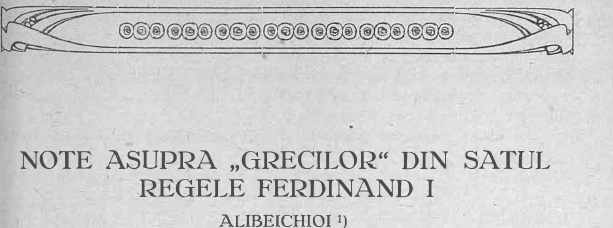
In 1929, the teacher Nichita Bonjug also called it Alibeichioi. He writes that the name change was proposed around Ferdinand’s coronation and accepted by the villagers. His title carries both names. [3]
Families named in 1929
Bonjug recorded Greek and Bulgarian families
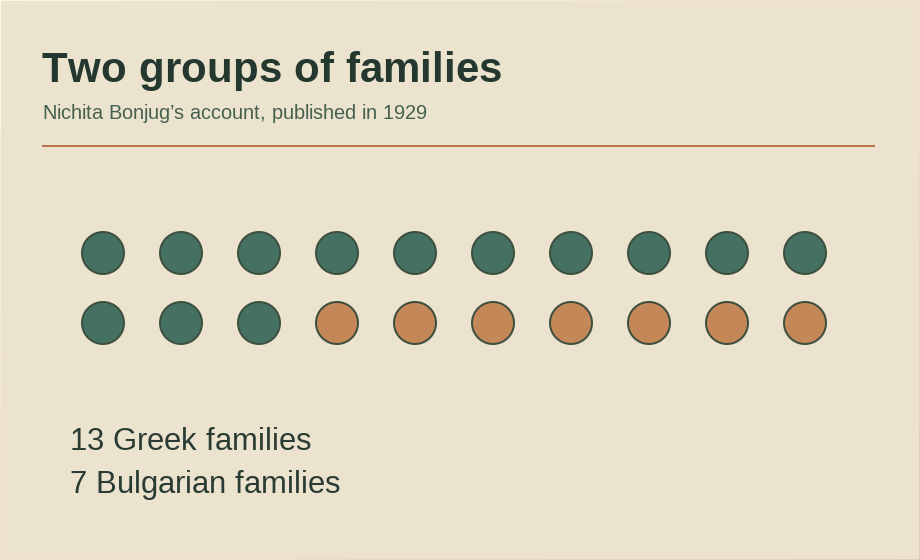
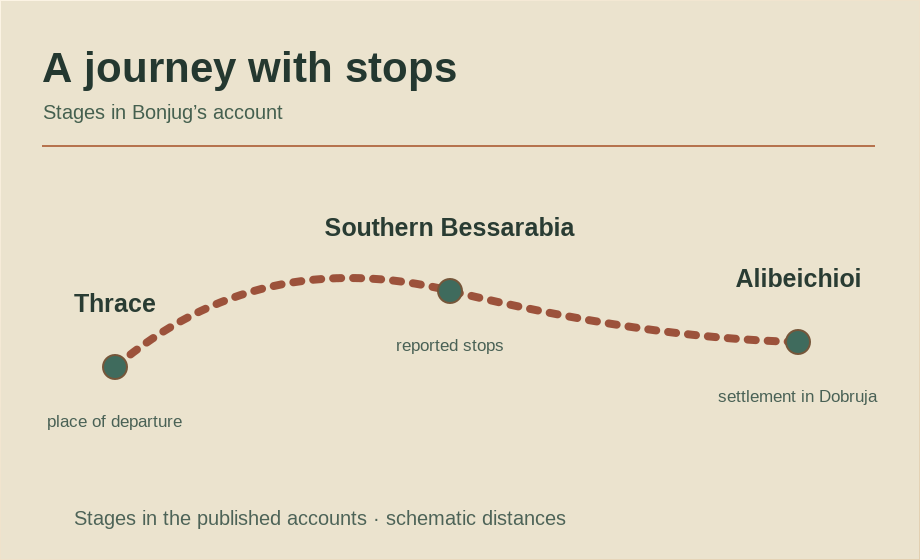
Bonjug wrote almost a century after the settlement. Villagers told him that thirteen Greek families and seven Bulgarian families arrived there in autumn 1830. His article lists heads of households remembered by the people who spoke to him. [3]
Dimitrios Kontogeorgis, who studied the region’s archives, considered a connection to Greek migration from Thrace after the Russo-Ottoman war of 1828–29 likely. He found no separate Alibeichioi collection in the archive and points to material held with the prefecture records. [4]
Why they may have stayed
The journey passed through southern Bessarabia
In Bonjug’s account, the families first lived in several villages in southern Bessarabia. On the return journey, the birth of twins reportedly prompted the group to stop near Mount Consul. [3]
Bonjug connects the decision to stay with the livelihood people found there. He describes timber being sent to the boatbuilding places at Isaccea and Tulcea, and some households turning to farming. These accounts were gathered several generations later. [3]

The church and the language of worship
Services were held in several languages
The older residents Bonjug spoke to recalled a priest who worshipped in Turkish, alongside priests who conducted services in Greek. Bonjug also records that a Romanian priest, Nicolae Popa, led services in Romanian in 1882. [3]
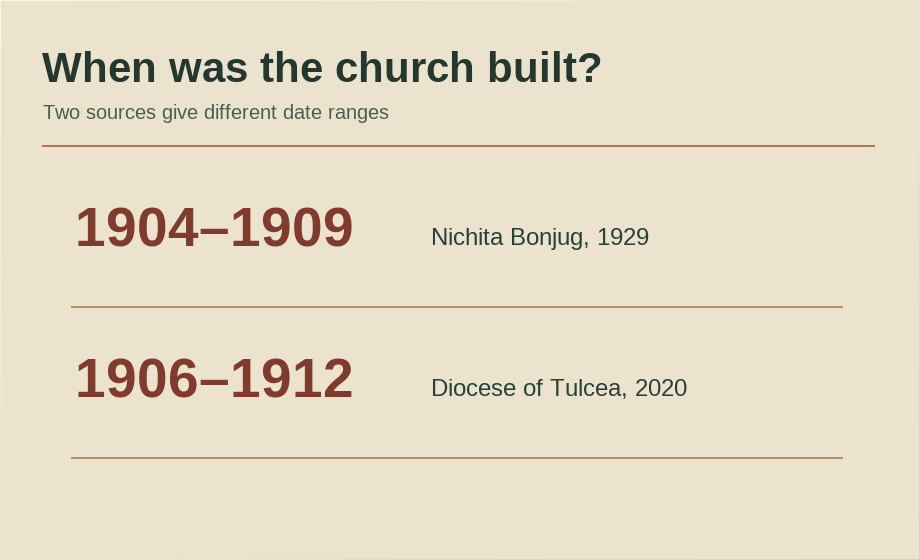
Bonjug places the building of St Demetrius between 1904 and 1909. The Diocese of Tulcea directory gives 1906–1912. The two date ranges refer to the same church and overlap. [3] [5]
How residents were counted
What the column “Greeks” meant in 1930
The Regele-Ferdinand row has 1,333 residents, including 1,120 in the Greek column. Other nonzero cells list Romanians, Russians, Bulgarians and Jews. The Romanian header calls the criterion neamul and the French labels it as group affiliation. [2]
This is how the census classified residents at a particular date. Language in church, at home and at school are separate questions. Bonjug’s description of worship offers a second source about one of them. [2] [3]
A museum that began in the village
The teacher donated the collection in 1938
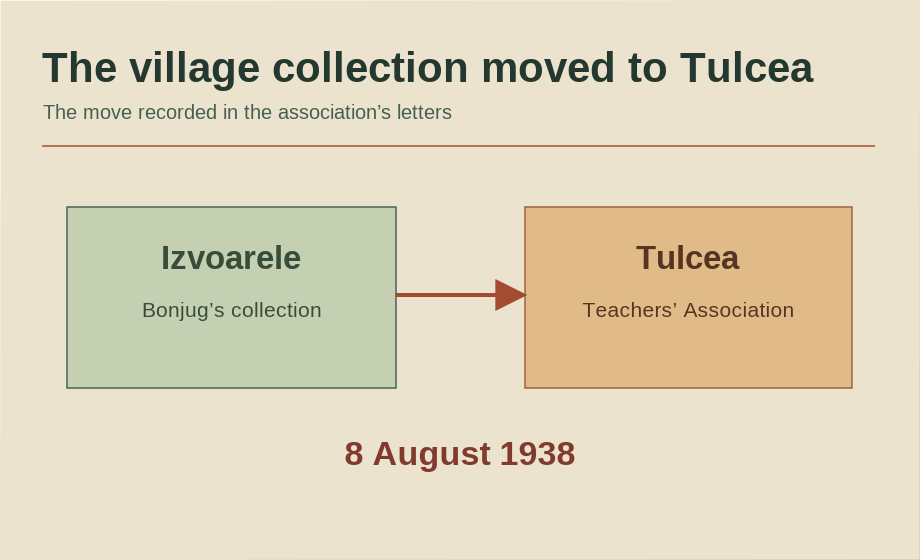
Bonjug set up a museum at Izvoarele and named it after King Ferdinand I. In 1938 he donated it to the Tulcea County Teachers’ Association. The County Library describes a letter of thanks dated 8 August for installing it at the association’s headquarters. [9]
The association proposed adding the founder’s name to the new title. Bonjug chose to retain the king’s name alone. Regele Ferdinand I, which appeared in the census row earlier, also appears in the records of a museum founded in the village. [9] [2]
Izvoarele village and commune
The 2021 figure covers three villages
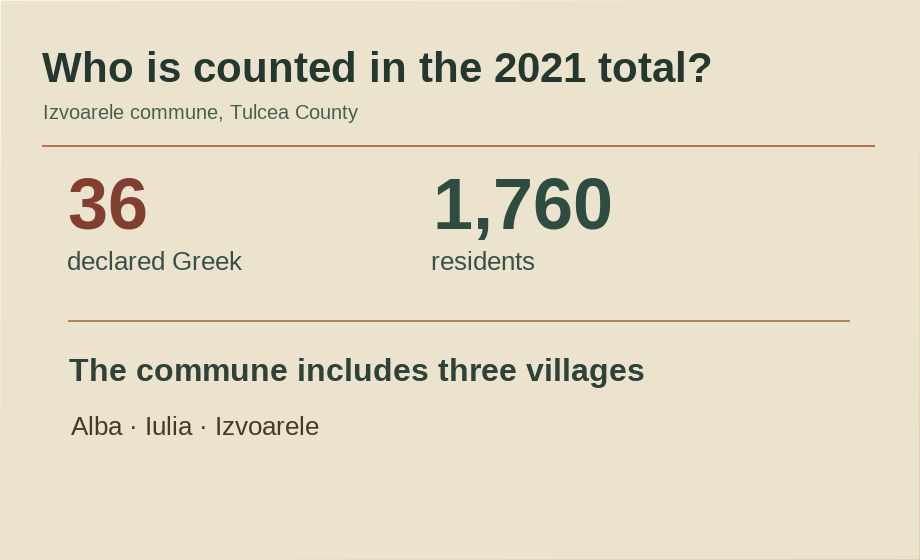
Izvoarele commune now includes Alba, Iulia and Izvoarele villages. For the 2021 census, the County Council published 1,760 residents and 36 people recorded as of Greek ethnicity across the commune. The 1930 Regele-Ferdinand row has a different geographical scope and categorisation. [6] [7] [2]
The Tulcea Museum of Ethnography and Folk Art uses clothing and rural household objects to document this community. The County Council also describes Lăzărelul, a custom in which girls dress for the occasion and go from house to house singing. Objects and accounts reveal aspects of village life outside the census totals. [6] [8]