Marius ComperVasile Fati Botanical Garden · Sălaj
Română

Jibou Botanical Garden

How Jibou’s botanical garden grew

Jibou’s two domes had a modest beginning. A biology teacher and his pupils started with a garden beside their school. The records give the area of the first greenhouse and show how the garden became a place for seed exchange and research.

Compare the first two greenhouses ↓
Two domed greenhouses seen from the end of a path.
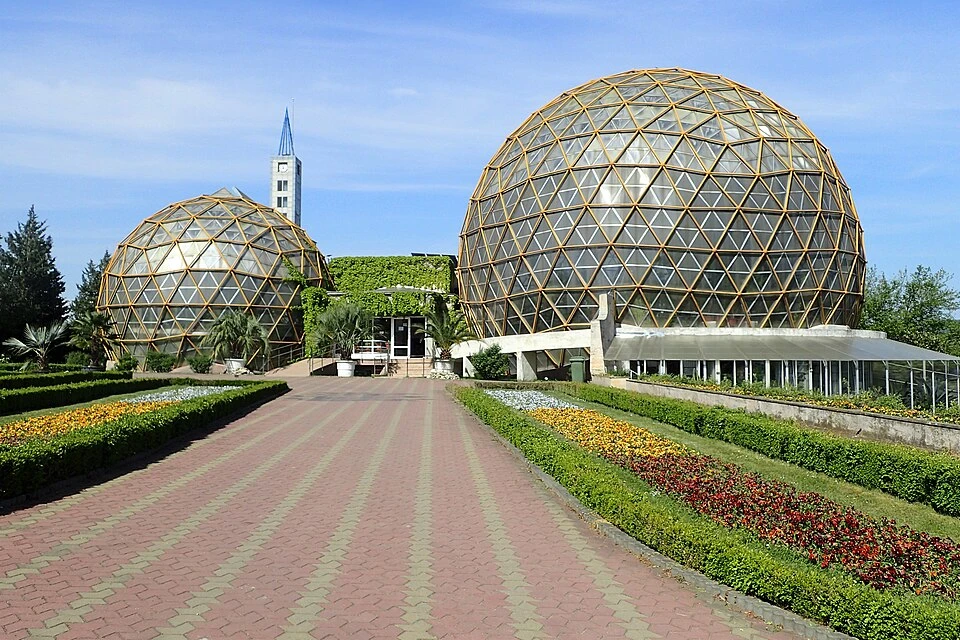
Two domes seen from the garden path in 2018. A network of triangles is visible on the shell. (Source · Krzysztof Ziarnek, Kenraiz / Wikimedia Commons · WebP · CC BY-SA 4.0)

The greenhouses today
Two domed greenhouses seen from the end of a path.
Two domes seen from the garden path in 2018. A network of triangles is visible on the shell. (Source · Krzysztof Ziarnek, Kenraiz / Wikimedia Commons · WebP · CC BY-SA 4.0)

The greenhouses today

What you see from the path and under glass

From the path you see two domes. Under glass, palms grow above the paths. The garden at Jibou began with a much more modest teaching greenhouse, with a floor area of 110 square metres. [5] [6] [1]

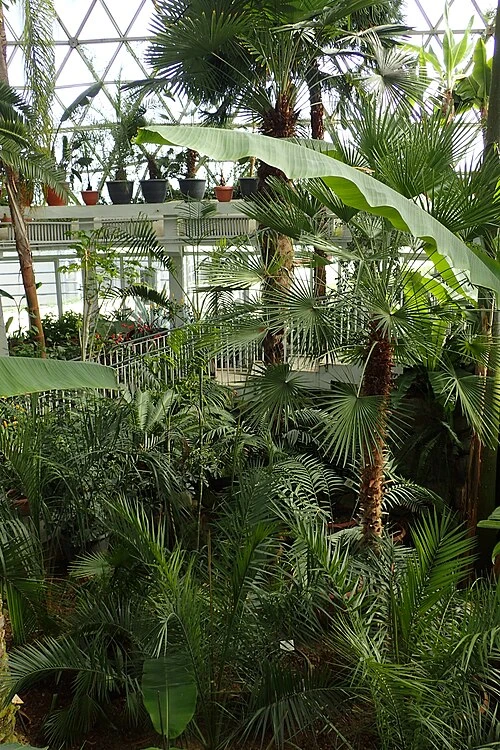
Compare the outside and inside views. The leaves show what a greenhouse can hold. The records of the first buildings show how the project grew. [5] [6] [1]
Two domed greenhouses seen from the end of a path.
Two domes seen from the garden path in 2018. A network of triangles is visible on the shell. (Source · Krzysztof Ziarnek, Kenraiz / Wikimedia Commons · WebP · CC BY-SA 4.0)
Tall plants and palm leaves inside the greenhouse at Jibou.
Palm leaves are visible beneath the glazed structure. Photographed in 2018. (Source · Krzysztof Ziarnek, Kenraiz / Wikimedia Commons · WebP · CC BY-SA 4.0)

Biology at school

Why the garden began beside the school

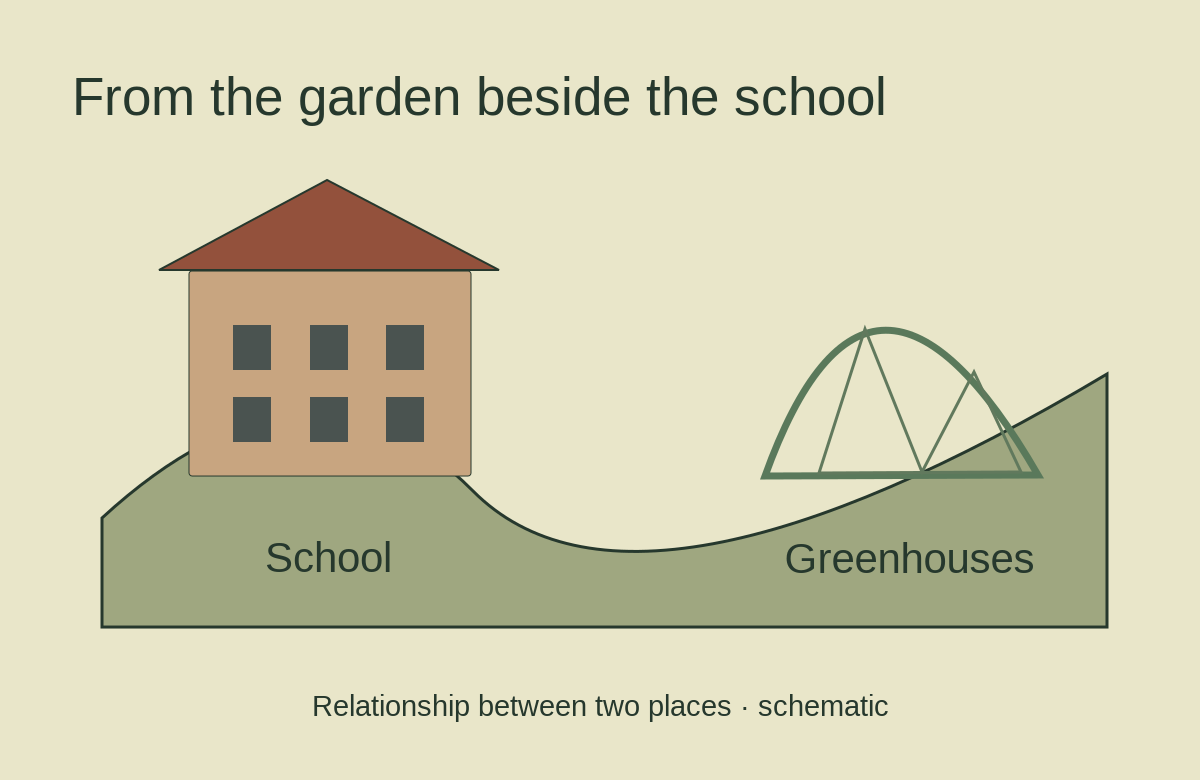
Vasile Fati started teaching biology at the local school in 1959. The historical survey says the school had little equipment for practical biology. The teacher, pupils and other staff used the park around Wesselényi Castle for a teaching garden. [1] [2]

In 1968 the project was approved as a botanical garden within the school. The castle and its park were already there. The teaching garden gave the ground a new use. [1] [2]
A school and greenhouse drawn schematically, without a surveyed layout.
Schematic relationship. The school was based in the castle complex, with the teaching garden established alongside it. (Source)

1968–1971

From 110 to 1,000 square metres

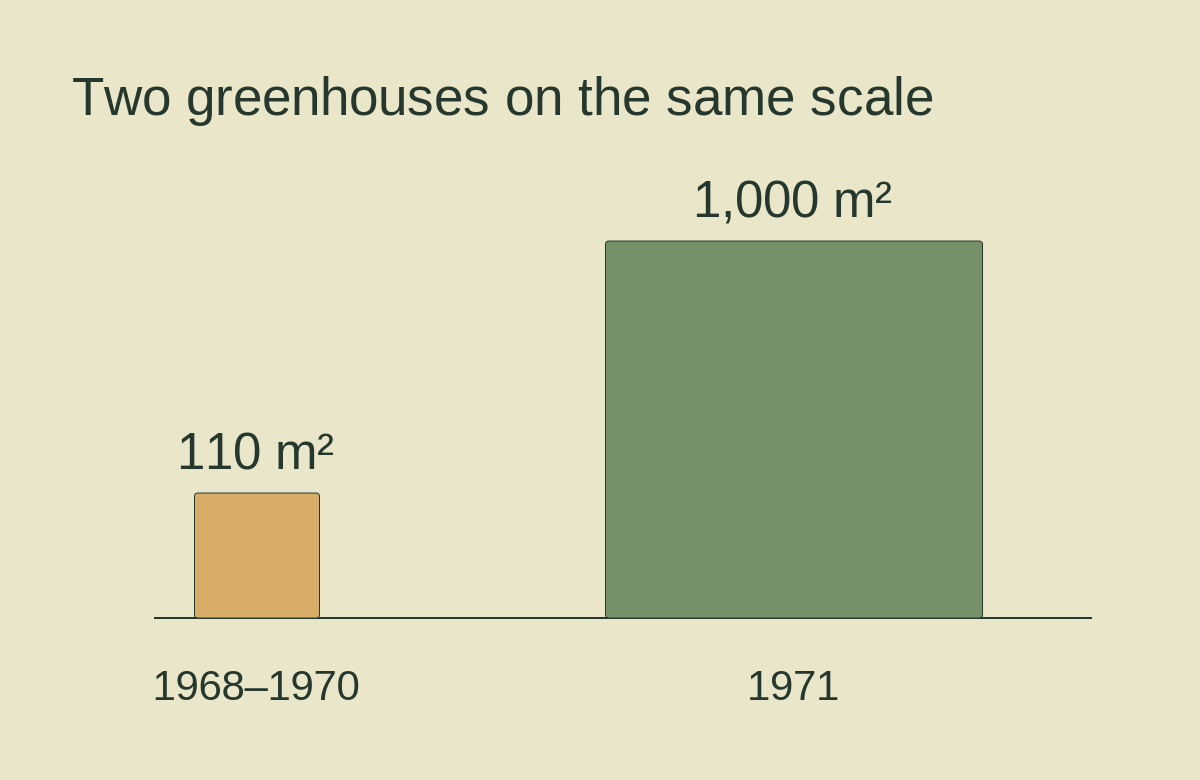
The first greenhouse, built between 1968 and 1970, covered 110 square metres. For 1971, the county survey records another greenhouse of 1,000 square metres and 250 square metres of seedbeds. The two squares represent the greenhouse floor areas. [1] [2]

The areas give a measure of the expansion. They say how much room was available. How many plants grew there and how the collections were divided are separate questions. [1]
Two squares representing 110 and 1,000 square metres.
The area of each square is proportional to the recorded greenhouse area. Building shapes are schematic. (Source)

Collections under glass

What more greenhouses made possible

Between 1974 and 1977 six further greenhouses added over 1,000 square metres for tropical, subtropical and Mediterranean plants. A heating plant and laboratories helped the garden maintain these collections. [1] [2]

In 1978 a further 1,500 square metres of greenhouse space was approved. The survey credits architect Valentin Zisu with the space-frame structure built in this phase. In the garden photograph, you can see the glazed triangles from the entrance. [1] [5]
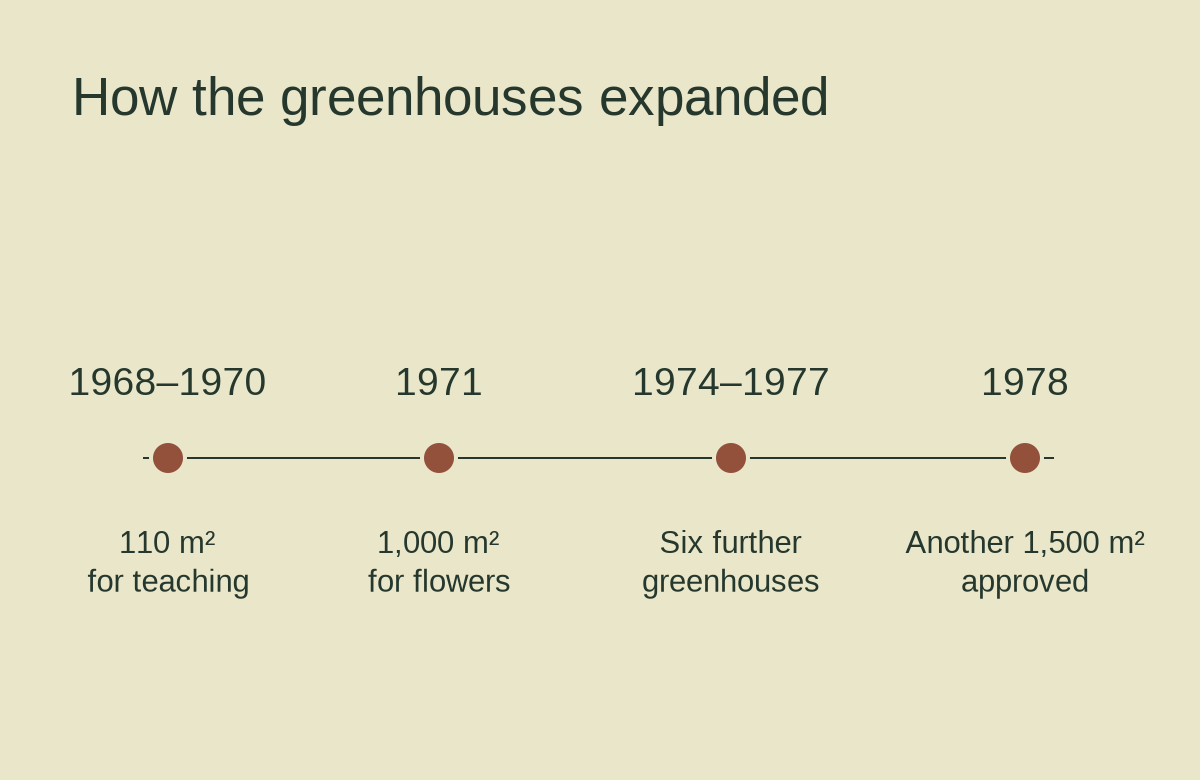
Timeline from the 110-square-metre teaching greenhouse to the extension approved in 1978.
The historical survey dates the first two greenhouses, the six additions and the expansion approved in 1978. (Source)

Seed exchange

How a living collection grew

In 1970 the first greenhouse held about 150 species donated by the botanical garden in Cluj and 85 donated by the garden in Bucharest. The survey also records donations from Iași and Craiova without giving a species count. [1]

Later Jibou published an annual catalogue of seeds and specimens. When the survey was written, it had active exchanges with more than 450 botanical gardens and related institutions worldwide. The catalogue told partners what seeds they could request from Jibou. [1] [3]
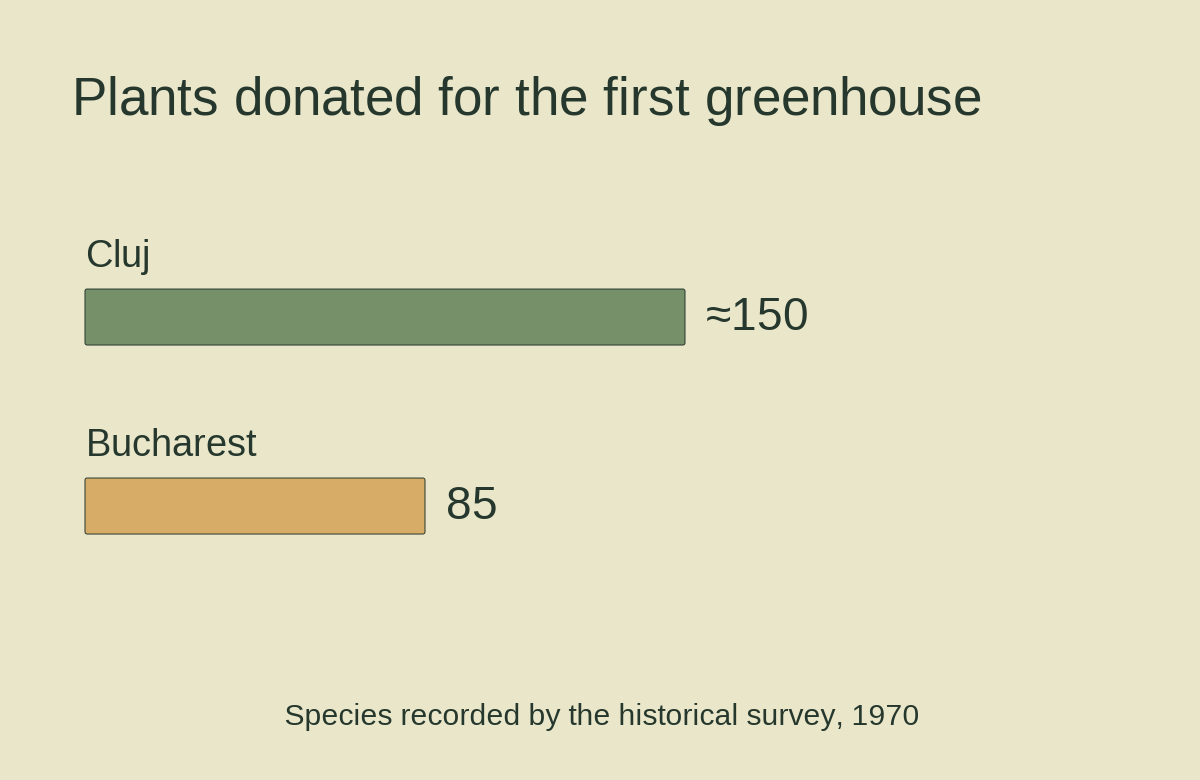
Two bars show about 150 species from Cluj and 85 from Bucharest.
The survey gives species counts for donations from Cluj and Bucharest in 1970. It also records donations from Iași and Craiova. (Source)

1990

How the garden joined a research centre

From 1972 to 1989 the garden operated as the Young Naturalists Station, according to the historical survey. A postcard in the Andrei Ștomff collection shows the botanical garden. [1] [4]

In 1990 the station was reorganised as the Biological Research Centre, which took over the garden. What began with pupils stayed in the same park, with collection and research roles alongside visits by the public. [2] [3]
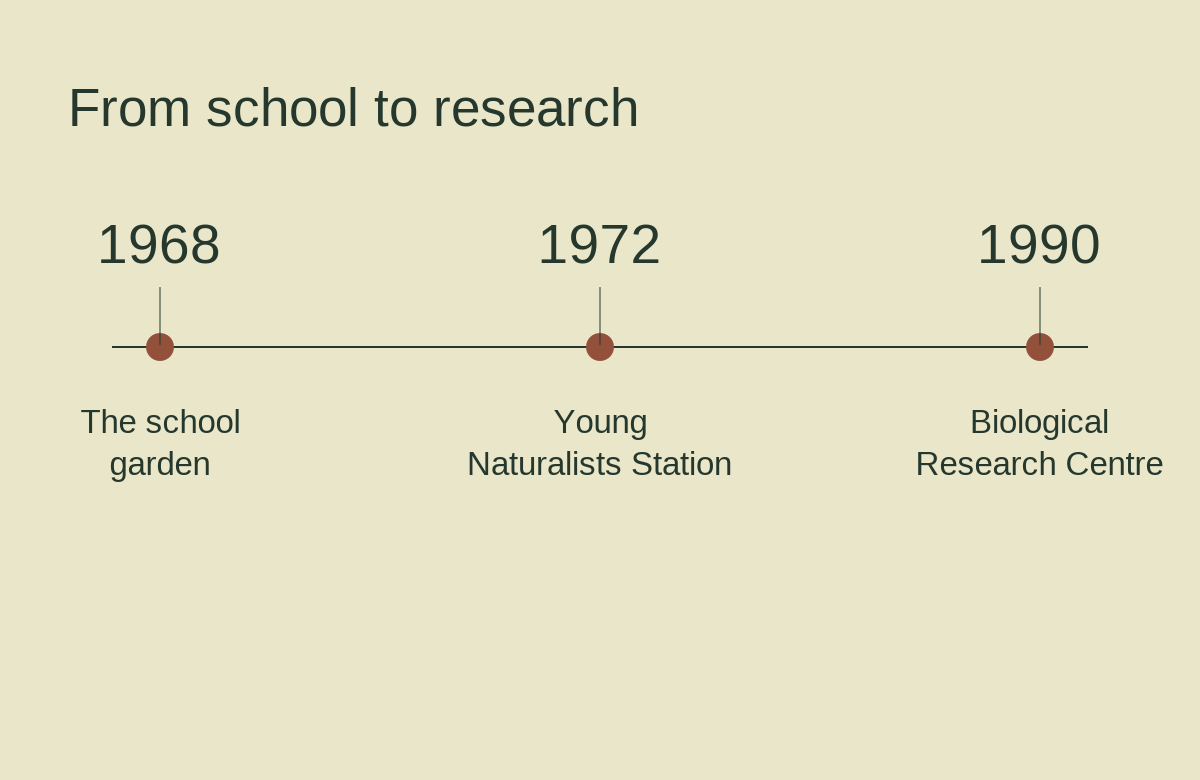
Timeline marking 1968, 1972 and 1990.
The school garden, young naturalists station and research centre appear in succession in the records. (Source)

Sources

Look again at the domes. The plants are under glass. The records show the decisions that made room for them, from a practical lesson to a collection studied and shared with other gardens.

  1. Sălaj County Council, Jibou historical surveyHistory of the school, garden and early greenhouses, including dates and areas.
  2. Ministry of Education, account of the Biological Research CentreThe explanatory note cites Decision no. 565/1990 and records greenhouse and laboratory construction.
  3. Town of Jibou, Vasile Fati Botanical GardenDescription of the garden’s sections and seed exchanges.
  4. National Heritage Institute, illustrated postcard from JibouThe Andrei Ștomff collection includes a postcard featuring the botanical garden.
  5. Krzysztof Ziarnek, greenhouse exteriorA photograph taken at Jibou, CC BY-SA 4.0.
  6. Krzysztof Ziarnek, greenhouse interiorA photograph taken at Jibou, CC BY-SA 4.0.