Marius ComperLacu Sărat Resort
Română

Lacu Sărat Resort

How people in Brăila reached the Lacu Sărat baths

Five kilometres from Brăila, Lacu Sărat’s baths drew visitors before there were rooms. Villas, a 32-cabin bathhouse, English Park and an electric tram followed. The resort’s story can be read in the ways the city reached the lakeshore.

Start the story ↓
Black-and-white postcard of a symmetrical garden with paths, planted beds, trees and a few visitors; the bottom reads “Lacul-Sărat. Parcul Englez”.
The central walk, beds and trees show the park’s layout. The postcard’s inscription names the place “English Park”. (Postcard, circa 1890 · Unknown photographer; scan and courtesy of Derzsi Elekes Andor. · Public domain)

On Brăila’s edge

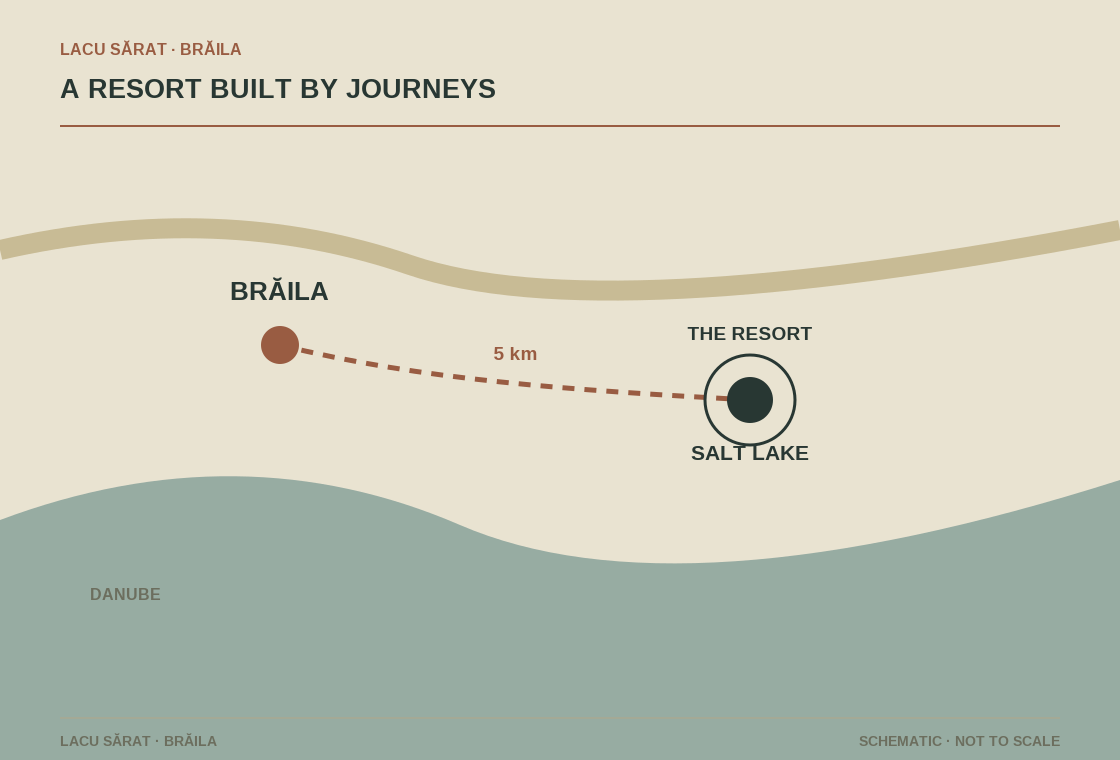
Orientation diagram with the Danube to the north, Brăila and Lacu Sărat Resort farther south, joined by a dotted line.
Diagram showing Brăila, the Danube and the resort to the south. The five-kilometre distance comes from period reporting; the route is schematic. (Source · Original editorial diagram derived from the cited sources.)

On Brăila’s edge

The baths five kilometres from Brăila

Lacu Sărat Resort lies about five kilometres from Brăila, in a low-lying part of the Bărăgan plain. In 1900, Gazeta Transilvaniei described a resort of villas, plantings and a garden; its short distance from town would shape its rhythm and public. [1] [6]

The newspaper described the daily trip from town to the saltwater baths for people who stayed in Brăila. Within a few decades the journey connected their lodgings to the bath cabins, the garden and a tram stop. [1] [3]

Orientation diagram with the Danube to the north, Brăila and Lacu Sărat Resort farther south, joined by a dotted line.
Diagram showing Brăila, the Danube and the resort to the south. The five-kilometre distance comes from period reporting; the route is schematic. (Source · Original editorial diagram derived from the cited sources.)

Before the villas

Visitors commuted before there were rooms

An article published in 1900 says that in 1878 visitors to the baths lodged in Brăila and travelled to the lake twice a day. It captures a resort still in its commuting phase: the town provided rooms, while the lakeshore was the destination for bathing. [1]

Ioan Munteanu records shelters in 1874 and heated baths in 1875. The bathing facilities appeared first. Lodgings that could shorten the trip for visitors enter the record several years later. [2] [1]
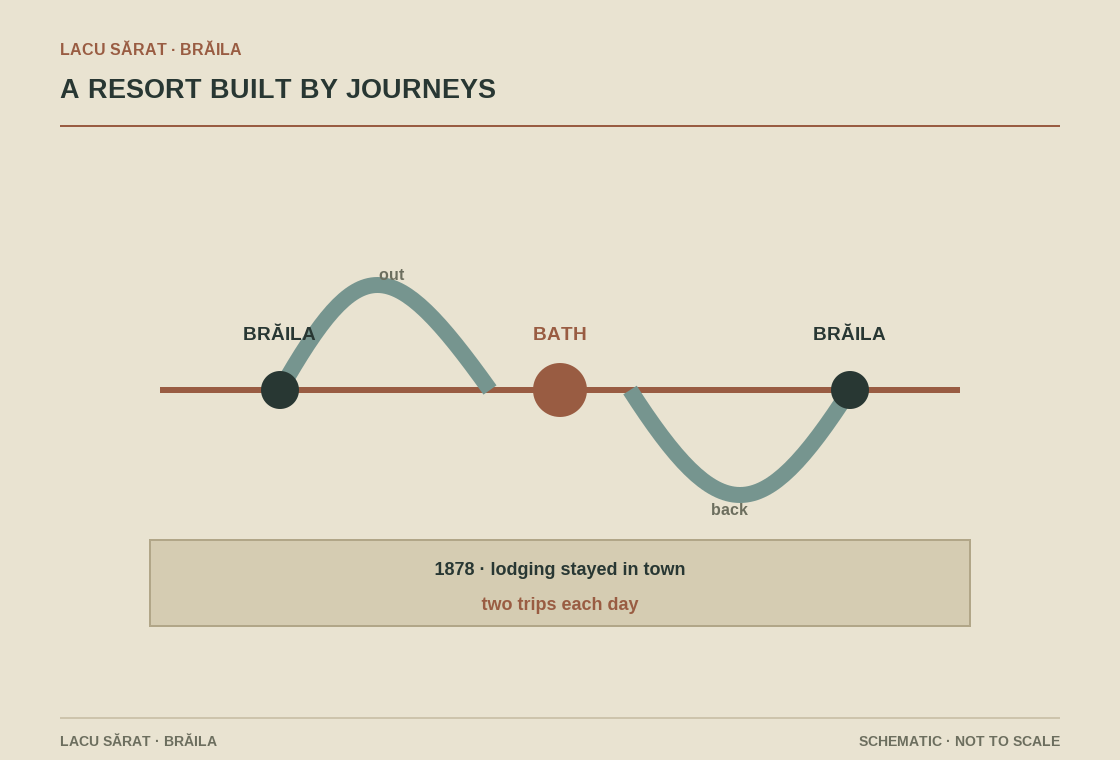
Brăila connected by two curved trips, out and back, to a bathing point at Lacu Sărat.
Diagram summarises a contemporary account of lodging in Brăila and bathing at the lake. The illustrated distance is not to scale. (Source · Original editorial diagram derived from the cited sources.)

From shelter to resort

In 1886 came a 32-cabin bathhouse and a casino

The timeline becomes clearer when huts, villas and the public bathhouse are kept separate. Munteanu’s history records huts in 1874, heated baths in 1875 and villas in 1878; the 1900 newspaper says the first dwellings were built in 1879. [2] [1]

In 1886 the state built a bathhouse with 32 cabins and a casino. The two accounts date villas and lodgings a year apart. By 1886, the resort had cabins for bathing and a place where visitors could spend time outside them. [1] [2]
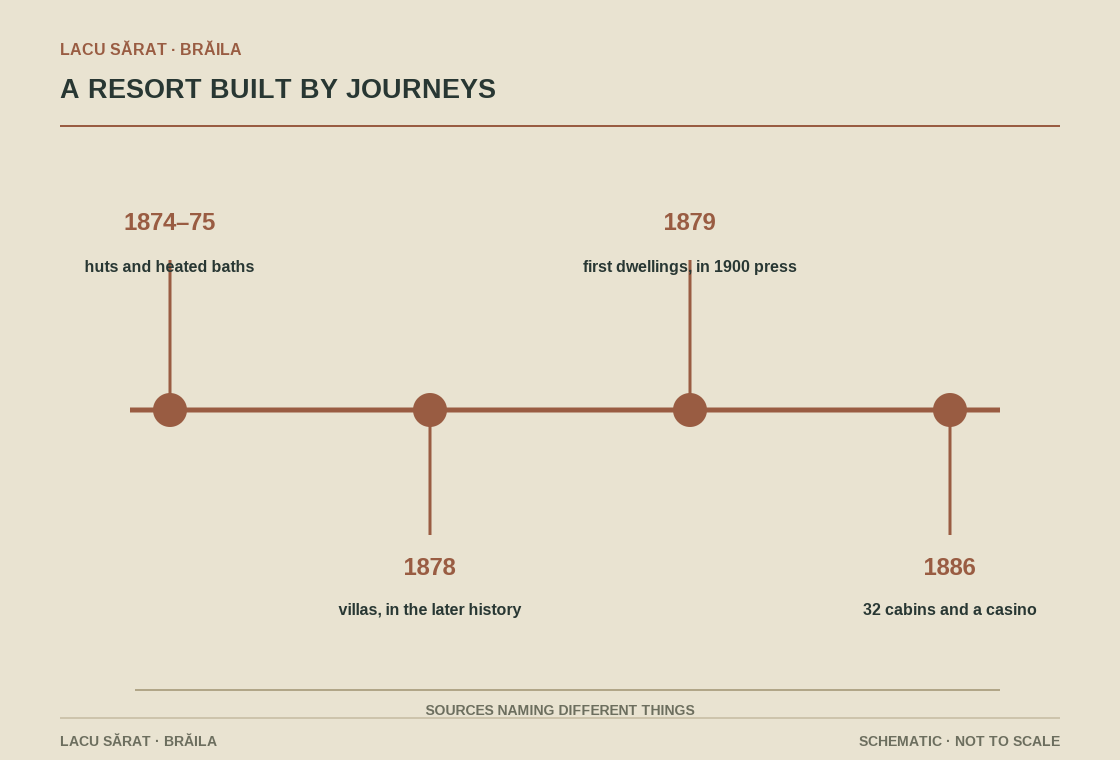
Schematic timeline: 1874–75, 1878, 1879 and 1886, each paired with the relevant source description.
The later monograph names huts and heated baths; the contemporary newspaper dates first dwellings a year later and confirms the 1886 facility. (Source · Original editorial diagram derived from the cited sources.)

A view from around 1890

English Park made the lakeside a place to linger

The English Park postcard, dated around 1890, shows paths, planted beds and people strolling. It shows what you could do between visits to the baths without going back to town. [4]

In 1900, Gazeta Transilvaniei described the planting and garden alongside the villas and baths. Visitors could stay by the lake after bathing. [1] [4]
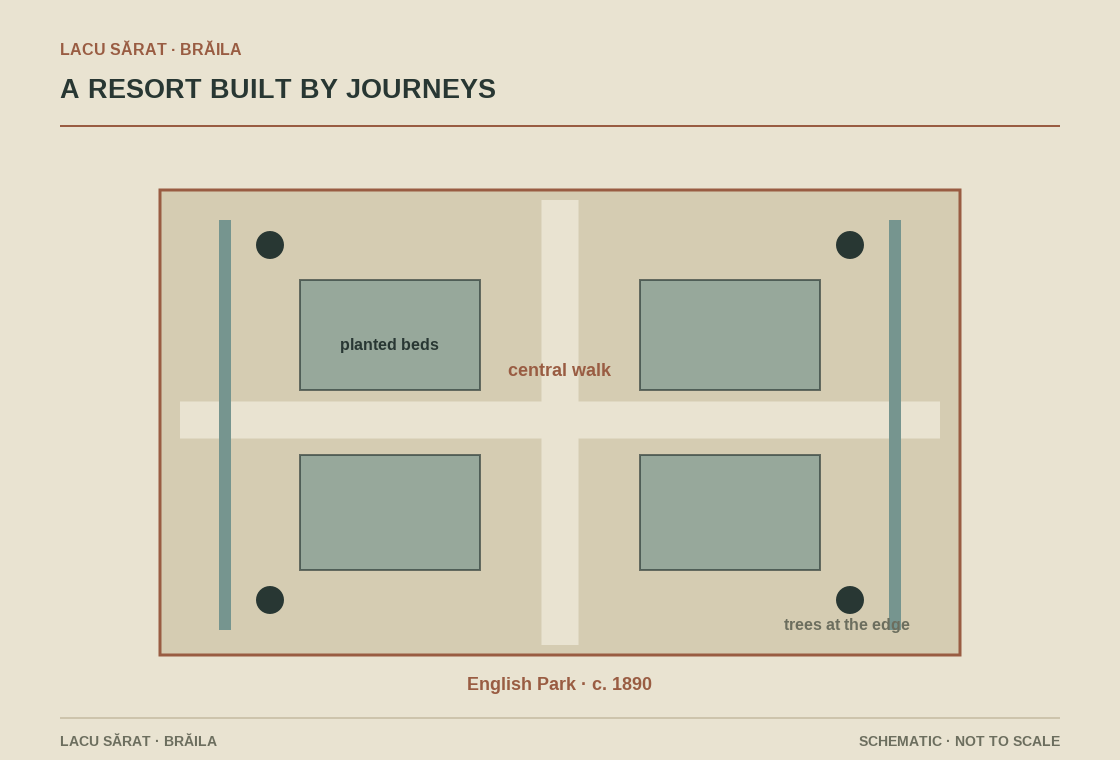
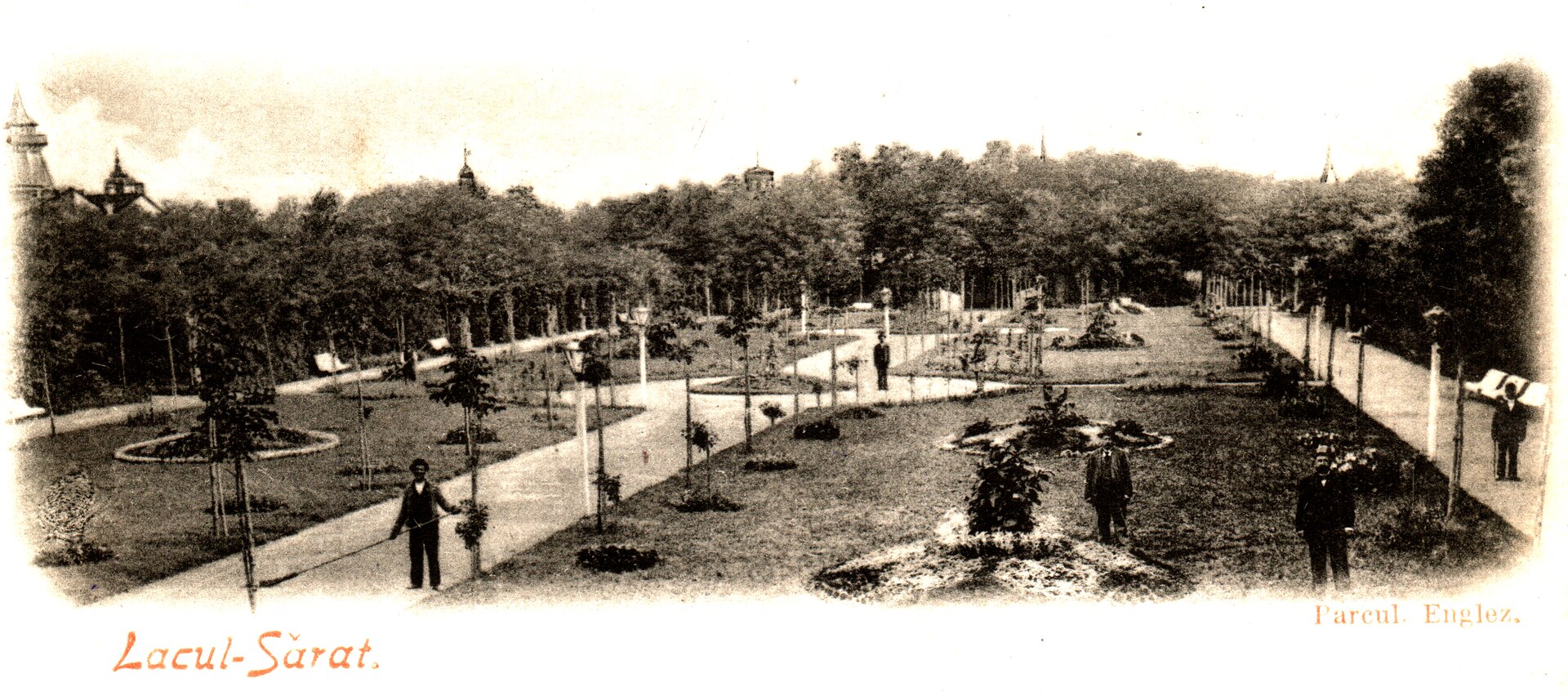
Diagram of a central walk, crosswalk and planted beds framed by trees.
Interpretive diagram based on features visible in the historic photograph. It is not a measured garden plan. (Source · Original editorial diagram derived from the cited sources.)
Black-and-white postcard of a symmetrical garden with paths, planted beds, trees and a few visitors; the bottom reads “Lacul-Sărat. Parcul Englez”.
The central walk, beds and trees show the park’s layout. The postcard’s inscription names the place “English Park”. (Postcard, circa 1890 · Unknown photographer; scan and courtesy of Derzsi Elekes Andor. · Public domain)

Brăila and Lacu Sărat, 1900

From 1900, to the baths by tram

Braicar records the first electric service on 19 June 1900, along a line connecting Piața Sfinții Arhangheli, Călărașilor Gate and Lacu Sărat. It offered another way to cover the five kilometres described in the period press. [3] [1]

A photograph published in 2025 shows a later tram in the resort loop, its pantograph raised towards the overhead wire. More than a century after the first run, the terminus recalls the journey between town and lake. [7] [3]
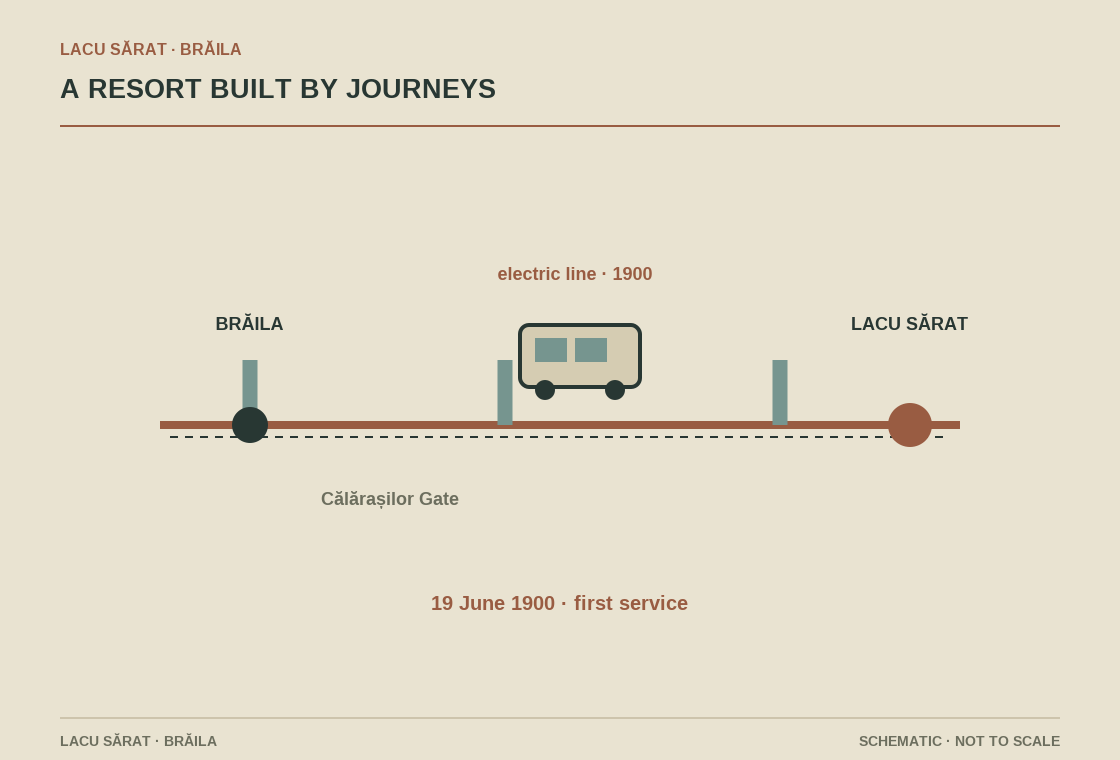
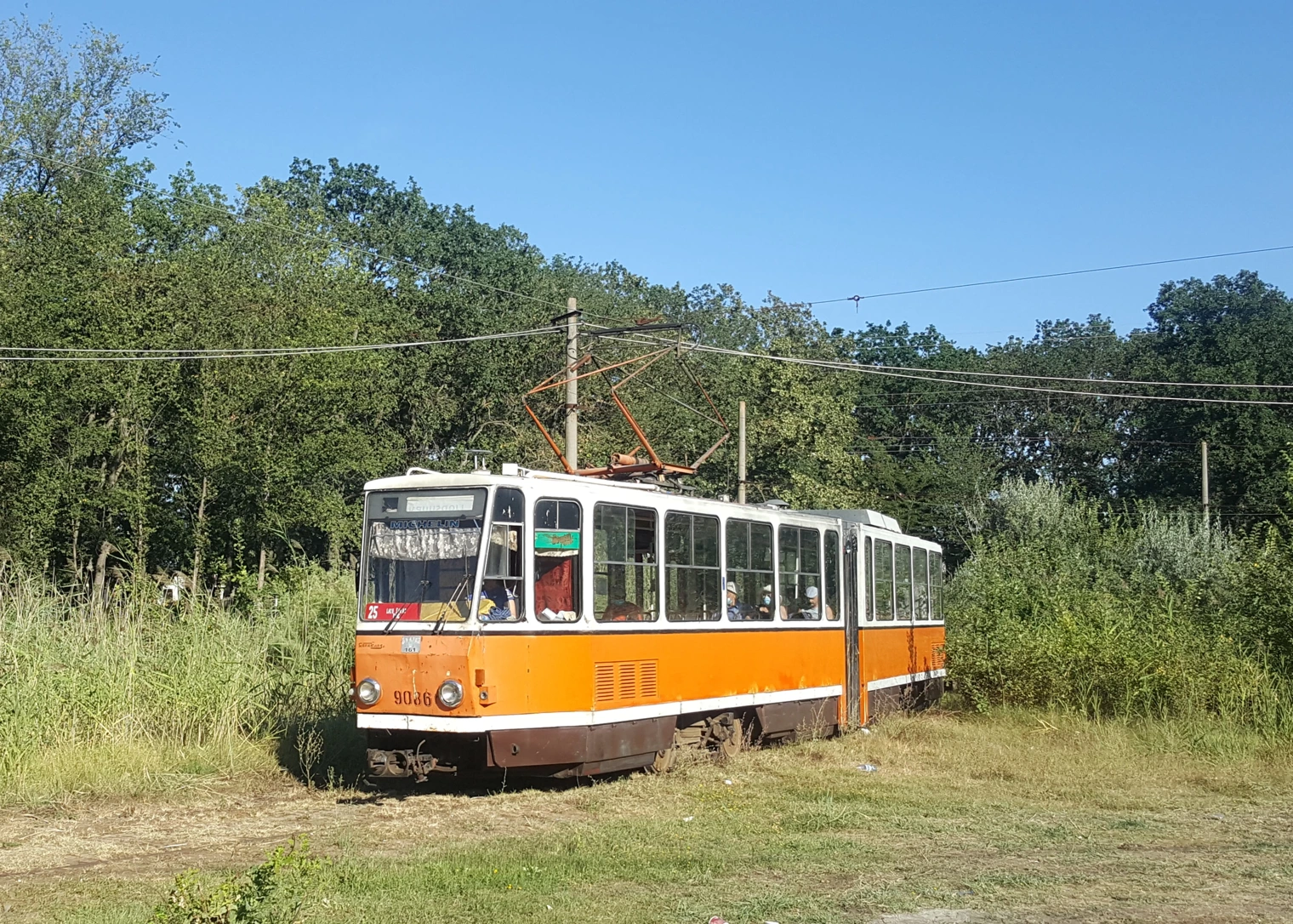
Diagram showing an electric tram line linking Brăila, Călărașilor Gate and Lacu Sărat Resort.
Diagram follows the stops named by Braicar; it is not a map of the present-day route. (Source · Original editorial diagram derived from the cited sources.)
Orange and white tram on a track curving through trees.
A Tatra KT4D tram at the Lacu Sărat loop. Look for the raised arm on its roof, which draws current from the overhead wire. (Source · SSBChris / Wikimedia Commons · CC BY-SA 4.0)

Sources

In the summer of 1878, a visit to the lake meant two journeys from Brăila. By 1900, an electric line connected town and resort. Between them came rooms, baths and a garden where people could linger.

  1. Gazeta Transilvaniei, 1900, no. 127, article on Lacul-SăratContemporary account: 1878 visitors lodged in Brăila and made two trips daily; it dates the first dwellings to 1879 and a 32-cabin bathhouse and casino to 1886. Claims about treatment are presented as historical rhetoric, not medical fact.
  2. Ioan Munteanu, *Lacu Sărat: History of the Resort*Historical monograph, p. 17: records huts built in 1874, heated bathing in 1875 and villas in 1878; it describes the spread of the resort’s reputation through visitors’ accounts. These markers do not automatically contradict the 1900 paper, which refers to first dwellings and the public bathhouse.
  3. Braicar, history of Brăila’s tramwayThe public transport operator describes the concession for the Lacu Sărat line and records the first service on 19 June 1900.
  4. English Park, postcard circa 1890Unknown photographer; scanned by and courtesy of Derzsi Elekes Andor. The file is public domain, with tags for country of origin and the United States. The project image is a Wikimedia 1920×852 rendition; it has not been cropped.
  5. Lacu Sărat Resort, OpenStreetMapOSM node 10302072936, named “Stațiunea Lacul Sărat”, coordinates 45.21572, 27.91664; identifies the resort, near the lake itself.
  6. Great Geographical Dictionary of Romania, vol. IV, entry “Lacul-Sărat”The entry describes the low ground between two ridges, the lake’s shape and its distance from Brăila, as well as nineteenth-century administrative chronology.
  7. SSBChris, a tram at the Lacu Sărat loopPhotograph published on Wikimedia Commons in 2025, CC BY-SA 4.0. Its upload date differs from the date in the camera metadata.