Csatád, 1802

Csatád, 1802
Born in an administration building
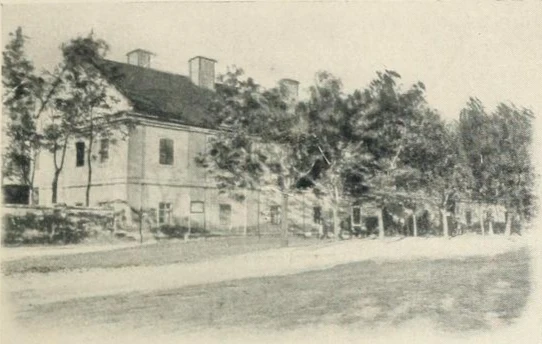
Nikolaus Lenau was born in Csatád, the old name of the Banat village. His birthplace was a local administration building put up in 1775. The association of former residents and their descendants also records living quarters for officials. Look at the frontage in the survey published in 1912. [1] [6] [9]
Lenau became a German-language Romantic poet. He published poems about landscape, love and longing. The Banat village preserved his birth house and later took his name. [8] [7] [1]
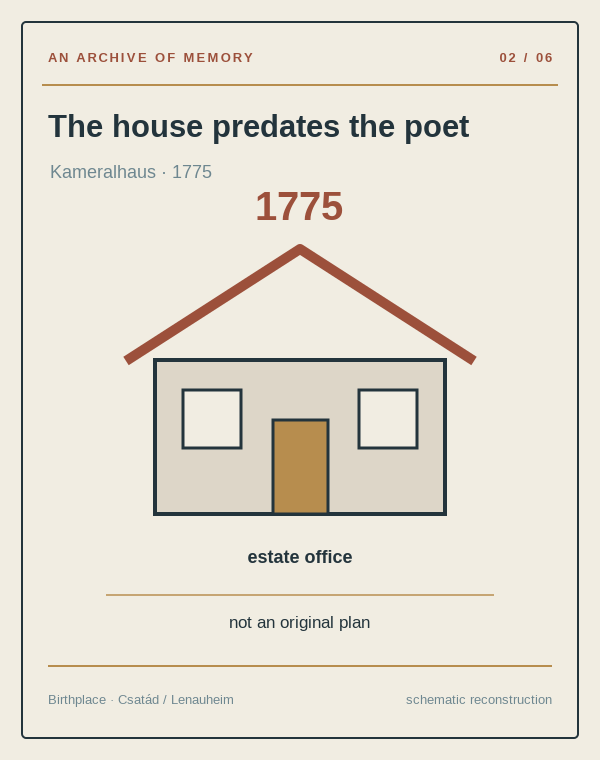
Kameralhaus · 1775
The house predates the poet
The village history records a district office with accommodation for officials. Another account from the same association calls it a Kameralhaus or Rentamt, terms associated with estate administration. The building contained offices and living quarters. [1] [9]
The drawing shows the ground floor and upper storey. The village history places the birth on the ground floor. The sources here give no exact room or boundaries for the family’s accommodation. [1] [9]
A life beyond the village
Csatád was a beginning, not his whole childhood
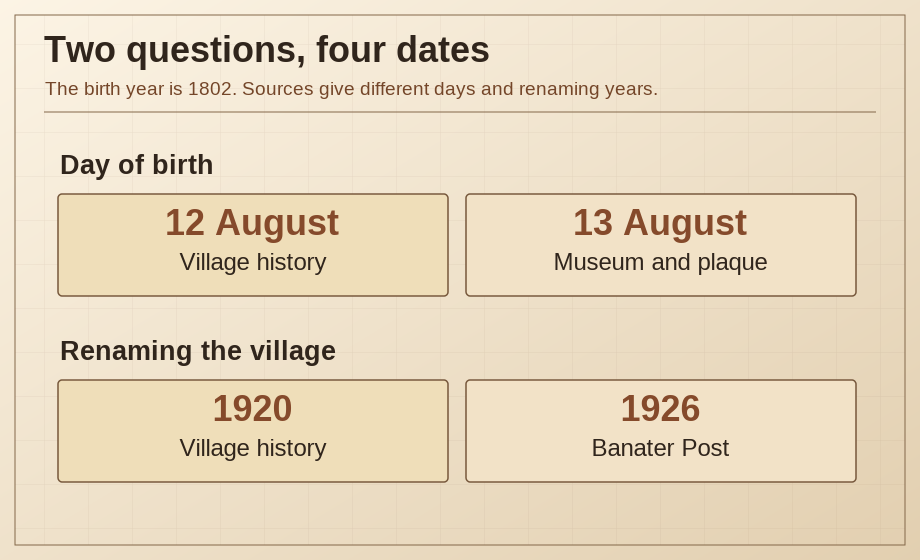
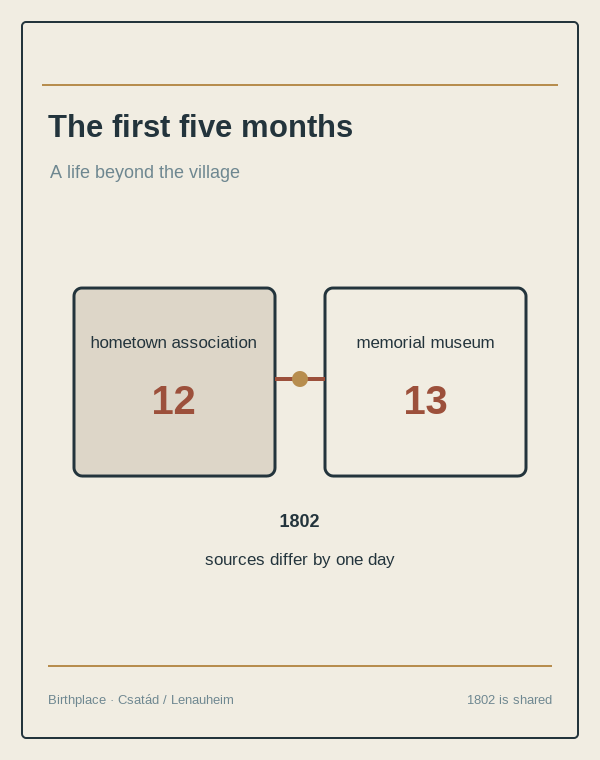
The hometown association dates Lenau’s birth to 12 August 1802 and says he spent his first five months in Csatád. The memorial museum gives 13 August. Both sources agree on 1802; we keep the year and make the one-day difference visible. [1] [2]
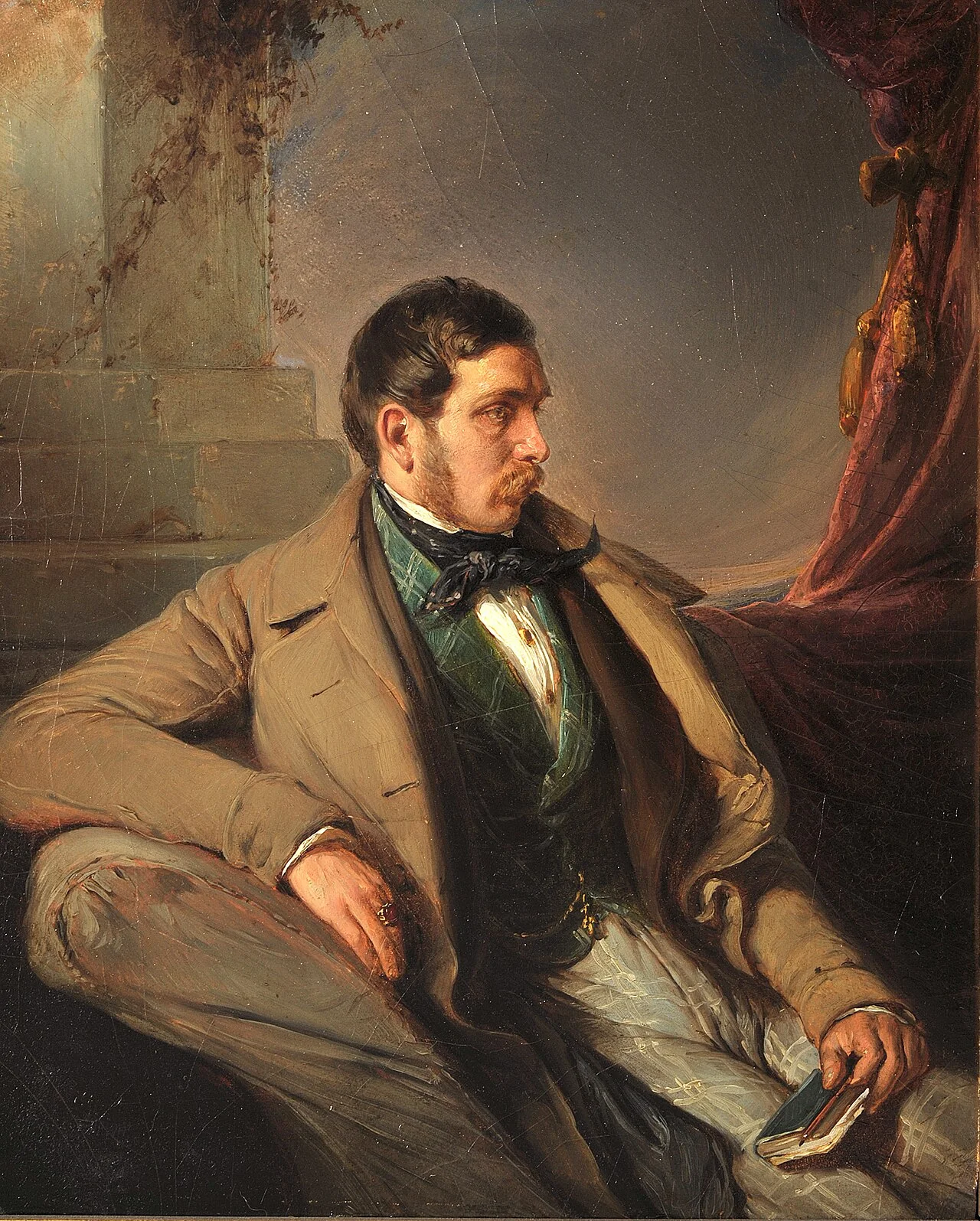
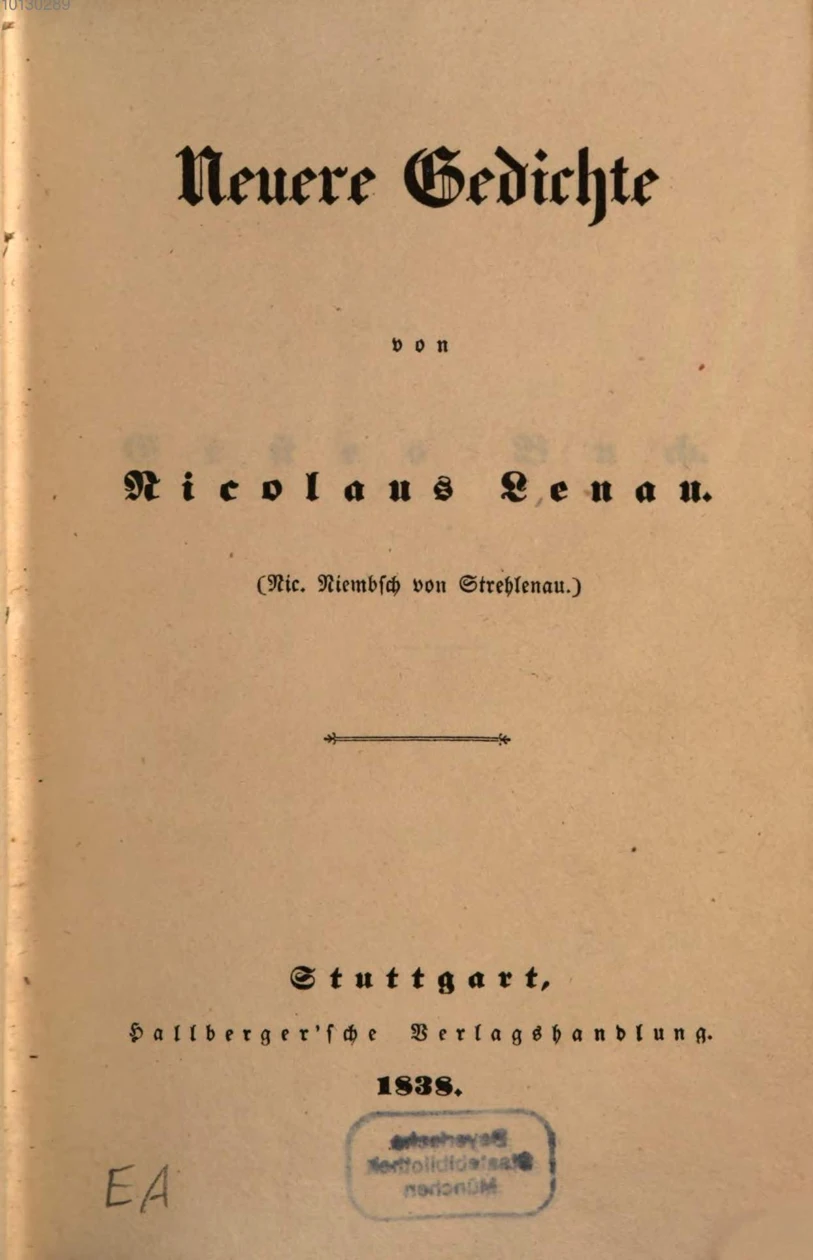
The association records the family’s move to Old Buda in the spring of 1803. Look at the 1838 title page and the portrait from around 1844. The title page prints the pen name that the village would later adopt. [9] [5] [7]


The plaque and statue
The house gets a plaque in the 1870s
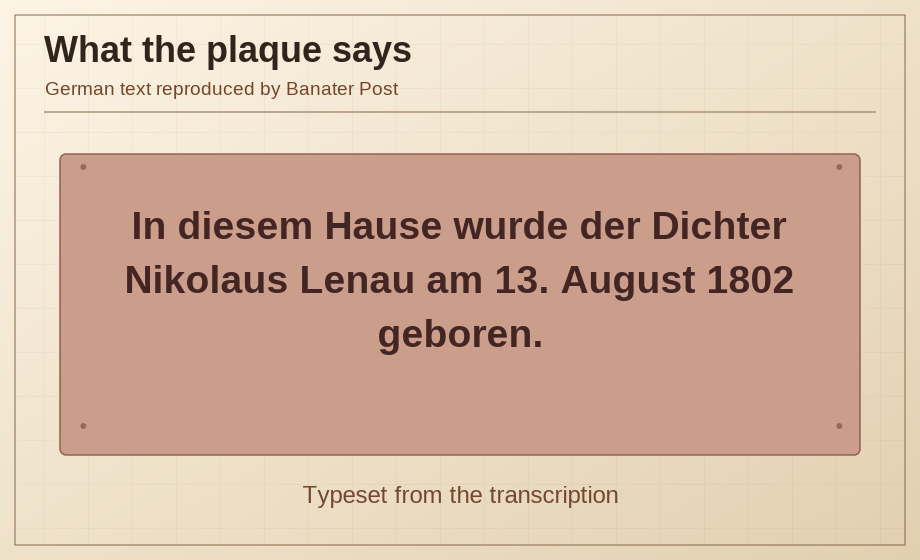
The marble plaque was donated by wheelwright Matthias Gehl. The village history dates it to 1875. Banater Post records installation in 1876 and transcribes the German text. It says that the poet Nikolaus Lenau was born in this house on 13 August 1802. [1] [8]
The monument to Lenau later appeared in front of the town hall. The account of the ceremony dates its unveiling to June 1905. The plaque told visitors where a child had been born. The statue showed the poet in the centre of the village. [8]
The museum expands
The birth house becomes a museum
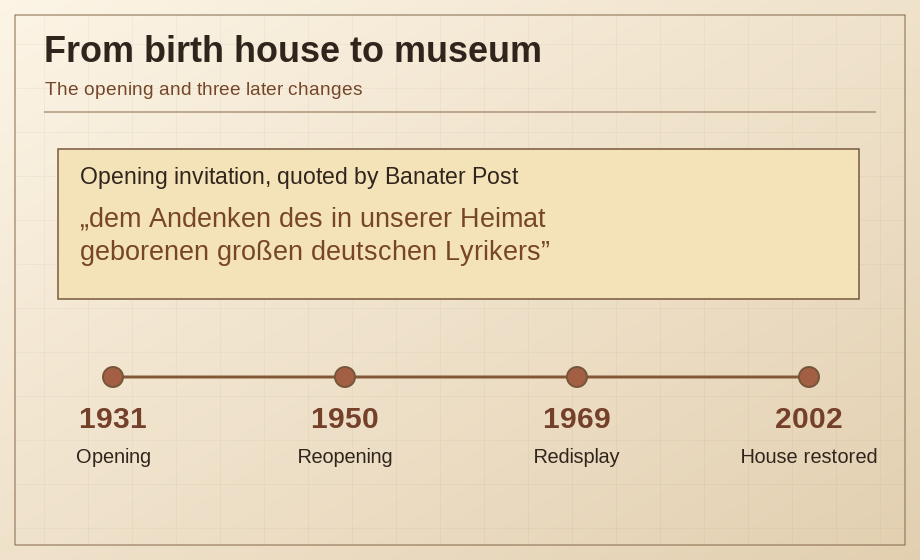
In August 1931 the physician Fritz Klingler helped open a memorial in the birth house. The invitation, quoted by Banater Post, spoke of the German-language poet born in the Banat. The museum now holds photographs, letters, manuscripts and objects from village life. [9] [2] [8]
The memorial reopened in 1950 and was reorganised in 1969 for a meeting of the International Lenau Society. The house was restored in 2002. An exhibit on Banat Swabian life gives visitors another reason to go inside. [9] [2] [3]
What the source can tell us
The name and the dates have different histories
The village was called Csatád and then became Lenauheim. The village history gives 1920. Banater Post and the cited biography give 1926. The administrative act that could settle the date is absent from these sources. [1] [4] [8]
The same care applies to the birth day: sources differ by one day, and the place alone cannot settle it. What the record does show is a sequence of documented gestures—a plaque, statue, museum and restoration—through which a village linked its name to a poet who left in the first months of his life. [1] [2]