Orientation

Orientation
A memorial sits inside a park with several stories
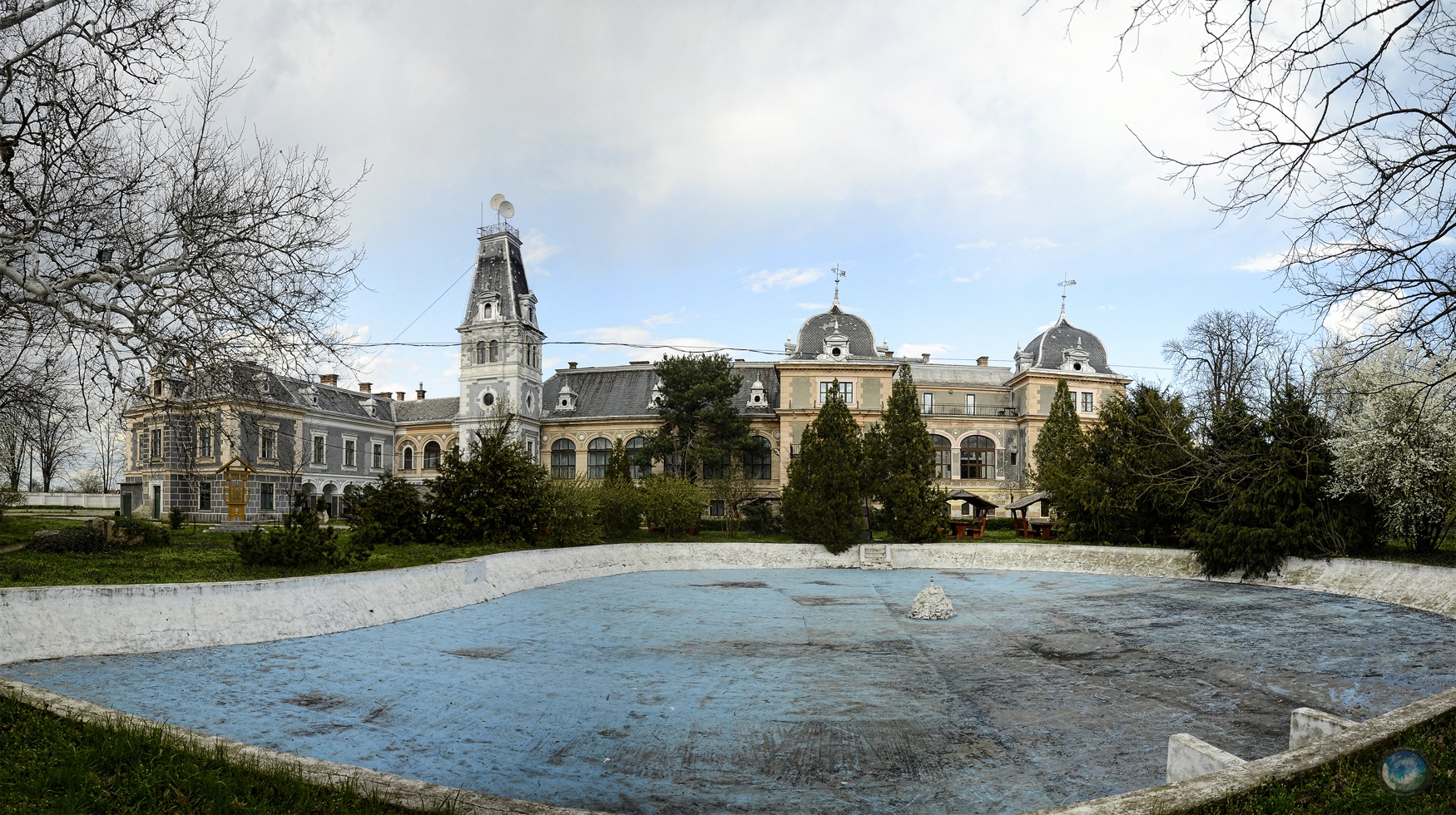
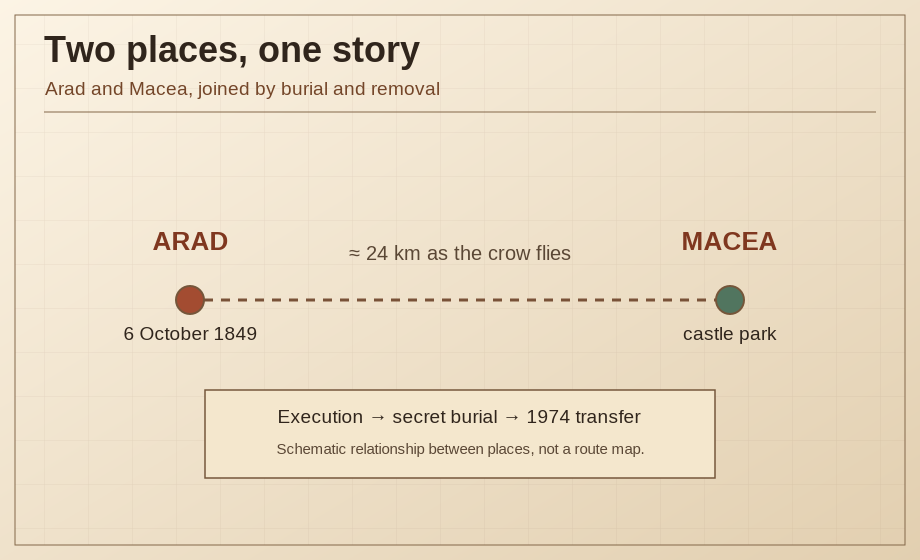
In the park of Csernovics Castle in Macea stands the gravestone of two officers executed in Arad in 1849. The map pin marks the castle complex, not the exact grave: the source places it near the former hunting pavilion but gives no coordinates. The present-day photograph helps you recognize the estate, while the diagram shows the distance between the execution city and the burial place. [1] [6] [8]
To understand how they came here, look beyond today’s garden. Macea was first a Cernovici family estate, then a summer residence of the Károlyi family; the park grew around the castle, with walks, flower beds and species brought from elsewhere. On this noble estate, after a political execution, two bodies were hidden. The same garden would later be catalogued as botanical heritage. [3] [4]
The context
From revolution into a private park’s keeping
János Damjanich joined the Hungarian Revolution and rose to become a general. In 1849 he commanded Arad Fortress, which surrendered to the Russian army on 17 August. After the revolution’s defeat, Austrian authorities tried and hanged him there on 6 October. György Lahner, who had overseen supplies for the revolutionary army, was executed the same day. Both men were buried secretly at Macea. [2] [1]
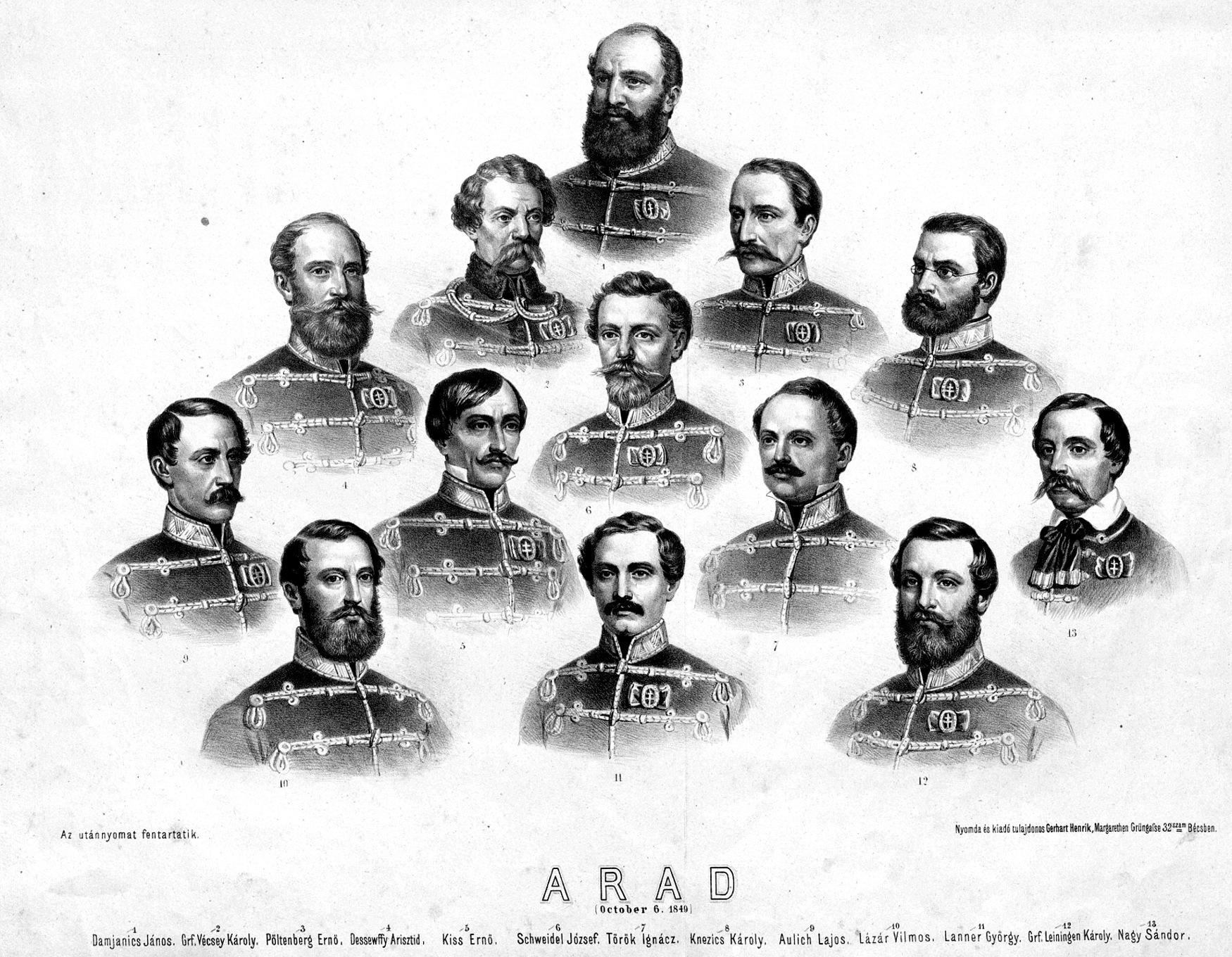
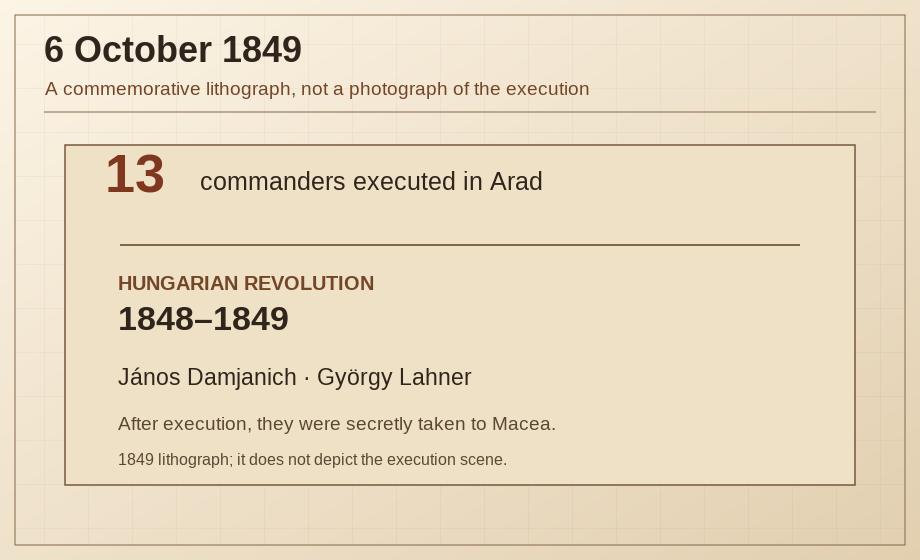
The 1849 lithograph shows them with the other commanders commemorated as the martyrs of Arad. It does not show the execution or the Macea burial; it is a period image of how they were represented. The county library says the burial took place in secret at the park’s northern edge, near the hunting pavilion, without a marker. For a time, their local history existed only in a place known to the family and a few close allies. [7] [1]

The petition
Emilia wanted her husband moved to the family crypt
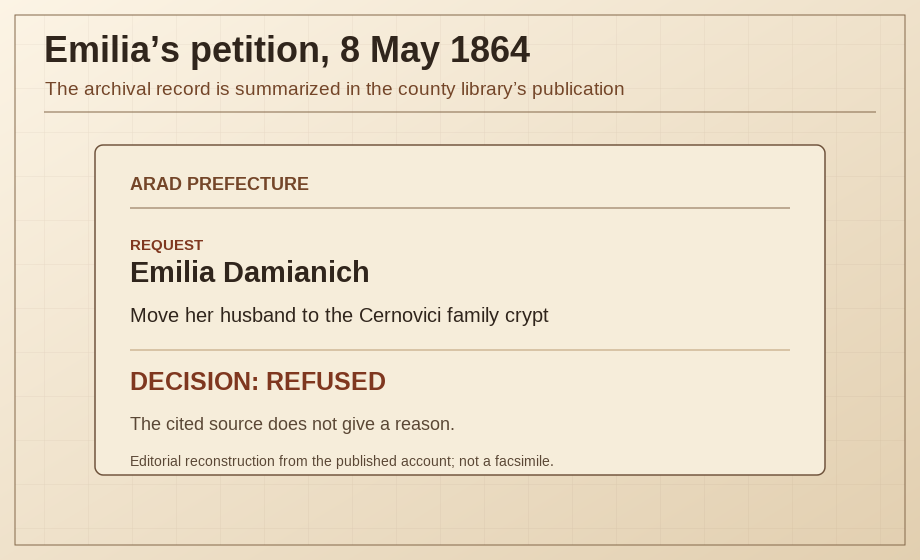
On 8 May 1864, Emilia Damianich asked the Arad prefect for permission to move her husband’s remains to the Cernovici family crypt in Macea’s Orthodox church. Nearly fifteen years had passed since his execution. Arad County Library records that the request was refused. [1]
The library’s account gives neither the decision-maker nor the reason. A few years after Emilia’s petition failed, a gravestone appeared where the general had been buried in secret. [1]
The memorial
After 1867, a visible marker replaced silence
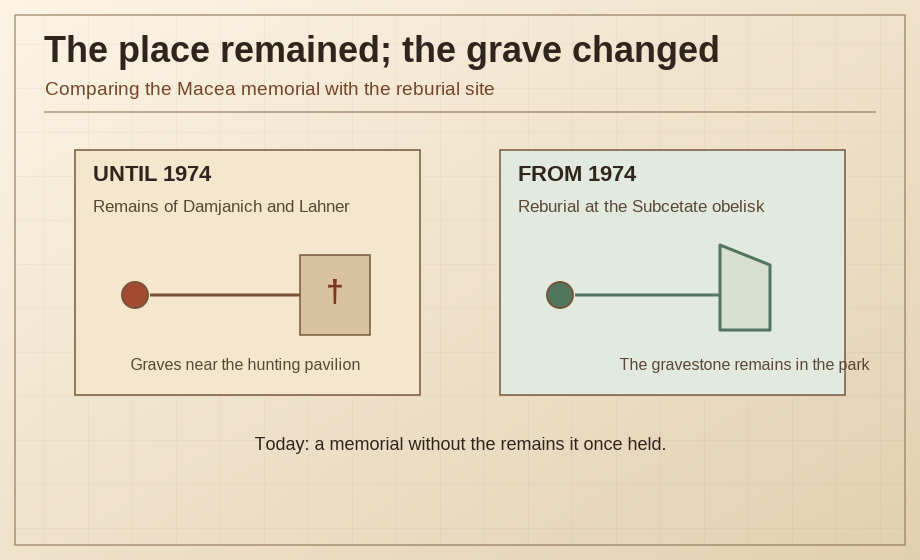
After 1867, the two generals’ grave received a gravestone. A photograph described by the Arad County Library shows an iron railing on a brick plinth around it; the railing has disappeared. In 1955, the local administration repaired the grave. These changes made the place easier to recognize than the unmarked 1849 burial, while keeping its commemoration in a park, far from the public obelisk in the city. [1]
In 1974, the remains were exhumed and reburied at the Arad-Subcetate obelisk, together with those of other martyrs. The stone at Macea stayed. The right term is cenotaph: a monument above a place that no longer contains the bodies it commemorates. The diagram compares the two moments without claiming to show the grave’s real construction or the precise location of each object. What remains in the park is a trace of burial history, not the resting place of the remains. [1] [5]
The file
In 1956, a museum asked who would repair the stone
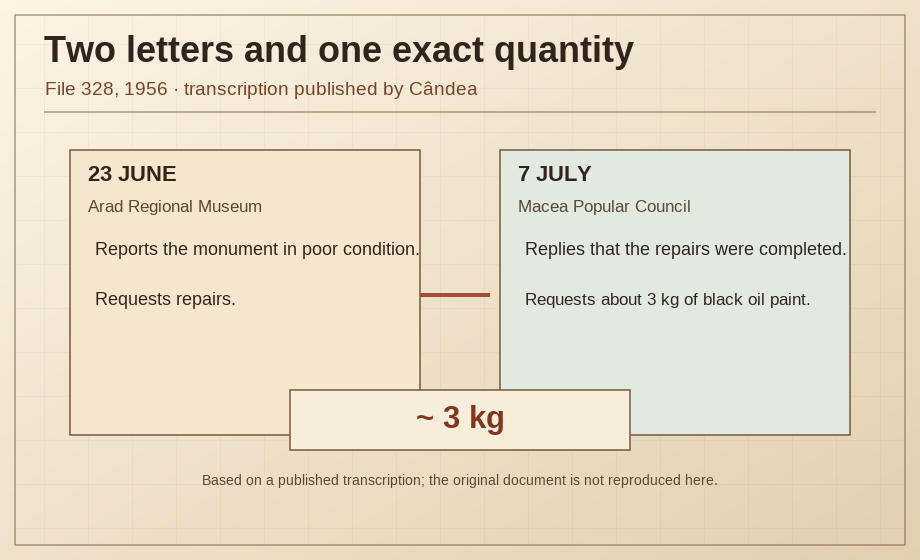
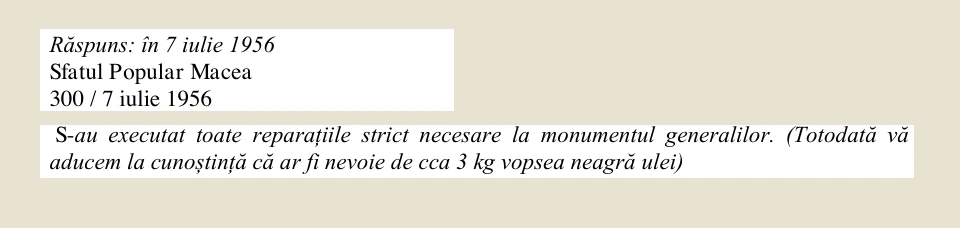
On 23 June 1956, the Arad Regional Museum wrote to the Macea Popular Council about the monument’s poor condition. A transcription published by Florica R. Cândea says the institution requested repairs and noted that part of the brick railing had been used elsewhere. On 7 July, the council replied that the necessary work had been done and requested about three kilograms of black oil paint. The graphic compares the request and reply; its wording summarizes the transcription rather than reproducing a facsimile. [3]
The small quantity of material makes the exchange easy to picture, but it does not tell us exactly which surfaces were painted or what repairs were completed. The published passage gives no work-by-work list. We can still see a regional institution demanding action, a local authority reporting the issue resolved, and one practical need still outstanding: paint. The grave had already been repaired in 1955; the 1956 file shows that maintaining a memorial did not end with one intervention. [1] [3]
The park
In 1969, Pavel Covaci proposed restoring the park
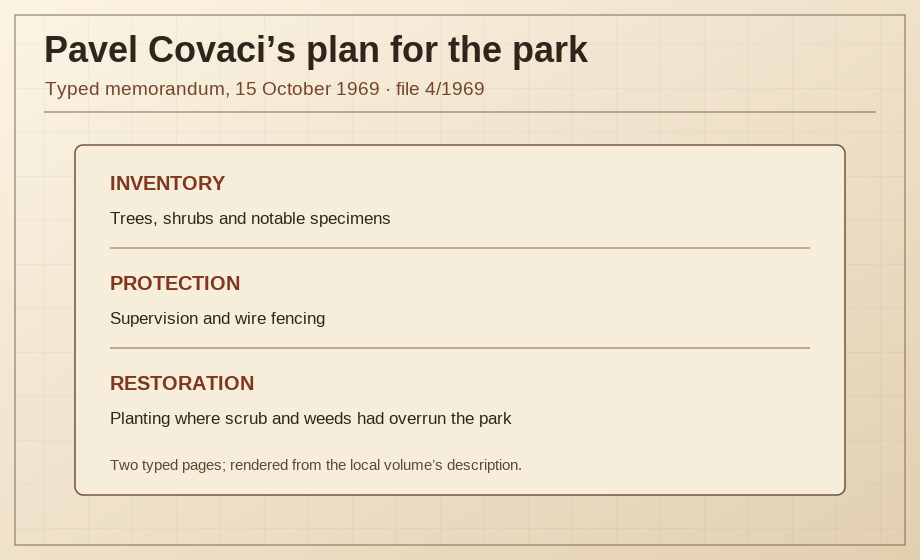
Schoolteacher and botanist Pavel Covaci began restoring the park in 1968. On 15 October 1969 he signed a two-page memorandum on what the work would take. He listed notable trees and shrubs and called for fencing, supervision and planting where scrub had taken over. [3]
Two files describe how people looked after the same park. In 1956 the Regional Museum requested repairs to the monument. Thirteen years later Covaci proposed tending the trees and restoring parts of the garden. [3]
The garden today
A noble estate became a university botanical garden
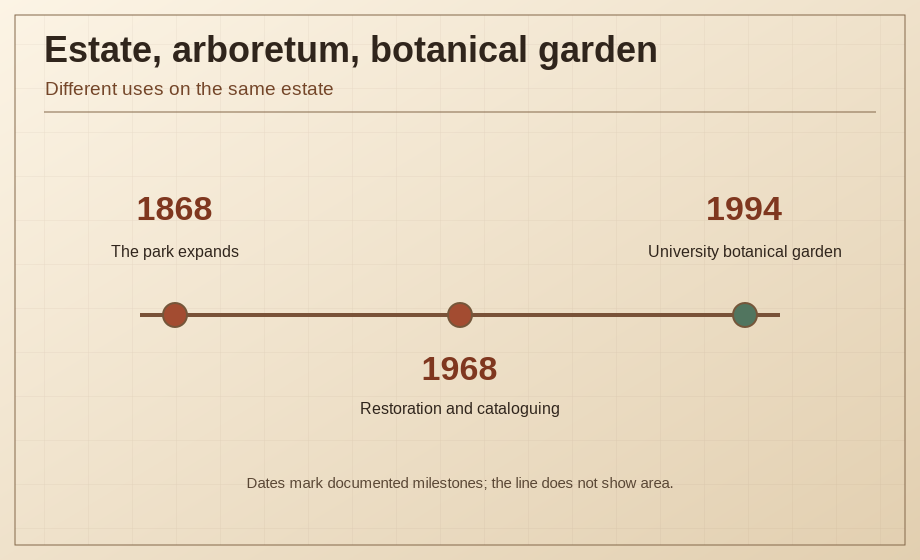
Around 1868, the park expanded and was planted with rare species; in 1968, Pavel Covaci began restoration; in 1994, the place became Macea University Botanical Garden, now named after him. These milestones are different in kind: the first is an estimate of the estate’s expansion, the second the start of a programme of cataloguing and care, the third an institutional change. The timeline orders the dates; it does not imply that the area or number of species grew steadily. [3] [4]
The grave’s story ends with a move; the park’s story ends with a new public use. The remains are in Arad, while their gravestone stayed in Macea, in a landscape that was reshaped into a botanical collection. If you visit, you can see the castle and garden; ask where the gravestone is and keep the source limit in view: the accounts place it near the hunting pavilion, but do not give an exact point here. [1] [4] [6]