Dolj, by the Danube
Dolj, by the Danube
A shepherd’s account in Dolj
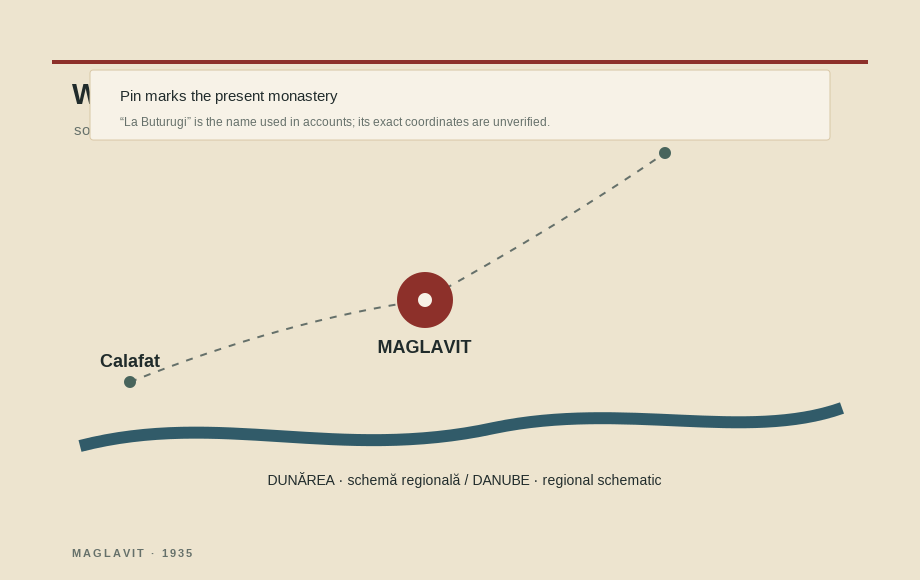
In the commune of Maglavit by the Danube in June 1935, Petrache Lupu told villagers he had experienced several visions. The historian Radu Petre Mureșan connects the first accounts with a place known as La Buturugi. The monastery built later marks Maglavit on the map. [1] [6]
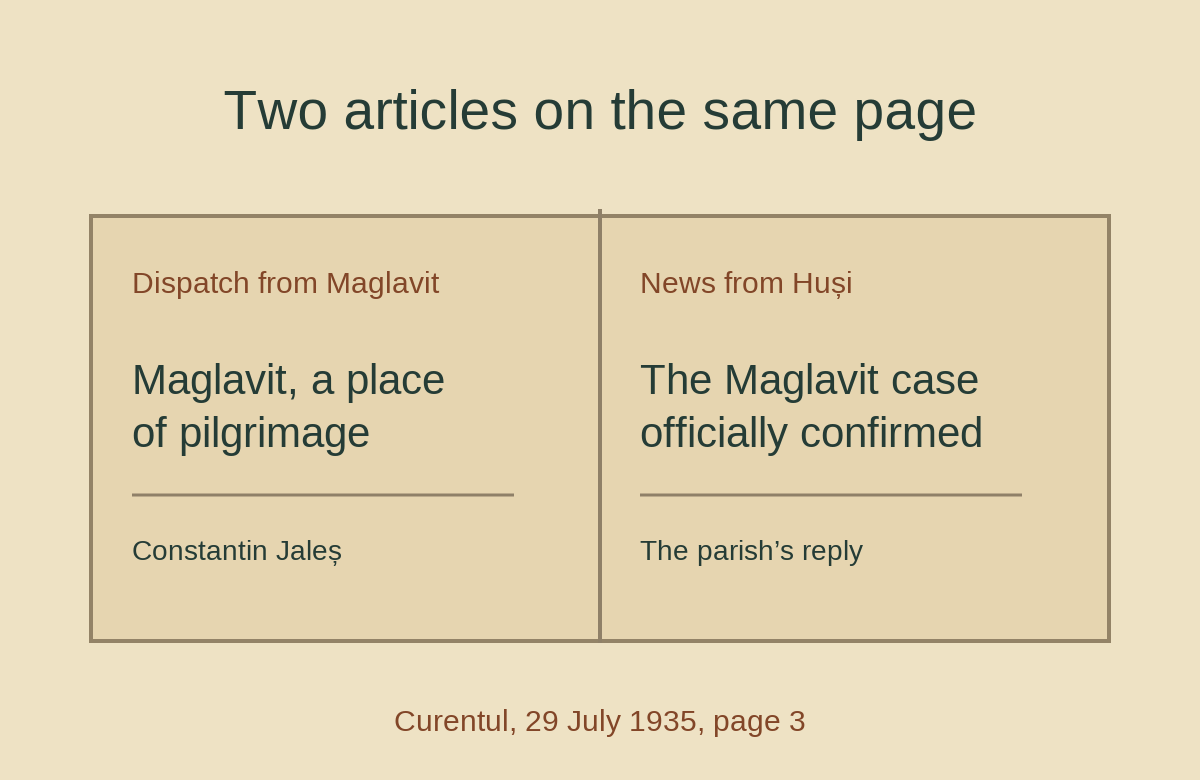
Within weeks, pilgrims and reporters came to the village. Two articles on page three of Curentul preserve part of the discussion. A special correspondent describes the pilgrimage. A dispatch from Huși gives the parish’s account. [2] [3]
Dated accounts
Three Fridays, then an account in the village
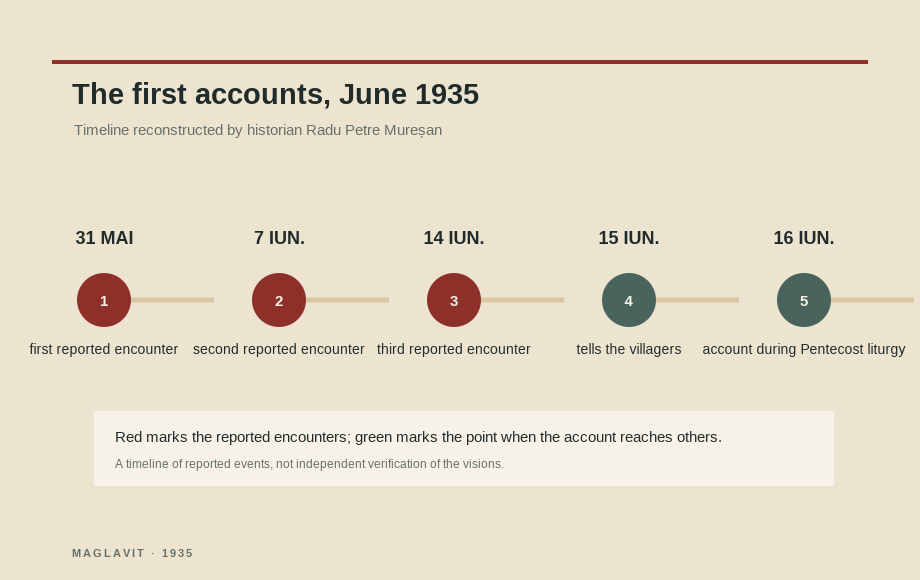
Lupu described three successive Fridays, 31 May, 7 June and 14 June. In the accounts traced by Mureșan, he said he had seen an old man who asked him to tell people to repent and go to church. [1]
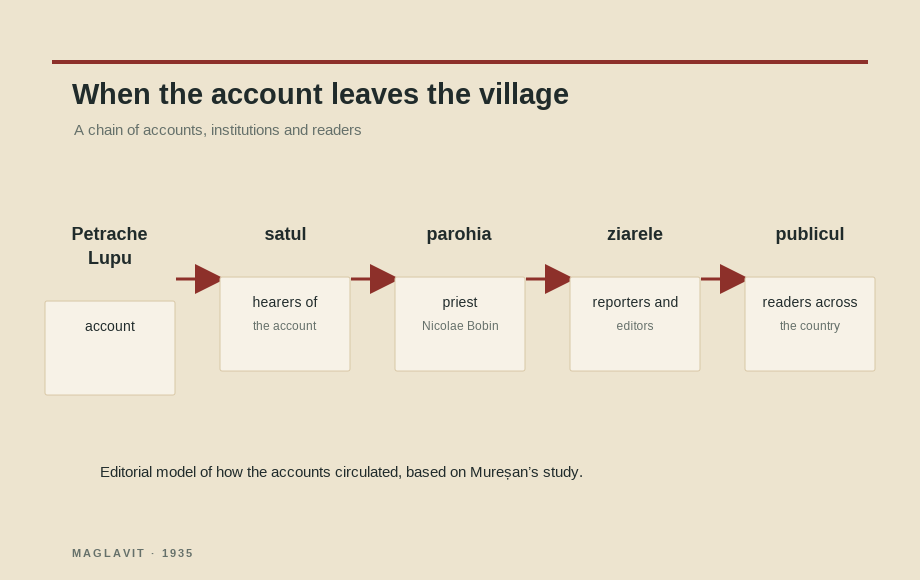
On 15 June Lupu told villagers what he believed he had seen. Among those he informed were the priest Nicolae Bobin and the mayor Florea Stănică. On Sunday, during the Pentecost service, Lupu reported another vision. [1]
From village to newspapers
Newspapers send reporters to Maglavit
Dimineața, Curentul and Universul sent people to Maglavit. In early July, Curentul published an account of the encounter Lupu described. In Universul, another reporter ran a sceptical piece on 24 July headed “The alleged miracle at Maglavit.” [1]
By the end of July the director of Curentul, Pamfil Șeicaru, had decided to erect a wayside cross at the place called La Buturugi. The announcement in the paper shows how far one newsroom had become involved in village life. [2] [1]
A newspaper with a position
By July, Curentul presented Maglavit as a pilgrimage site
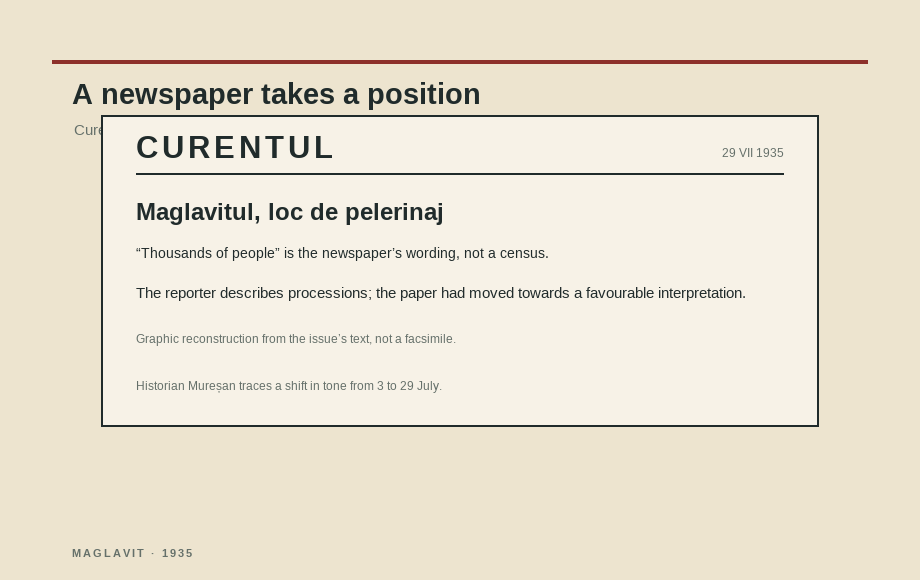
Writing in Curentul on 29 July 1935, Constantin Jaleș describes visitors heading to La Buturugi. He speaks of thousands each day and gives no count method. In the same dispatch, the paper announces its cross. [2]
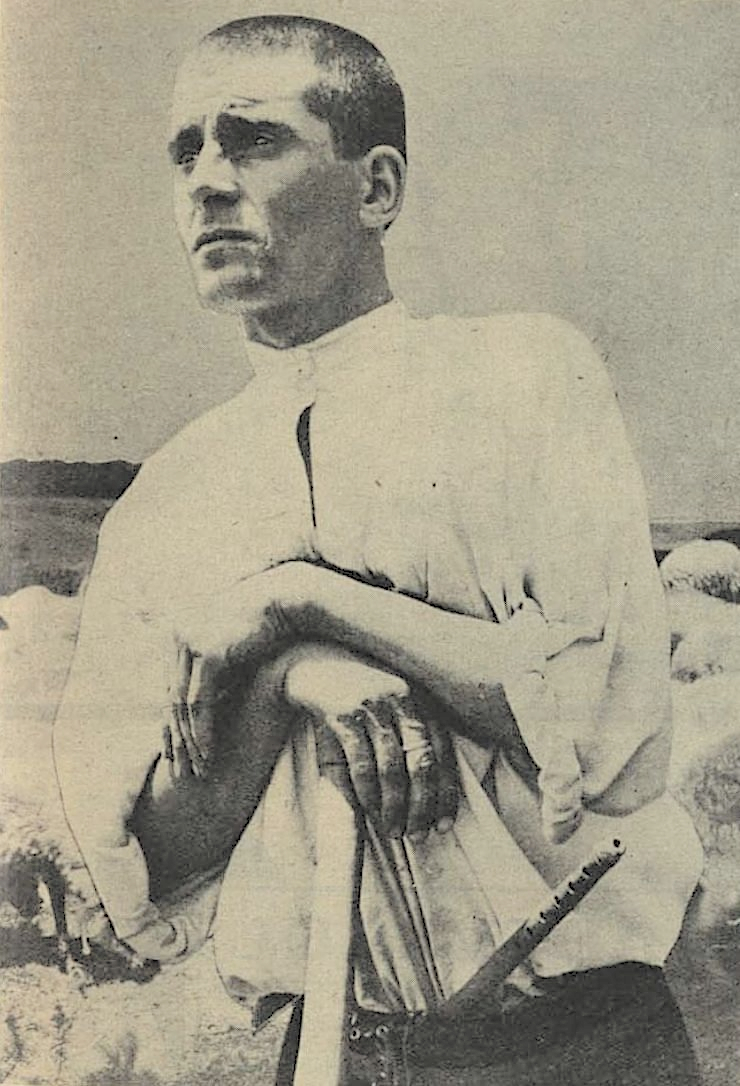
The portrait in the 1936 Adevărul and Dimineața almanac brought Lupu to other readers. In the dispatch, people go to Maglavit to see him. In the almanac, his image travels beyond the pilgrimage site. [2] [4]

Headline and document
What “officially confirmed” meant on the same page
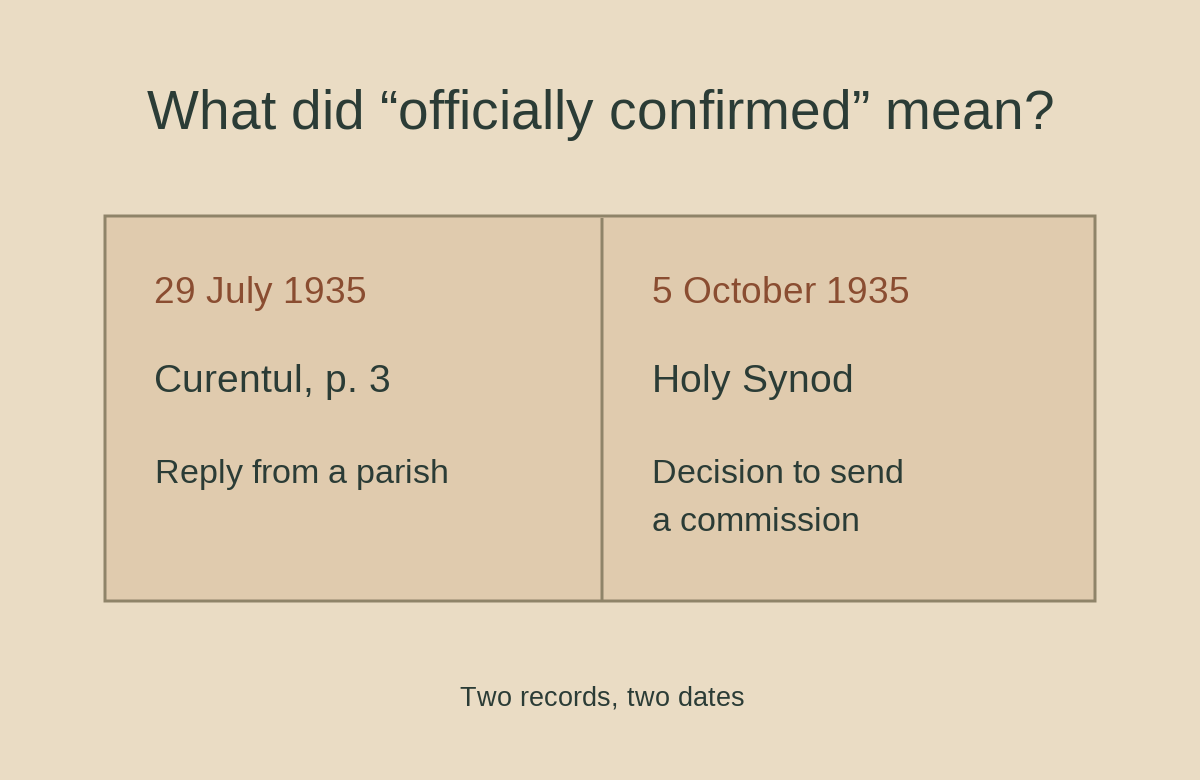
Lower on the same page, the item “The Maglavit case officially confirmed” says that Gheorghe Timircan, the priest in Cârligați, wrote to his counterpart Nicolae Bobin in Maglavit. The reply quoted by the paper backed its earlier reports and described Lupu as a messenger calling for repentance. [3]
That reply came from the parish. On 5 October, the Holy Synod decided to send a commission to look into what was happening in Maglavit. The two records show who made each statement and what they were in a position to decide. [3] [1]
Memory becomes a building
Work on the main church began in 1936
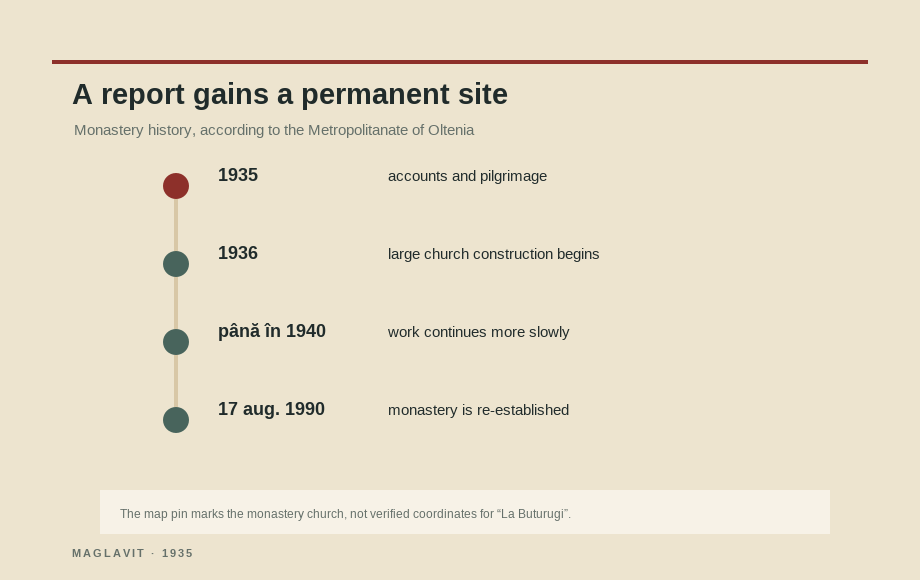
The Metropolitanate of Oltenia records work starting on the large brick church in 1936 and continuing more slowly until 1940. It describes the choice of pillars to keep the building clear of floodwater from the Danube. [5]
The same account dates the monastery’s re-establishment to August 1990. In 1935 Curentul publicised a shepherd’s account and announced its cross. The building at Maglavit shows what grew around those accounts. [2] [5]