1905
1905
Constanța’s beach reaches beyond the city
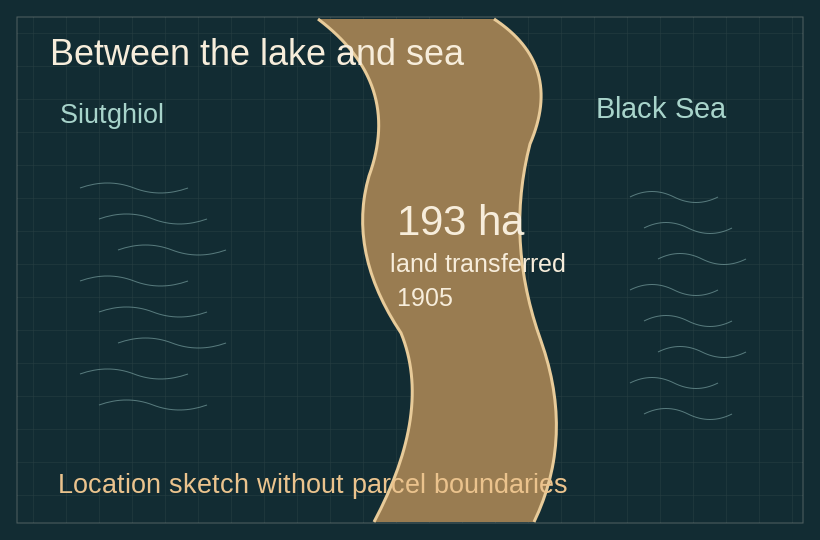
At the beginning of the twentieth century, Mamaia was a strip of land between Lake Siutghiol and the Black Sea, north of Constanța. In 1905 the city, under mayor Ion Bănescu, received 193 hectares for development. That August, a newspaper was already reporting bathing at Mamaia. [1]
In 1906 the town opened the purpose-built sea baths. This was a beach with facilities for bathing. Visitors came to change, enter the water and use the equipment specified in the lease. The early photograph shows the pavilions by the shore. [2] [3] [1]
1906
What the equipped beach provided
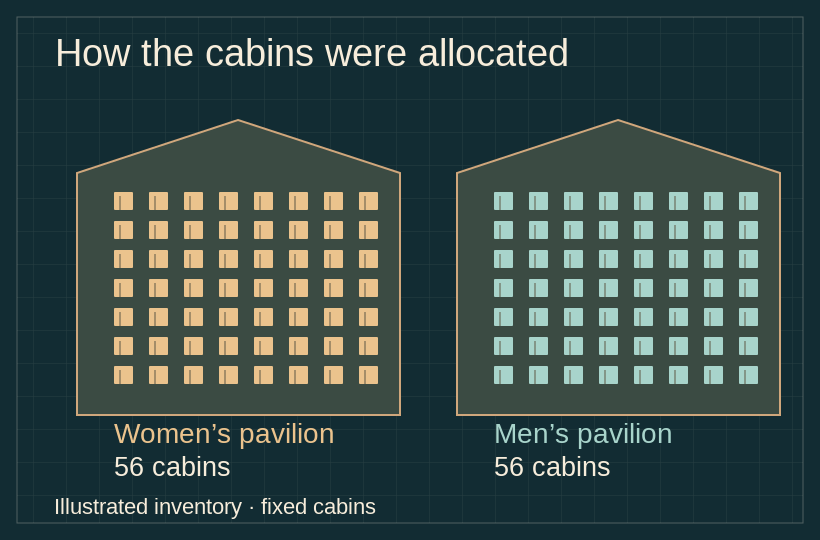
In 1906 a businesswoman took over the baths after the town let them by public auction. Historian Georgeta Lungu found two pavilions with 56 fixed cabins each, one for women and one for men. Each group in the drawing has seven rows of eight. The arrangement makes the inventory countable. The layout of the actual cabins belonged to the architectural plans. [1]
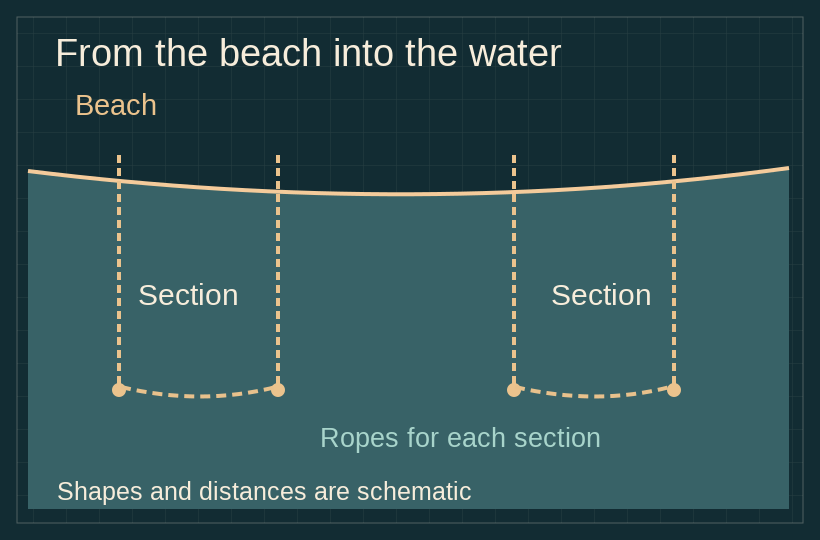
The contract required ropes for both bathing sections and specified equipment for the cabins. Switch views to go from the cabins to the facilities in the water. The pavilions housed changing rooms and the ropes formed part of operating the beach. [1]
A wheeled cabin
Some cabins needed wheels
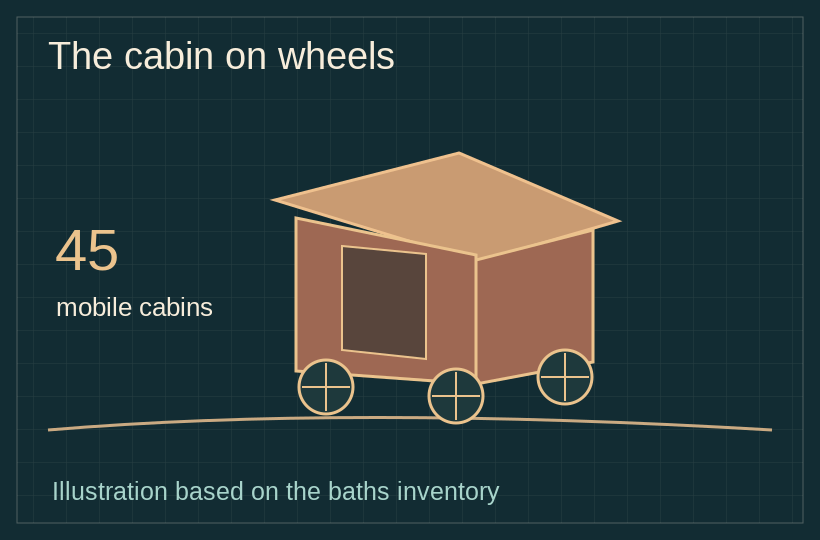
The same inventory lists 45 movable cabins on wheels. The records cited by Lungu also separately mention 35 cabins for women. Fixed cabins, wheeled cabins and cabins assigned to women are different details of how the baths were organised. [1]
A cabin on wheels let the changing space be moved along the beach. The illustration shows the idea. Its size, appearance and number of wheels are schematic. [1]
Getting to the beach
The beach became the end of the line
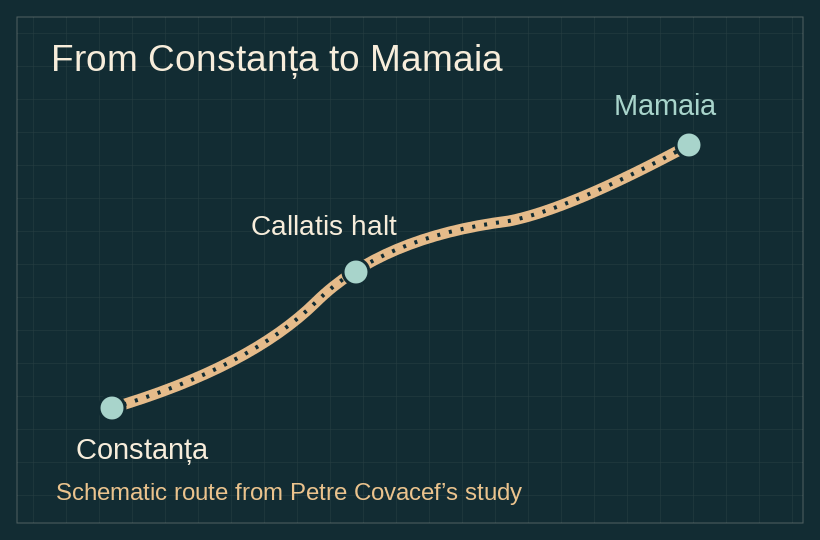
Building the beach facilities went together with creating a way to reach them. A train line linked Constanța and Mamaia. Historian Petre Covacef traced the route and its stops, including Callatis halt. That connection made the beach accessible from the railway and the city. [4]
The 1906 records describe both a baths inauguration and a railway event. Attribution of the work depends on the source. A town hall letter connects Petre Antonescu with the design and supervision, while the inscription reproduced by Aurelia Lăpușan also names engineer Elie Radu. [2]
1912
What the newspaper promised beachgoers
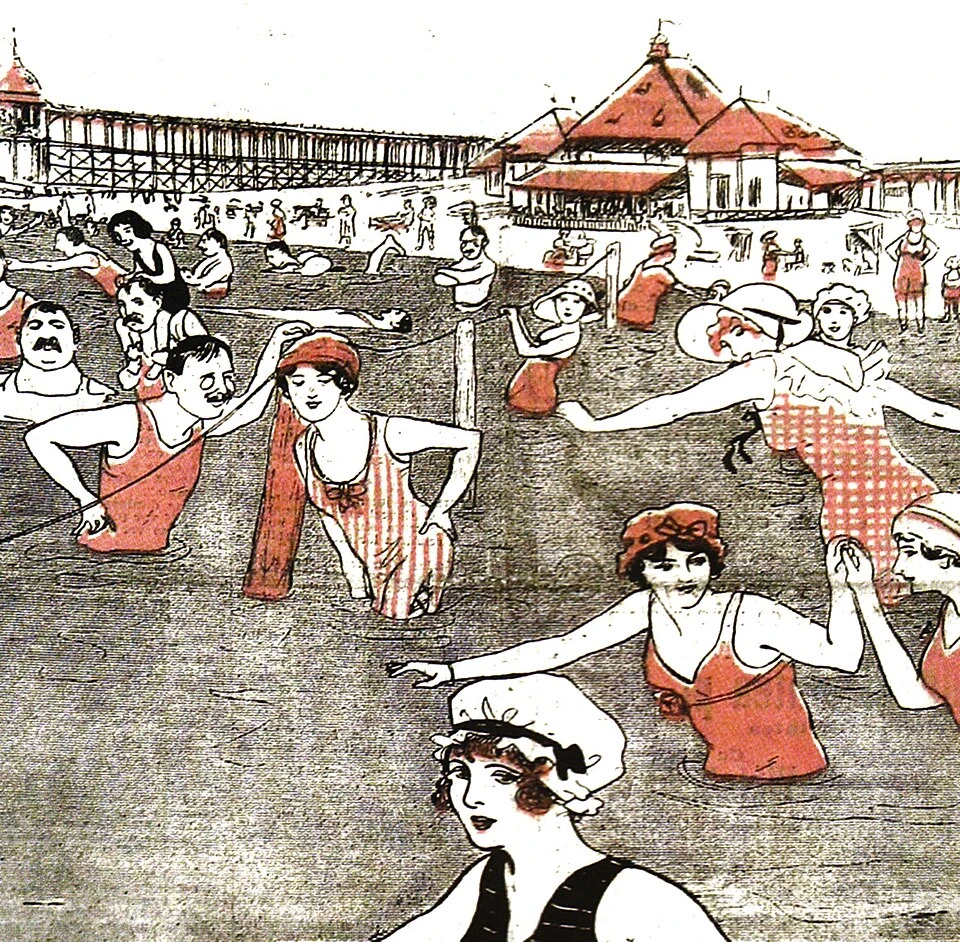
A 1912 advertisement in the newspaper Dimineața showed a beach full of people in bathing costumes. Its caption invited readers to come to the baths, where women and men could “admire each other”. Look at how the drawing and the joke make sea bathing a public outing. [5]
The advertisement was intended to bring visitors. Administrative documents are more precise about how the cabins and sections of water were allocated. The 1928 ordinances then show what was expected of beachgoers in a later season. [5] [1] [6]

1928
The rules changed between the water and the terrace
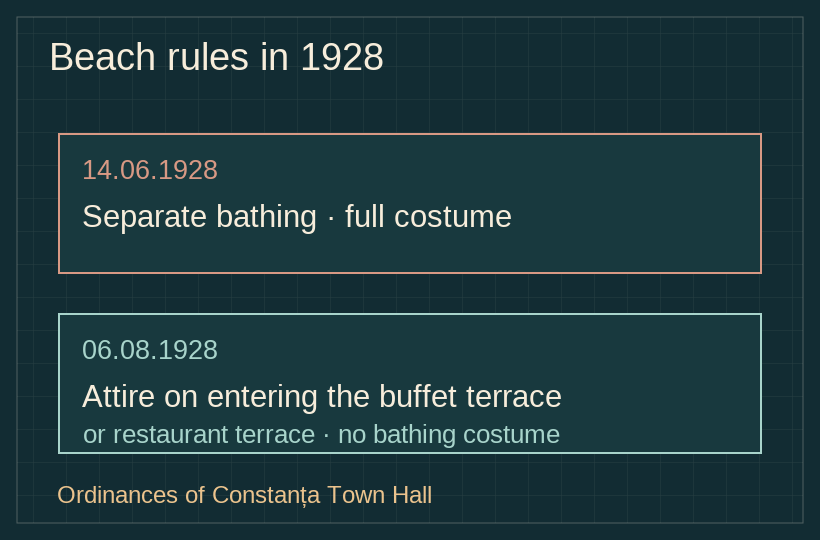
Two ordinances from 1928 show how closely the town regulated a visit to Mamaia. On 14 June, mixed bathing was prohibited and a full bathing costume was required. The 6 August ordinance barred visitors from entering the buffet or restaurant terrace in bathing attire. [6]
The town treated the water and the terrace as spaces with their own rules. The advertisement and the ordinances come from different years and did different jobs. A newspaper sold the seaside experience. The ordinances set out what visitors could do when they arrived. [5] [6]