400 BC · below 2 km
The Greek ship
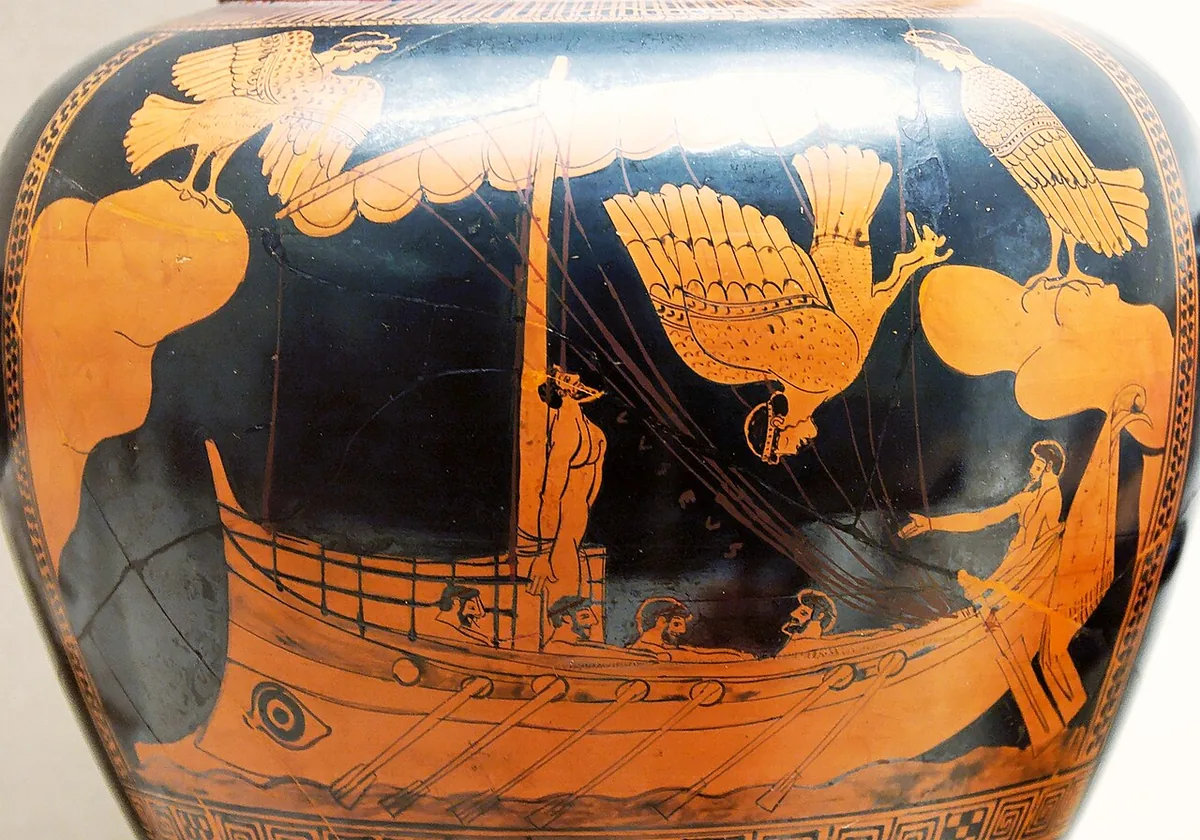
The oldest known intact wreck: a trading vessel, radiocarbon dated, at least 2,400 years old. It resembles the ships painted on Greek pottery.
What is under the Black Sea
The top 50 metres hold oxygen. Below 100–150 metres there is none at all, and the oxygen-free water preserves wooden ships for thousands of years. Dive past the ships, down to 2,212 metres.
Dive downThe surface
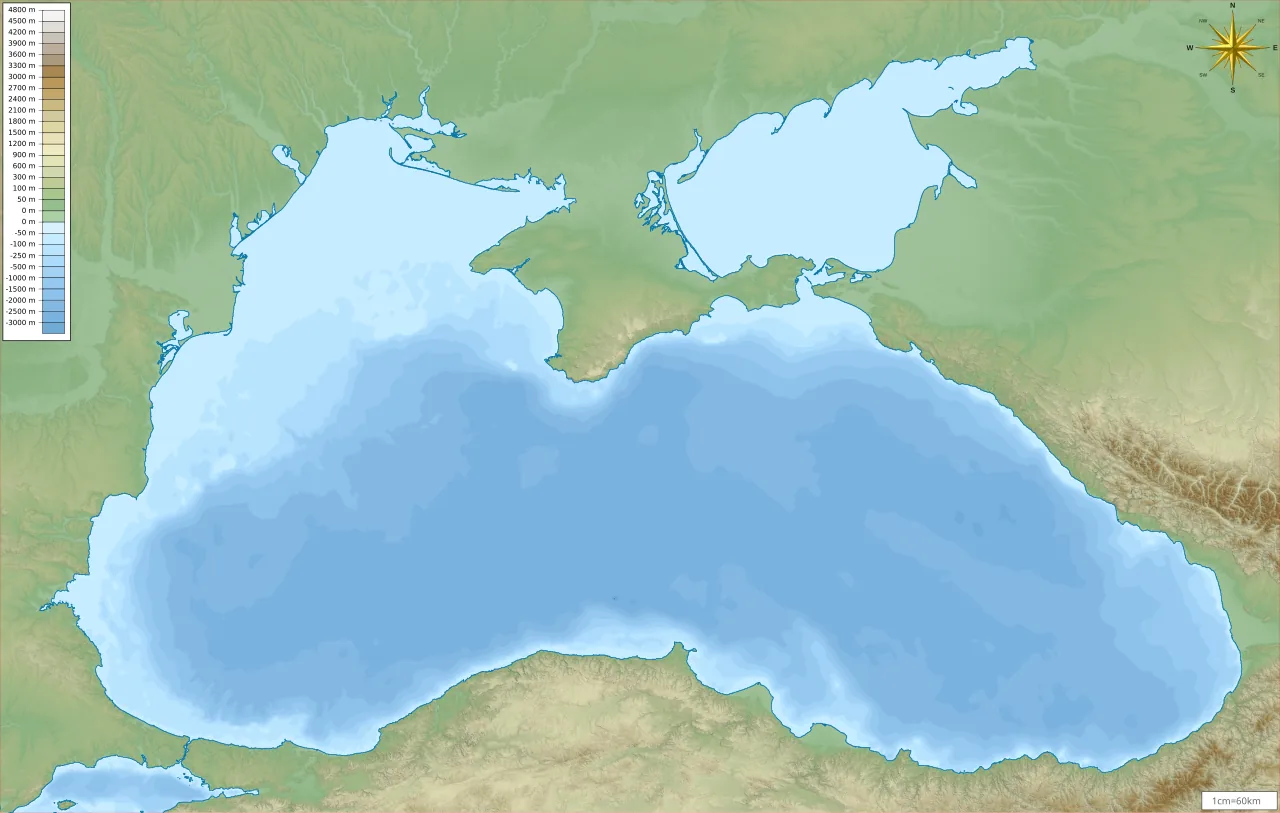
You are at Constanța, paddling at the shore. Below you drop 2,212 metres of water, the sea's greatest depth. To reach the bottom you would need 1,302 people 1.7 m tall, stacked head to toe.
40 metres
Ordinary diving ends here: 40 metres is the deepest that divers with deep training reach. The oxygen in the water carries on further.
Between 50 and 150 metres
Here oxygen thins out and then vanishes. The boundary moves between 100 and 150 metres, depending on place.
Below 2 kilometres
Here lies the Greek ship, more than 2,400 years old. Its wood survived because no oxygen surrounds it.
2,212 metres
The bottom. Above you, about nine tenths of the sea's water holds no oxygen.
The floors
The upper floor, down to about 50 metres, holds oxygen. Then comes a transition zone, and below 100–150 metres the lower floor begins: water with hydrogen sulphide, where nothing that breathes oxygen lives. By volume: 469,800 km³ without oxygen and 70,200 km³ with it.
At what depth do you think oxygen runs out?
Between 100 and 150 metres.
Between 100 and 150 metres, depending on place. Anything in that range counts.
The top 50 metres are rich in oxygen. Between 50 and 100 metres lies the transition zone, where oxygen and hydrogen sulphide are both almost entirely absent.
The water above is fresher, because the Danube, Dniester, Dnieper, Don and Kuban keep pouring river water into the sea. The water below is saltier, because Mediterranean water enters along the bottom of the Bosphorus. Fresh water is lighter and sits on top of the salty water, so the two mix very slowly.
The upper floor holds oxygen because it meets air and light. The lower floor is cut off from air: the oxygen once brought there is used up, and new oxygen never reaches it. Left without oxygen, the deep produces hydrogen sulphide, the gas that smells of rotten eggs.
At 1.7 m, it would take 89 of you, stacked head to toe, to reach 150 metres, and 1,302 to reach the bottom.
The wrecks
Between 2015 and 2017 the Black Sea MAP expedition surveyed over 2,000 sq km of seabed off Bulgaria and found 65 wrecks. Their wood is whole because no oxygen surrounds them.
400 BC · below 2 km
The oldest known intact wreck: a trading vessel, radiocarbon dated, at least 2,400 years old. It resembles the ships painted on Greek pottery.
Roman period
Trading vessels with their amphorae still beside them. The expedition brought a few amphorae and other objects to the surface.
17th century
Cossack raiding craft from the 1600s. Between the Greek wreck and them lie two thousand years of seafaring.
Bronze Age · near the shore
The remains of an old village lie 2.5 metres beneath the seabed, near today's shoreline. The rising waters covered it.
Wood rots because it is eaten by creatures that need oxygen. Where there is no oxygen, the eaters are missing and the wood remains. That is why the researchers say the wrecks survived in astonishing condition.
Astonishing does not mean perfect: what survived is the shape and the wood, not the whole ship, ready to sail. No source read gives every wreck its depth and year, so the list above says only what the sources say.
The flood
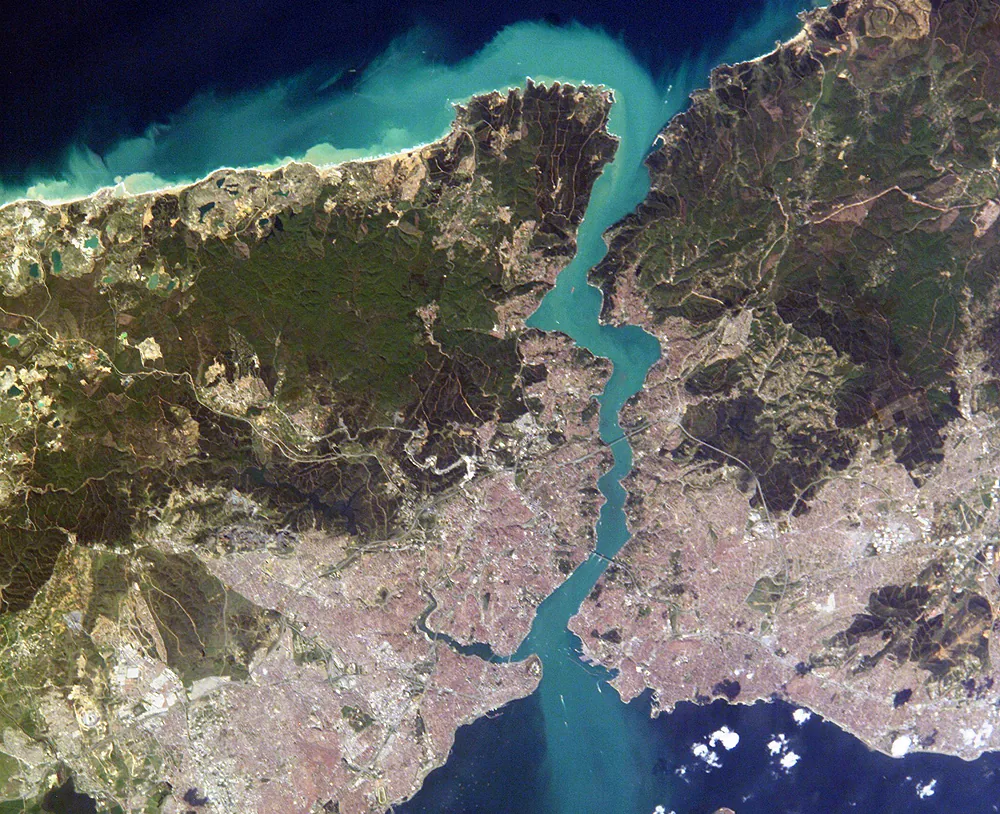
9,300 years ago the Black Sea was a freshwater lake, cut off from the ocean. Then the Mediterranean water entered and the lake became a sea. How did it happen: fast or slow?
What do the cores from the continental shelf say?
A team that gathered cores from the Ukrainian, Romanian, Bulgarian and Turkish shelves says the shelf drowned suddenly 9,300 years ago, when the Mediterranean water entered. By its calculations the shoreline retreat lasted 200 years at most, and the flow at the breaching of the sill was so great that everything happened within 40 years at most, perhaps within a decade.
That is one team's verdict, not the end of the debate. Other teams read the same seabeds differently: some say the lake already stood at sill level and the filling was gradual. The debate is about speed: nobody disputes that the sea rose.
The cores show a thin bed of shells laid down at once over dry ground, across the whole shelf. The lake shells vanish within the first 900 years; the sea shells appear only after some centuries. The salty water, being heavier, sank into the deep first, and the surface water turned salty with a delay.
Other reconstructions place the lake already high, at Bosphorus sill level, before the salty water entered. In this reading the shelf drowned gradually as the global ocean rose, and the traces of dry land come from a much older retreat of the waters. The 2017 paper reviews these readings and rejects them one by one.
Game
Eight statements about the two floors. Some sound like stories and are true.
The eight statements and their answers:
Limits
Three things this page cannot say, because the sources read do not give them.
Sources
Depths, volumes and dates come from published studies and data, read in full except for the diving course page, read in part. Where sources give different values the page prints the range: 100–150 metres for the oxygen boundary, not one number.
Two numbers need a note. The oxygen-free volume is 87%, not 90%; the page says nine tenths because that is what the rounding gives, and shows both numbers. The sea's area is 422,000 km² in Black Sea SCENE; other pages give 436,400 km², and the page uses only the first, so as not to mix definitions.
The map is drawn from Natural Earth data, public domain. The water column is to scale, with depths from the sources above.