An identified object
An identified object
The vessel reaches the conservator in 22 fragments
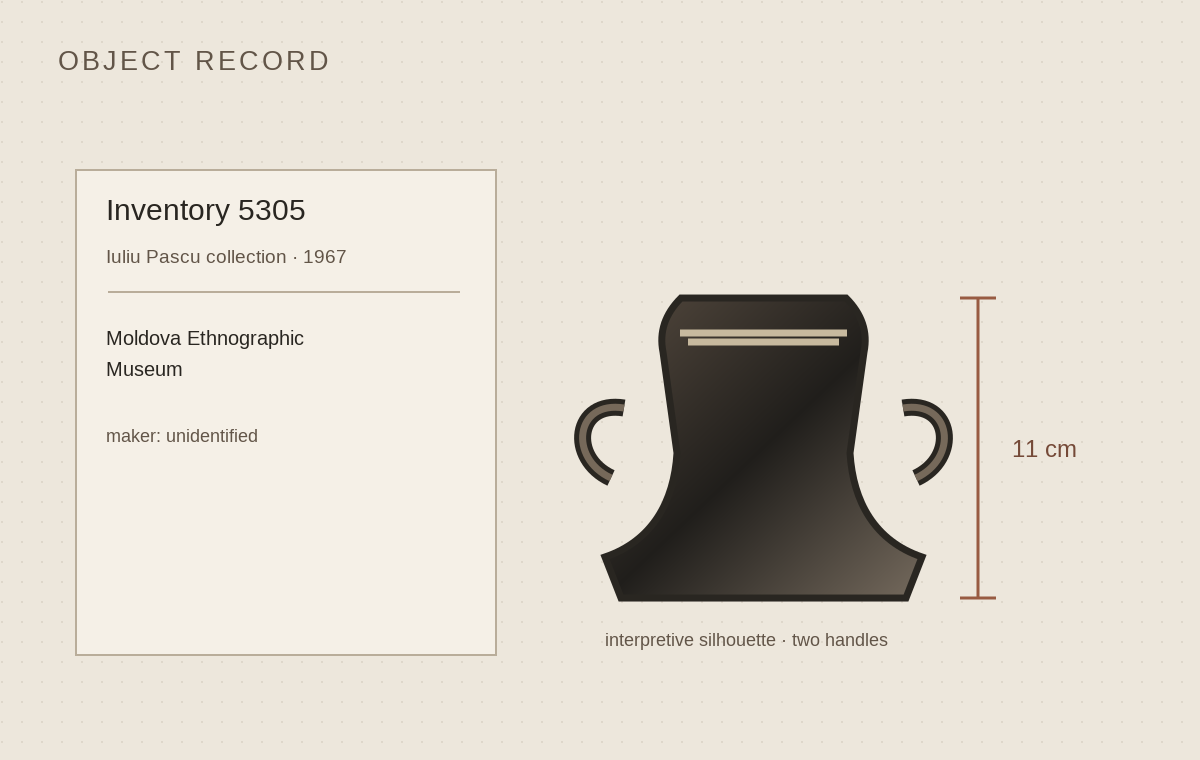
In 2019, a conservator published the account of a black vessel from Marginea in the Moldova Ethnographic Museum. Its record identifies it as inventory 5305, links it to the Iuliu Pascu collection and dates it to 1967. The potter’s name is unknown. Instead of generalizing about “the village tradition”, we can follow this one object: how it was described, what happened to it and what could be repaired. [1]
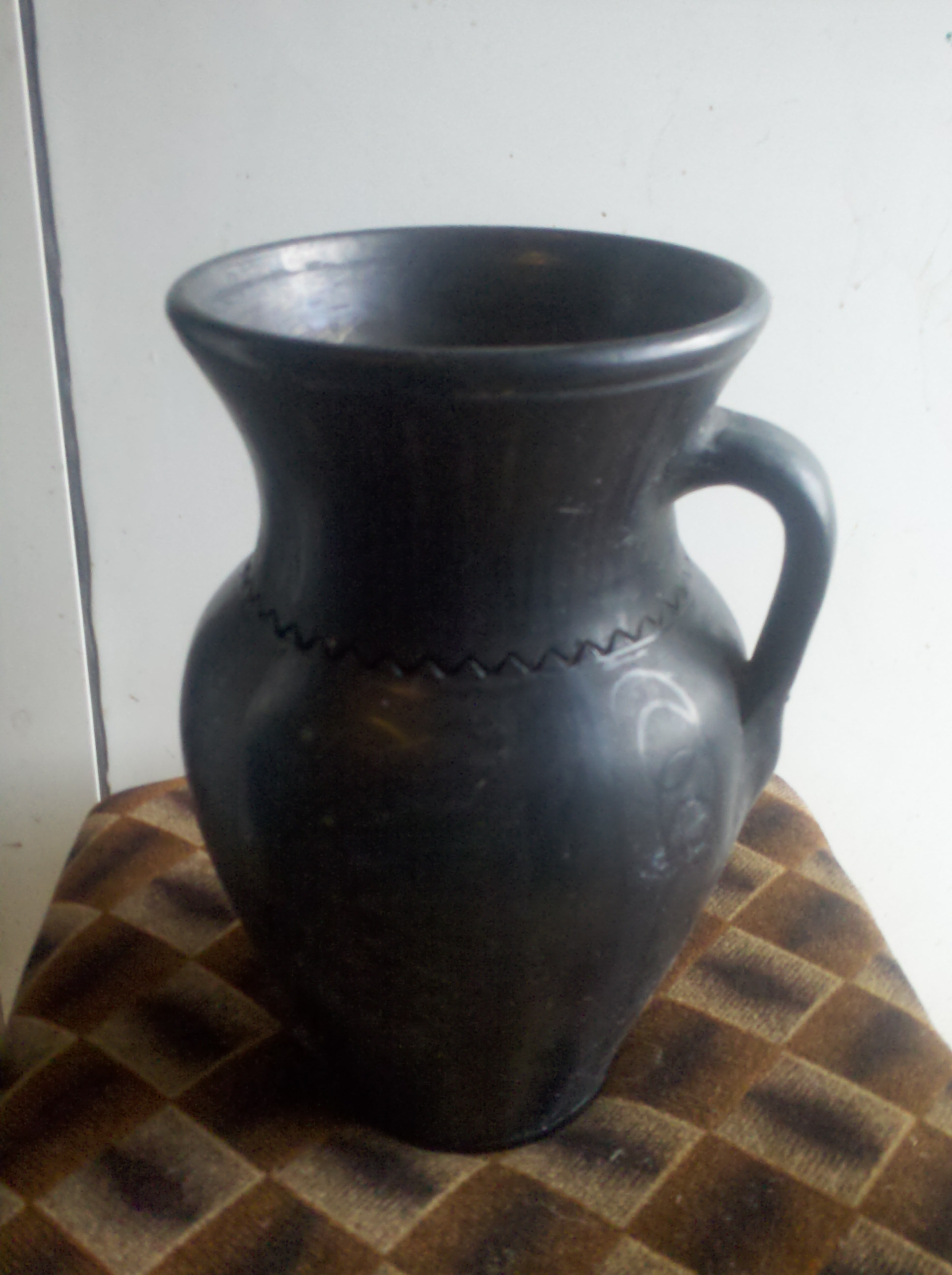
The restoration record describes two handles. The photograph of another Marginea vessel shows a single handle and a wide mouth. Compare them to recognise the object that went into the lab. [1] [2]

Measured in the record
A small vessel recorded by weight and measure
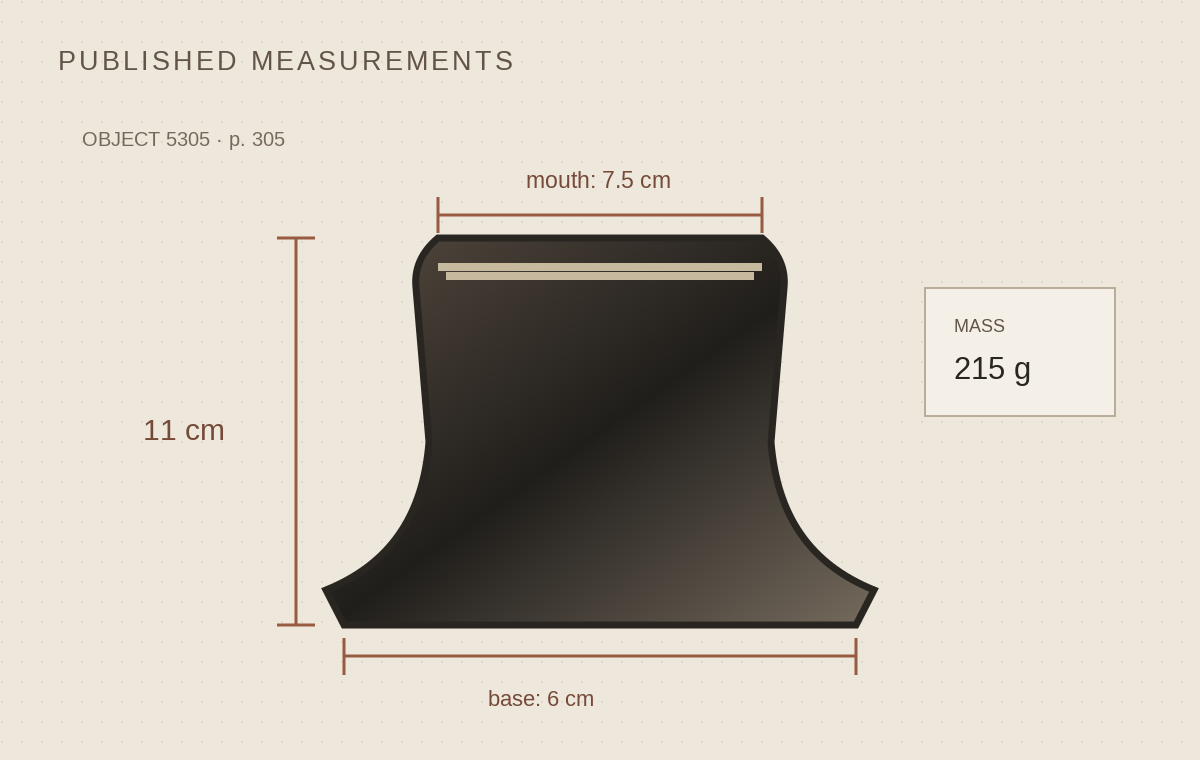
The record gives a height of 11 cm, a mouth 7.5 cm wide, a 6 cm base and a mass of 215 g. These are the measurements of a table vessel that fits in one hand, not a monumental object. The values give the pot a precise scale and help us understand what had to be reassembled after it broke. [1]
The profile uses the published measurements but remains a diagram: the paper provides neither a fully dimensioned technical drawing nor an orthogonal photograph from which the exact body curve could be reconstructed. Mouth, base, height and mass are published data; the outline is explanatory. [1]
The worked surface
Incised decoration preserves gestures, not the potter’s name
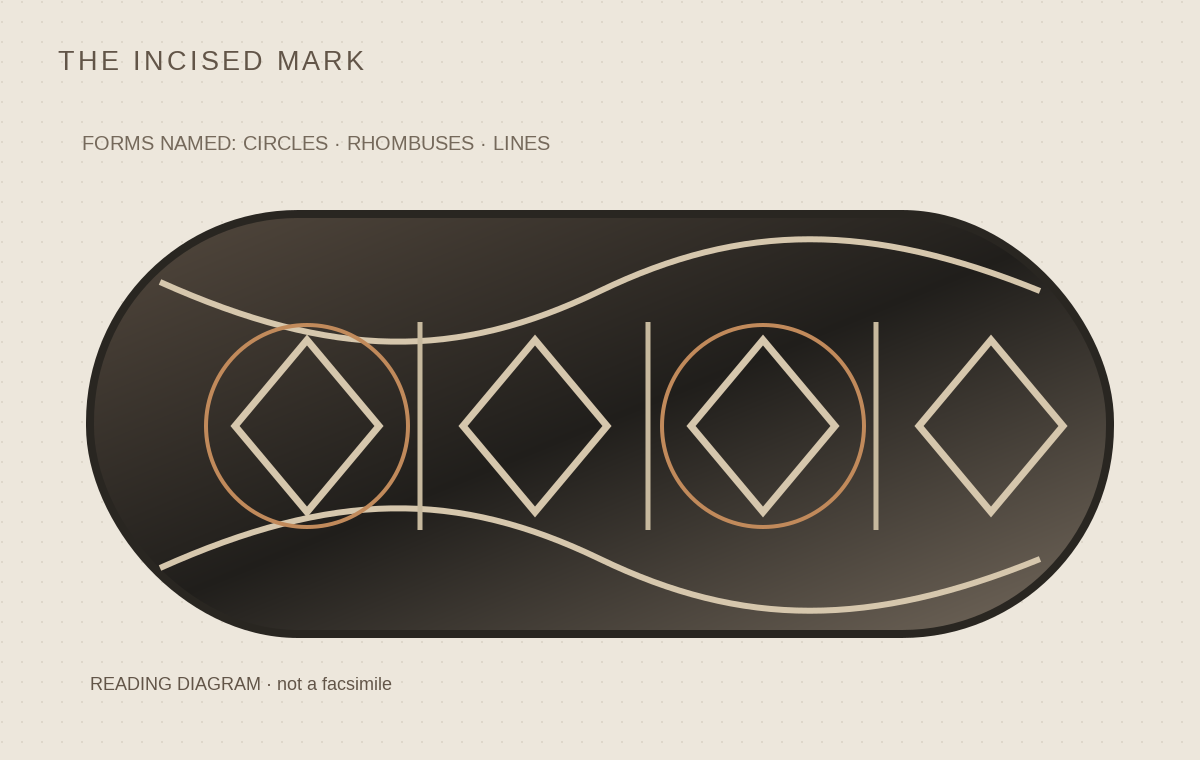
The paper describes geometric decoration made with sgraffito: lines incised into the vessel’s surface, including circles, rhombuses and vertical or diagonal strokes. A conservator can describe the marks; the record does not identify the hand that made them. Naming a particular potter would go beyond what we know about object 5305. [1]
The drawing enlarges forms mentioned in the text so you can examine them before looking back at the vessel. It is not a copy of a photographed motif and does not claim to reproduce the decoration’s order, number or position on the pot. It shows only the kinds of marks the author records. [1]
How it was made
The paper links the black colour to reduction firing
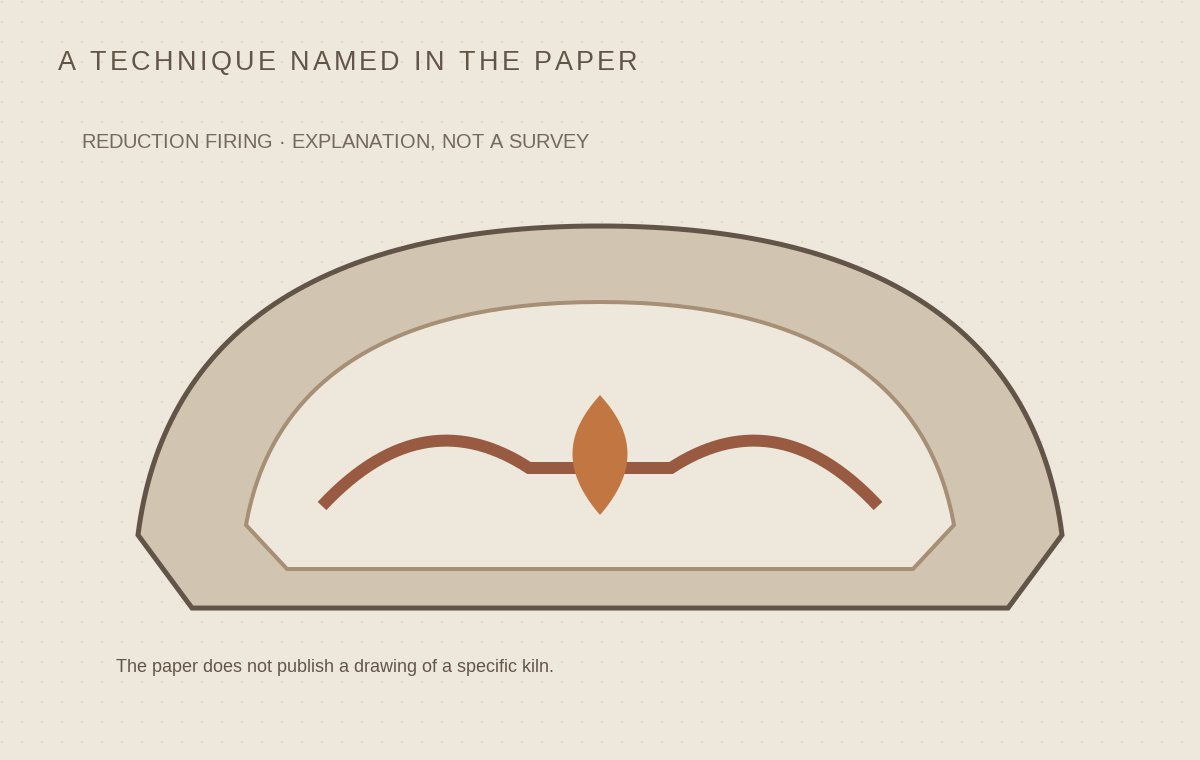
The technical description calls the vessel’s pottery “black” and records reduction firing. We follow that link as the paper states it; there is no kiln log, laboratory analysis or documentation of the 1967 firing batch that would tell us exactly how this particular piece was made. [1]
The kiln section is explanatory, not an excavated installation or a specific kiln documented at Marginea. It shows that firing is separate from throwing the clay and incising decoration, but adds no temperature, fuel or duration that the source does not publish. [1]
Conserving the evidence
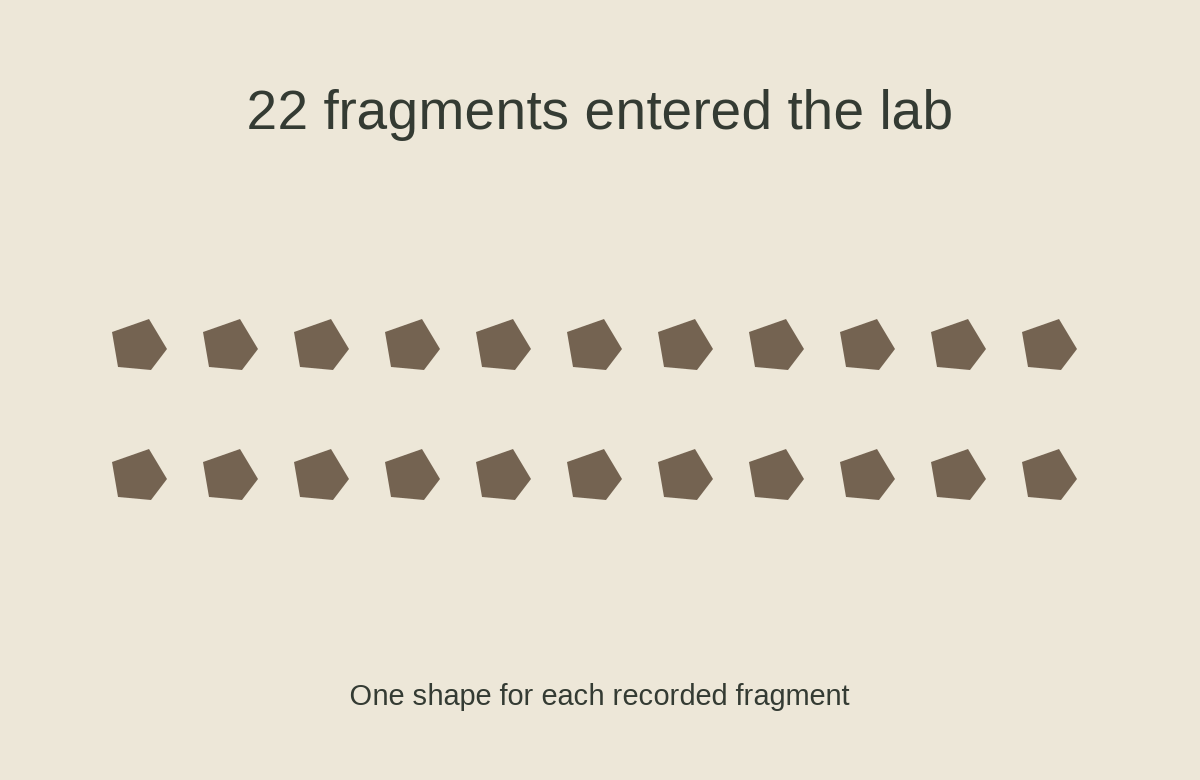
Conservation began with 22 fragments
At the time of treatment, the vessel was in 22 fragments. The paper also records a gap of about one centimetre where a handle meets the rim. The count shows the scale of reassembly; the measured loss indicates that the conservator had to restore a small but important part of the vessel’s shape. [1]
The drawing does not reproduce the fragments’ actual positions: the paper does not publish a complete map of each piece. It separates the facts verifiable in the text — 22 fragments and a missing section where one handle meets the rim — so a diagram is not mistaken for a photograph of the work. [1]
Reconstructing a missing part
A surviving handle became the model for a replacement
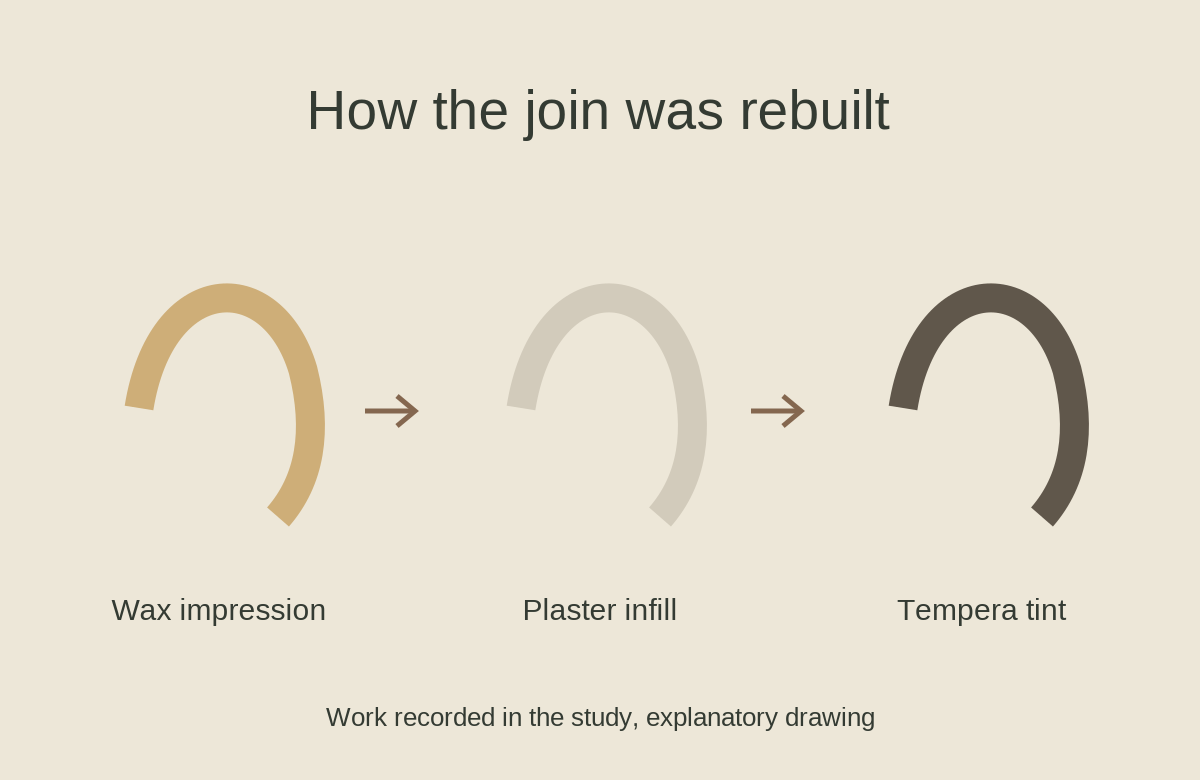
The conservator used the intact handle’s shape to fill the missing area. The paper describes making a wax mould from the surviving part, casting the replacement in plaster and toning it with tempera. The sequence makes the main decision visible: original material is retained, while the replacement is made separately from a surviving reference. [1]
The diagram shows the recorded operations, not photographs of each stage. The text does not record when or why the vessel broke, or how it was used afterwards. After conservation, the object can be read through what remains original and the small filled section; the potter’s identity remains unknown. [1]