The place
The place
A new forest in a sandy landscape
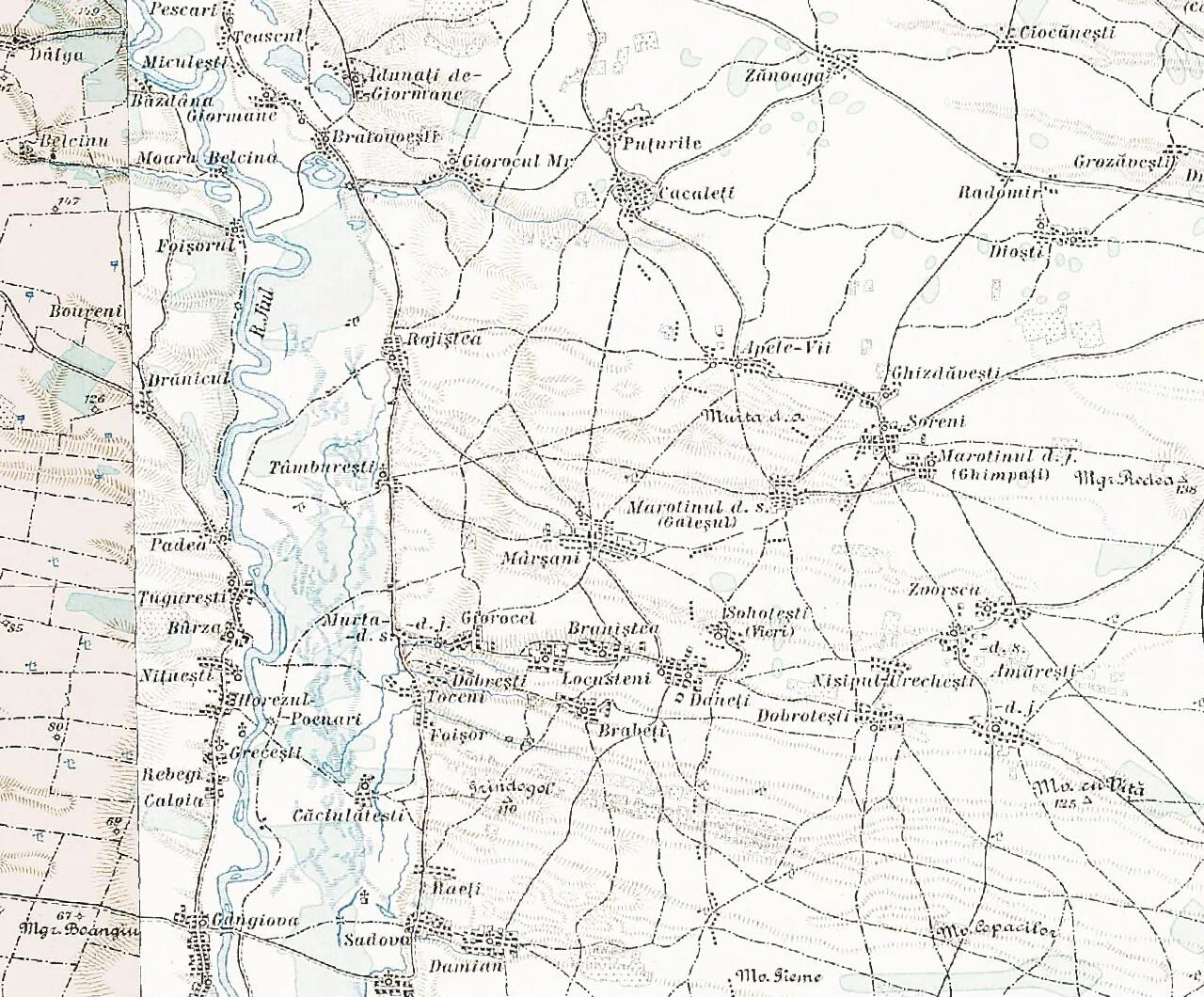
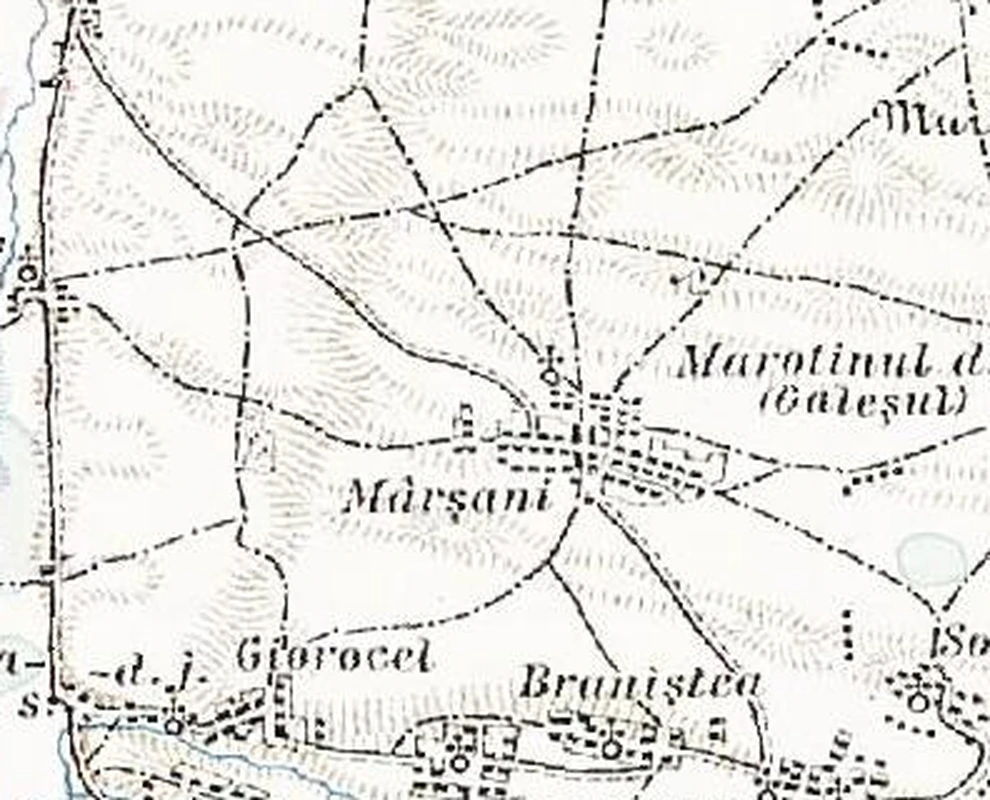
On the military map, Mârșani lies east of the Jiu floodplain, among roads that link it to neighbouring villages. The map shows the settlement. Later forestry studies describe what happens on sandy ground in this part of Oltenia when wind blows close to the soil. [5] [2]
Black locust planting at Mârșani began in November 2019, according to the initiative that organised it. Work continued after planting. Early maintenance kept weeds from overtaking the seedlings. [3]
Wind
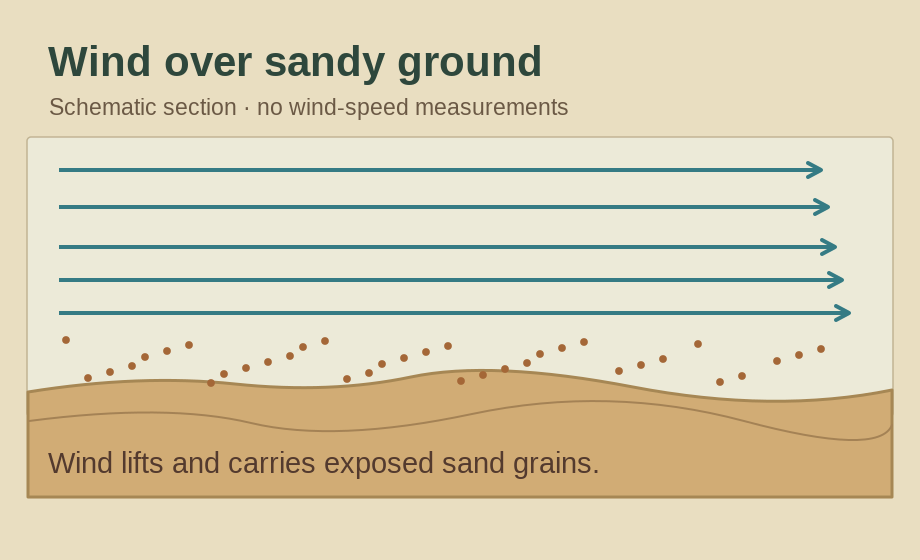
How does the wind move sand?
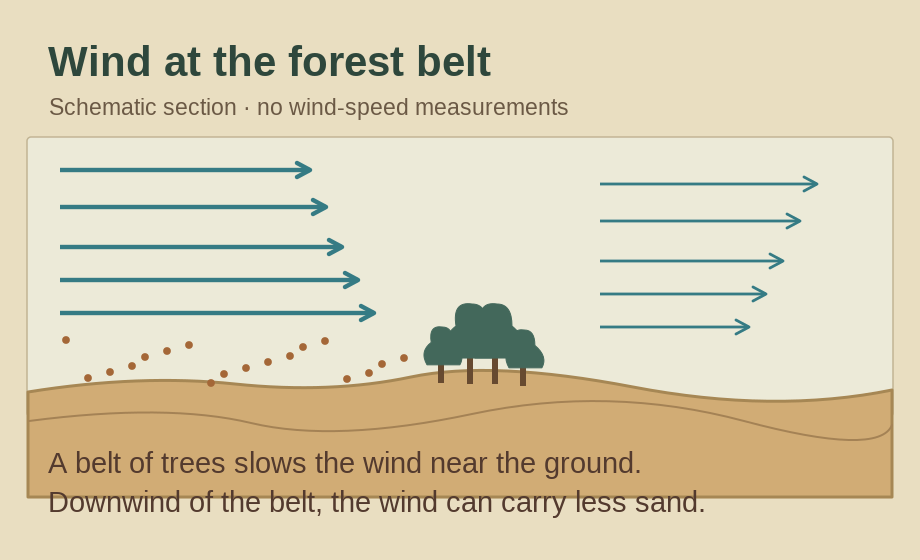
On open ground, wind lifts grains of sand and moves them. A belt of trees slows the wind close to the surface. Behind the belt, the air can carry less sand. The section lets you compare the two situations. [2]
The ICAS panel from 2000 colours sandy areas and forest vegetation separately. Silviu Nuță took measurements in the Segarcea and Sadova forest districts. The study explains how the belts worked there. Equivalent measurements are unavailable for Mârșani. [1] [2]
A regional precedent
Sadova had tree belts before 1950
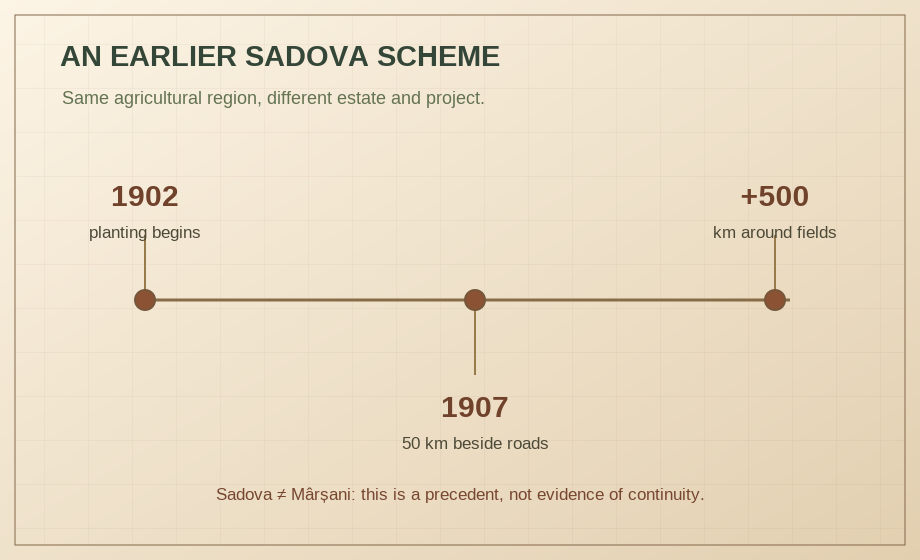
From 1902 to 1907, the Crown Estates at Sadova planted, according to the Academy of Agricultural Sciences presentation, 50 kilometres of black-locust belts along roads and another 500 kilometres around farm plots. It is an important Dolj precedent, but that project was at Sadova, not Mârșani. [1]
Later, in 1969–1970, ICAS designed a belt network for the Sadova–Corabia irrigation system; the presentation says planting in the area followed in 1970–1975. Neither source proves that the Mârșani stand in the later photograph belonged to the old network or that today’s planting continues it. [1]
The Mârșani trace
A photograph records a damaged forest
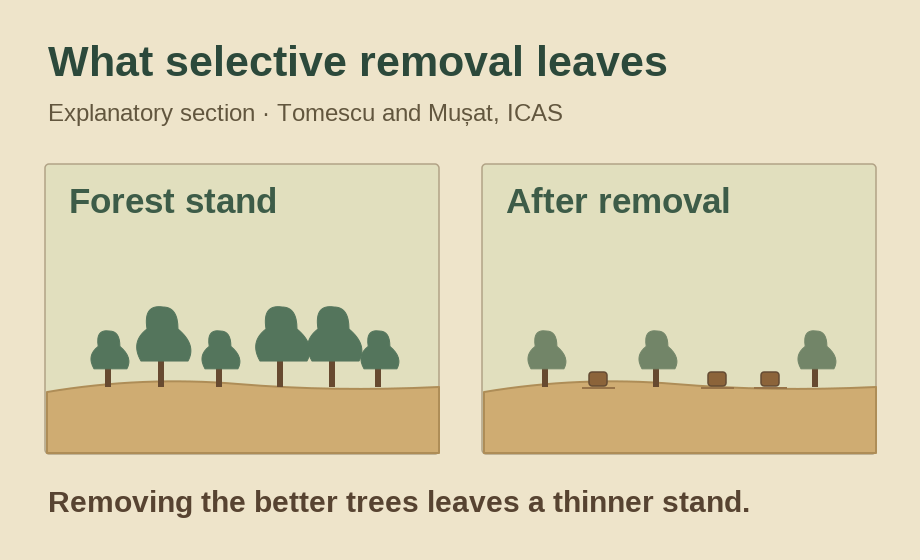
Romică Tomescu and Ilie Mușat publish a photograph whose caption describes a damaged stand at Mârșani, Dolj County. The Romanian term brăcuită means that better trees were removed, leaving a sparse stand of poorer trees. The slide mentions the 2003–2005 study. The photograph’s caption has no date. [1]
The ICAS publication’s photograph shows a few trees standing apart. Its caption identifies Mârșani. The extent of the cutting and the position of the photographed stand relative to the planting begun in 2019 are unknown. [1] [3]
The planting begins
The first three hectares were planted in 2019
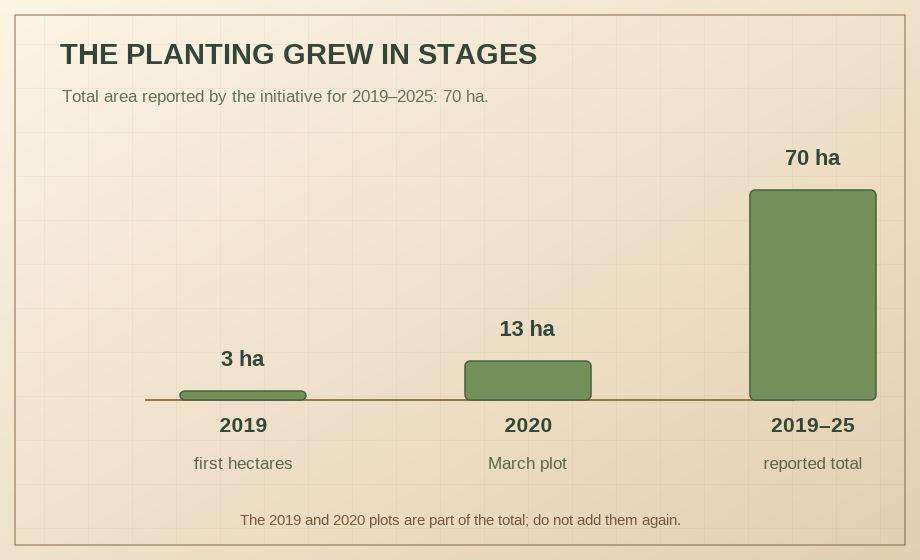
Caravana Pădurii says the work began in November 2019, when 300 volunteers planted the first three hectares with black locust. In March 2020, the team planted a 13-hectare plot. These figures describe early stages, not the whole project, and should not be added again to the later total. [3]
Foresters used black locust in shelterbelts across southern Oltenia long before 2019. At Mârșani, the species appears in both planting rounds described by the initiative. [3] [2]
The work afterwards
Crews tended the seedlings for three years
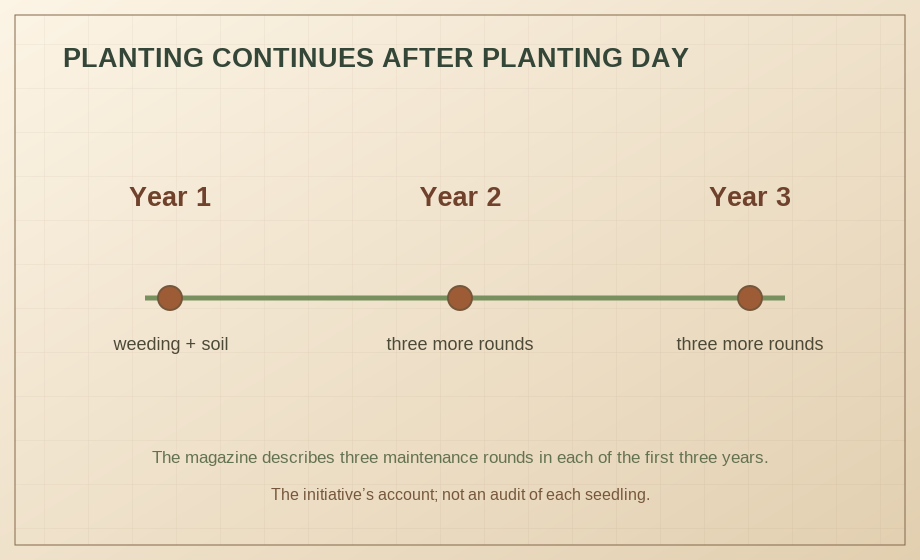
The initiative’s magazine says that, in each of its first three years, the 2020 plot received three maintenance rounds: cutting back weeds that overtook seedlings and loosening soil between the rows. The team describes both tractor work and manual hoeing. [3]
Workers used hoes to loosen the soil close to each seedling by hand. Between rows they could use machinery. The maintenance schedule shows how much work followed the planting. [3]
What can be checked
How much was planted and what remains to measure
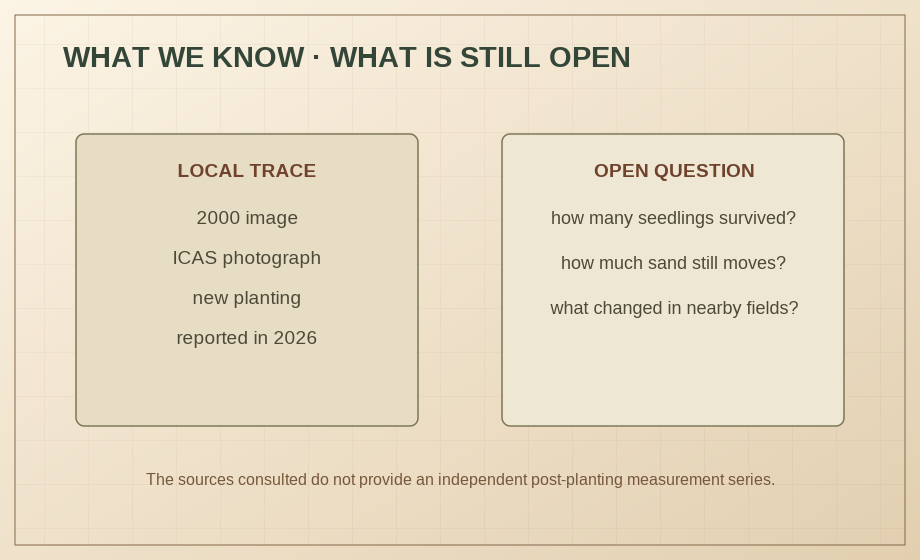
The regional ICAS image from 2000 distinguishes sandy ground from forest vegetation. A separate photograph shows a depleted stand at Mârșani. The planting initiative reports putting in 350,000 seedlings across 70 hectares from 2019 onwards. [1] [3]
Establishing how many took root and whether less sand is moving requires further measurements of the ground and trees. [3] [2]