Form
Form
Six sails catch the wind
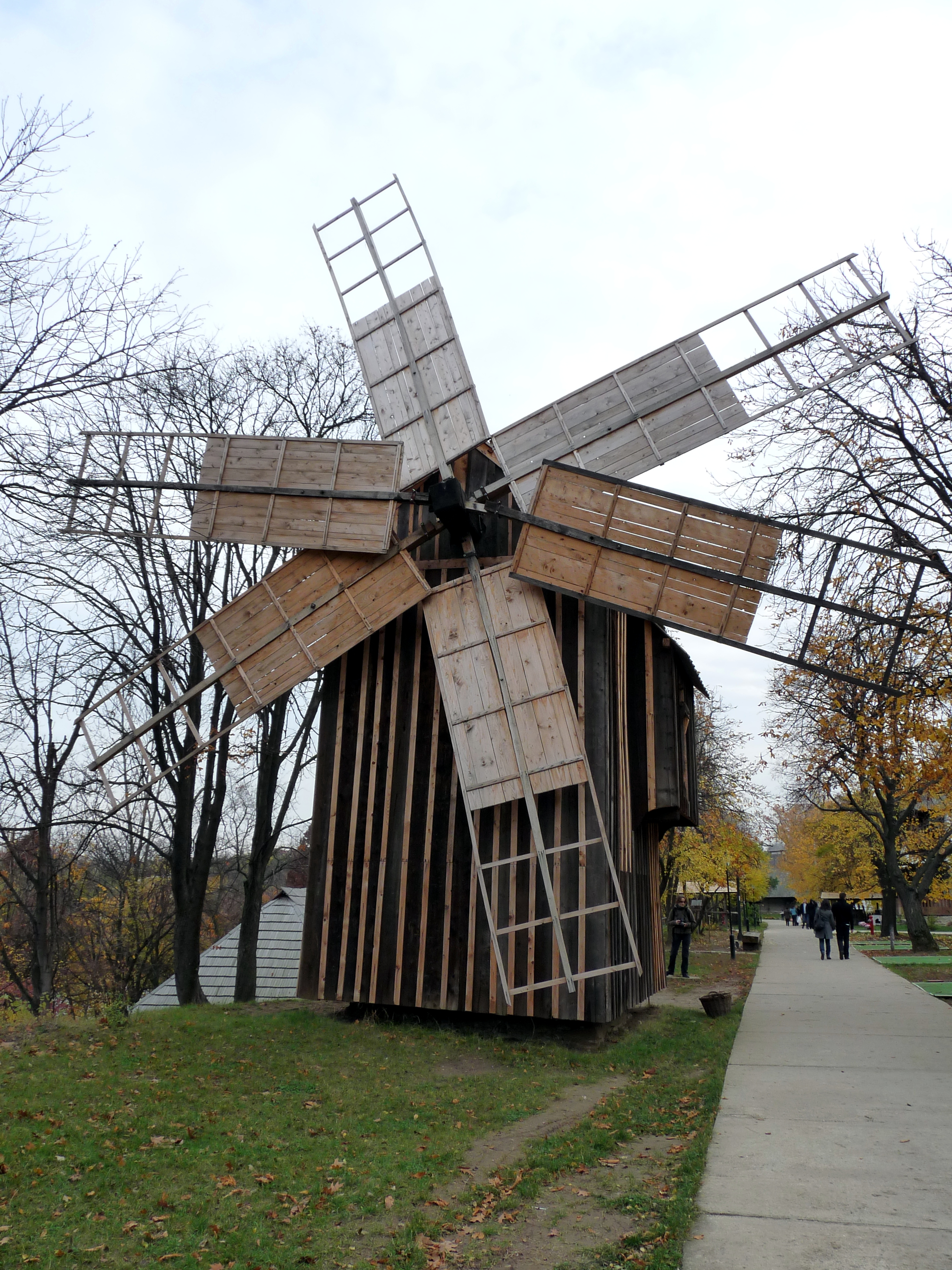
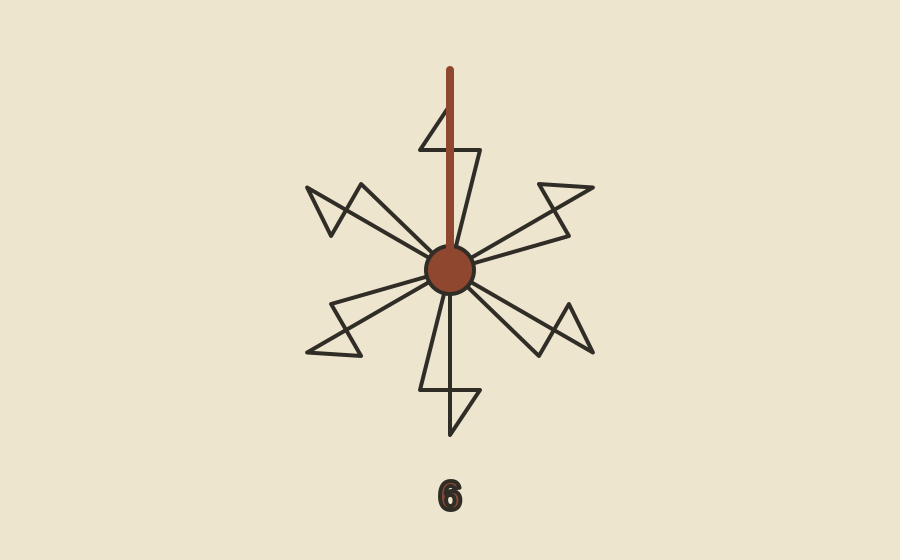
The Sarichioi windmill preserved at Bucharest’s Village Museum has six sails. Wind turns them, and machinery inside transfers that movement to the millstones. The photograph shows the museum object today, not the mill in its village setting. [1] [3]
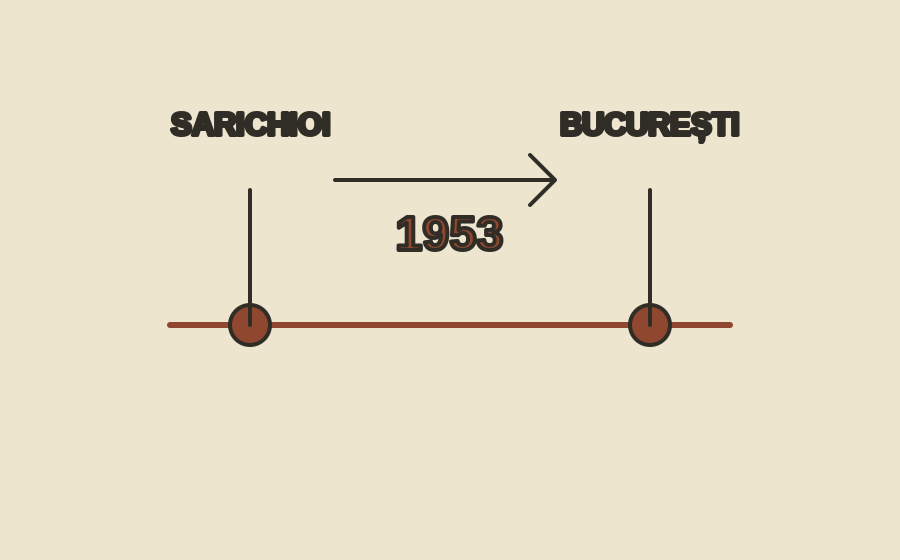
At its original village, the mill belonged to a network of grain-processing structures. It is no longer in Sarichioi: the Village Museum says it was dismantled and reassembled at the museum in 1953. [1]
The landscape
A technology spread across Dobruja
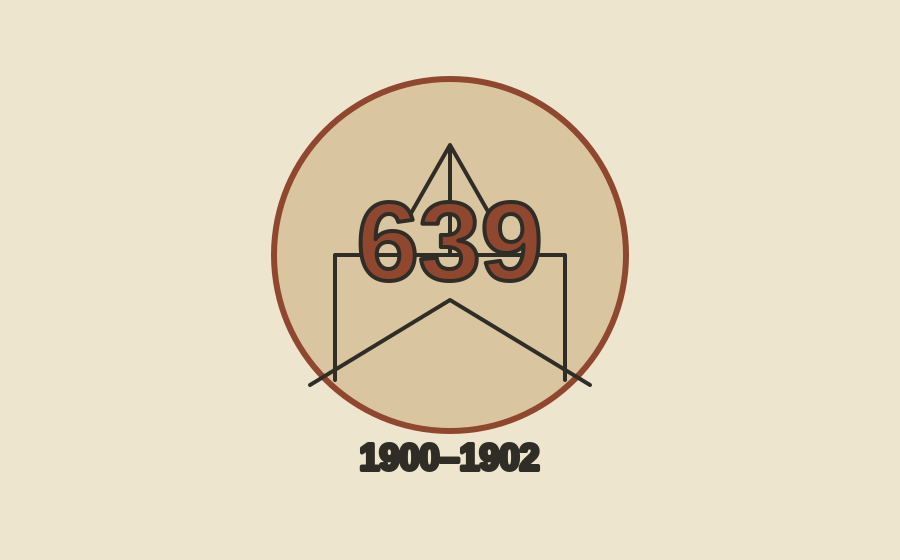
A Cibinium study cites 639 windmills in Dobruja in an industrial survey from 1900–02. The figure signals a technology found in many settlements; it is not a count of mills operating at once or still surviving. [2]
The historical count alone does not tell us who owned the mills or how much flour they produced. It offers a regional marker: in the early twentieth century, wind powered a significant share of local milling. [2]
The move
In 1953, the mill left the village
The Village Museum records that the windmill was brought to Bucharest and reassembled in its open-air exhibition in 1953. The move preserved it as an ethnographic object but changed its setting: from a working village to a museum built for comparison and conservation. [1]
Today’s photograph places it among other houses and structures in the museum collection. That setting is museological; it does not reproduce the mill’s original place in Sarichioi. [3] [1]
The structure
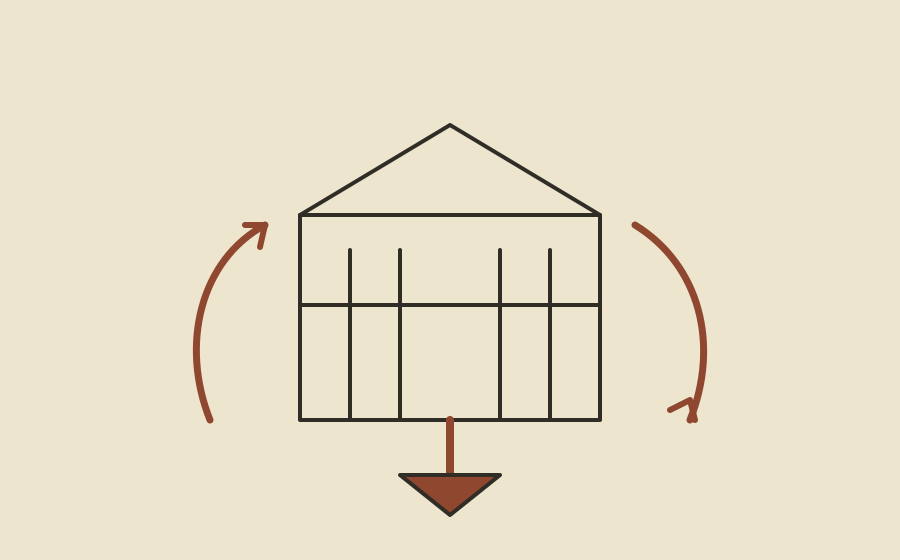
Timber, a pivot and spruce walls
The museum record describes an oak frame with spruce walls and roof. The entire body could turn around a central pivot to point its sails into the wind. The diagram follows that whole-structure movement, not only the rotation of the sails. [1]
A balcony called a “burduf” locally surrounds the working structure. The record also uses the name “moara cu sân” but offers no reliable explanation of the term. We retain it as a recorded name without guessing its etymology. [1]
The mechanism
From horizontal motion to a vertical shaft
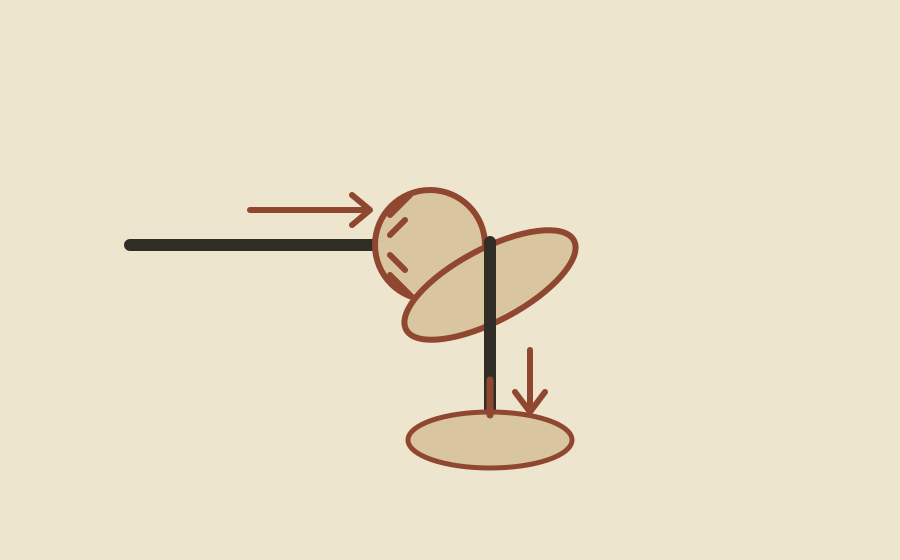
The museum describes a toothed wheel and lantern gear that change the direction of motion: the rotor drives a horizontal shaft, then the mechanism transfers rotation to the vertical shaft of the millstones. Inside, wind becomes milling motion. [1]
The diagram simplifies the components into a transmission chain; it does not show the actual teeth or speed. The key is the change of axis: rotation caught outside must reach the stones on the mill’s floor. [1]
Milling
Two pairs of stones for wheat and maize
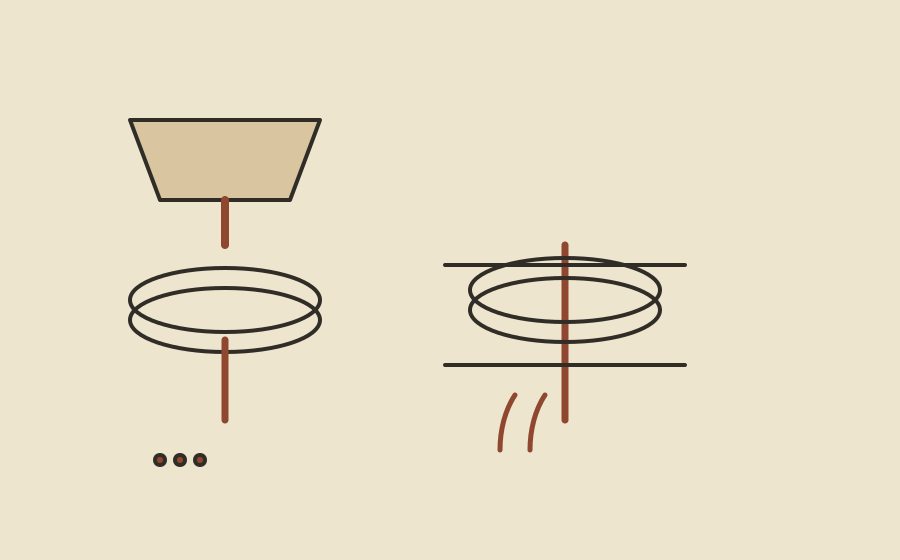
The museum record notes two pairs of millstones, one for wheat and the other for maize. Grain fell from the hopper between the stones; their spacing and the rotating shaft turned it into flour or maize meal. [1]
Before reaching the stones, wheat and maize could pass through a sieve and feed mechanism. The museum describes the components but gives no production volumes or operating recipes here. The diagram follows only the material through the mill. [1]
What remained in Sarichioi
In 1964, researchers found only two
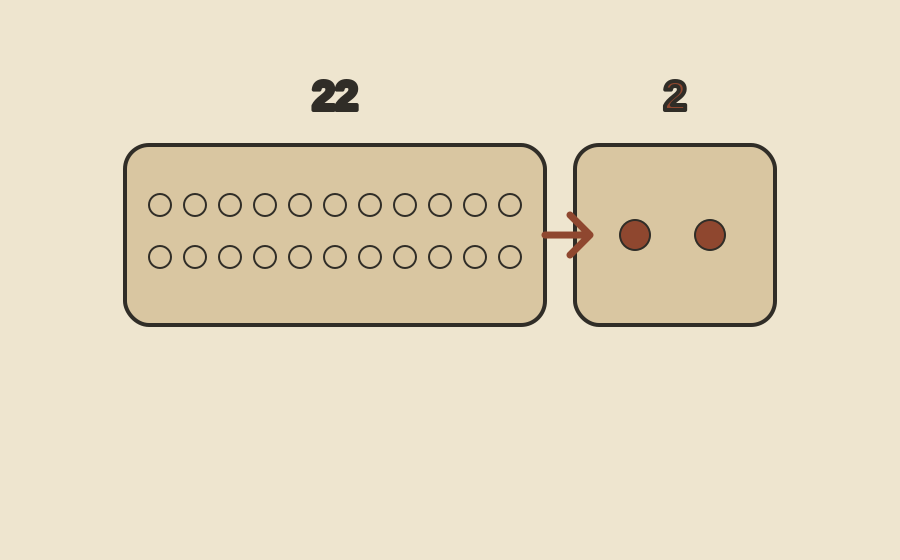
The ethnographic study published in 1966 reports that researchers in 1964 identified only two of the 22 mills known in Sarichioi; both were partly deteriorated. The article does not say when the figure of 22 was first recorded. [2]
The preserved mill had left Sarichioi for Bucharest in 1953, eleven years before the survey. The two mills observed in 1964 were those still in the village; they should not be confused with the museum object. [1] [2]