American missiles · how the name works
Same missile, three names, depending on who launches it
The Harpoon missile has one body, one seeker, one warhead. The US military still gives it three different codes: AGM-84 when it launches from an aircraft, RGM-84 from a ship, UGM-84 from a submarine. The letter changes with the launch point, not the weapon. The rule has run unbroken since 1963, covers 315 active codes today, and in March 2025 got its first new letter since the late 1980s.
One missile, three names
A US missile's code does not describe the weapon. It describes the circumstance: where it launches from, what kind of target it hits, what kind of object it is. When the same missile launches from different places, it gets different codes — even though the engine, warhead and electronics stay identical.
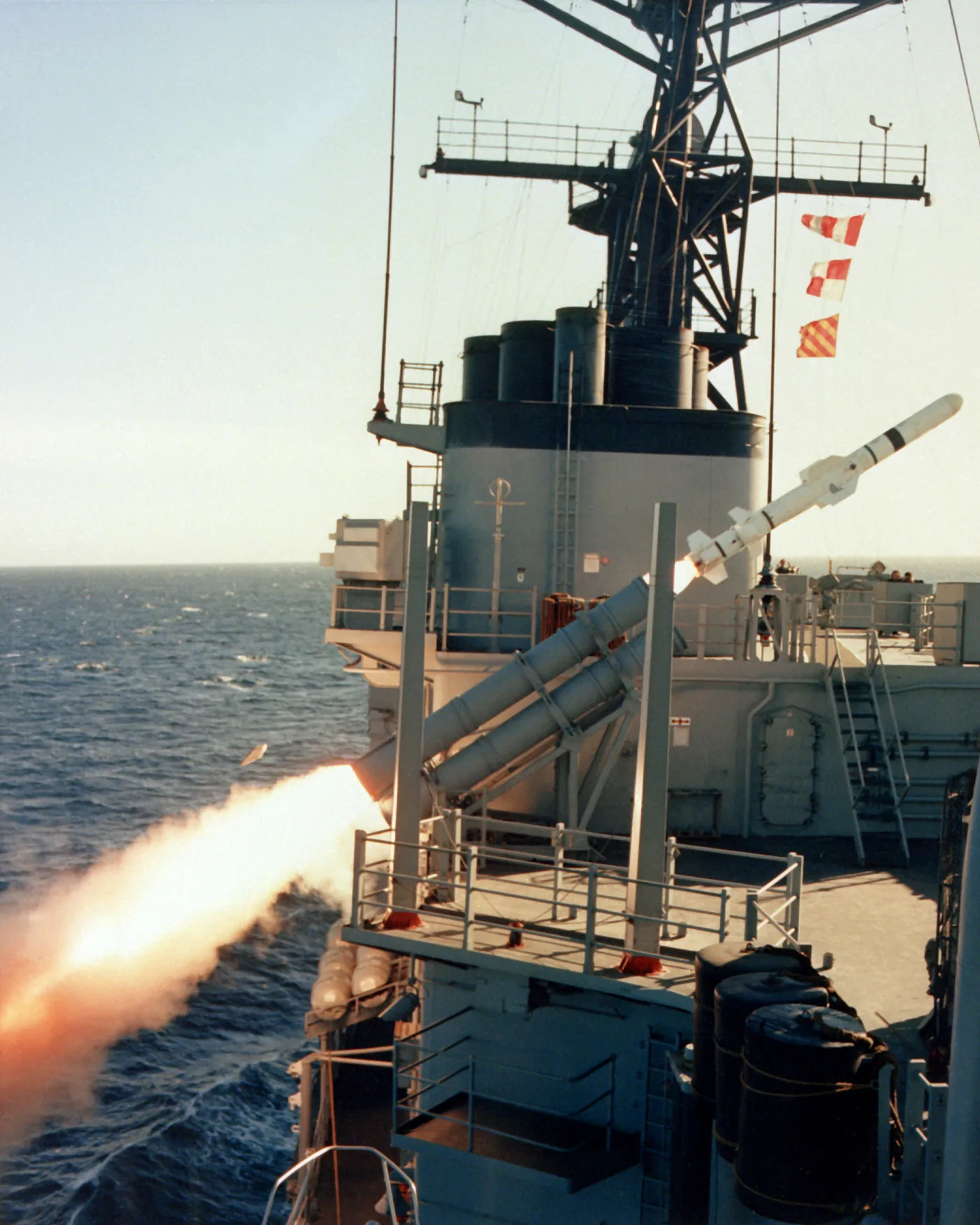
_launching_RGM-84_Harpoon.jpg)
Harpoon is the cleanest case. Under design number 84, the registry lists nine different codes for the same missile family: AGM-84 from an aircraft, RGM-84 from a ship, UGM-84 from a submarine, plus ATM-84, CATM-84, DATM-84, NAEM-84, RTM-84 and UTM-84 — training and test variants, each with its own status letter. Nine names for one missile program.
Tomahawk follows the same pattern, with an exception that shows the rulebook doesn't always follow itself. The ship-launched version is RGM-109, the submarine version UGM-109. The American ground-mobile version, Gryphon, should have been MGM-109G — the letter M means "ground launched, mobile." It stayed BGM-109G, the letter the Navy already used for the whole Tomahawk family before each launch environment got its own letter. Nobody ever corrected it.
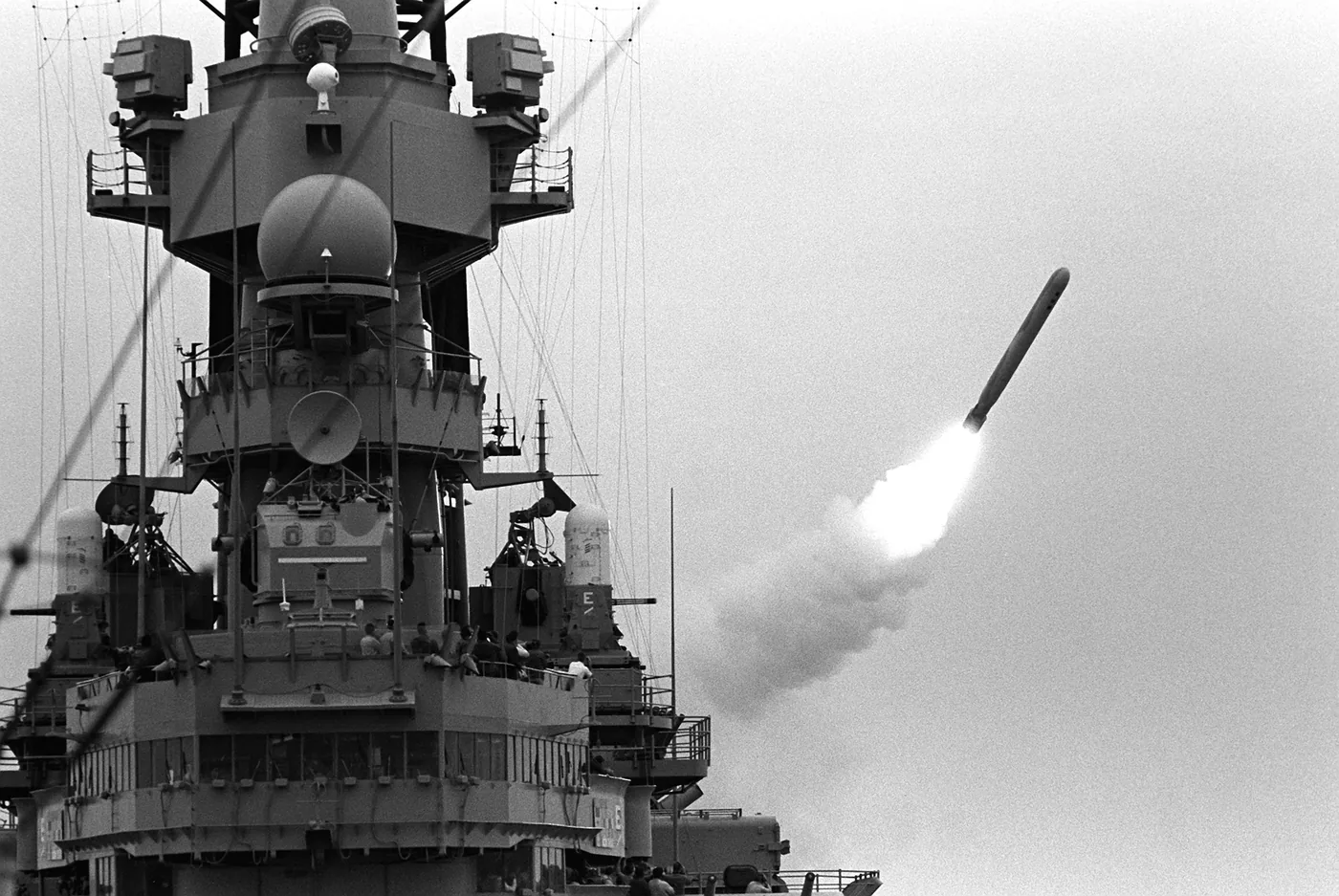

The code is exactly three letters plus a design number, and the order is fixed: launch environment, then mission, then vehicle type. AIM-9 means launched from the air, on an intercept mission, a guided missile. An optional prefix ahead of the three letters marks a round as merely experimental, captive (carried but not fired), or a plain training dummy.
Decode any code
Pick the letters and see what each position means — and whether a real missile ever carried exactly that combination.
What each letter means
Position matters as much as the letter. M in the middle means ground-launched, mobile; M at the end means guided missile; M as a status prefix once meant "under maintenance" — the only letter ever retired from the system, dropped in 1993. The tables below give the meaning at each position, with the year each letter has been valid since.
1. Launch environment
| Letter | Launch environment | In use |
|---|---|---|
| A | Air | 1963– |
| B | Multiple | 1963– |
| C | Coffin | 1963– |
| F | Individual | 1969– |
| G | Runway or ground | 1976– |
| H | Silo stored | 1963– |
| L | Silo launched | 1963– |
| M | Ground launched, mobile | 1963– |
| P | Soft pad | 1963– |
| R | Surface ship | 1963– |
| S | Space | 1988/89– |
| U | Underwater | 1963– |
2. Basic mission
| Letter | Basic mission | In use |
|---|---|---|
| C | Transport | 1988/89– |
| D | Decoy | 1963– |
| E | Special electronics, communication | 1963– |
| G | Surface attack | 1963– |
| H | High-speed, hypersonic | 2025– |
| I | Interception | 1963– |
| L | Launch detection | 1988/89– |
| M | Scientific measurement | 1988/89– |
| N | Navigation | 1988/89– |
| Q | Target drone | 1963– |
| S | Space operations support | 1988/89– |
| T | Training | 1963– |
| U | Underwater attack | 1963– |
| W | Weather | 1963– |
3. Vehicle type
| Letter | Vehicle type | In use |
|---|---|---|
| B | Booster | 1988/89– |
| M | Guided missile, target drone, UAV | 1963– |
| N | Probe | 1963– |
| R | Rocket | 1963– |
| S | Satellite | 1988/89– |
Status prefix (optional)
| Letter | Status (optional prefix) | In use |
|---|---|---|
| C | Captive: carried, not fired | 1978/86– |
| D | Dummy, inert round | 1978/86– |
| J | Special test, temporary | 1963– |
| N | Special test, permanent | 1963– |
| X | Experimental | 1963– |
| Y | Prototype | 1963– |
| Z | Planning | 1963– |
Of the 14 possible mission letters, exactly one is new: H, for "high-speed, hypersonic." It is absent from the Air Force's official 2020 list. A memorandum dated 25 March 2025 added the mission, but does not spell out which letter marks it — the letter H is inferred from a single real case, AHM-4A, the HACM hypersonic missile. It is the only entry in the whole registry carrying mission H.
From chaos to three letters
Before 1963, each armed service kept its own registry, and the same missile could carry three different names within a few years. The Navy's Sparrow missile was first AAM-N-2, then, once the Air Force adopted it, AIM-101 — a code with no relation to the Navy's, for the exact same weapon. Minuteman was SM-80. A period field guide needed three separate tables just to identify one missile, depending on which service flew it.
- 1941–1962
Every service invents its own registry: the Army Air Forces' wartime categories (BG, BQ, GB, JB, VB), the Navy's K-series from 1946, then the 1947 joint system with separate numbering per service. By 1962, the same missile can carry entirely different codes at the Navy and the Air Force.
- 11 December 1962
Department of Defense Directive 4000.20 calls for one registry, shared by all three services, for missiles and guided weapons.
- 27 June 1963
The new system takes effect. Every missile already in service is renamed at once — Minuteman goes SM-80 → LGM-30, Sidewinder goes AAM-N-7 → AIM-9.
- 1969
Letter F is added, for a weapon carried and fired by a single soldier — Redeye, later Stinger.
- 1976
Letter G is added, for runway launch.
- 1978–1986
Status prefixes C (captive) and D (dummy) are added.
- 1988–1989
The biggest expansion: the registry absorbs space vehicles — vehicle-type letters B (booster) and S (satellite), launch environment S (space), and missions C, L, M, N, S.
- 1993
Status prefix M (maintenance) falls out of use. It remains the only letter ever retired from the system.
- 1997
Reusable drones leave the missile series for their own registry, the Q series, inside the aircraft naming system — from then on, Predator is RQ-1, not a missile.
- 3 November 2020
The last full rewrite of the rulebook, as Department of the Air Force Instruction 16-401.
- 25 March 2025
A memorandum adds the "high-speed, hypersonic" mission — the first real addition to the letter list since 1989.
All 315 active codes
Every line below is a distinct letter-and-number code, exactly as it appears in the registry consulted: a missile with four launch environments, like Harpoon, occupies four lines under the same design number, 84. A code with a status prefix — training, test, dummy — occupies a line separate from its operational form. The search box filters by name or manufacturer.
| Code | Status | Launch | Mission | Type | Name | Manufacturer |
|---|---|---|---|---|---|---|
| MGM-1 | — | M | G | M | Matador | Martin |
| RIM-2 | — | R | I | M | Terrier | General Dynamics (Convair) |
| MIM-3 | — | M | I | M | Nike Ajax | Western Electric |
| AHM-4 | — | A | H | M | HACM (Hypersonic Attack Cruise Missile) | Raytheon |
| AIM-4 | — | A | I | M | Falcon | Hughes |
| MGM-5 | — | M | G | M | Corporal | JPL/Firestone |
| BQM-6 | — | B | Q | M | Regulus | Vought |
| RGM-6 | — | R | G | M | Regulus | Vought |
| AIM-7 | — | A | I | M | Sparrow ( AIM-7) Sea Sparrow ( RIM-7) | Raytheon |
| ATM-7 | — | A | T | M | Sparrow ( AIM-7) Sea Sparrow ( RIM-7) | Raytheon |
| CAEM-7 | C | A | E | M | Sparrow ( AIM-7) Sea Sparrow ( RIM-7) | Raytheon |
| CATM-7 | C | A | T | M | Sparrow ( AIM-7) Sea Sparrow ( RIM-7) | Raytheon |
| DATM-7 | D | A | T | M | Sparrow ( AIM-7) Sea Sparrow ( RIM-7) | Raytheon |
| RIM-7 | — | R | I | M | Sparrow ( AIM-7) Sea Sparrow ( RIM-7) | Raytheon |
| RTM-7 | — | R | T | M | Sparrow ( AIM-7) Sea Sparrow ( RIM-7) | Raytheon |
| MQM-8 | — | M | Q | M | Talos ( RIM/RGM-8) Vandal ( MQM-8) | Bendix |
| RGM-8 | — | R | G | M | Talos ( RIM/RGM-8) Vandal ( MQM-8) | Bendix |
| RIM-8 | — | R | I | M | Talos ( RIM/RGM-8) Vandal ( MQM-8) | Bendix |
| AIM-9 | — | A | I | M | Sidewinder | Raytheon (NWC/Philco/General Electric) |
| ATM-9 | — | A | T | M | Sidewinder | Raytheon (NWC/Philco/General Electric) |
| CATM-9 | C | A | T | M | Sidewinder | Raytheon (NWC/Philco/General Electric) |
| DATM-9 | D | A | T | M | Sidewinder | Raytheon (NWC/Philco/General Electric) |
| NATM-9 | N | A | T | M | Sidewinder | Raytheon (NWC/Philco/General Electric) |
| CIM-10 | — | C | I | M | Bomarc | Boeing |
| CQM-10 | — | C | Q | M | Bomarc | Boeing |
| PGM-11 | — | P | G | M | Redstone | Chrysler |
| PTM-11 | — | P | T | M | Redstone | Chrysler |
| AEM-12 | — | A | E | M | Bullpup | Martin |
| AGM-12 | — | A | G | M | Bullpup | Martin |
| ATM-12 | — | A | T | M | Bullpup | Martin |
| CGM-13 | — | C | G | M | Mace | Martin |
| MGM-13 | — | M | G | M | Mace | Martin |
| MQM-13 | — | M | Q | M | Mace | Martin |
| MIM-14 | — | M | I | M | Nike Hercules | Western Electric |
| GQM-15 | — | G | Q | M | Regulus II | Vought |
| MQM-15 | — | M | Q | M | Regulus II | Vought |
| RGM-15 | — | R | G | M | Regulus II | Vought |
| CGM-16 | — | C | G | M | Atlas | General Dynamics (Convair) |
| CTM-16 | — | C | T | M | Atlas | General Dynamics (Convair) |
| HGM-16 | — | H | G | M | Atlas | General Dynamics (Convair) |
| PGM-17 | — | P | G | M | Thor | Douglas |
| PTM-17 | — | P | T | M | Thor | Douglas |
| MGM-18 | — | M | G | M | Lacrosse | Martin |
| PGM-19 | — | P | G | M | Jupiter | Chrysler |
| ADM-20 | — | A | D | M | Quail | McDonnell |
| MGM-21 | — | M | G | M | (Model SS.10) | Nord |
| AGM-22 | — | A | G | M | (Model SS.11/AS.11) | Aérospatiale (Nord) |
| ATM-22 | — | A | T | M | (Model SS.11/AS.11) | Aérospatiale (Nord) |
| MEM-23 | — | M | E | M | Hawk | Raytheon |
| MIM-23 | — | M | I | M | Hawk | Raytheon |
| MTM-23 | — | M | T | M | Hawk | Raytheon |
| XMTM-23 | X | M | T | M | Hawk | Raytheon |
| RIM-24 | — | R | I | M | Tartar | General Dynamics (Convair) |
| HGM-25 | — | H | G | M | Titan Titan II ( LGM-25C) | Martin |
| HTM-25 | — | H | T | M | Titan Titan II ( LGM-25C) | Martin |
| LGM-25 | — | L | G | M | Titan Titan II ( LGM-25C) | Martin |
| AIM-26 | — | A | I | M | Nuclear Falcon | Hughes |
| UGM-27 | — | U | G | M | Polaris A1/A2/A3 | Lockheed |
| AGM-28 | — | A | G | M | Hound Dog | North American |
| MGM-29 | — | M | G | M | Sergeant | Sperry/JPL |
| LGM-30 | — | L | G | M | Minuteman | Boeing |
| NLGM-30 | N | L | G | M | Minuteman | Boeing |
| MGM-31 | — | M | G | M | Pershing Pershing II ( MGM-31C) | Martin Marietta |
| MTM-31 | — | M | T | M | Pershing Pershing II ( MGM-31C) | Martin Marietta |
| MGM-32 | — | M | G | M | Entac (Engin Téléguidé Anti-Char = Remotely Guided Anti-Tank Missile) | Aérospatiale (Nord) |
| AQM-34 | — | A | Q | M | Firebee Firebee II ( BQM-34E/F/T) | Teledyne Ryan |
| BGM-34 | — | B | G | M | Firebee Firebee II ( BQM-34E/F/T) | Teledyne Ryan |
| BQM-34 | — | B | Q | M | Firebee Firebee II ( BQM-34E/F/T) | Teledyne Ryan |
| MQM-34 | — | M | Q | M | Firebee Firebee II ( BQM-34E/F/T) | Teledyne Ryan |
| AQM-35 | — | A | Q | M | (see note 2) | Northrop (Radioplane)/Bendix |
| LGM-35 | — | L | G | M | Sentinel ICBM; also known as GBSD (Ground Based Strategic Deterrent) | Northrop Grumman |
| MQM-36 | — | M | Q | M | Shelduck | Northrop (Radioplane) |
| AQM-37 | — | A | Q | M | (Model 1019) | Beech |
| AQM-38 | — | A | Q | M | (Model RP-76/78) | Northrop (Radioplane) |
| MQM-39 | — | M | Q | M | (Model 1001) | Beech |
| MQM-40 | — | M | Q | M | Firefly | Globe |
| AQM-41 | — | A | Q | M | Petrel (drone version) | Bureau of Standards/Fairchild |
| MQM-42 | — | M | Q | M | Redhead/Roadrunner | North American |
| FEM-43 | — | F | E | M | Redeye | General Dynamics |
| FIM-43 | — | F | I | M | Redeye | General Dynamics |
| UUM-44 | — | U | U | M | Subroc | Goodyear |
| AGM-45 | — | A | G | M | Shrike | Texas Instruments |
| ATM-45 | — | A | T | M | Shrike | Texas Instruments |
| RIM-46 | — | R | I | M | Mauler ( MIM-46) Sea Mauler ( RIM-46) | General Dynamics |
| XMIM-46 | X | M | I | M | Mauler ( MIM-46) Sea Mauler ( RIM-46) | General Dynamics |
| AIM-47 | — | A | I | M | Falcon | Hughes |
| XAGM-48 | X | A | G | M | Skybolt | Douglas |
| LIM-49 | — | L | I | M | Nike Zeus B ( XLIM-49A) Spartan ( LIM-49A) (see note 3) | Western Electric/McDonnell Douglas |
| RIM-50 | — | R | I | M | Typhon LR (cancelled) | Bendix |
| MGM-51 | — | M | G | M | Shillelagh | Ford |
| MTM-51 | — | M | T | M | Shillelagh | Ford |
| MGM-52 | — | M | G | M | Lance | LTV |
| AGM-53 | — | A | G | M | Condor | Rockwell |
| AEM-54 | — | A | E | M | Phoenix | Raytheon (Hughes) |
| AIM-54 | — | A | I | M | Phoenix | Raytheon (Hughes) |
| ATM-54 | — | A | T | M | Phoenix | Raytheon (Hughes) |
| CATM-54 | C | A | T | M | Phoenix | Raytheon (Hughes) |
| DATM-54 | D | A | T | M | Phoenix | Raytheon (Hughes) |
| RIM-55 | — | R | I | M | Typhon MR (cancelled) | Bendix |
| PQM-56 | — | P | Q | M | (CT.41 ramjet-powered supersonic target) | Nord/Bell |
| MQM-57 | — | M | Q | M | Falconer (similar to MQM-33/36) | Northrop (Radioplane) |
| MQM-58 | — | M | Q | M | Overseer | Aerojet General |
| ZRGM-59 | Z | R | G | M | Taurus LFSW (Landing Force Support Weapon; cancelled) | APL |
| AQM-60 | — | A | Q | M | Kingfisher (modified X-7) | Lockheed |
| MQM-61 | — | M | Q | M | Cardinal (similar to MQM-39) | Beech |
| AGM-62 | — | A | G | M | Walleye | Martin Marietta |
| ZAGM-63 | Z | A | G | M | (Navy project for anti-radiation missile; cancelled) | - |
| XAGM-64 | X | A | G | M | Hornet (USAF project; cancelled) | Rockwell (North American) |
| AGM-65 | — | A | G | M | Maverick | Raytheon (Hughes) |
| CATM-65 | C | A | T | M | Maverick | Raytheon (Hughes) |
| DATM-65 | D | A | T | M | Maverick | Raytheon (Hughes) |
| RGM-66 | — | R | G | M | Standard SM-1/2 MR (Medium Range) ( RIM-66) Standard ARM (Anti-Radiation Missile) ( RGM-66) | Raytheon (General Dynamics) |
| RIM-66 | — | R | I | M | Standard SM-1/2 MR (Medium Range) ( RIM-66) Standard ARM (Anti-Radiation Missile) ( RGM-66) | Raytheon (General Dynamics) |
| RTM-66 | — | R | T | M | Standard SM-1/2 MR (Medium Range) ( RIM-66) Standard ARM (Anti-Radiation Missile) ( RGM-66) | Raytheon (General Dynamics) |
| RIM-67 | — | R | I | M | Standard SM-1/2 ER (Extended range) | Raytheon (General Dynamics) |
| RQM-67 | — | R | Q | M | Standard SM-1/2 ER (Extended range) | Raytheon (General Dynamics) |
| ZAIM-68 | Z | A | I | M | Big Q (cancelled USAF project; see note 6) | Air Force Weapons Lab |
| AGM-69 | — | A | G | M | SRAM (Short Range Attack Missile) | Boeing |
| LEM-70 | — | L | E | M | Minuteman ERCS (Emergency Rocket Communications System) (see note 7) | Boeing |
| BGM-71 | — | B | G | M | TOW (Tube-launched, Optically tracked, Wire guided) | Raytheon (Hughes) |
| BTM-71 | — | B | T | M | TOW (Tube-launched, Optically tracked, Wire guided) | Raytheon (Hughes) |
| XBEM-71 | X | B | E | M | TOW (Tube-launched, Optically tracked, Wire guided) | Raytheon (Hughes) |
| MIM-72 | — | M | I | M | Chaparral (modified AIM-9) | Ford |
| RIM-72 | — | R | I | M | Chaparral (modified AIM-9) | Ford |
| UGM-73 | — | U | G | M | Poseidon C3 | Lockheed |
| BQM-74 | — | B | Q | M | Chukar | Northrop |
| MQM-74 | — | M | Q | M | Chukar | Northrop |
| ZBGM-75 | Z | B | G | M | AICBM (Advanced ICBM; cancelled USAF project WS-120A) | - |
| AGM-76 | — | A | G | M | Falcon (air-to-ground derivative of AIM-47) | Hughes |
| FGM-77 | — | F | G | M | Dragon | McDonnell Douglas |
| FTM-77 | — | F | T | M | Dragon | McDonnell Douglas |
| AGM-78 | — | A | G | M | Standard ARM | General Dynamics |
| ATM-78 | — | A | T | M | Standard ARM | General Dynamics |
| XAGM-79 | X | A | G | M | Blue Eye (TV guided derivative of AGM-12 ; cancelled USAF project) | Martin Marietta |
| XAGM-80 | X | A | G | M | Viper (derivative of AGM-12 with inertial guidance; cancelled USAF project) | Chrysler |
| AQM-81 | — | A | Q | M | Firebolt | Teledyne Ryan |
| ZAIM-82 | Z | A | I | M | (1969/1970 USAF design study for advanced short-range AAM for F-15 aircraft; cancelled in favour of AIM-95) | - |
| AGM-83 | — | A | G | M | Bulldog (laser-guided derivative of AGM-12 ; cancelled Navy project) | Texas Instruments |
| ATM-83 | — | A | T | M | Bulldog (laser-guided derivative of AGM-12 ; cancelled Navy project) | Texas Instruments |
| AGM-84 | — | A | G | M | Harpoon SLAM (Standoff Land Attack Missile) ( AGM-84E) SLAM-ER (SLAM-Expanded Response) ( AGM-84H/K) | Boeing (McDonnell Douglas) |
| ATM-84 | — | A | T | M | Harpoon SLAM (Standoff Land Attack Missile) ( AGM-84E) SLAM-ER (SLAM-Expanded Response) ( AGM-84H/K) | Boeing (McDonnell Douglas) |
| CATM-84 | C | A | T | M | Harpoon SLAM (Standoff Land Attack Missile) ( AGM-84E) SLAM-ER (SLAM-Expanded Response) ( AGM-84H/K) | Boeing (McDonnell Douglas) |
| DATM-84 | D | A | T | M | Harpoon SLAM (Standoff Land Attack Missile) ( AGM-84E) SLAM-ER (SLAM-Expanded Response) ( AGM-84H/K) | Boeing (McDonnell Douglas) |
| NAEM-84 | N | A | E | M | Harpoon SLAM (Standoff Land Attack Missile) ( AGM-84E) SLAM-ER (SLAM-Expanded Response) ( AGM-84H/K) | Boeing (McDonnell Douglas) |
| RGM-84 | — | R | G | M | Harpoon SLAM (Standoff Land Attack Missile) ( AGM-84E) SLAM-ER (SLAM-Expanded Response) ( AGM-84H/K) | Boeing (McDonnell Douglas) |
| RTM-84 | — | R | T | M | Harpoon SLAM (Standoff Land Attack Missile) ( AGM-84E) SLAM-ER (SLAM-Expanded Response) ( AGM-84H/K) | Boeing (McDonnell Douglas) |
| UGM-84 | — | U | G | M | Harpoon SLAM (Standoff Land Attack Missile) ( AGM-84E) SLAM-ER (SLAM-Expanded Response) ( AGM-84H/K) | Boeing (McDonnell Douglas) |
| UTM-84 | — | U | T | M | Harpoon SLAM (Standoff Land Attack Missile) ( AGM-84E) SLAM-ER (SLAM-Expanded Response) ( AGM-84H/K) | Boeing (McDonnell Douglas) |
| ZRIM-85 | Z | R | I | M | (Navy project for medium-range SAM; cancelled) | - |
| AGM-86 | — | A | G | M | ALCM (Air-Launched Cruise Missile) | Boeing |
| DATM-86 | D | A | T | M | ALCM (Air-Launched Cruise Missile) | Boeing |
| AGM-87 | — | A | G | M | Focus ( AIM-9B derivative) | General Electric |
| AGM-88 | — | A | G | M | HARM (High-Speed Anti-Radiation missile) AARGM (Advanced Anti-Radiation Guided Missile) ( AGM-88E) AARGM-ER (AARGM Extended Range) ( AGM-88G) SiAW (Stand-in Attack Weapon) ( AGM-88J) | Raytheon (Texas Instruments) |
| AQM-88 | — | A | Q | M | HARM (High-Speed Anti-Radiation missile) AARGM (Advanced Anti-Radiation Guided Missile) ( AGM-88E) AARGM-ER (AARGM Extended Range) ( AGM-88G) SiAW (Stand-in Attack Weapon) ( AGM-88J) | Raytheon (Texas Instruments) |
| ATM-88 | — | A | T | M | HARM (High-Speed Anti-Radiation missile) AARGM (Advanced Anti-Radiation Guided Missile) ( AGM-88E) AARGM-ER (AARGM Extended Range) ( AGM-88G) SiAW (Stand-in Attack Weapon) ( AGM-88J) | Raytheon (Texas Instruments) |
| CATM-88 | C | A | T | M | HARM (High-Speed Anti-Radiation missile) AARGM (Advanced Anti-Radiation Guided Missile) ( AGM-88E) AARGM-ER (AARGM Extended Range) ( AGM-88G) SiAW (Stand-in Attack Weapon) ( AGM-88J) | Raytheon (Texas Instruments) |
| DATM-88 | D | A | T | M | HARM (High-Speed Anti-Radiation missile) AARGM (Advanced Anti-Radiation Guided Missile) ( AGM-88E) AARGM-ER (AARGM Extended Range) ( AGM-88G) SiAW (Stand-in Attack Weapon) ( AGM-88J) | Raytheon (Texas Instruments) |
| ZUGM-89 | Z | U | G | M | Perseus (cancelled Navy project) | - |
| ZBQM-90 | Z | B | Q | M | (Navy project for high-speed high-altitude target; cancelled) | - |
| AQM-91 | — | A | Q | M | Firefly (UAV for Compass Arrow program) | Teledyne Ryan |
| FIM-92 | — | F | I | M | Stinger | Raytheon (General Dynamics) |
| XGQM-93 | X | G | Q | M | (Model L450F UAV for Compass Dwell program) | E-Systems |
| YGQM-94 | Y | G | Q | M | B-Gull (UAV for Compass Cope program) | Boeing |
| AIM-95 | — | A | I | M | Agile (Navy project; cancelled) | Hughes |
| UGM-96 | — | U | G | M | Trident I C4 | Lockheed |
| XAIM-97 | X | A | I | M | Seekbat (USAF project; cancelled) | General Dynamics |
| YGQM-98 | Y | G | Q | M | R-Tern (UAV for Compass Cope program) | Teledyne Ryan |
| XLIM-99 | X | L | I | M | (I have no details; see note 9) | ? |
| XLIM-100 | X | L | I | M | (I have no details; see note 9) | ? |
| RIM-101 | — | R | I | M | (Navy project; see note 10) | - |
| PQM-102 | — | P | Q | M | Delta Dagger (F-102 modified as target drone; see note 11) | General Dynamics (Convair)/Sperry |
| XAQM-103 | X | A | Q | M | Firebee (modified Model 147G; similar to AQM-34) | Teledyne Ryan |
| MIM-104 | — | M | I | M | Patriot | Raytheon |
| YMQM-105 | Y | M | Q | M | Aquila | Lockheed |
| XBQM-106 | X | B | Q | M | Teleplane (experimental UAV) | USAF FDL |
| MQM-107 | — | M | Q | M | Streaker | Raytheon (Beech) |
| XBQM-108 | X | B | Q | M | (Navy VATOL (Vertical Attitude Take-Off & Landing) project) | NWC |
| AGM-109 | — | A | G | M | Tomahawk Gryphon GLCM (Ground-Launched Cruise Missile) ( BGM-109G) | Raytheon (General Dynamics) |
| BGM-109 | — | B | G | M | Tomahawk Gryphon GLCM (Ground-Launched Cruise Missile) ( BGM-109G) | Raytheon (General Dynamics) |
| RGM-109 | — | R | G | M | Tomahawk Gryphon GLCM (Ground-Launched Cruise Missile) ( BGM-109G) | Raytheon (General Dynamics) |
| UGM-109 | — | U | G | M | Tomahawk Gryphon GLCM (Ground-Launched Cruise Missile) ( BGM-109G) | Raytheon (General Dynamics) |
| YAGM-110 | Y | A | G | M | (unsuccessful competitor to BGM-109) | LTV |
| YBGM-110 | Y | B | G | M | (unsuccessful competitor to BGM-109) | LTV |
| ZBQM-111 | Z | B | Q | M | Firebrand (Navy target; cancelled) | Teledyne Ryan |
| AGM-112 | — | A | G | M | (unpowered guided bomb; redesignated as GBU-15(V)/B) | Rockwell |
| XRIM-113 | X | R | I | M | (cancelled Navy project for Anti-Cruise-Missile missile) | - |
| AGM-114 | — | A | G | M | Hellfire | Boeing/Lockheed Martin (Rockwell/Martin Marietta) |
| ATM-114 | — | A | T | M | Hellfire | Boeing/Lockheed Martin (Rockwell/Martin Marietta) |
| CATM-114 | C | A | T | M | Hellfire | Boeing/Lockheed Martin (Rockwell/Martin Marietta) |
| DBTM-114 | D | B | T | M | Hellfire | Boeing/Lockheed Martin (Rockwell/Martin Marietta) |
| RGM-114 | — | R | G | M | Hellfire | Boeing/Lockheed Martin (Rockwell/Martin Marietta) |
| XMIM-115 | X | M | I | M | Roland | Euromissile/Hughes/Boeing |
| RIM-116 | — | R | I | M | RAM (Rolling Airframe Missile) | Raytheon (General Dynamics) |
| RTM-116 | — | R | T | M | RAM (Rolling Airframe Missile) | Raytheon (General Dynamics) |
| FQM-117 | — | F | Q | M | RCMAT (Radio-Controlled Miniature Aerial Target; see note 13) | RS Systems |
| LGM-118 | — | L | G | M | Peacekeeper (often referred to as "MX" ICBM) | Martin Marietta |
| MGM-118 | — | M | G | M | Peacekeeper (often referred to as "MX" ICBM) | Martin Marietta |
| AGM-119 | — | A | G | M | Penguin | Kongsberg |
| CATM-119 | C | A | T | M | Penguin | Kongsberg |
| AIM-120 | — | A | I | M | AMRAAM (Advanced Medium-Range Air-to-Air Missile) | Raytheon (Hughes) |
| CATM-120 | C | A | T | M | AMRAAM (Advanced Medium-Range Air-to-Air Missile) | Raytheon (Hughes) |
| DATM-120 | D | A | T | M | AMRAAM (Advanced Medium-Range Air-to-Air Missile) | Raytheon (Hughes) |
| JAIM-120 | J | A | I | M | AMRAAM (Advanced Medium-Range Air-to-Air Missile) | Raytheon (Hughes) |
| YCGM-121 | Y | C | G | M | Pave Tiger ( YCQM-121A) Seek Spinner ( YCGM-121B) | Boeing |
| YCQM-121 | Y | C | Q | M | Pave Tiger ( YCQM-121A) Seek Spinner ( YCGM-121B) | Boeing |
| AGM-122 | — | A | G | M | Sidearm (obsolete AIM-9C modified as anti-radiation missiles) | Motorola |
| ATM-122 | — | A | T | M | Sidearm (obsolete AIM-9C modified as anti-radiation missiles) | Motorola |
| CATM-122 | C | A | T | M | Sidearm (obsolete AIM-9C modified as anti-radiation missiles) | Motorola |
| AGM-123 | — | A | G | M | Skipper II ( GBU-16/B Paveway II glide bomb fitted with a rocket motor) | Emerson Electric |
| ATM-123 | — | A | T | M | Skipper II ( GBU-16/B Paveway II glide bomb fitted with a rocket motor) | Emerson Electric |
| AGM-124 | — | A | G | M | Wasp (USAF anti-tank mini-missile; cancelled) | Hughes |
| RUM-125 | — | R | U | M | Sea Lance ASWSOW (Anti-Submarine Warfare Stand-Off Weapon; cancelled) | Boeing |
| UUM-125 | — | U | U | M | Sea Lance ASWSOW (Anti-Submarine Warfare Stand-Off Weapon; cancelled) | Boeing |
| BQM-126 | — | B | Q | M | (Model 997 target; cancelled) | Beech |
| YAQM-127 | Y | A | Q | M | SLAT (Supersonic Low-Altitude Target; cancelled Navy project) | Martin Marietta |
| YAQM-128 | Y | A | Q | M | (subscale aerial target missile for Navy; cancelled) | - |
| AGM-129 | — | A | G | M | ACM (Advanced Cruise Missile) | Raytheon (General Dynamics) |
| AGM-130 | — | A | G | M | ( GBU-15(V)/B glide bomb fitted with a rocket motor) | Boeing (Rockwell) |
| CATM-130 | C | A | T | M | ( GBU-15(V)/B glide bomb fitted with a rocket motor) | Boeing (Rockwell) |
| DATM-130 | D | A | T | M | ( GBU-15(V)/B glide bomb fitted with a rocket motor) | Boeing (Rockwell) |
| AGM-131 | — | A | G | M | SRAM II (Short-Range Attack Missile II; cancelled) ( AGM-131A) SRAM-T (SRAM-Tactical; cancelled) ( AGM-131B) | Boeing |
| AIM-132 | — | A | I | M | ASRAAM (Advanced Short-Range Air-to-Air Missile) | MBDA (BAe Dynamics/Matra) |
| UGM-133 | — | U | G | M | Trident II D5 | Lockheed Martin |
| XMGM-134 | X | M | G | M | Midgetman SICBM (Small ICBM; cancelled) | Martin Marietta |
| ASM-135 | — | A | S | M | ASAT (Anti-Satellite missile) | Vought |
| CASM-135 | C | A | S | M | ASAT (Anti-Satellite missile) | Vought |
| AGM-136 | — | A | G | M | Tacit Rainbow (cancelled anti-radar cruise missile) | Northrop |
| ATM-136 | — | A | T | M | Tacit Rainbow (cancelled anti-radar cruise missile) | Northrop |
| BGM-136 | — | B | G | M | Tacit Rainbow (cancelled anti-radar cruise missile) | Northrop |
| DATM-136 | D | A | T | M | Tacit Rainbow (cancelled anti-radar cruise missile) | Northrop |
| AGM-137 | — | A | G | M | TSSAM (Tri-Service Standoff Attack Missile; cancelled) | Northrop |
| MGM-137 | — | M | G | M | TSSAM (Tri-Service Standoff Attack Missile; cancelled) | Northrop |
| YCEM-138 | Y | C | E | M | Pave Cricket (ECM drone similar to YCGM-121B) | Boeing |
| DRUM-139 | D | R | U | M | VL-Asroc (Vertical Launch - Anti-Submarine Rocket) | Lockheed Martin (Loral) |
| RTM-139 | — | R | T | M | VL-Asroc (Vertical Launch - Anti-Submarine Rocket) | Lockheed Martin (Loral) |
| RUM-139 | — | R | U | M | VL-Asroc (Vertical Launch - Anti-Submarine Rocket) | Lockheed Martin (Loral) |
| DMGM-140 | D | M | G | M | ATACMS (Army Tactical Missile System) | Lockheed Martin (LTV) |
| MGM-140 | — | M | G | M | ATACMS (Army Tactical Missile System) | Lockheed Martin (LTV) |
| ADM-141 | — | A | D | M | TALD (Tactical Air-Launched Decoy; see note 16) | IMI (Brunswick) |
| AGM-142 | — | A | G | M | Have Nap (original Isreali name is Popeye) | Rafael/Lockheed Martin |
| ATM-142 | — | A | T | M | Have Nap (original Isreali name is Popeye) | Rafael/Lockheed Martin |
| CATM-142 | C | A | T | M | Have Nap (original Isreali name is Popeye) | Rafael/Lockheed Martin |
| DATM-142 | D | A | T | M | Have Nap (original Isreali name is Popeye) | Rafael/Lockheed Martin |
| MQM-143 | — | M | Q | M | (1/5th scale target model of MIG-27) | Continental RPVs |
| ADM-144 | — | A | D | M | (designation reserved but most probably not used; I have no further details) | - |
| BQM-145 | — | B | Q | M | Peregrine (JUAV-MR; Joint UAV - Medium Range; cancelled) | Teledyne Ryan |
| DMTM-146 | D | M | T | M | ADATS (Air-Defense Anti-Tank System) | Oerlikon/Lockheed Martin |
| MIM-146 | — | M | I | M | ADATS (Air-Defense Anti-Tank System) | Oerlikon/Lockheed Martin |
| BQM-147 | — | B | Q | M | Exdrone UAV | BAI Aerosystems |
| MIM-147 | — | M | I | M | ? (see note 21) | Rafael |
| FGM-148 | — | F | G | M | Javelin AAWS-M (Advanced Anti-Tank Weapon System - Medium) | Raytheon/Lockheed Martin |
| YPQM-149 | Y | P | Q | M | UAV-SR (Unmanned Aerial Vehicle-Short Range; designations reserved by Army/Navy, but not used) | McDonnell Douglas Isreal Aircraft Industries (see note 17 ) |
| YPQM-150 | Y | P | Q | M | UAV-SR (Unmanned Aerial Vehicle-Short Range; designations reserved by Army/Navy, but not used) | McDonnell Douglas Isreal Aircraft Industries (see note 17 ) |
| FQM-151 | — | F | Q | M | Pointer UAV | AeroVironment |
| YAIM-152 | Y | A | I | M | AAAM (Advanced Air-to-Air Missile; cancelled Navy project) | - |
| XAGM-153 | X | A | G | M | (1992 USAF requirement for tactical standoff air-to-ground missile; cancelled) | - |
| AGM-154 | — | A | G | M | JSOW (Joint Standoff Weapon) | Raytheon (Texas Instruments) |
| DATM-154 | D | A | T | M | JSOW (Joint Standoff Weapon) | Raytheon (Texas Instruments) |
| BQM-155 | — | B | Q | M | Hunter UAV (has since been redesignated as RQ-5A) | TRW/IAI |
| RIM-156 | — | R | I | M | Standard SM-2ER Block IV (derivative of RIM-67) | Raytheon |
| DMTM-157 | D | M | T | M | EFOGM (Enhanced Fiber-Optical Guided Missile; cancelled) | Raytheon |
| YMGM-157 | Y | M | G | M | EFOGM (Enhanced Fiber-Optical Guided Missile; cancelled) | Raytheon |
| AGM-158 | — | A | G | M | JASSM (Joint Air-to-Surface Stand-off Missile) ( AGM-158A) JASSM-ER (JASSM-Extended Ramge) ( AGM-158B/D) LRASM (Long Range Anti-Ship Missile) ( AGM-158C) | Lockheed Martin |
| ATM-158 | — | A | T | M | JASSM (Joint Air-to-Surface Stand-off Missile) ( AGM-158A) JASSM-ER (JASSM-Extended Ramge) ( AGM-158B/D) LRASM (Long Range Anti-Ship Missile) ( AGM-158C) | Lockheed Martin |
| DATM-158 | D | A | T | M | JASSM (Joint Air-to-Surface Stand-off Missile) ( AGM-158A) JASSM-ER (JASSM-Extended Ramge) ( AGM-158B/D) LRASM (Long Range Anti-Ship Missile) ( AGM-158C) | Lockheed Martin |
| AGM-159 | — | A | G | M | JASSM (unsuccessful competitor to AGM-158A) | Boeing (McDonnell Douglas) |
| ADM-160 | — | A | D | M | MALD (Miniature Air-Launched Decoy) | Northrop Grumman (Teledyne Ryan) ( ADM-160A ) Raytheon ( ADM-160B/C ) |
| DATM-160 | D | A | T | M | MALD (Miniature Air-Launched Decoy) | Northrop Grumman (Teledyne Ryan) ( ADM-160A ) Raytheon ( ADM-160B/C ) |
| RIM-161 | — | R | I | M | Standard SM-3 | Raytheon |
| RIM-162 | — | R | I | M | ESSM (Evolved Sea-Sparrow Missile) | Raytheon |
| GQM-163 | — | G | Q | M | Coyote SSST (Supersonic Sea-Skimming Target) | Orbital Sciences |
| MGM-164 | — | M | G | M | ATACMS (Army Tactical Missile System) Block II | Lockheed Martin |
| RGM-165 | — | R | G | M | LASM (Land Attack Standard Missile; cancelled) | Raytheon |
| MGM-166 | — | M | G | M | LOSAT KEM (Line-Of-Sight Anti-Tank Kinetic Energy Missile) | Lockheed Martin |
| BQM-167 | — | B | Q | M | Skeeter | Composite Engineering |
| MGM-168 | — | M | G | M | ATACMS (Army Tactical Missile System) Block IVA | Lockheed Martin |
| CATM-169 | C | A | T | M | JCM (Joint Common Missile) | Lockheed Martin |
| DATM-169 | D | A | T | M | JCM (Joint Common Missile) | Lockheed Martin |
| YAGM-169 | Y | A | G | M | JCM (Joint Common Missile) | Lockheed Martin |
| MQM-170 | — | M | Q | M | Outlaw | Griffon Aerospace |
| MQM-171 | — | M | Q | M | Broadsword | Griffon Aerospace |
| FGM-172 | — | F | G | M | SRAW (Short-Range Assault Weapon) | Lockheed Martin |
| MQM-172 | — | M | Q | M | Arrowhead (Shahed-136 look-alike target drone) | Griffon Aerospace |
| GQM-173 | — | G | Q | M | MSST (Multi-Stage Supersonic Target) | Alliant Techsystems |
| AIM-174 | — | A | I | M | ERAM (Extended-Range Active Missile) SM-6 | Raytheon |
| DATM-174 | D | A | T | M | ERAM (Extended-Range Active Missile) SM-6 | Raytheon |
| NAIM-174 | N | A | I | M | ERAM (Extended-Range Active Missile) SM-6 | Raytheon |
| RIM-174 | — | R | I | M | ERAM (Extended-Range Active Missile) SM-6 | Raytheon |
| MQM-175 | — | M | Q | M | (sub-scale target drone) | EADS |
| AGM-176 | — | A | G | M | Griffin | Raytheon |
| ATM-176 | — | A | T | M | Griffin | Raytheon |
| BGM-176 | — | B | G | M | Griffin | Raytheon |
| CATM-176 | C | A | T | M | Griffin | Raytheon |
| MQM-178 | — | M | Q | M | Firejet | Composite Engineering |
| AGM-179 | — | A | G | M | JAGM (Joint Air-to-Ground Missile) | Lockheed Martin |
| ATM-179 | — | A | T | M | JAGM (Joint Air-to-Ground Missile) | Lockheed Martin |
| YAGM-180 | Y | A | G | M | LRSO (Long Range Standoff Cruise Missile; unsuccessful competitor to AGM-181) | Lockheed Martin |
| AGM-181 | — | A | G | M | LRSO (Long Range Standoff Cruise Missile) | Raytheon |
| AGM-182 | — | A | G | M | HCSW (Hypersonic Conventional Strike Weapon) (see note 20) | Lockheed Martin |
| YLGM-182 | Y | L | G | M | GBSD (Ground-Based Strategic Deterrent); redesignated as LGM-35 (see note 20) | Northrop Grumman |
| AGM-183 | — | A | G | M | ARRW (Air-Launched Rapid Response Weapon) | Lockheed Martin |
| AGM-184 | — | A | G | M | NSM (Naval Strike Missile) ( RGM-184) Kraken ( AGM-184) | Kongsberg |
| RGM-184 | — | R | G | M | NSM (Naval Strike Missile) ( RGM-184) Kraken ( AGM-184) | Kongsberg |
| RTM-184 | — | R | T | M | NSM (Naval Strike Missile) ( RGM-184) Kraken ( AGM-184) | Kongsberg |
| MQM-185 | — | M | Q | M | Banshee Jet 80+ | QinetiQ |
| MQM-186 | — | M | Q | M | RedWing ; sub-scale aerial target for U.S. Army ADA-T (Air Defense Artillery Targets) program | Griffon Aerospace |
| AGM-187 | — | A | G | M | JAGM-F (Joint Air-To-Ground Missile - Fixed Wing) | Lockheed Martin |
| AGM-188 | — | A | G | M | Rusty Dagger | Zone 5 |
| AGM-189 | — | A | G | M | Barracuda-500 | Anduril |
| AGM-190 | — | A | G | M | Black Arrow SCM (Small Cruise Missile) | Leidos |
| AIM-260 | — | A | I | M | JATM (Joint Advanced Tactical Missile) | Lockheed Martin |
| DATM-260 | D | A | T | M | JATM (Joint Advanced Tactical Missile) | Lockheed Martin |
| JAIM-260 | J | A | I | M | JATM (Joint Advanced Tactical Missile) | Lockheed Martin |
| NATM-260 | N | A | T | M | JATM (Joint Advanced Tactical Missile) | Lockheed Martin |
| AIM-424 | — | A | I | M | Malice | Raytheon |
The registry's own oddities
A rulebook kept for 63 years accumulates exceptions.
A jump with no explanation. Design numbers climb in order, from 1 to 424 — but the newest known code, AIM-424 ("Malice," Raytheon), jumps straight from the 260s to 424, with no explanation in the source consulted.
A recovered slot. Number 146 is taken — MIM-146 exists — but 147 sat apparently unassigned for years before resurfacing as MIM-147A, for an unidentified Navy or Marine Corps missile. The source consulted says plainly that it does not know which missile this refers to. One unconfirmed guess ties it to Tamir, the interceptor of Israel's Iron Dome system.
A false legend. A few older sources mention a code RIM-35 for the Talos anti-aircraft missile. It never existed: Talos's real code is RIM-8, and the confusion comes from an unrelated drone project that briefly carried the letter Q.
A number skipped out of superstition. In the separate military satellite series, the number 13 is deliberately missing — "triskaidekaphobia," the source consulted calls it: the old fear of the number 13.
A rule broken by its own author. Gryphon, the ground-launched Tomahawk, still carries the letter of a family it should have left behind — BGM-109G instead of MGM-109G — because nobody updated it after the rule changed.
Method and limits
The letter tables and the 315 codes above come from Current Designations of U.S. Unmanned Military Aerospace Vehicles, Andreas Parsch's compilation at designation-systems.net, last updated 23 August 2026 — the reference source Wikipedia, F-16.net and GlobalSecurity.org all lean on for this subject. Parsch in turn cites the official rulebook, Department of the Air Force Instruction 16-401 (3 November 2020), and the 25 March 2025 memorandum. An attempt to download the official rulebook directly from the Air Force's own server was blocked; the letter H above is therefore attributed to Parsch, verified by reading his page directly, not the rulebook itself.
Counting unit: one code means one distinct combination of letters and design number, exactly as it appears as its own line in the source — not one missile program (Harpoon is one program, nine codes) and not one series-letter variant (AIM-9A and AIM-9B are one code, AIM-9, with different series letters). Of the 315, 143 — nearly half — start with the letter A, air launch. The real launch-and-mission combinations, ignoring the status prefix, number 44 out of a possible 168: just over a quarter of the rulebook has ever actually been used.
The decoder checks a combination only against this corpus of 315 guided missiles. It does not cover unguided rockets, probes, boosters or satellites, which use the same launch and mission letters but different vehicle-type letters, in their own separate registries.
The thread that started this piece: Christopher Wipper (@SGTWipper1Each) on X, laying out the same three letters in brief.
Sources
- Andreas Parsch, Current Designations of U.S. Unmanned Military Aerospace Vehicles, designation-systems.net, updated 23 August 2026 — the letter tables and the 315 codes.
- Department of the Air Force, Instruction 16-401, Designating and Naming Military Aerospace Vehicles, 3 November 2020, cited by the source above; direct access to the official file was blocked at verification.
- Wikimedia Commons — photographs, with author and licence under each.
Every number in the text is computed from the same registry behind the decoder and the table. What the source does not say, the page does not say either: for codes without a public name, the table shows exactly what the registry shows.