The archive
The archive
The unit has a name. Its people emerge one by one.
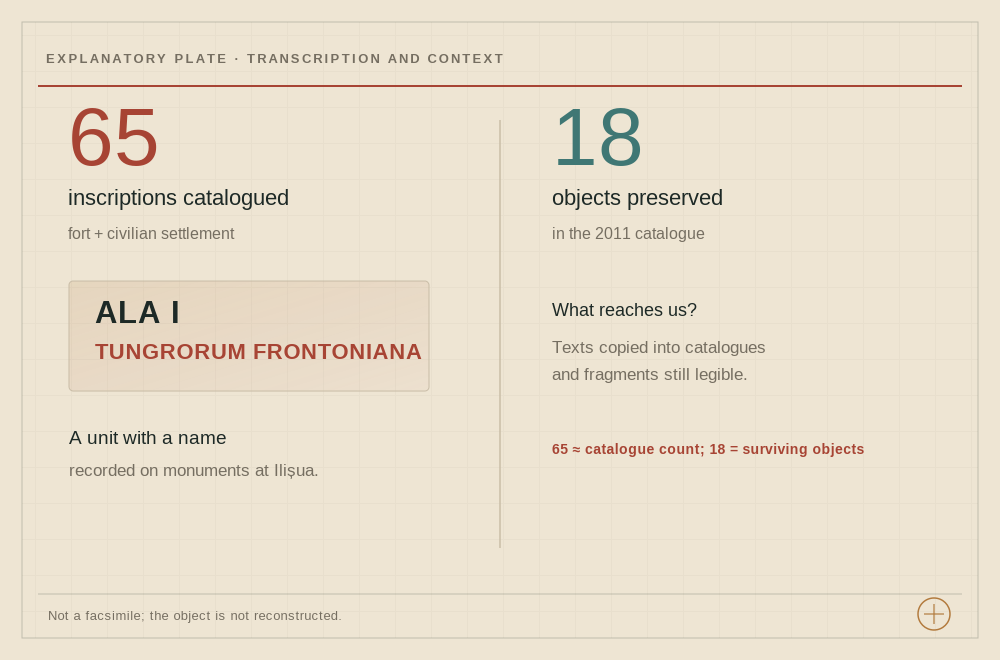
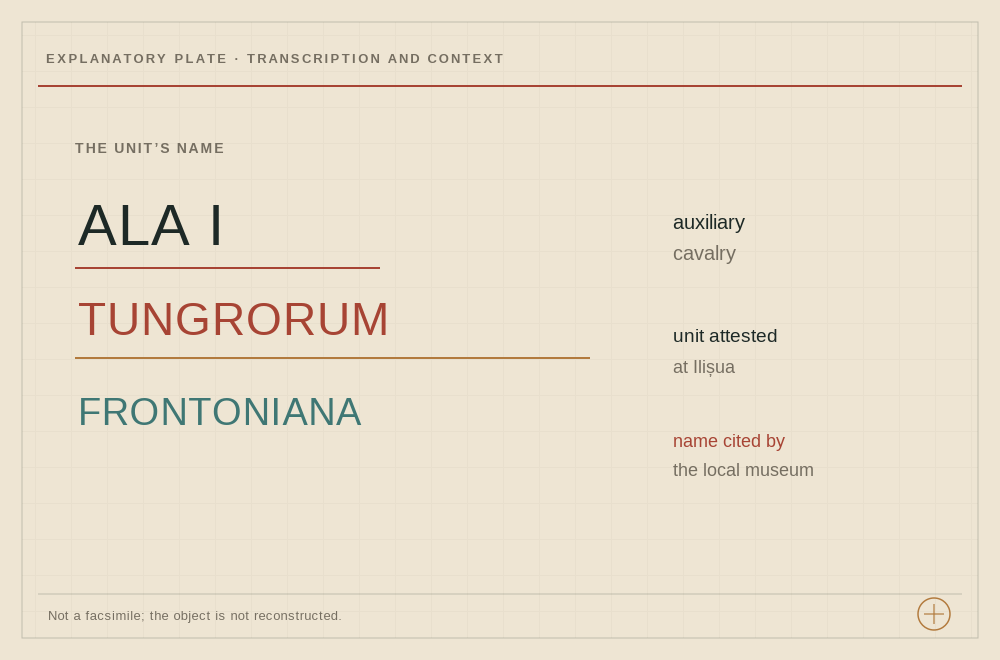
The Bistrița-Năsăud County Museum identifies ala I Tungrorum Frontoniana, an auxiliary cavalry unit, at Ilișua. The 2011 epigraphic catalogue lists about 65 inscriptions from the fort and its civilian settlement; only 18 objects survived, while many texts were known only through copies and publications. For a story about people, that is the first important fact: part of the archive is gone, and what we can say depends on how scholars read and published the fragments. [4] [1]
The unit’s name appears on monuments, but it cannot tell us who lived in the barracks or what an ordinary day looked like. In the chapters ahead, a vessel scratched after firing gives us one junior officer’s name; two dedications point to a sister and a possible brother; an altar links a prefect to the restoration of the bath. Each inscription preserves a different detail and leaves other parts of life outside the stone. [1]
The vessel
A name scratched after firing
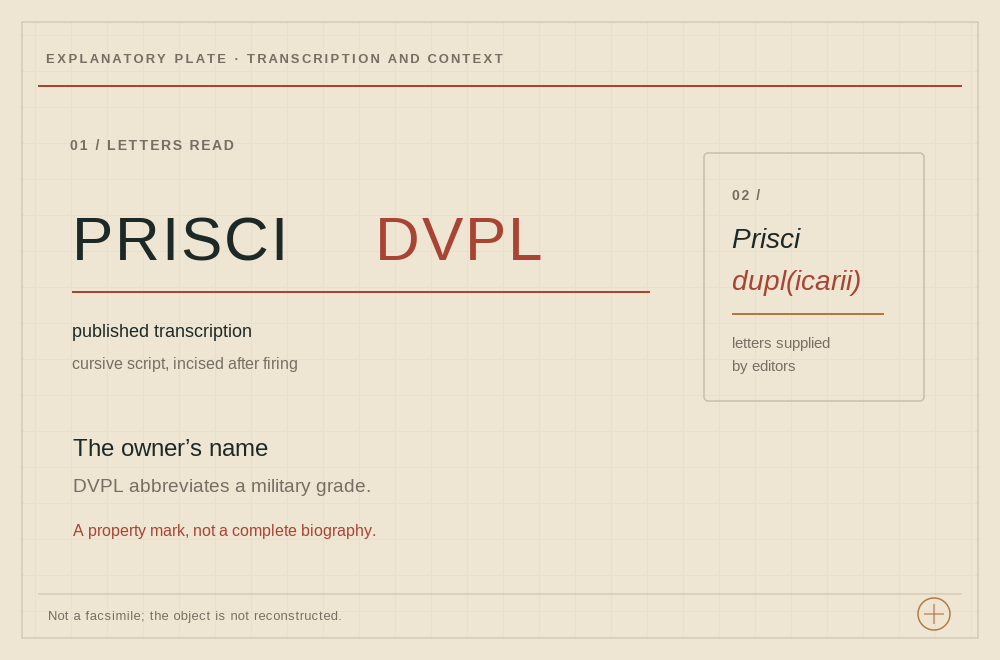
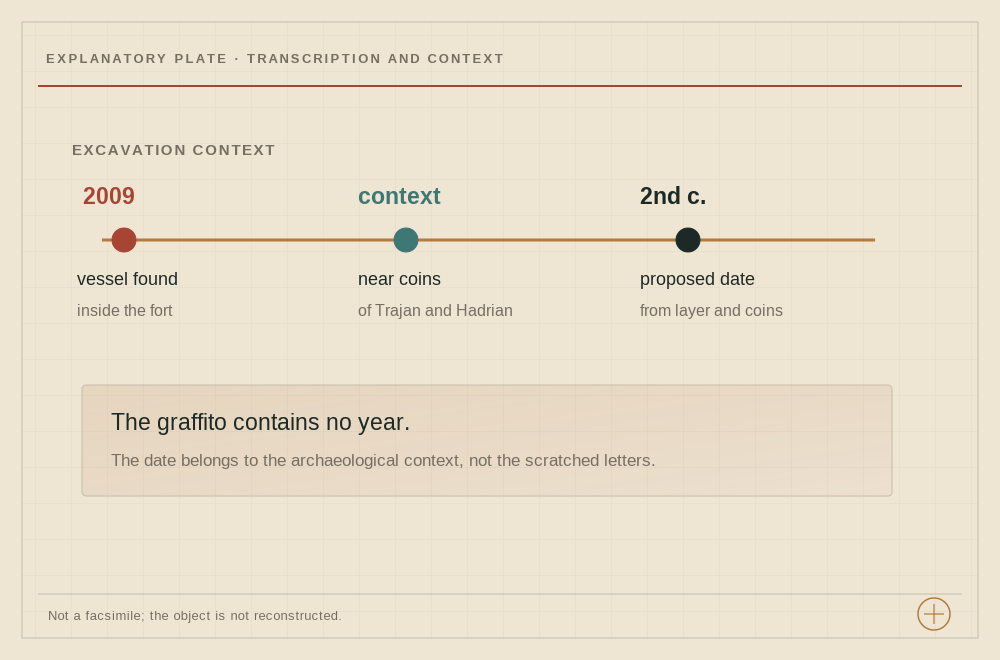
In 2009, archaeologists found a small vessel in the rear part of the fort, beside coins issued under Trajan and Hadrian and in a context linked to the stables and a violent fire. Its letters were incised after firing, in cursive script: PRISCI DVPL. The National Archaeological Museum in Madrid’s catalogue reproduces a photograph of the object; the plate here typesets the authors’ reading and does not recreate the vessel’s shape. [2] [3]
Dana, Gaiu and Zăgreanu expand the abbreviation as Prisci dupl(icarii): “of Priscus, duplicarius”. The genitives suggest a mark of ownership, and a duplicarius was a junior rank in auxiliary cavalry, usually second in a turma and paid twice the basic rate. The proposed date, in the second quarter of the second century, comes from coins and stratigraphy; no year is written on the vessel. It gives us a name attached to a unit, not its owner’s biography. [2] [5]
The dedication
A sister appears in a military vow
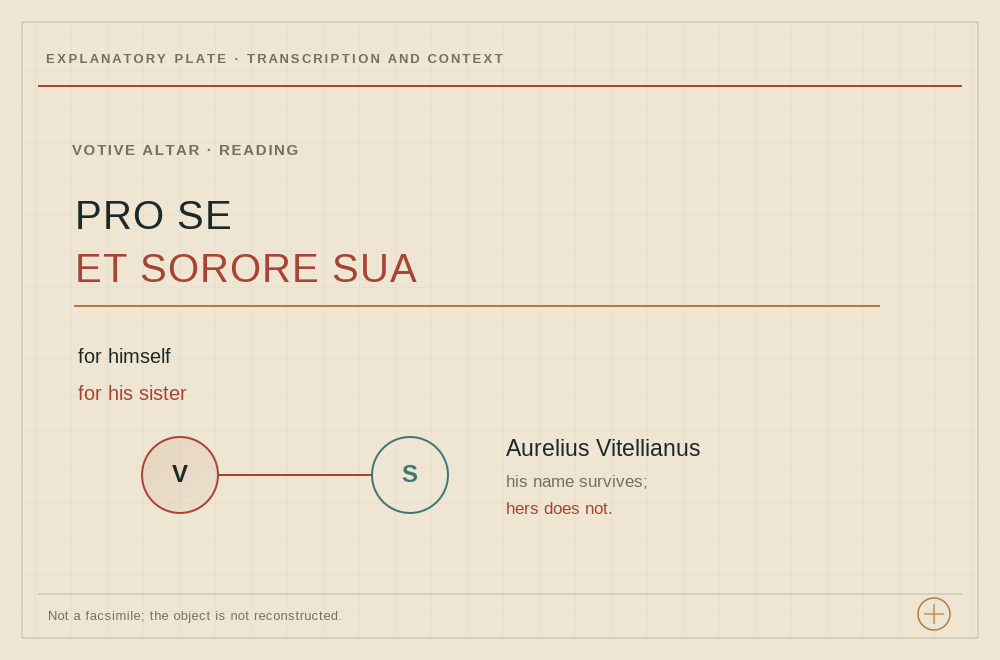
The altar dedicated to Jupiter Optimus Maximus is lost. Its text survives in publication. Aurelius Vitellianus calls himself a sesquiplicarius and makes his vow pro se et sorore sua—“for himself and for his sister”. The sister is not named, and the text does not say where she lived. He is the only person we can identify in this dedication; she appears only through her relationship to him. [1]
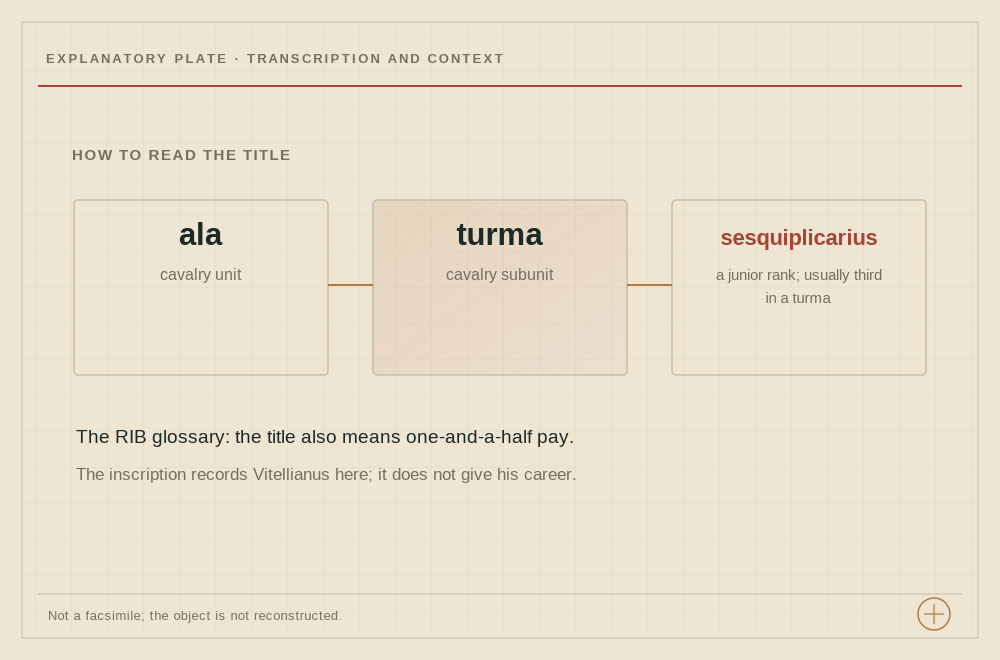
The specialist glossary of Roman Inscriptions of Britain defines sesquiplicarius as a soldier paid one and a half times the basic rate; in cavalry, the title usually means third in command within a turma. That helps translate Vitellianus’s rank, but it cannot fill the gaps in his private life. The inscription shows that he included his sister in the vow; it does not tell us why, or whether she ever came to Ilișua. [1] [5]
The epitaph
An heir and a “brother”
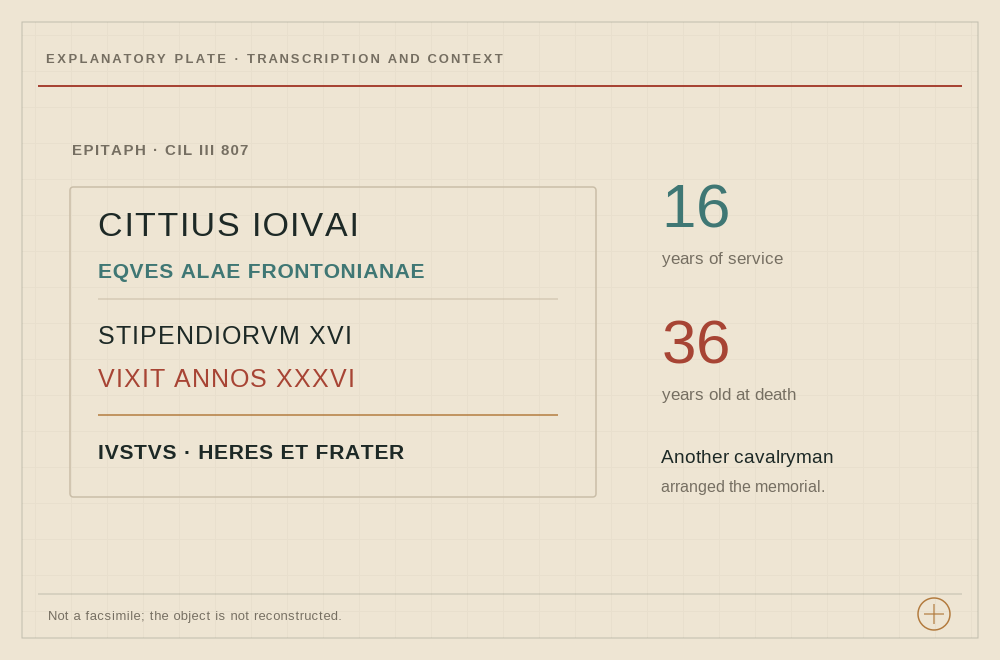
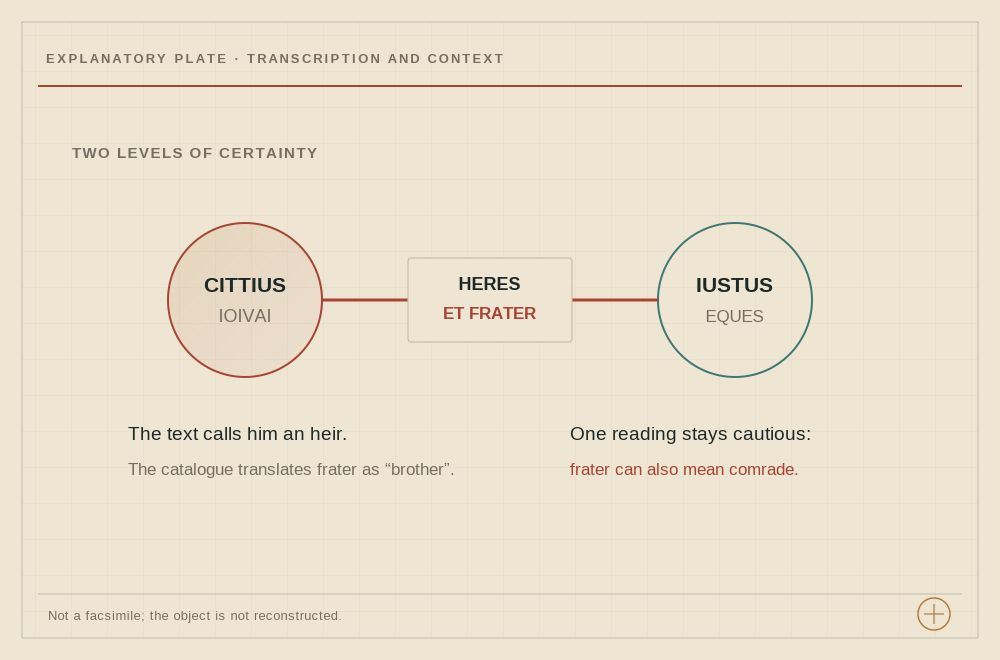
A funerary inscription names Cittius Ioivai and Iustus, both cavalrymen in the same ala. It says Cittius had served 16 years and died at 36. Of Iustus, it says heres et frater: heir and brother, in the catalogue’s translation, the person who arranged the memorial. Two names, a service record and a stated bond share one inscription. [1]
A small qualification matters. In a discussion of names at Ilișua, Sorin Nemeti notes that frater can sometimes mean a comrade as well as a brother. The text certainly identifies an heir and uses this word; the catalogue’s reading is familial, though the precise relationship is open to discussion. Nor can the names alone establish where the men came from. The stone tells us more clearly what they did in the unit than where they began. [1] [7]
The bath
A bath restoration, seen through an altar
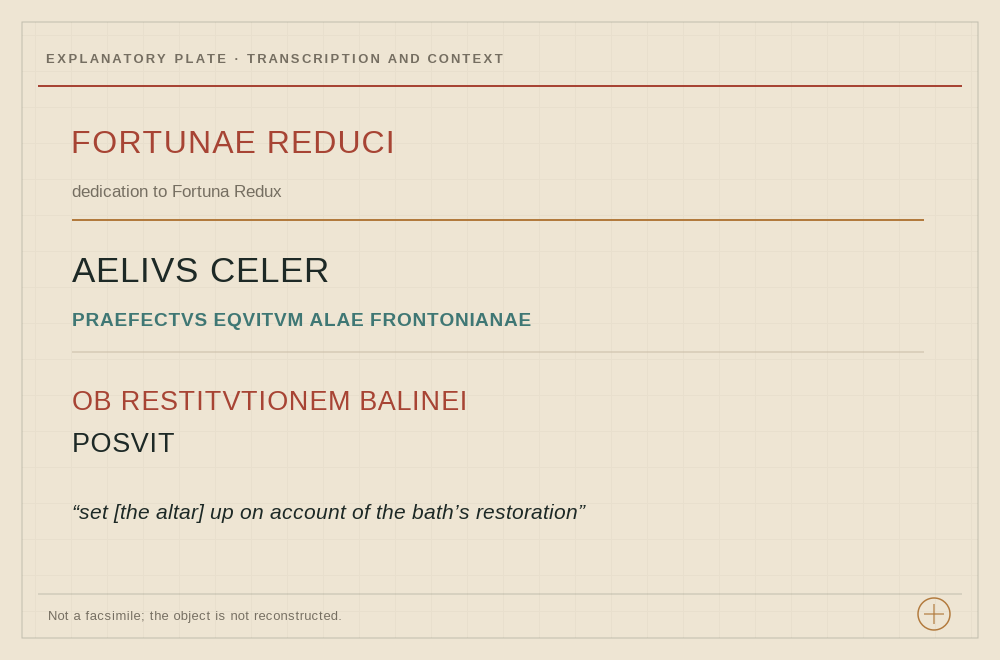
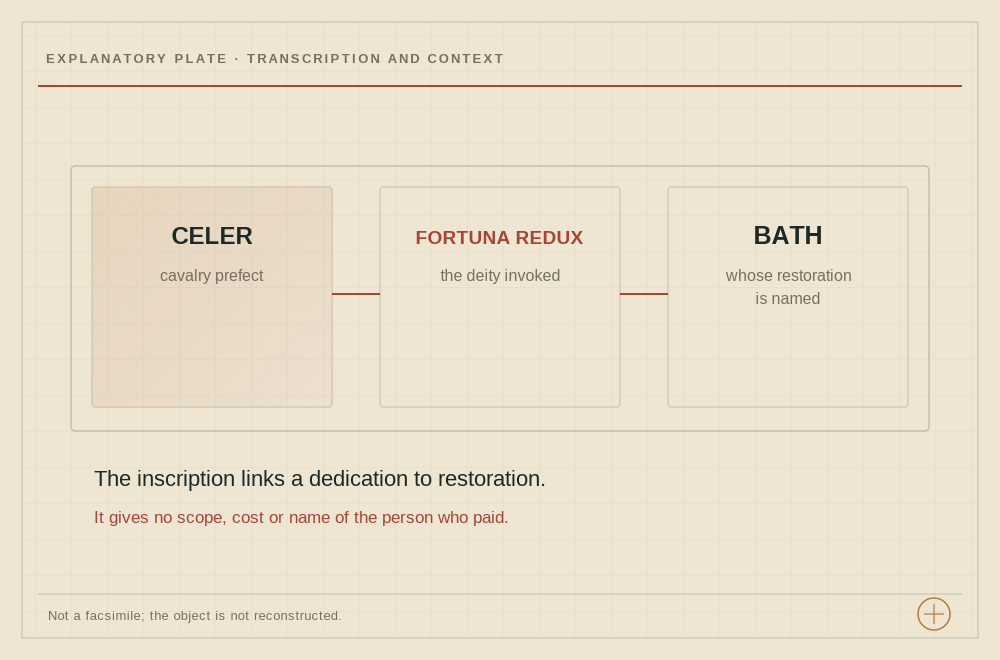
In 1858, an altar was found built into the masonry of Ilișua’s large bath building. Its inscription invokes Fortuna Redux and names Aelius Celer, prefect of cavalry in the ala Frontoniana. The phrase ob restitutionem balinei posuit connects the monument with the restoration of the bath. The catalogue dates it to the second half of the second century. [1]
The verb posuit says Celer set up the monument; it does not say that he paid for or carried out the work. The text gives no account of what was repaired, what it cost or who supervised the building site. Still, this concrete formula changes the scale of the story: alongside inscriptions about rank and family, we have a trace of maintaining a shared service. The bath is no longer just a building on a fort plan; its restoration entered a public dedication. [1]
The fragmentary altar
When a letter changes the date
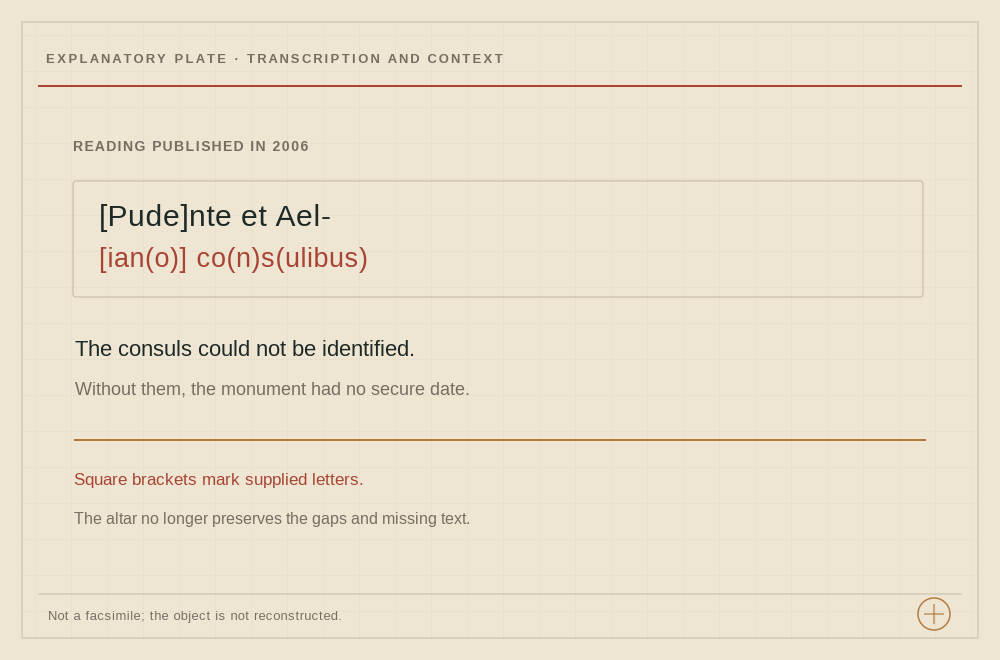
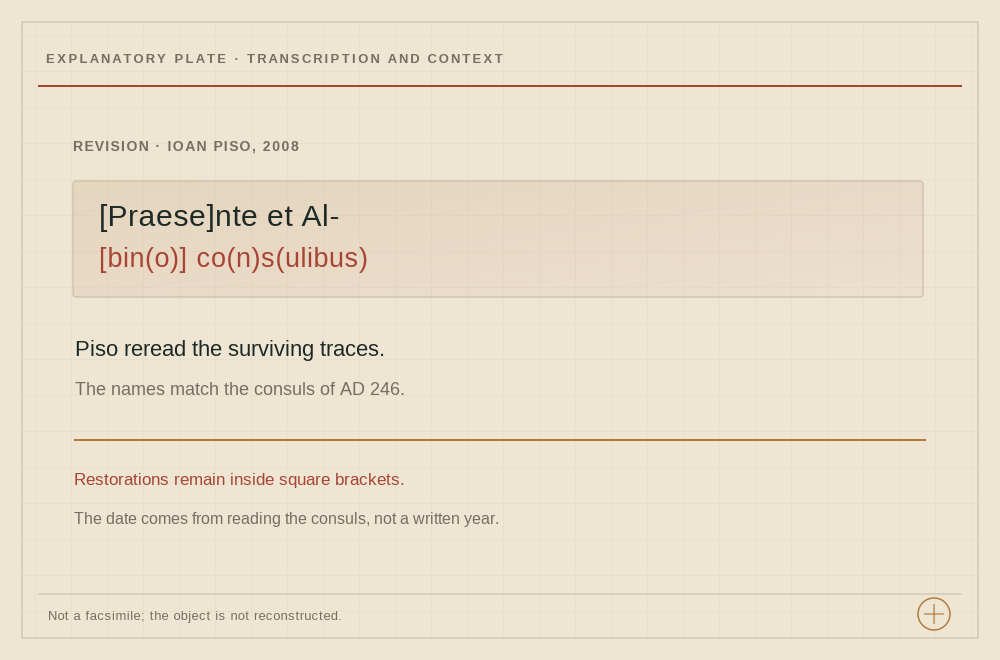
In 1989, the right-hand fragment of a volcanic-tuff altar was found in the civilian settlement beside the fort. Scholars filled its gaps in stages. An early reconstruction read the consuls’ names as Pudente et Aeliano, a proposed pair that left the monument without a secure date. Ioan Piso then reread the surviving traces and proposed Praesente et Albino, the consular pair of AD 246. [6] [7]
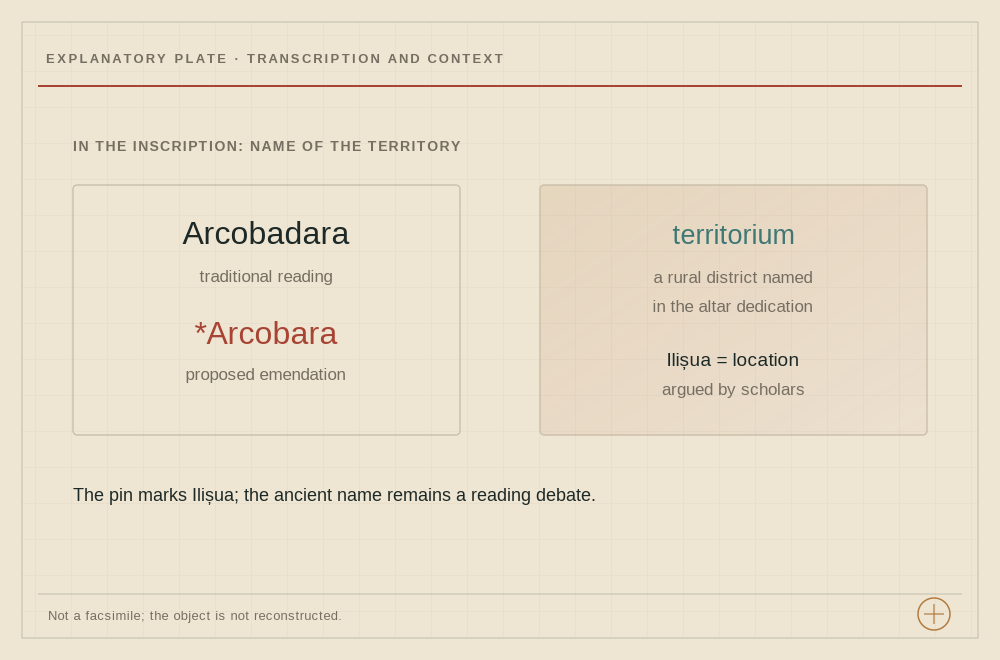
The identification rests on a few restored letters. The consuls’ names give the year 246. Nemeti’s published reading uses the name territorium Arcobadarense and mentions two magistri, leaders of a rural community near the fort. But the inscription is fragmentary, and identifying this name with the settlement mentioned by Ptolemy remains an interpretation. Dana and Nemeti argue that the ancient form may have been Arcobara, not Arcobadara. The pin marks present-day Ilișua; by itself, it does not prove the ancient name of the fort. [7] [8] [9]