The study follows birds in the park through monitoring carried out from 1991 to 2012.
Islands for birds
The study follows birds in the park through monitoring carried out between 1991 and 2012. 1
Start the story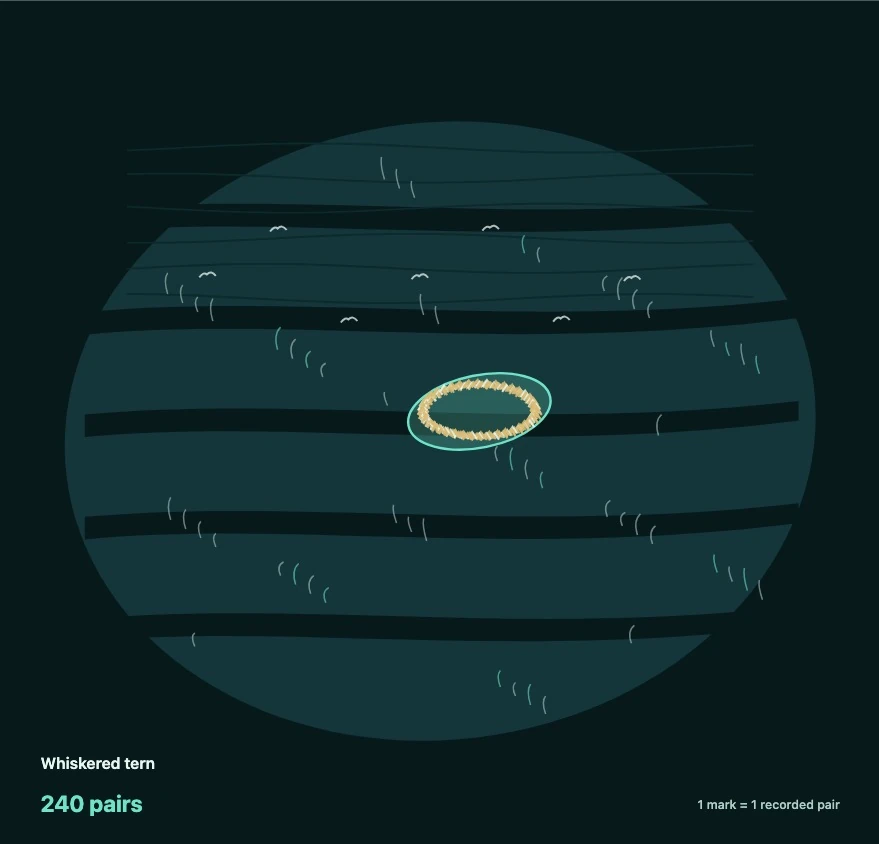
The study follows birds in the park through monitoring carried out from 1991 to 2012.
The study follows birds in the park through monitoring carried out between 1991 and 2012. 1
Start the storyFirst, the fishpond
The article describes a managed fishpond system where floating plants may form nesting islands and reeds on the banks offer more hidden sites. 2
Floating nests
In the floating vegetation, the 2015 study recorded 240 pairs of whiskered terns, *Chlidonias hybrida*. This is a count documented by that study, not an estimate for today. 2
Other nests, the same water
The same research recorded ten pairs of black terns and between 15 and 35 pairs of ferruginous ducks. The numbers differ sharply between the species. Switch between the three records and see the colony change on the same island. 2
Another layer of the wetland
The article also describes nests among reeds and vegetation along the canals. Its examples include 6–9 pairs of Eurasian bitterns and 40–50 pairs of little bitterns in the observations summarized by the authors. 2
A list for the whole park
The authors identified 246 bird species in the area, including 78 listed in the European Birds Directive annex for protected species. This total covers the whole park during the monitoring period, not only the fishponds. Ponds, reeds, woodland and meadow all belong to the same story. 1
The drawing shows habitats and counts reported by the study. It is not a map of the park or a picture of the birds there today.
The total of 246 species refers to the whole park in the monitoring summarized by the article; the pair counts come from its section about the fishponds. These data do not describe conditions today. The illustration is schematic, not a map of lots or nests.
Petrovici and Nagy, 2015. The article summarizes monitoring from 1991–2012 and distinguishes records for the park as a whole from nesting data for the fishponds.
Petrovici and Nagy, section on nesting on floating islands and in reed beds.