One village, several villages
One village, several villages
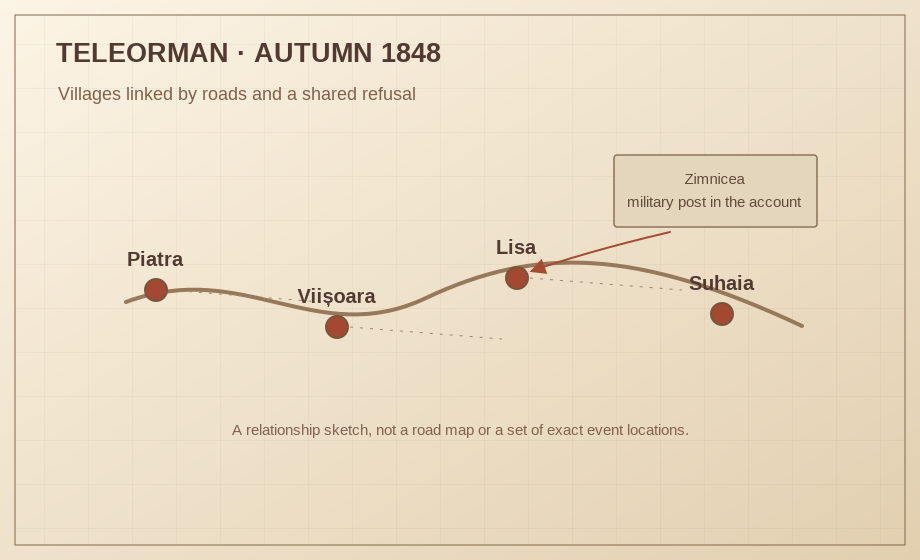
Resistance linked Piatra with Viișoara, Lisa and Suhaia
In 1848, Piatra lay in a rural area where the administration was trying to restore old rules after the revolution’s defeat. C. C. Bodea places unrest along the Danube, from Mehedinți to Ialomița, and names people in Piatra, Viișoara, Lisa and Suhaia among those who refused the new regime’s orders. [1]
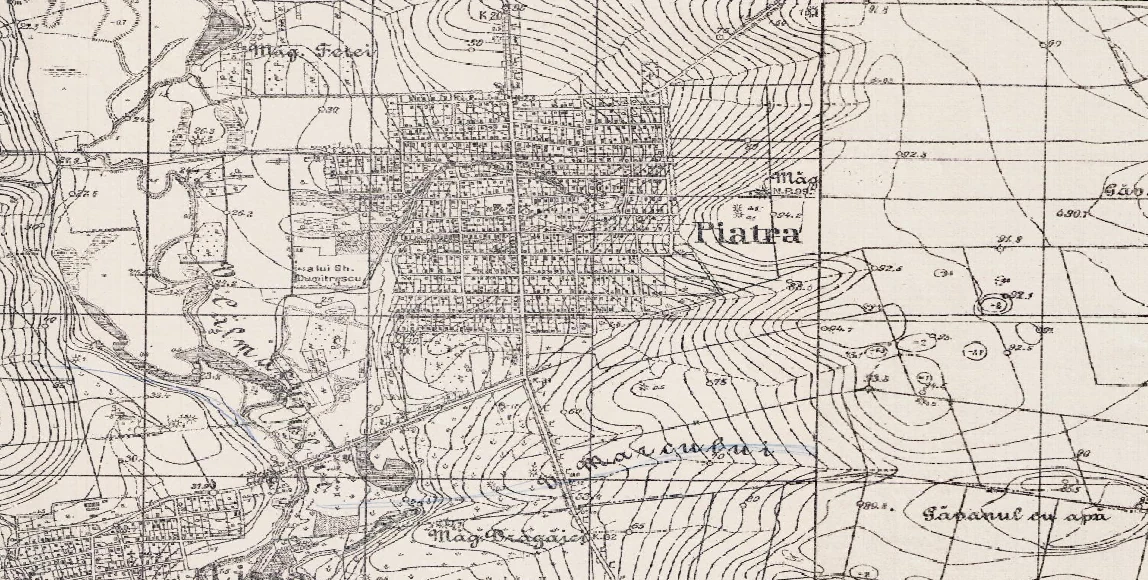
A map of these villages explains why a local episode drew support from nearby communities. Bodea says peasants from Lisa and Suhaia joined the movement around Piatra and Viișoara. The local account adds Căcănău, now Vânători, to the list of villages involved. [1] [3]
Land and labour were at stake
Peasants resisted the return of corvée and tithe
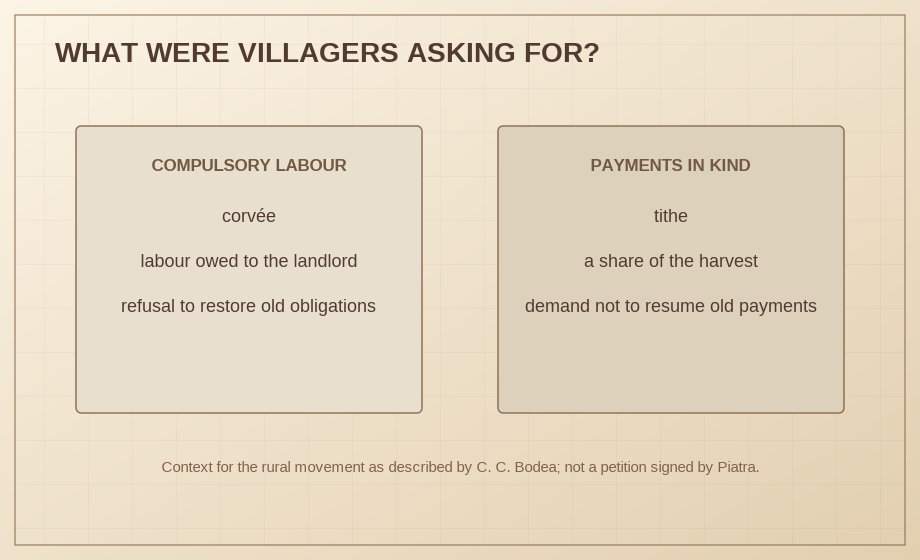
After 13 September, the boyar regime returned under the protection of foreign armies. Bodea describes villagers refusing orders from the new administration and opposing the return of corvée — days of labour owed to a landlord — and tithe, a share of the harvest paid to the owner. Political restoration was felt in household work as well as in county government. [1]
Calls for a republic and constitution went alongside the defence of changes peasants associated with the revolution. The local account connects Piatra’s support to the promise in the Islaz Proclamation to abolish corvée. Bodea describes similar rural resistance across several counties, but does not give each community its own list of demands. [1] [3]
A confrontation that lasted into the night
The administrator came with soldiers
The local account dates the confrontation to 5 October. It says the county administrator Alexandru Cocărăscu and Captain Costache Arion arrived with 30 soldiers, and 400–500 peasants surrounded them. C. C. Bodea describes threats with stones and clubs, and says even the cavalry sent from Zimnicea failed to disperse the crowd. [3] [1]
According to the local account, the clash began around ten in the morning and ended after reinforcements arrived, near one at night. Bodea confirms participation from nearby villages. The number of people and the hours come from the local account. [3] [1]
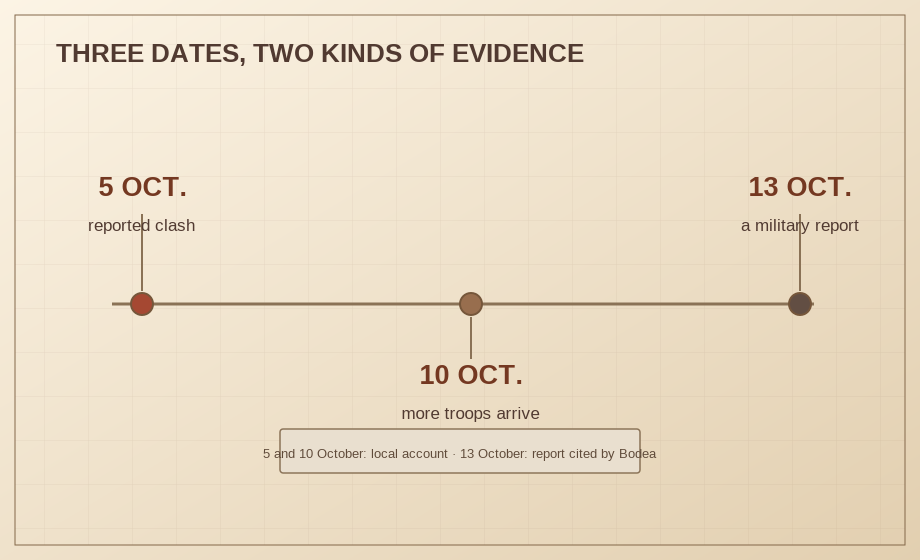
The report was written on 13 October
The military record follows the clash
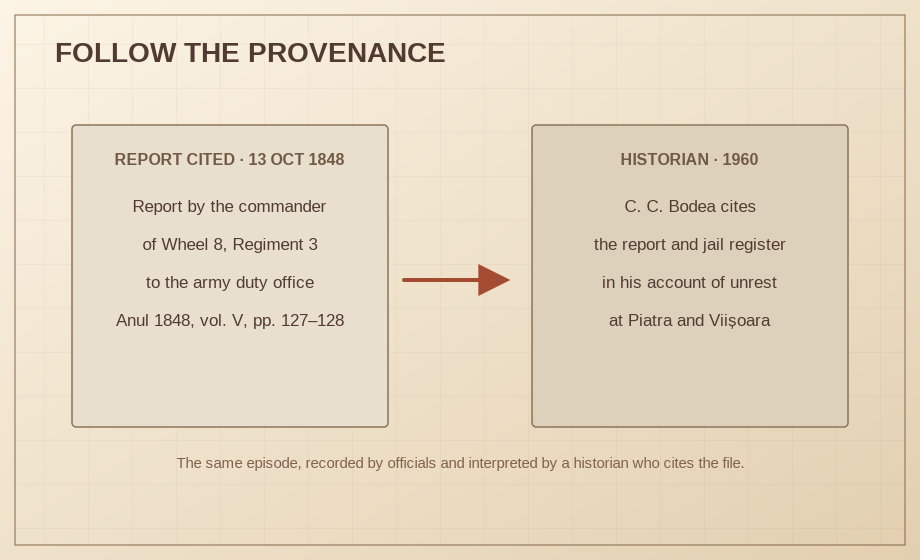
C. C. Bodea cites a 13 October report from the commander of the 8th company of the 3rd Regiment, addressed to the army duty office. He uses it alongside the prison register when explaining resistance in Piatra and Viișoara. The citation leads to the volume record in the Central University Library of Cluj catalogue; the scanned page of the report is not available there. [2] [1]
The report’s date is not the date of the confrontation. The local account places the main clash on 5 October and another military intervention on 10 October; Bodea shows that the 13 October document belongs to a wider sequence of refusals and arrests. The university library’s catalogue lists the volume but does not provide a scan of pages 127–128. [3] [1]
Arrests continued after the clash
Arrests and an order to pay compensation
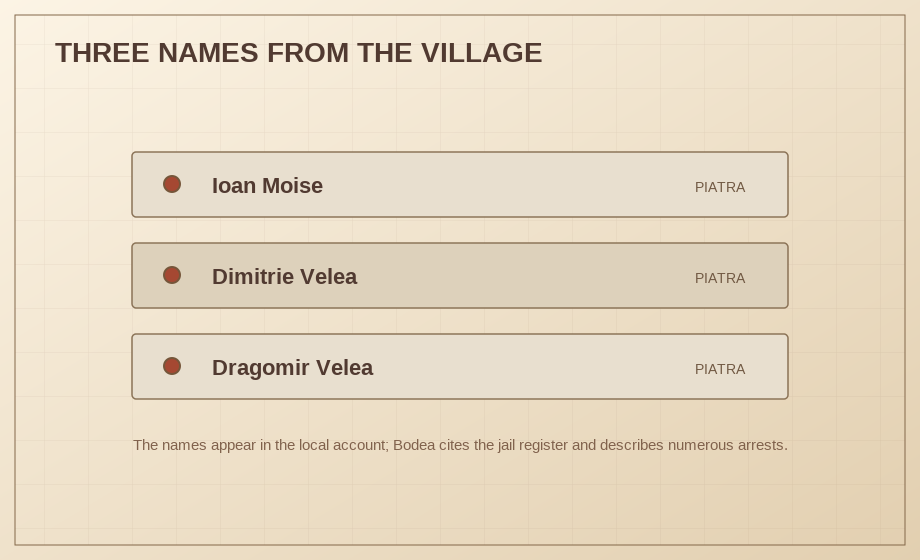
The local account says 51 people were arrested and 18 taken to Bucharest for questioning. It names Ioan Moise, Dimitrie Velea and Dragomir Velea from Piatra. Bodea cites the Văcărești prison register and describes punishment in the village, but does not give the same total in his passage on Piatra. [3] [1]
The local account says that in June 1849 the Extraordinary Administrative Council ordered the people it held responsible in Piatra and Suhaia to pay 996 lei for provisions and fodder received by the Ottoman command. The account records the decision. It gives no evidence that they paid. [3]
A large village in a wider movement
The 1838 census shows the community’s scale
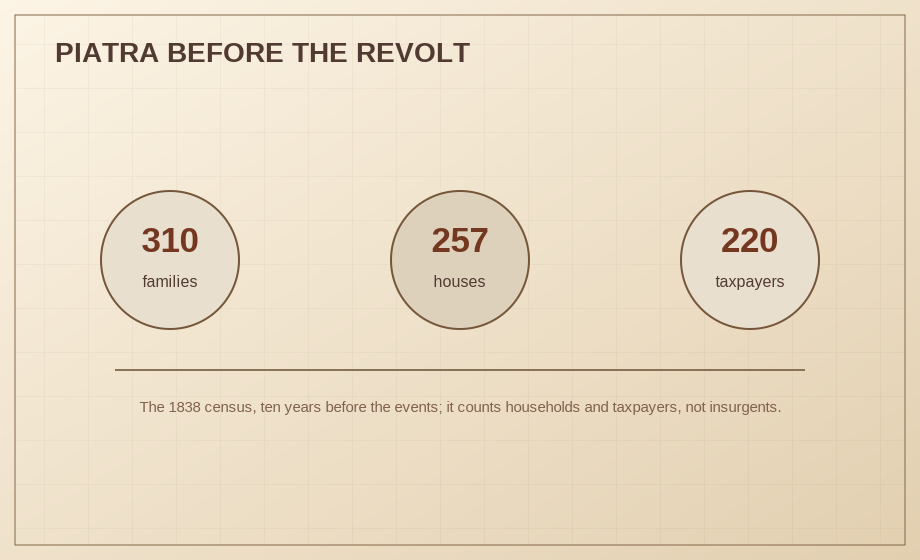
A 1838 Teleorman census, as summarised in the commune’s local history, counts 310 families, 257 houses and 220 taxpayers in Piatra. These figures predate the confrontation by ten years; they cannot be used as a count of insurgents, but they show that the events unfolded in a substantial community. [4]
Piatra did not act alone. Bodea follows rural unrest across a line of Danube villages and shows resistance continuing over the following months and into spring 1849. For Piatra, the military report and the act imposing the indemnity still need direct comparison; the local account points to where those traces can be found. [1] [3]