mariuscomper.ukRomână

A garden with different habits

Beautiful
carnivores.

Some leaves snap shut on insects. Others stick them down, let them fall or suck them out of the water. Enter a world where the plant is the predator.

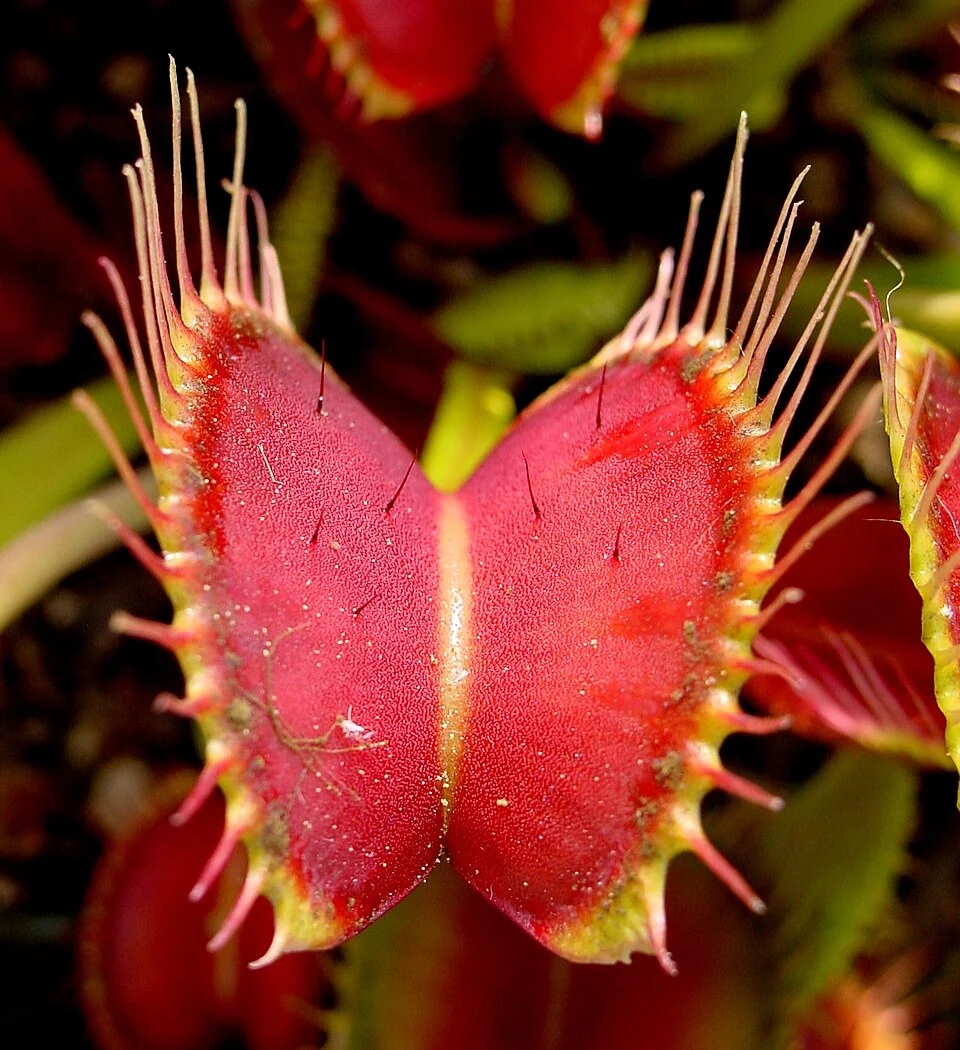
An open red Venus flytrap with short trigger hairs inside and long spikes around its edges.
Dionaea muscipula
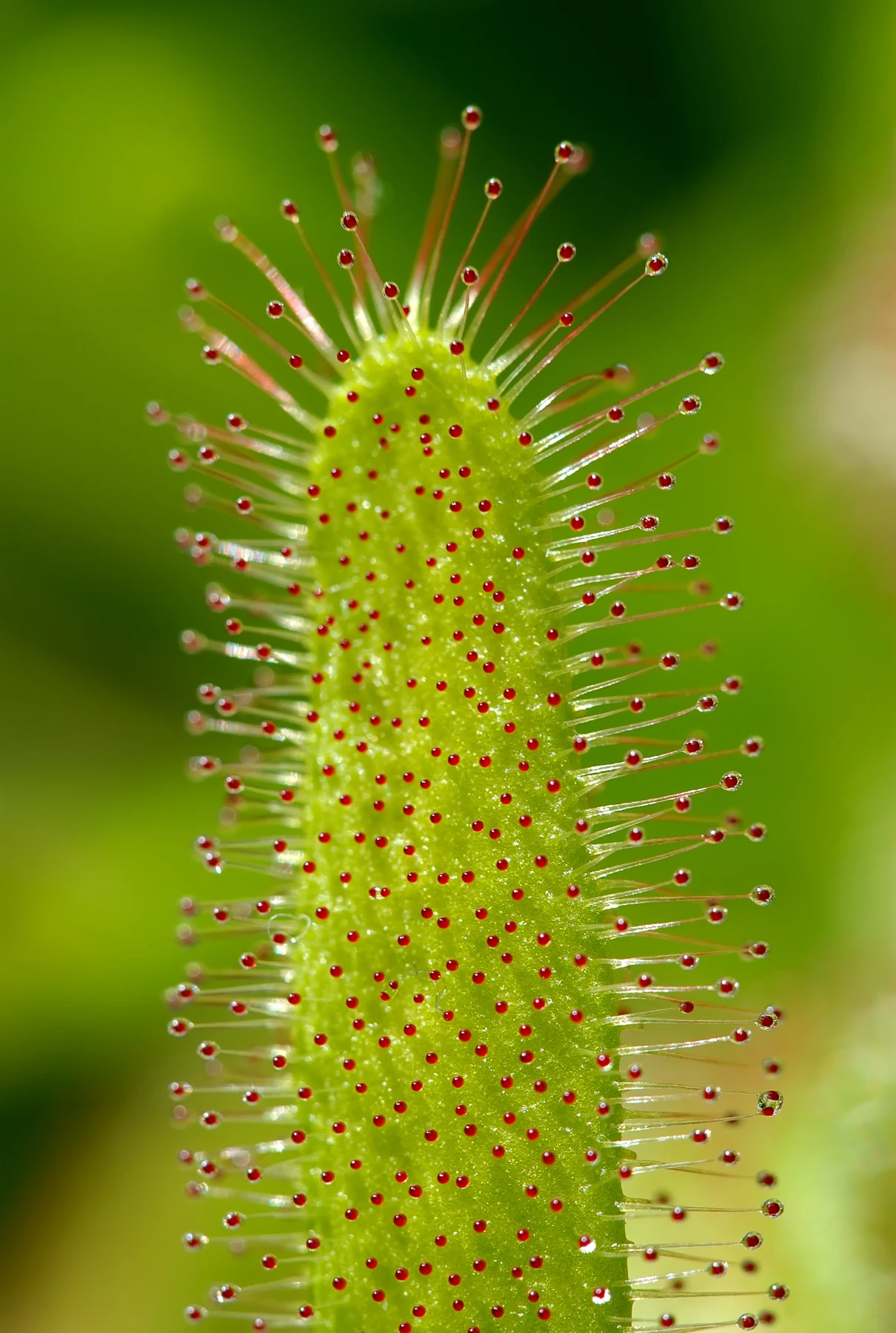
A Cape sundew leaf covered with red tentacles bearing glistening drops of secretion.
It looks like dew. It is glue.

The trap is a leaf. The three small hairs inside each half detect touch.

Noah Elhardt · Photograph · CC BY-SA 2.5
Luc Viatour / Lucnix.be · Photograph · CC BY-SA 3.0

WhatsApp ↗

Start with a touch

An insect bends a trigger hair. An electrical signal follows. If another arrives soon enough, the two halves of the leaf snap shut.

Simplified model: each touch here creates one signal, retained for 20 seconds. In the real plant, the response depends on movement and conditions; a single bend of a hair can produce two signals. Burri et al., 2020 ↗

Closing is just the beginning. The movements of trapped prey can generate further signals that help trigger digestion.

For nutrients that are hard to find in the soil. Many carnivorous plants grow in places short of nitrogen and phosphorus. Prey supplies some of these elements; sunlight still provides energy through photosynthesis.

The traps are modified leaves. Flowers retain their role in reproduction. Pavlovič et al., 2014 ↗

Underwater, everything changes

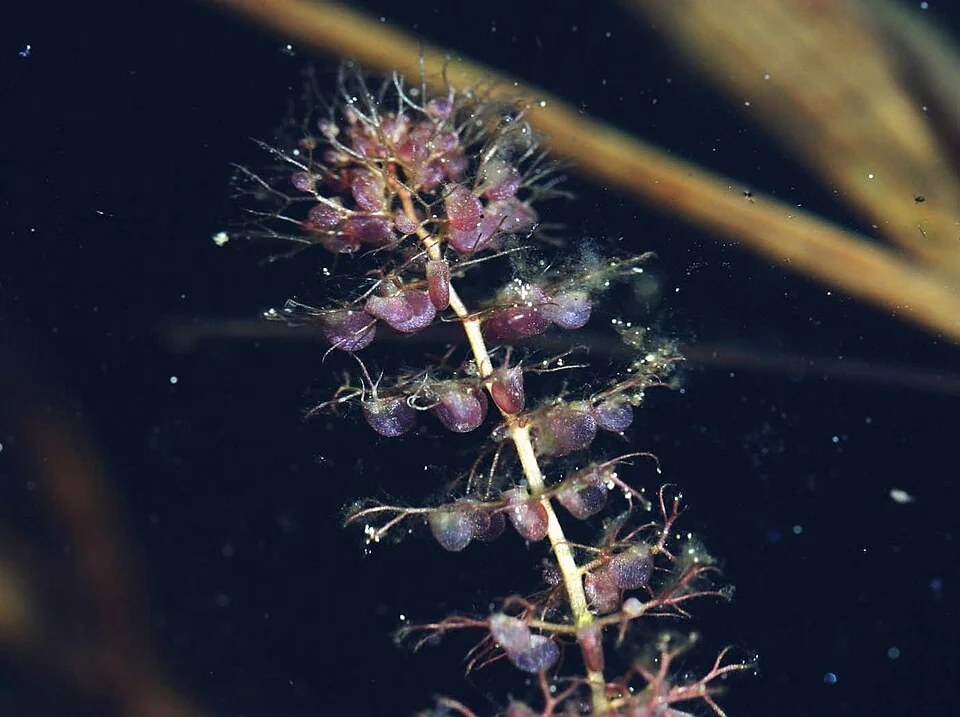
Researchers filmed Utricularia traps sucking water in within less than a millisecond. Opening and closing the door add time to the full sequence, which is still difficult to follow with the naked eye.

< 1 ms · suction, in the 2011 study

Water has been pumped out.

Slowed explanatory sequence; shape and movement are schematic. The submillisecond duration describes suction, not the entire sequence. The study included U. vulgaris, the photographed species. Vincent et al., 2011 ↗

Now recognise the trap

Three situations. Choose the mechanism that explains each capture.

You land on a glistening leaf. Your legs get stuck. What caught you?

Sundew. The drops on its tentacles are a sticky secretion.

You swim past a tiny bladder. A door opens and water drives you inside.

Bladderwort. A pressure difference creates a current that carries prey into the trap.

You fall into a container of liquid. Its lid stays open.

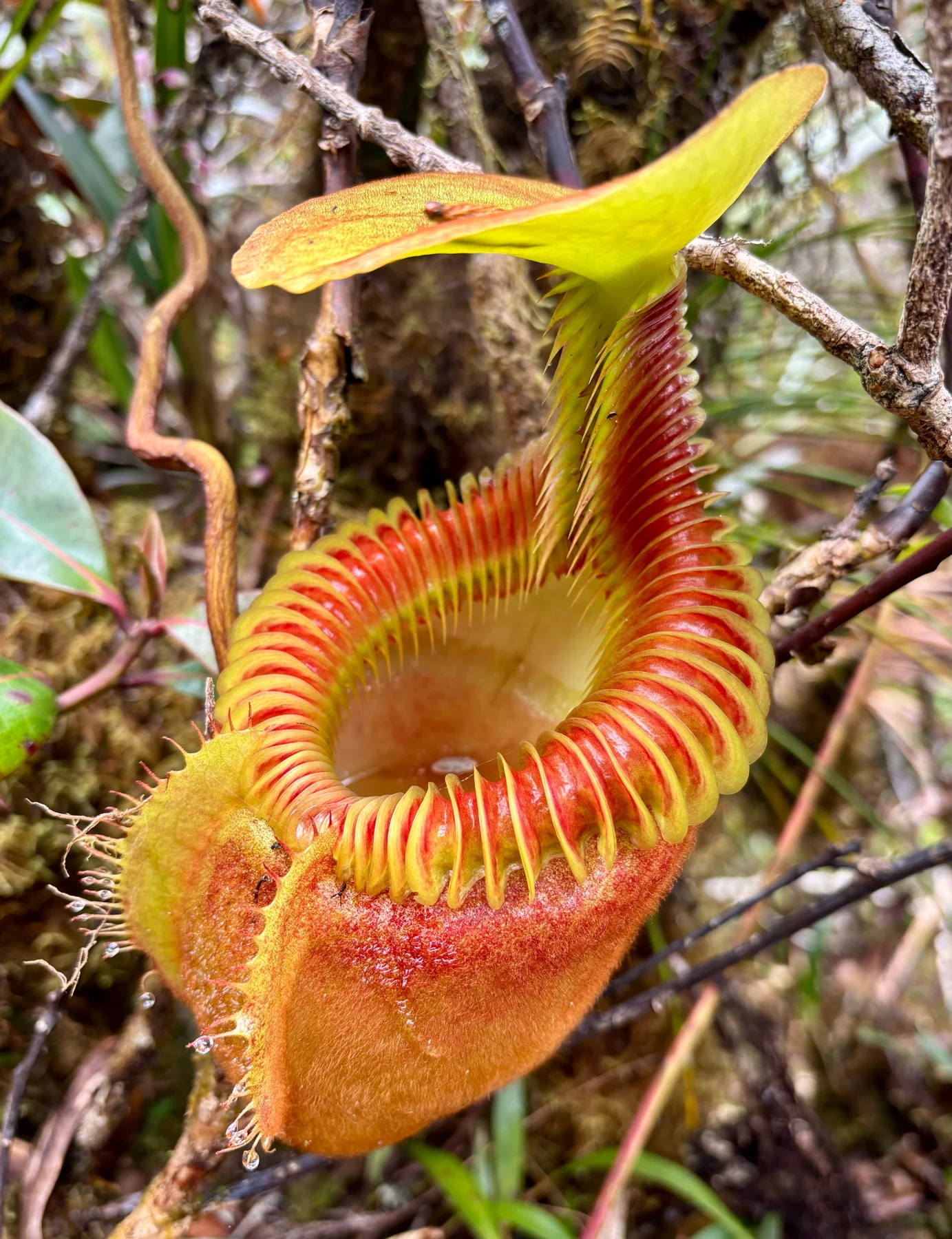
Pitcher plant. The pitcher retains its prey; the lid does not work like a jaw.

The round-leaved sundew, Drosera rotundifolia, is native to Romania too. The gallery photograph shows another species in the same genus, Drosera capensis.

Kew · Plants of the World Online ↗

Trap research, botanical explanations and photographs that let you see for yourself.

Research and explanations
The photographs

Image resized; some views show a partial crop.