From the gallery to the sanctuary
From the gallery to the sanctuary
Look above the doors
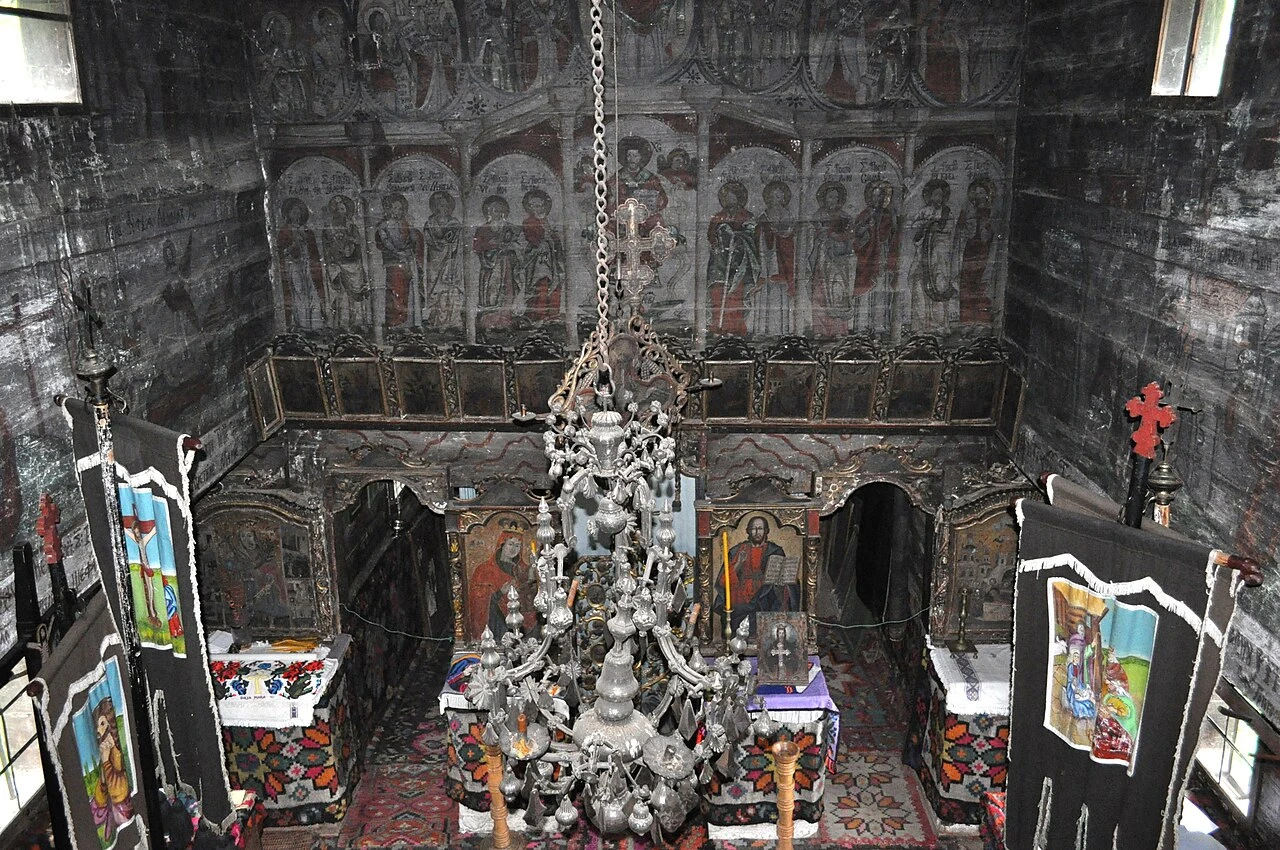
The wooden church at Poienile Izei stands in the Iza valley in Maramureș. In the nave, where the congregation gathered for services, a timber screen covered with icons stands before the sanctuary. A photograph taken from the gallery catches the doors and the work above them. [3] [6]
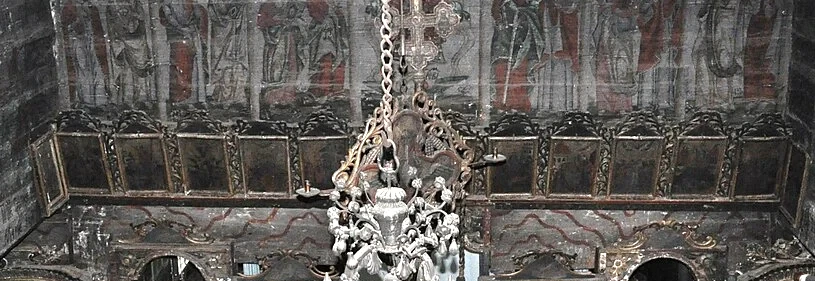
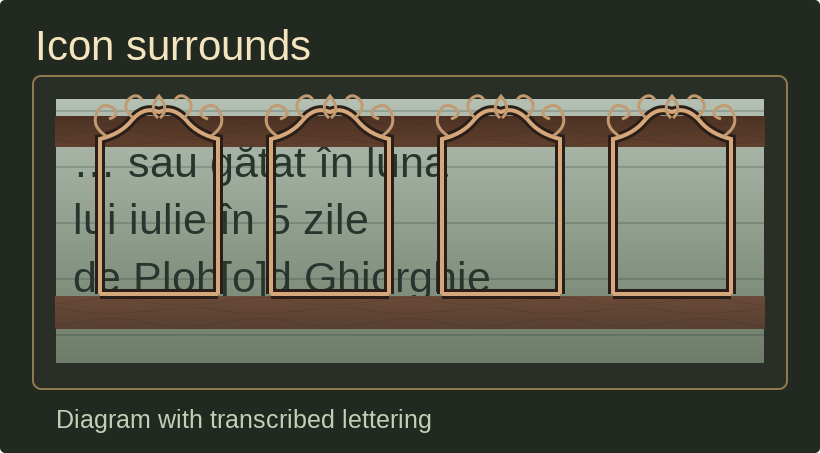
Fruntar is the name for the upper painted screen above the entrances into the sanctuary. Along its base sit feast icons, which represent major feasts in the Church calendar. Between the painted timber and the icon surrounds runs a short inscription. At first glance, the ornament and lettering look like one surface. [1] [2]
Through the openwork
How writing disappears behind an icon
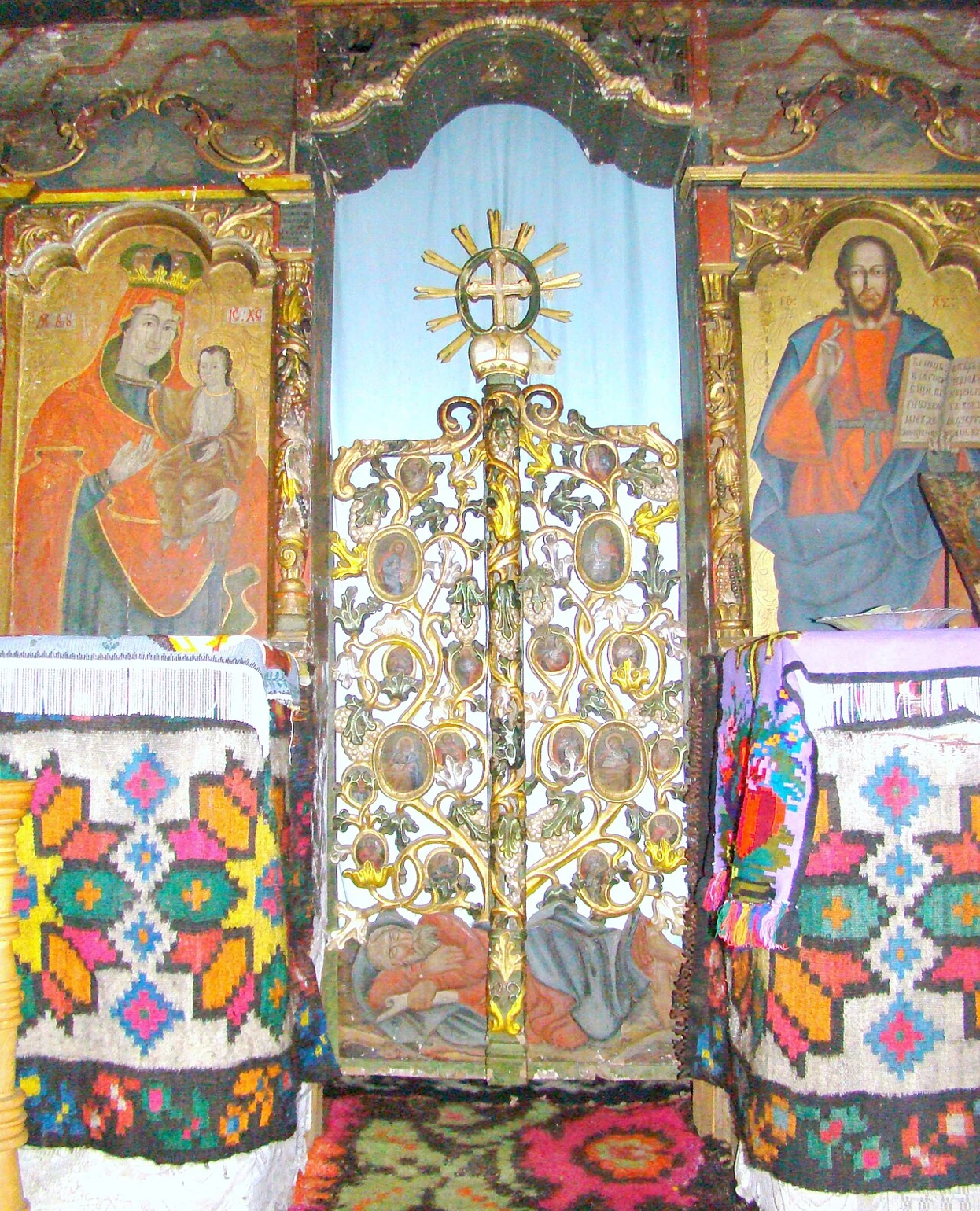
In the 2012 photograph the icons sit in their surrounds. In 2020, Alexandru Baboș and Mihai Covaci documented the writing concealed behind them. On page 9 of their report the inscription appears between the carved sides of the surrounds. The letters are on the painted board behind them. [6] [1]
Use the drawing to see where the writing can appear when the icons are moved aside. Then open the 2020 photographs to examine the left and right halves. The diagram shows how the painted boards, frames and icons overlap. The lettering is transcribed. [1] [2]
1793 and 1794
Why there are two dates
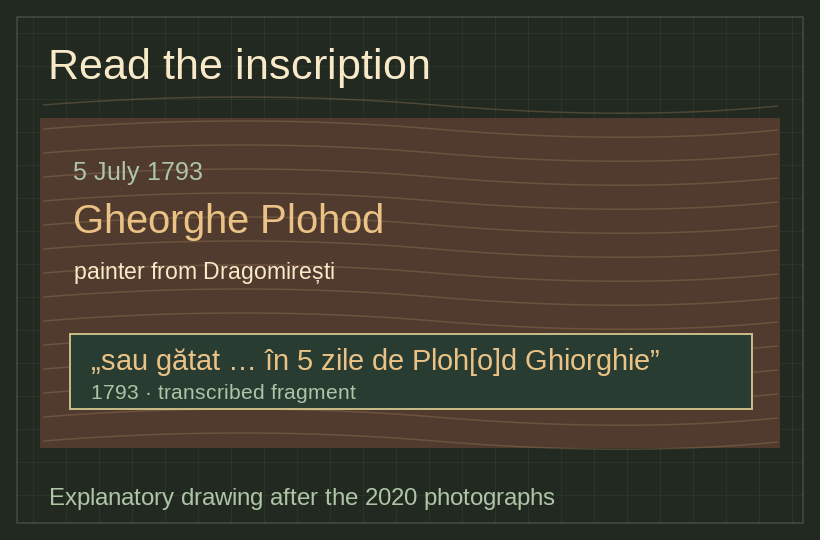
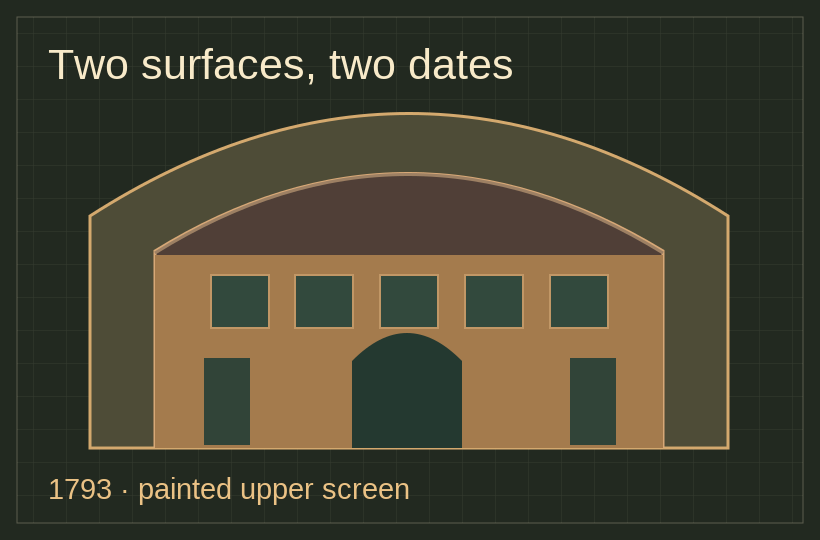
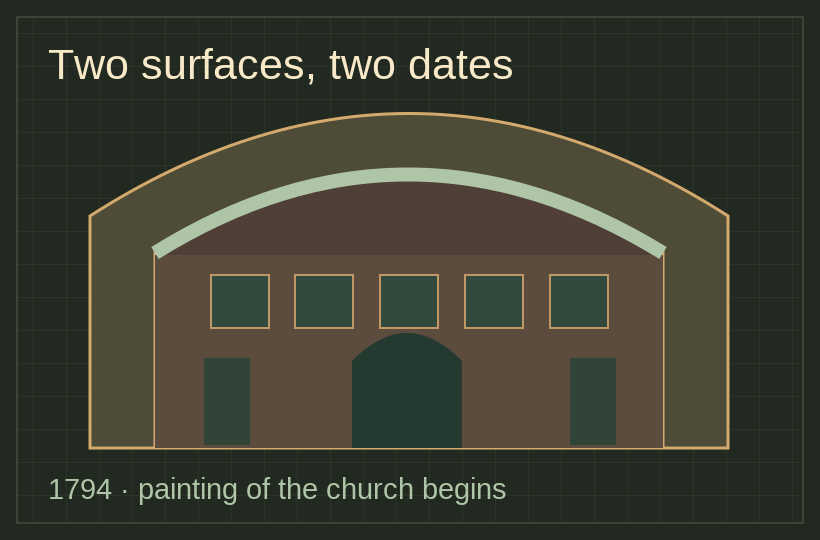
The inscription on the upper screen records a completion date of 5 July 1793. It names Gheorghe Plohod of Dragomirești. Find the position of this inscription on the diagram, then switch views to locate the other painted surface, along the vault and by the gallery. [2]
The text along the vault says that painting of the church began in 1794. The work documented on the upper screen preceded the wider painting campaign. The 1793 signature ties Plohod to the screen. The 1794 inscription records the start of work elsewhere in the building and gives no painter’s name at that spot. [2]
The people who paid
The people named by the painter
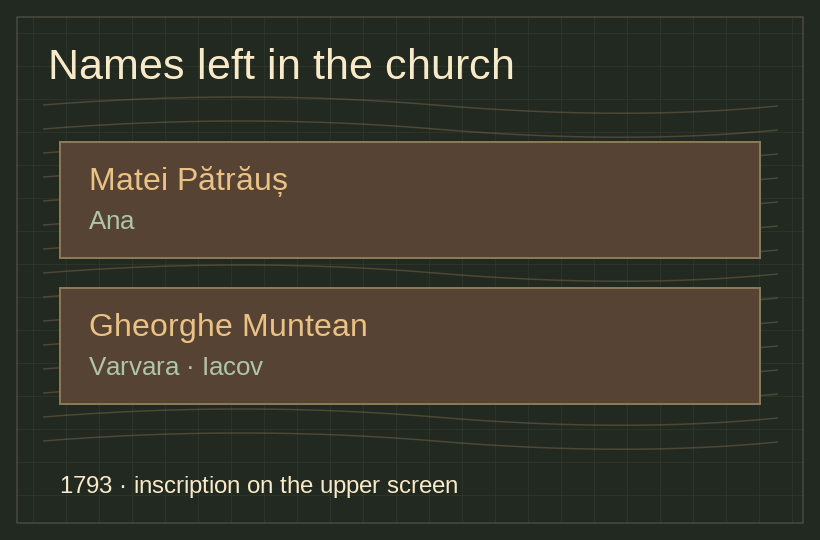
The left side of the screen names those who paid for the work. They are Matei Pătrăuș and his wife Ana, together with Gheorghe Muntean, his wife Varvara and his son Iacov. The inscription asks that they and their descendants be remembered for the gift. Both families can be read on the very part of the church they funded. [2] [1]
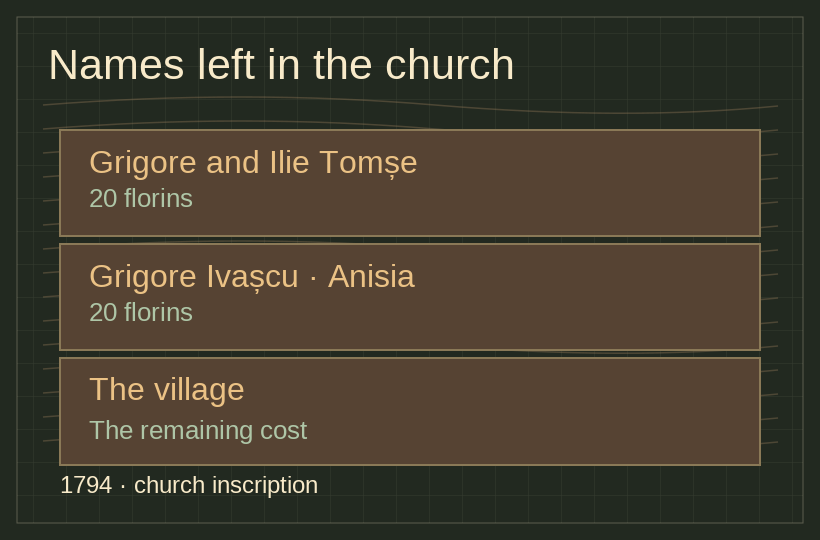
A year later, different names appear. On the vault, two brothers, Grigore and Ilie Tomșe, are named with a contribution of 20 florins. Grigore Ivașcu and his wife Anisia are remembered with the same amount. The text adds that the village covered the remaining cost. Switch inscriptions to see how the record of payment changes. [2]


At the entrance to the church
The same church, different walls
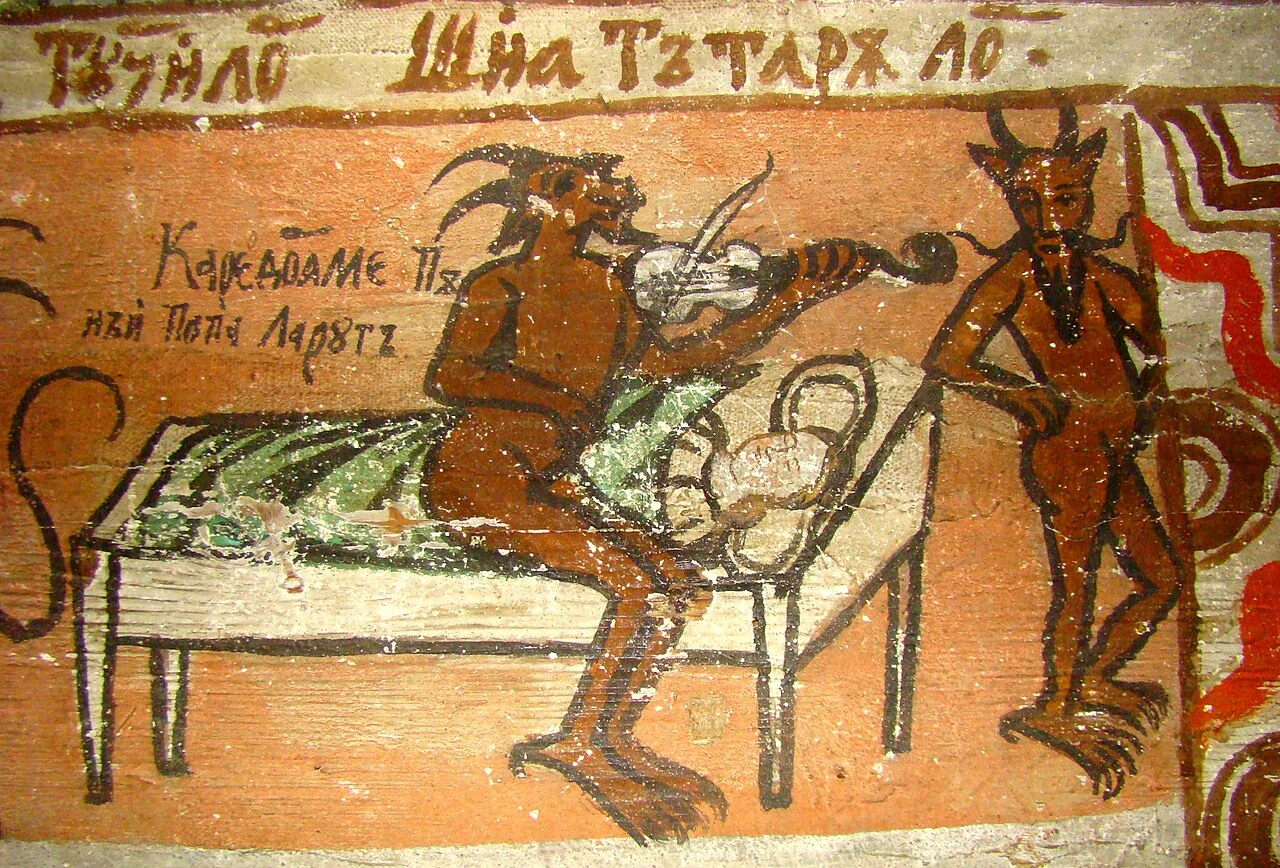
Turn back towards the entrance chamber. Here the Last Judgement unfolds in painted scenes and letters on timber. In the photograph, writing and painting are close together here too. At the entrance, words accompany the scenes. On the upper screen, the inscription tells us when, for whom and by whom the work was made. [8] [3] [2]
Poienile Izei is one of eight wooden churches in Maramureș inscribed on the World Heritage List in 1999. The nomination dossier describes the painted interior as a whole. The photographs taken in 2020 add an observation at the scale of a carved frame. Through those openings it was possible to read names, a date and a signature. [4] [5] [1]