The card that gets used
It is shuffled, handled, carried around and sometimes bent. Its value is functional. What matters is whether it helps a deck and remains legal in the competitive format.
How a piece of Pokémon cardboard became, at once, a game, a memory, a social badge, a speculative commodity and a target for criminals.
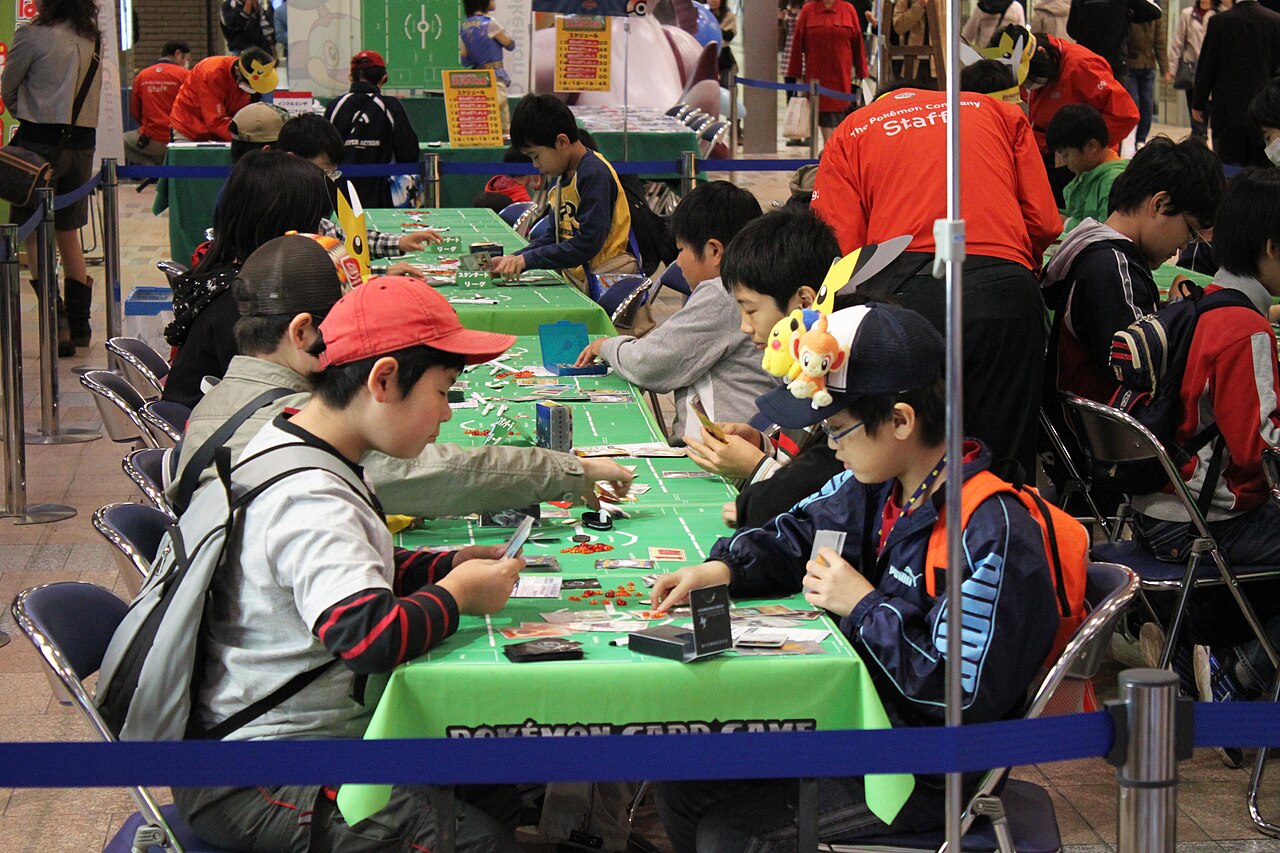
The useful question is: what kind of object is a Pokémon card when it passes through a child’s hands, a binder, an online shop, an auction house and a safe?
The answer changes at each stage. For a player, the card is a piece in a deck. For a collector, it is an organised memory. For an investor, it is a bet on future demand. For a platform, it is content, traffic and commission. For a criminal, it can become portable goods whose price is hard to verify on the spot.
Pokémon Trading Card Game was not a collectible that discovered the game later. It was a game built around collecting, trading and completing sets. The market is not an outside accident. It is written into the design.
The Pokémon Company says the card game debuted in Japan in 1996 and in North America and Europe in 1999. In 2026, the game marks 30 years, and the company announces a synchronised global launch of the ‘30th Celebration’ expansion in participating markets. [1][2]
Technically, the recipe is simple and powerful: packs with random contents, sets with a finite number of cards, characters with different levels of popularity, promotions tied to shops or events, and Standard rotation, through which older cards periodically leave the main competitive format. The secondary market fills the gap between ‘I do not know what I will get’ and ‘I know exactly what I want’. [25]
The cards are produced in many languages and sold in dozens of countries. The astonishing figure of more than 85 billion cards produced by the end of March 2026 does not mean every card is abundant. It means rarity has to be read locally: a particular edition, in a particular language, with a particular error, in very good condition and with a particular provenance. [3][4]
This is the first distinction missing from many conversations about ‘Pokémon investing’: there is an enormous supply of cards, but a much smaller supply of particular combinations of rarity, demand and condition.
The rarity of a Pokémon card is not a single number. It is a story about print run, distribution, use, condition, character and trust.
It is shuffled, handled, carried around and sometimes bent. Its value is functional. What matters is whether it helps a deck and remains legal in the competitive format.
It is protected in a sleeve, binder or holder. Its value includes the image, generation, character, illustration and link to a memory. A card that is weak for play can be excellent for a collection.
It is compared with past sales, sent for grading, photographed, listed and tracked. Its value becomes dependent on the next buyer and on the infrastructure that certifies the object.
| Form | What happens | Why it matters | The trap |
|---|---|---|---|
| Production rarity | An event promo, an old print run or a variant distributed through a narrow channel has fewer copies. | Supply cannot be increased easily without changing the object’s story. | ‘Few’ does not automatically mean ‘wanted’. |
| Condition rarity | There are many copies, but few have good centring, a clean surface and intact corners. | The difference between PSA 8, PSA 9 and PSA 10 can multiply the price. | Grading is a judgement, not a law of nature. The reported population is not a census of every copy in existence. |
| Attention rarity | A character, an illustration or a cultural moment moves to the centre of the online conversation. | Demand can rise faster than supply, especially at launches. | Attention moves on. A ‘viral’ card can have a thin market after the clip disappears. |
| Provenance rarity | The card has a verifiable history: a prize, tournament, known collection or documented sale. | In the million-dollar range, the story and authenticity are part of the price. | A good story without documents is only marketing. |
An important effect is that the mechanism produces pleasure and frustration at the same time. The unopened pack preserves possibility. The card taken from the pack turns possibility into a concrete object. The secondary market sells exactly this leap: from chance to certainty.
The pandemic did not invent collectors. It synchronised nostalgia, free time, available money, platforms and content creators in a market that already existed.
In its 2021 report, eBay said domestic trading-card sales rose 142% in 2020 compared with the previous year, while collectible card games, including Pokémon, rose by more than 500%. These are platform data, not a measure of the whole world, but they show the acceleration of visible commerce. [5]
Several forces converged:
Adults who had received packs in 1999 or 2000 began looking through their drawers for what remained. They were not just buying cardboard. They were buying a recognisable version of their own childhood at a time when the future had become hard to control.
That is why Charizard and Pikachu have disproportionate power relative to their value in play. They are characters with a public biography.
A pack opened at a table is an experience. A pack opened on a livestream is an event. The camera, reaction, chat and possibility of a rare hit turn a purchase into content. Content brings an audience, the audience brings demand, and demand justifies more openings.
In October 2020, Logan Paul streamed the opening of a first-edition Pokémon Base Set booster box bought for $200,000, at a time when the market was already rising. The video gave the market event language and turned a niche hobby into a spectacle for the influencer’s audience. That does not mean one person created the market. It means a creator with an audience can move attention faster than goods can be printed.
Pikachu Illustrator is a special case. The card was awarded as a prize in illustration contests published by the Japanese magazine CoroCoro in 1998. CGC notes that 39 copies were distributed. [6] In 2021, Logan Paul bought a PSA 10-graded copy for $5.275 million in a private transaction. In February 2026, Guinness recorded $16.492 million for the lot sold through Goldin, making it the most expensive trading card sold at auction. The lot also included display elements, and the sum includes the buyer’s premium. [7][8]
It is tempting to calculate a tripling and call it a return. That would be too much. We are talking about a unique or nearly unique object, a very wealthy buyer, a lot with a marketing story and a market without daily comparable transactions. The record says one buyer paid that sum at that moment. It does not say all Pokémon cards became three times more valuable.
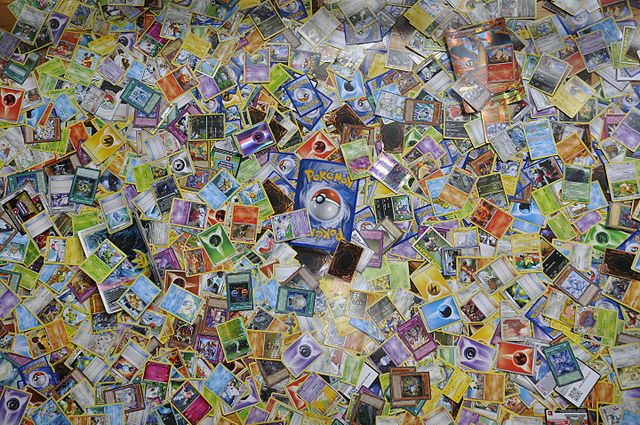
After the boom, the market received more production and more reprints. In May 2026, Pokémon Support acknowledged that very high demand had affected the availability of some products and said it would print more and replenish stock. This is the game’s central tension: the company wants to preserve desirability, but it also has to produce enough for players to buy and play. [9]
The word ‘investment’ covers very different things here. Some are collecting with hopes of appreciation. Some are flipping, meaning quick resale. Others are retail businesses. An object rising in price does not mean it works like a share or a bond.
| What you buy | What you hope will rise | What you are actually paying for | The dominant risk |
|---|---|---|---|
| Raw card, ungraded | That it is better than it looks and receives a high grade. | The possibility and your eye for condition. | Hidden defects, fakes and a price too high against comparables. |
| Graded card, in a slab | That trust and the difference between grades will show up in the price. | Authenticity, preservation and a label accepted by the market. | Fees, waiting times, a growing population report and changing preferences between companies. |
| Sealed product | That it becomes harder to find and its opening is postponed. | The option to open it, plus the packaging and the set’s story. | Reprints, damage, storage costs and low liquidity. |
| Promo / trophy | That provenance and rarity become more important over time. | A verifiable history and access to top buyers. | Authenticity, missing documents and an extremely thin market. |
| Fraction or token | That the value of the card in the vault rises. | A claim or share defined by the platform, not necessarily the card in your hand. | Custody, bankruptcy, rules, redemption, fees and counterparty risk. |
PSA, Beckett and CGC try to answer a simple problem: a buyer cannot tell with the naked eye whether a card is authentic or how well it has been preserved. A grader inspects, authenticates and assigns a grade. PSA uses a scale from 1 to 10, and the certification number can be checked in its database. In a fraud case, the US Department of Justice describes the effect directly: a higher grade can change the price by multiples. [10]
An important subtlety appears here. A population report shows how many cards the company has graded at each grade. It does not show how many cards exist in the world. Some were never submitted. Some were submitted again. Some were removed from circulation, lost or kept in private collections. PSA warns users that data can be inaccurate for some varieties and that re-holdering changes the report’s accuracy. [11]
Suppose a card is bought for €1,000 and sold for €1,400. If the platform hypothetically keeps 15%, grading cost €50, and shipping and insurance cost €25, about €1,115 remains before tax and before valuing your time. The gain is €115, or 11.5%, not 40%.
The example is illustrative. Fees, taxes and grading costs vary by country, platform, service level and declared value.
The example above uses an online marketplace, but that is only one way to find a buyer. A card show, a trade night, a local card shop (LCS) and a private buyer change how you reach a price, how long it takes to get paid and which risks you carry.
| Channel | What it offers | Costs or risks it moves |
|---|---|---|
| Online marketplace | Broad reach and a public record of the listing, negotiation and sale, when the platform preserves one. | Commission, shipping, returns, disputes, fraud and listing time. |
| Card show / trade night | The buyer can inspect the card in person, and negotiation or a trade can happen on the spot. A trade night is an organised evening for collectors. | Travel, admission, table fees, time and a local market where the right buyer may not appear. |
| Local card shop (LCS) | Convenience, a quick appraisal and immediate cash if the shop is buying. | The dealer spread. The offer has to leave room for the shop’s costs and risk. |
| Private buyer / auction | A rare card may meet a specialised buyer. | Trust, documents, waiting time, marketing and fees, especially at auction. |
Every channel replaces one cost structure with another. The platform makes the commission visible. The show moves it into travel, access and time. The shop includes it in its margin.
Compare the net amount after commission, shipping, grading, insurance, travel, admission, table fees, taxes and your time. Card shows and trade nights may be better for inspection, negotiation or trading. No channel guarantees a higher price.
A company has revenue, assets, debts and a way to produce cash flow. A card produces nothing on its own. To sell it, you need another buyer, a platform or a dealer. A quoted price is a one-off agreement. If a card was listed at €3,000, that does not mean it is worth €3,000. If it sold once for €3,000, that does not mean you can sell it tomorrow for the same amount.
There is also the spread problem: a dealer has to buy below the price at which they hope to sell. Between the two prices sit rent, wages, fees, risk, tied-up capital and the chance that the price falls. An online market makes a transaction visible, not necessarily liquid.
In 2026, projects also appeared that split rights in a card into fractions or tokens. An announcement published on the Hong Kong Exchanges and Clearing platform described a tokenised fund for a Pokémon card and addressed professional investors. [12] This is a sign that the object has entered the vocabulary of alternative investments, not proof that the model is safe or suitable for the general public.
The decisive question is not ‘can I buy 1%?’ It is ‘what exactly do I own, who keeps the card, who insures it, how do I vote, how do I exit, what happens if the platform disappears, and what rights do I have if the owner becomes insolvent?’ Tokenisation can lower the entry threshold. It does not remove custody risk. Sometimes it only moves that risk into a contract few people read.
Pokémon cards are sociologically interesting precisely because they gather three biographies into a small object: the child who received it, the community that recognised it and the market that gave it a price.
Research on collecting describes collections as tools of identity, memory and story. A study of textile collectors observes that objects help people authenticate themselves and enter a community. A representative study published in 2025 found that roughly one third of consumers collect something, although few strongly identify as ‘collectors’. [13][14]
This changes how the return of adults to Pokémon should be read. Not all of them are trying to make a profit. Many are trying to repair a continuity. The child in the past cannot receive the pack back, but the adult can recreate the ritual: search, compare, choose, keep and show.
In an expensive collection, the difference is not only available money. It is also vocabulary: set, collector number, edition symbol, print line, Japanese variant, print error, centring, population report and comp. Whoever knows these things moves through the market more effectively. Knowledge produces status.
This cultural capital has two effects. It helps the community self-organise because people can check one another’s judgements. But it can also exclude. A beginner who does not know the difference between a sealed product and a resealed pack pays more for the same lesson. And jargon can create an impression of precision even when the data are weak.
The local shop, fair, Facebook group, Discord, YouTube channel and opening stream are not only places of transaction. They are places where people recognise one another. A binder can work like a passport: open it and you immediately have a shared subject.
At the same time, platforms turn a private collection into a public performance. A card in a safe is property. A card filmed at the moment of opening is content. A card worn around the neck at an event is personal branding. The attention economy can be more profitable than selling the object.
When a card is treated as an asset, touching it becomes a problem. The player puts it in a deck. The investor puts it in a sleeve, then a holder, then a safe. An object created to circulate between children is taken out of circulation precisely to preserve its price.
This tension creates conflict in the community. The collector says they are protecting history. The player says an unused card no longer takes part in the game. The investor says they finance demand. The shop says it needs a margin. Each is right within their own regime, and the same piece of cardboard cannot satisfy all regimes at once.
Nostalgia feels intimate, but it is a very efficient economic resource. It shortens the distance between product and buyer: ‘I know what it is’, ‘I had one too’, ‘I remember the picture’. The brand does not have to educate the audience from zero. It only has to find the moment when memory can be converted into a purchase.
That is why Pokémon is more powerful than a series of attractive images. It has games, anime, music, toys, competitions, characters and vocabulary. Each medium sends audiences to the others. The card works as a physical interface between them.
The correct answer has two levels. Legally, classification depends on the jurisdiction and the product. Psychologically, a pack with a random outcome resembles other variable-reward mechanisms.
A booster contains cards, so it is not the same as a ticket that may contain nothing. The cards have a use in play and a secondary market. But the buyer does not know exactly what they will receive, and some of the excitement comes from anticipating a rare card. When resale value becomes the main criterion, opening approaches a pocket lottery: you pay for the chance of a very good result and accept that the average may be worse than the amount spent.
A study that replicated research on loot boxes found structural similarities between booster packs and random mechanisms in digital games, but it did not find the same simple link with gambling problems. The authors stress that research on physical card players is still limited. [15] The responsible conclusion is more precise: the design deserves scrutiny, especially when the audience includes children and creators put pressure on people to buy.
You pay for opening, surprise and cards that may go into a deck. If you do not get the card you wanted, the experience should not become debt.
If you want a particular card, the secondary market is usually more direct than repeatedly opening packs. You buy certainty, not chance.
Set an entertainment amount before opening. Do not try to recover a loss by buying another pack. If the budget becomes secret, a source of arguments or a reason for debt, the problem is no longer the card’s rarity.
When small goods can be worth a lot, moved quickly and recognised by a global community, they become a target. Not all cards are valuable. This uneven distribution is exactly what makes a shop vulnerable: a few products have high prices, while the rest can be taken in bulk.
In May 2026, the US Department of Justice announced charges linked to two armed robberies in January, in Queens and Manhattan. According to the complaint, cards and cash worth more than $100,000 were stolen, and the attackers allegedly photographed the cards in the display beforehand. The DOJ stresses that charges are only charges, not convictions. [16]
Cheshire Constabulary reported that two brothers pleaded guilty after two break-ins at collectible-card shops. In one case, cards worth about £62,000 were stolen, while damage to the shop exceeded £3,000. [17]
At the beginning of 2024, a San Jose shop reported the theft of almost 35,000 cards. In Australia, shop owners in Melbourne described a series of break-ins and losses worth tens of thousands of dollars. These cases do not let us calculate a ‘global Pokémon heist rate’, but they show why small shops with visible displays and concentrated stock have begun to look more like merchants of valuables than toy shops. [18][19]
Fraud has the advantage of not requiring a smashed display. It can look like an offer that is too good, a resealed pack, a holder with a fake label or a pre-order that never arrives.
| Type | Mechanism | Practical signal |
|---|---|---|
| Counterfeit card | Imitated cardboard, ink, texture or back. | A price far below the market, a seller without a history, and printing details that do not match. |
| Resealed pack | The packaging is opened, valuable cards are removed and the pack is closed again. | A strange seal, repeated folds and an aggressively good offer. Pokémon Support recommends caution with prices dramatically below retail. [20] |
| Altered card | An authentic card is cleaned, recoloured, cut, given a new back or otherwise presented as being in better condition. | The difference between authenticity and condition is essential. A card can be real and still be altered. |
| Fake slab or label | The holder, certification number or grader’s score is imitated. | Checking the number in the official database is necessary, but it does not replace inspecting the card and holder. |
| Marketplace scam | An advance payment is requested for a product that does not exist, followed by the seller disappearing. | Payment by bank transfer, time pressure, an unprotected pre-order and a conversation moved off-platform. |
PSA announced that in 2025 it intercepted fraudulent collectibles with a projected value of more than $200 million and that fakes had become more frequent and sophisticated. In a federal case, a defendant was convicted in 2026 after selling Pokémon cards with counterfeit PSA grades; prosecutors said the scheme attempted to cause losses of more than $2 million. [21][22]
In Singapore, the police report for 2025 said Pokémon trading cards were the item most often involved in e-commerce scams, representing 13.6% of e-commerce scam cases. The scheme described was simple and effective: a price or pre-order, payment by transfer, then the product never appears. [23]
Heists are spectacular and make the news. Platform fraud is less cinematic but easier to multiply. A healthy market needs seller history, payment protection, authenticity checks, serial documentation and shops that do not treat security as an administrative detail.
A clip shows a card bought for 200 and sold for 1,000. It does not show the ten cards bought and unsold, the fees, the time, the return, a reprint, a fake or the month when nobody answers a message.
A character can lose attention. A set can be reprinted. A new rarity can cannibalise an older variant. A social-media trend can move demand in a week. The market is global but not evenly distributed: language, region, exchange rate and platform access matter.
Concentrating on Charizard, Pikachu, Umbreon or a few popular sets makes the portfolio look diverse, but economically it depends heavily on the same stories.
The grader, marketplace, auction house and vault are not scenery. They are intermediaries. If one raises fees, delays service, loses a lot, changes the rules or becomes insolvent, the experience of ownership changes.
A card kept in a vault does not mean zero risk. It means you have transferred risk from your drawer to an institution you need to check.
The healthiest way to talk about Pokémon is ‘alternative and speculative asset’, not ‘safe investment’. A bond promises payments under a contract. A share represents a stake in a company that produces something. A card produces an experience and, perhaps, a sale to a future fan.
That does not make it worthless. It makes it dependent on human behaviour. And human behaviour is exactly the part that cannot be guaranteed by a grade, a photograph or an influencer.
The phenomenon does not end with a record. It moves into infrastructure: more cards, more data, more protection, more content and more attempts to turn a collection into a financial product.
The company says it is increasing production and reprinting products affected by demand. The total number can grow quickly, but limited launches and wave-based distribution can keep pressure high.
Pokémon TCG Pocket launched in 2024, and Sensor Tower estimated more than 100 million global downloads in 2026. Digital extends the collecting ritual, even though it does not offer the same physical ownership or resale market. [24]
As records enter the press, vaults, shares, funds and tokens appear. Access may become easier. The question of ownership and exit becomes more important.
| Scenario | What it looks like | Who wins | Who loses |
|---|---|---|---|
| Normalisation | Supply moves closer to demand and modern prices settle. Very good vintage cards and trophies keep a separate market. | Players, patient collectors and shops with healthy stock. | Flippers who bought the top and people who confused the listed price with value. |
| Financialisation | More cards are graded, vaulted and divided into digital rights. The object circulates less, while certification becomes the centre of the market. | Graders, platforms and holders of rare assets with solid documents. | Players who can no longer find affordable goods and buyers who do not understand custody. |
| Community regeneration | After hype fatigue, interest returns to play, trading and local events. Investment remains a layer, not the meaning of the whole hobby. | Communities, good shops, children and small-budget collectors. | Content built only on sensation and ‘guaranteed profit’. |
There probably will not be a single scenario. The million-dollar market, the modern-product market and the play market can move in different directions in the same week.
There is no formula that turns a hobby into an ATM. There are, however, a few rules that separate conscious collecting from impulsive buying.
If the price stayed unchanged for ten years, would you still want the card? If the answer is no, you are not buying a collection. You are buying hope. That is not necessarily forbidden, but it must be budgeted as hope, not safety.
Pokémon cards did not become gold. They became a surface on which several things can be seen at once.
You can see the child who wanted to complete the page. You can see the adult buying a memory in an ordered form. You can see the community producing rules and trust. You can see the platform turning emotion into traffic. You can see the company printing billions of objects while preserving the feeling of rarity. You can see the investor looking for an alternative. And sometimes you can see the criminal who hears only the sum.
The phenomenon is impressive and slightly unsettling precisely because it is not a single story. It is a complete economy built around images familiar enough to feel personal. That is where Pokémon’s power lies. That is also where the risk lies.
A card is worth as much desire, memory and trust as it can concentrate. When one of them disappears, a card is still there. Only the price leaves first.
I used official sources for production, launches, rules and authentication; platform data for market movement; academic sources for collecting and random packs; and authority documents for fraud and theft cases. Legal claims about cases are attributed, and the presumption of innocence is preserved where a case was not finalised.

