9/22 March 1907
9/22 March 1907
Three in one deposition, three hundred in another
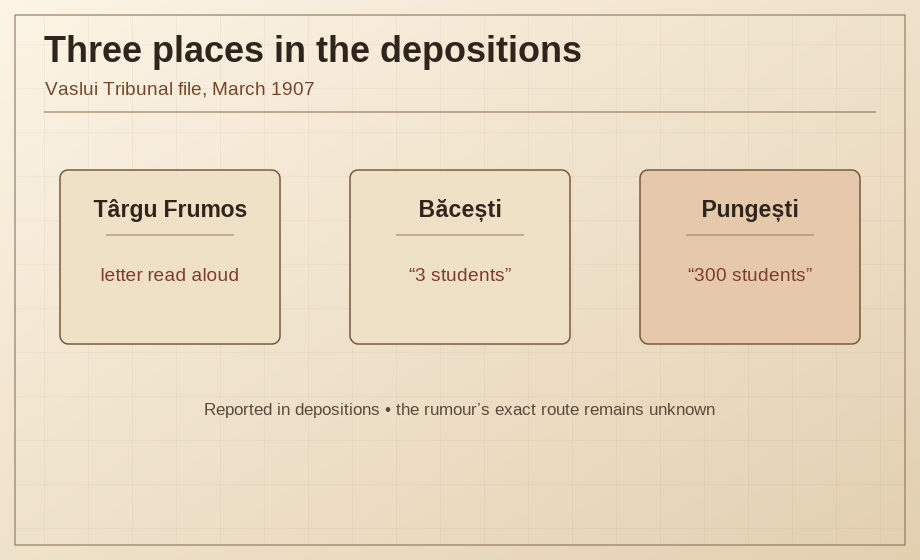
On 9 March 1907, Grigorie Vrabie of Gârceni says he heard at Vasile Tofan’s tavern that three students were coming from Băcești. The next day, Neculai Harabagiu goes to Pungești to see the “students” he has heard numbered three hundred. The historian’s article follows a rumour; it does not confirm that any student group existed. [1]
Another account begins with a letter about unrest at Târgu Frumos and Podul Iloaiei, read aloud in a tavern. Each fragment reaches the judge after passing through memory and village talk. The diagram connects only claims reported in depositions; it does not pretend to know exactly who passed the rumour to whom. [1]
10/23 March 1907
A market seen through testimony
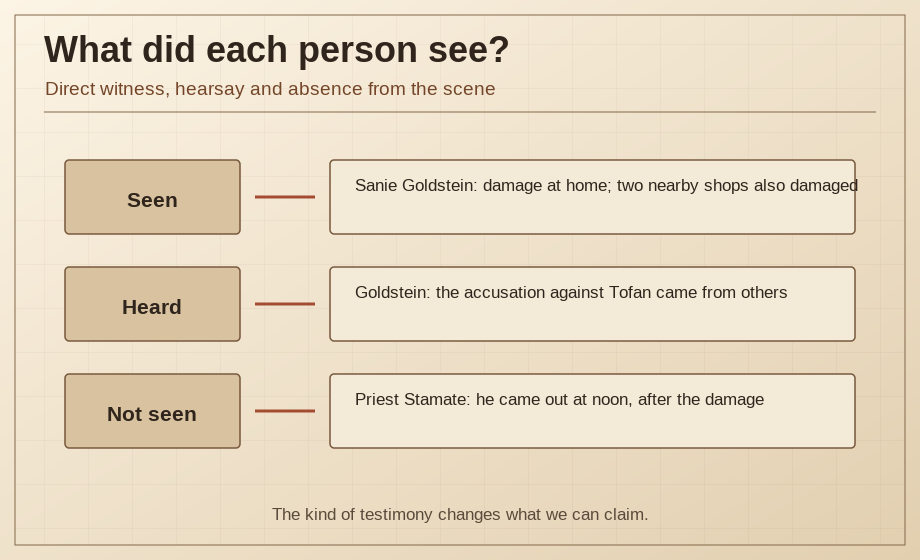
10 March on the Julian calendar (23 March Gregorian) was the feast of Saint Theodore, and one witness places the beginning of the ransacking at around ten in the morning. Priest V. Stamate’s account gives another marker: he came out of church at noon and says the market had already been damaged. Between those times are memories of crowds, soldiers at a barrier and shops being broken into. [1]
A 1:20,000 military map shows the Pungești settlement, roads and Racova valley; the crop omits the sheet date in its marginalia and does not mark the 1907 market. We do not know which street held each shop or where the barrier stood. The timeline beside it places only the times mentioned by witnesses, keeping uncertainty visible. [4] [1]

Damage
Two merchants, two concrete accounts
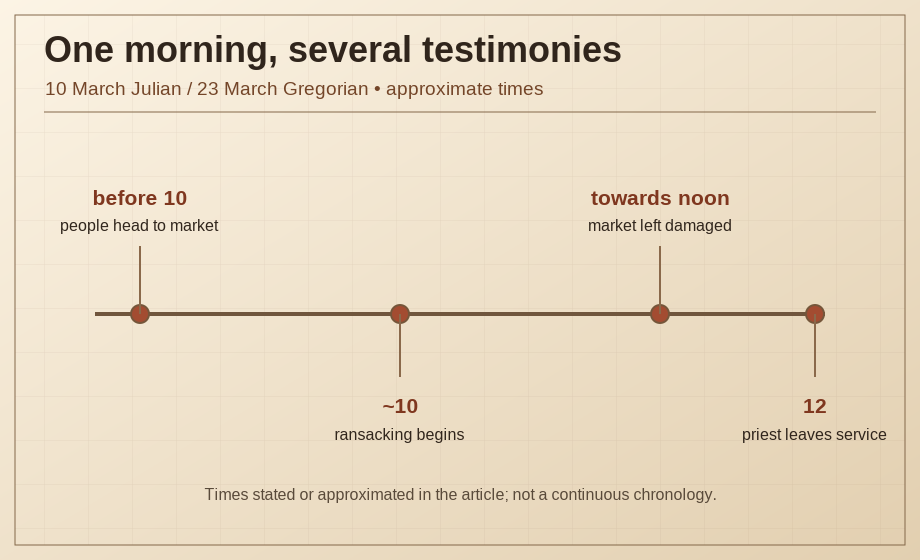
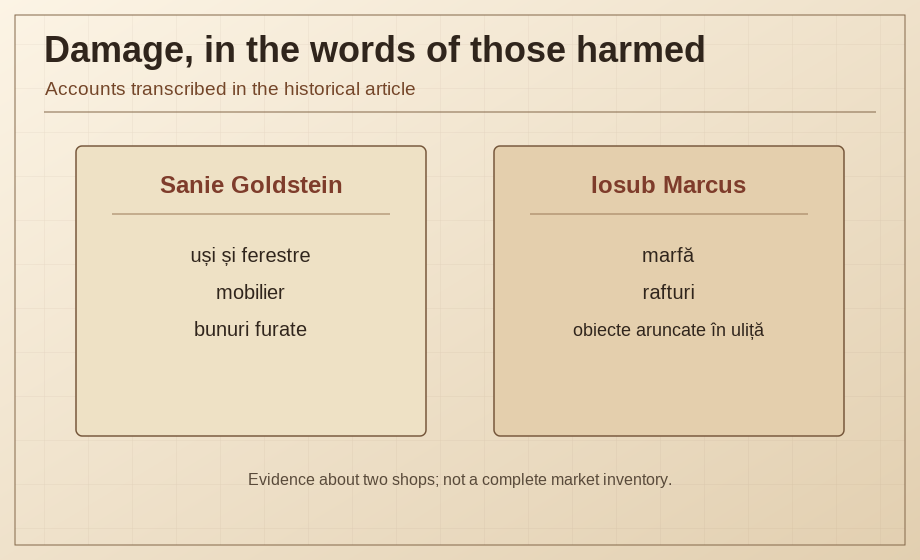
Sanie Goldstein says people broke doors and windows, damaged his furniture and stole the goods in his home. He says he did not see Tofan break or steal anything; the accusation he repeats, he says, came from others. This distinction sits at the heart of the file: he describes damage from personal experience, but assigns responsibility indirectly. [1]
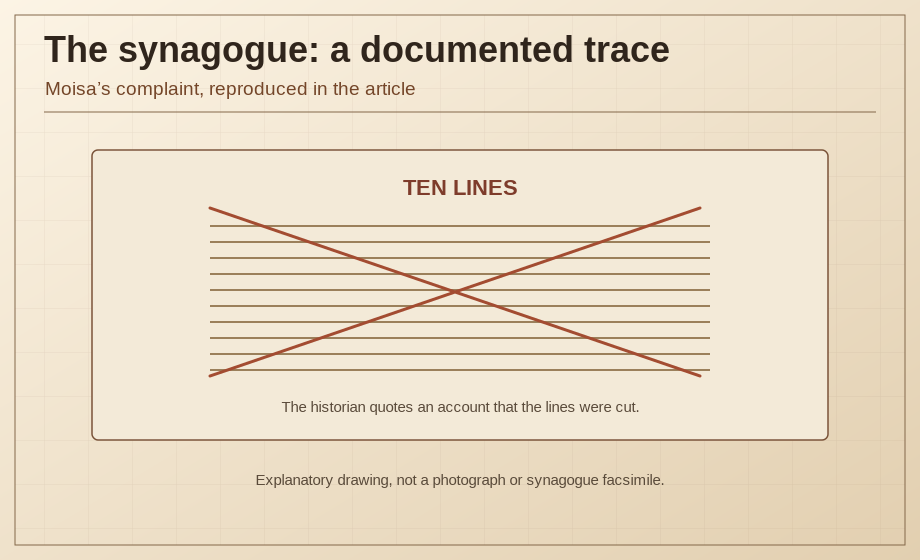
Iosub Marcus says he hid when the shops began to be ransacked, then came out and saw people throwing goods and shelving into the street. In the same section, the historian reproduces Moisa’s complaint: the synagogue had been looted and ten lines on its Commandments panels cut. The testimony names serious damage, but does not provide a complete account of the market town. [1]
Accusation and defence
Vasile Tofan’s role remains disputed
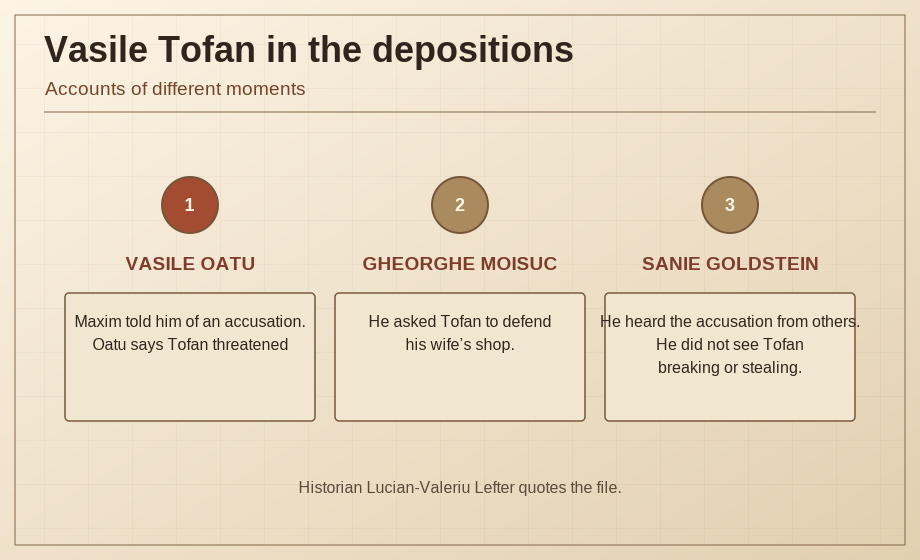
Deputy mayor Vasile Oatu says Ștefan Maxim, an estate official, told him Tofan was urging people to set out for Pungești. Oatu says that Tofan later threatened him directly when he tried to stop them. The accusation of incitement reaches Oatu through Maxim. The account of the threat is his own. [1]
Court clerk Gheorghe Moisuc describes a later moment in Pungești. He says he asked Tofan to defend his wife’s shop. Sanie Goldstein says he did not see Tofan breaking or stealing anything. The accounts concern different places and moments. The article does not give a court ruling on Tofan’s role. [1]
After the ransacking
Stolen goods hidden and recovered
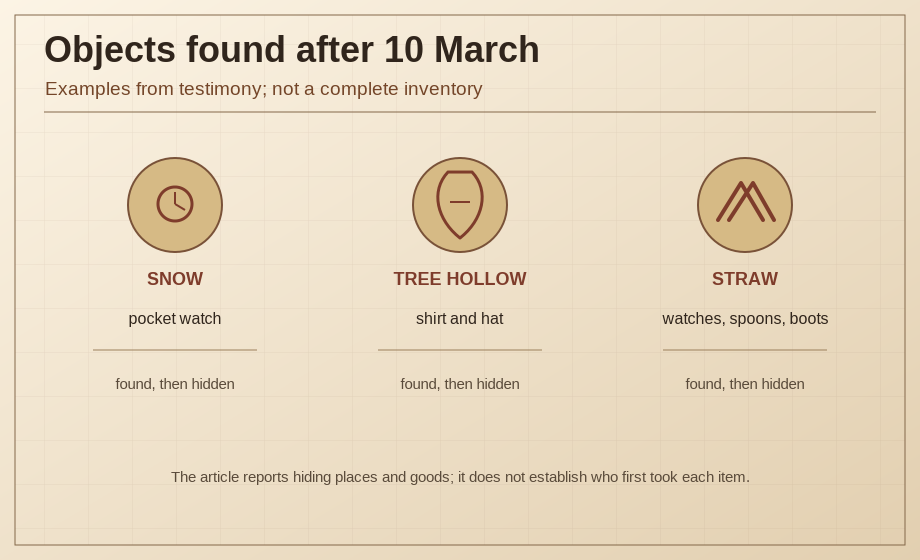
After the attacks, gendarmes searched some peasants’ homes and witnesses described where goods had been hidden. The article mentions a pocket watch and textiles found in woodpiles or snow. One deposition says some objects were taken to the town hall. These details show how the investigation followed physical goods after the market had been damaged. [1]
The return of objects does not replace the harmed person’s testimony or measure the total loss. The published excerpts do not give a complete inventory, the value of the goods or how many were returned. The diagram includes only examples named by the historian and separates recovery from the original damage. [1]
Context and archive
A national uprising, local testimony
The 1907 uprising began amid an agricultural crisis, tensions around leases and credit, and concentration of land ownership, historian Gheorghe Platon writes. In several parts of Moldavia, Jewish merchants and leaseholders were targets of violence. This context helps explain vulnerabilities and social relationships; by itself it cannot establish what motivated each attack at Pungești. [2]
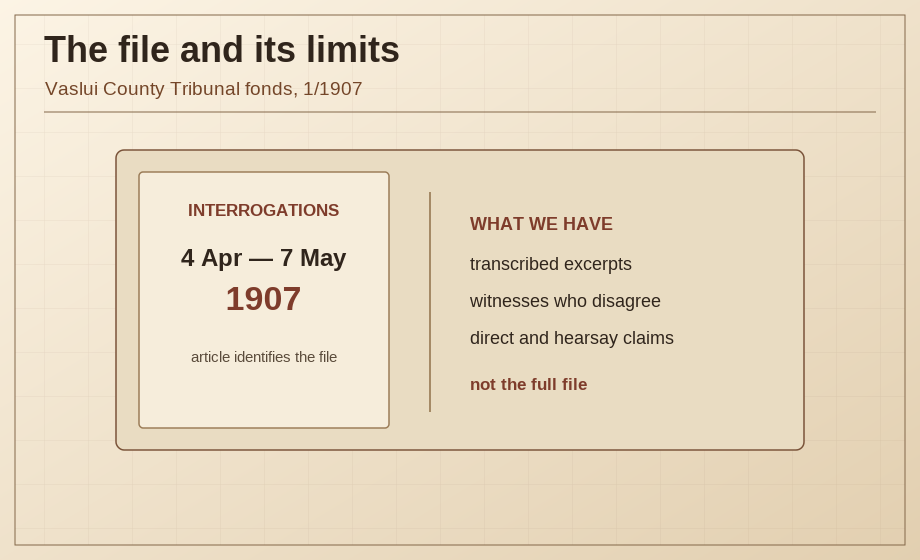
For Pungești, Lefter follows what witnesses said afterwards: interrogations took place between 4 April and 7 May in the Vaslui County Tribunal file, file 1/1907. Accounts are incomplete, sometimes indirect and contradictory; the priest says he came out after the damage had ended. This is an archive excerpt published by a historian, not the complete file or an exhaustive reconstruction. [1]