Sebeș, Alba

Sebeș, Alba
What are you seeing in the ravine?
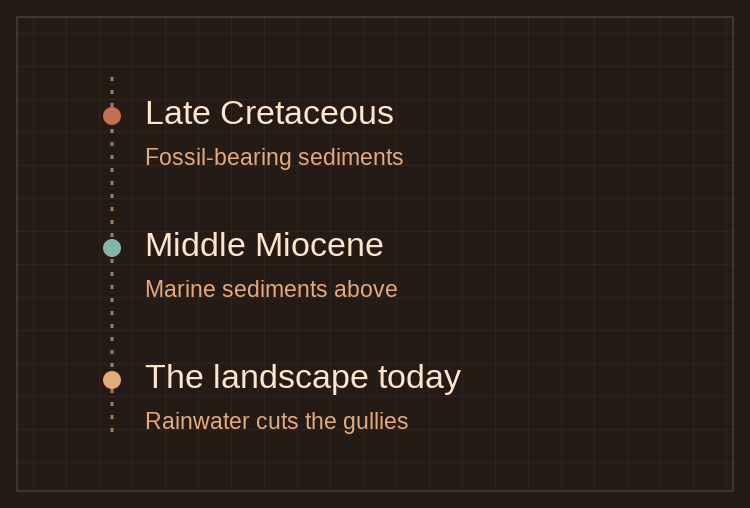
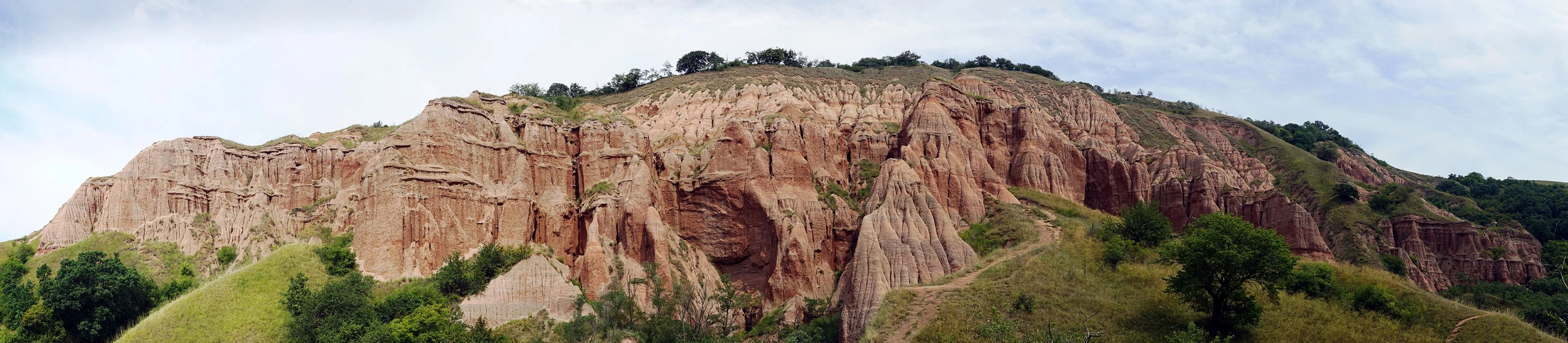
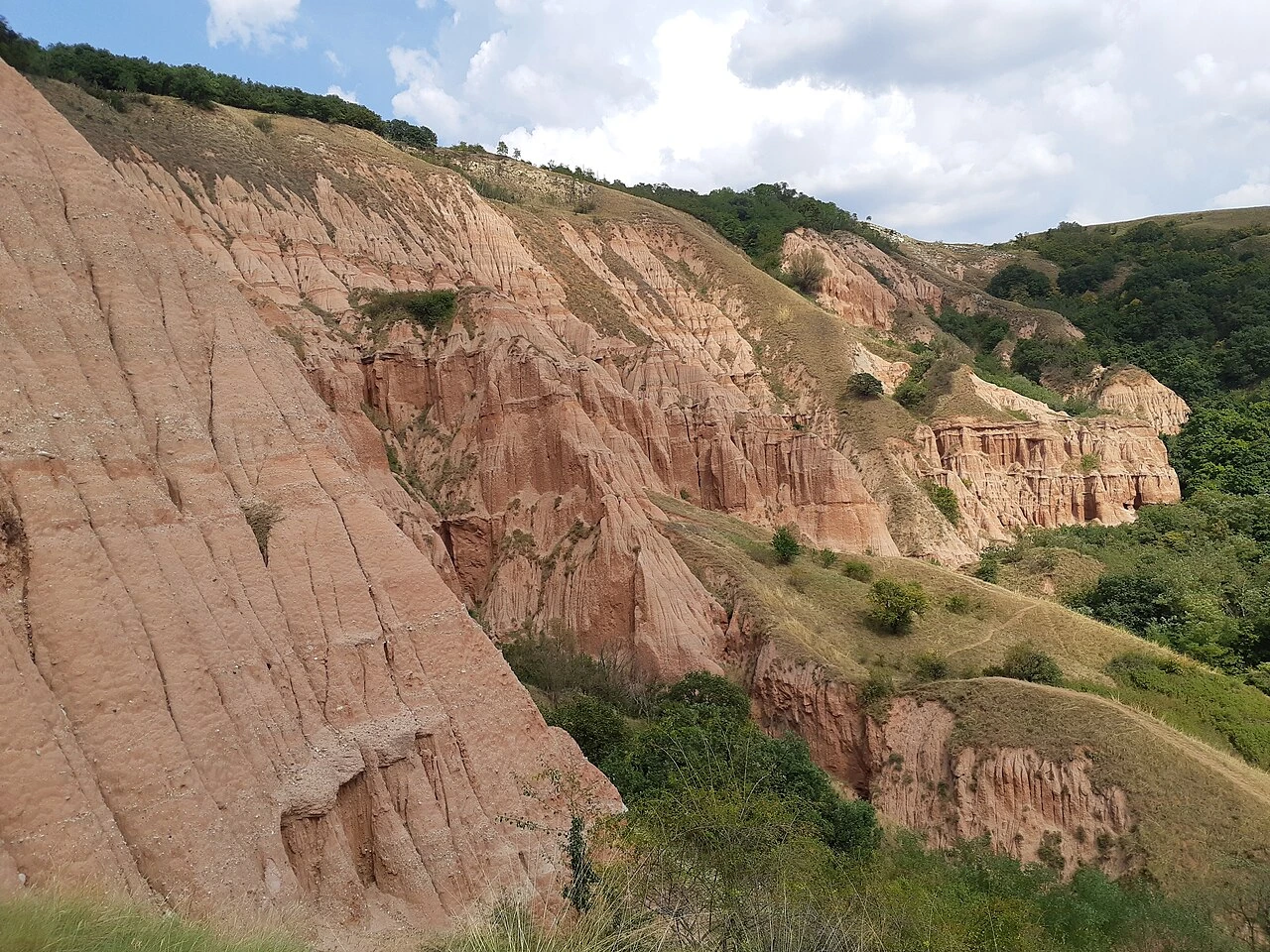
Three kilometres north-east of Sebeș, on the side of Pleșii Hill, gullies separate the ragged red ridges. Water carries material off the slope and exposes the sediments. The photograph shows both the tracks left by recent runoff and the beds deposited long before those gullies formed. [1] [5] [6]
The cliff contains bones of dinosaurs and pterosaurs, flying reptiles. An old bone can end up in younger rock if water uncovers it and buries it again. Here that possibility led to two interpretations of the ravine’s age. [2] [3]

The sediments
The cliff preserves ancient river channels
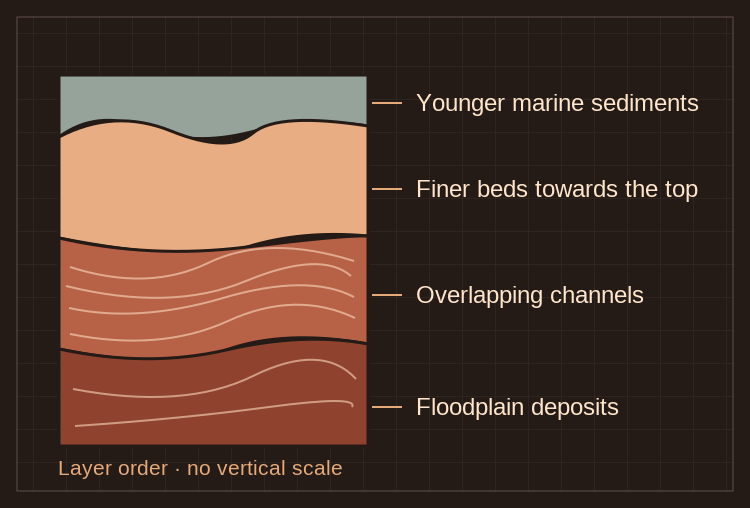
The 2015 field inventory describes floodplain deposits at the bottom, interrupted by coarser material that filled channels. Overlapping sandy and gravelly channels dominate the middle. Near the top, thin layers of silt and clay interrupt the sand and gravel. The study identifies younger marine sediments above them. [1]
A river leaves sand and gravel in its channel. During floods, water can leave finer particles on the floodplain. Researchers used the shapes and order of the beds to distinguish those settings. The drawing follows the broad order and kinds of sediment. [1]
2008 and 2010
Did the bone come out of an older bed?
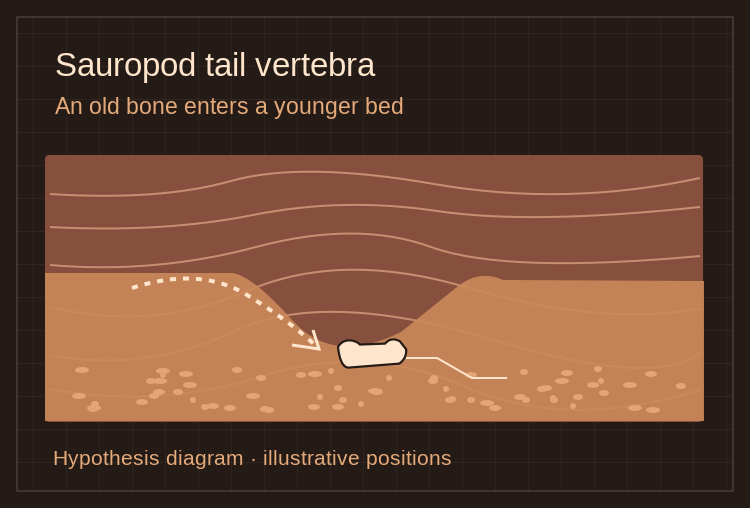
In 2008, Vlad Codrea and colleagues described a sauropod tail vertebra with worn edges and a broken arch. They interpreted the wear as evidence that water had rolled it, and proposed that it was eroded from a Cretaceous deposit and buried again in a younger bed, which they dated to the Early Miocene. [2]
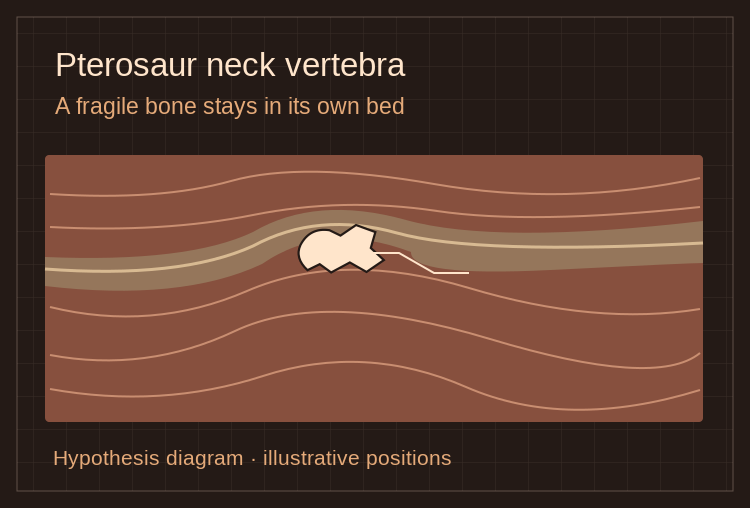
In 2010, Mátyás Vremir described a different specimen found in its bed high in the formation. It was a nearly complete pterosaur neck vertebra with thin bony walls. Its preservation strengthened the case that at least some bones were buried with the sediments around them in the Late Cretaceous. Switch views to see how the explanations differ. [3] [1]
EME 315
What survives from the pterosaur’s neck?
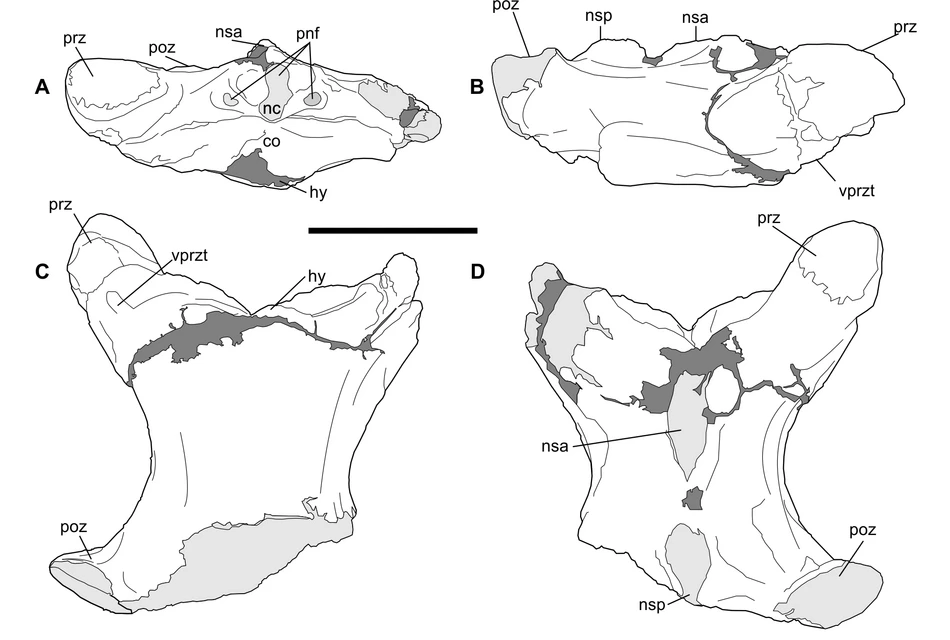
In Mark Witton’s plate, the same vertebra is drawn from four directions. Light grey marks damaged areas and dark grey the filler. The ten-centimetre bar gives the specimen’s scale, while the outlines let you compare the surviving parts. [4] [8]
In 2017, Naish and Witton provisionally assigned the bone to Hatzegopteryx. Comparisons with other fossils support that interpretation. For dating the ravine, what also matters is where the bone lay when it was found, as recorded in its 2010 description. [3] [4]

The field inventory
Bones in the same ravine have different histories
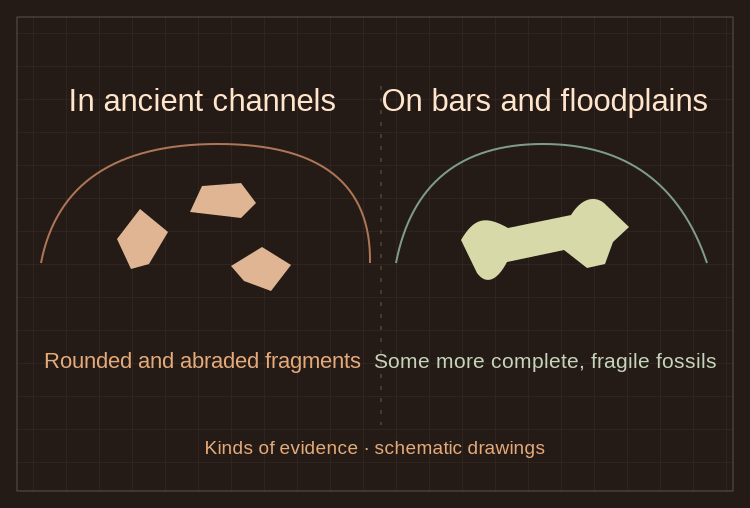
The 2015 inventory records worn fragments in channel fills and more complete, fragile pieces in deposits on river bars or floodplains. The transported bones tell us what the water could move. The fragile bones found in their beds support the case that some of the animals were buried in those sediments. [1]
The inventory dates the described part of the Sebeș Formation to the late Maastrichtian, near the end of the Cretaceous, and distinguishes the younger marine beds above it. In this reading, the age depends on where several fossils were found, their condition and the order of the beds. [1]
Râpa Roșie today
Distinguish the age of the beds from the age of the ravine
Take another look at the photograph. The beds described by geologists come from different periods. Runoff cut the gullies after those sediments accumulated, and rainfall continues to shape the slope. [1] [5] [6]
Bones, beds and gullies answer different questions. A bone preserves traces of what happened before and after burial. The beds tell us how material accumulated. The gullies show how it was exposed. [2] [1] [5]