A GREETING THAT KISSES
Why do you say you kiss her hand when you only say hello?
“Sărut-mâna” is a greeting that acts out a hand-kiss: one of five rival ways of saying hello in Romanian. And the verb “a săruta”, to kiss, comes from Latin “salutare”, to greet — the kiss-word was once a greet-word.
KÜSS’ DIE HANDKEZÉT CSÓKOLOMSĂRUT-MÂNA
Three languages, one gesture. A parallel, not a pedigree.
- 2 formulas
- mâna and dreapta, in DEX
- 5 greetings
- the rivals of chapter three
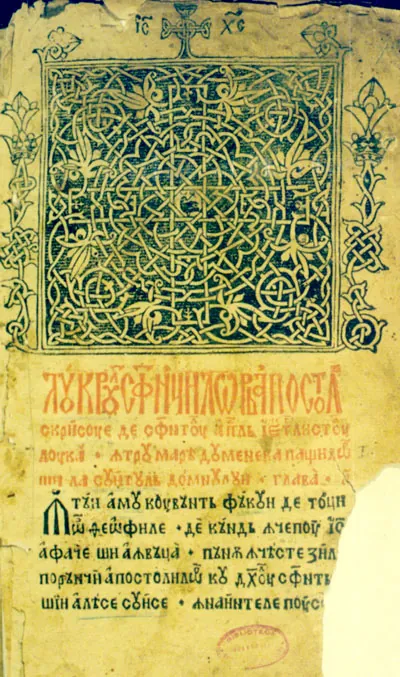
- 1563–1583
- the copying of the Voroneț Codex

What the dictionaries say
Two formulas inside one verb
Three dictionaries keep the same record: “sărut-mâna” is a greeting for women and older people, with an archaic sister for priests, rulers and boyars.
DEX ’09
“Sărut mâna, a greeting or thanks said to a woman or an older person.”
- women
- older people
The addressees are social, not regional.
DEX ’09, archaic
“Sărut dreapta, a greeting said to priests, rulers, boyars.”
That is all: the page describes it and never stages it.
MDA2
- First sense of the verb: “A saluta”, to greet.
- Attested: COD. VOR. 30/6.
- The phrase, said “to women, to (older) people or, in the past, to masters”.
“To masters” prefigures the “servus” parallel of chapter three.
DOOM 3
“!sărut-mâna/(fam.) săru-mâna s. n. (în: a merge/a umbla cu ~)”
Spelling with authority: the familiar form is “săru-mâna”.
What the dictionary page for “sărut-mâna” does not hold
No etymology. Four spelling entries and nothing else — the finding behind the hypothesis panel of chapter two.

1 verb → 2 formulas
mâna and dreapta
The gesture, in three languages
The hand that gets kissed
Before it was a formula, the hand-kiss was a gesture: of subjects, of believers, of drawing rooms. Three documented stops — and a fourth, Romanian one, with an unknown road.
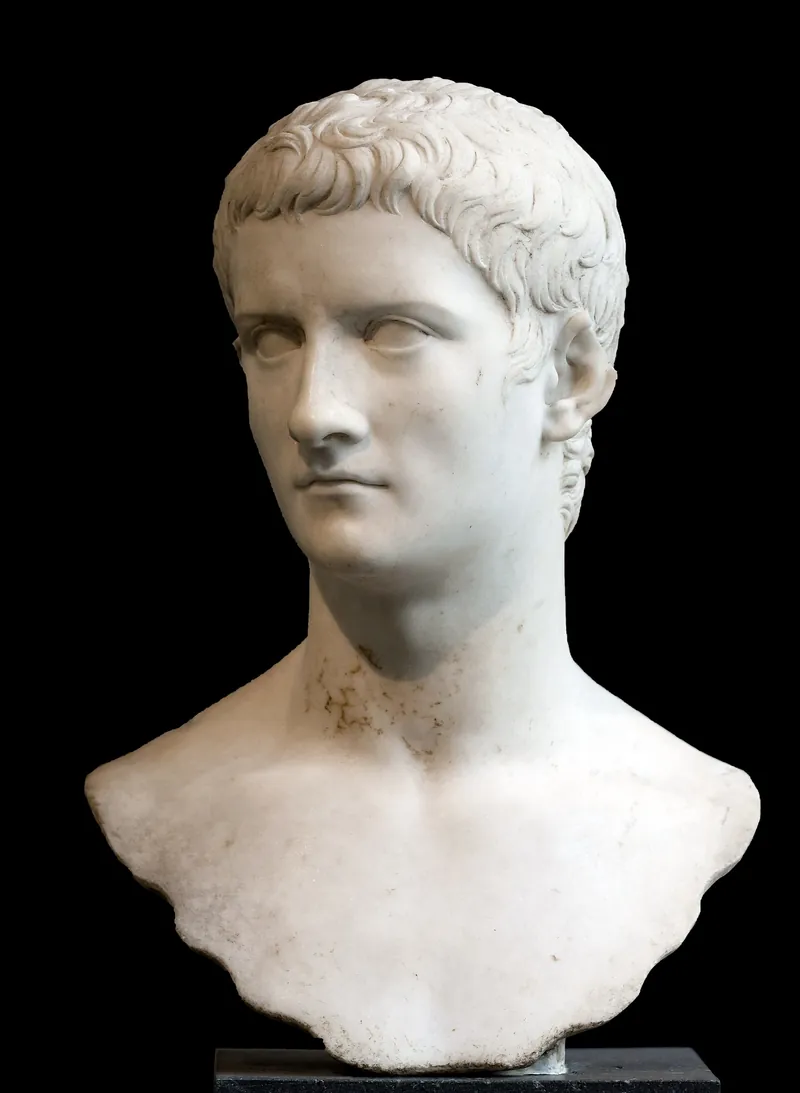
Rome: the extended foot
Seneca tells how Caligula stretched out his left foot to be kissed, after sparing Pompeius Pennus (On Benefits II.12).
“he stretched out his left foot to be kissed” (Gutenberg text)
“Caligula ordered people to kiss his hands and feet” Nyrop, The Kiss, 1901
“The Roman slaves kissed the hands of their masters” (Nyrop again)
The word “oriental” is Nyrop’s; the page quotes it without adopting it.

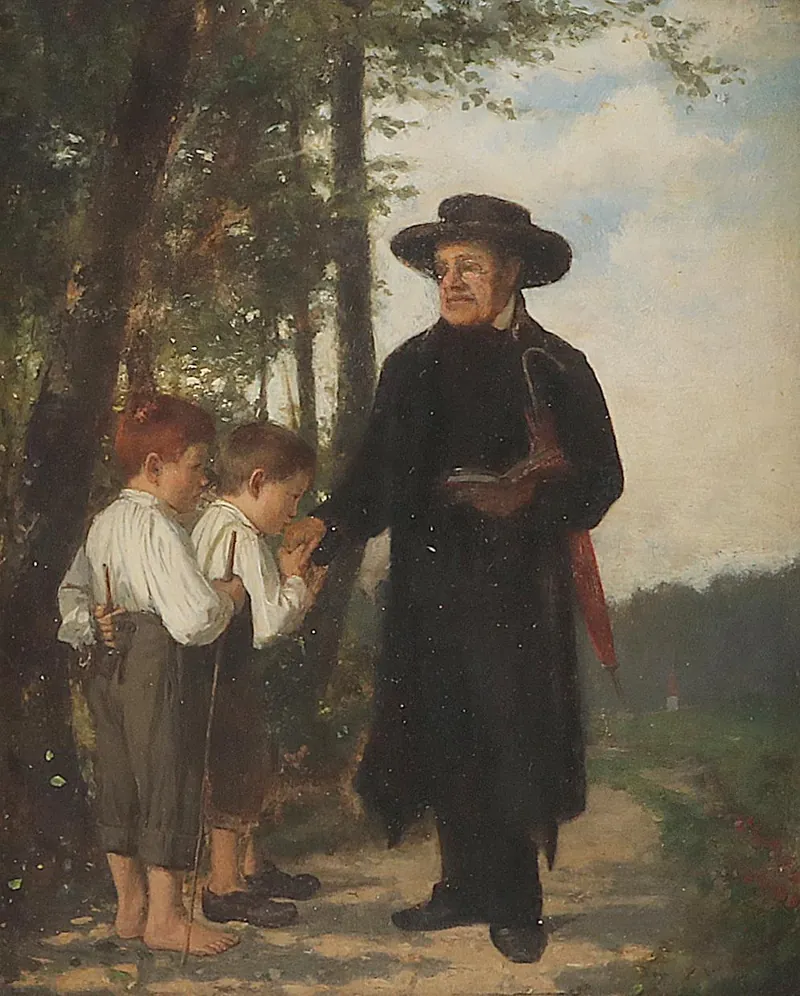
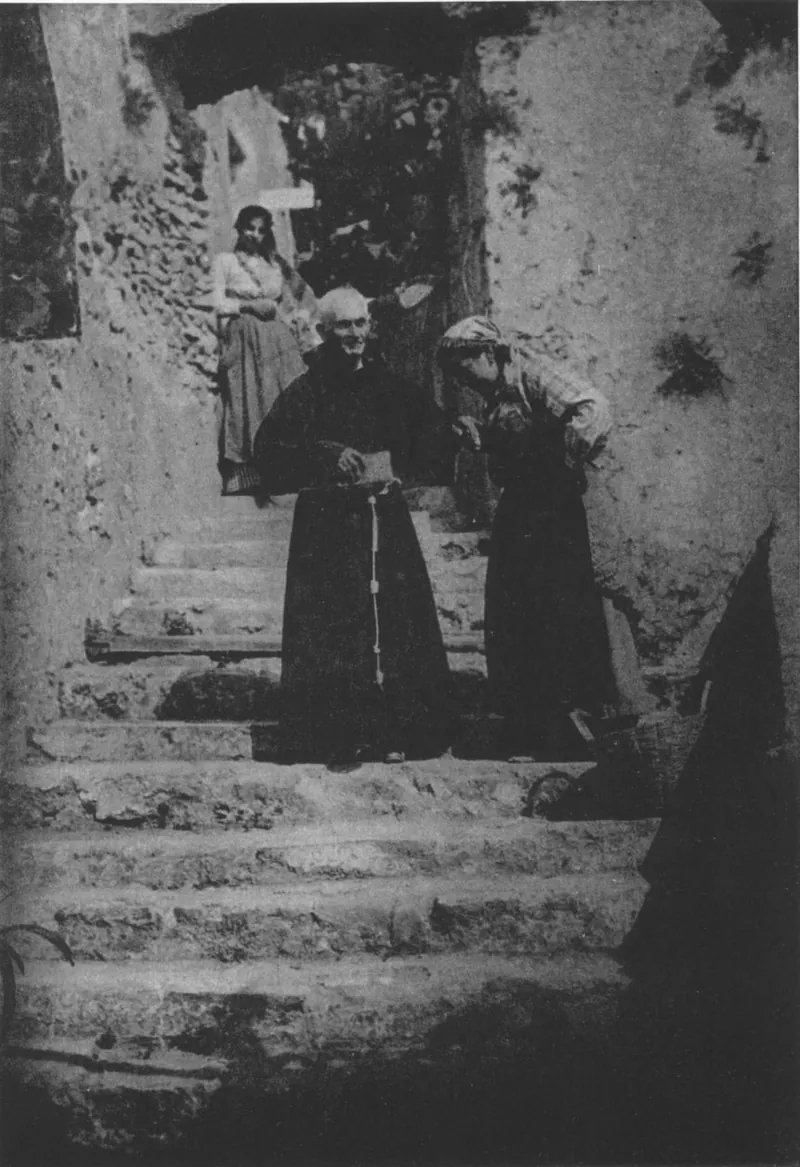
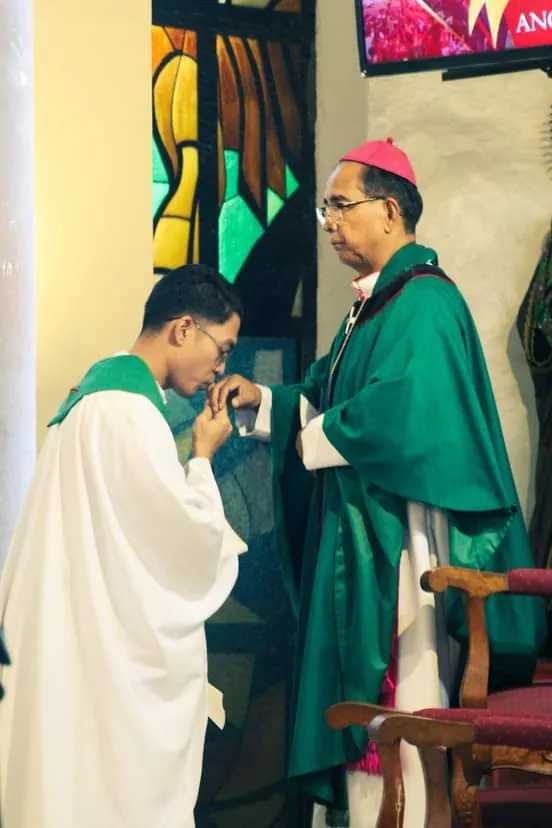
The church: the priest’s hand
“kissing the hands of the priest is still customary” — wrote Nyrop in 1901, of southern Italy



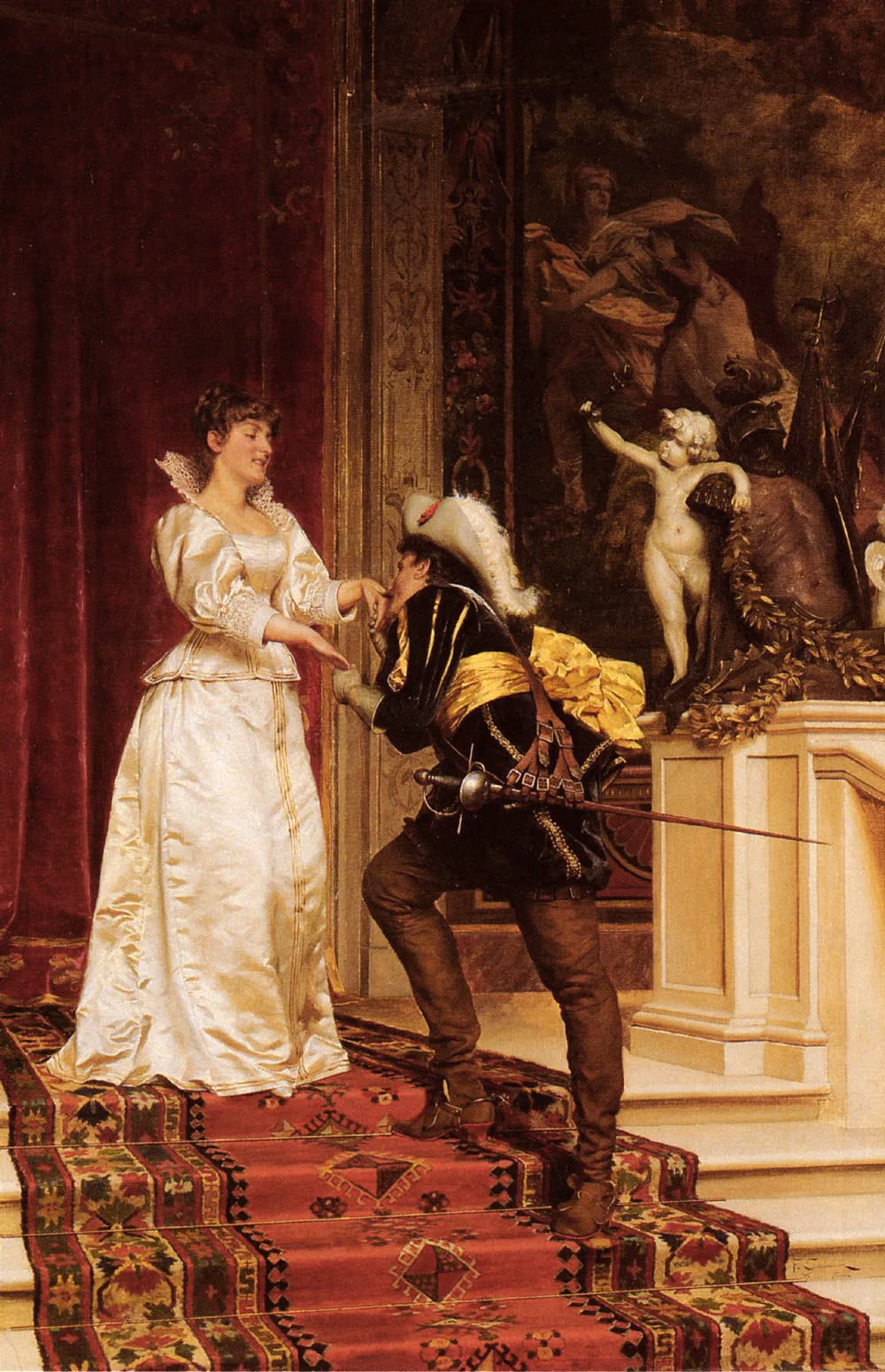
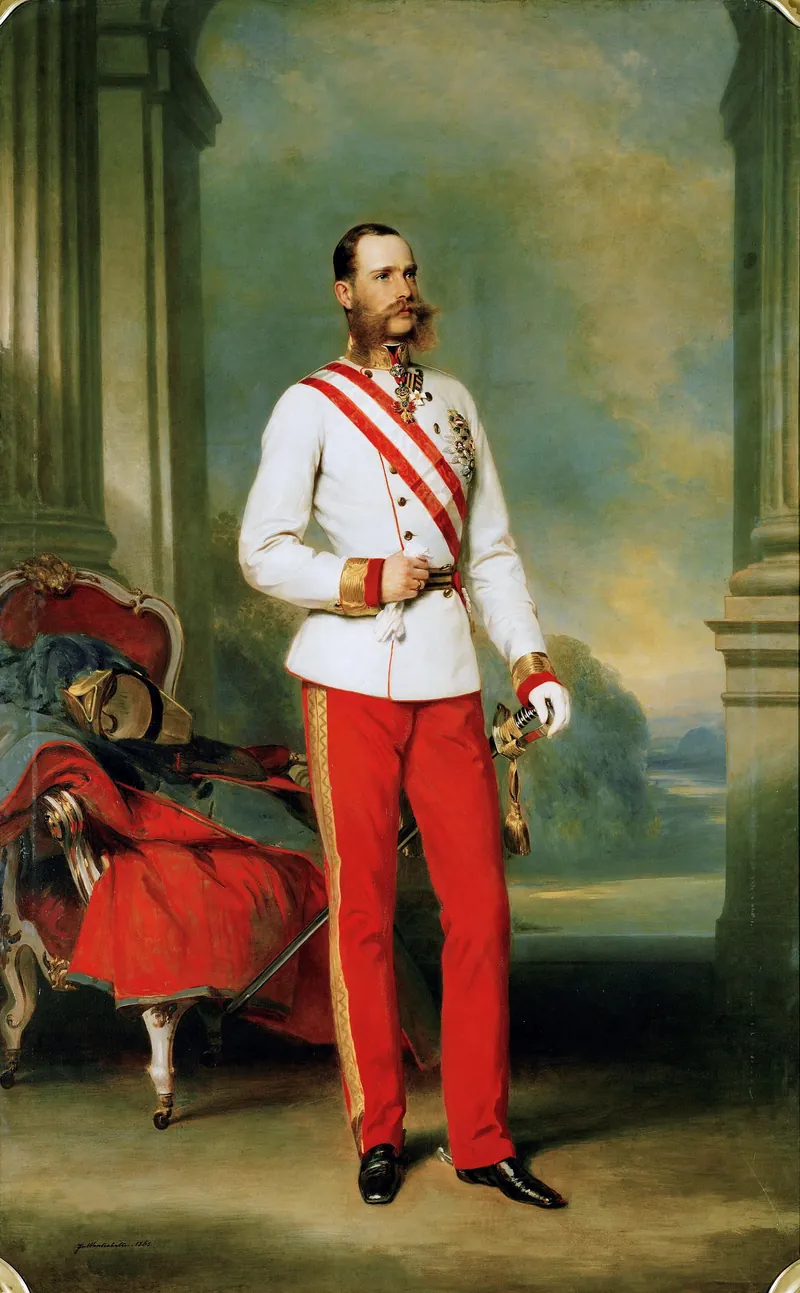
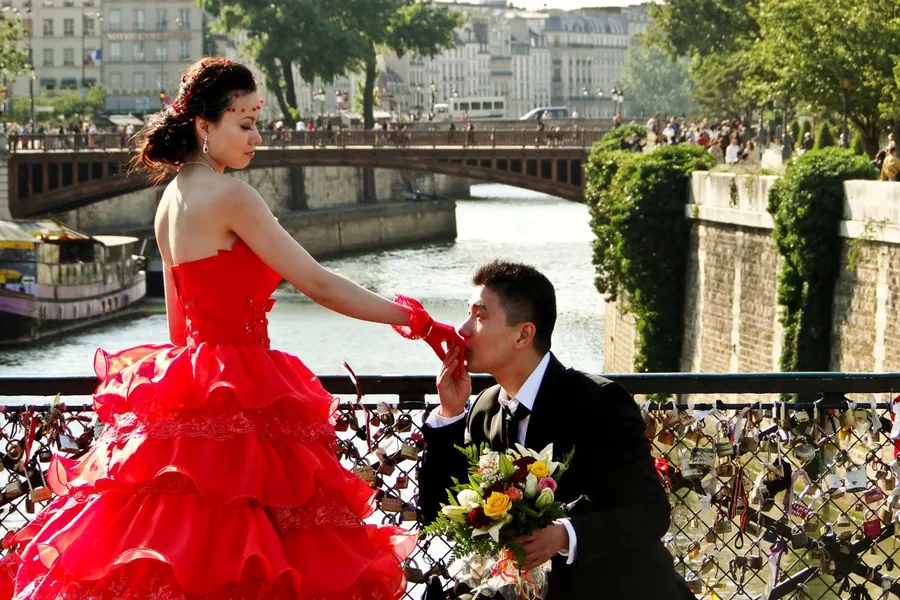
The drawing room: küss’ die Hand
“Kezét csókolom” is a calque of German “küss’ die Hand”, a greeting once common in Austria-Hungary, accompanied by a kiss on the hand (Wiktionary).
Said only by men to women, young and old alike; very polite (Wiktionary again).

The Romanian street: the unknown road HYPOTHESIS
The story goes that the Romanian phrase arrived by a Hungarian road. No dictionary gives that etymology: the dictionary page for “sărut-mâna” holds spelling only, and the verb comes from Latin “salutare”. Until a source turns up, the parallel stands in for the road.
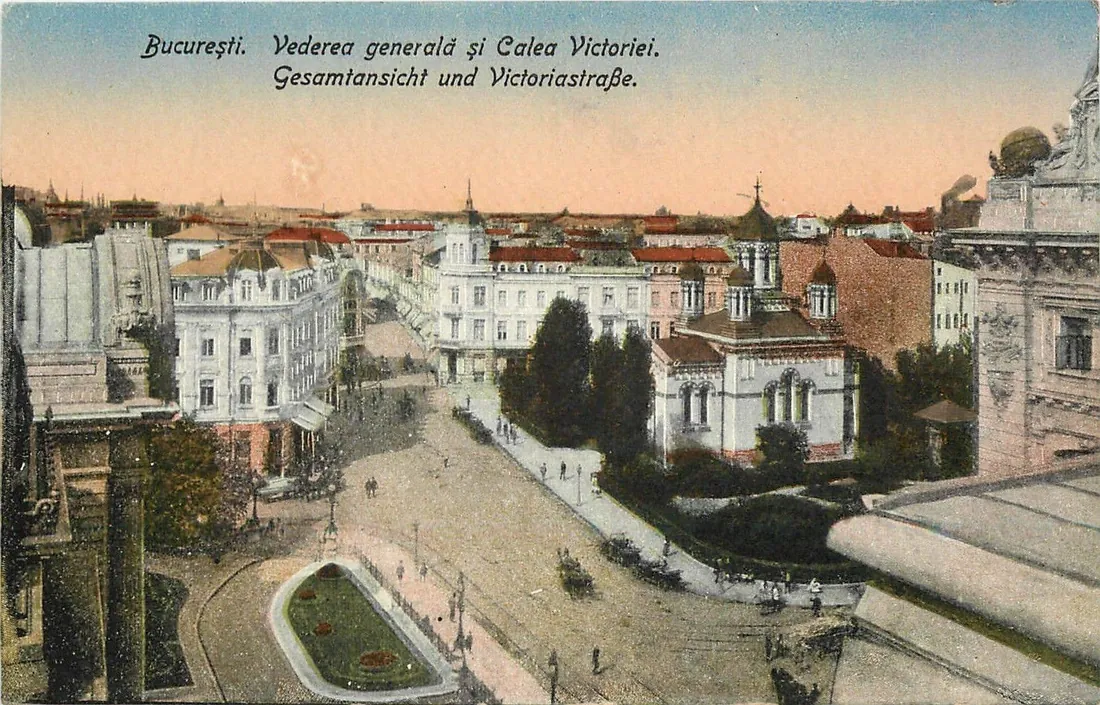

One gesture, three languages.
Five theories of hello
Five ways of saying hello
Romanian has five answers to how you greet. Each proposes something else: a wish, a service, a kiss or a stroke of luck.
bună ziua
The daylight wish
“Bună ziua, a greeting at meeting or parting, during the day” (DEX, s.v. zi).
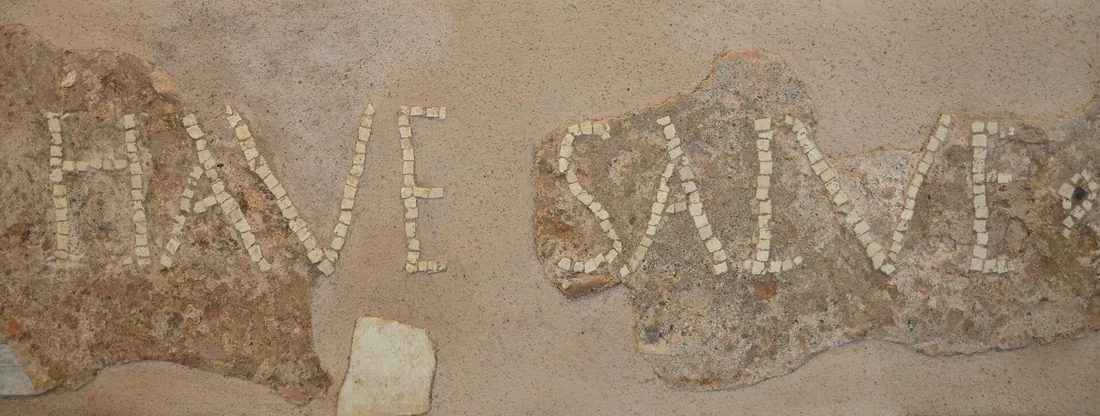
salut
The Latin back through French
“From French salut, Latin salus” (DEX). And “a saluta” comes “from Latin and Italian salutare” — the same root as “a săruta”.
servus
The servant’s bow
“A familiar greeting”, from German Servus (DEX, regional); MDA2 adds Latin servus and Hungarian szervusz. And szervusz comes from “servus humillimus”, “your humblest servant” (Wiktionary).
noroc
The toasted luck
“Noroc!” is a greeting too. The story of the glass and of fate lives at home:
sărut-mâna
The kiss
“A greeting said to a woman or an older person” (DEX). The hello that acts out a gesture.

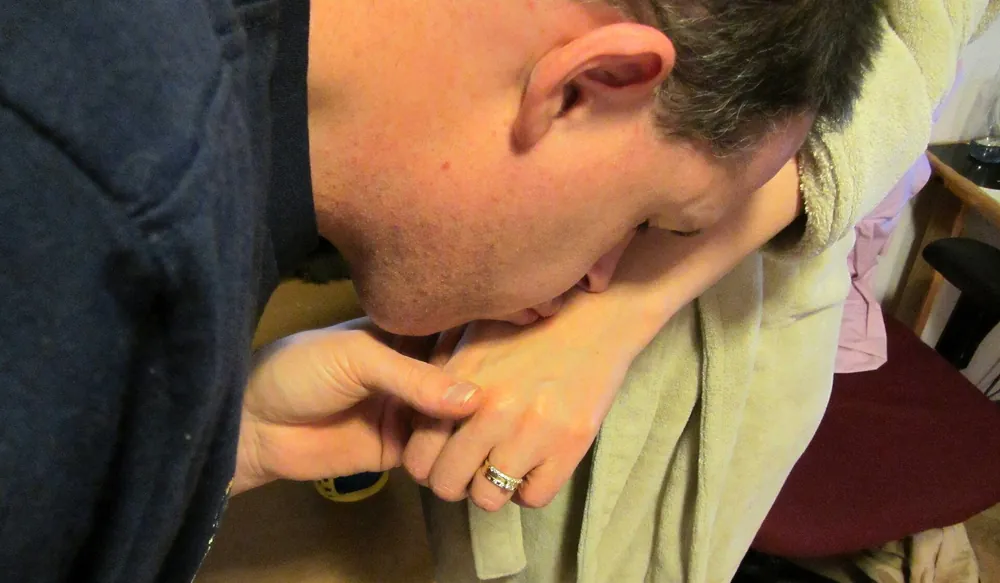
Today, on the street
Today “sărut-mâna” is said to women and older people, as a greeting or as thanks (DEX). The familiar form is “săru-mâna” (DOOM 3).

“M-am închinat cu sărut mîna, cucoană Zamfiriță”
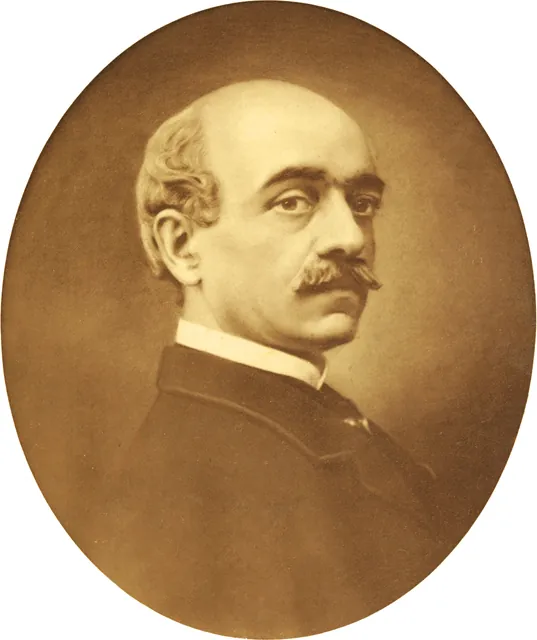

The greetings machine
The greeting ticket
Four stops, four ways of greeting. Pick the era; the ticket performs the fitting hello, with its addressee.
ROME
stop 1 of 4
- ROME — the master’s kissed hand. slaves → masters (after Nyrop) Seneca, On Benefits II.12: Caligula stretches out his foot to be kissed.
- THE DRAWING ROOM — Küss’ die Hand → Kezét csókolom. gentlemen → ladies A documented calque (Wiktionary); very polite.
- THE STREET — Sărut-mâna. women, older people (DEX) The road here: unknown. Read the hypothesis panel of chapter two.
- TODAY — bună ziua · salut · servus · noroc · sărut-mâna. anyone, anywhere The five theories live together.
Who do you say it to?
Five rounds, one kind of question. Every round teaches one dictionary row.
1 Who do you say “kezét csókolom” to?
Wiktionary: said only by men to women; very polite.
2 Who do you say “sărut-mâna” to?
DEX: a greeting or thanks for women and older people.
3 Who do you say “servus” to?
DEX, regional: a familiar greeting; MDA2: at meeting or parting.
4 When do you say “bună ziua”?
DEX, s.v. zi: a daytime greeting.
5 Where does “salut” come from?
DEX: “From French salut, Latin salus”.

In numbers
5
ways of saying hello
The five cards above, counted from data.
1563–1583
the copying of the Voroneț Codex
From the watermarks (Mareș); the oldest found attestation of the verb “a săruta” (MDA2: COD. VOR. 30/6).
Three untruths
“Sărut-mâna is borrowed from Hungarian”
No evidence. The Hungarian parallel is documented — “kezét csókolom” is a calque of “küss’ die Hand” — and no dictionary gives that etymology to the Romanian phrase.
“It is only said in one region”
The addressees are social, not regional: women and older people, in every dictionary. No examined source draws a boundary.
“The verb always meant the kiss”
The oldest recorded sense is “to greet” (COD. VOR. 30/6, MDA2; Scriban: “Vechĭ. Salut”).
Sources
Dictionaries first, then old texts and studies. Every risky claim points at its source; Wiktionary is tertiary and appears as such.
The claims, in order
| C01 | “Sărut-mâna”: greeting or thanks for women and older people | DEX ’09, via dexonline |
|---|---|---|
| C02 | Archaic “sărut dreapta”, for priests, rulers, boyars | DEX ’09, via dexonline |
| C03 | MDA2: first sense “A saluta”; “in the past, to masters” | MDA2, via dexonline |
| C04 | DOOM 3: “sărut-mâna” / familiar “săru-mâna” | DOOM 3, via dexonline |
| C05 | “A săruta” from Latin “salutare” | DEX ’09 + MDA2, via dexonline |
| C06 | “Kezét csókolom”, a calque of “küss’ die Hand” | Wiktionary (tertiary) |
| C07 | “Kezét csókolom”: men → women, very polite | Wiktionary (tertiary) |
| C08 | Scriban: “Vechĭ. Salut” | Scriban 1939, via dexonline |
| C09 | Caligula: kissed hands and feet | Seneca II.12 + Nyrop 1901 |
| C10 | “Salut” from French; “saluta” from Latin/Italian “salutare” | DEX ’09, via dexonline |
| C11 | “Servus”: familiar, regional; “servus humillimus” | DEX + MDA2 + Wiktionary |
| C12 | “Bună ziua”: a daytime hello and goodbye | DEX, s.v. zi, via dexonline |
| C13 | The Voroneț Codex, copied 1563–1583 | Mareș, via Wikipedia |
| C14 | Alecsandri: “M-am închinat cu sărut mîna” | DLRLC, via dexonline |
| C15 | “Noroc!” is a greeting too | the noroc-narok sibling |
Method
The Nyrop (1901) quotes keep his frame — “oriental” is his word. The short Seneca and Nyrop renderings into Romanian are this page’s, and so are the English wordings of the DEX entries. “The story goes…” marks the one hypothesis: the phrase’s road into Romanian. The pictures come from Wikimedia Commons, with their licences.
Dictionaries
Texts and studies
- Seneca, On Benefits (Gutenberg)
- Nyrop, The Kiss, ch. 5 (Wikisource)
- kezét csókolom (Wiktionary)
- szervusz (Wiktionary)
- The Voroneț Codex (Wikipedia)
- Coresi (Wikipedia)
The sibling
Type: Fraunces, Newsreader and Atkinson Hyperlegible, under the SIL Open Font Licence.