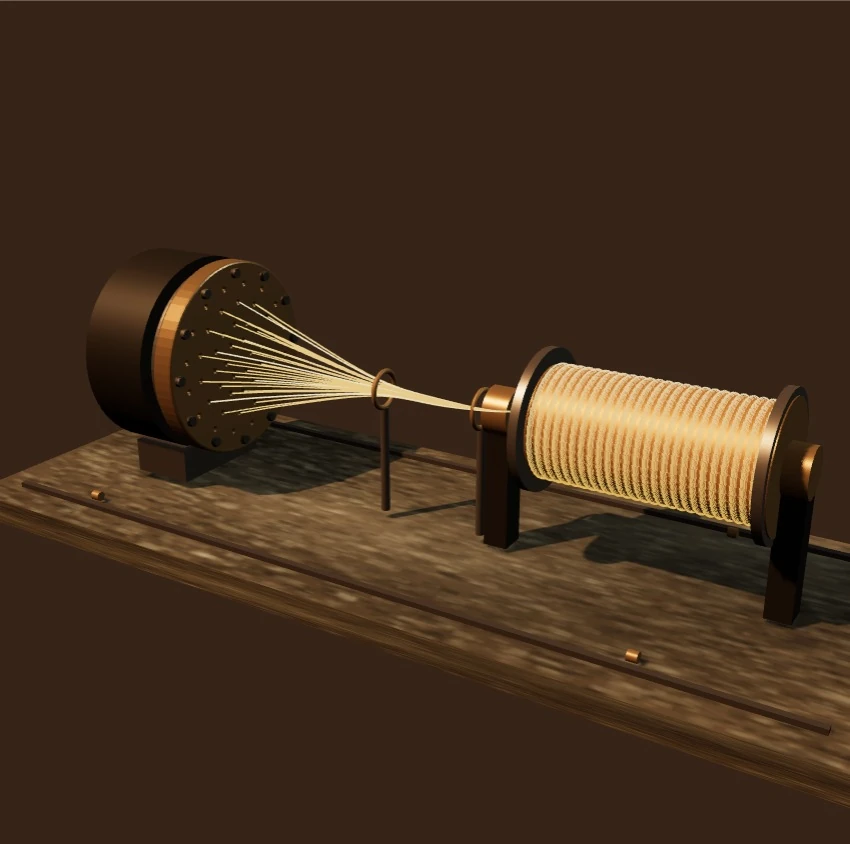
A metal spinning assembly in section with golden filaments and a bobbin of thread.
Filaments collect on a bobbin

Săvinești, Neamț

The first thread at Săvinești

A thin thread is hard to see while it moves. In April 1959, the first thread made by the new production line at Săvinești was enough of an event to make the newspaper’s front page. 1 2

Why build near Piatra-Neamț? Two things weighed in the choice of site: the Bâtca Doamnei hydroelectric station and a town close enough to recruit workers from. Before the first length of yarn could wind onto a bobbin, the mill needed both electricity and people who could learn to spin it. 2

Follow it back to the plate where more filaments are coming out of the holes than you could count while they are moving.

Start the story
1958–1959

Almost nobody had done this before

Some of the workforce came straight from the construction site where the machinery had been installed. Others brought experience from older industrial towns or learned from the German specialists who put in the first equipment. 2

The Zimmer engineers stayed in the area beyond the first installations. In the early 1960s, homes went up for them near the centre of Piatra-Neamț. Residents came to know the neighbourhood as the German quarter. 2

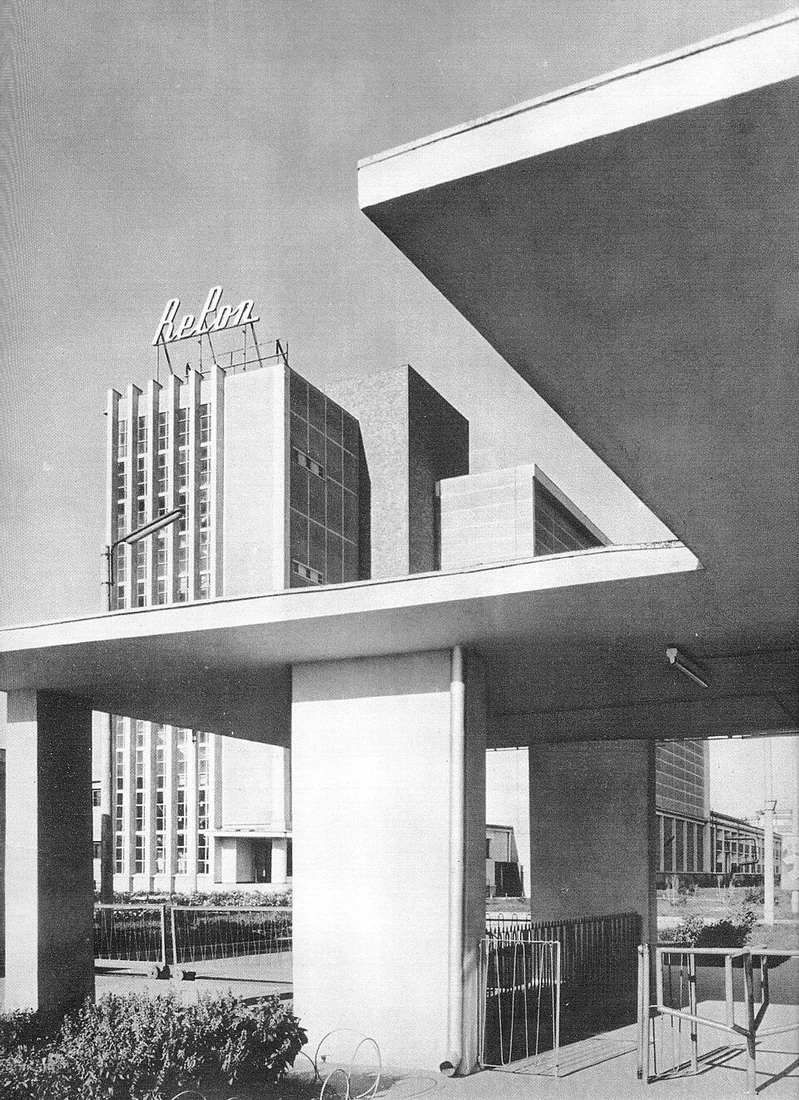
The exterior photograph gives you a sense of how much room the plant occupied. For the people who went inside, learning the new technology could start with a single strand. 4

Black-and-white view of the buildings at the Săvinești fibre plant.
An exterior view of the synthetic fibre plant, photographed before 1964. Regiunea Bacău, 1964 · Domeniu public / Public domain

Spinning

A plate separates the material into filaments

When material passes through several holes, individual filaments emerge on the other side. A textile thread can gather several of these filaments together. A close view reveals a step hidden inside the machinery.

Open the assembly to see the holes and where each filament begins. The 1959 newspaper names spinning as a stage in the new Săvinești production line. 1

Open the section
24 %

The route to the bobbin

One thread can contain several filaments

On the bobbin, the thread sits in close turns. Starting from the spinneret, you can track several filaments in the same thread. The section increases the spacing so you can see where they gather.

Choose how many filaments to follow. The count in the drawing is an example for reading the apparatus.

Visible filaments

The people at the plant

The trade was learned beside a machine

A study based on factory files and interviews describes how people learned to run the equipment. New workers watched experienced colleagues, foremen or technicians from other factories. On-site training grew as the factory complex was built. 2

For some workers the end of a shift meant a journey back to a village household. The interviews describe people fitting farm work around factory shifts. How long it took to get home, and how much daylight remained when they arrived, mattered alongside what they learned at the spinning machine. 2

Keeping a thread whole from the plate to the bobbin means looking at how it travels and knowing what to watch when it breaks.

What remains

Where you can still see the plant

CIMEC keeps a postcard of the Săvinești complex. Its catalogue records that demolition of the factory began in 2007. Period photographs preserve another view of the place. 3 4

Keep the thread in view alongside the factory and you can read it both ways. It runs from material to bobbin, and from an object used at home back to where it was made.

Sources

The section illustrates the principle of spinning through a perforated plate and gathering thread onto a bobbin. The assembly, hole count and thread paths are illustrative. The photograph shows the Săvinești plant, whose spinning machine is represented schematically.

  1. Scînteia, 26 April 1959

    A contemporary report announcing that the synthetic fibre line had gone into operation.

  2. International Review of Social History, study of chemical industry labour

    Research drawing on interviews, plant records and the training of workers at Săvinești.

  3. CIMEC, a postcard of the Săvinești complex

    The record of the industrial complex and later demolition of the factory.

  4. Photograph from Regiunea Bacău, 1964

    Public-domain period photograph.