The place
The place
In a village on the Caraș valley
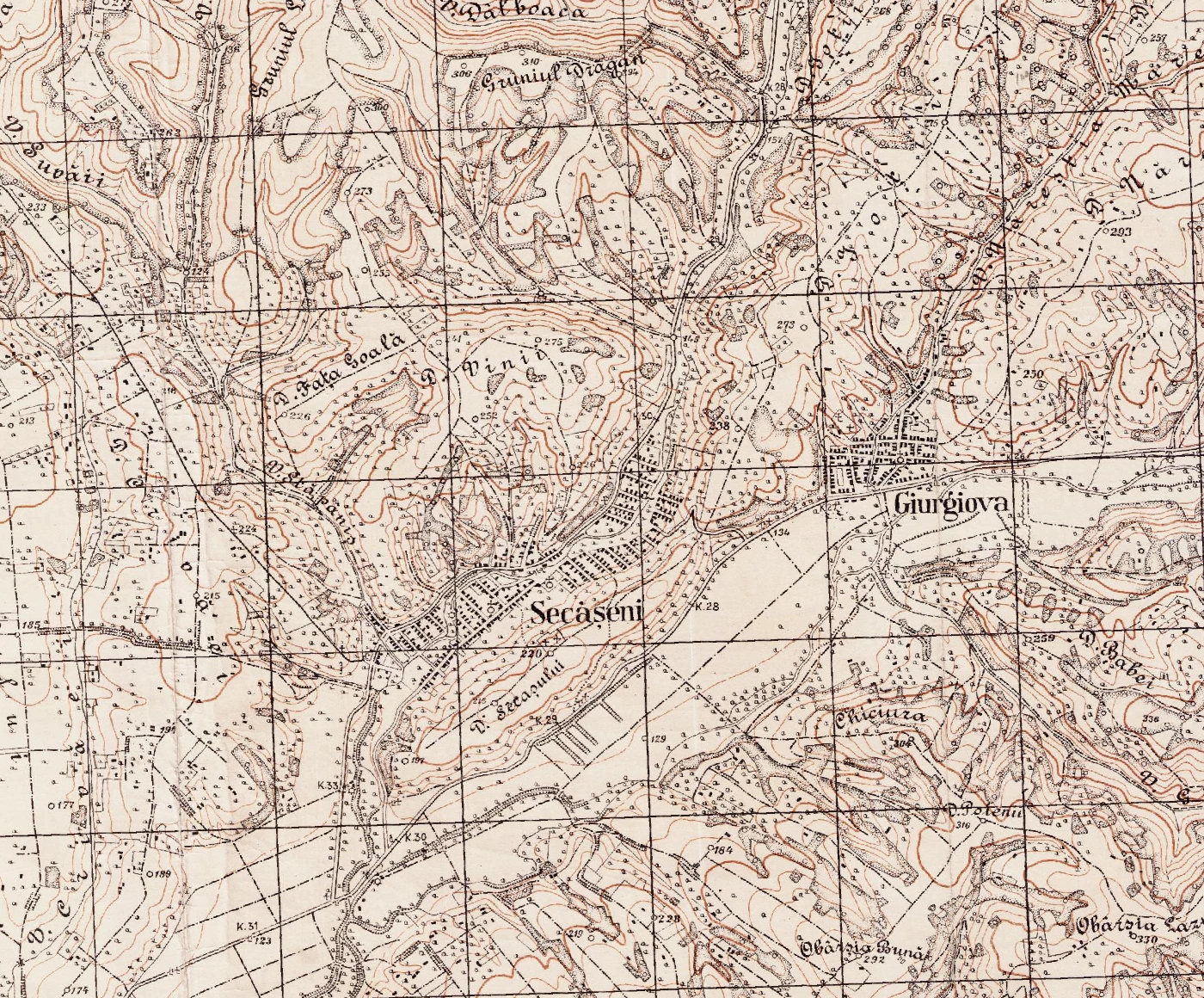
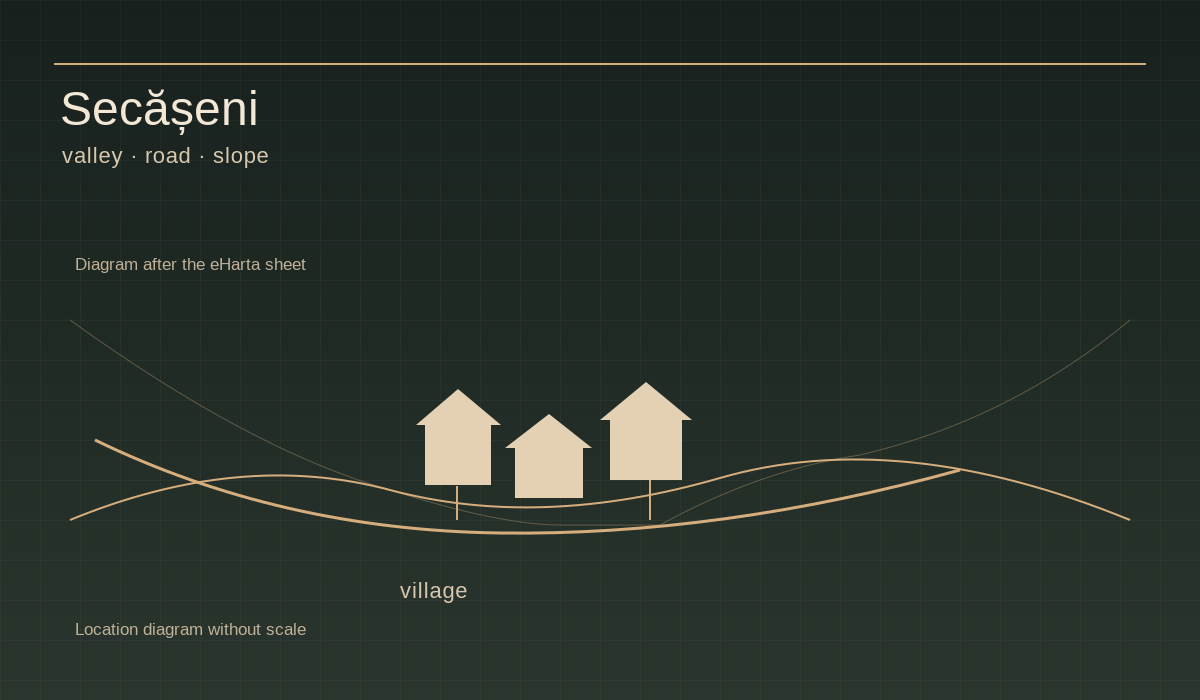
On today’s map, Secășeni appears as a line of lanes and homes in a side valley of the Caraș. The eHarta crop shows the settlement, roads and slopes, but it does not locate the church to a surveyed plot; the pin marks the village rather than claiming cadastral precision. That limit matters before we begin a building’s story. [2] [3]
In a 1958 study, priest Dănilă Puia describes the parish church and cites records kept in its archive. One is an 1838 repair contract: a document about people negotiating, measuring and paying for work. It lets us follow the church not through a single founding date, but through a sequence of changes. [2] [3]
The contract
Who worked—and who made the agreement
On 25 October 1838, church and village representatives contracted two masons from Oravița: Ioan Matiaș and Andriaș Witner. In Puia’s published account, the parties included priests, churchwardens, the village judge and councillors. The contract describes an obligation negotiated between a community and its craftsmen. [3]
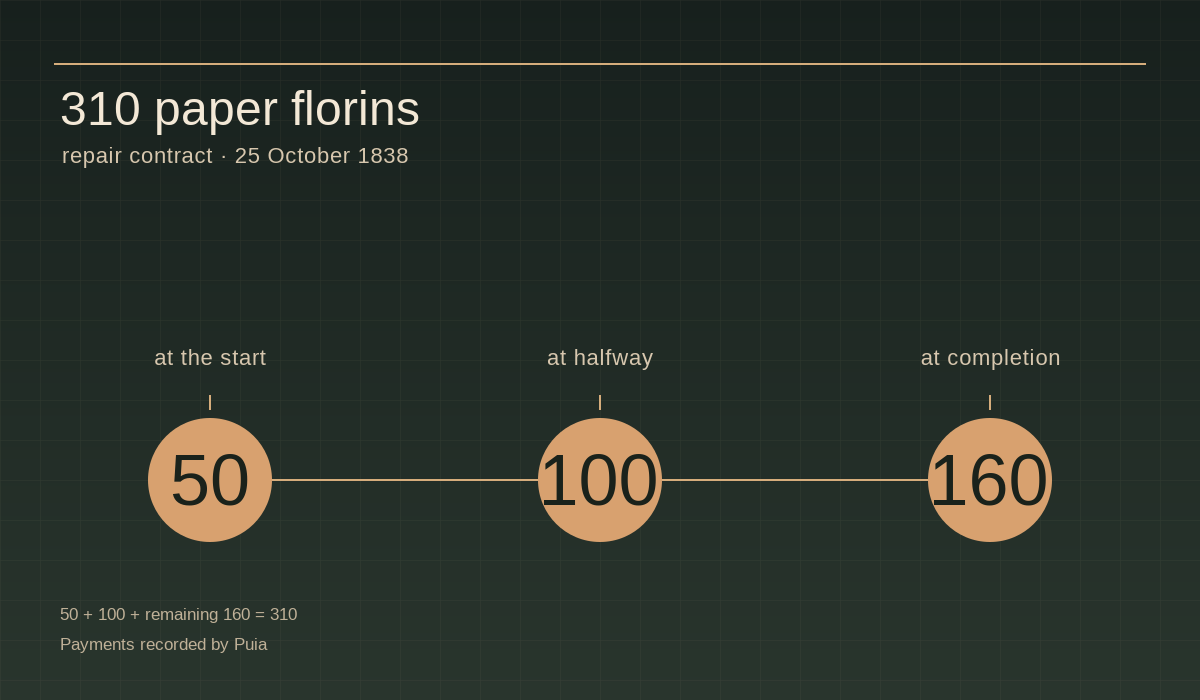
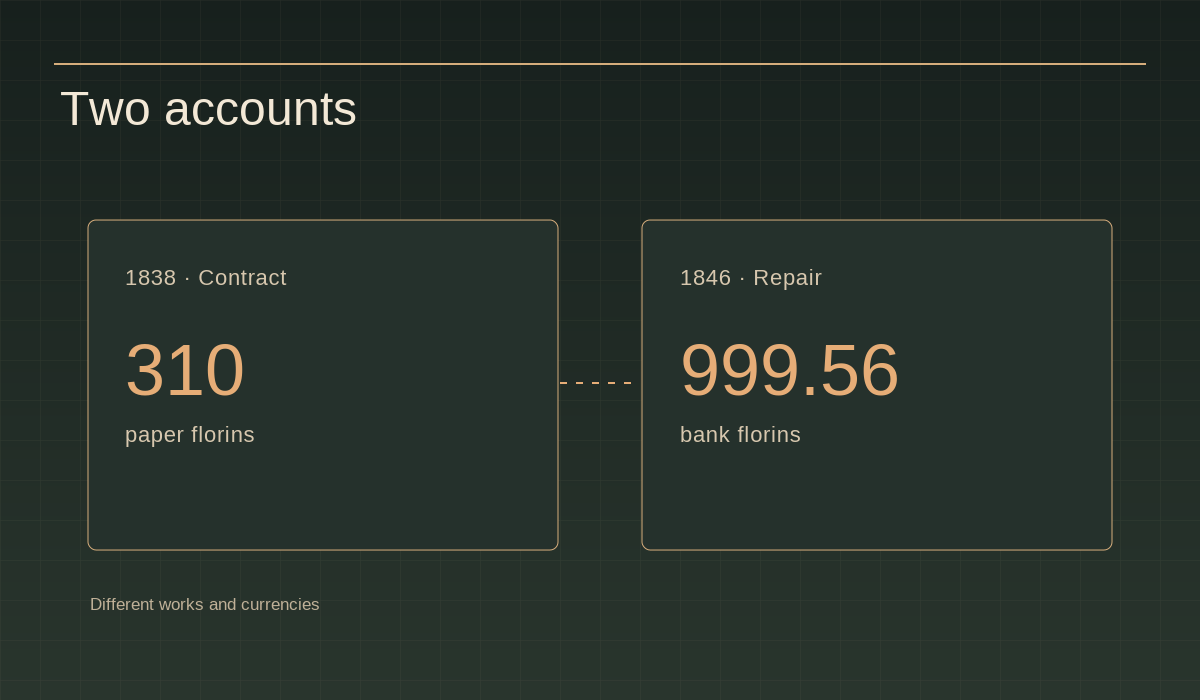
The contract set a price of 310 paper florins and three instalments: 50 at the start, 100 halfway through, and the balance on completion. The schedule divided risk: the masons received money before finishing, while the final payment depended on delivery. The 1958 article reports the contract’s terms; this is not a photograph of the original. [3]
The work
Seven șuci added to the tower
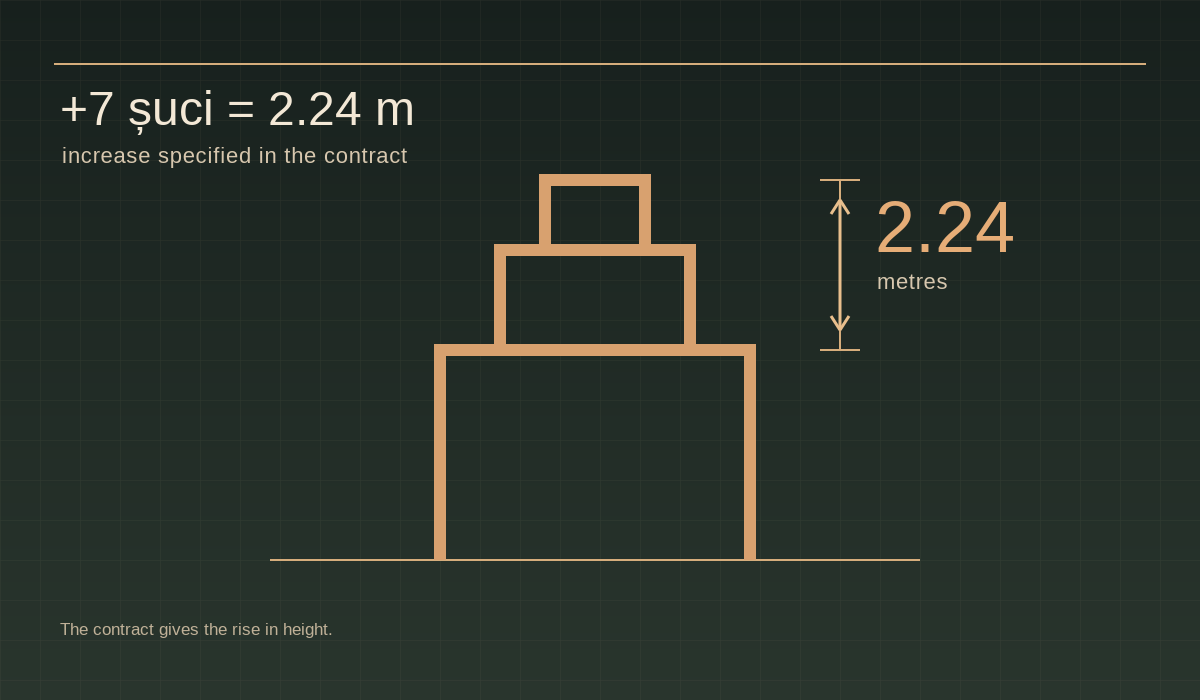
The masons were not hired for an undefined repair. The contract called for window repairs and a tower raised by seven șuci. Puia’s explanatory note converts seven șuci to 2.24 metres. An old unit translated into metres makes the archival wording easier to picture beside a person’s height. [3]
That does not tell us the tower’s total height, or prove that the added height survives unchanged. The adjacent drawing shows only the increase specified in the contract, not a complete tower. A precise measurement helps distinguish the proposed work from what we know about the building today. [3]
Maintenance
A different account in 1846
Eight years later, the article records a general repair and painted-shingle roofing, together valued at 999.56 bank florins. That amount belongs to later work; the 1838 contract used paper florins. We cannot compare the figures as if they were the same currency or the same estimate. [3]
The sequence changes how we see the church: the 1838 contract describes a defined commission, while the 1846 note points to maintenance that followed. Shingles, exposed to rain and snow, needed renewal; the reported cost also includes general repairs. No breakdown tells us what each part cost. [3]
The inscriptions
A brass disc and a metal cross
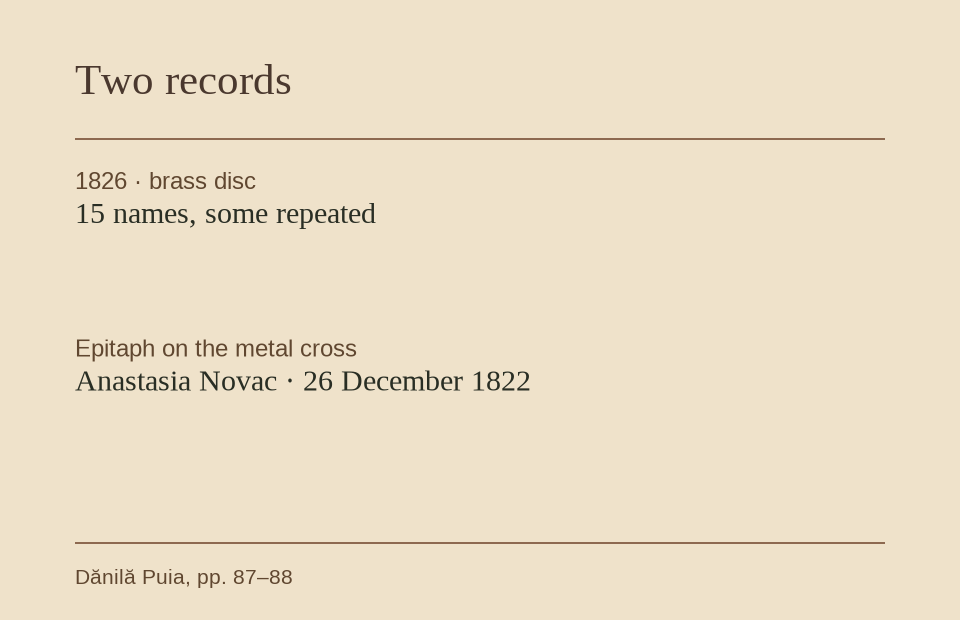
Puia describes a brass disc engraved with 15 names, some repeated. The year 1826 is in the centre. On the north wall was a metal cross with a German epitaph for Anastasia Novac, née Kerflies, who died on 26 December 1822 aged thirty. [3]
The name Anastasia appears twice on the disc. Puia wondered whether one entry referred to the woman on the cross and whether the Novac family had donated the disc. The repeated name raises the question. The two published inscriptions leave the link open. [3]
The chronology
One church, more than one proposed beginning
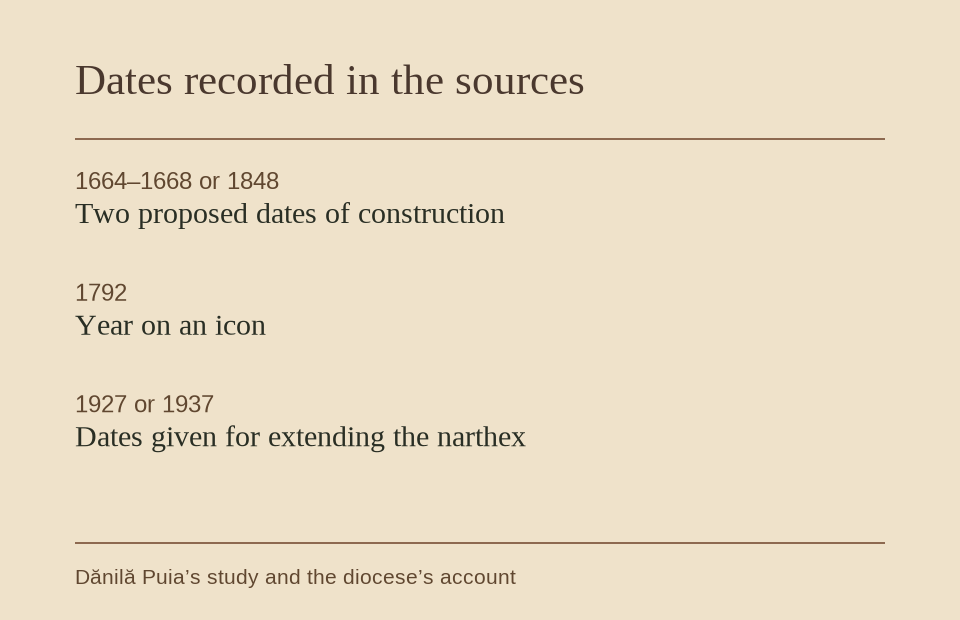
When was the church built? The Diocese of Caransebeș presents two views, 1664–1668 and 1848. An inscription on an icon gives 1792, which the diocese tentatively connects with a consecration. The date of construction remains disputed. [5]
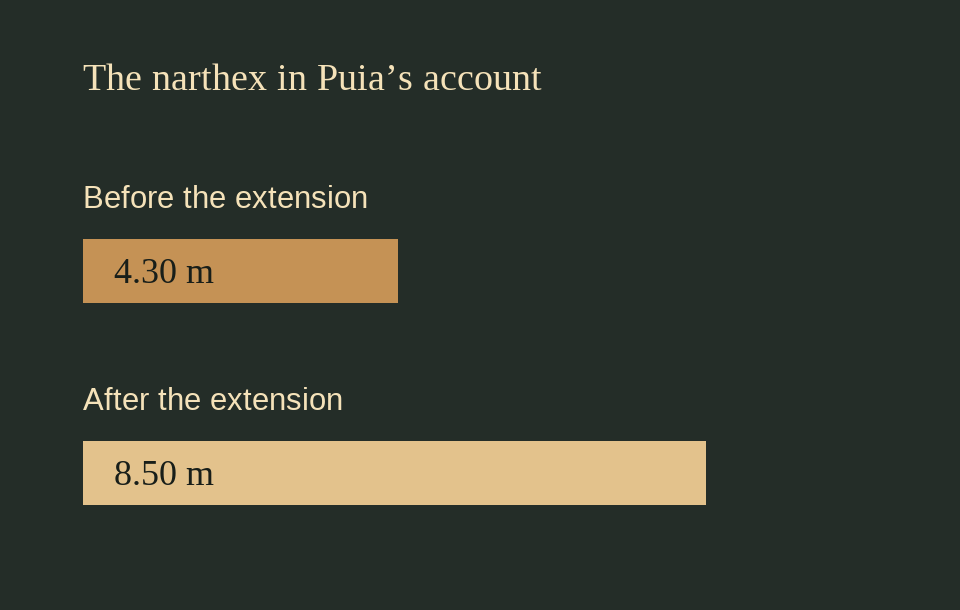
The two sources give different years for the narthex extension. In Puia’s account it grew from 4.30 to 8.50 metres in 1927, and a carved pillar was reused. The diocesan page dates the extension to 1937. The accounts do not establish whether they refer to the same stage of the work. [3] [5]