First train
16 May: the small ghetto
The first transport carried 3,007 people. It is the only train both lists give separately — and the figures agree. According to the encyclopedia, these were the Jews of the small ghetto — the villagers.
How many people the ghetto held, where it was, who was deported in May 1944, and what survives in the town today. The answers come from two lists — the Commission’s report gives each train’s figure, the Memorial Museum’s encyclopedia confirms the first train and the other three’s grouped total — and from a walk through today’s Sighet.
Next: the two lists
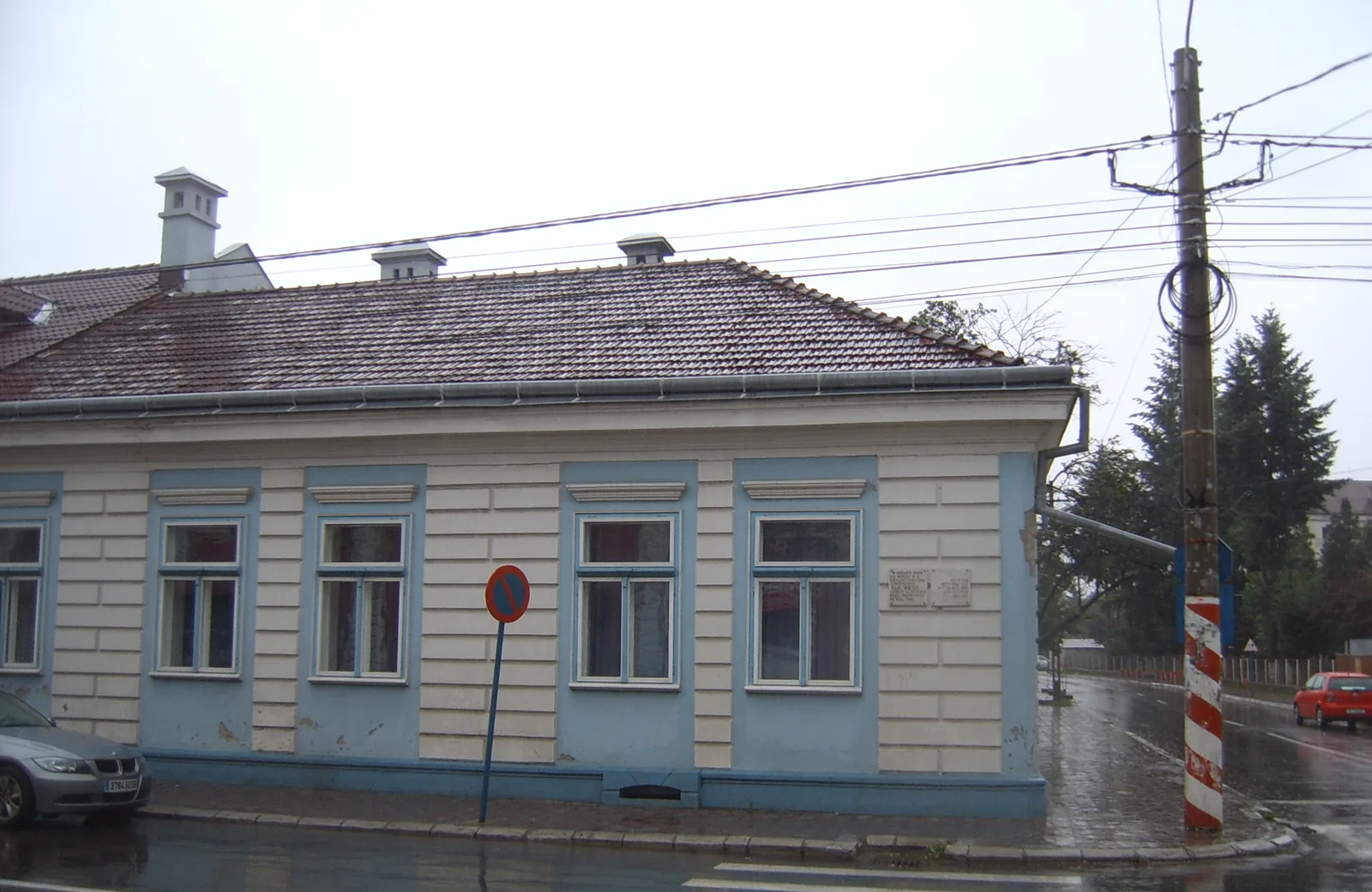
The house where Elie Wiesel was born, today a memorial house, photographed in July 2007: the front at 1 Tudor Vladimirescu Street. (Photo: Vberger, Wikimedia Commons, public domain.)
Sighetu Marmației is a small town at Romania’s northern edge, where the Iza meets the Tisza and the border with Ukraine runs through the middle of the valley. In May 1944, four trains left this town. The Commission’s Final Report says how many people each one carried: 3,007 people, 3,248 people, 3,104 people and 3,490 people. The destination was Auschwitz. Together, the four transports carried 12,849 people — nearly all that Jewish life in Sighet had been.
The town is different now. The questions are the same. How many people the ghetto held. Where it was. Who was deported in May 1944. And what survives in the town today. Each answer is written in two places: in the Final Report of the International Commission on the Holocaust in Romania, presented in Bucharest on 11 November 2004, and in the Holocaust Encyclopedia of the United States Holocaust Memorial Museum. Where the two do not agree, both figures stand, plainly marked as disagreeing.
The two lists deserve a look in the face. The train table comes from the Kassa (Košice) railway command, through the notes of Miklós Gaskó, and survives in the Commission report’s appendix. The table’s own footnote warns that its figures do not always coincide with other sources. The second list is the Memorial Museum’s encyclopedia, with its Sighet town sheet. The Final Report lists each train’s passengers. The encyclopedia confirms the four dates, 3,007 on the first train, and 9,842 on the other three together — that is, 3,248+3,104+3,490 grouped.
Jews had lived in Sighet and the surrounding Maramureș region for about 200 years. The community grew with the town, and by 1920 it numbered some 11,000 people, roughly 40 percent of the population. Sighet was a centre of Orthodox and Hasidic Judaism — the Wiesel Commission’s report places it among the largest concentrations of Orthodox and Hasidic Jews in Hungary in those years, and the Memorial Museum’s encyclopedia says that most of Sighet’s Orthodox Jews were Hasidic.
Most Jews in Sighet spoke Yiddish as a first language, and for those in need the community had built welfare institutions. The town held dozens of synagogues and study houses.
The Hungarian census of 1941 counted the town’s Jews. Here the lists do not agree. The Memorial Museum’s encyclopedia gives 10,144 Jews, almost 40 percent of the town. Yad Vashem’s memorial sheet gives 10,441 Jews, or 39.1 percent. Between the two stands a gap of 297 people (2.9%), which no source seen explains. No choice is made here. Both stand, as a measure of what lists can and cannot say.
In 1940, northern Transylvania, Sighet included, passed from Romania to Hungary under the Second Vienna Award — Nazi Germany and Fascist Italy redrawing the map. From 1940 to 1944, Sighet was part of Hungary. The antisemitic laws already in force in Hungary arrived with the new authorities: Jews were removed from public office, the young shut out of state schools almost entirely, newspapers and associations disbanded. Thousands of Jews from Maramureș were drafted into Hungarian forced-labour battalions; many died of the treatment and the conditions.
In the summer of 1941, the Hungarian authorities rounded up the Jews they deemed “aliens” and deported them toward occupied Galicia. Among them were hundreds of Jews from Sighet. Most reached Kamenets-Podolsk, where thousands were shot in late August 1941; by some reckonings perhaps as many as 2,000 of the deported ever returned to Hungary. The total of that deportation reads two ways: the Commission’s report gives between 16,000 and 18,000 people, the Memorial Museum’s encyclopedia gives more than 20,000. Both stand.
Elie Wiesel wrote about that summer in the first pages of Night. His childhood mentor, Moshe Lieberman — “Moishe the Beadle”— was among the deported and among the few who returned; he tried to tell Sighet what he had seen. By the book’s testimony, people refused to listen.
Between 1942 and March 1944, the Jews of Hungary lived in greater safety than those of most of occupied Europe: the Budapest government refused to deport them. In Sighet the laws and the forced labour went on weighing down.
In March 1944, Germany occupied its ally Hungary. In Sighet there followed weeks of decrees: a curfew for Jews, a ban on leaving town, marked shops, confiscated property, and from early April the yellow star from the age of six.
The ghetto was formed in April, after the middle of the month. It had two parts. The large ghetto, inside the town, consisted of four streets where Jews lived and held about 10,000 Jews from the town. The small ghetto, in a poor district of narrow alleys, took the Jews brought in from the villages. Altogether the ghetto held over 12,000 people — close to 13,000 once the villages of the Dragomirești, Ocna Şugatag and Vișeu de Sus districts are counted in. Among the villages whose Jews were brought into the ghetto were Berbești, Bârsana, Budești and Giulești. The names of the ghetto streets appear in no source seen; no map here draws them, and no list assigns people to streets.
The crowding was dreadful: nearly every room in every building, cellars and attics included, held between 15 and 24 people; Yad Vashem’s sheet gives about 20 people in nearly every room. The ghetto was fenced with barbed wire and guarded by the local police plus a special unit of 50 gendarmes brought in from Miskolc. According to the Final Report, the ghetto’s commander was the police chief, Tóth. The Miskolc gendarmes stood, according to the same report, under Colonel Sárvári. General authority lay with Mayor Rednik, again according to the Final Report. Inside, a Jewish council — led, according to Yad Vashem’s sheet, by Rabbi Samu Danzig — tried to mend the inhabitants’ lot a little — a communal kitchen, services, a few ordinances. Here too stood the “mint”: people were tortured into telling where they had hidden their valuables; among those who did the torturing was Colonel Sárvári.
The mass deportations from Hungary began on 15 May 1944, from east to west, on a timetable set by the Reich Security Main Office through the Eichmann special commando. The technical details had been settled in early May, in a memorandum by László Endre, an undersecretary of state in the Interior Ministry, discussed at Munkács on 8–9 May under the chairmanship of László Ferenczy, the gendarmerie officer in charge of the ghettoization and deportation of the Jews. The Sighet ghetto was among the first to be liquidated. Between 16 and 22 May, four transports carried its people to Auschwitz.
The first train did not carry the town. According to the Memorial Museum’s encyclopedia, the 16 May transport carried the 3,007 Jews of the small ghetto — the villagers — and the Jews of the large ghetto were deported only on 18, 20 and 22 May: 9,842 people in three transports. Wiesel wrote in Night about the walk to the station: people loaded by the Hungarian police into freight cars, 80 to a car, the doors sealed.
The nearly 13,000 deportees from Sighet were among the first Jews taken from Hungary to Auschwitz-Birkenau that summer. Of the Jews taken from Hungary to Auschwitz-Birkenau between 15 May and 9 July 1944 — about 420,000 people —, about 330,000 were murdered in the gas chambers on arrival, according to the Memorial Museum’s encyclopedia. The same encyclopedia’s Sighet sheet says the same of Sighet’s deportees: most were murdered on arrival, very few survived. The sources consulted do not establish an exact number of survivors among those deported from Sighet: no list seen gives a number.
The report: 3,007 + 3,248 + 3,104 + 3,490 = 12,849. The encyclopedia: 3,007 + 9,842 = 12,849. The last three, grouped: 3,248+3,104+3,490 = 9,842.
16 May — Commission Report: 3,007; Memorial Museum: 3,007 — agree.
18 May — Commission Report: 3,248; Memorial Museum: — (the three together: 9,842).
20 May — Commission Report: 3,104; Memorial Museum: — (the three together: 9,842).
22 May — Commission Report: 3,490; Memorial Museum: — (the three together: 9,842).
The 1941 census — Memorial Museum encyclopedia: 10,144; Yad Vashem: 10,441 — disagree; gap 297.
Touch a row to see it alone.
The first train appears with its date and with the figure from each list; the other three appear with the report’s figures, grouped against the encyclopedia’s 9,842. The last row holds the two figures of the 1941 census open: 10,144 (the encyclopedia) and 10,441 (Yad Vashem).
Source of the figures: the Kassa railway command’s table, in the report’s appendix (each train), the encyclopedia’s Sighet sheet (the first train and the grouped total), and Yad Vashem’s sheet (the census’s second figure).
Four trains, two lists. The Commission’s report gives each train’s figure; the Memorial Museum’s encyclopedia confirms the four dates, 3,007 on the first train and 9,842 on the other three together. Keep scrolling: the rows check one by one.
First train
The first transport carried 3,007 people. It is the only train both lists give separately — and the figures agree. According to the encyclopedia, these were the Jews of the small ghetto — the villagers.
Second train
The second transport carried 3,248 people, from the Commission’s report — the only list that gives each train. The encyclopedia does not split the three transports: it gives 9,842 people together. According to the same sheet, from here on the trains carried the Jews of the large ghetto.
Third train
The third transport carried 3,104 people, from the Commission’s report. The encyclopedia counts it inside the 9,842 people of the three transports together.
Fourth train
The last transport carried 3,490 people, the fullest of the four — still from the Commission’s report. 3,248+3,104+3,490 make 9,842: the encyclopedia’s grouped reckoning.
The reckoning
The report’s four figures added together make 12,849 — the total the report prints. The encyclopedia reaches the same total by another road: 3,007 plus 9,842, where 9,842 are 3,248+3,104+3,490 grouped. Two reckonings, one number.
The limit
The 1941 census gives 10,144 (the Memorial Museum’s encyclopedia) and 10,441 (Yad Vashem): a gap of 297 people that nobody explains.
Hungarian and German authorities cooperated in organising the ghettoisation and deportations. In Sighet, Hungarian civil officials, police and gendarmes selected the ghetto sites, rounded up and guarded the Jews and put them on the trains. The schedule followed RSHA instructions worked out by the Eichmann special commando. The destination, Auschwitz-Birkenau, was run by Germans. The Munkács conference of 12 April 1944 settled the measures for Maramureș, and the Sighet meetings of 15 April chose the ghetto sites and the 20 round-up commissions. At the head of the county stood Szaplonczai, according to the Final Report.
What the Hungarian authorities did is documented in the Commission’s report; what the German authorities did is documented in the same report and in the museum’s encyclopedia.
In 1947, Sighet still had 2,308 Jews — survivors who returned, plus Jews settled there from other parts of Romania. The community of before never grew back.
Among the deportees was Elie Wiesel, born in Sighet on 30 September 1928. In May 1944 he was deported to Auschwitz with his family, at 15. His mother and younger sister were murdered on arrival; his father died in Buchenwald; he and two older sisters survived. He studied in Paris and wrote La Nuit, published by Minuit in 1958; in English the book is quoted here in Marion Wiesel’s 2006 translation. In 1986 he received the Nobel Peace Prize, “messenger to mankind: his message is one of peace, atonement and dignity”. He became one of the voices that asked the world to remember: he chaired the American presidential commission on the Holocaust and was the driving force behind the creation of the United States Holocaust Memorial Museum. He died on 2 July 2016, at 87.
Also from Sighet was Dr Gisella Perl, a survivor too, whose memoir is called I Was a Doctor in Auschwitz. The two memoirs are the two doors into the town’s story: one a 15-year-old boy’s, the other a doctor’s.
Three stops, one town, two tenses: each place guards one part of the 1944 list.
The house where Elie Wiesel was born and spent his childhood today holds the Elie Wiesel Memorial House, part of the Maramureș Museum. The walk starts here.
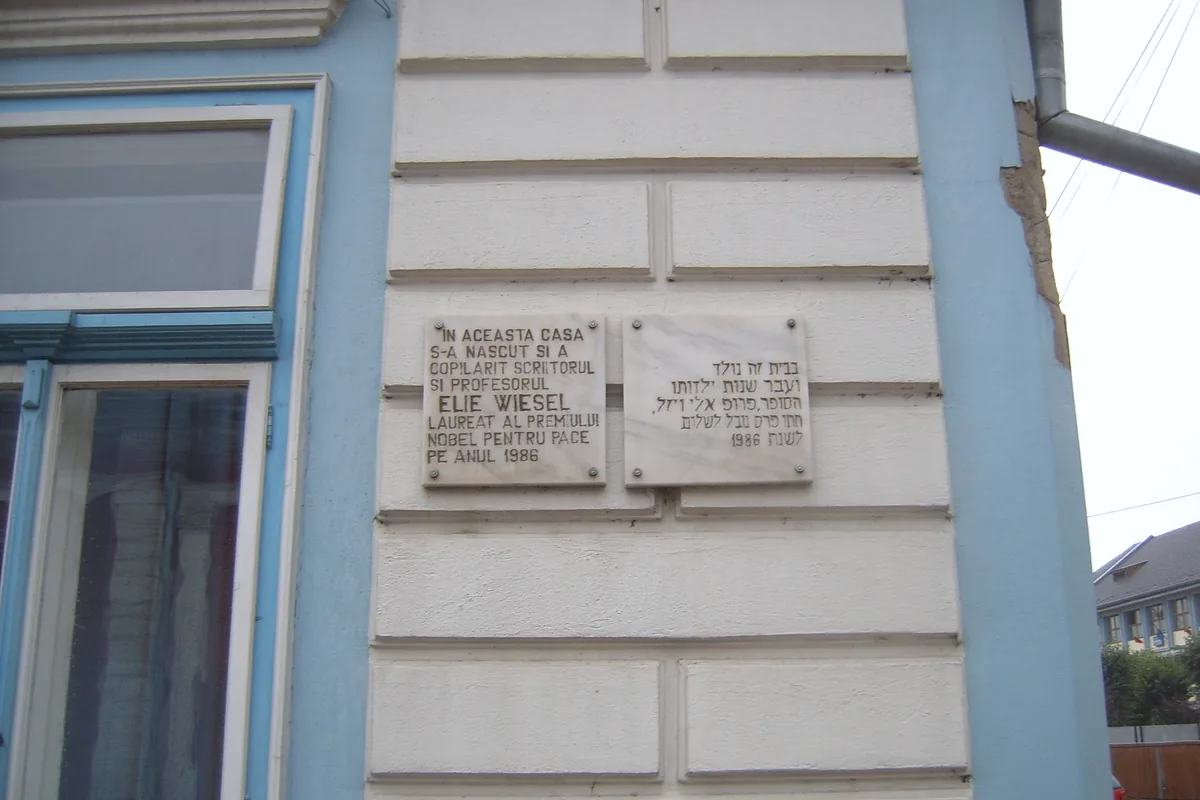
From here, about 230 metres in a straight line lead to the Klaus Wijnitzer Temple, the synagogue that still serves the community.
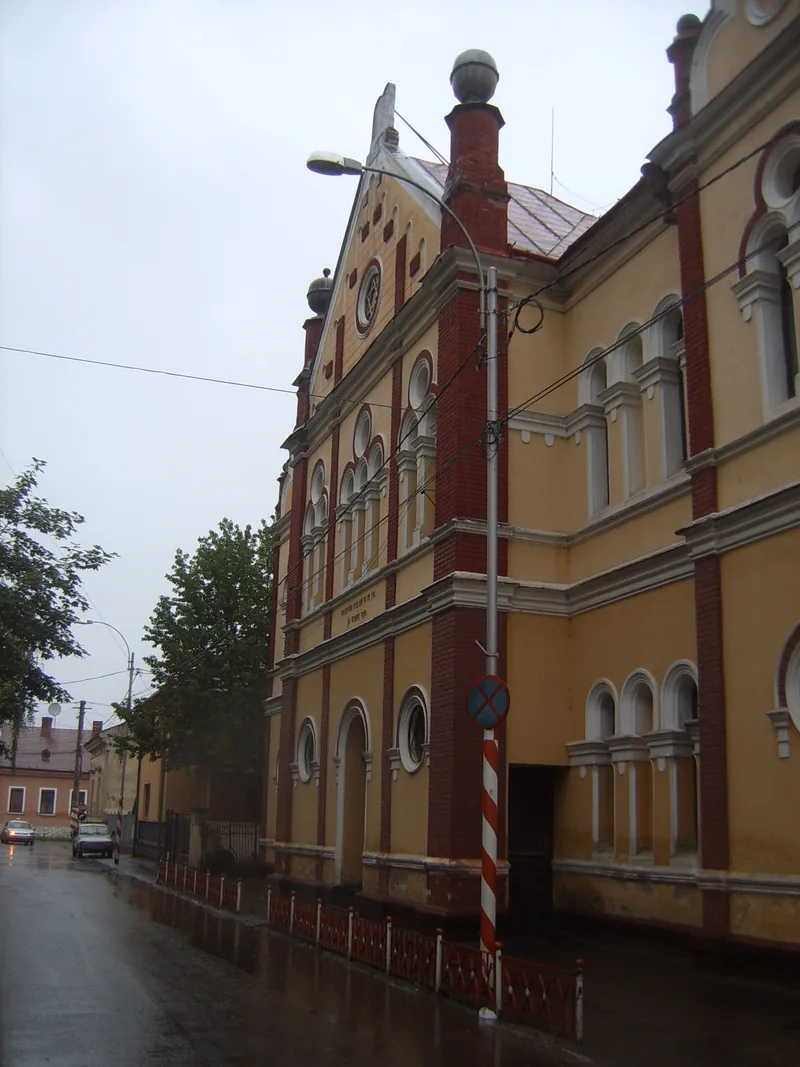
The third stop is the memorial monument on 75 Gheorghe Doja Street. No distance is printed here: the monument’s address is seen in a single source.
For reading: Night, in any edition, and Dr Perl’s memoir; for checking: the Commission’s report and the encyclopedia’s Sighet sheet, both public.
The town also holds the Memorial to the Victims of Communism and to the Resistance. But that is another territory and another story — the communist prison’s, told by the sister page on Romania’s political prisoners. The two stories are not mixed: beyond lies only the Memorial’s own gate, for whoever wishes to go further.
What a reader can do. Visit the three places. Read Night and Gisella Perl’s book. That is all. Nothing else is asked.
Coming back from Sighet, one thing is worth carrying home: these figures belong to no author. They belong to the lists — to the Kassa railwaymen’s table and to the memorial sheets — and the lists do not agree on every figure. Check them. The Commission’s report and the Memorial Museum’s encyclopedia are public; the memorial house is open to visitors. And if you reach the station, remember that the four trains of May 1944 left from there — and that the first of them carried not the town, but the villages.
See also: Romania’s political prisoners — the story of Sighet’s communist prison · Maramureș · Cimitirul Vesel