The building

The building
Look through the cell door
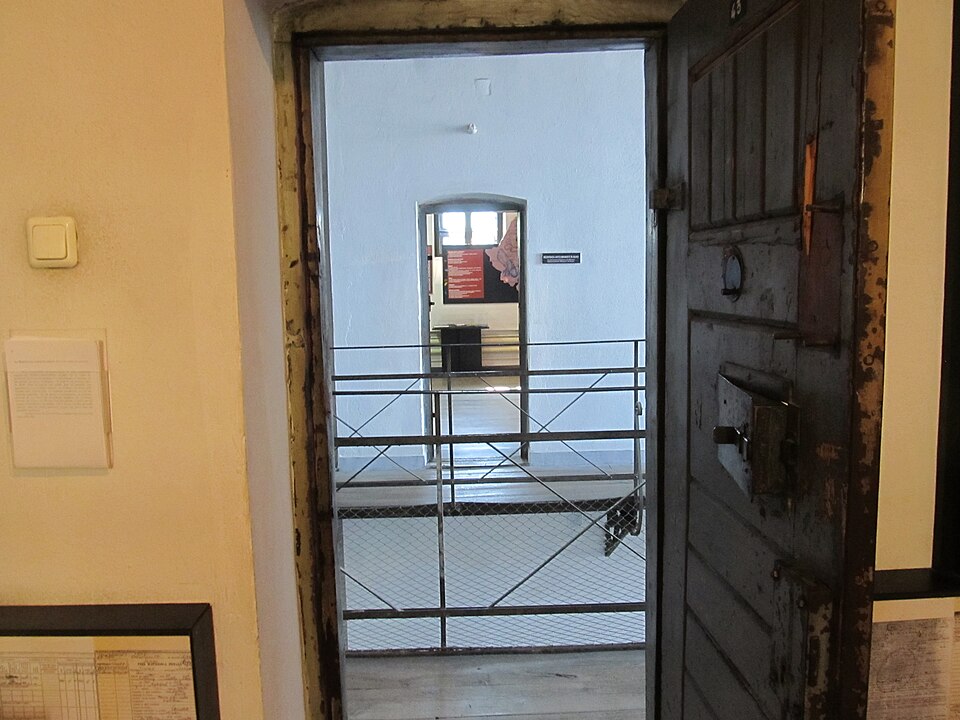
The Memorial pin brings you to the former prison in Sighetu Marmației, the building that now houses the museum. A 2012 photograph looks from a cell through a heavy open door towards a museum room. Two uses meet in the same frame: a place of detention and a place where documents and testimony are presented. [6] [1]
The prison was built in 1897 for common-law prisoners; political detainees were held here in several periods too. The museum’s official history says political prisoners from Maramureș were brought here after 1947, alongside political, cultural and religious figures imprisoned between 1950 and 1955. [1]
The prison closed in 1977. The building later served as a warehouse and production space before becoming a ruin. The Memorial’s story begins when a group proposed using this building to make the history of repression accessible to the public. [1] [3]
Strasbourg, 1993
A proposal for the abandoned building
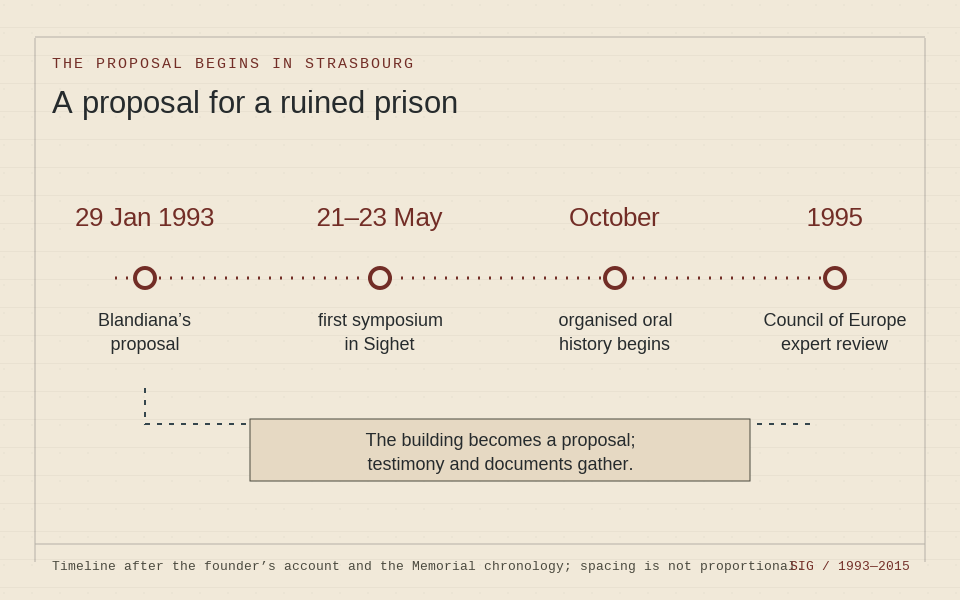
On 29 January 1993, Ana Blandiana met Catherine Lalumière, then Secretary General of the Council of Europe, in Strasbourg. In Romulus Rusan’s account, Blandiana proposed turning the former prison into a museum to the victims of communism. The proposal sought support for a project of memory and research; the building still needed repairs and exhibitions before it could welcome visitors. [3]
According to the same account, the Council of Europe placed the project under its auspices after an international review lasting about two years. Rusan describes this as moral recognition. The team continued raising money for the building and gathering documents for the exhibitions. [3] [2]
Other parts of the project began that same year. The Memorial dates its first Sighet symposium to May and the establishment of its Oral History Department to October 1993. The building, the research and preparation for visitors moved forward in parallel; museum work would continue for several more years. [4]
Research work
The museum begins by gathering evidence
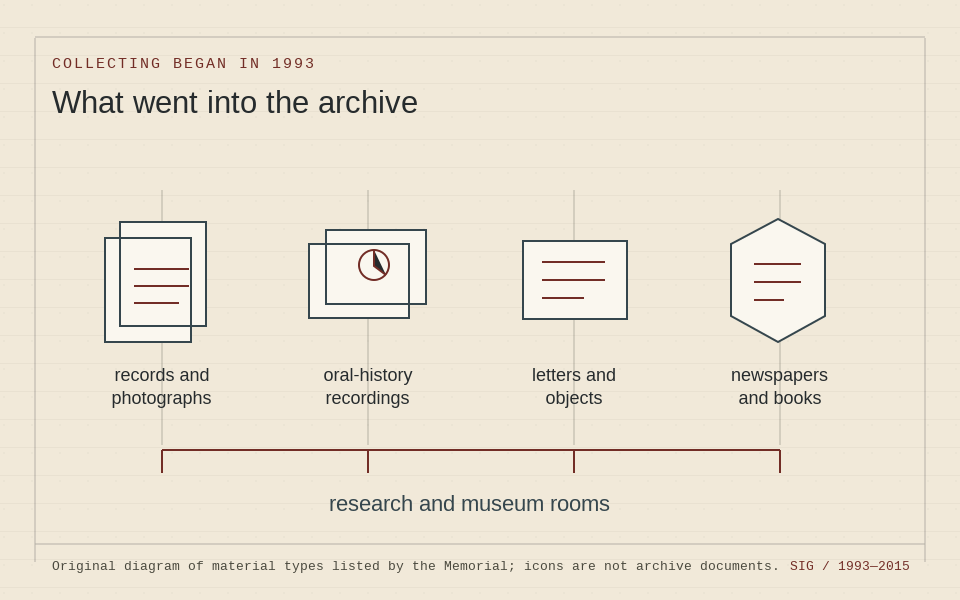
The founders describe two needs from the start: money to repair the building and a database from which the museum could be made. In 1993, the International Centre for Studies into Communism began recording oral histories and collecting photographs, documents, letters, objects, newspapers and books. [2]
These materials do different jobs. A photograph fixes a person or place in view; a document preserves an administrative trace; objects show things people kept; oral recordings carry memories in the witnesses’ own words. The Memorial says these materials entered exhibitions alongside testimony, studies, statistics and documents. [2]
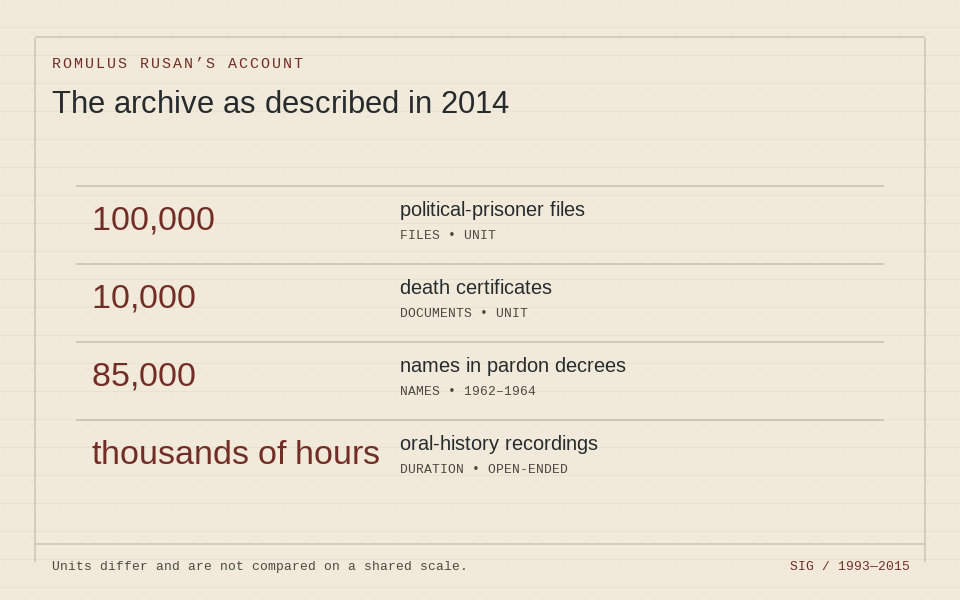
In an account published in 2014, Romulus Rusan listed 100,000 political-prisoner files, 10,000 death certificates, 85,000 names in pardon decrees from 1962–1964 and thousands of hours of oral history. Read each figure with its unit in view: files, certificates, names or recording hours. [3]
The building
Repairs had to come before the exhibitions
The Memorial describes the building in 1993 as ruined and damp. After a competition in 1995, rehabilitation design went to UMROL of Cluj, and construction to Stelid of Baia Mare. Work took place in stages and lasted several years. [2]
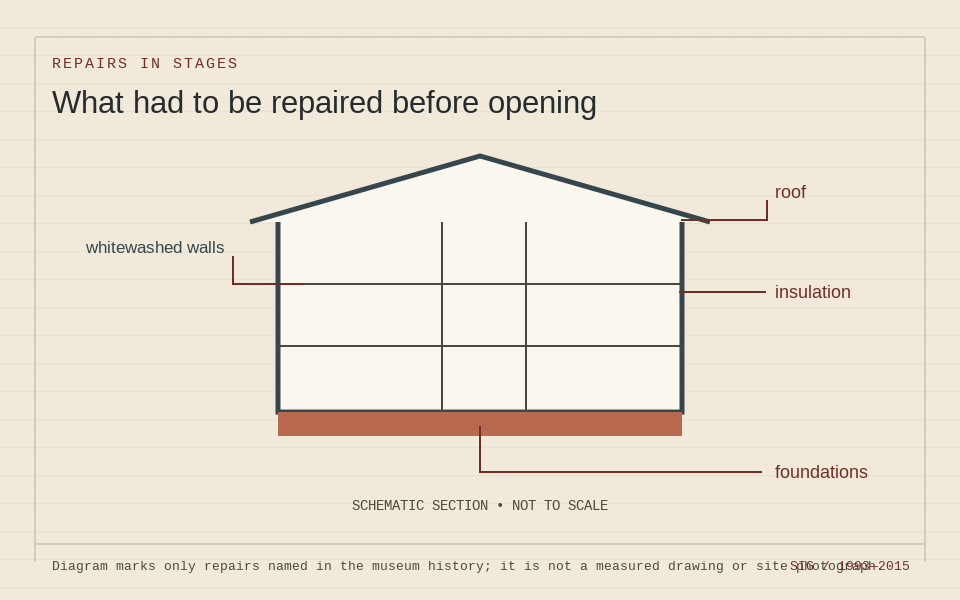
The official history lists repairs to the foundations, insulation and roof. Interior walls had been repainted during the building’s later use and no longer retained their 1950s appearance; they were whitewashed. The drawing marks these kinds of work only. It does not reproduce the prison plan or dimensions. [2]
Repairs and documentation moved together. One made the building ready for visitors; the other gathered material with which its cells could become museum rooms. The project needed builders, researchers, architects, donors and volunteers over several years. [2] [3]
The 1997 law
The law linked the prison to a burial ground
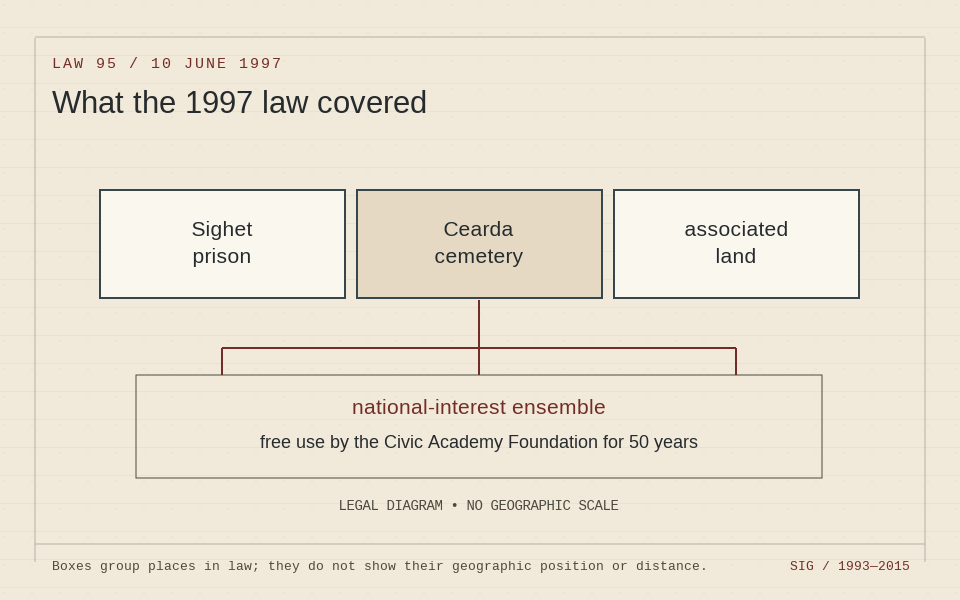
On 10 June 1997, Law no. 95 declared the ensemble of Sighet Prison, Cearda cemetery and associated land to be of national interest. Article 3 granted the land and buildings to the Civic Academy Foundation for free use for 50 years; Article 4 assigned the Foundation responsibility for their development. [5]
The Memorial grew out of a civic initiative begun in 1993, and it opened on 20 June 1997. The June act recognised an ensemble larger than the prison building and established who was responsible for it. [5] [2]
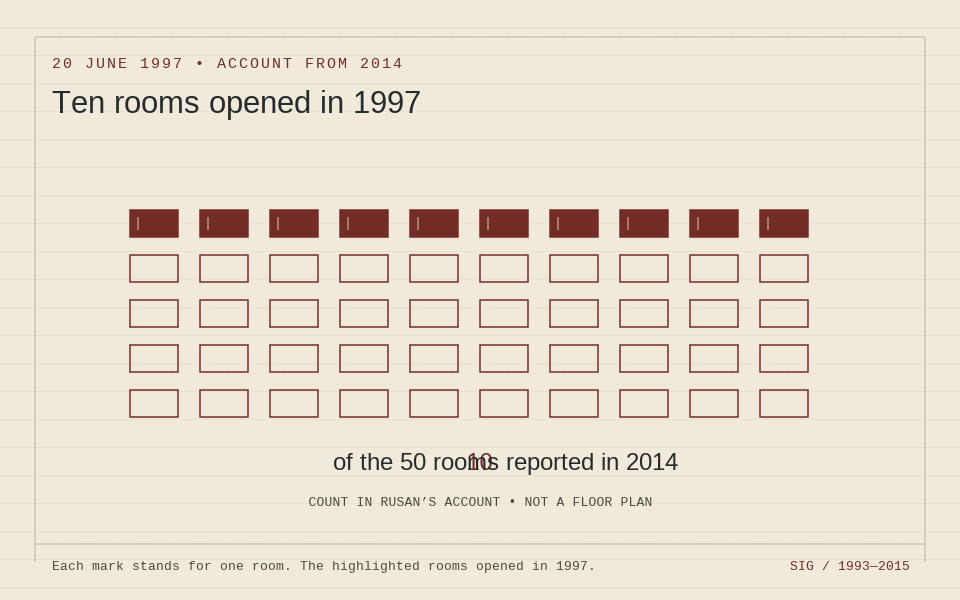
In 2014, Romulus Rusan said that ten of the museum’s then fifty rooms had been restored and opened in 1997. The partial opening began a longer conversion: visitors entered the museum while repairs and the fitting-out of cells continued. [3]
By 2015
The last cell became a museum room
From its opening on 20 June 1997, the Memorial turned several cells into museum rooms each year. The institution says the rooms were arranged chronologically, with themes on communist repression and the replacement of the rule of law by a totalitarian system. [2]
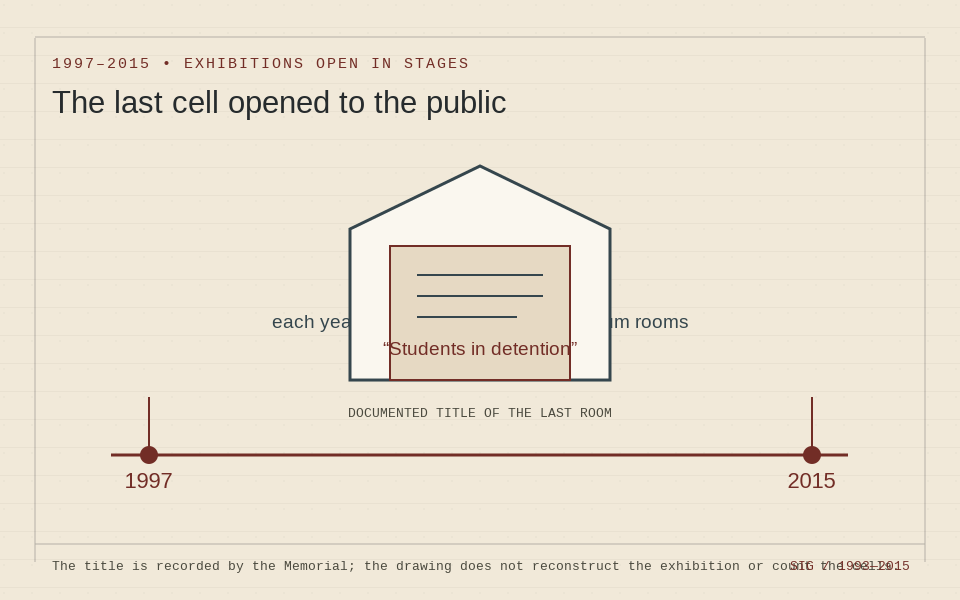
The last room, titled “Students in detention,” opened in 2015. This is the recorded endpoint of the gradual installation. The drawing shows only the documented title and dates; it does not reconstruct the exhibition or suggest what detained people experienced. [2]
When you visit, follow the cell doors and then enter the rooms where documented histories are presented. The prison remains recognisable, while the museum’s purpose was built inside it through testimony, records, photographs and research gathered over time. [6] [2]