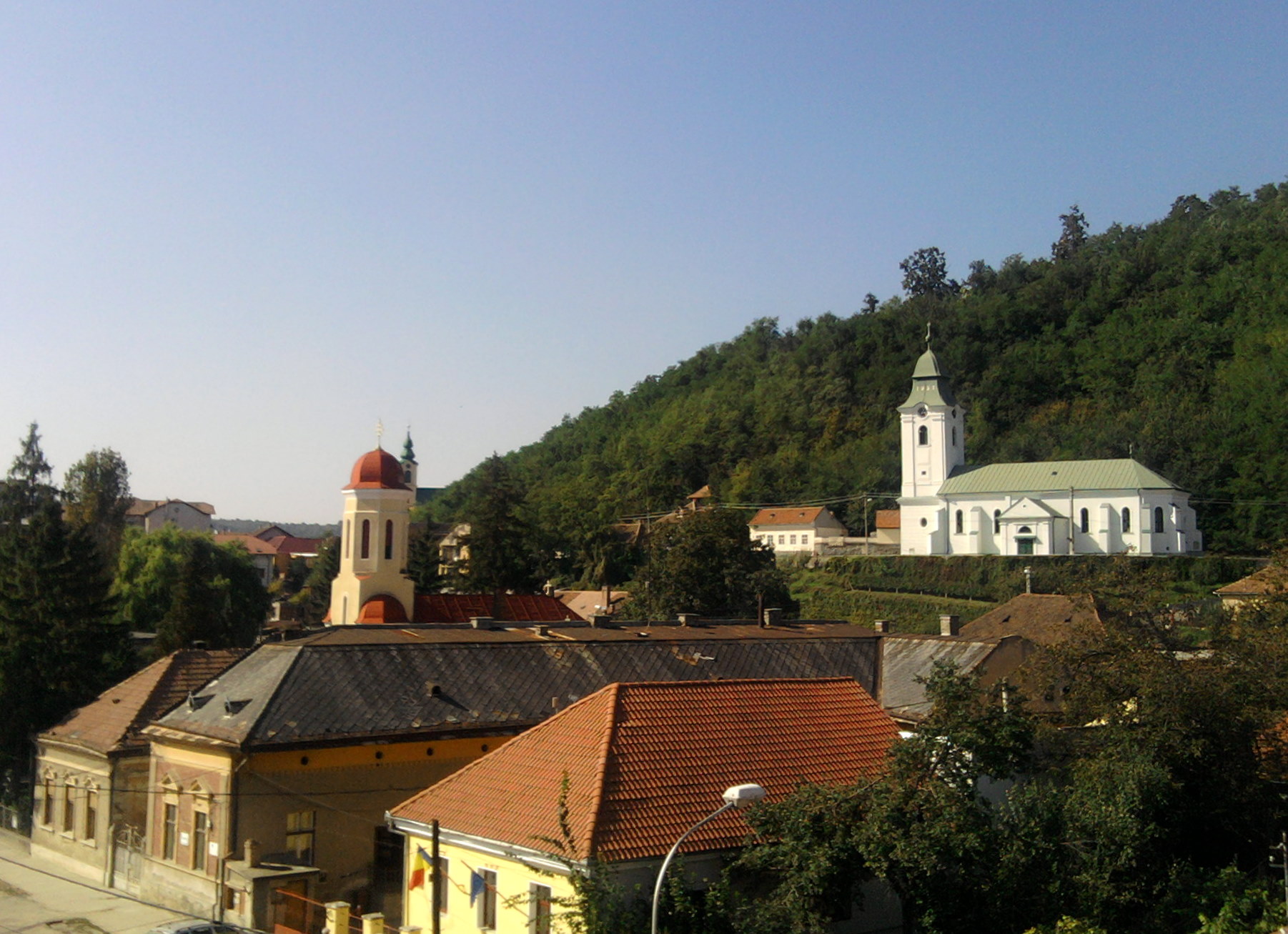
Măgura hill
Măgura hill
Two boys find gold in 1797
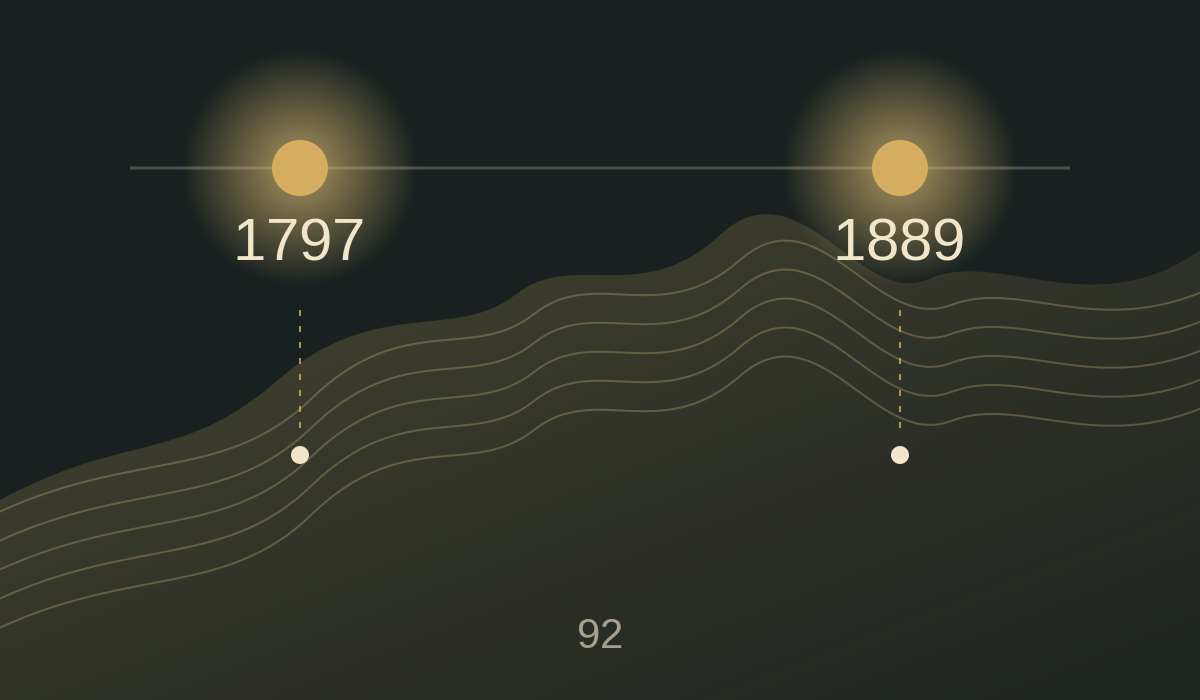
On 3 August 1797, two boys tending goats on Măgura saw something shining in a gully while picking plums. They dug out more gold objects and fragments of an earthenware vessel. The first discovery begins this way, not as an archaeological excavation but as an accident on the hillside. [1] [7]
On 20 April 1889, almost a century later, two farm workers came across a second group while planting potatoes. The archaeological atlas says the objects formed a compact cluster a short distance below ground, probably wrapped in cloth. A Hungarian National Museum curator adds that a thick lime crust meant the finders did not recognise their value at first. [1] [4]

The 1797 find
A gold chain worn across the body
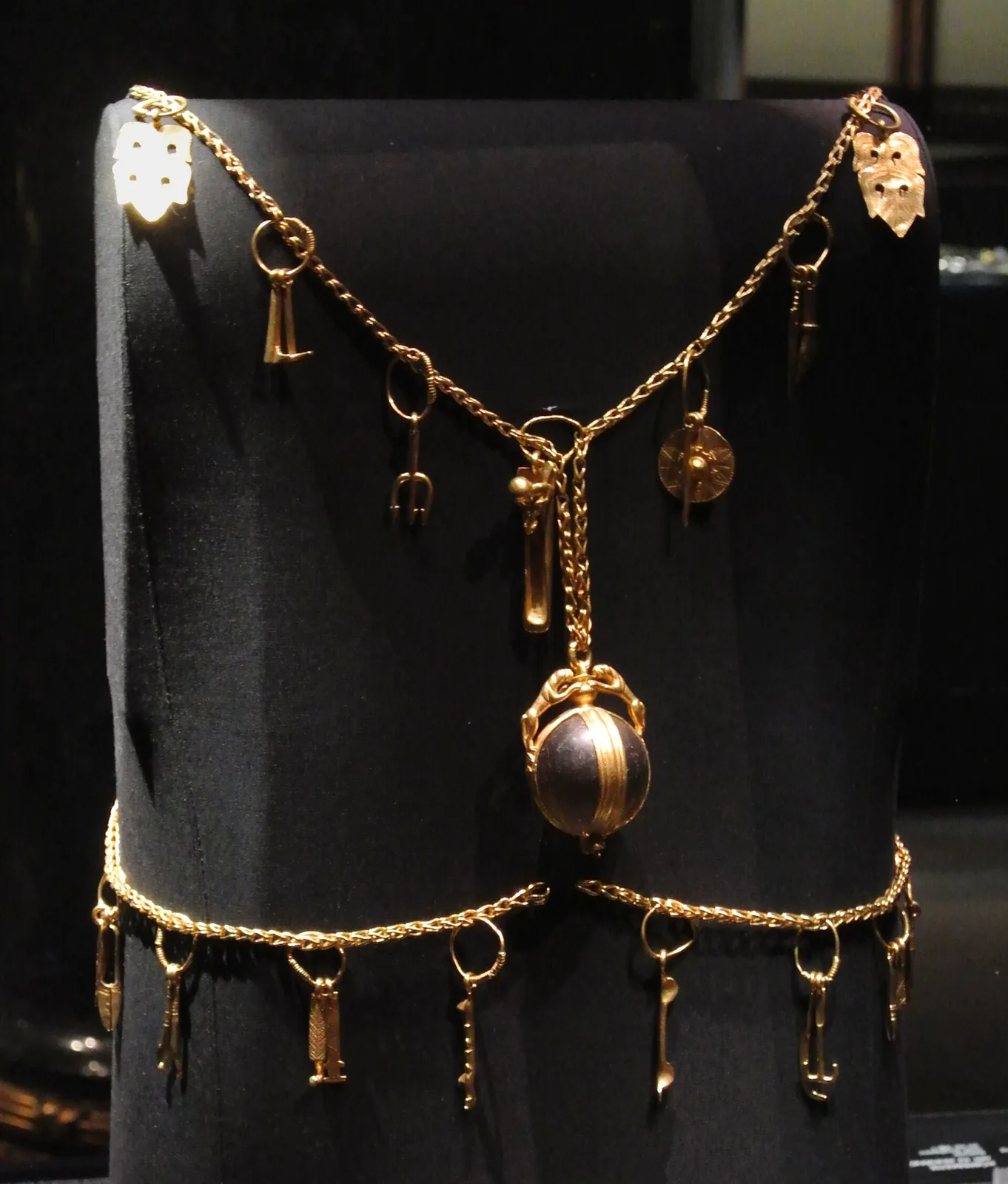
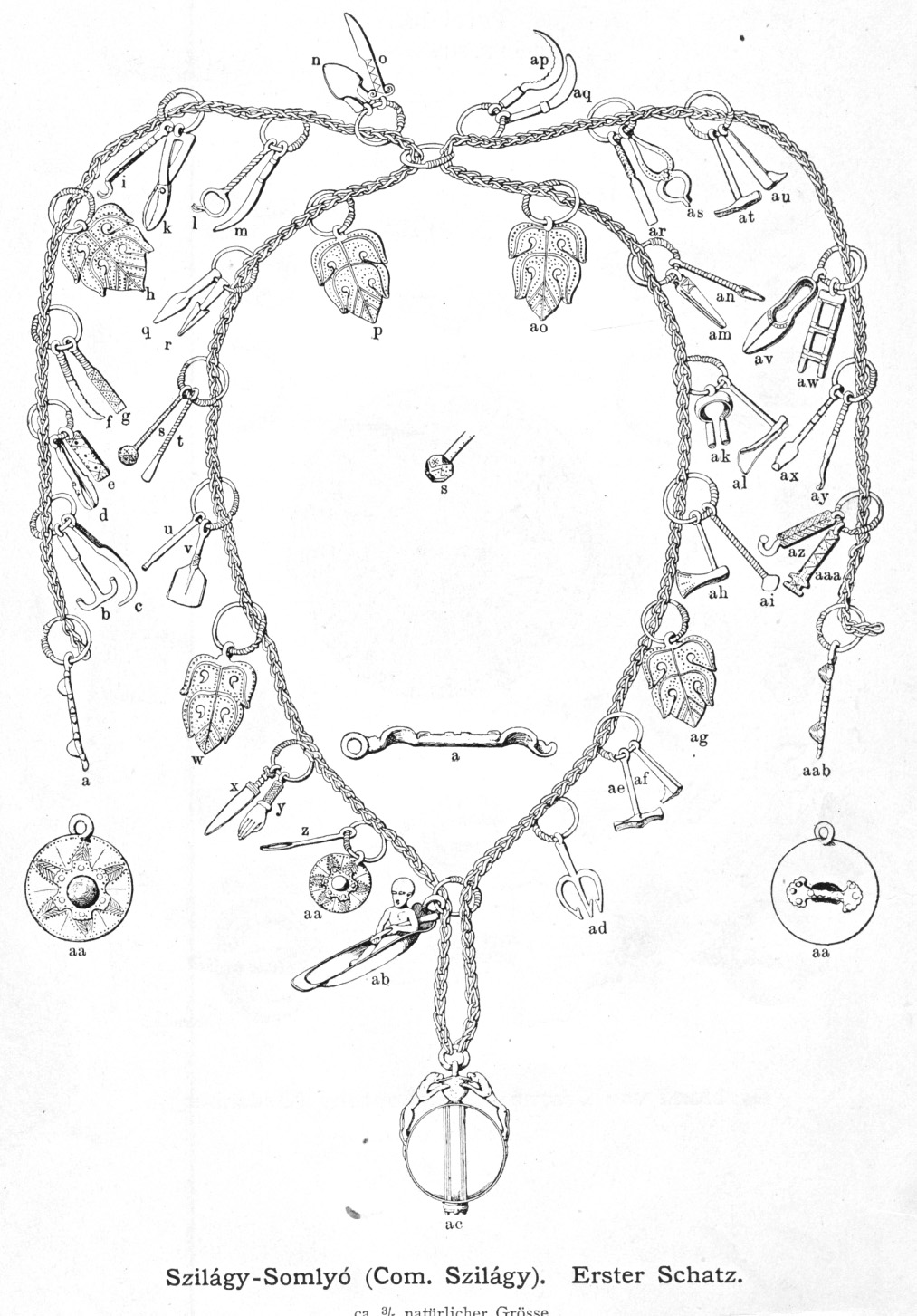
The object you recognise first is the chain: it has 52 pendants and a large smoky quartz at its centre. The Kunsthistorisches Museum gives its length as 176 cm and its weight as 712.8 g without the stone pendant. The museum suggests that it was probably a woman’s body ornament. [5]
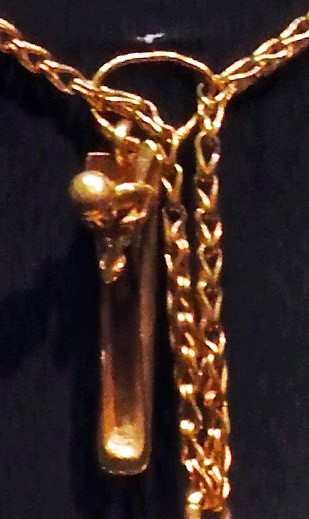
The museum also explains how it may have been worn: across the chest and back, with the two ends hooked into a ring below the quartz. A modern photograph shows it on a black display mount; József Hampel’s 1905 drawing spreads it out like a map of miniatures. Neither image tells us who wore it. [5] [11] [8]


The pendants
What miniatures hang from the chain?
Among the pendants are vine leaves, miniature weapons and tools. One represents a man in a dugout canoe. At this scale, they are gold ornaments, not working tools. The museum describes them as amulet-like pendants. [5] [9]
The close-up shows how small the rower scene is; the 1905 plate shows it among the other miniatures. The tools may evoke familiar activities, and the weapons other forms of prestige, but there is no evidence that the chain belonged to a craftworker, warrior or named individual. [11] [9]

Roman gold and imitations
Imperial portraits turned into pendants
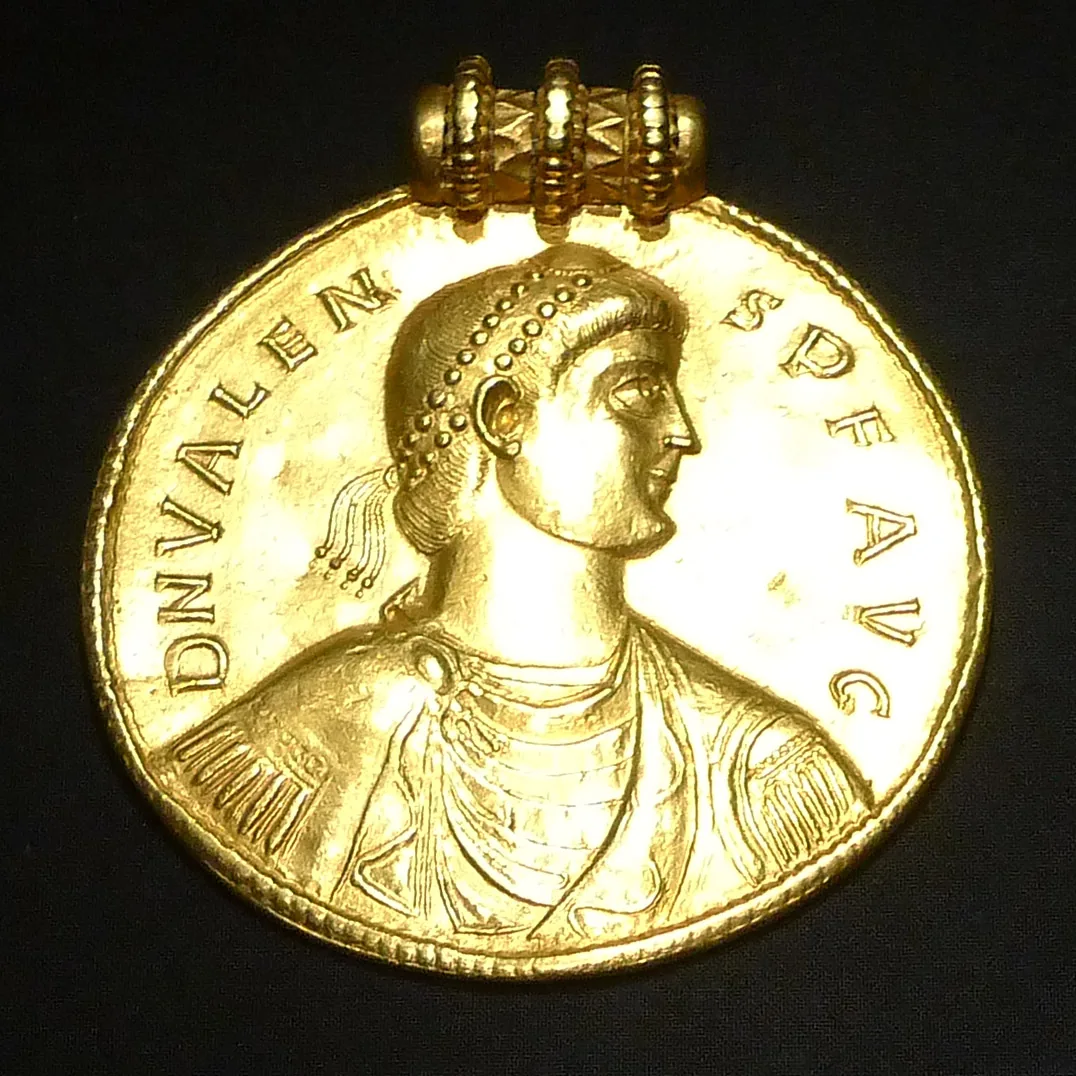
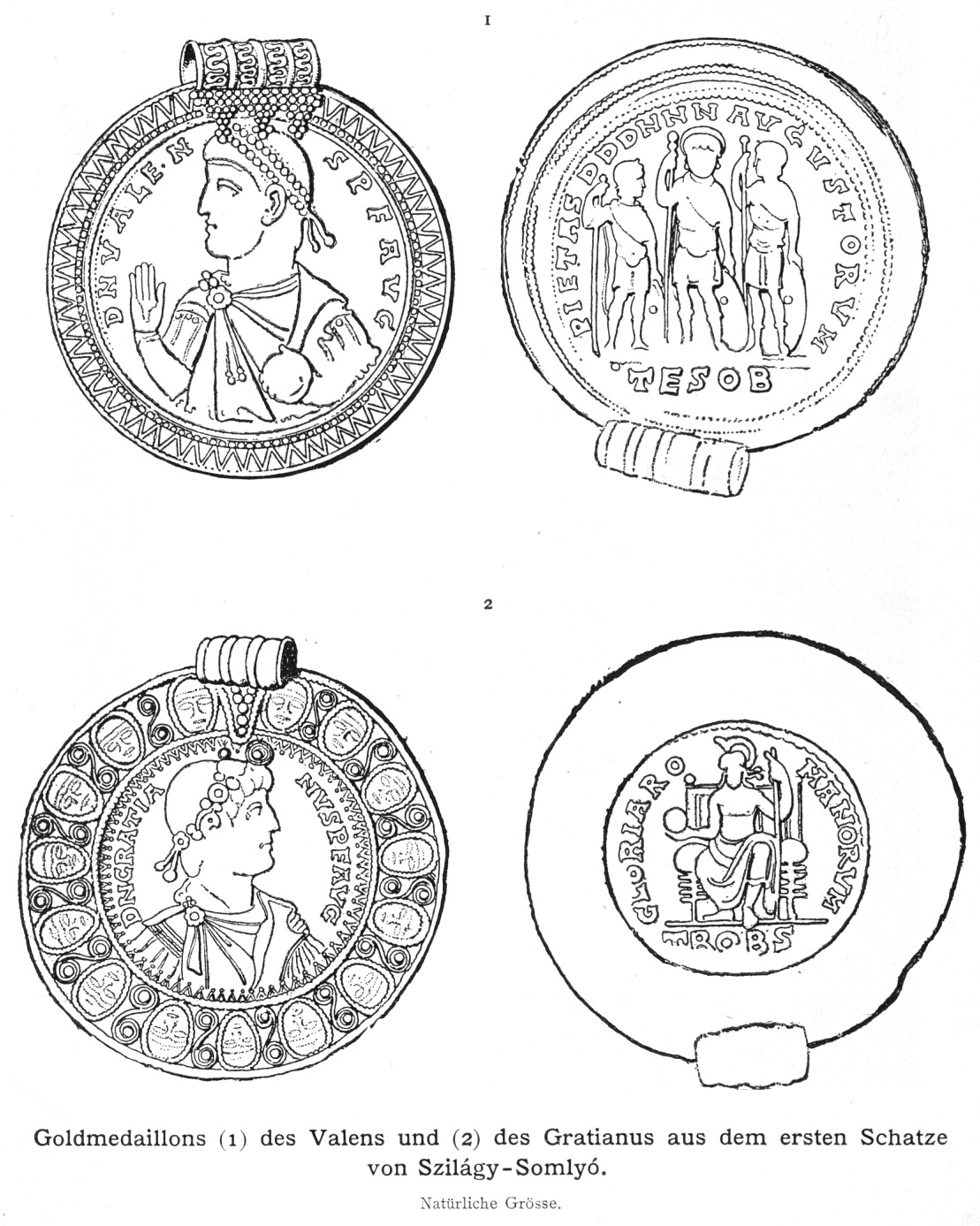
The first find contained Roman gold medallions and copies of them. Some had loops or frames, so they could be worn. The university atlas records Roman medallions, imitations and an aureus, a Roman gold coin fitted here with a loop. Hampel’s 1905 plate places medallions of Valens and Gratian side by side. [1] [12]
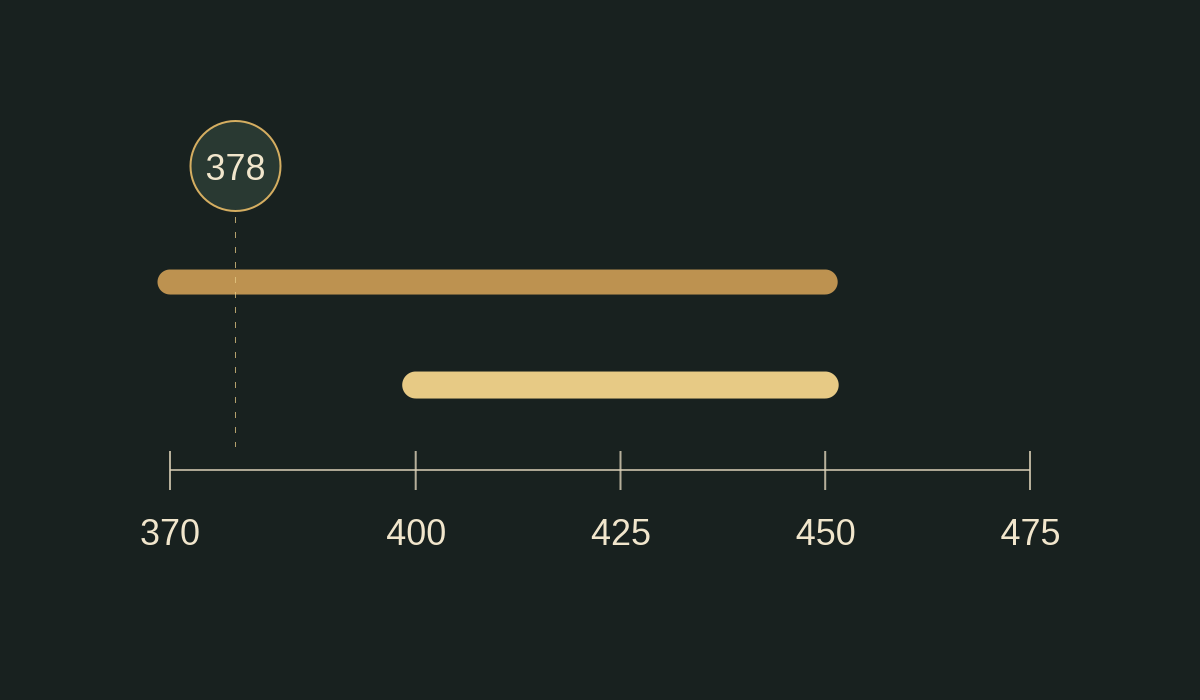
The Valens medallion pictured here is a Germanic copy dated after 378. Compare it with the older drawing: the imperial portrait remains, but another workshop remade the object. Researchers use the latest coins to set a starting point for the hoard’s date; they do not give the year it was buried. [10] [1]


The 1889 find
The onyx fibula appears in 1889
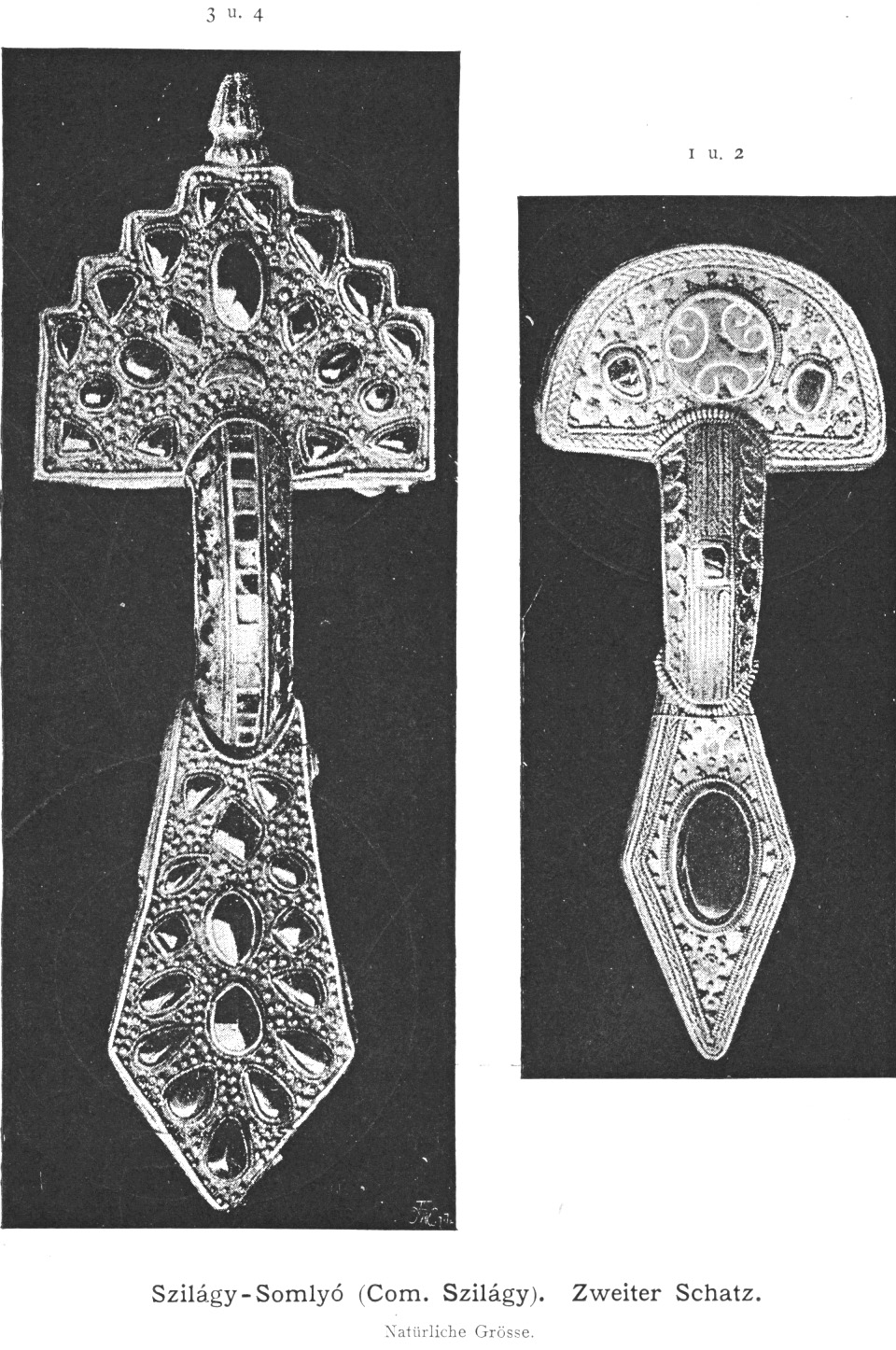
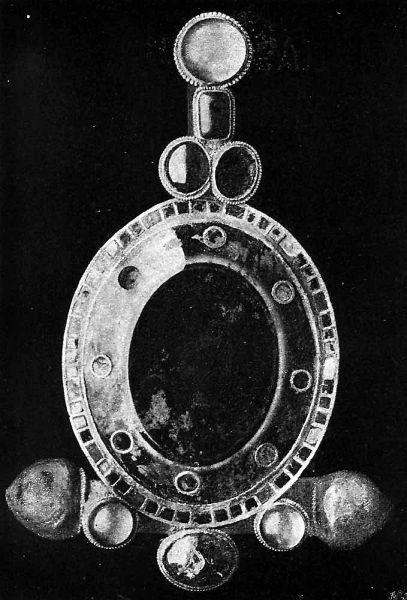
The objects found in 1889 look different from the Vienna chain: ten pairs of dress pins, three gold cups, a votive bracelet and an onyx imperial fibula. A fibula is a brooch pin used to fasten clothing. The Hungarian National Museum describes the find as jewellery accumulated over time, not a set made all at once. [3]
An early twentieth-century illustration shows two matching pairs; another plate depicts the large onyx fibula. The museum describes it as an imperial insignia, the kind used by emperors and their male relatives. The idea that an emperor gave it to a ruler beyond the Empire is the museum’s proposed explanation, not a documented event. [13] [14] [6]


The objects separate
One find goes to Vienna, the other to Budapest
In November 1797, most of the first find entered Vienna’s imperial collection. After the 1889 discovery, most of the later pieces went to the Hungarian National Museum in Budapest. Some brooch fragments are also held by the National Museum of Transylvanian History in Cluj-Napoca. [1] [3]
That is why you cannot see the whole treasure in one display case. The objects followed different museum histories, and researchers later connected them through place, date and stylistic similarities. The diagram shows the split between collections, not exact transport routes or a single expedition. [1]
Linking the finds
Do the finds belong to one treasure?
No archaeologist saw the two finds together. The University of Warsaw atlas nevertheless connects them as one deposit: they were found on the same hill, a short distance apart, and the objects’ dates and styles fit. The Hungarian National Museum also describes them as one treasure discovered in two parts almost a century apart. [1] [3]
This is a conclusion from clues, not an archaeological record of the moment the gold was buried. We do not know who gathered the objects, the exact location of either group or why the gold was hidden. An older catalogue records that some objects from the first find were lost before reaching today’s collections; the inventory cannot restore the complete treasure. [1] [2]