Inside the mine
Inside the mine
A chamber 55 metres high
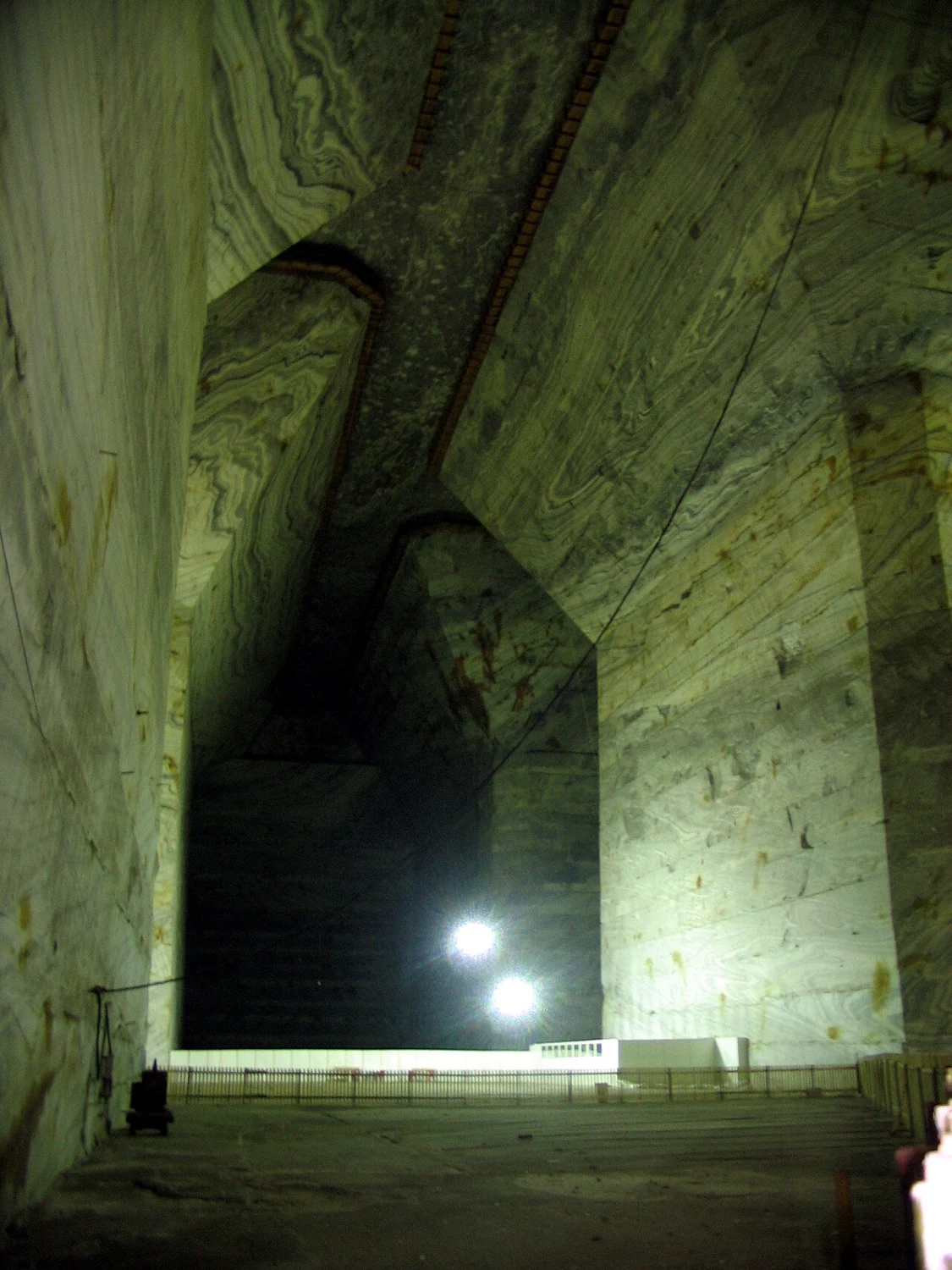
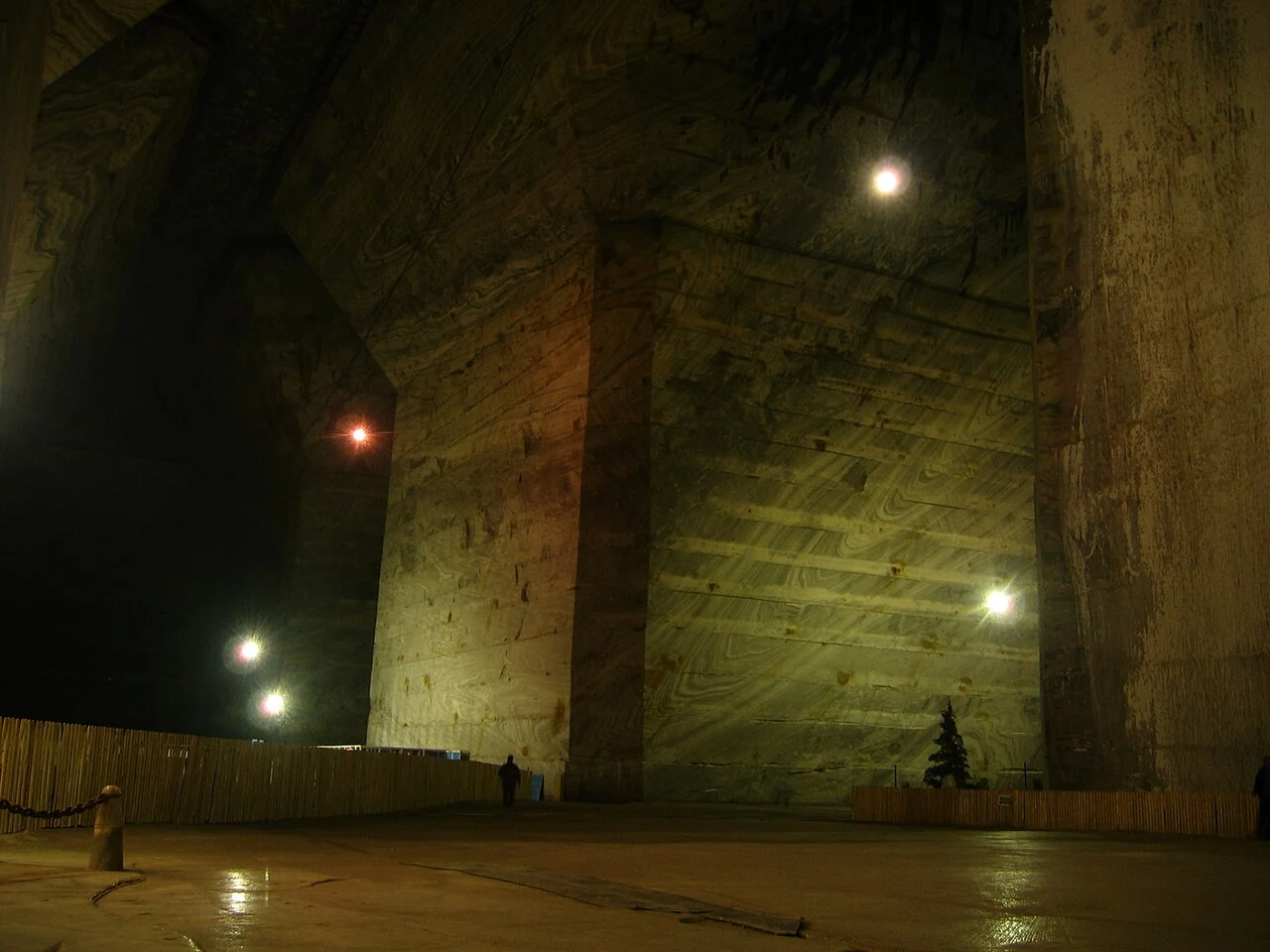
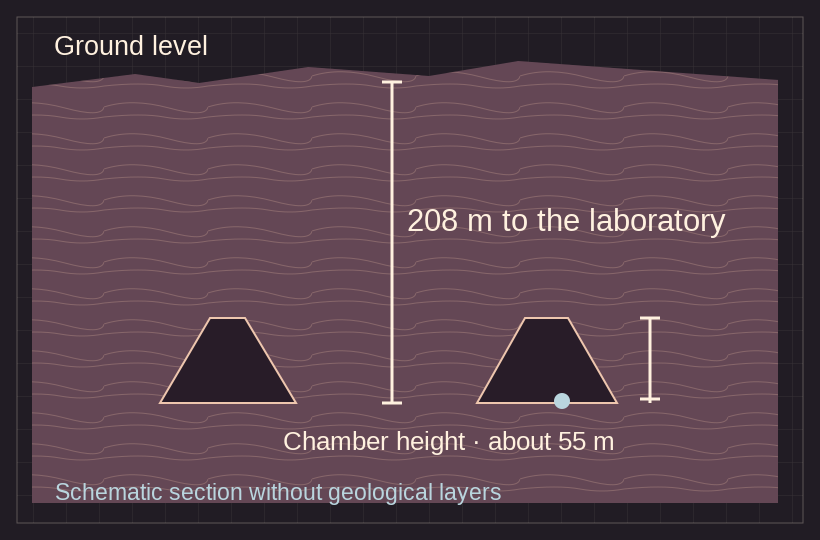
The walls slope inward towards the ceiling and spread towards the floor. At Unirea, in the old salt mine at Slănic, Prahova, 14 chambers have a trapezoidal profile. Researchers give dimensions of around 10 m across at the roof, 32–36 m at floor level and 55 m in height. In the 2006 photograph, the people below give the walls a sense of scale. [1] [7]
In 2004, the Horia Hulubei National Institute of Physics and Nuclear Engineering opened an underground laboratory at the Unirea mining level. A detector here receives far fewer muons than one at ground level. The salt and rock overhead change the environment in which measurements take place. [1] [3]
208 m
From ground level to the detector
Move the detector down the section. The vertical distance from ground level to the laboratory level is 208 m. The roughly 55 m runs from a chamber floor to its roof. The section drawing puts both lengths on the same scale. [1] [4]
As you descend, look at the amount of material overhead. The model shows the reported dimensions for a chamber and the distance between levels. The surface outline, horizontal position of the rooms and bands in the illustration are schematic. [1]
Around 600 m of water
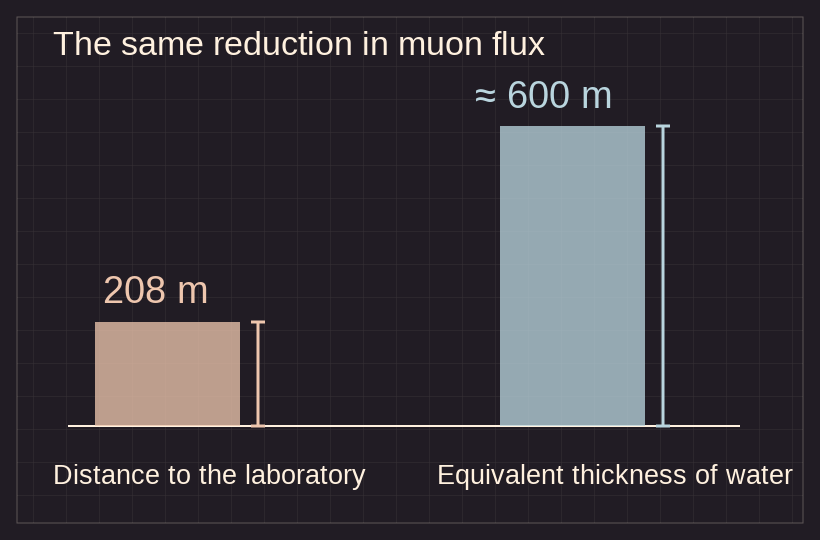
How much water would reduce the muon flux by the same amount?
Picture a vertical column of material above a base of 1 m². At Slănic the depth to the laboratory is 208 m. Researchers estimate that around 600 m of water would reduce the muon flux by as much as the rock above the lab. [4]
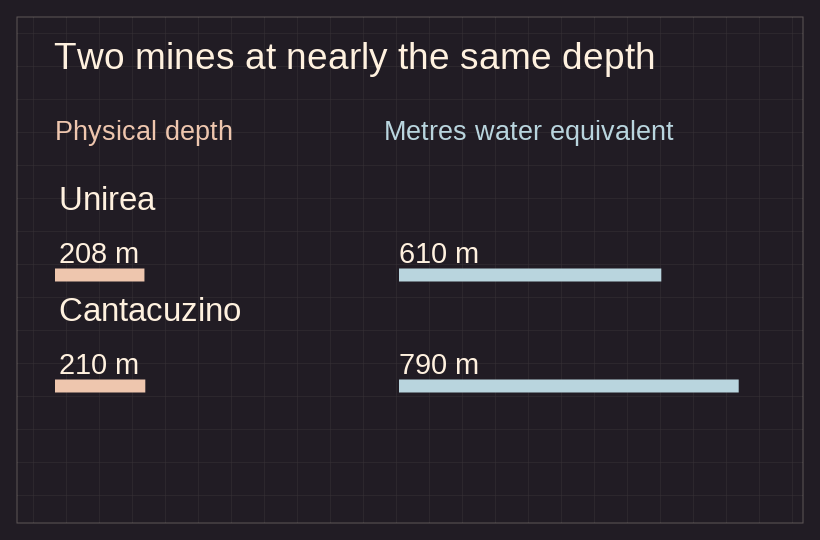
Underground physicists call the unit the metre water equivalent. It lets them compare sites beneath layers of different densities. A 2012 paper gives 610 ± 7 metres water equivalent for Unirea. The team estimated the equivalent from the fall in muon flux, using a model of attenuation. At level 12 of the Cantacuzino mine, at almost the same physical depth, researchers reported 790 ± 13 metres water equivalent. [4] [1] [2]
From the atmosphere
Where do the muons come from?
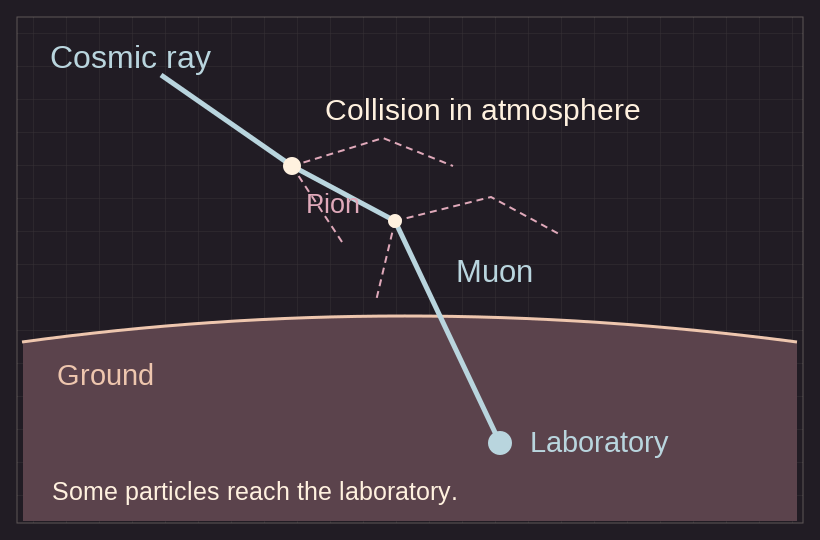
Particles from space strike atomic nuclei in the atmosphere and set off a shower of other particles. A pion produced in the shower can decay into a muon. Like an electron, a muon carries electric charge, but has substantially greater mass. Some muons reach the ground and travel through it. [5]
The journey through rock makes them lose energy. Many stop above the Unirea level. The drawing follows one branch of a possible shower. The highlighted path shows how one particle can reach a detector underground. [5] [3]
The detector
A crossing leaves signals in several layers
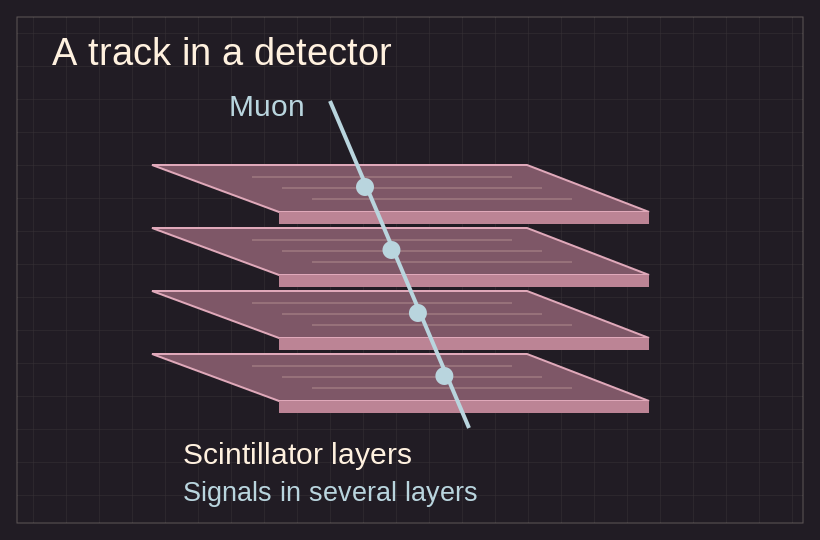
A scintillator gives off small flashes of light when a charged particle passes through it. If the crossing triggers several layers, the recorded points trace the particle’s path. At Slănic, scintillator instruments have been used to measure muons reaching the Unirea laboratory. [1] [3]
The drawing shows the measurement principle. The team’s paper gives photographs and schematics of the instrument. The rate you can compare between places is the number of particles crossing a given area in a given time. [3]
A hundred crossings
Under a second at the surface, over nine minutes in the mine
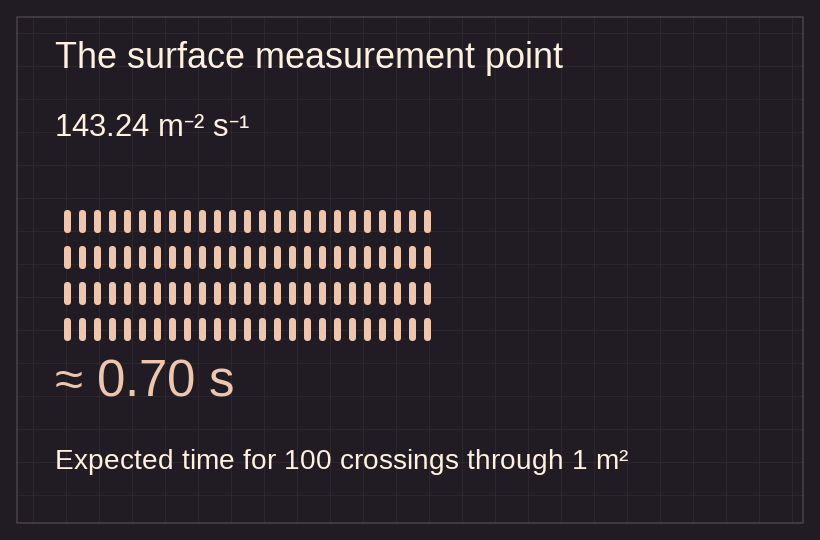
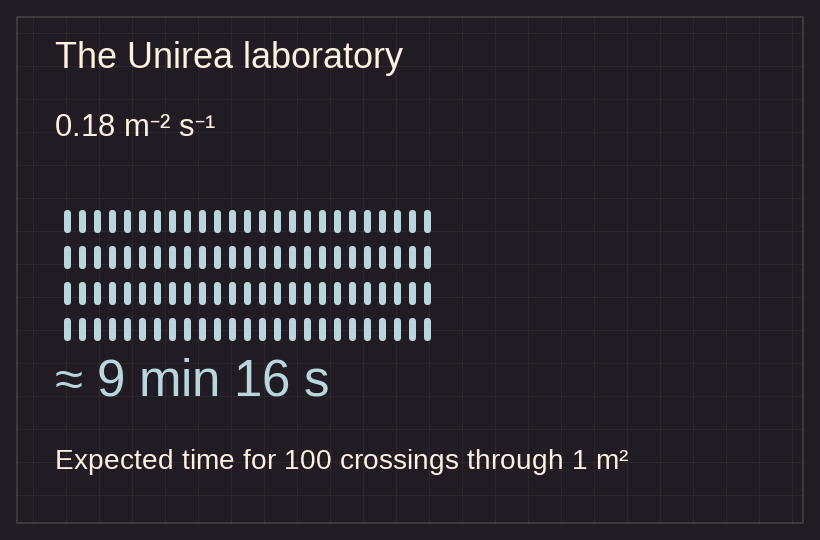
In the campaign published by Mitrică’s team in 2011, the surface instrument recorded a rate of 143.24 ± 2.24 muons per square metre per second. At Unirea the team measured 0.18 ± 0.01. Later studies gave the same approximate rate of 0.18 at Unirea. [2] [3]
At those rates, across an area of 1 m², the expected time for 100 crossings is around 0.70 seconds at the surface and about 9 minutes 16 seconds in the mine. Divide 100 by the rate. On average the detector in the mine would wait around 800 times as long. [3]