Rediscovery
Rediscovery
A great hall beneath the limewash
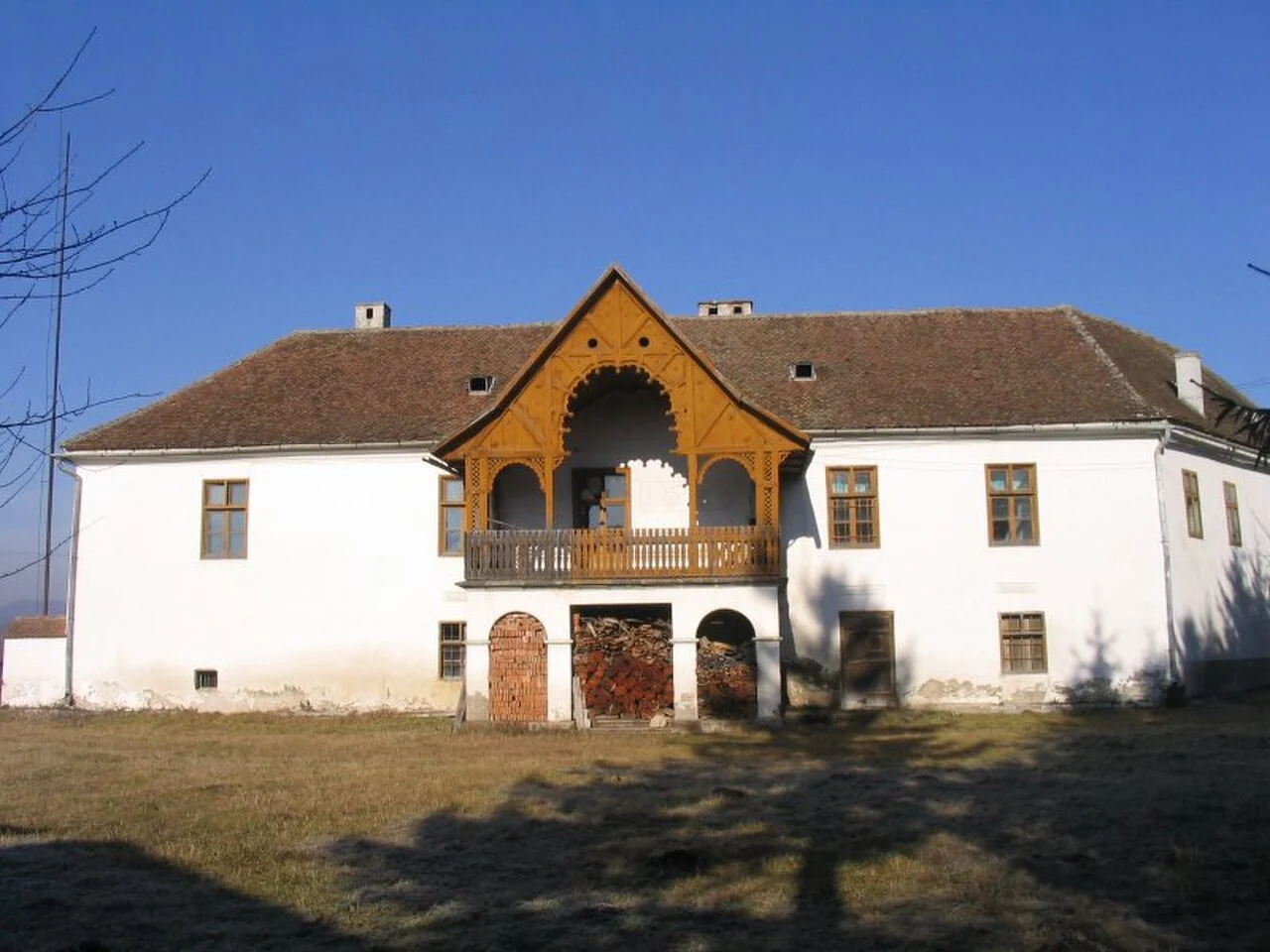
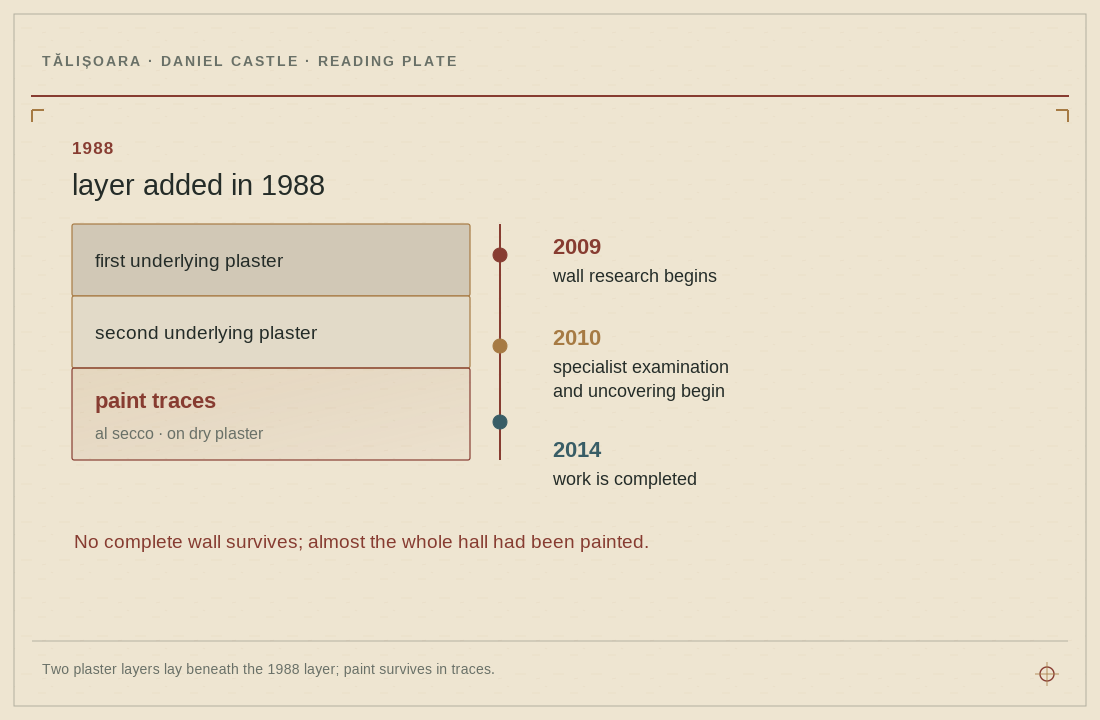
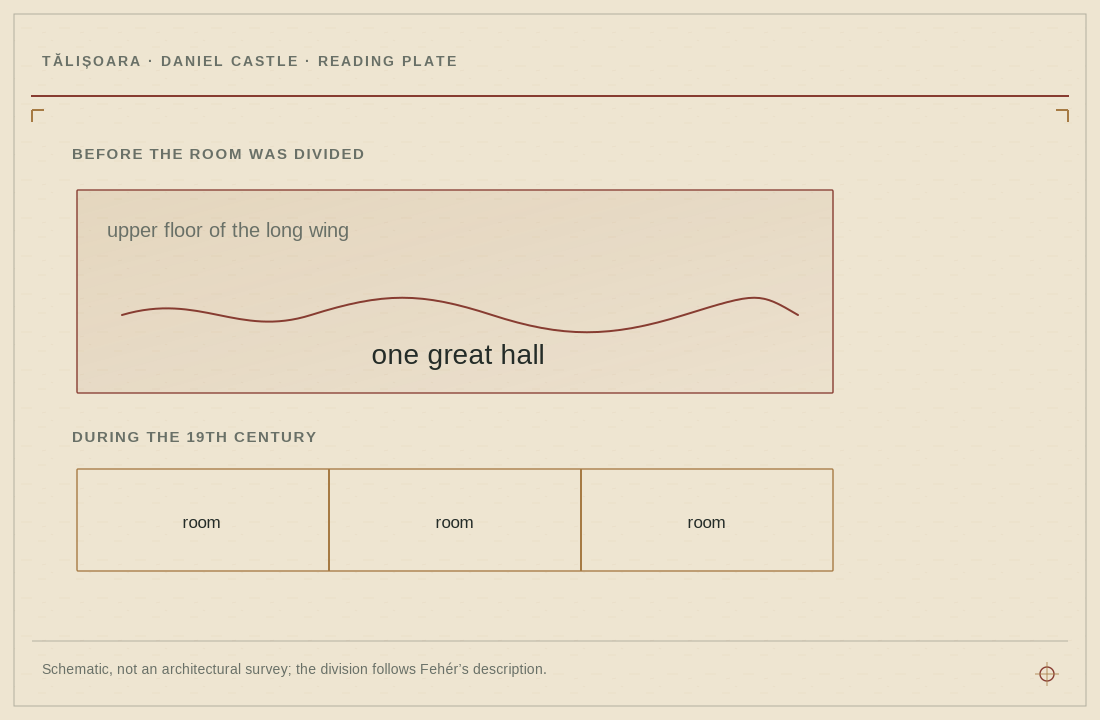
The Daniel family once used the upper floor of the long wing as a great hall, almost entirely painted. In the nineteenth century, the room was divided into three. The paintings had been limewashed before that; beneath the layer added in 1988, researchers found two more plaster layers. [1]
Wall research began in 2009, and conservators uncovered the painted layers between 2010 and 2014. The technique was al secco: pigment applied to dry plaster. The scenes survive only in fragments, but the decorative borders and remaining compositions show that almost the whole hall had been painted. The Living Castle project included mural research and graphic reconstruction, as well as a permanent history exhibition. [1] [2]
Inscriptions
A swan, two initials, a date
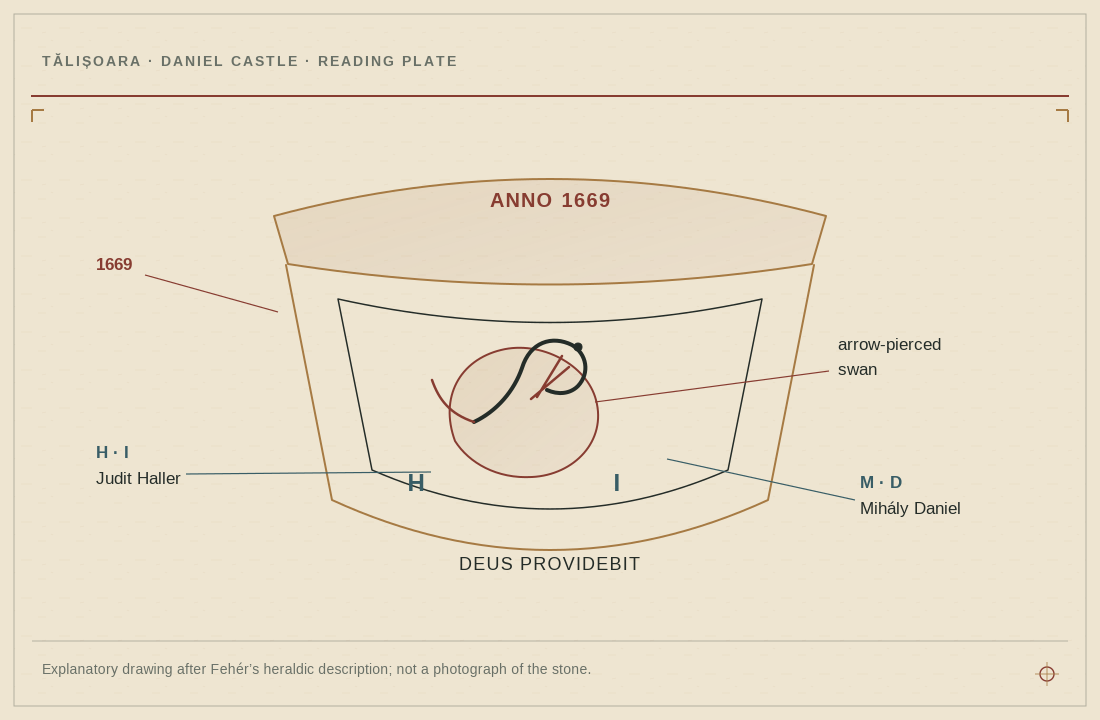
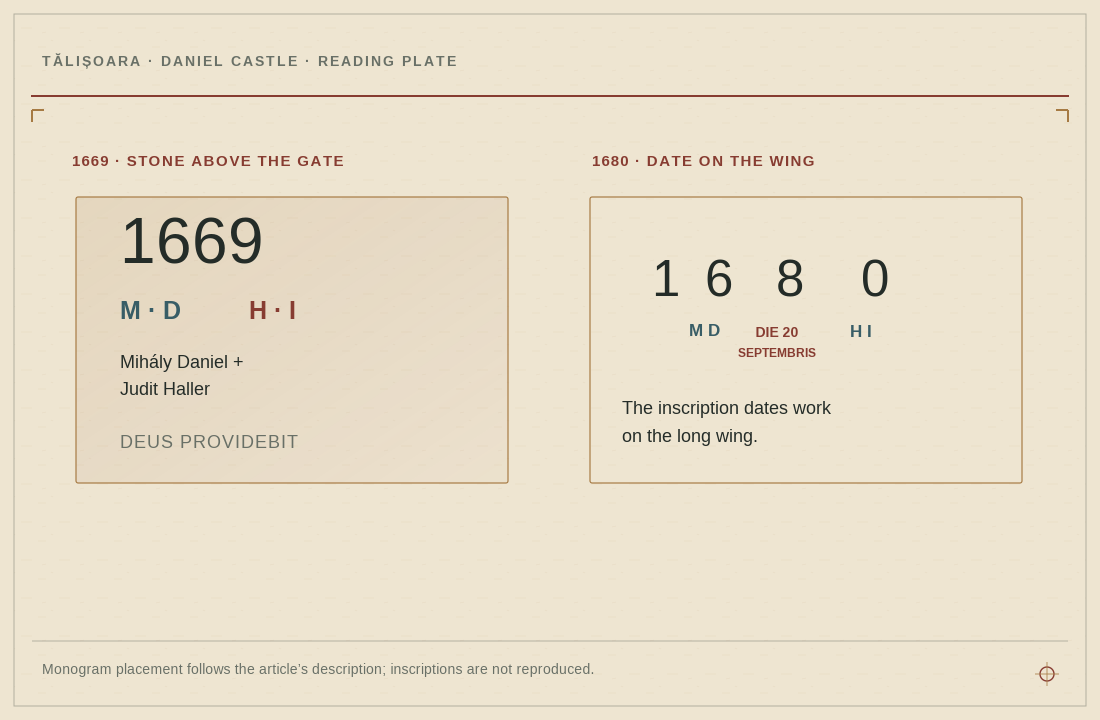
The heraldic stone dated 1669 bears the Daniel family swan, pierced through the neck by an arrow. Fehér reads the letters MD as Mihály Daniel’s initials and HI as those of his wife, Judit Haller. The motto beneath the crest reads “Deus providebit”—“God will provide.” [1]
A second inscription, dated 20 September 1680, repeats the initials MD and HI on the long wing. Together, these two inscriptions link the house’s enlargement and the hall’s decoration to the couple who commissioned the work. They do not name the people in the wall paintings. [1]
The family
Three generations, a repeated name
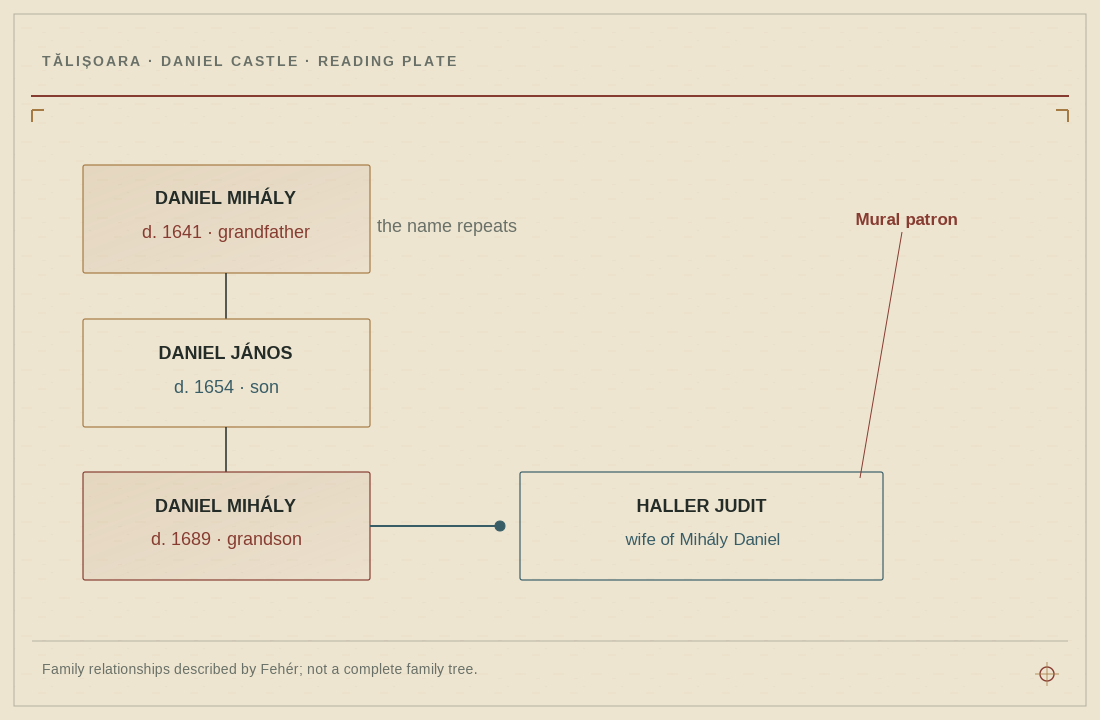
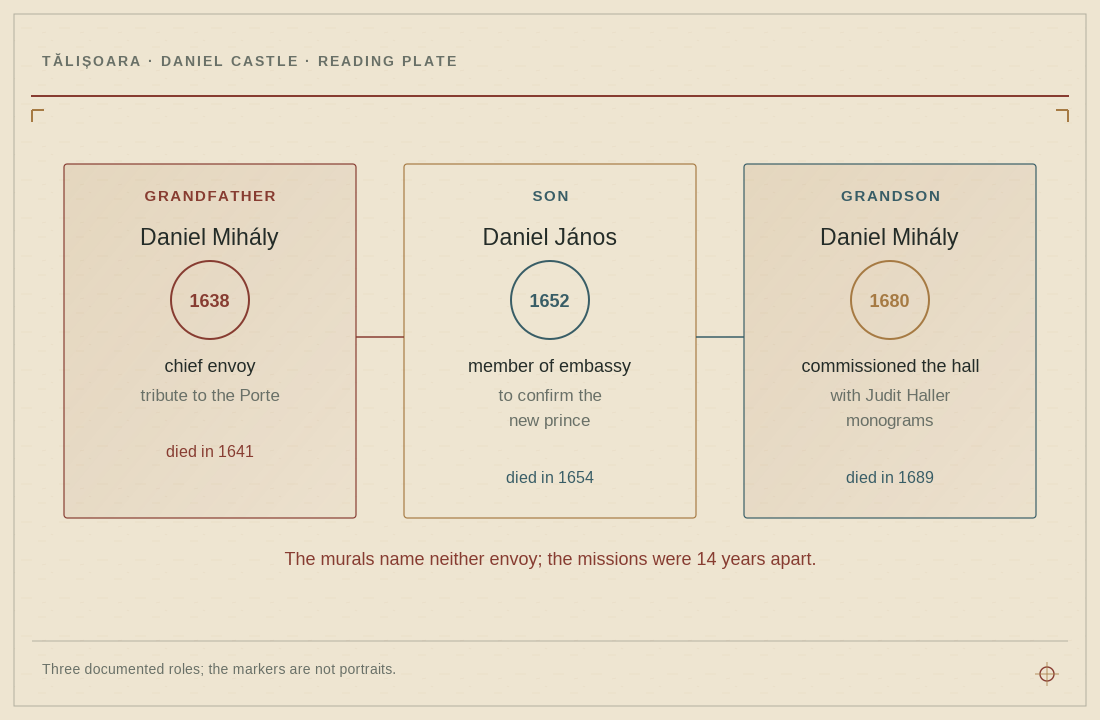
The family tree includes two men named Daniel Mihály. The elder died in 1641; his son, Daniel János, in 1654; János’s son, a second Daniel Mihály, lived until 1689. This younger Mihály, husband of Judit Haller, commissioned the paintings in the great hall. [1]
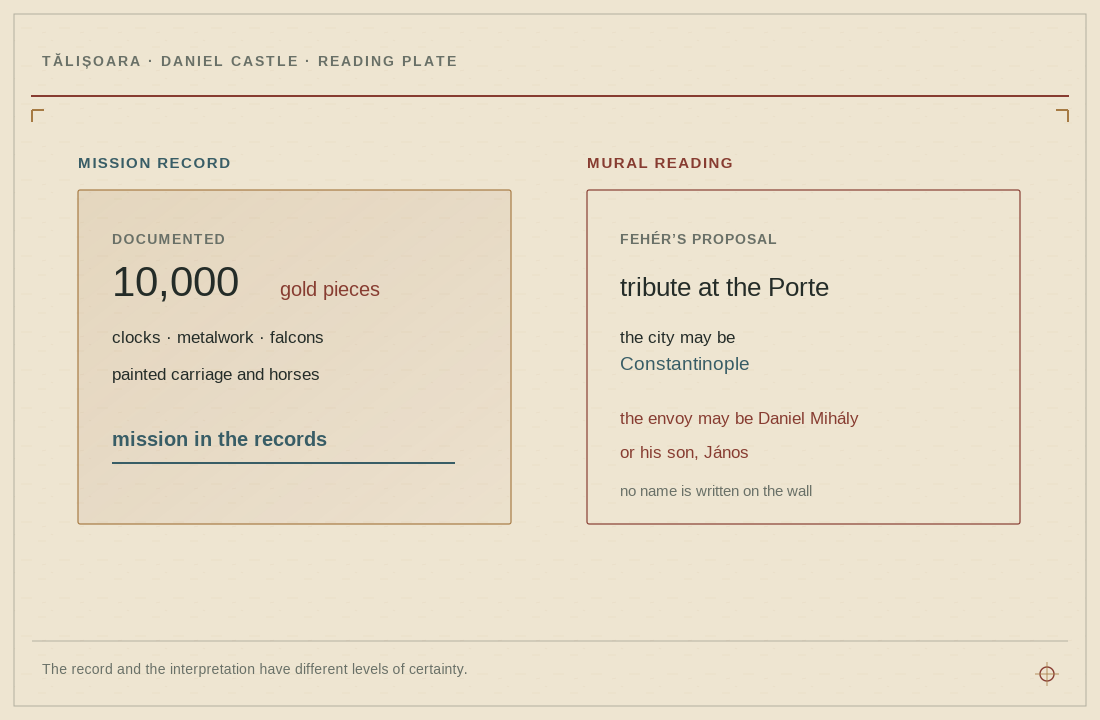
The elder Daniel Mihály was appointed chief envoy for the 1638–39 tribute. His son, Daniel János, joined a separate embassy to Constantinople in September 1652 to secure confirmation of the new prince; the sultan received the delegation on 8 October, and it returned in January 1653. Fehér leaves open whether the lead figure in the diplomatic scenes is the grandfather or the son. The gift list and dates link the tribute scene more closely to the grandfather’s mission, without identifying the painted face. [1]
The embassy
Three months and the gifts for the Porte
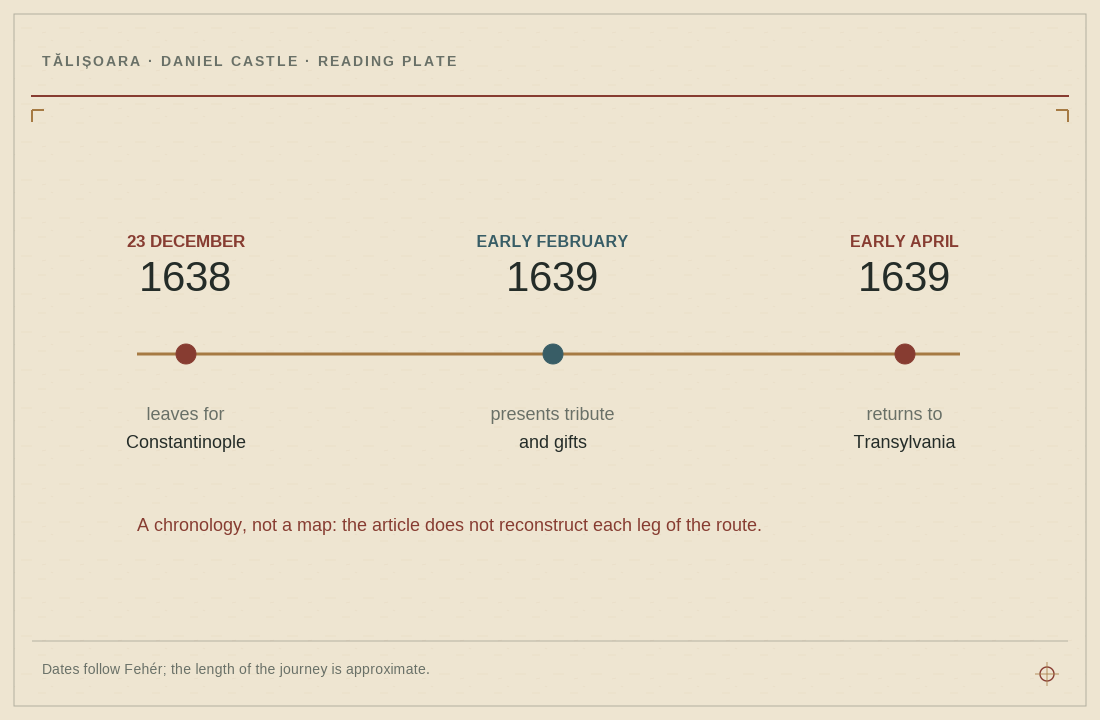
In 1638, George I Rákóczi appointed Daniel Mihály chief envoy after the original choice, István Szalánczi, fell ill. Mihály left for Constantinople on 23 December; in early February 1639 he presented the tribute to the Porte, and by early April he was back in Transylvania. [1]
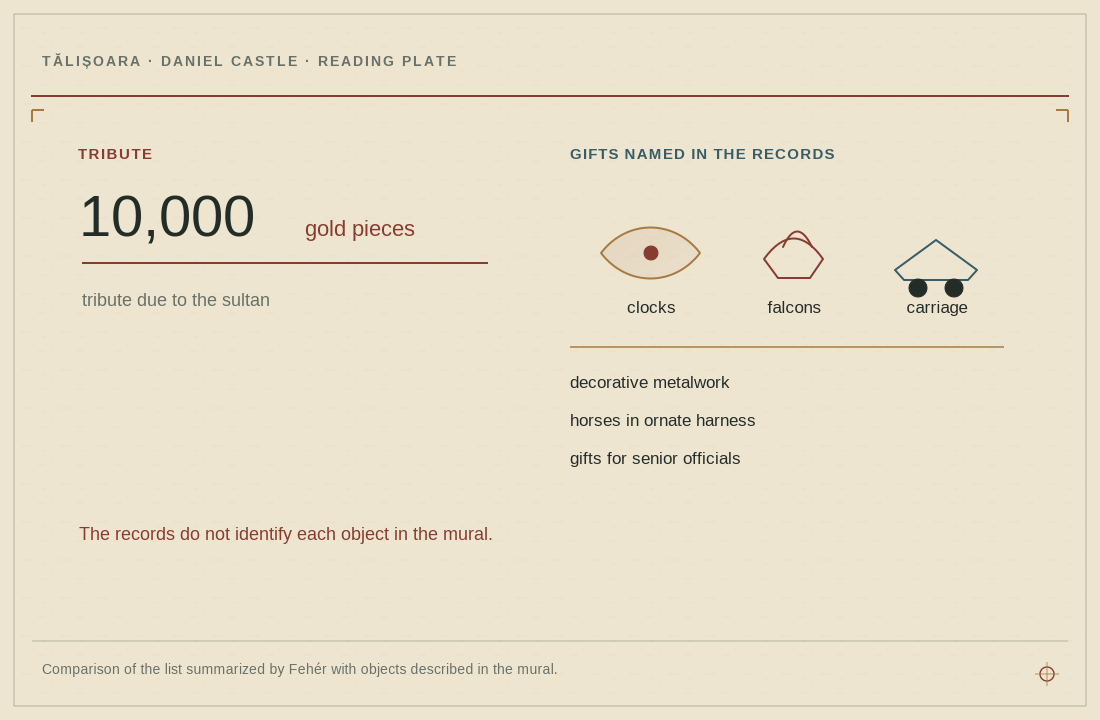
Transylvania owed the Ottoman sultan a political tribute, called the tribute to the Porte in the records. It amounted to 10,000 gold pieces. Gifts included clocks, gold and silver objects, falcons, a painted carriage and harnessed horses; senior officials also received thalers and other gifts. This list comes from the mission records. It gives us a point of comparison with the mural, not proof that each painted object is a specific item. [1]
The mural
What is visible, and what the scholar infers
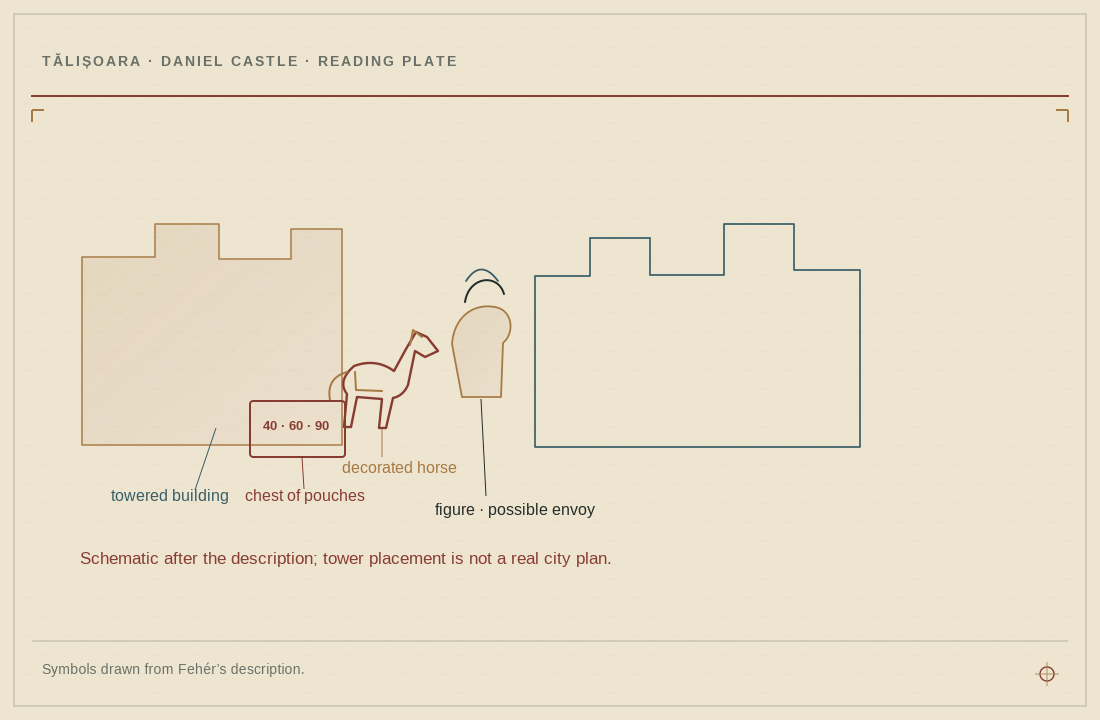
In the fragmentary scene, Fehér describes an open chest with bags marked 40, 60 and 90, a richly harnessed horse, a figure holding its reins and another with a raised arm, perhaps with a falcon. At left, a figure stands much taller; the faces are damaged. [1]
Fehér reads the scene as the presentation of Transylvania’s tribute before the Ottoman sultan. The 1638 mission records list horses and falcons, details that support this reading without proving the mural shows that embassy. Fehér suggests the towered city may be Constantinople and the tall figure may be the chief envoy. The study does not say what the pouch numbers measure; the damaged faces do not support secure identifications. [1]

Another scene
The wedding that may be on the wall
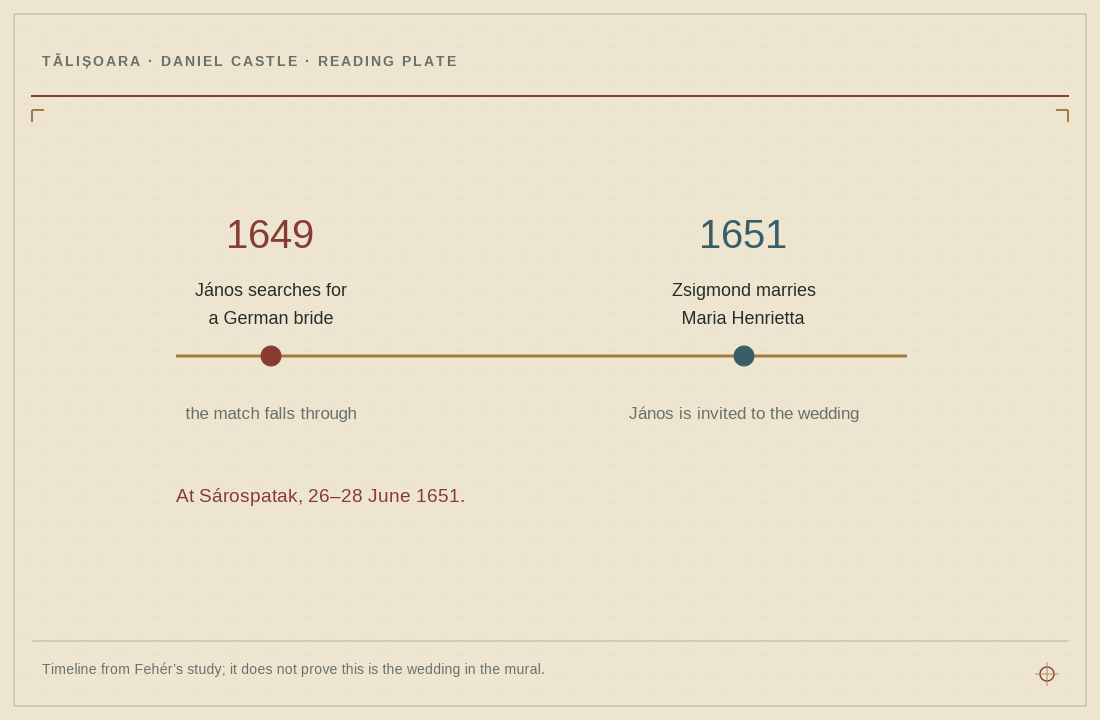
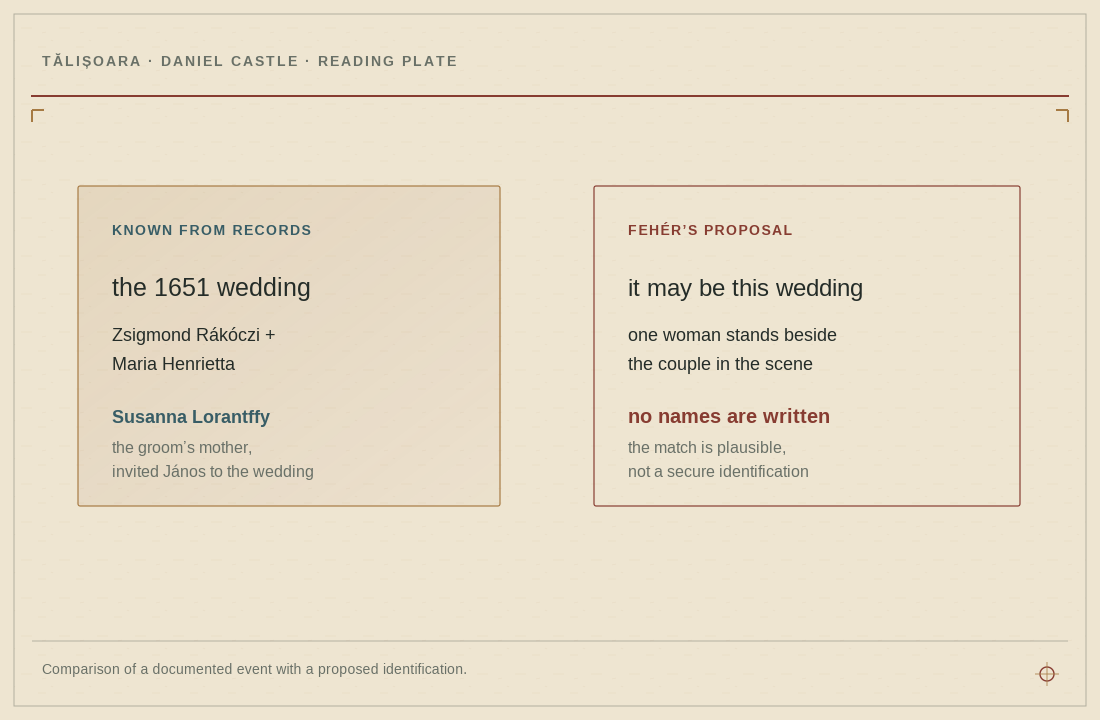
In 1649, Daniel János received a delicate assignment: to find a bride for Zsigmond Rákóczi, the prince’s younger brother. The German match did not lead to a wedding. In 1651, Zsigmond married Maria Henrietta, Princess Palatine, at Sárospatak; Daniel János was invited and was expected to help host the wedding. [1]
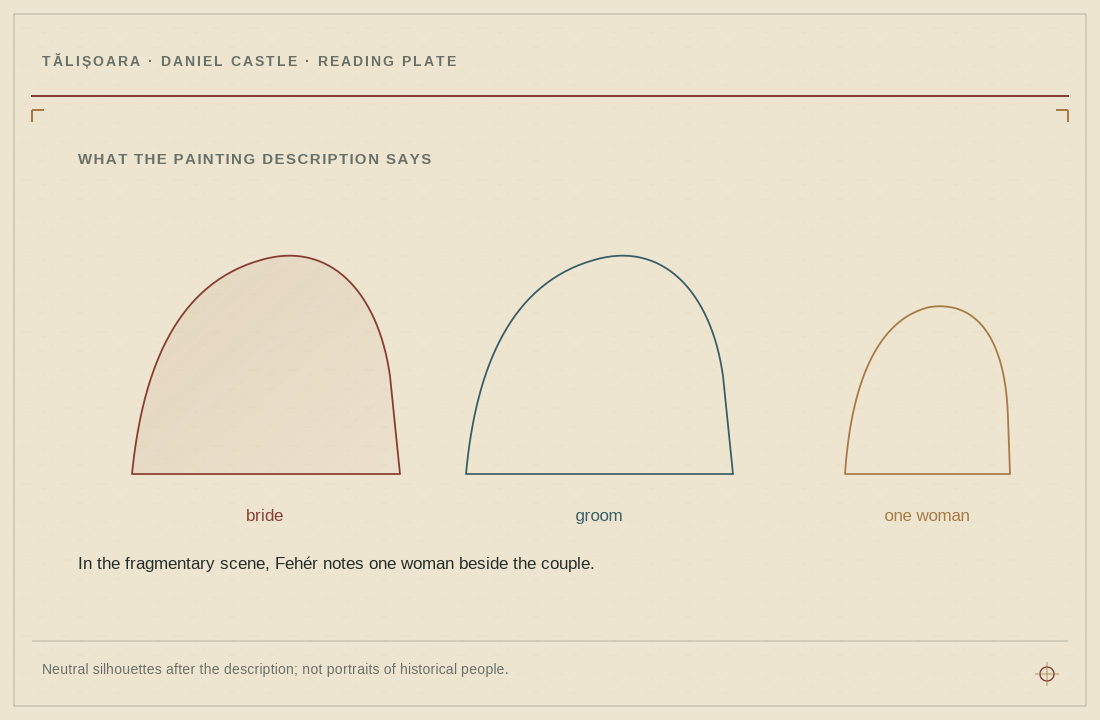
Another painting in the hall shows a couple and one woman beside them. Fehér suggests it may be Zsigmond’s wedding, and the woman may be Susanna Lorantffy, the groom’s mother. The dates and number of figures fit, but the painting does not name them. This is a reasoned identification, not a secure one. [1]