Marius ComperSoveja · Vrancea
Română

Former Soveja monastery

What Alecu Russo wrote under guard at Soveja

In 1846, Moldavia’s ruler sent Alecu Russo under guard to Soveja hermitage. His diary follows the journey and records the people, news and books that reached him there.

Start the story ↓
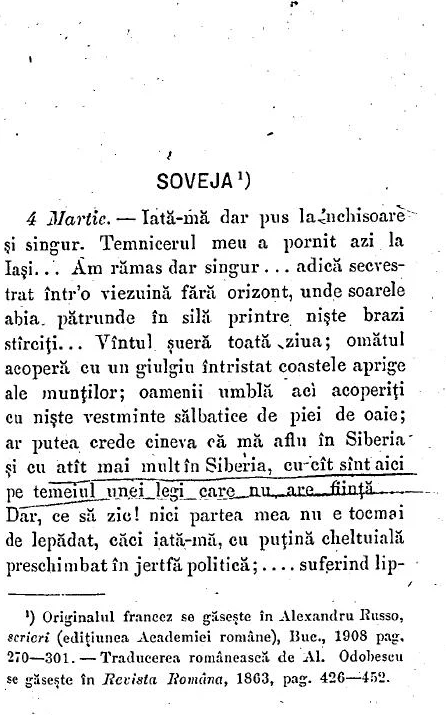
The opening page of Soveja in the 1908 printed edition.
The diary opens on 4 March. Russo wrote in French. This page shows Odobescu’s translation in the 1908 Socec edition. (Source · Carol I Central University Library, Restitutio · cropped and converted · Public domain)

1846

The opening page of Soveja in the 1908 printed edition.
The diary opens on 4 March. Russo wrote in French. This page shows Odobescu’s translation in the 1908 Socec edition. (Source · Carol I Central University Library, Restitutio · cropped and converted · Public domain)

1846

The exile begins with solitude

“So I was left alone,” Alecu Russo writes on 4 March. His guard had left for Iași. Russo remained at Soveja monastery, at the foot of the mountains, where the ruler of Moldavia had sent him. Snow and firs are the first things he describes from a room where the light barely reached. [1] [2]

Then he goes back to the arrest and the journey that brought him there. The journal moves between the room and the events outside it. His French text reached readers after his death in Alexandru Odobescu’s Romanian translation. [2]
The opening page of Soveja in the 1908 printed edition.
The diary opens on 4 March. Russo wrote in French. This page shows Odobescu’s translation in the 1908 Socec edition. (Source · Carol I Central University Library, Restitutio · cropped and converted · Public domain)
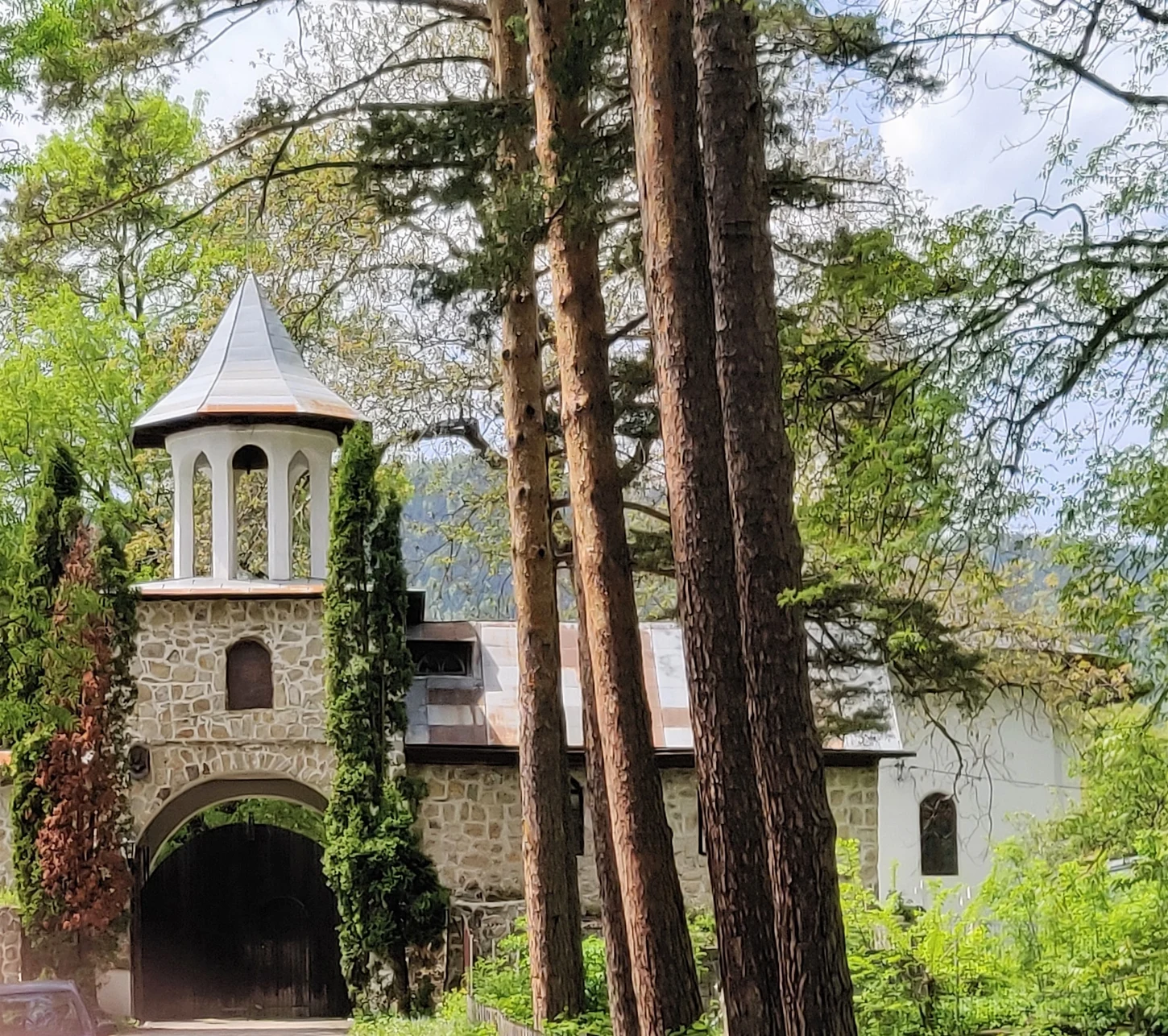
The stone bell tower at Soveja monastery.
The former monastery’s bell tower in a photograph published in 2022. The location of Russo’s room is unknown. (Source · Strainu · converted to WebP · CC BY-SA 4.0)

The order from Iași

A play followed by an order from the ruler

Vasile Alecsandri connects the punishment to a Romanian theatre performance in Iași. The order he reproduces accuses the actors of scandalous utterances and Russo of disturbing public order. It sends the writer to a monastery. [3]

The order called for surveillance, confinement and a ban on correspondence. Alecsandri says the actors were also sent to another monastery. Russo’s diary records what happened on the days when those rules were supposed to apply. [3] [1]
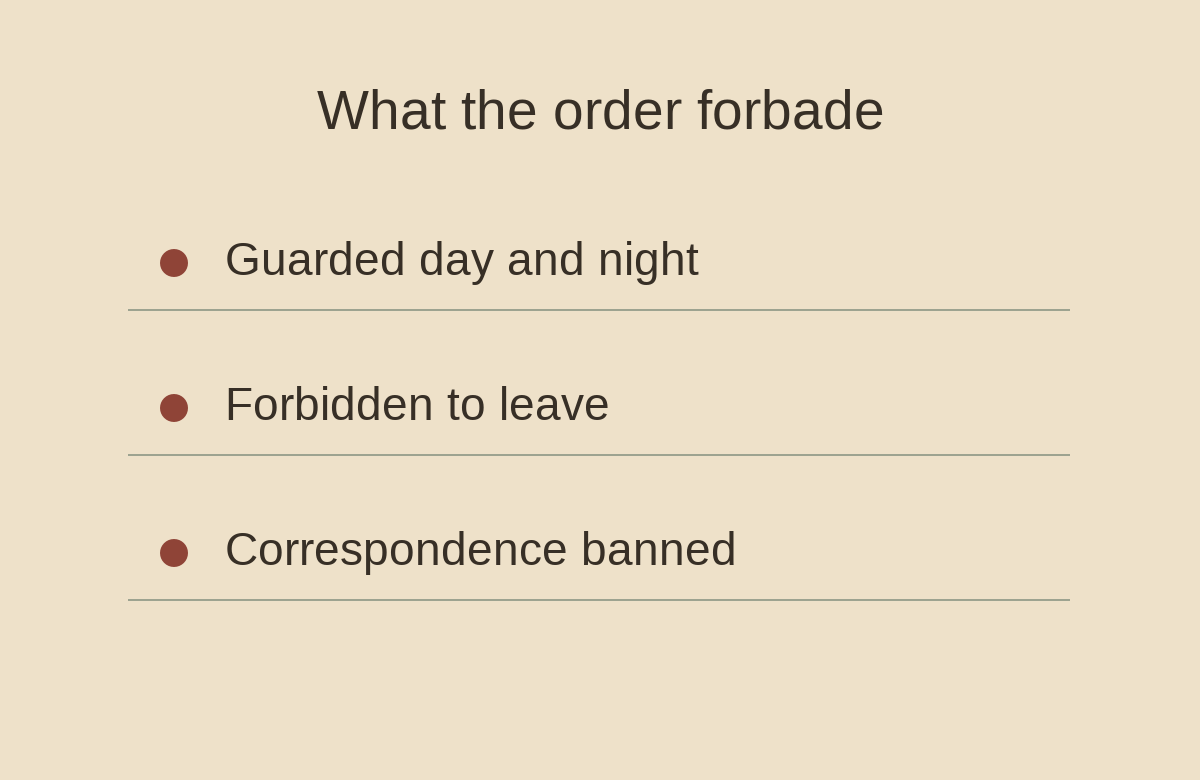
Three lines show surveillance, confinement and a ban on correspondence.
The terms of the order, based on the text printed by Alecsandri. (Source)

The journey

To the monastery through Focșani

Russo describes making the journey by post carriage in the cold. At Focșani the order passed to the local official, the ispravnic. He would be sent on under guard to Soveja, on the edge of a basin in the Vrancea Mountains. [1] [3]

In Focșani he bought shirts, socks and tobacco. He reckons up the purchases with humour, though the departure and the destination had been decided for him. These details show how he experienced the journey. [1]
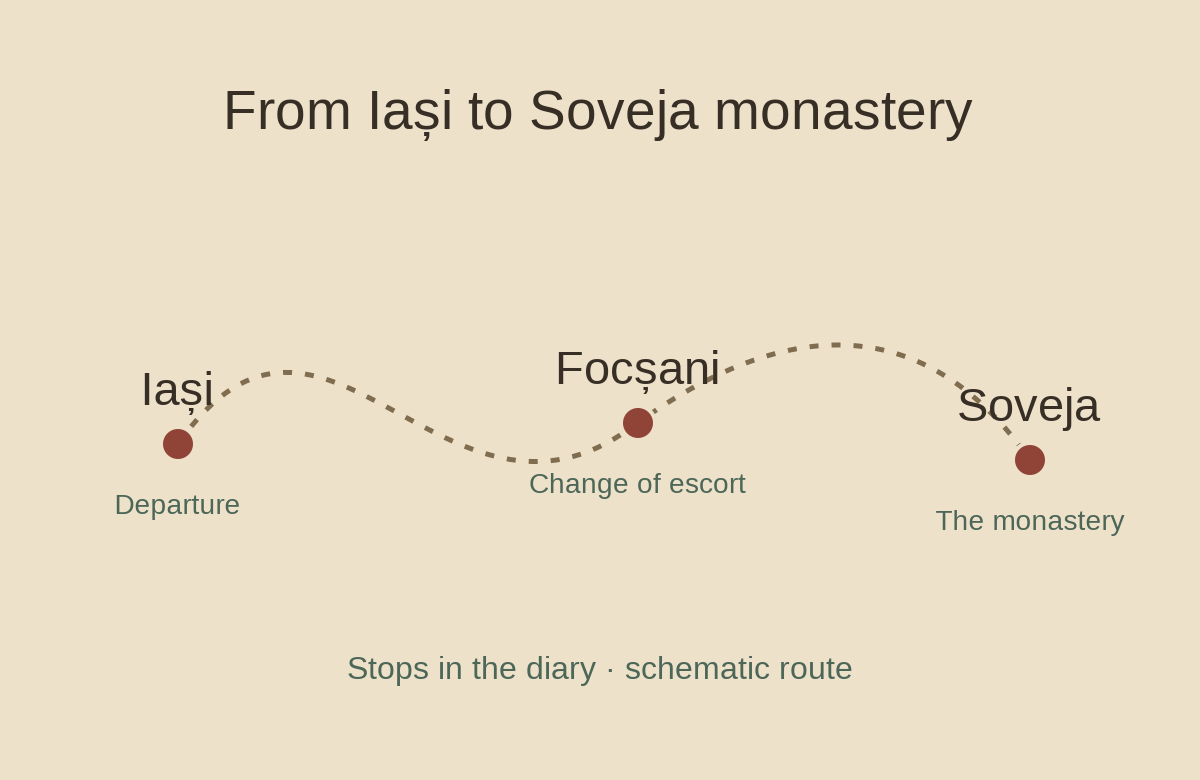
Three places connected by a dotted line.
Iași, Focșani and Soveja monastery, in the order given in the diary. (Source)

Days in the diary

Letters forbidden, books received

On 5 March linen and clothes came from Focșani. On 6 March he notes the arrival of six pamphlets and a book by Théophile Gautier. On 7 March he looks at the church and notices the church inscription, or pisanie, written in Church Slavonic, which he says he cannot read. [1]

Reading a passage about monasteries, Russo agrees with Gautier only so far. “He does not know Soveja,” he writes, because Gautier does not know what it means to be there against your will. On 10 March, Russo looks from the porch towards the cemetery and hears women mourning their dead. [1]
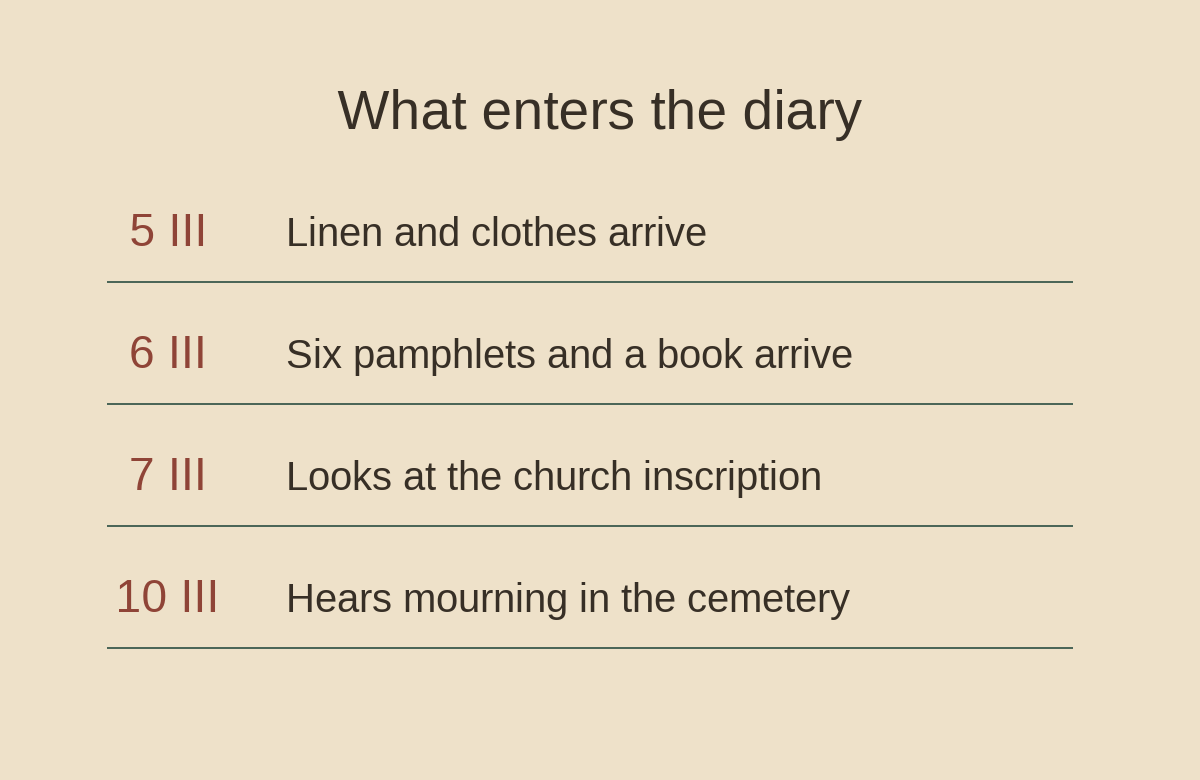
Four entries from 5 to 10 March, covering clothes, books, the inscription and mourning.
Dates are as printed in the diary. The rows are evenly spaced. (Source)

The last page

News from Cașin, then release

On 1 April, people from Cașin tell him that those confined there have been allowed to go. Russo waits for news from Focșani. “My release comes riding,” he writes when the warden arrives with two Cossacks. [1] [2]

Russo puts off leaving until the next day and visits the church one last time. People have gathered for the Holy Week service by the light of a few candles. The diary that opened with his guard leaving reaches a church full of people. [1]
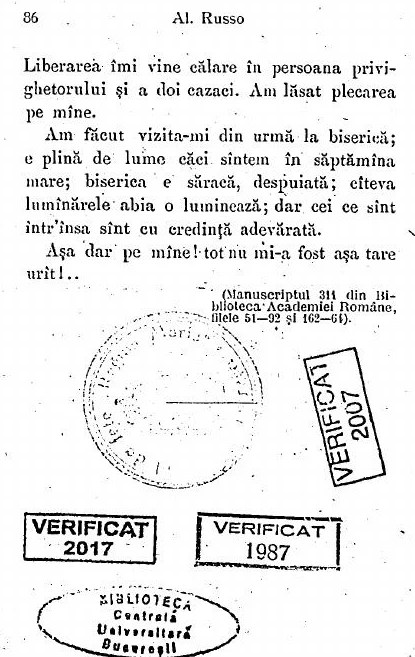
The last diary page, headed Liberarea, meaning release.
The closing passage headed “Liberarea” appears on page 86 of the Socec edition. (Source · Carol I Central University Library, Restitutio · p. 86 · Public domain)

Sources

The order preserved by Alecsandri tells us why Russo was sent to Soveja. The diary, written by the man sent there, tells us how he spent the time between arrest and release.

  1. Alecu Russo, Soveja, translated by Alexandru OdobescuThe diary recounts the arrest, journey and days at the monastery. Dates are retained as printed.
  2. Piatra Corbului. Soveja, Socec, 1908, p. 23The 1908 edition, digitised by the Carol I Central University Library, contains the translated diary. It appeared in Revista română in 1863.
  3. Vasile Alecsandri, Alecu RussoRusso’s friend reproduces the order sending him to Soveja and a letter he received before the writer left.
  4. National Archaeological Register, former Soveja monasteryThe site at Dragosloveni includes the church, bell tower and remnants of the enclosure wall.
  5. Strainu, bell tower of Soveja monasteryPhotograph posted in 2022, CC BY-SA 4.0. It shows one of the surviving structures.