Church of the Resurrection, Sucevița

Church of the Resurrection, Sucevița
Where does the ladder begin?
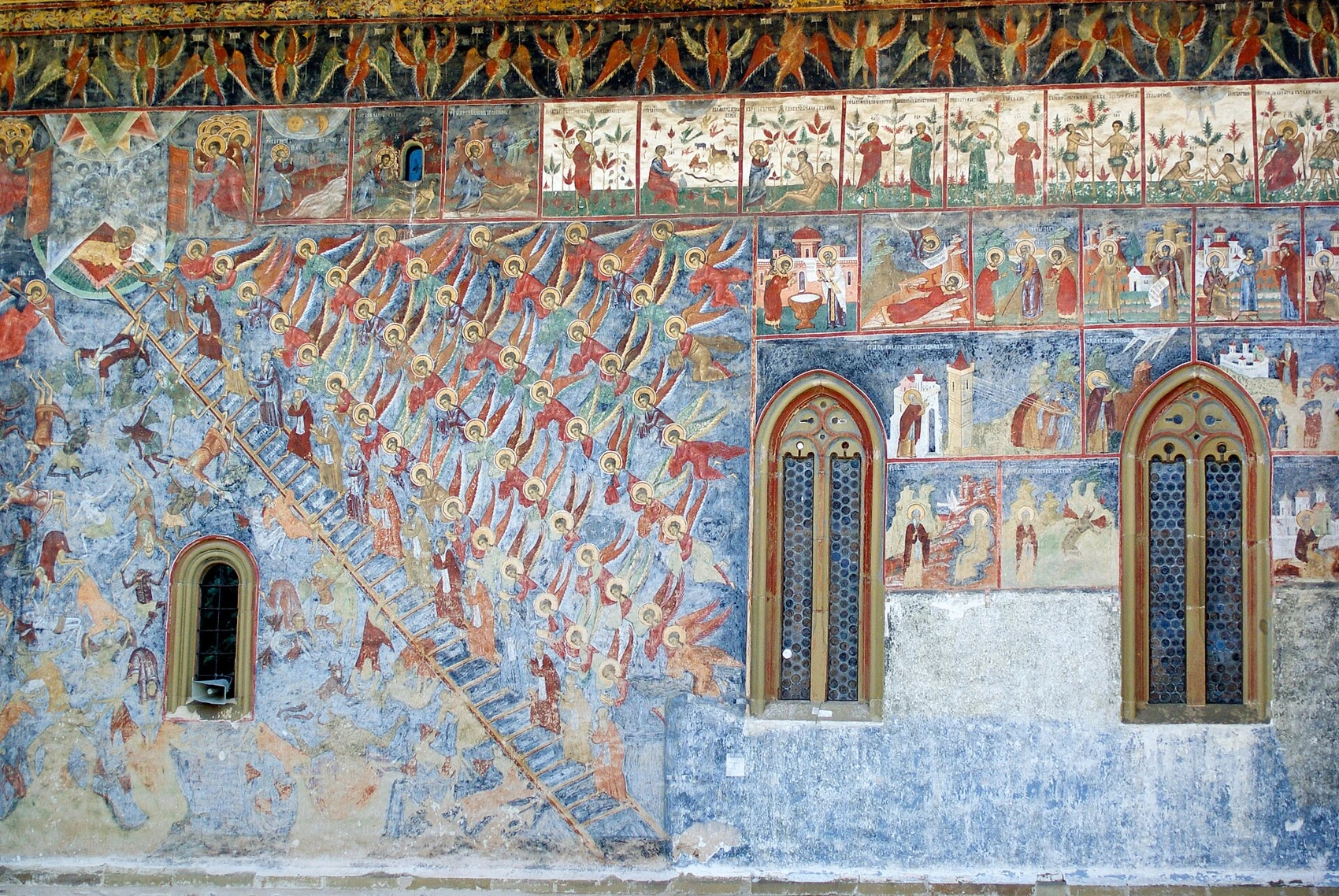
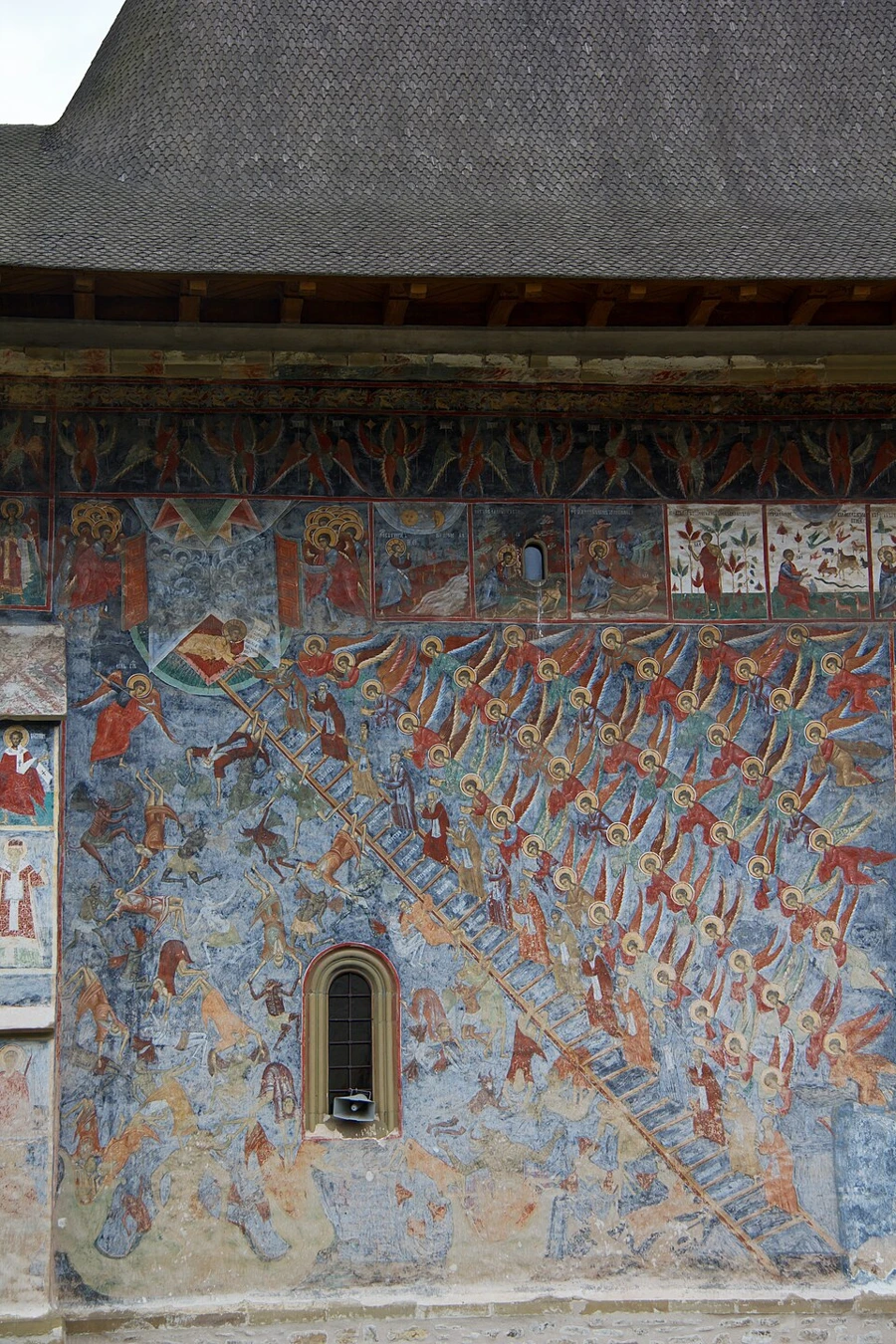
Stand facing the north wall of the Church of the Resurrection in Sucevița and the ladder first appears as a diagonal. It begins near the base on the right and rises to the left beside a narrow window. The monastery calls it the Ladder of Virtues. It belongs to a sequence of paintings extending across the outer walls. [1] [5]
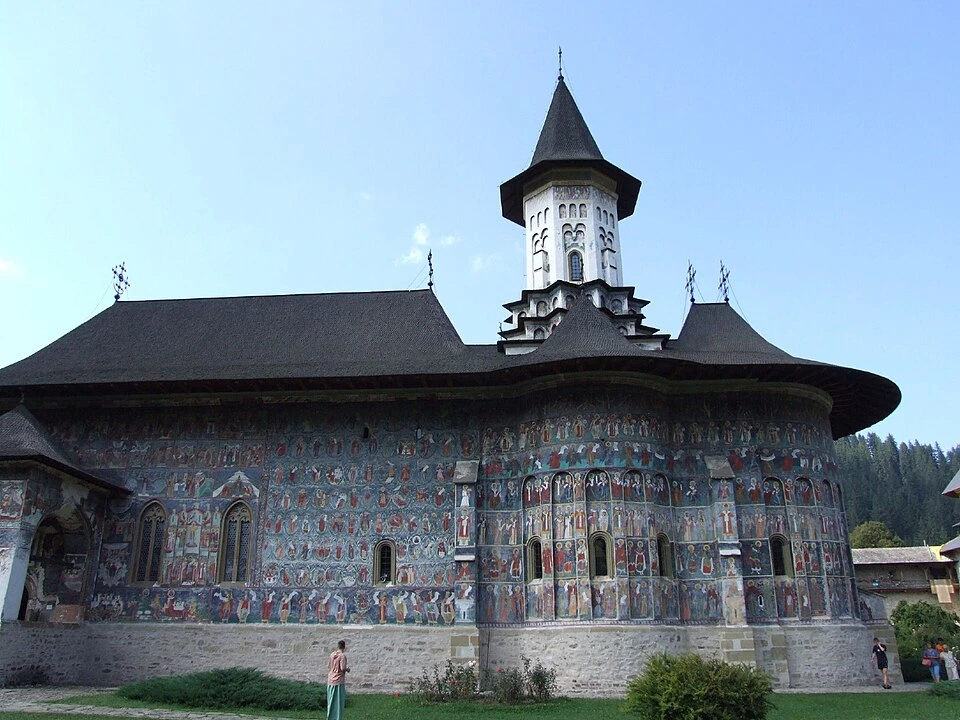
The monastery’s history cites a note by the hieromonk Enoh in an old book of monastic rules. It records work beginning in 1595 under Ieremia Movilă. Two brothers, Ion and Sofronie, worked with their apprentices. The vertical photograph shows how much of the wall the scene occupies and where the eave sits above it. [6] [2]

From book to wall
Why are the steps counted differently?
In the seventh century, John Climacus arranged a work on spiritual life into 30 steps. At Sucevița the painters turned the idea into a scene in which people climb, slip and fall. Inscriptions appear beside the steps. The painting lets you see how far someone has come and what is happening immediately below them. [5] [9]
The monastery’s account distinguishes 32 virtues in the painting and counts love as a 33rd step associated with Christ. The book groups faith, hope and love into the same step. Iconography scholar Ion Jabinschi points out that the fresco sets them apart and leaves a noticeable gap between the last rungs. In the close-up you can see where the ladder approaches the figure towards which the monks climb. The monastery identifies the Church Slavonic scroll beside Christ as Matthew 11:28. The passage invites those who are weary to find rest. [5] [9] [1]

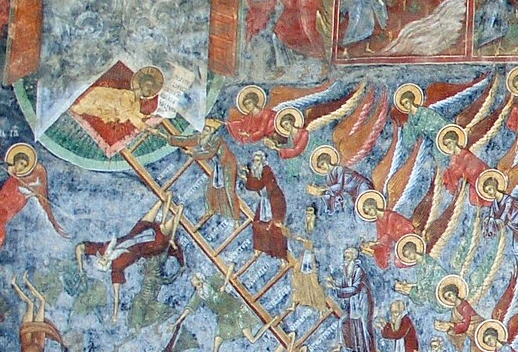
Two painted fields
What changes on either side of the ladder?
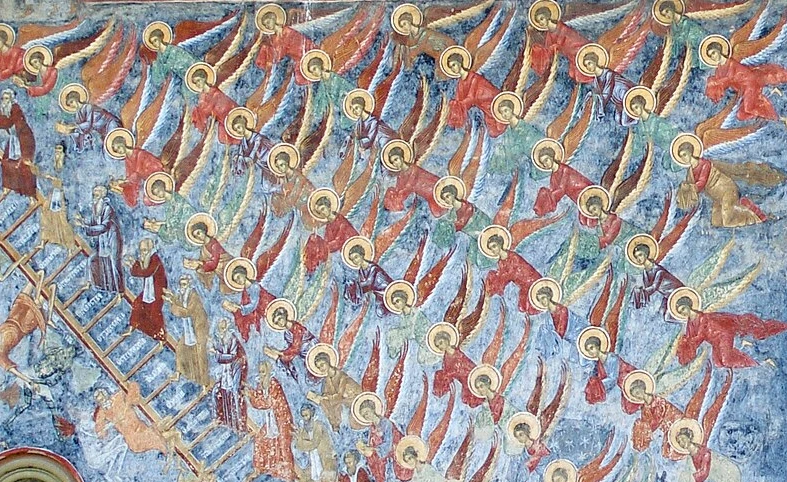
Look above the diagonal first. The angels repeat in rows. Their wings and halos make the arrangement easy to follow. Below, bodies tilt in different directions. The monastery reads that arrangement as an opposition between the angels’ order and the demons’ commotion. [5] [1]
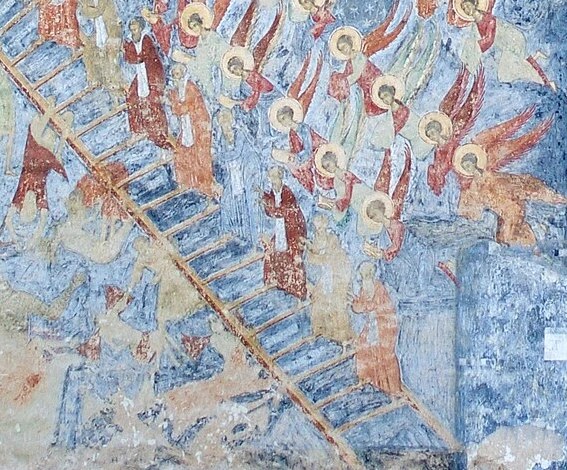
Move your eye down towards the window. Here you can see people climbing along the diagonal and others falling away from it. The detail explains how the ladder holds the scene together: you can follow both the climbing and the falling within the same frame. [5] [1]
Two photographs, one wall
How do you recognise the scene in the old photograph?
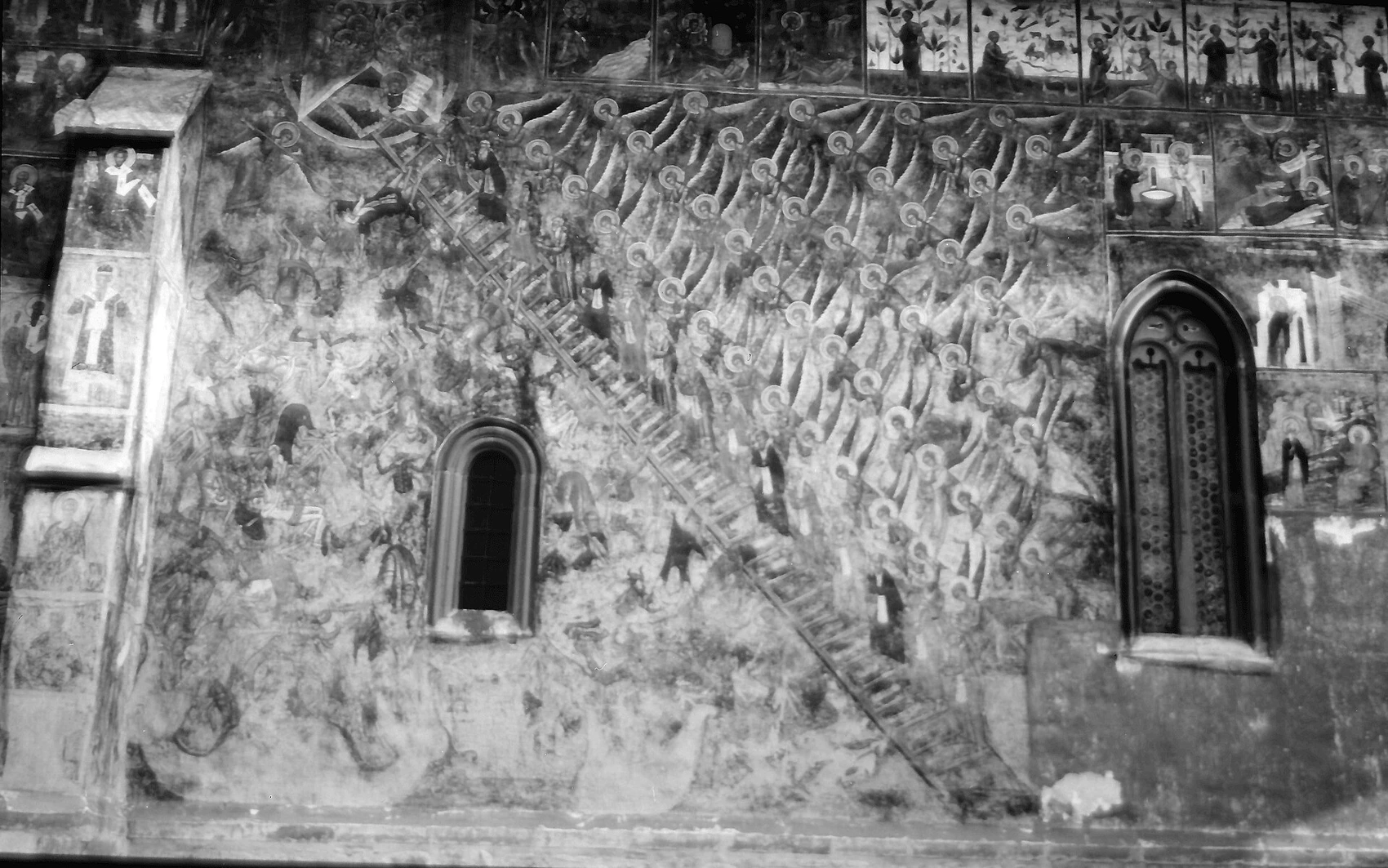
On 26 September 1971 photographer Willy Pragher took a black-and-white view of the façade. The colours that help you recognise the figures now are absent, but the same narrow window, rows of angels and foot of the ladder are visible. The photograph comes from Pragher’s collection at the Freiburg State Archive. [3]
Switch to the 2012 colour photograph. The window and upper painted bands give you points of alignment. The two photographs use different light and framing. The 2012 monitoring report takes you closer and shows how conservators identified losses in the colour layer itself. [1] [8]

1989 and 2012
What did the conservators need to secure?
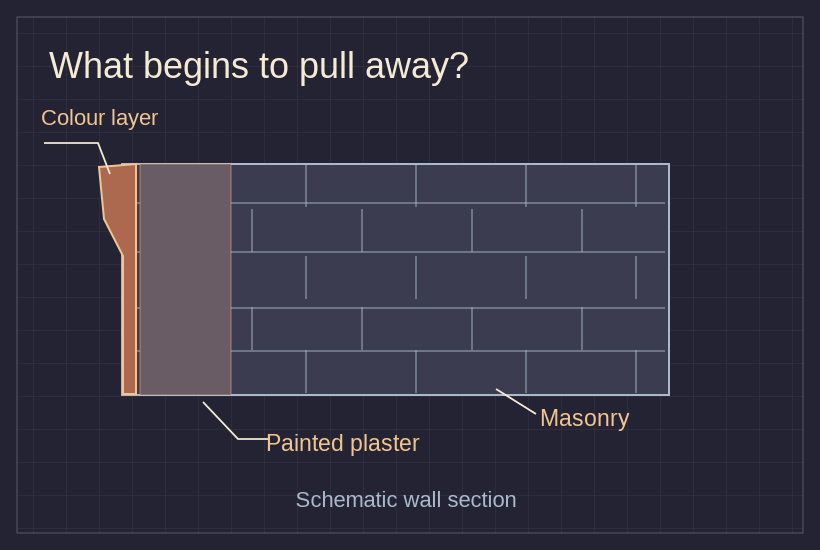
In 1989 Tatiana Pogonat and Oliviu Boldura began emergency work on the lower part of the Ladder. The monastery identifies the deteriorating material as the colour layer. Their work aimed to secure it before more could be lost. [7]
In a wall painting, colour can flake away from the plaster. The plaster itself can separate from what holds it. The 2012 monitoring report distinguishes these problems on the north wall. Figure 3a shows separation near the base, and figure 4 records gaps left by the loss of colour. [8]
Work in 2020–2022
Why does the edge of the roof matter?
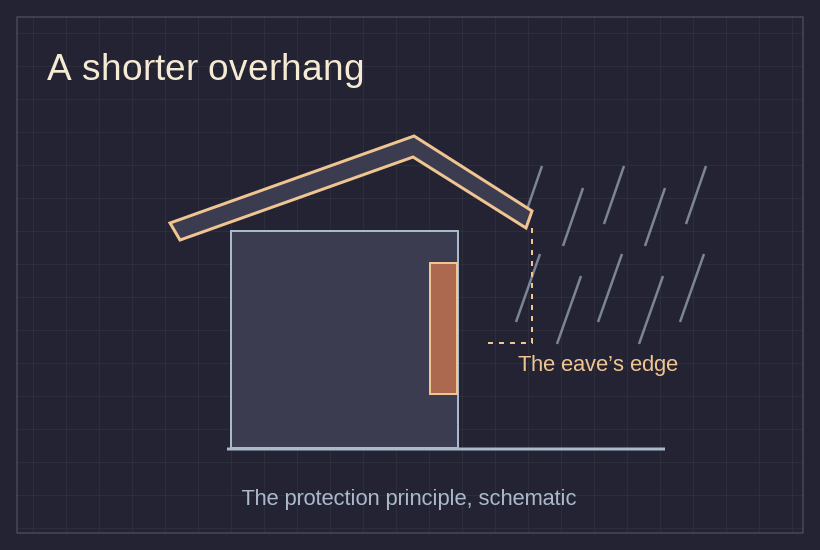
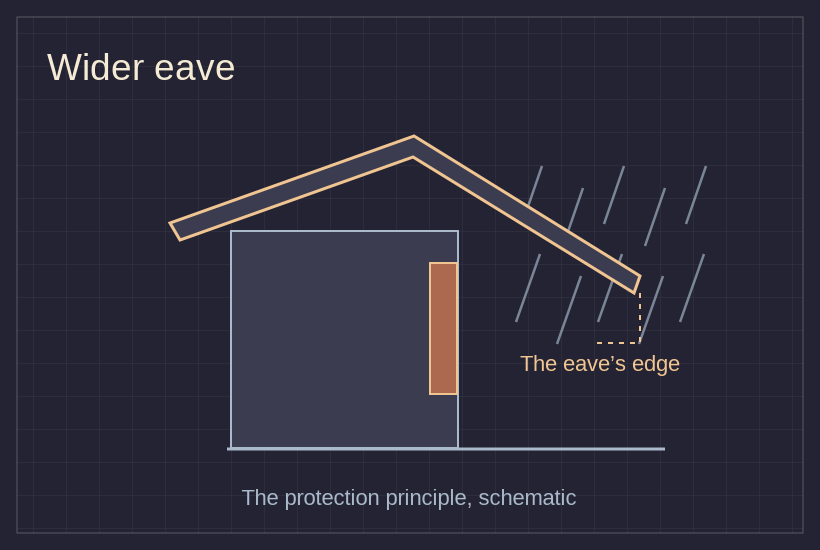
The 2012 report recorded water entering the attic through deteriorated roofing and separation of layers on the north façade. The monastery dates a later project to 2020–2022. The church was reroofed with wooden shingles and the overhang made wider to help shelter the paintings. [8] [7]
Compare the overhangs in the two drawings. A roof that projects farther carries its drip line farther from the face of the wall. After following the painted steps and the small areas of colour loss, look up at the timber that shelters the whole scene. [7] [2]